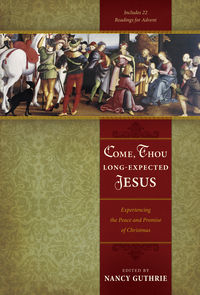
TIM KELLER ON CHRISTMAS AND SUFFERING

come thou long expected Jesus guthrie

When September 11th happened and New Yorkers started to suffer, you heard two voices. You heard the conventional moralistic voices saying, “When I see you suffer, it tells me about a judging God. You must not be living right, and so God is judging you.” When they see suffering they see a judgmental God. The secular voice said, “When I see people suffering I see God is missing.” When they see suffering, they see an absent, indifferent God.

WHAT CHRISTMAS DOES FOR SUFFERING

But when we see Jesus Christ dying on the cross through an act of violence and injustice, what kind of God do we see then? A condemning God? No, we see a God of love paying for sin. Do we see a missing God? Absolutely not! We see a God who is not remote but involved. We sometimes wonder why God doesn’t just end suffering, but we know that whatever the reason, it isn’t one of indifference or remoteness. God so hates suffering and evil that he was willing to come into it and become enmeshed in it. Dorothy Sayers wrote:

For whatever reason, God chose to make man as he is—limited and suffering and subject to sorrows and death—he [God] had the honesty and the courage to take his own medicine. Whatever game he is playing with his creation, he has kept his own rules and played fair. He can exact nothing from man that he has not exacted from himself. He has himself gone through the whole of human experience, from the trivial irritations of family life and the cramping restrictions of hard work and lack of money to the worst horrors of pain and humiliation, defeat, despair, and death. When he was a man, he played the man. He was born in poverty and died in disgrace, and thought it was worthwhile.

The gift of Christmas gives you a resource—a comfort and consolation—for dealing with suffering, because in it we see God’s willingness to enter this world of suffering to suffer with us and for us. No other religion—whether secularism, Greco-Roman paganism, Eastern religion, Judaism, or Islam—believes God became breakable or suffered or had a body. Eastern religion believes the physical is illusion. Greco-Romans believe the physical is bad. Judaism and Islam don’t believe God would do such a thing as live in the flesh. But Christmas teaches that God is concerned not only with the spiritual, because he is not just a spirit anymore. He has a body. He knows what it’s like to be poor, to be a refugee, to face persecution and hunger, to be beaten and stabbed. He knows what it is like to be dead. Therefore, when we put together the incarnation and the resurrection, we see that God is not just concerned about the spirit, but he also cares about the body. He created the spirit and the body, and he will redeem the spirit and the body.

Christmas shows us that God is not just concerned about spiritual problems but physical problems too. So we can talk about redeeming people from guilt and unbelief, as well as creating safe streets and affordable housing for the poor, in the same breath. because Jesus himself is not just a spirit but also has a body, the gift of Christmas is a passion for justice. There are a lot of people in this world who have a passion for justice and a compassion for the poor but have absolutely no assurance that justice will one day triumph. They just believe that if we work hard enough long enough, we’ll pull ourselves together and bring some justice to this world. For these people, there’s no consolation when things don’t go well. But Christians have not only a passion for justice but also the knowledge that, in the end, justice will triumph. Confidence in the justice of God makes the most realistic passion for justice possible.

WHAT CHRISTMAS DOES FOR THE DESPISED (& THE DESPISER)

Lastly, in the package of Christmas, there’s the ability to reconnect with the part of the human race you despise. Have you ever noticed how women-centric the incarnation and resurrection narratives are? Do you realize that women, not men, are at the very center of these stories? For example, in the story of the resurrection, who was the only person in the world who knew that Jesus Christ had risen from the dead? Mary Magdelene, a former mental patient, is the one Jesus tells to take this news to the world. Everyone else in the whole world learns it from her. Women are the first people to see Jesus risen from the dead.

In the incarnation, the annunciation comes to a woman. God penetrates the world through the womb of a poor, unwed, Jewish, teenage girl. The first theological reflection group trying to wrap their minds around this to figure out what this means and what is going on is Mary and Elizabeth. We know that in those days women had a very, very low status. They were marginalized and oppressed. For example, we know that a woman’s testimony was not admissible in court. Why? Because of prejudice against women.

We say to ourselves, aren’t we glad we’re past all that? Yes, but here’s what we have to realize: God is deliberately working with people the world despises. The very first witnesses to his nativity and resurrection are people whom the world says you can’t trust, people the world looks down on. Because we don’t look down on women today, we don’t look at this part of the story and realize what we’re being told. But here’s what we’re being told: Christmas is the end of snobbishness. Christmas is the end of thinking, “Oh, that kind of person.” You don’t despise women, but you despise somebody. (Oh, yes you do!) you may not be a racist, but you certainly despise racists. You may not be a bigot, but you have certain people about which you think, “They’re the reason for the problems in the world.”

There’s a place in one of Martin Luther’s nativity sermons where he asks something like, “Do know what a stable smells like? You know what that family would have smelled like after the birth when they went out into the city? And if they were standing next to you, how would you have felt about them and regarded them?” He is saying, I want you to see Christ in the neighbor you tend to despise—in the political party you despise, in the race you despise, in the class of people you despise.

Christmas is the end of thinking you are better than someone else, because Christmas is telling you that you could never get to heaven on your own. God had to come to you. It is telling you that people who are saved are not those who have arisen through their own ability to be what God wants them to be. Salvation comes to those who are willing to admit how weak they are.

In Christmas there is a resource for something most of us don’t even feel the need of. We might be able to admit we have trouble being vulnerable or that we need help handling suffering or that we need more passion for justice. But almost nobody says, “What am I going to do about my prejudice and snobbery? I really need help with that.”

Do you remember what an incredible snob you were when you were a teenager? Teenagers generally want nothing to do with people who don’t dress right and look cool. Do you think you ever got over that? You’re not really over that. You just found more socially acceptable ways to express it. You see, teenagers let that aspect of human nature out and don’t realize how stupid they look, and after a while they get rid of it. But really they are just papering over it. There are all kinds of people you look down on and want nothing to do with—and you know it. But in Christmas you have this amazing resource to decimate that—to remove it and take it away.

These are the gifts that come in the package of Christmas— vulnerability for intimacy, strength for suffering, passion for justice, and power over prejudice. And you are blessed if you open this gift and take it into your life. If you do, you’ll be blessed. You’ll be transformed.

SOURCE: This adapted sermon is an excerpt from Come, Thou Long-Expected Jesus: Experiencing the Peace & Promise of Christmas. Edited by Nancy Guthrie, Crossways. Copyright © by Timothy Keller, 2007. 


Tim Keller is the founding pastor of Redeemer Presbyterian Church in Manhattan, which he started in 1989 with his wife, Kathy, and three young sons. For over twenty years he has led a diverse congregation of young professionals that has grown to a weekly attendance of over 5,000.

BOOK REVIEW: Max Lucado’s “GOD WILL USE THIS FOR GOOD”

TRUSTING GOD TO TRUMP EVIL

GWUTFG LucadoBook Review by David P. Craig

Oftentimes when we are going through tough times we need some short and quick reminders that everything is going to be okay. In this short treatment of the life of Joseph from the Old Testament Lucado reminds us: “”You’ll get through this. It won’t be painless. It won’t be quick. But God will use this mess for good. In the meantime don’t be foolish or naive. But don’t despair either. With God’s help you will get through this.”

In retelling the story of Joseph the author takes time to provide ample applications (contemporary and ancient) to bring forth the principles that help us as we wait for God to bring forth good out of the messes in our lives whether we made them, inherited them, or we were the object of someone’s evil plans. Ultimately nothing can thwart the plans that God has for us, and that means that all things will work out for our good and God’s glory. The main idea brought out by Lucado in this book is that “in God’s hands intended evil becomes eventual good.”

This short book would make a good gift or recommendation for Christians that are currently going through a rough time. Lucado’s story telling connects well with readers by continually making connections between the biblical subject and the relevant points to our own lives. Lucado has written a helpful manual for believers who need guidance in their pain by helping us trust in the God who always trumps evil for our own good.

CHUCK SWINDOLL ON “WHY DO WE SUFFER?”

WHY CHRISTIANS SUFFER – A MEDITATION ON 2 CORINTHIANS 1:3-11

CBW Swindoll

2 Corinthians 1:3-11, Blessed be the God and Father of our Lord Jesus Christ, the Father of mercies and God of all comfort, who comforts us in all our affliction, so that we may be able to comfort those who are in any affliction, with the comfort with which we ourselves are comforted by God. For as we share abundantly in Christ’s sufferings, so through Christ we share abundantly in comfort too. If we are afflicted, it is for your comfort and salvation; and if we are comforted, it is for your comfort, which you experience when you patiently endure the same sufferings that we suffer. Our hope for you is unshaken, for we know that as you share in our sufferings, you will also share in our comfort

For we do not want you to be unaware, brothers, of the affliction we experienced in Asia. For we were so utterly burdened beyond our strength that we despaired of life itself. Indeed, we felt that we had received the sentence of death. But that was to make us rely not on ourselves but on God who raises the dead. He delivered us from such a deadly peril, and he will deliver us. On him we have set our hope that he will deliver us again. You also must help us by prayer, so that many will give thanks on our behalf for the blessing granted us through the prayers of many. 

Of all the letters Paul wrote, Second Corinthians is the most autobiographical. In it the great apostle lifts the veil of his private life and allows us to catch a glimpse of his human frailties and needs. You need to read that letter in one sitting to capture the moving emotion that surged through his soul.
It is in this letter alone that he records the specifics of his anguish, tears, affliction, and satanic opposition. In this letter alone he spells out the details of his persecution, loneliness, imprisonments, beatings, feelings of despair, hunger, shipwrecks, sleepless nights, and that “thorn in the flesh”–his companion of pain. How close it makes us feel to him when we picture him as a man with real, honest-to-goodness problems…just like you and me!
It is not surprising, then, that he begins the letter with words of comfort–especially verses 3 through 11. Now, then, having read those nine verses, please observe his frequent use of the term comfort in verses 3-7. I count ten times in five verses that the same root word is employed by Paul. This word is para-kaleo, meaning literally, “to call alongside.” It involves more than a shallow “pat on the back” with the tired expression, “the Lord bless you…” No, this word involves genuine in-depth understanding…deep-down compassion and sympathy. This seems especially appropriate since it says that God, our Father, is the “God of all comfort” who “comforts us in all our affliction.” Our loving Father is never preoccupied or removed when we are enduring sadness and affliction! Read Hebrews 4:14-16 and Matthew 6:31-32 as further proof.
There is yet another observation worth noting in 2 Corinthians, chapter 1. No less than three reasons are given for suffering–each one introduced with the term “that” in verses 4, 9, and 11. Quietly and without a lot of fanfare, the Holy Spirit states the reasons we suffer:
(1) “That we may be able to comfort those who are in any affliction…” (v. 4). God allows suffering so that we might have the capacity to enter into others’ sorrow and affliction. Isn’t that true? If you have suffered a broken leg and been confined to crutches for weeks–you are in complete sympathy with someone else on crutches, even years after your affliction. The same is true for the loss of a child…emotional depression…an auto accident…undergoing unfair criticism…financial burdens. God gives His children the capacity to understand by bringing similar sufferings into our lives. Bruises attract one another.
(2) “That we should not trust in ourselves…” (v. 9). God also allows suffering so that we might learn what it means to depend on Him, not on our own strength and resources. Doesn’t suffering do that? It forces us to lean on Him totally, absolutely. Over and over He reminds us of the danger of pride…but it frequently takes suffering to make the lesson stick. Pride is smashed most effectively when the suffering comes suddenly, surprisingly. The express trains of heaven are seldom announced by a warning bell; they dash suddenly and abruptly into the station of the soul. Perhaps that has been your experience recently. Don’t resent the affliction as an intruder–welcome it as God’s message to stop trusting in your flesh…and start leaning on Him.
(3) “That thanks may be given…” (v. 11). Honestly–have you said, Thanks, Lord for this test”? Have you finally stopped struggling and expressed to Him how much you appreciate His loving sovereignty over your life? I submit that one of the reasons our suffering is prolonged is that we take so long saying “Thank you, Lord” with an attitude of genuine appreciation.
How unfinished and rebellious and proud and unconcerned we be without suffering! Here are two statements on suffering I heard years ago and shall never forget:
Pain plants the flag of reality in the fortress of a rebel heart.
When God wants to do an impossible task, He takes an impossible individual–and crushes him.
May these things encourage you the next time God heats up the furnace.
Source: Chuck Swindoll. Come Before Winter…And Share My Hope. Multnomah Press, Portland, OR.: 1985, pp. 202-203.

 About the Author:

Dr. Charles R. Swindoll is senior pastor of Stonebriar Community Church, chancellor of Dallas Theological Seminary, and the Bible teacher on the internationally syndicated radio program Insight for Living.

Charles Swindoll’s Books:

  • You And Your Child, Thomas Nelson (1977)

  • Hand Me Another Brick, Thomas Nelson (1978)

  • Three Steps Forward, Two Steps Back: Persevering Through Pressure, Thomas Nelson (1980)

  • Strike The Original Match, Multnomah (1980)

  • Improving Your Serve: The Art Of Unselfish Living, Word (1981)

  • Strengthening Your Grip: Essentials In An Aimless World, Word (1982)

  • Growing Strong In The Seasons Of Life, Multnomah (1983)

  • Dropping Your Guard: The Value Of Open Relationships, Word (1983)

  • Come Before Winter – And Share My Hope, Multnomah (1985)

  • Living On The Ragged Edge: Coming To Terms With Reality, Word (1985)

  • Growing Deep In The Christian Life: Returning To Our Roots, Multnomah (1986)

  • The Quest For Character, Multnomah (1987)

  • Living Above The Level Of Mediocrity : A Commitment To Excellence, Word (1987)

  • Growing Wise In Family Life, Multnomah (1988)

  • Living Beyond The Daily Grind: Reflections On The Songs And Sayings In Scripture, Word (1988)

  • Rise & Shine: A Wake-Up Call, Multnomah (1989)

  • The Grace Awakening, Word (1990)

  • Sanctity Of Life: The Inescapable Issue, Word (1990)

  • Stress Fractures, Multnomah (1990)

  • Simple Faith, Word (1991)

  • Laugh Again, Word (1992)

  • Flying Closer To The Flame (Re-issued as Embraced by The Spirit: The Untold Blessings of Intimacy with God, Word in 1993 & Zondervan in 2010)

  • The Finishing Touch, Word (1994)

  • Paw Paw Chuck’s Big Ideas in the Bible, Word (1995)

  • Hope Again, Word (1996)

  • The Road To Armageddon (with John F Walvoord; J Dwight Pentecost), Word (1999)

  • Start Where You Are: Catch A Fresh Vision For Your Life, Word (1999)

  • The Mystery Of God’s Will: What Does He Want For Me?, Word (1999)

  • Perfect Trust: Ears To Hear, Hearts To Trust, And Minds To Rest In Him, J. Countryman (2000 & 2012)

  • The Darkness And The Dawn : Empowered By The Tragedy And Triumph Of The Cross, Word (2001)

  • Why, God?: Calming Words For Chaotic Times, Word (2001)

  • Wisdom For The Way: Wise Words For Busy People, J. Countryman (2001)

  • Understanding Christian Theology (with Roy B Zuck), Thomas Nelson (2003)

  • Behold—The Man!: The Pathway Of His Passion, Word (2004)

  • Getting Through the Tough Stuff: It’s Always Something! Thomas Nelson (2004)

  • So, You Want To Be Like Christ?: Eight Essentials To Get You There, Word (2005)

  • When God Is Silent (Choosing To Trust In Life’s Trials), J. Countryman (2005)

  • Great Attitudes For Graduates!: 10 Choices For Success In Life (with Terri A Gibbs), J. Countryman (2006)

  • Encouragement For Life: Words Of Hope And Inspiration, J. Countryman (2006)

  • The Strength Of Character: 7 Essential Traits Of A Remarkable Life (with Terri A Gibbs), J. Countryman (2007)

  • A Bethlehem Christmas: Celebrating The Joyful Season, Thomas Nelson (2007

  • The Owner’s Manual for Christians: The Essential Guide for a God-Honoring Life, Thomas Nelson (2009)

  • The Church Awakening: An Urgent Call for Renewal, FaithWords (2010 & 2012)

  • Meet Me In The Library: Readings From 8 Writers Who Shaped My Life, IFL (2011)

  • Saying It Well: Touching Others with Your Words, FaithWords (2012)

  • Living the Psalms: Encouragement for the Daily Grind, Worthy (2012)

  • Living the Proverbs: Living in the Daily Grind, Worthy (2013)

Swindoll’s New Testament Insights Commentary Series

  • Insights on Romans, Zondervan (2010)

  • Insights on John, Zondervan (2010)

  • Insights on James and 1 & 2 Peter, Zondervan (2010)

  • Insights on 1 & 2 Timothy and Titus, Zondervan (2011)

  • Insights on Revelation, Zondervan (2012)

  • Insights on Luke, Zondervan (2012)

  • Insights on Galatians & Ephesians, Zondervan (2013)

 Profiles in Character series

  • David: A Man Of Passion & Destiny, Word (1997)

  • Esther: A Woman Of Strength & Dignity, Word (1997)

  • Joseph: A Man Of Integrity And Forgiveness, Word (1998)

  • Moses: A Man Of Selfless Dedication, Word (1999)

  • Elijah: A Man Of Heroism And Humility, Word (2000)

  • Paul: A Man Of Grace And Grit, Word (2002)

  • Job: A Man Of Heroic Endurance, Word (2004)

  • Fascinating Stories Of Forgotten Lives: Rediscovering Some Old Testament Characters, Word (2005)

  • Jesus: The Greatest Life Of All, Thomas Nelson (2008)

Honors and Awards

BOOK REVIEW: TIM KELLER’S “WALKING WITH GOD THROUGH PAIN AND SUFFERING”

Into The Furnace and Out Like Gold

WWGTPAS Keller

Book Review By David P. Craig

As someone who has experienced a tremendous amount of loss, grief, pain, and suffering I was excited for Tim’s book on suffering to arrive. Tim Keller has also suffered much, and thus speaks with credibility as a fellow sufferer in the journey of life where there are many hills and valleys along the way.

Keller divides the book into three parts based on the biblical metaphor where suffering is described as a “fiery furnace.” Fire is an image used throughout the Bible as an image describing the torment and pain of suffering. The Bible speaks frequently of troubles and trials as “walking through the fire,” a “fiery ordeal”, and a “fiery furnace.”

Therefore, Keller builds his themes around this image. In Part One Keller considers the furnace from the outside of us. He tackles “the phenomenon of human suffering, as well as the various ways that different cultures, religions, and eras in history have sought to help people face and get through it [suffering].”

In part two Keller moves away from the theoretical realm and begins to hone in on the personal and character issues that are developed when we suffer. He seeks to demonstrate that the common ways we handle suffering via avoidance, denial, and despair are essentially to waste our suffering. On the other hand, the Bible presents a balanced view in how to handle suffering in a step by step fashion. Biblical truth is always balanced and faces hardships head-on because these are the fires that God uses in our lives to mold our character and make us more like Christ.

Part three is the most practical part of the book. Suffering is actually designed by God to “refine us, not destroy us.” Keller explains in this final section how we can can properly orient ourselves toward God in the midst of our suffering so that we walk as Jesus walked in His great suffering.

The best time to read a book on suffering is before you are in the midst of the furnace. Keller recommends that you read sections two and three if you are already in the midst of great suffering. However, the best time to prepare for suffering is before it occurs. Therefore, it would be wise to read this book in the calm before the storm. Christians need to be prepared and develop a theological foundation of suffering before we enter the hot furnaces of life.

Americans seem to suffer more due to the fact that they are even suffering – than because of the suffering in and of itself. Keller wisely shows that suffering is a normal part of living in a fallen world. Life is full of various kinds of sufferings and we will always find ourselves coming into, or coming out of the fires of the furnace. God’s promise is that when you “pass through the waters…when you walk through the fire…I will be with you.” Jesus faced the ultimate suffering and furnace [the cross] and came through unscathed on our behalf. He was victorious over all the fires that we faced so that we too can be victorious as we face the fires that will come in Him, and with Him by our side.

I highly recommend this book as a wonderful resource that takes seriously the problems and complexities of suffering without watering them down. It is a resource that takes a multidimensional approach to suffering – tackling the internal and external realities – and takes us deep theologically and practically. It is good spiritual food for the mind and soul. Keller also weaves many personal stories of men and women along the way in this journey of suffering that will help you connect to the truths that he is communicating – not just for information, but for transformation.

I believe that God will use this book to powerfully help Christians realize that God has a plan and purpose to bring good out of all of our suffering. Out of each furnace that we enter – though difficult and painful – we will be refined by the fire and come out like gold. We will come out shining like the Son if we learn to trust and depend on His grace before, during, and in the aftermath of our trials. As Keller writes, “In Jesus Christ we see that God actually experiences the pain of the fire as we do. He is truly God with us, in love and understanding, in our anguish. He plunged himself into our furnace so that, when we find ourselves in the fire, we can turn to him and know we will not be consumed but will be made into people great and beautiful.”

Emergency Numbers in The Bible

“My presence will go with you, and I will give you rest.” – Exodus 33:14b

dark sunset at the beach

When in SORROW, call John 14

When people FAIL you, call Psalm 27

When you have SINNED, call Psalm 51

When you WORRY, call Matthew 6:19-34

When you are in DANGER, call Psalm 91

When God seems FAR AWAY, call Psalm 139

When your FAITH needs stirring, call Hebrews 11

When you are LONELY and FEARFUL, call Psalm 23

When you grow BITTER and CRITICAL, call 1 Corinthians 13

When you feel DOWN and OUT, call Romans 8:18-39

When you want REST and PEACE, call Matthew 11:25-30

When the WORLD seems BIGGER than God, call Psalm 90

When you want Christian ASSURANCE, call Romans 8:1-30

When you leave home for LABOR or TRAVEL, call Psalm 121

When your PRAYERS grow narrow or SELFISH, call Psalm 67

When you want COURAGE for a task, call Joshua 1

When you think of INVESTMENTS and RETURNS, call Mark 10

How to get along with DIFFICULT people, call Romans 12

For great INVENTION/OPPORTUNITY, call Isaiah 55

For Paul’s secret to HAPPINESS, call Colossians 3:12-17

For a SUMMARY OF CHRISTIANITY, call 1 Corinthians 5:15-19

If you are DEPRESSED, call Psalm 27

If you want to be FRUITFUL, call John 15

If your FINANCIALLY BROKE, call Psalm 37

If your are LOSING CONFIDENCE in PEOPLE, call 1 Corinthians 13

If people seem UNKIND, call John 15

If your are DISCOURAGED about your WORK, call Psalm 126

If you find the world growing SMALL, and you GREAT, call Psalm 19

In All Your Trouble Seek God

Robert Salmon Storm at Sea

In all your trouble you should seek God. You should not set him over against your troubles, but within them. God can only relieve your troubles if in your anxiety you cling to Him. Trouble should not really be thought of as this thing or that in particular, for our whole life on earth involves trouble; and through the troubles of our earthly pilgrimage we find God.

– Augustine of Hippo (Painting by Robert Salmon, “Storm at Sea”)

God Can, and God Does – An Encouraging Word

Lady Walking alone on the beach

When you feel unlovable, unworthy and unclean, when you think that no one can heal you: Remember, friend, God Can.

When you think that you are unforgivable for your guilt and your shame:  Remember, friend, God Can.

When you think that all is hidden and no one can see within:  Remember, friend, God Can.

And when you have reached the bottom and you think that no one can hear:  Remember, my dear friend, God Can.

And when you think that no one can love the real person deep inside of you:  Remember,my dear friend, God Does.

“In this the love of God was made manifest among us, that God sent his only Son into the world, so that we might live through him. In this is love, not that we have loved God but that he loved us and sent his Son to be the propitiation for out sins.” – 1 John 4:9-10

Andrew Murray on Being in the Center of God’s Will

 *The Center of God’s Will

Wave tube 1

(1) He brought me here. It’s by His will I am in this straight place. In that fact I will rest.

(2) He will keep me here in His love and give me grace to behave as His child.

(3) Then He will make the trial a blessing, teaching me the lessons He intends for me to learn.

(4) In His good time, He will bring me out again—how and when He knows. So let me say: I am

(a) Here by God’s appointment.

(b) In His keeping.

(c) Under His training.

(d) For His time.


*From a Sermon by Andrew Murray on Acts 27:28-29 entitled “Anchors to Throw in a Time of Testing.” Andrew Murray was a Dutch Reformed Church missionary sent from Scotland to South Africa. Andrew pastored churches in Bloemfontein, Worcester, Cape Town and Wellington, all in South Africa. He was a champion of the South African Revival of 1860.

In 1889, he was one of the founders of the South African General Mission (SAGM), along with Martha Osborn and Spencer Walton. After Martha Osborn married George Howe, they formed the South East Africa General Mission (SEAGM) in 1891. SAGM and SEAGM merged in 1894. Because its ministry had spread into other African countries, the mission’s name was changed to Africa Evangelical Fellowship (AEF) in 1965. AEF joined with SIM in 1998 and continues to this day.

He died on January 18, 1917, four months before his eighty-ninth birthday. He was so influenced by Johann Christoph Blumhardt‘s Möttlingen revival that he included a portion of Friedrich Zündel’s biography at the end of With Christ in the School of Prayer. Over the years he has influenced many, including Jessie Penn-Lewis, a key figure in the 1904-1905 Welsh Revival. His writings have greatly influenced the writings of both Watchman Nee and Witness Lee.

3 Reasons to Give Thanks in Our Suffering by Dr. Sam Storms

Sam Storms

Here are the three primary reasons why God orchestrates life in such a way that his children suffer persecution and trials and opposition from the enemies of the faith.

First, give thanks for suffering because of what it accomplishes for you personally. In particular, I have in mind what it accomplishes for your faith and for your future.

As for your faith, consider these texts:

“Count it all joy, my brothers, when you meet trials of various kinds, for you know that the testing of your faith produces steadfastness. And let steadfastness have its full effect, that you may be perfect and complete, lacking in nothing” (James 1:2-4).

“Not only that, but we rejoice in our sufferings, knowing that suffering produces endurance, and endurance produces character, and character produces hope, and hope does not put us to shame, because God’s love has been poured into our hearts through the Holy Spirit who has been given to us” (Romans 5:3-5).

As for your future, we read:

“Blessed are you when others revile you and persecute you and utter all kinds of evil against you falsely on my account. Rejoice and be glad, for your reward is great in heaven, for so they persecuted the prophets who were before you” (Matthew 5:11-12).

“So we do not lose heart. Though our outer self is wasting away, our inner self is being renewed day by day. For this light momentary affliction is preparing for us an eternal weight of glory beyond all comparison, as we look not to the things that are seen but to the things that are unseen. For the things that are seen are transient, but the things that are unseen are eternal” (2 Corinthians 4:16-18).

“For I consider that the sufferings of this present time are not worth comparing with the glory that is to be revealed to us” (Romans 8:18).

“Beloved, do not be surprised at the fiery trial when it comes upon you to test you, as though something strange were happening to you. But rejoice insofar as you share Christ’s sufferings, that you may also rejoice and be glad when his glory is revealed” (1 Peter 4:12-13).

Second, give thanks for suffering because of what it accomplishes for others.

We see in 2 Corinthians 1:3-5 that it equips you to encourage them:

“Blessed be the God and Father of our Lord Jesus Christ, the Father of mercies and God of all comfort, who comforts us in all our affliction, so that we may be able to comfort those who are in any affliction, with the comfort with which we ourselves are comforted by God. For as we share abundantly in Christ’s sufferings, so through Christ we share abundantly in comfort too” (2 Corinthians 1:3-5).

Paul also points out that suffering equips you to evangelize them:

“I want you to know, brothers, that what has happened to me has really served to advance the gospel, so that it has become known throughout the whole imperial guard and to all the rest that my imprisonment is for Christ. And most of the brothers, having become confident in the Lord by my imprisonment, are much more bold to speak the word without fear” (Philippians 1:12-14; see also 2 Cor. 4:7-11).

Third, and by far and away the most important reason of all, give thanks for suffering because of what it accomplishes for the praise and honor of Christ.

Look closely again at v. 29. Did you notice how Paul boldly declares that our suffering is “for the sake of Christ” and then again “for his sake”? How can that possibly be true? What benefit could come to the name and fame of Jesus because his people bear up patiently under persecution?

That our suffering serves the greater glory of Christ is clear from 2 Corinthians 1:8-11. There Paul writes:

“For we do not want you to be unaware, brothers, of the affliction we experienced in Asia. For we were so utterly burdened beyond our strength that we despaired of life itself. Indeed, we felt that we had received the sentence of death. But that was to make us rely not on ourselves but on God who raises the dead. He delivered us from such a deadly peril, and he will deliver us. On him we have set our hope that he will deliver us again. You also must help us by prayer, so that many will give thanks on our behalf for the blessing granted us through the prayers of many” (2 Corinthians 1:8-11).

Or consider how it magnifies his greatness:

“Three times I pleaded with the Lord about this [thorn in the flesh], that it should leave me. But he said to me, ‘My grace is sufficient for you, for my power is made perfect in weakness.” Therefore I will boast all the more gladly of my weaknesses, so that the power of Christ may rest upon me. For the sake of Christ, then, I am content with weaknesses, insults, hardships, persecutions, and calamities. For when I am weak, then I am strong” (2 Corinthians 12:7-10).

All our sufferings, all our trials, all our discomfort, all the pain inflicted by an unbelieving world, whether it be emotional, physical, or financial, are designed by God to magnify the beauty of Christ’s all sufficient-grace.

I recently read the remarkable book, The Secret Thoughts of an Unlikely Convert: an English professor’s journey into christian faith (Crown and Covenant, 2012), by Rosaria Champagne Butterfield. Butterfield was in her own words a radical feminist, a lesbian, and a professor of English literature at Syracuse University. She regularly taught courses in postmodern deconstruction, gay and lesbian studies, and what is known as “Queer” theory. And then she met Jesus. When she turned her back on her lesbian lifestyle and radical feminist politics, the persecution she endured from former colleagues, friends, and students was almost unimaginable. In her book she tells the story of one profound encounter:

“My lesbian neighbor . . . was dying of cancer. She approached me one day and said, ‘I didn’t give a damn about who God was to you in your happiness. But now that you are suffering, I want to know: who is your God? Where is he in your suffering?” (60; italics mine)

I’ll close with one final comment by John Piper. Listen closely:

“We do not choose suffering simply because we are told to, but because the One who tells us to describes it as the path to everlasting joy. He beckons us into the obedience of suffering not to demonstrate the strength of our devotion to duty or to reveal the vigor of our moral resolve or to prove the heights of our tolerance for pain, but rather to manifest, in childlike faith, the infinite preciousness of His all-satisfying promises” (Desiring God, 287).

Will you then join with me, together with Paul and the Philippians and countless other Christian, both ancient and modern, and give thanks for the gift of suffering?

– See more at: http://www.samstorms.com/enjoying-god-blog/post/for-what-purpose–suffering#sthash.XCK8dj75.dpuf

*Note: Sam Storms’ books on Theology Proper and Soteriology are excellent: The Singing God; Pleasures Evermore; One Thing; The Grandeur of God; and Chosen for Life – all highly recommended! (DPC)

Book Review of Warren Wiersbe’s Looking Up When Life Gets You Down

Why Us? Book Review by David P. Craig

LUWLGYD Wiersbe

Originally published as ‘Why Us?” in 1984, this reissue by Wiersbe seeks to answer the question: Why do bad things happen to seemingly innocent people? Other questions addressed by Wiersbe include: If God knows everything and is all powerful then why doesn’t he stop tragedies from happening? Is God limited in what He can do? Why does God seem so absent during our disappointments and pains? How Big is God? And When life falls apart, how do you pray?

Wiersbe wisely and sensitively tackles these tough questions and many more, pointing us to faith in the grace and power of God as our greatest hope in our time of need. He motivates the reader to not run or hide from God, but to “look up when life gets you down.” The author does not minimize the harsh realities of suffering but provides a plethora of resources from the Scriptures to help us cope and grow during the difficulties of life which are sure to come.

If you are looking for a clear, comforting, and helpful book to help you deal with difficult times in life this is a great place to start. Wiersbe writes a book that will not bog you down in philosophical discussion, but give you practical solutions to your grappling with pain and suffering. He will guide you into peace and rest as you encounter God’s grace and power in a new and fresh way through the ultimate sufferer – the Lord Jesus Christ.

I slowly read this book during a period in which I was diagnosed with Stage 3 Cancer, and went through a very difficult treatment and recovery process. Personally, I was helped immensely by Wiersbe’s care and wisdom and highly recommend this book for those going thorough suffering and would recommend it even more in preparing for future suffering which is inevitable.