A GUIDE TO THE BIBLE’S STORY, SYMBOLISM, AND PATTERNS


*B. Tyler Ellis is a College Minister in Newark, DE and you can follow him on Twitter @BTylerEllis and has a website: btylerellis.com/tyler-3/

“SOURCE: Stephen Viars. Leadership: How to Guide Others Integrity. New Growth Press, 2012.
 Introduction. One of the memorable things uttered by Abraham Booth (1734-1806) in his useful book, The Reign of Grace, is this one, “The indelible motto inscribed by the hand of Jehovah on all the blessings of the unchangeable covenant, is, to the praise of the glory of His grace.”1 The question that is before us in this lecture is, “Preaching the Grace of the Spirit’s Calling,” and it, too, has the indelible motto of to the praise of the glory of His grace inscribed upon it. It has its origin in the absolutely free favour of God.
In the midst of the knowledge explosion of the past half century, it is astounding how many have forgotten that the greatest knowledge they could possess is the knowledge of God. Suppose inhabitants of other planets were discovered; this would not be as great as knowing about the one who inhabits heaven. The fact that we have sent men to the moon is not so amazing as sending men to heaven. The knowledge of God is certainly top priority.
Does God Exist?
Traditionally there have been two lines of argument used to demonstrate the existence of God.
NATURALISTIC ARGUMENTS
The traditional line of proof is philosophical and may or may not satisfy an unbeliever. But the arguments go like this: The first is an argument from cause and effect and simply reminds people that everywhere they look in the world around them they are faced with an effect. In other words, the natural world is a result or an effect, and this forces them to account for that which caused such an effect. Actually there are two possible answers. Either (1) nothing caused this world (but the uncaused emergence of something has never been observed), or (2) something caused this world. This something may be an “eternal cosmic process,” or it may be chance, or one might conclude that God was the cause. While we have to admit that this cause-and-effect argument does not in itself “prove” that the God of the Bible exists, it is fair to insist that the theistic answer is less complex to believe than any other. It takes more faith to believe that evolution or blind intelligence (whatever such a contradictory phrase might mean) could have accounted for the intricate and complex world in which we live than it does to believe that God could.
The second philosophical argument concerns the purpose we see in the world. In other words, we are not only faced with a world (the first argument) but that world seems to have purpose in it. How do you account for this? The nontheist answers that this happens by chance and/or through the processes of natural selection (which are by chance too). The question remains, however: Can random “by chance” actions result in the highly integrated organization which is evident in the world about us? To say it can is possible, but it requires a great deal of faith to believe. The Christian answer may also involve faith, but it is not less believable.
The third argument concerns the nature of man. Man’s conscience, moral nature, intelligence, and mental capacities have to be accounted for in some way. Again the nontheist answers that all of this evolved, and he has proposed very elaborate explanations of how this has happened. A tendency today seems to be to consider man as a biological or organic and cultural or superorganic creature and to account for the evolving of both these aspects totally by chance. But does this explain conscience or that reaching out for a belief in a higher being which seems to be universal (though terribly defective as far as understanding what that being is like)? Or does the very existence of man point to the existence of a personal God? Paul put the question this way to the philosophers of Athens: “Forasmuch then as we are the offspring of God, we ought not to think that the Godhead is like unto gold or silver, or stone, graven by art and man’s device” (Ac 17:29).
In connection with this anthropological argument, the moral argument is sometimes delineated. It poses the question, How did the idea of good and bad, right and wrong ever come into human culture? Man seems to have a sense of what is desirable as opposed to what is not. Where does this sense come from, and on what basis does man decide what ought to be desired or what ought not to be? Some argue that man’s recognition of good and his quest for a moral ideal point to the existence of a God who gives reality to that ideal. Others have emphasized that the ethical systems advanced by philosophers always contain contradiction and paradox if Christian theism is left out, which argues for the necessity of theism to explain satisfactorily man’s idea of good and evil. For instance, the humanist declares that he does not accept any absolute standard, yet in the next breath he exhorts you to do better.
A fourth line of reasoning seems much more sophisticated and much less easy to comprehend. It is called the ontological argument (from the present participle form of the Greek verb “to be”). The idea is that God has to be since man commonly has the idea of a most perfect Being and that idea must include the existence of such a Being. The reason is simply that a being, otherwise perfect, who did not exist would not be so perfect as a being who was perfect and who did exist. Therefore, since this concept does exist in the minds of men, such a most perfect Being must exist. Or to put it another way, since God is the greatest Being who can be thought of, He cannot be conceived as not existing; for if He could, then it would be possible to conceive of a being greater than God who does exist; therefore, God must exist. Many (including Immanuel Kant) do not feel this argument has any value. It originated with Anselm in the twelfth century.
One has to face the fact that these philosophical arguments do not of themselves prove the existence of the true God. But we do not minimize them. They may be used to establish a presumption in favor of the existence of the God of the Bible, and they produce sufficient evidence to place the unregenerated man under a responsibility to accept further knowledge from God or to reject intelligently this knowledge and thus to relieve God of further obligation on his behalf. You may find that using these lines of reasoning may trigger the thinking or open the way to present the gospel more clearly to a fellow student or friend.
The entire theistic world view has come under massive attack because of the rise of mechanistic science and its questioning of the possibility of miracles and because of the popular acceptance of evolution. Evolution is discussed in chapter 7, but a word about miracles is in order here.
If a miracle is defined (as Hume did) as a violation of the laws of nature, then, of course, the possibility of a miracle happening is slim if not nil. But if a miracle is contrary to what we know as the laws of nature, then the possibility of introducing a new factor into the known laws of nature is not eliminated. This new miraculous factor does not contradict nature because nature is not a self-contained whole; it is only a partial system within total reality, and a miracle is consistent within that greater system which includes the supernatural. It is true, however, that a miracle is something which nature, if left to its own resources, could not produce. If one admits the postulate of God, miracles are possible. If one adds the postulates of sin and salvation and sign-evidence, then they seem necessary.
The Christian does not view miracles as an easy way out of difficulties, but as an important part of the real plot of the story of the world. Most historians will not admit the occurrence of a miracle until they have tried every other possible and less probable explanation. But the admitted improbability of a miracle happening at a given time and place does not make the story of its happening untrue or unbelievable. It is improbable that you should be the millioneth customer to enter a store and thus receive a prize, but if you are, your friends should not refuse to believe that you were simply because it was unlikely that you would be.
The dimension of the supernatural is essential to Christianity and is often seen in history. Beware when considering specific miracles that you do not slip into naturalistic explanations for them. Remember, too, that to deny miracles is to deny also the resurrection of Christ, which would mean that our faith is empty.
BIBLICAL ARGUMENTS
The other line of proof is what the Bible presents, and this may be summarized very quickly. Often it is said that the Bible does not argue for the existence of God; it simply assumes it throughout. It is true that the opening words of the Bible assume His being, and this assumption underlies and pervades every book. But it is not the whole story to say that the Bible assumes but does not argue God’s existence. Look at Psalm 19 and notice that David says clearly that God has revealed His existence in the world around us. Isaiah told backslidden people who were making and worshiping idols to consider the world around them and then think whether or not idols that they made with their hands could fashion such a world. The answer is obviously negative. Then he said, “Lift up your eyes on high, and behold who hath created these things” (Is 40:26). The apostle Paul argued before a non-Christian audience that the rain and change of seasons witness to the existence of God (Ac 14:17). So the Bible does argue for as well as assume the existence of God.
How Has God Revealed Himself?
Liberalism teaches that man knows God through his own efforts. In contrast to this, one of the “good” things that Barth did when he thundered on the world his new theology was to remind men that there can be no revelation of God unless God Himself takes the initiative to make Himself known. In other words, the question is the one which Zophar asked a few thousand years before, “Canst thou by searching find out God?” (Job 11:7). The liberal says yes; the conservative says no (this is not intended to imply that Barth was a conservative, because he also said no; his view of the Bible demonstrates that he was not one).
If God has taken the initiative to reveal Himself, in what ways has He done this? We may think immediately of Christ and the Bible as answers to this question. But there are other answers too, like nature and history. These latter two ways are obviously different from the former in that they do not tell us as much about God. In other words, there seem to be general ways and special ways in which God has revealed Himself; the revelation of God through nature and history is called general revelation, while other means are labeled special revelation.
What are the characteristics of general revelation? Look at Psalm 19:1–6. Verse 1 states the content of that revelation as being the glory and handiwork of God. Verse 2 affirms the continuousness of it—day and night (since the sky is always there for man to behold). Verse 3 states the character of that revelation in nature as being a silent revelation (the word “where” is not in the original text). Verses 4–6 tell that the coverage of that revelation is worldwide (v. 4) and to every man (note v. 6 which intimates that even a blind man can feel the heat of the sun). Romans 1:18–20, which is the other central passage on this doctrine, adds the fact that the revelation of God in nature contains a revelation of His “eternal power and Godhead.” God’s revelation of Himself through history comes in various ways. He gives all people rain and productive seasons (Ac 14:17); He especially revealed a variety of aspects of His being and power to the nation Israel (Ps 78—His miraculous power, v. 13; His anger, v. 21; His control of nature, v. 26; His love, v. 38). In many ways the revelation of God through history is more explicit than that through nature.
Through Jesus Christ, God revealed Himself (“exegeted” is the word in Jn 1:18) in clarity and detail. The miracles of Christ showed things like the glory of God (Jn 2:11); His words told of the Father’s care (Jn 14:2); His person showed the Father (Jn 14:9). The way to know God is to know His Son; and apart from the revelation through the Son, little is known of God.
The other avenue of special revelation is the Bible. Today some are saying that the Bible is a lesser revelation than the Son, and to make too much of it is to worship the Bible (bibliolatry). But if we do not make much of the Bible, then we cannot know much of the Son, for our only source of information about the Son (and hence about the Father) is through the Bible. Furthermore, if the Bible is not to be trusted, then again we cannot know truth about the Son. Or if only certain parts of the Bible are trustworthy, we will end up with as many pictures of Christ as there are people picking the parts of the biography which they think are reliable. In other words, if the Bible is not completely true, we end up with either misinformation or subjective evaluation. Jesus Himself asserted that the Bible revealed Him (Lk 24:27, 44–45; Jn 5:39). And, of course, the Bible reveals many other things about God. Think, for instance, of the many aspects of His plan which are known only through the Bible and which tell us about Him. You might say that the Bible is an inexhaustible source of information about God.
What Is God Like?
With all these channels of revelation we ought to be able to learn something about what God is like. Traditionally, the characteristics of God stated formally and systematically are called the attributes of God; and traditionally, they have been divided into two categories. There are some ways in which God is like us (for instance, God is just, and man can be just too); and there are some ways in which God is unique (for instance, He is infinite, which finds no correspondence in us). However, these categories are not hard and fast, and some of the choices as to which attributes to place within which category are debatable. The important thing to study is the attribute itself to learn not only what it reveals about God but also what implications that it has for one’s personal outlook and life.
1. God is omniscient. Omniscience means that God knows everything, and this includes the knowledge not only of things that actually happen but also of things which might happen. This kind of knowledge God had by nature and without the effort of learning. Jesus claimed omniscience when He said, “If the mighty works, which were done in you, had been done in Tyre and Sidon, they would have repented long ago in sackcloth and ashes” (Mt 11:21). Here is a display of the knowledge of things that might have happened. God “telleth the number of the stars; he calleth them all by their names” (Ps 147:4), and “known unto God are all his works from the beginning of the world” (Ac 15:18).
The practical ramifications of the omniscience of God are many. Think, for instance, what this means in relation to the eternal security of the believer. If God knows all, then obviously nothing can come to light subsequent to our salvation which He did not know when He saved us. There were no skeletons in the closet which He did not know about when He offered to give us eternal salvation. Think again what omniscience means when something tragic occurs in our lives. God knows and has known all about it from the beginning and is working all things out for His glory and our ultimate good. Consider what omniscience ought to mean in relation to living the Christian life. Here is Someone who knows all the pitfalls as well as the ways to be happy and who has offered to give us this wisdom. If we would heed what He says then we could avoid a lot of trouble and experience a lot of happiness.
2. God is holy. The word holiness is very difficult to define. The dictionary does not help much since it just defines holiness as absence of evil, and it is usually measured against a relative standard. In God, holiness is certainly absence of evil, but it must also include a positive righteousness and all of this measured against Himself as an absolute standard. Holiness is one of the most important, if not the most important, attributes of God, and certainly nothing that God does can be done apart from being in complete harmony with His holy nature. Peter declares that “he which hath called you is holy” (1 Pe 1:15), and then he goes on to state what effect that should have in our lives, namely, “so be ye holy in all manner of conversation [life].”
An analogy may help in understanding this concept of holiness. What does it mean to be healthy? It means more than not being sick. Likewise, holiness is more than absence of sin; it is a positive, healthy state of being right. This is what John meant when he said that God is light (1 Jn 1:5).
The ramification of this is obvious: “Walk in the light,” A proper concept of holiness as a requirement for Christian living would end a lot of discussion about what is permitted to the Christian and what is not. It seems as though many are trying to discover how close they can come to sin without being cut off from their particular Christian group or clique instead of determining the propriety of things on the simple basis of “Is it holy?” Don’t be tempted to be a leader in or follower of the “let’s skate on as thin ice as possible” group; instead, be a leader in holiness. This will please God because it imitates Him.
3. God is just (or righteousness). While holiness principally concerns the character of God, justice or righteousness has more to do with the character expressed in His dealings with men. It means that God is equitable, or, as the Bible puts it, He is no respecter of persons. David said, “The judgments of the Lord are true and righteous altogether” (Ps 19:9; see also Ps 116:5; 145:17; Jer 12:1).
The most obvious application of the justice of God is in connection with judgment. When men stand before God to be judged they will receive full justice. This is both a comfort (for those who have been wronged in life) and a warning (for those who think they have been getting away with evil). Before an unsaved audience Paul emphatically warned of the coming righteous judgment: “He hath appointed a day, in the which he will judge the world in righteousness by that man whom he hath ordained; whereof he hath given assurance unto all men, in that he hath raised him from the dead” (Ac 17:31).
If you think a little further you might ask if God can save sinners and still be just. This is a good question and is answered by Paul in Romans 3:21–26 in the affirmative, but only because (as he explains) Jesus died to pay the penalty for sin which a just God required. But the price having been paid, God can be just (not compromising His holiness) and at the same time justify the one who believes in Jesus.
4. God is love (1 Jn 4:8). What is love? This is one of the most often used and most infrequently defined words in our vocabulary today. Here is one way of arriving at a proper concept of what love is. When young people think of love they think first and quite naturally of a pleasant emotional experience. And this is love, but it is not the whole concept. When those same young people grow up, marry, and have children, they soon learn that they have to discipline those children. The couple that first cuddles a baby and then soon after corrects that baby who, for instance, reaches out to touch a hot stove, is expressing two aspects of love. So any definition of love must be broad enough to include both the cuddling and correcting aspects of love. Therefore, we might tentatively propose the definition that love is that which seeks good for the object loved. But anyone who rears children knows that there are as many experts on child-rearing as there are grandmothers and aunts. What is good in the opinion of one is not good in the judgment of another. For the Christian this problem of what is good is easily solved. Good is the will of God. So, putting that in our tentative definition, we may say that love is that which seeks the will of God in the object loved. Will such a definition work? Let’s test it. God is love, meaning that He seeks His own will or glory, and we know that this is true. God loves the world, meaning that He seeks to have His will followed by the world. God loves sinners, meaning He wants them to know His will, and it is His desire that they believe on His Son. We are to love one another, meaning that we are to endeavor to see that the will of God is done in each other. So the definition seems to work.
The love of God seems to be of such a nature as to interest itself in the welfare of creatures in a measure beyond any normal human conception (1 Jn 3:16; Jn 3:16). It is almost beyond human comprehension to think of God allowing Himself to become emotionally involved with human beings. Of course the great manifestation of this was in the sacrifice of His Son for the salvation of men (1 Jn 4:9–10). The Bible also teaches that the love of God is shed abroad in the hearts of the children of God (Ro 5:8).
There is a very popular teaching today that says that because God is love and always acts in a loving manner toward His creatures, eventually all men will be saved. This teaching is called universalism. The trouble with the doctrine is not only that it contradicts direct statements of the Bible which say that men will be cast into hell forever (Mk 9:45–48), but it misunderstands the concept of love and its relation to the other attributes of God. Love may have to punish, and the attribute of love does not operate in God apart from His other attributes, particularly the attributes of holiness and justice.
5. God is true. Truth is another concept which is difficult to define. The dictionary says that it is agreement which is represented; if applied to God, it means that God is consistent with Himself and thus everything He does is true also. The Bible asserts that God is true (Ro 3:4) and Jesus claimed to be the truth (Jn 14:6), thus making Himself equal with God. The ramifications of the truthfulness of God lie chiefly in the area of His promises. He cannot be false to any one of the promises He has made. This includes broad and inclusive promises as, for instance, to the nation Israel and it affects with equal certainty the promises made to believers for daily living. The truth of God also affects His revelation, for He who is true cannot and has not revealed anything false to us.
6. God is free. Freedom in God means that He is independent of all His creatures, but it obviously could not mean that He is independent of Himself. Often we hear it said that the only restrictions on God are those inherent in His own person (e.g., God cannot sin because His holiness restricts Him from doing that). Perhaps it would be better to consider the matter in this fashion: the only restrictions on God’s freedom are the restrictions of perfection, and since perfection is no restriction, in reality, then, God is not restricted in any way. When Isaiah asked the people, Who has directed the Lord or who has taught Him anything or who has instructed Him? (Is 40:13–14), He expected the answer “no one,” because God is free (independent of His creatures). If this be true, then anything God has done for His creatures is not out of a sense of obligation to them, for He has none. What He has done for us is out of His love and compassion for us.
7. God is omnipotent. Fifty-six times the Bible declares that God is the almighty one (and this word is used of no one but God, cf. Rev 19:6). When students talk about the omnipotence of God they often joke about it along the line of asking if God could make two plus two equal six. The trouble with such a question is simply that it is not in the realm which omnipotence is concerned with. You might as well ask if dynamite could make two plus two equal six. The truths of mathematics are not in the area of omnipotence. But the security of the believer certainly is, and we are kept secure in our salvation by an omnipotent God (1 Pe 1:5). In fact, our salvation comes because the gospel is the power of God unto salvation (Ro 1:16). So rather than meditating on the ridiculous, let’s be thankful for the basics of our redemption which are effected by the power of God. Furthermore, God’s omnipotence is seen in His power to create (Gen 1:1), in His preservation of all things (Heb 1:3), and in His providential care for us.
8. God is infinite and eternal. Since there is nothing in our human natures which corresponds to infinity (only the opposite, finitude), it is difficult, if not impossible, for us to comprehend the term. Indeed, most dictionaries resort to defining it by negatives—without termination or without finitude. Eternity is usually defined as infinity related to time. Whatever is involved in these concepts, we can see that they must mean God is not bound by the limitations of finitude and He is not bound by the succession of events, which is a necessary part of time. Also His eternality extends backward from our viewpoint of time as well as forward forever. Nevertheless, this concept does not mean that time is unreal to God. Although He sees the past and future as clearly as the present, He sees them as including a succession of events, without being Himself bound by that succession. “Before the mountains were brought forth, or ever thou hadst formed the earth and the world, even from everlasting to everlasting, thou art God” (Ps 90:2; cf. Gen 21:33; Ac 17:24).
9. God is immutable. Immutability means that God is unchanging and unchangeable. God never differs from Himself, and thus in our concept of God there can be no idea of a growing or developing being. He is the one in whom is no variableness (Ja 1:17; cf. Mal 3:6; Is 46:9–10).
There is a problem in connection with the immutability of God, and it concerns verses which say that God repented (Gen 6:6; Jon 3:10). If these verses are understood to mean that there actually was a change in God’s plans, then He is either not immutable or not sovereign. But if such verses refer only to the revelation or unfolding of God’s plans to men, then it can be said that although His plan does not change, as man views its unfolding it seems to involve change. In other words, God’s “repentance” is only from our viewpoint; therefore, it is only apparent repentance as His eternal and unchanging plan is worked out in history.
10. God is omnipresent. Omnipresence means simply that God is everywhere present. That concept is not difficult, but some aspects related to it are. For instance, what is the difference between omnipresence and pantheism? Essentially, it is this: Omnipresence says God is everywhere present (though separate from the world and the things in it), while pantheism says that God is in everything. Omnipresence says that God is present in the room where you are reading this, while pantheism affirms that God is in the chair and in the window, etc. Another important distinction is this: Even though God is everywhere (though not in everything), this does not contradict the fact that there are varying degrees of the manifestation of His presence. God’s presence in the Shekinah glory was an immediate and localized manifestation of His presence, while His presence in relation to unredeemed men is scarcely realized by them. Furthermore, the presence of God is not usually in visible or bodily form. Occasionally He has appeared so that His glory was seen, but omnipresence is a spiritual manifestation of God. Psalm 139 teaches His omnipresence in a most vivid way, and of course this doctrine means that no one can escape God. If people try throughout their entire lifetime, they still cannot escape Him at death. On the other hand, it also means that a believer may experience the presence of God at all times and know the blessing of walking with Him in every trial and circumstance of life.
11. God is sovereign. The word sovereign means chief, highest, or supreme. When we say that God is sovereign we are saying that He is the number one Ruler in the universe. Actually, the word itself does not tell anything about how that Ruler may rule, although this is described in the Bible. The word itself means only that He is the supreme Being in the universe. Of course, the position brings with it a certain amount of authority, and in God’s case that authority is total and absolute. This does not mean, however, that He rules His universe as a dictator, for God is not only sovereign, He is also love and holiness. He can do nothing apart from the exercise of all His attributes acting harmoniously together. The concept of sovereignty involves the entire plan of God in all of its intricate details of design and outworking. Although He often allows things to take their natural course according to laws which He designed, it is the sovereign God who is working all things according to His wise plan.
That the Bible teaches the sovereignty of God there can be no doubt. Just read Ephesians 1 and Romans 9 (and don’t worry about all the ramifications). For the Christian the idea of sovereignty is an encouraging one, for it assures him that nothing is out of God’s control, and that His plans do triumph.
These are the principal attributes or characteristics of God, and this is the only God that exists. The God of the Bible is not a god of man’s own making or thinking or choosing, but He is the God of His own revelation.
What Does God Call Himself?
A person’s names always tell something about him or about the relationship he has to those who use the names. Often names grow out of experiences people have. So it is with God. He has revealed aspects of His nature by the names He uses with men, and some of them have grown out of specific experiences men have had with God.
PRIMARY OLD TESTAMENT NAMES
1. Elohim. The most general (and least specific in significance) name for God in the Old Testament is Elohim, Although its etymology is not clear, it apparently means “Strong One,” and it is used not only of the true God but also of heathen gods (Gen 31:30; Ex 12:12). The im ending indicates that the word is plural, and this has given rise to considerable speculation as to the significance of the plural. Some have suggested that it is an indication of polytheism, which would be difficult to sustain since the singular (Eloah) is rarely used and since Deuteronomy 6:4 clearly says that God is one. Others have attempted to prove the concept of the Trinity from this plural word. While the doctrine of the Trinity is of course a biblical one, it is very doubtful that it can be proved on the basis of this name for God. Nevertheless, this is not to say that the plural Elohim in no way indicates some distinctions within the Godhead. Though the plural does allow for the subsequent clear revelation of the Trinity in the New Testament, it most likely is best understood as indicating fullness of power. Elohim, the strong one, is the powerful Governor of the universe and of all the affairs of mankind. This name for God occurs over 2,500 times in the Old Testament. Take time to read verses like Genesis 1:1 and remember that this one is your God in all the circumstances of life.
2. Jehovah. This is the most specific name for God in the Old Testament, though Jehovah is not a real word! It is actually an artificial English word put together from the four Hebrew consonants YHWH and the vowels from another name for God, Adonai. Thus Jehovah was concocted this way: YaHoWaH, or Jehovah. The Jews had a superstitious dread of pronouncing the name YHWH, so whenever they came to it they said Adonai. We probably ought to pronounce it Yahweh.
The meaning of the word is also a matter of much discussion. There seems to be agreement that it is connected somehow with the Hebrew verb, to be, or some variant or earlier form of it, so that it does have the idea of God’s eternal self-existence (Ex 3:14). In its use in Exodus 6:6, however, there seems to be an added idea that connects this name in a special way with God’s power to redeem Israel out of Egyptian bondage. We have already seen that a name usually tells something about a person and some relationship that person has. In the name Yahweh these two features of a name are evident: Yahweh is eternal, and Yahweh bore a special relationship to Israel as her Redeemer.
The name occurs nearly 7,000 times in the Old Testament and is especially associated with Yahweh’s holiness (Lev 11:44–45), with His hatred of sin (Gen 6:3–7) and with His gracious provision of redemption (Is 53:1, 5, 6, 10).
3. Adonai. This is the name of God which the Jews substituted for the Tetragrammaton (the four letters YHWH, Yahweh) when they read the Scriptures. Yet it, too, is a basic designation for God and means Lord (master). It is used, as one might expect, of the relationship between men (like master and slave, as in Ex 21:1–6); thus when it refers to God’s relationship with men it conveys the idea of His absolute authority. Notice its occurrences in Joshua 5:14 (where Joshua recognized the authority of the captain of the Lord’s hosts) and Isaiah 6:8–11 (where Isaiah was commissioned by his Master).
There are two sides to a master-servant relationship. On the one hand, the servant must give absolute obedience to his master. On the other hand the master obligates himself to take care of the servant. If the believer truthfully calls God by His name, Lord, then he can expect God to take care of him, and God in turn can expect the believer to obey Him in everything.
COMPOUND OLD TESTAMENT NAMES
Frequently the Old Testament reveals something about the character or activity of God by using some designation in compound with Yahweh or El (which is the singular of Elohim). Here are some examples:
1. El Elyon—“The most high” (Gen 14:22). Notice its use in connection with Lucifer’s desire to be like the Most High (Is 14:14).
2. El Olam—“The everlasting God” (Gen 21:33). Notice this use in connection with God’s inexhaustible strength (Is 40:28).
3. El Shaddai—“The Almighty God” (Gen 17:1). This probably derives from a related word which means “mountain” and pictures God as the overpowering almighty one standing on a mountain. The name is often used in connection with the chastening of God’s people, as in Ruth 1:20–21 and the thirty-one times it is used in the book of Job.
4. Yahweh Jireh—The Lord provides (Gen 22:14). This is the only occurrence. After the angel of the Lord pointed to a ram as a substitute for Isaac, Abraham named the place, “the Lord provides.”
5. Yahweh Nissi—The Lord is my Banner (Ex 17:15). Similarly, after the defeat of the Amalekites, Moses erected an altar and called it Yahweh Nissi. Actually this and the other compounds are not really names of God, but designations that grew out of commemorative events.
6. Yahweh Shalom—The Lord is peace (Judg 6:24).
7. Yahweh Sabbaoth—“The Lord of hosts” (1 Sa 1:3). The hosts are the angels of heaven which are ready to obey the Lord’s commands. This title was often used by the prophets (Isaiah and Jeremiah) during times of national distress to remind the people that Yahweh was still their Protector.
8. Yahweh Maccaddeshcem—The Lord thy Sanctifier (Ex 31:13).
9. Yahweh Roi—“The Lord … my shepherd” (Ps 23:1).
10. Yahweh Tsidkenu—The Lord our Righteousness (Jer 23:6). This title was a direct thrust against King Zedekiah (which means Yahweh is righteousness) who was a completely unrighteous king (2 Ch 36:12–13).
11. Yahweh Shammah—“The Lord is there” (Eze 48:35).
12. Yahweh Elohim Israel—“The Lord God of Israel” (Judg 5:3). This is a designation frequently used by the prophets (Is 17:6), similar to the God of Abraham, Isaac, and Jacob.
13. Qadosh Israel—“The Holy One of Israel” (Is 1:4).
This list might go on and on because these compounds are not really distinct names but are more designations or titles. Yet they need to be included in our study since they do reveal some things about God. Remember, in the East a name is more than an identification; it is descriptive of its bearer, often revealing some characteristic or activity of that person. “O Lord, our Lord, how excellent is thy name in all the earth!” (Ps 8:1, 9).
To review: The knowledge of the true God is the highest knowledge any person can have. There are certain logical arguments which can at least tip the balance in favor of theism (though they do not tell us who God is or what He is like). The world around us tells us of the power of God, but it is from the Bible that we learn the full facts about God. Specifically we learn about Him through what the Bible says about His character (attributes) and His names.
What Is the Trinity?
The word trinity is not found in the Bible; indeed, many think it is a poor word to use to try to describe this particular teaching of the Bible. Actually, it describes only half the teaching; the reason will become clear shortly.
When you study a book like this, it may appear to you that the writer, or the church, or somebody else is saying to you, “Here are the doctrines—believe them!” If that’s the case it is only because you are looking at the results of someone’s study, not the process of it. We are not saying, “Here are some doctrines to be believed whether you like it or not,” but rather, “Here are some facts to be faced. How would you harmonize and organize them?”
The teaching on the Trinity is a good illustration of this point. You have probably heard lessons on the Trinity in which you were taught only the results: that the one God exists in three Persons. Then you asked for illustrations and got none that were satisfying. So you concluded that there was a doctrine you were expected to believe—regardless! Actually, the way we ought to go about it is this: as we read the Bible, certain astounding facts confront us and demand our attention. Specifically, the Bible seems to say clearly that there is only one true God. But it also seems to say with equal clarity that there was a man Jesus Christ who claimed equality with God and there is Someone called the Holy Spirit who is also equal with God. Now how do you put those facts together? The way conservatives have put them together results in the doctrine of the Trinity. Others have put these facts together and have come up with a different idea of the Trinity (the Persons being modes of expression of God and not distinct persons), and still others, rejecting the claims of Christ and the Spirit to be God, become Unitarians. But the claims are still there in the Bible, and the need for packaging them is what we study in this section.
Any concept of the Trinity must be carefully balanced, for it must maintain on the one side the unity of God, and on the other, the distinctness and equality of the Persons. That is why the word trinity only tells half of the doctrine—the “threeness” part and not the unity. Perhaps the word tri-unity is better since it contains both ideas—the “tri” (the threeness) and the “unity” (the oneness).
EVIDENCE FOR ONENESS
Deuteronomy 6:4 may be translated various ways (e.g., Yahweh our God is one Yahweh,” or “Yahweh is our God, Yahweh alone”), but in any case it is a strong declaration of monotheism. So are Deuteronomy 4:35 and 32:39 as well as Isaiah 45:14 and 46:9. The first of the so-called Ten Commandments shows that Israel was expected to understand that there is only one true God (Ex 20:3; Deu 5:7). The New Testament is equally clear in passages like 1 Corinthians 8:4–6, Ephesians 4:3–6 and James 2:19, all of which state emphatically that there is only one true God. Therefore, the doctrine of the Trinity must not imply in any way that there might be three Gods. God is single and unique, demanding the exclusion of all pretended rivals and removing any hint of tritheism.
EVIDENCE FOR THREENESS
Nowhere does the New Testament explicitly state the doctrine of triunity (since 1 Jn 5:7 is apparently not a part of the genuine text of Scripture), yet the evidence is overwhelming.
1. The Father is recognized as God. Notice, among many Scripture verses, John 6:27 and 1 Peter 1:2. This point is seldom debated.
2. Jesus Christ is recognized as God. Doubting Thomas recognized Him as such (Jn 20:28). He Himself claimed some of the attributes which only God has, like omniscience (Mt 9:4), omnipotence (Mt 28:18) and omnipresence (Mt 28:20). Further, He did things which only God can do (and the people recognized this) (Mk 2:1–12—healing the paralytic was done to prove that Christ had the power to forgive sins, which was acknowledged as something only God can do).
3. The Holy Spirit is recognized as God. He is spoken of as God (Ac 5:3–4—lying to the Spirit is the same as lying to God). He possesses the same attributes as God and those which belong exclusively to God (omniscience, 1 Co 2:10; omnipresence, Ps 139:7). It is the Spirit who regenerates man (Jn 3:5–6, 8).
This New Testament evidence is quite clear and explicit. Is there any similar evidence in the Old Testament? The answer is no, because what the Old Testament reveals concerning the Trinity is not clear and explicit but intimating and implicit. It is probably best to say that the Old Testament, although it does not reveal the triunity of God, does allow for the later New Testament revelation of it. Passages which use the plural word for God, Elohim, and plural pronouns of God allow for this subsequent revelation (Gen 1:1, 26). The Angel of Yahweh is recognized as God and yet is distinct from God (Gen 22:15–16), indicating two equal Persons. The Messiah is called the mighty God (Is 9:6 and note eternality ascribed to Him in Mic 5:2) again indicating two equal yet distinct Persons. Probably Isaiah 48:16 is the clearest intimation of the Trinity in the Old Testament because “I”—the Lord—is associated with God and the Spirit in an apparently equal relationship. But still these are only intimations and are not so explicit as the New Testament evidences.
THE EVIDENCE FOR TRIUNITY
Probably the verse that best states the doctrine of the triunity of God balancing both aspects of the concept, the unity and the Trinity, is Matthew 28:19, “baptizing them in the name of the Father, and of the Son, and of the Holy Ghost.” There is no question about the “threeness” aspect, for the Father, Son, and Spirit are mentioned—and only three. The unity is strongly indicated in the singular “name” rather than “names.” There are other verses similar to this one where the three are associated in equality and yet distinguished (like the benediction in 2 Co 13:14 and the presence of the Trinity at the baptism of Christ, Mt 3:16–17), but they do not also contain the strong emphasis on unity as indicated in the singular “name” in Matthew 28:19.
Having looked at the evidence and having concluded that there is one God and yet three Persons in the Godhead, is it possible to formalize this concept in a definition? Warfield’s is one of the best: “The doctrine that there is one only and true God, but in the unity of the Godhead there are three eternal and co-equal Persons, the same in substance but distinct in subsistence.” Subsistence means being or existence. The word person is really not so good, because it seems to indicate separate individuals in the Godhead; but, though we all recognize deficiency in the word, what better one is there?
Can the Trinity be illustrated? Not perfectly, nor probably very well, because most illustrations cannot include the idea that the three fully possess all the qualities of the one equally and without separation. One illustration from psychology notes that the innermost being of man—his soul—can carry on dialogue with itself, noting both sides of the debate and making judgments. Another uses the sun (like the Father) and notes that we only see the light of the sun, not the sun itself, which yet possesses all the properties of the sun (like the Son who came to earth), and observing further that the chemical power of the sun (which also possesses all the qualities of the sun and yet is distinct) is what makes plants grow. The sun, its light, and its power may give some help in illustrating the Trinity.
It is no wonder that a difficult doctrine like this has been the focal point of many errors throughout church history. One error that crops up again and again sees the Spirit as a mere influence and not a living person who is God. Sometimes Christ, too, is regarded as inferior to the Father, even as is some created being (dynamic Monarchianism, Arianism, present-day Unitarianism). Another error regards the concept of the Trinity as merely modes or manifestations of God (Sabellianism, after Sabellius, c. a.d. 250, or modalism). Karl Barth was for all intents and purposes a modalist, though he often rejected the label.
Is the teaching important? How else could one conceive of our atonement being accomplished apart from a triune God? God becoming man, living, dying, raised from the dead is pretty hard to conceive of if you are a Unitarian. Does not this doctrine illuminate the concept of fellowship? The fact that God is Father, Son, and Spirit emphasizes the fact that He is a God of love and fellowship within His own being. And this is the one with whom we as believers can enjoy fellowship as well.
The Father
Since the Son and the Holy Spirit are considered in detail later, we need to add a word here concerning the particular relationships and works of the Father.
THE PARTICULAR RELATIONSHIPS OF THE FATHER
1. All people are called the offspring of God (Ac 17:29); therefore, there is a sense in which God is the Father of all men as their Creator. This is simply a creature-Creator relationship and is in no sense a spiritual one.
2. God is the Father of the nation Israel (Ex 4:22). Not all in Israel were redeemed, so this relationship was both spiritual (with believers) and governmental (with all in Israel, whether believers or not).
3. God is the Father of the Lord Jesus Christ (Mt 3:17).
4. In a very special way God is the Father of all who believe in Christ (Gal 3:26).
THE PARTICULAR WORKS OF THE FATHER
Almost everything God does involves in some way or other all the Members of the Trinity. So when we speak of the particular works of the Father we are not excluding the other Persons, but simply delineating those things which seem to be the prerogative of the Father in a special way.
1. It is the Father who was the Author of the decree or plan of God (Ps 2:7–9).
2. The Father was related to the act of election as its Author (Eph 1:3–6).
3. The Father sent the Son to this world (Jn 5:37).
4. The Father is the disciplinarian of His children (Heb 12:9).
Important Ramifications of the Doctrine of God
Two final thoughts:
1. There is no other God but the one we have been trying to describe. Gods of our making, whether radically different from the God of the Bible or akin to Him, are false. Even good Christians can fall into the trap of trying to mold God according to their own thinking or wishes or pleasure. The result may be a god not dissimilar to the God of the Bible, but it will not be the true God. We know God not because we can initiate or generate such knowledge, but because He has revealed Himself. Therefore, what we know does not come from our minds but from His revelation. Beware of creating a god!
2. If the true God is as He is revealed to be, then it shouldn’t be hard for us to believe that He could perform miracles, give us an inspired Bible, become incarnate, or take over the kingdoms of this world. In other words, if we accept the facts about the true God which have been revealed, then it shouldn’t be difficult to believe He could and can do what is claimed of Him. That is why the knowledge of God takes first priority in the study of doctrine.
About the Author:
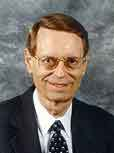
Charles Caldwell Ryrie (born 1925) is a Christian writer and theologian. He graduated from Haverford College (B.A.), Dallas Theological Seminary (Th.M., Th.D.) and the University of Edinburgh, Scotland (Ph.D.). For many years he served as professor of systematic theology and dean of doctoral studies at Dallas Theological Seminary and as president and professor at Philadelphia College of Bible, now Philadelphia Biblical University. He is a premillennial dispensationalist, though irenic in his approach. He is also the editor of the popular Ryrie Study Bible.

4 points from the Bethlehem Baptist Church Elder Affirmation of Faith (PDF):
1. Scripture, the Word of God Written
1.1 We believe that the Bible, consisting of the sixty-six books of the Old and New Testaments, is the infallible Word of God, verbally inspired by God, and without error in the original manuscripts.
1.2 We believe that God’s intentions, revealed in the Bible, are the supreme and final authority in testing all claims about what is true and what is right. In matters not addressed by the Bible, what is true and right is assessed by criteria consistent with the teachings of Scripture.
1.3 We believe God’s intentions are revealed through the intentions of inspired human authors, even when the authors’ intention was to express divine meaning of which they were not fully aware, as, for example, in the case of some Old Testament prophecies. Thus the meaning of Biblical texts is a fixed historical reality, rooted in the historical, unchangeable intentions of its divine and human authors. However, while meaning does not change, the application of that meaning may change in various situations. Nevertheless it is not legitimate to infer a meaning from a Biblical text that is not demonstrably carried by the words which God inspired.
1.4 Therefore, the process of discovering the intention of God in the Bible (which is its fullest meaning) is a humble and careful effort to find in the language of Scripture what the human authors intended to communicate. Limited abilities, traditional biases, personal sin, and cultural assumptions often obscure Biblical texts. Therefore the work of the Holy Spirit is essential for right understanding of the Bible, and prayer for His assistance belongs to a proper effort to understand and apply God’s Word.
Michael Novak (First Things, Sept. 1994, p. 21) Templeton Prize Address
“There is no such thing as truth,” they teach even the little ones. “Truth is bondage. Believe what seems right to you. There are as many truths as there are individuals. Follow your feelings. Do as you please. Get in touch with yourself. Do what feels comfortable.” Those who speak this way prepare the jails of the twenty-first century. They do the work of tyrants.
Once truth is removed as the arbiter between two groups all that is left is power.
Star Tribune, Oct. 17, 1992 Letter from Minnesota Atheists
One of the few worthwhile statements in the Bible is, “You shall know the truth and the truth shall make you free. . . . Knowledge of the Bible is hindered by the informal censorship imposed by religious leaders who would rather their followers didn’t know what‘s in it—the innumerable contradictions, historical errors, plagiarism, absurdities, meaningless prophecies, myths presented as historical fact, and countless instances of divinely ordered or approved atrocities. . . . It is true that the Bible has some worthwhile material, including entertaining stories, inspirational sentiments and astute observations about human behavior. However, those worthwhile parts could probably be contained in a pamphlet.
As holy books come near, your own can become relativized and you need to know how you feel about that.
Ernst Kaesemann, quoted in Gerhard Maier, The End of the Historical Method, (St. Louis: Concordia Pub. House, 1974).
The Scripture which one gives over to itself and to which one . . . gives himself up uncritically without the “principal key” leads not only to a multiplicity of confessions but also to the inability to distinguish between faith and superstition, the Father of Jesus Christ and the idol . . . . Does the New Testament canon establish the unity of the church? . . . No . . . If (the formal canon) establishes also a variety of Christologies which are in part incompatible . . . the canon as such also legitimates more or less all sects and false doctrines (pp. 37-38).
It was common when I was in school to hear things like, “The New Tesament is not the basis of the unity of the church; it is the basis of the disunity of the church,” meaning there are distinct theologies taught in the Bible and you need to pick which will be yours.
In our day, Bart Ehrman probably leads the pack in trying to discredit the reliability of the biblical text. His claim is that the New Testament has been corrupted by copyists so badly it can’t be recovered.
His relevant books:
Ehrman and others have also argued that there are other gospels besides our own that show alternative Christianities that are as valid as the traditional one.
For a readable, yet scholarly response to all this, see Darrell Bock, Dethroning Jesus: Exposing Popular Culture’s Quest to Unseat the Biblical Christ.
(See more recommended books on the reliability of Scripture.)
The Bible will stand. No critic will.
For all the gods of the peoples are idols, But the LORD made the heavens. (Psalm 96:5)
Jesus said to him, “I am the way, and the truth, and the life; no one comes to the Father but through Me.” (John 14:6)
Jesus said therefore to the twelve, “You do not want to go away also, do you?” Simon Peter answered Him, “Lord, to whom shall we go? You have words of eternal life.” (John 6:67-68)
And there is salvation in no one else; for there is no other name under heaven that has been given among men, by which we must be saved. (Acts 4:12)
Whoever denies the Son does not have the Father; the one who confesses the Son has the Father also. (1 John 2:23)
He who has the Son has the life; he who does not have the Son of God does not have the life. (1 John 5:12)
The one who hears you hears me, and the one who rejects you rejects me, and the one who rejects me rejects him who sent me. (Luke 10:16)
It would be tragic to construct our lives around the Bible and then discover the gospel was false.
If we have hoped in Christ in this life only, we are of all men most to be pitied. (1 Corinthians 15:19)
From childhood you have been acquainted with the sacred writings which are able to instruct you for salvation through faith in Christ Jesus. All Scripture is inspired by God and profitable for teaching, for reproof, for correction, and for training in righteousness. (2 Timothy 3:15-16)
If it is foolish to build your ministry on the Bible and discover it is not true, it would be even more foolish to not build your ministry on it and find out it is true. If you believe it is true, how could you devote your ministry to doing anything less than explaining and applying this book?
Assumption #1: It is a good idea to ask why trust the Bible and not just to do it gullibly.
Beloved, do not believe every spirit, but test the spirits to see whether they are from God, for many false prophets have gone out into the world. (1 John 4:1)
And Paul went in, as was his custom, and on three Sabbath days he reasoned with them from the Scriptures, 3 explaining and proving that it was necessary for the Christ to suffer and to rise from the dead, and saying, “This Jesus, whom I proclaim to you, is the Christ.” (Acts 17:2-3)
I write these things to you who believe in the name of the Son of God that you may know that you have eternal life. (1 John 5:13)
He presented himself alive to them after his suffering by many proofs, appearing to them during forty days and speaking about the kingdom of God. (Acts 1:3)
Assumption #2: Scholarly defenses of the Scriptures are important for the church, but are not the sure foundation of anyone’s spiritual confidence in the Bible.
That is true for a statistical reason and for a Biblical one:
I want to offer a way of knowing and trusting the Bible that is open to all who have access to the Bible, not just historians.
By a reasonable conviction, I mean a conviction founded on real evidence, or upon that which is a good reason, or just ground of conviction.
Where does this evidence come from?
The gospel of the blessed God does not go abroad a begging for its evidence, so much as some think
Specifically,
the mind ascends to the truth of the gospel but by one step, and that is its divine glory…. Unless men may come to a reasonable solid persuasion and conviction of the truth of the gospel…by a sight of its glory; it is impossible that those who are illiterate, and unacquainted with history, should have any thorough and effectual conviction of it at all.
I met him in the Gospel. What’s the Gospel?
Now I would remind you, brothers, of the gospel I preached to you, which you received, in which you stand, 2 and by which you are being saved, if you hold fast to the word I preached to you–unless you believed in vain. 3 For I delivered to you as of first importance what I also received: that Christ died for our sins in accordance with the Scriptures, 4 that he was buried, that he was raised on the third day in accordance with the Scriptures. (1 Corinthians 15:1-4)
The gospel is the story of Christ’s life and death for sinners according to the Scriptures and his resurrection and what it achieved and how it is enjoyed and what it leads to ultimately.
When this gospel story is recounted in sufficient fullness, the glory of Christ becomes the ground of or trust in it.
And even if our gospel is veiled, it is veiled only to those who are perishing. 4 In their case the god of this world has blinded the minds of the unbelievers, to keep them from seeing the light of the gospel of the glory of Christ, who is the image of God. 5 For what we proclaim is not ourselves, but Jesus Christ as Lord, with ourselves as your servants for Jesus’ sake. 6 For God, who said, “Let light shine out of darkness,” has shone in our hearts to give the light of the knowledge of the glory of God in the face of Jesus Christ. (2 Corinthians 4:3-6)
Here the mind reaches certainty of Christ in the gospel by the self-authenticating glory that shines through.
Nothing can be more evident, than that a saving belief of the gospel is here spoken of by the apostle, as arising from the mind being enlightened to behold the divine glory of the things it exhibits.
In other words, the “real evidence” or “just ground” on which saving faith must rest is the Glory of God manifest in the gospel.
God grants us to see “light of the knowledge of the glory of God in the face of Jesus Christ.” There is a spiritual light and it is a real knowledge. It has a real basis, just as the shining of a light is a real basis for seeing the light, though the blind may deny that there is any such thing.
This is the new birth: the opening of the eyes of the blind to see what is really there. This eye-opening removal of blindness and deadness comes by the word of God.
Since you have been born again, not of perishable seed but of imperishable,through the living and abiding word of God; . . . And this word is the good news that was preached to you. (1 Peter 1:23, 25)
Picture the dead and blind heart. Christ and the cross and sin are boring and foolish and a stumbling block. Then the word of God, the gospel comes empowered by the Spirit and touches the heart. It awakens to see the very thing that the word carries, the news about Jesus Christ.
I turn to Paul as a contemporary witness to Jesus who more than any other witness in the New Testament let’s us see into his own soul and ministry. I do this because I when I need to credit someone I need to know him. Paul’s witness to Jesus wins my trust. He does not sound like a lunatic or a liar. His story rings true. It coheres with the self-authenticating Christ that I met in the gospel.
Paul saw himself as an apostle with authority equal to the Twelve’s.
Paul, an apostle, not sent from men, nor through the agency of man, but through Jesus Christ, and God the Father, who raised Him from the dead. (Galatians 1:1)
And it came about that as he journeyed, he was approaching Damascus, and suddenly a light from heaven flashed around him; 4 and he fell to the ground, and heard a voice saying to him, “Saul, Saul, why are you persecuting Me?” 5 And he said, “Who art Thou, Lord?” And He said, “I am Jesus whom you are persecuting, 6 but rise, and enter the city, and it shall be told you what you must do.” (Acts 9:3-6)
Paul saw his message as taught by the risen Christ and absolute.
For I would have you know, brethren, that the gospel which was preached by me is not according to man. 12 For I neither received it from man, nor was I taught it, but I received it through a revelation of Jesus Christ. (Galatians 1:11-12)
Paul assumed the right as an apostle to command the churches.
Now we command you, brethren, in the name of our Lord Jesus Christ, that you keep aloof from every brother who leads an unruly life and not according to the tradition which you received from us. (2 Thessalonians 3:6)
So then, brethren, stand firm and hold to the traditions which you were taught, whether by word of mouthor by letter from us. (2 Thessalonians 2:15)
The Lord gave him his authority for building up the churches.
For even if I should boast somewhat further about our authority, which the Lord gave for building you up and not for destroying you, I shall not be put to shame. (2 Corinthians 10:8)
For this reason I am writing these things while absent, in order that when present I may not use severity, in accordance with the authority which the Lord gave me, for building up and not for tearing down. (2 Corinthians 13:10)
Paul sees his preached word as God’s word.
And for this reason we also constantly thank God that when you received from us the word of God’s message, you accepted it not as the word of men, but forwhat it really is, the word of God, which also performs its work in you who believe. (1 Thessalonians 2:13)
Paul sees himself as a true apostle over against the “false apostles” (2 Cor. 11:13).
For in no respect was I inferior to the most eminent apostles, even though I am a nobody. 12 The signs of a true apostle were performed among you with all perseverance, by signs and wonders and miracles. (2 Corinthians 12:11-12)
Paul’s authority put him above all professed prophets of his day.
If anyone thinks he is a prophet or spiritual, let him recognize that the things which I write to you are the Lord’s commandment. 38 But if anyone does not recognize this, he is not recognized. (1 Corinthians 14:37-38)
Paul believed his words were “taught by the Spirit.”
Now we have received, not the spirit of the world, but the Spirit who is from God, that we might know the things freely given to us by God, 13 which things we also speak, not in words taught by human wisdom, but in those taught by the Spirit, interpreting spiritual things to spiritual people.14 But a natural man does not accept the things of the Spirit of God; for they are foolishness to him, and he cannot understand them, because they are spiritually appraised. (1 Corinthians 2:12-14)
Peter teaches that Paul’s apostolic writings are Scripture like the Old Testament.
Regard the patience of our Lord to be salvation; just as also our beloved brother Paul, according to the wisdom given him, wrote to you, 16 as also in all his letters, speaking in them of these things, in which are some things hard to understand, which the untaught and unstable distort, as they do also the rest of the Scriptures, to their own destruction. (2 Peter 3:15-16)
With my knowledge of Christ and his will and his vision of the world expanded by the witness of Paul I turn to the gospels to listen to their witness to Christ and to hear his own words in their witness, and I find there the same self-authenticating Christ who won my allegiance in the gospel and in Paul. And I find that this Christ vindicated his own life and ministry on the basis of the truth and authority of the Old Testament. So through him I yield to the inspiration of the Old Testament and approach it with my heart open to hear God through it.
Jesus believed the Psalmist spoke by the Holy Spirit.
And Jesus answering began to say, as He taught in the temple, “How is it that the scribes say that the Christ is the son of David? 36 David himself said in the Holy Spirit, ‘The Lord said to my Lord, “Sit at my right hand, until I put your enemies beneath your feet.”’” (Mark 12:35)
Jesus believed that what Moses wrote in the law God himself said.
And some Pharisees came to Him, testing Him, and saying, “Is it lawful for a man to divorce his wife for any cause at all?” 4 And He answered and said, “Have you not read, that He who created them from the beginning made them male and female, 5 and said, ‘For this cause a man shall leave his father and mother, and shall cleave to his wife; and the two shall become one flesh’? 6 “Consequently they are no longer two, but one flesh. What therefore God has joined together, let no man separate.” (Matthew 19:3-6)
And the man said, “This is now bone of my bones, And flesh of my flesh; She shall be called Woman, Because she was taken out of Man.” 24 For this cause a man shall leave his father and his mother, and shall cleave to his wife; and they shall become one flesh. 25 And the man and his wife were both naked and were not ashamed. (Genesis 2:23)
Jesus believed that all Scripture would be fulfilled.
“Do not think that I came to abolish the Law or the Prophets; I did not come to abolish, but to fulfill. 18 “For truly I say to you, until heaven and earth pass away, not the smallest letter or stroke shall pass away from the Law, until all is accomplished. (Matthew 5:17-18)
Jesus believed that the small affirmations of Scripture cannot be broken
The Jews answered Him, “For a good work we do not stone You, but for blasphemy; and because You, being a man, make Yourself out to be God.” 34 Jesus answered them, “Has it not been written in your Law, ‘I said, you are Gods’? 35 “If he called them gods, to whom the word of God came (and the Scripture cannot be broken), 36 do you say of Him, whom the Father sanctified and sent into the world, ‘You are blaspheming,’ because I said, ‘I am the Son of God’? (John 10:33-36)
Jesus taught that Moses’ writings are to be believed.
“For if you believed Moses, you would believe Me; for he wrote of Me. 47 “But if you do not believe his writings, how will you believe My words?” (John 5:46)
Jesus devoted his life to fulfilling the Scriptures about the Messiah.
Face set toward Jerusalem
And He took the twelve aside and said to them, “Behold, we are going up to Jerusalem, and all things which are written through the prophets about the Son of Man will be accomplished. (Luke 18:31)
Cleansing of the temple
“Is it not written, ‘My house shall be called a house of prayer for all the nations’? But you have made it a robbers’ den.” (Mark 11:15-17, compare to Isaiah 56:7)
His ministry is fulfillment of the Old Testament.
And He came to Nazareth. . . . 18 “The Spirit of the Lord is upon me, because he anointed me to preach the gospel to the poor. He has sent me to proclaim the release of the captives, and recovery of sight to the blind, to set free those who are downtrodden, 19 to proclaim the favorable year of the Lord.” 20 And He closed the book, and gave it back to the attendant, and sat down; and the eyes of all in the synagogue were fixed upon Him. 21 And He began to say to them, “Today this Scripture has been fulfilled in your hearing.” (Luke 4:16-21)
The ministry of Jesus and John the Baptist are being played out according to Scripture.
And they asked Him, saying, “Why is it that the scribes say that Elijah must come first?” 12 And He said to them, “Elijah does first come and restore all things. And yet how is it written of the Son of Man that He should suffer many things and be treated with contempt? 13 “But I say to you, that Elijah has indeed come, and they did to him whatever they wished, just as it is written of him.” (Mark 9:11-13)
Jesus saw his betrayal as fulfillment of Scripture.
“For the Son of Man is togo, just as it is written of Him; but woe to that man by whom the Son of Man is betrayed! It would have been good for that man if he had not been born.” (Mark 14:21)
“I do not speak of all of you. I know the ones I have chosen; but it is that the Scripture may be fulfilled, ‘He who eats my bread has lifted up his heel against me.’” (John 3:18)
Jesus saw the disciples abandonment as fulfillment of Scripture.
And Jesus said to them, “You will all fall away, because it is written, ‘I will strike down the shepherd, and the sheep shall be scattered.’” (Mark 14:27)
Jesus saw his arrest as a criminal as fulfillment of Scripture.
“For I tell you, that this which is written must be fulfilled in Me, ‘And he who was numbered with the transgressors’; for that which refers to Me has its fulfillment.”(Luke 22:37)
“Or do you think that I cannot appeal to My Father, and He will at once put at My disposal more than twelve legions of angels? 54 How then shall the Scriptures be fulfilled, that it must happen this way?” (Matthew 26:53)
Jesus taught that we should not be slow to believe all that the Old Testament prophets have spoken: Luke 24:25
And He said to them, “O foolish men and slow of heart to believe in all that the prophets have spoken!
The last two reasons I trust the Bible is the word of God come from the Westminster Larger Catechism:
Question Four: How doth it appear that the Scriptures are the word of God?
Answer: The Scriptures manifest themselves to be the word of God, by their majesty(1) and purity(2); by the consent of all the parts(3), and the scope of the whole, which is to give all glory to God(4); by their light and power to convince and convert sinners, to comfort and build up believers unto salvation.(5) But the Spirit of God, bearing witness by and with the Scriptures in the heart of man, is alone able fully to persuade it that they are the very word of God.(6)
So Jesus answered them, “My teaching is not mine, but his who sent me. 17 If anyone’s will is to do God’s will, he will know whether the teaching is from God or whether I am speaking on my own authority. 18 The one who speaks on his own authority seeks his own glory; but the one who seeks the glory of him who sent him is true, and in him there is no falsehood. (John 7:16-18)
I do not receive glory from men; 42 but I know you, that you do not have the love of God in yourselves. 43 “I have come in My Father’s name, and you do not receive Me; if another shall come in his own name, you will receive him. 44 “How can you believe, when you receive glory from one another, and you do not seek the glory that is from the one and only God? (John 5:41-44)
From Genesis to Revelation the thrust of the Bible is that God gets the glory, we don’t. “The scope of the whole” is about getting God glory.
And “the scope of the whole” includes natural revelation. My existence in the world confronts me as soon as I am conscious of it with:
There is implicit in our personhood, our conscience, our dependence, and our guilt that God is a personal Being, with moral expectations, whom we have dishonored, and from whom we deserve wrath.
What’s the point of all this in relation to the Westminster Catechism’s question four about how the Scriptures “manifest themselves to be the word of God”?
When the answer says that the Scriptures manifest themselves to be the word of God “by the scope of the whole, which is to give all glory to God,” it is linking up with something in us that we know immediately from our own created existence in the world (unless we supress it as Romans 1:18) — that all glory belongs to God not us, and that we are guilty before him for not giving him this glory, and that the only hope of salvation will be by the initiative of this God to preserve his glory while finding away to forgive our sins.
This is in fact what we find in the whole Bible — the centrality of the glory of God and a history of salvation that makes his glory the center and goal of all things.
Therefore, this is one way that the Scriptures manifest themselves to be the word of God — they present a vision of God and man and salvation that fits with what we know immediately from God’s self-revelation in nature and in our own personhood and conscience.
John Calvin on the internal testimony of the Spirit and the problem with relying on the church to decide what is the Word of God:
“A most pernicious error widely prevails that Scripture has only so much weight as is conceded to it by the consent of the church. As if the eternal and inviolable truth of God depended upon the decision of men! . . . Yet, if this is so, what will happen to miserable consciences seeking firm assurance of eternal life if all promises of it consist in and depend solely upon the judgment of men?” (Institutes, I, vii, 1)
The immediate sight of God’s reality in the Word:
“How can we be assured that this has sprung from God unless we have recourse to the decree of the church? — it is as if someone asked: Whence will we learn to distinguish light from darkness, white from black, sweet from bitter? Indeed,Scripture exhibits fully as clear evidence of its own truth as white and black things do of their color, or sweet and bitter things do of their taste.” (Institutes, I, vii, 2)
How then shall we know? The inward testimony of the Spirit.
“The testimony of the Spirit is more excellent than all reason. For as God alone is a fit witness of himself in his word, the Word will not find acceptance in men’s hearts before it is sealed by the inward testimony of the Spirit. The same Spirit therefore who has spoken through the mouths of the prophets must penetrate into our hearts to persuade us that they faithfully proclaimed what had been divinely commanded . . . because until he illumines their minds, they ever waver among many doubts!” (Institutes, I, vii, 4)
Life is the witness to the truth and power of the word.
7 And it is the Spirit who bears witness, because the Spirit is the truth. . . . 9 If we receive the witness of men, the witness of God is greater; for the witness of God is this, that He has borne witness concerning His Son. 10 The one who believes in the Son of God has the witness in himself; the one who does not believe God has made Him a liar, because he has not believed in the witness that God has borne concerning His Son. 11 And the witness is this, that God has given us eternal life, and this life is in His Son. (1 John 5:7-11.)
J. I. Packer’s interpretation of Calvin’s thoughts on the inward witness of the Spirit
“Calvin affirms Scripture to be self-authenticating through the inner witness of the Holy Spirit. What is this ‘inner witness’? Not a special quality of experience, nor a new, private revelation, nor an existential ‘decision’, but a work of enlightenment whereby, through the medium of verbal testimony, the blind eyes of the spirit are opened, and divine realities come to be recognized and embraced for what they are. This recognition Calvin says, is as immediate and unanalysable as the perceiving of a color, or a taste, by physical sense—an event about which no more can be said than that when appropriate stimuli were present it happened, and when it happened we knew it had happened.” (Packer, 166)
Or to use the words of Jesus, “My sheep hear My voice, and I know them, and they follow Me” (John 10:27)
The Word became flesh and made his dwelling among us. We have seen his glory, the glory of the One and Only, who came from the Father, full of grace and truth. JOHN 1:14
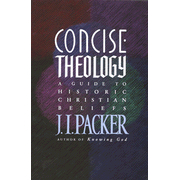
Trinity and Incarnation belong together. The doctrine of the Trinity declares that the man Jesus is truly divine; that of the Incarnation declares that the divine Jesus is truly human. Together they proclaim the full reality of the Savior whom the New Testament sets forth, the Son who came from the Father’s side at the Father’s will to become the sinner’s substitute on the cross (Matt. 20:28; 26:36-46; John 1:29; 3:13-17; Rom. 5:8; 8:32; 2 Cor. 5:19-21; 8:9; Phil. 2:5-8).
The moment of truth regarding the doctrine of the Trinity came at the Council of Nicaea (A.D.325), when the church countered the Arian idea that Jesus was God’s first and noblest creature by affirming that he was of the same “substance” or “essence” (i.e., the same existing entity) as the Father. Thus there is one God, not two; the distinction between Father and Son is within the divine unity, and the Son is God in the same sense as the Father is. In saying that Son and Father are “of one substance,” and that the Son is “begotten” (echoing “only-begotten,” John 1:14, 18; 3:16, 18, and NIV text notes) but “not made,” the Nicene Creed unequivocally recognized the deity of the man from Galilee.
A crucial event for the church’s confession of the doctrine of the Incarnation came at the Council of Chalcedon (A.D.451), when the church countered both the Nestorian idea that Jesus was two personalities—the Son of God and a man—under one skin, and the Eutychian idea that Jesus’ divinity had swallowed up his humanity. Rejecting both, the council affirmed that Jesus is one divine-human person in two natures (i.e., with two sets of capacities for experience, expression, reaction, and action); and that the two natures are united in his personal being without mixture, confusion, separation, or division; and that each nature retained its own attributes. In other words, all the qualities and powers that are in us, as well as all the qualities and powers that are in God, were, are, and ever will be really and distinguishably present in the one person of the man from Galilee. Thus the Chalcedonian formula affirms the full humanity of the Lord from heaven in categorical terms.
The Incarnation, this mysterious miracle at the heart of historic Christianity, is central in the New Testament witness. That Jews should ever have come to such a belief is amazing. Eight of the nine New Testament writers, like Jesus’ original disciples, were Jews, drilled in the Jewish axiom that there is only one God and that no human is divine. They all teach, however, that Jesus is God’s Messiah, the Spirit-anointed son of David promised in the Old Testament (e.g., Isa. 11:1-5; Christos, “Christ,” is Greek for Messiah). They all present him in a threefold role as teacher, sin-bearer, and ruler—prophet, priest, and king. And in other words, they all insist that Jesus the Messiah should be personally worshiped and trusted—which is to say that he is God no less than he is man. Observe how the four most masterful New Testament theologians (John, Paul, the writer of Hebrews, and Peter) speak to this.
John’s Gospel frames its eyewitness narratives (John 1:14; 19:35; 21:24) with the declarations of its prologue (1:1-18): that Jesus is the eternal divine Logos (Word), agent of Creation and source of all life and light (vv. 1-5, 9), who through becoming “flesh” was revealed as Son of God and source of grace and truth, indeed as “God the only begotten” (vv. 14, 18; NIV text notes). The Gospel is punctuated with “I am” statements that have special significance because I am (Greek: ego eimi) was used to render God’s name in the Greek translation of Exodus 3:14; whenever John reports Jesus as saying ego eimi, a claim to deity is implicit. Examples of this are John 8:28, 58, and the seven declarations of his grace as (a) the Bread of Life, giving spiritual food (6:35, 48, 51); (b) the Light of the World, banishing darkness (8:12; 9:5); (c) the gate for the sheep, giving access to God (10:7, 9); (d) the Good Shepherd, protecting from peril (10:11, 14); (e) the Resurrection and Life, overcoming our death (11:25); (f) the Way, Truth, and Life, guiding to fellowship with the Father (14:6); (g) the true Vine, nurturing for fruitfulness (15:1, 5). Climactically, Thomas worships Jesus as “my Lord and my God” (20:28). Jesus then pronounces a blessing on all who share Thomas’s faith and John urges his readers to join their number (20:29-31).
Paul quotes from what seems to be a hymn that declares Jesus’ personal deity (Phil. 2:6); states that “in Christ all the fullness of the Deity lives in bodily form” (Col. 2:9; cf. 1:19); hails Jesus the Son as the Father’s image and as his agent in creating and upholding everything (Col. 1:15-17); declares him to be “Lord” (a title of kingship, with divine overtones), to whom one must pray for salvation according to the injunction to call on Yahweh in Joel 2:32 (Rom. 10:9-13); calls him “God over all” (Rom. 9:5) and “God and Savior” (Titus 2:13); and prays to him personally (2 Cor. 12:8-9), looking to him as a source of divine grace (2 Cor. 13:14). The testimony is explicit: faith in Jesus’ deity is basic to Paul’s theology and religion.
The writer to the Hebrews, purporting to expound the perfection of Christ’s high priesthood, starts by declaring the full deity and consequent unique dignity of the Son of God (Heb. 1:3, 6, 8-12), whose full humanity he then celebrates in chapter 2. The perfection, and indeed the very possibility, of the high priesthood that he describes Christ as fulfilling depends on the conjunction of an endless, unfailing divine life with a full human experience of temptation, pressure, and pain (Heb. 2:14-17; 4:14-5:2; 7:13-28; 12:2-3).
Not less significant is Peter’s use of Isaiah 8:12-13 (1 Pet. 3:14). He cites the Greek (Septuagint) version, urging the churches not to fear what others fear but to set apart the Lord as holy. But where the Septuagint text of Isaiah says, “Set apart the Lord himself,” Peter writes, “Set apart Christ as Lord” (1 Pet. 3:15). Peter would give the adoring fear due to the Almighty to Jesus of Nazareth, his Master and Lord.
The New Testament forbids worship of angels (Col. 2:18; Rev. 22:8-9) but commands worship of Jesus and focuses consistently on the divine-human Savior and Lord as the proper object of faith, hope, and love here and now. Religion that lacks these emphases is not Christianity. Let there be no mistake about that!
From: Concise Theology: A Guide To Historic Christian Beliefs
Series: Friday Humor #7

The first axiomatic statement is this: Almost all frustration and anxiety come from a refusal to be what one is. In other words, frustration and anxiety are the result of playing a part other than the one you have been given.
Someone tells the story of a man who was out of work. His unemployment compensation benefits had run out, and he was desperate. He went to the zoo to ask for work, and the zoo keeper told him they didn’t really have any work, but he could make a few extra dollars by taking the place of a gorilla who had died the day before.
Ordinarily the man would not have done it, but he really needed money. He accepted the job, put on the gorilla suit, and made his way back to the gorilla cage. It really wasn’t a bad job. All he had to do was to eat bananas and swing from a rope, and after a while he began to like the job. But alas, all good things must come to an end. One day his rope broke and he fell over the fence into the lion’s cage. He started yelling for help, and the closer the lion came to him, the louder he yelled. Finally the lion came right up next to him, nudged him, and said, “Hey Buddy, will you shut up! We are both going to be out of a job!”
Now the difference between some Christians and the man in the gorilla outfit is that whereas he was forced into his role, we aren’t. We choose a role for which we are not suited, and in that choice is the source of much of our misery and frustration.
Have you ever seen Christians who seemed to be very pure and very spiritual—and very miserable? The problem with those Christians is that they were playing a role for which they were not suited. Jesus said, “No one is good except God” (Mark 10:18). If Jesus was right, and I have every reason to believe He was, then we pretend to be good and pure, we have just climbed into a gorilla suit.
And then there are those Christians who feel that everything they say comes as if from Sinai. They make all sorts of political and social pronouncements as if God Himself had given them a corner on truth. They are very serious—and very miserable. God says, “The heart is more deceitful than all else” (Jeremiah 17:9a). If that is true, then the person who believes and acts as if he or she had a corner on truth (when only God has that corner) has started wearing a gorilla costume.
We see countless examples of Christian men and women who play parts for which they were not created in the pride that so often is the a mark of modern Christianity, in the anger we feel when our plans are crossed, or in the way we want the world to revolve around our selfish desires. It is important that we understand that the source of much of our frustration and anxiety is our proclivity toward being something we aren’t.
*This humorous anecdote was adapted from the excellent book by Stephen Brown. If God is In Charge. Thomas Nelson: Nashville, 1983. Pages 61-62.

Our culture teaches us that people are basically good and that their internal problems are the result of external circumstances. But Jesus taught that no outside-in program will rectify the human condition, since our fundamental problems stem from within (Mark 7:20-23). Holiness is never achieved by acting ourselves into a new way of being. Instead, it is a gift that God graciously implants within the core of those who have trusted in Christ. All holiness is the holiness of God within us—the indwelling life of Christ. Thus, the process of sanctification is the gradual diffusion of this life from the inside (being) to the outside (doing), so that we become in action what we already are in essence. Our efforts faithfully reveal what is within us, so that when we are dominated by the flesh we will do the deeds of the flesh, and when we walk by the Spirit we will bear the fruit of the Spirit (Galatians 5:16-26).
Holiness is a new quality of life that progressively flows from the inside to the outside. As J. I. Packer outlines it in Keep in Step with the Spirit, the nature of holiness is transformation through consecration; the context of holiness is justification through Jesus Christ; the root of holiness is co-crucifixion and co-resurrection with Jesus Christ; the agent of holiness is the Holy Spirit; the experience of holiness is one of conflict; the rule of holiness is God’s revealed law; and the heart of holiness is the spirit of love. When we come to know Jesus we are destined for heaven because He has already implanted His heavenly life within us. The inside-out process of the spiritual life is the gradual outworking of this kingdom righteousness. This involves a divine-human synergism of dependence and discipline so that the power of the Spirit is manifested through the formation of holy habits. As Augustine put it, “Without God we cannot; without us, He will not.” Disciplined grace and graceful discipline go together in such a way that God-given holiness is expressed through the actions of obedience. Spiritual formation is not a matter of total passivity or of unaided moral endeavor, but of increasing responsiveness to God’s gracious initiatives. The holy habits of immersion in Scripture, acknowledging God in all things, and learned obedience make us more receptive to the influx of grace and purify our aspirations and actions.
“Beloved, if our heart does not condemn us, we have confidence before God” (1 John 3:21). It is wise to form the habit of inviting God to search your heart and reveal “any hurtful way” (Psalm 139:23) within you. Sustained attention to the heart, the wellspring of action, is essential to the formative process. By inviting Jesus to examine our intentions and priorities, we open ourselves to His good but often painful work of exposing our manipulative and self-seeking strategies, our hardness of heart (often concealed in religious activities), our competitively-driven resentments, and our pride. “A humble understanding of yourself is a surer way to God than a profound searching after knowledge” (Thomas A Kempis, The Imitation of Christ). Self-examining prayer or journaling in the presence of God will enable us to descend below the surface of our emotions and actions and to discern sinful patterns that require repentance and renewal. Since spiritual formation is a process, it is a good practice to compare yourself now with where you have been. Are you progressing in Christlike qualities like love, patience, kindness, forgiveness, compassion, understanding, servanthood, and hope? To assist you, here is a prayer sequence for examination and encouragement that incorporates the ten commandments, the Lord’s prayer, the beatitudes, the seven deadly sins, the four cardinal and three theological virtues, and the fruit of the Spirit. This can serve as a kind of spiritual diagnostic tool:
Search me, O God, and know my heart; Try me and know my anxious thoughts;
And see if there be any hurtful way in me, And lead me in the everlasting way. (Psalm 139:23-24)
Watch over your heart with all diligence, For from it flow the springs of life. (Proverbs 4:23)
The Lord’s Prayer
Our Father who is in heaven,
Hallowed be Your name.
Your kingdom come,
Your will be done,
On earth as it is in heaven.
Give us this day our daily bread.
And forgive us our debts, as we also have forgiven our debtors.
And do not lead us into temptation,
But deliver us from evil.
For Yours is the kingdom and the power and the glory forever.
Poverty of spirit (nothing apart from God’s grace)
Mourning (contrition)
Gentleness (meekness, humility)
Hunger and thirst for righteousness
Merciful to others
Purity of heart (desiring Christ above all else)
Peacemaking
Bearing persecution for the sake of righteousness
Pride
Avarice
Envy
Wrath
Sloth
Lust
Gluttony
Prudence (wisdom, discernment, clear thinking, common sense)
Temperance (moderation, self-control)
Justice (fairness, honesty, truthfulness, integrity)
Fortitude (courage, conviction)
Faith (belief and trust in God’s character and work)
Hope (anticipating God’s promises)
Love (willing the highest good for others, compassion)
Love
Joy
Peace
Patience
Kindness
Goodness
Faithfulness
Gentleness
Self-control
One of the great enemies of process spirituality is the craving to control our environment and the desire to determine the results of our endeavors. Many of us have a natural inclination to be manipulators, grabbers, owners, and controllers. The more we seek to rule our world, the more we will resist the rule of Christ; those who grasp are afraid of being grasped by God. But until we relinquish ownership of our lives, we will not experience the holy relief of surrender to God’s good and loving purposes. Thomas Merton put it this way in New Seeds of Contemplation:
This is one of the chief contradictions that sin has brought into our souls: we have to do violence to ourselves to keep from laboring uselessly for what is bitter and without joy, and we have to compel ourselves to take what is easy and full of happiness as though it were against our interests, because for us the line of least resistance leads in the way of greatest hardship and sometimes for us to do what is, in itself, most easy, can be the hardest thing in the world.
Our resistance to God’s rule even extends to our prayerful attempts to persuade the Lord to bless our plans and to meet our needs in the ways we deem best. Instead of seeking God’s will in prayer, we hope to induce Him to accomplish our will. Thus, even in our prayers, we can adopt the mentality of a consumer rather than a servant.
Perhaps the most painful lesson for believers to learn is the wisdom of being faithful to the process and letting loose of the results.
| Opportunity | Obedience | Outcome |
| Divine Sovereignty | Human Responsibility | Divine Sovereignty |
We have little control over opportunities we encounter and the outcomes of our efforts, but we can be obedient to the process.
Distorted dreams and selfish ambitions must die before we can know the way of resurrection. We cannot be responsive to God’s purposes until we abandon our strategies to control and acknowledge His exclusive ownership of our lives. At the front end, this surrender to the life of Christ in us appears to be the way of renunciation, but on the other side of renunciation we discover that it is actually the way of affirmation. “For whoever wishes to save his life will lose it, but whoever loses his life for My sake, he is the one who will save it” (Luke 9:24). The better we apprehend our spiritual poverty and weakness, the more we will be willing to invite Jesus to increase so that we may decrease (John 3:30).
Another key to staying in the process is learning to receive each day and whatever it brings as from the hand of God. Instead of viewing God’s character in light of our circumstances, we should view our circumstances in light of God’s character. Because God’s character is unchanging and good, whatever circumstances He allows in the life of His children are for their good, even though they may not seem so at the time. Since His will for us is “good and acceptable and perfect” (Romans 12:2), the trials, disappointments, setbacks, tasks, and adversities we encounter are, from an eternal vantage point, the place of God’s kingdom and blessing. This Romans 8:28-39 perspective can change the way we pray. Instead of asking the Lord to change our circumstances to suit us, we can ask Him to use our circumstances to change us. Realizing that “the sufferings of this present time are not worthy to be compared with the glory that is to be revealed to us” (Romans 8:18), we can experience “the fellowship of [Christ’s] sufferings” through “the power of His resurrection” (Philippians 3:10). Thus, Blaise Pascal prayed in his Pensees:
With perfect consistency of mind, help me to receive all manner of events. For we know not what to ask, and we cannot ask for one event rather than another without presumption. We cannot desire a specific action without presuming to be a judge, and assuming responsibility for what in Your wisdom You may hide from me. O Lord, I know only one thing, and that is that it is good to follow You and wicked to offend You. Beyond this, I do not know what is good for me, whether health or sickness, riches or poverty, or anything else in this world. This knowledge surpasses both the wisdom of men and of angels. It lies hidden in the secrets of Your providence, which I adore, and will not dare to pry open.
We are essentially spiritual beings, and each “today” that is received with gratitude from God’s hand contributes to our preparation for our glorious and eternal destiny in His presence. In “the sacrament of the present moment” as Jean-Pierre de Caussade described it, “It is only right that if we are discontented with what God offers us every moment, we should be punished by finding nothing else that will content us” (Abandonment to Divine Providence). It is when we learn to love God’s will that we can embrace the present moment as a source of spiritual formation.
As we grow in dependence on Christ’s life and diminish in dependence on our own, the fulfillment of receiving His life gradually replaces the frustration of trying to create our own. It is in this place of conscious dependence that God shapes us into the image of His Son. Here we must trust Him for the outcome, because we cannot measure or quantify the spiritual life. We know that we are in a formative process and that God is not finished with us yet, but we must also remember that we cannot control or create the product. Furthermore, we cannot measure our ministry or impact on others in this life. If we forget this, we will be in a hurry to accomplish significant things by the world’s standard of reckoning. Frances Felenon noted that “the soul, by the neglect of little things, becomes accustomed to unfaithfulness” (Christian Perfection). It is faithfulness in the little daily things that leads to faithfulness in much (Luke 16:10). Henri Nouwen used to ask God to get rid of his interruptions so he could get on with his ministry. “Then I realized that interruptions are my ministry.” As servants and ambassadors of the King, we must be obedient in the daily process even when we cannot see what difference our obedience makes.
A young man with a bandaged hand approached the clerk at the post office. “Sir, could you please address this post card for me?” The clerk did so gladly, and then agreed to write a message on the card.
He then asked, “Is there anything else I can do for you?” The young man looked at the card for a moment and then said, “Yes, add a PS: ‘Please excuse the handwriting.’”
We are an ungrateful people. Writing of man in Notes from the Underground, Dostoevsky says, “If he is not stupid, he is monstrously ungrateful! Phenomenally ungrateful. In fact, I believe that the best definition of man is the ungrateful biped.” Luke’s account of the cleansing of the ten lepers underscores the human tendency to expect grace as our due and to forget to thank God for His benefits. “Were there not ten cleansed? But the nine—where are they? Was no one found who turned back to give glory to God, except this foreigner?” (Luke 17:17-18).
Our calendar allocates one day to give thanks to God for His many benefits, and even that day is more consumed with gorging than with gratitude. Ancient Israel’s calendar included several annual festivals to remind the people of God’s acts of deliverance and provision so that they would renew their sense of gratitude and reliance upon the Lord.
In spite of this, they forgot: “they became disobedient and rebelled against You . . . . they did not remember Your abundant kindnesses . . . . they quickly forgot His works” (Nehemiah 9:26;Psalm 106:7, 13). The prophet Hosea captured the essence of this decline into ingratitude: “As they had their pasture, they became satisfied, and being satisfied, their heart became proud; therefore, they forgot Me” (13:6). When we are doing well, we tend to think that our prosperity was self-made; this delusion leads us into the folly of pride; pride makes us forget God and prompts us to rely on ourselves in place of our Creator; this forgetfulness always leads to ingratitude.
Centuries earlier, Moses warned the children of Israel that they would be tempted to forget the Lord once they began to enjoy the blessings of the promised land. “Then your heart will become proud and you will forget the Lord your God who brought you out from the land of Egypt, out of the house of slavery. . . . Otherwise, you may say in your heart, ‘My power and the strength of my hand made me this wealth’” (Deuteronomy 8:14, 17). The antidote to this spiritual poison is found in the next verse: “But you shall remember the Lord your God, for it is He who is giving you power to make wealth” (8:18).
Our propensity to forget is a mark of our fallenness. Because of this, we should view remembering and gratitude as a discipline, a daily and intentional act, a conscious choice. If it is limited to spontaneous moments of emotional gratitude, it will gradually erode and we will forget all that God has done for us and take His grace for granted.
“Rebellion against God does not begin with the clenched fist of atheism but with the self-satisfied heart of the one for whom ‘thank you’ is redundant” (Os Guinness, In Two Minds). The apostle Paul exposes the error of this thinking when he asks, “What do you have that you did not receive? And if you did receive it, why do you boast as if you had not received it?” (1 Corinthians 4:7). Even as believers in Christ, it is quite natural to overlook the fact that all that we have and are—our health, our intelligence, our abilities, our very lives—are gifts from the hand of God, and not our own creation. We understand this, but few of us actively acknowledge our utter reliance upon the Lord throughout the course of the week. We rarely review the many benefits we enjoy in the present. And so we forget.
We tend toward two extremes when we forget to remember God’s benefits in our lives. The first extreme is presumption, and this is the error we have been discussing. When things are going “our way,” we may forget God or acknowledge Him in a shallow or mechanical manner. The other extreme is resentment and bitterness due to difficult circumstances. When we suffer setbacks or losses, we wonder why we are not doing as well as others and develop a mindset of murmuring and complaining. We may attribute it to “bad luck” or “misfortune” or not “getting the breaks,” but it really boils down to dissatisfaction with God’s provision and care. This lack of contentment and gratitude stems in part from our efforts to control the content of our lives in spite of what Christ may or may not desire for us to have. It also stems from our tendency to focus on what we do not possess rather than all the wonderful things we have already received.
“Rejoice always; pray without ceasing; in everything give thanks; for this is God’s will for you in Christ Jesus” (1 Thessalonians 5:16-18). We cannot give thanks and complain at the same time. To give thanks is to remember the spiritual and material blessings we have received and to be content with what our loving Lord provides, even when it does not correspond to what we had in mind. Gratitude is a choice, not merely a feeling, and it requires effort especially in difficult times. But the more we choose to live in the discipline of conscious thanksgiving, the more natural it becomes, and the more our eyes are opened to the little things throughout the course of the day that we previously overlooked. G. K. Chesterton had a way of acknowledging these many little benefits: “You say grace before meals. All right. But I say grace before the concert and the opera, and grace before the play and pantomime, and grace before I open a book, and grace before sketching, painting, swimming, fencing, boxing, walking, playing, dancing and grace before I dip the pen in the ink.” Henri Nouwen observed that “every gift I acknowledge reveals another and another until, finally, even the most normal, obvious, and seemingly mundane event or encounter proves to be filled with grace.”
If we are not grateful for God’s deliverance in the past and His benefits in the present, we will not be grateful for His promises for the future. Scripture exhorts us to lay hold of our hope in Christ and to renew it frequently so that we will maintain God’s perspective on our present journey. His plans for His children exceed our imagination, and it is His intention to make all things new, to wipe away every tear, and to “show the surpassing riches of His grace in kindness toward us in Christ Jesus” in the ages to come (Ephesians 2:7).
Make it a daily exercise, either at the beginning or the end of the day, to review God’s benefits in your past, present, and future. This discipline will be pleasing to God, because it will cultivate a heart of gratitude and ongoing thanksgiving.
“We want a whole race perpetually in pursuit of the rainbow’s end, never honest, nor kind, nor happy now, but always using as mere fuel wherewith to heap the altar of the future every real gift which is offered them in the Present.” Uncle Screwtape’s diabolical counsel to his nephew Wormwood in C. S. Lewis’ The Screwtape Letters is a reminder that most of us live more in the future than in the present. Somehow we think that the days ahead will make up for what we perceive to be our present lack. We think, “When I get this or when that happens, then I’ll be happy,” but this is an exercise in self-deception that overlooks the fact that even when we get what we want, it never delivers what it promised.
Most of us don’t know precisely what we want, but we are certain we don’t have it. Driven by dissatisfaction, we pursue the treasure at the end of the rainbow and rarely drink deeply at the well of the present moment, which is all we ever have. The truth is that if we are not satisfied with what we have, we will never be satisfied with what we want.
The real issue of contentment is whether it is Christ or ourselves who determine the content (e.g., money, position, family, circumstances) of our lives. When we seek to control the content, we inevitably turn to the criterion of comparison to measure what it should look like. The problem is that comparison is the enemy of contentment—there will always be people who possess a greater quality or quantity of what we think we should have. Because of this, comparison leads to covetousness. Instead of loving our neighbors, we find ourselves loving what they possess.
Covetousness in turn leads to a competitive spirit. We find ourselves competing with others for the limited resources to which we think we are entitled. Competition often becomes a vehicle through which we seek to authenticate our identity or prove our capability. This kind of competition tempts us to compromise our character. When we want something enough, we may be willing to steamroll our convictions in order to attain it. We find ourselves cutting corners, misrepresenting the truth, cheating, or using people as objects to accomplish our self-driven purposes.
It is only when we allow Christ to determine the content of our lives that we can discover the secret of contentment. Instead of comparing ourselves with others, we must realize that the Lord alone knows what is best for us and loves us enough to use our present circumstances to accomplish eternal good. We can be content when we put our hope in His character rather than our own concept of how our lives should appear.
Writing from prison to the believers in Philippi, Paul affirmed that “I have learned to be content in whatever circumstances I am. I know how to get along with humble means, and I also know how to live in prosperity; in any and every circumstance I have learned the secret of being filled and going hungry, both of having abundance and suffering need” (Philippians 4:11-12). Contentment is not found in having everything, but in being satisfied with everything we have. As the Apostle told Timothy, “we have brought nothing into the world, so we cannot take anything out of it either. If we have food and covering, with these we shall be content” (1 Timothy 6:7-8). Paul acknowledged God’s right to determine his circumstances, even if it meant taking him down to nothing. His contentment was grounded not in how much he had but in the One who had him. Job understood this when he said, “Naked I came from my mother’s womb, and naked I shall return there. The Lord gave and the Lord has taken away. Blessed be the name of the Lord” (Job 1:21). The more we release temporal possessions, the more we can grasp eternal treasures. There are times when God may take away our toys to force us to transfer our affections to Christ and His character.
A biblical understanding of contentment leads to a sense of our competency in Christ. “I can do all things through Him who strengthens me” (Philippians 4:13). As Peter put it, “His divine power has granted to us everything pertaining to life and godliness” (2 Peter 1:3). “Not that we are adequate in ourselves to consider anything as coming from ourselves, but our adequacy is from God” (2 Corinthians 3:5). Contentment is not the fulfillment of what we want, but the realization of how much we already possess in Christ.
A vision of our competency in Christ enables us to respond to others with compassion rather than competition, because we understand that our fundamental needs are fulfilled in the security and significance we have found in Him. Since we are complete in Christ, we are free to serve others instead of using them in the quest to meet our needs. Thus we are liberated to pursue character rather than comfort and convictions rather than compromise.
Notice the contrast between the four horizontal pairs in this chart:
| WHO DETERMINES THE CONTENT OF YOUR LIFE? | |
|
SELF |
CHRIST |
|
Comparison Covetousness Competition Compromise |
Contentment Competency Compassion Character |
As we learn the secret of contentment, we will be less impressed by numbers, less driven to achieve, less hurried, and more alive to the grace of the present moment.
Article adapted from several sources on the Internet – most likely originally from Bible.org or Monergism.com. Dr. Ken Boa is an outstanding Bible scholar, and Spiritual director, and author of numerous helpful books including the Outstanding Textbook on the Subject of Sanctification and Spiritual Formation: Conformed To His Image.

 LifeCoach4God