Book Review: The Essential Commandment by Greg Ogden

Another Winner by Greg Ogden to Help You Make Multiplying Disciples

 I finished reading Ogden’s 3rd workbook for making disciples this morning and I’m really excited about how God will use this book in building up His church through the multiplication of disciples around the world. The focus in this discipleship resource is on what it means to practically love God and others by studying, discussing, and applying the many principles gleaned from God’s Word related to what we call the “great commandment.”

Ogden has done an exceptional job (once again) of writing a discipleship workbook that is based on specific Bible passages, non-wordy, provides deep food for thought, and giving great insights and discussion questions along the way. I have used the two previous workbooks by Ogden and found that they work best in groups of three or four people.

Each Chapter in this book provides a: 1) Core truth – “the nugget around which each lesson is built;” 2) Memory Verse – “so that God’s viewpoint on the topic at hand becomes our own;” 3) Inductive Bible Study – “The place to discover reality from the only perspective that counts is the Bible;” 4) Reading – “Each lesson concludes with a teaching printed in the guide. This reading is intended to provide a contemporary discussion of the eternal core truth that will challenge our lifestyle and stimulate our thinking. The follow-up questions will make the learning concrete.”

I can’t recommend this workbook highly enough. Ogden is an expert at making disciples and knows how to get groups thinking, talking, praying, and serving together – resulting in what the church is supposed to be all about – making multiplying disciples. He has done a great service to the church by adding to his two previous works in this series (Discipleship Essentials, and Leadership Essentials). I hope that many will buy this book and use it repeatedly with triads and quads so that we continue to obey the great commandment and the great commission together for God’s glory.

Booklet Review: The Gospel and Scripture by Mike Bullmore

Very Helpful Primer on Reading the Bible Christo-centrically

Experienced preaching professor and pastor Mike Bullmore writes how the Scriptures are necessary to the gospel, and how the gospel is necessary to the Scriptures. Bullmore expands upon several well-articulated ideas in this little booklet:

Firstly, “While Scripture itself is not the gospel, all Scripture is related to the gospel, and the gospel is Scripture’s reason for being. The gospel is the Bible’s main and unifying message.” In other words, if you read the Bible and miss the message of the gospel, then you completely miss the point of the Bible. The purpose of the Bible is to declare the gospel through all of its historical accounts, genres, prophecies, etc.

Secondly, “the Bible exists both because of and for the gospel. The key is that the gospel is the message of Christ. The Bible in all its parts points to and explains Christ in some way.” God will accomplish His plans of redemption through the reading and hearing of the Scriptures, pointing to us to Christ, and salvation being accomplished through the working of the Holy Spirit through the vehicle of the Scriptures.

Thirdly, the Bible does these specific things:

It initiates faith: “Faith comes from hearing, and hearing through the word of Christ” (Romans 10:17).

It gives new spiritual life: “You have been born again not of perishable seed but of imperishable, through the living and abiding word of God.” (1 Peter 1:23).

It helps us grow spiritually: “Like newborn infants, long for the pure spiritual milk, that by it you may grow up into salvation.” (1 Peter 2:2).

It sanctifies: “Sanctify them in the truth; your word is truth” (John 17:17).

It searches the heart and convicts: “The word of God is living and active, sharper than any two-edged sword, piercing to the division of soul and spirit, of joints and of marrow, and discerning the thoughts and intentions of the heart” (Hebrews 4:12).

It liberates: “If you abide in my word, you are truly my disciples, and you will know the truth, and the truth will set you free.” (John 8:31-32).

It refreshes and renews: “Give me life according to your word!” (Psalm 119:25)

It revives and enlightens: “The law of the LORD is perfect, reviving the soul; the testimony of the LORD is sure, making wise the simple.” (Psalm 19:7)

Fourthly, it’s an absolute necessity to read the Bible with humility: “Humility is absolutely necessary—an active, eager, humble, even joyful anticipation of God’s Word working its purpose in our lives.”

Fifthly, “if we are going to read the Bible rightly, we must see it in all its parts as it relates to Christ.”

Sixthly, the entire Bible is a book of stories with one primary story line: “The Bible is God’s story, and its storyline is the gospel: God’s plan to redeem a people for himself and restore his fallen creation through Christ…If read as a continuous narrative, its storyline is creation, fall, redemption, and restoration. If read as a collection of theological perspectives, the themes that emerge are God, sin, Christ, and faith. The message of both readings is the triumph of God’s eternal, redemptive purpose.”

Seventh, “The good news is the singular and majestic theme of Scripture: through the sinless life, substitutionary death, resurrection, present ministry, and triumphant return of Christ—when all things, ‘things in heaven and things on earth,’ will be united in him (Ephesians 1:10)—God will accomplish his perfect purpose with humans and all creation (Romans 8:21).

I highly recommend this little booklet as an excellent introduction to the gospel, how to read the Bible, and that you purchase many copies to have on hand to give away. It is concise, simple, clear, and shows how all of the Scriptures point to Jesus “the author and finisher of our faith.”

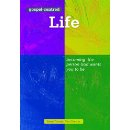
Book Review: The Gospel Centered Life by Tim Chester and Steve Timmis

How To Live For God’s Glory

 This is a fantastic concise guide written by two experienced church planters in England designed for individuals, one-on-one, or in small groups. This is one of four books in a series of guides on the themes of being gospel centered. All four of these guides (also on the Church, Marriage, and Family) are loaded with great topics, questions for discussion, and saturated with good theology and biblically based. The best thing about this guide is that it is short, without sacrificing depth – for people who don’t have a lot of time, or simply don’t like to read. It gets you straight and to the point of discussion quickly – designed for action.

This book has 14 short chapters that each contain these elements: 1) A Principle based on the biblical topic being discussed; 2) Consider this – a short case study on the topic at hand; 3) a biblical background reading on the subject of the case study; 4) Read all about it – a brief discussion on the topic tying in the context, bridging the biblical passage, and it’s relevancy to the topic; and 5) Questions for reflection and discussion.

Here are the Principles and Key Biblical Passages Developed in the Three Sections of this book:

Part One: Gospel-Centered Change

Chapter 1: “A Life for God” – Principle: “It’s not about me—it’s about God and His glory.” The Biblical background for this chapter comes from 1 Corinthians 8:1-11:1.

Chapter 2: “A Life for others” – Principle: “It’s not about me—it’s about loving God and others.” The Biblical background for this chapter comes from Matthew 22:34-40.

Chapter 3: “A Life of change” – Principle: “God is making me more like Jesus for His glory and my good.” The Biblical background for this chapter comes from Hebrews 12:1-11.

Chapter 4: “A Life of Miracles“ – Principle: “The Holy Spirit changes me through the gospel.” The Biblical background for this chapter comes from Romans 8:1-17.

Part Two: Gospel Centered Perspectives

Chapter 5:  “Look up to God” – Principle: “I respond to the gospel with daily repentance and faith.” The Biblical background for this chapter comes from Acts 20:17-24.

Chapter 6: “Look back to the cross” – Principle: “The cross is the foundation and pattern of my life.” The Biblical background for this chapter comes from Romans 8:28-39.

Chapter 7: “Look around at the Christian community” – Principle: “Belonging to Jesus means I belong to His community.” The Biblical background for this chapter comes from Colossians 3:1-17.


Chapter 8:  “Look forward to eternity” – Principle: “Eternal glory offers more than this life.” The Biblical background for this chapter comes from Hebrews 11:8-11, 24-26; 12:1-3.


Part Three: Gospel Centered Living

Chapter 9: “Decisions” – Principle: “My top priority is serving Christ.” The Biblical background for this chapter comes from 1 Thessalonians 4:3-12.

Chapter 10: “Relationships” – Principle: “I have a duty of care for others that involves taking the initiative to serve and resolve conflict.” The Biblical background for this chapter comes from James 3:1-4:12.

Chapter 11: “Friends” – Principle: “My willingness to speak about Jesus arises from my delight in Jesus.” The Biblical background for this chapter comes from Colossians 1:13-20.

Chapter 12: “Horizons” – Principle: “The gospel enlarges my horizons, giving me a concern for God’s world.” The Biblical background for this chapter comes from Isaiah 12.

Chapter 13: “Possessions” – Principle: “God gives me blessing that I might glorify Him.” The Biblical background for this chapter comes from 1 Timothy 6:6-19.

Chapter 14: “Suffering” – Principle: “God gives me suffering that I might glorify Him.” The Biblical background for this chapter comes from 2 Corinthians 1:3-7.

I highly recommend this book for all followers of Christ. The most beneficial way to read it will be in the context of community with other believers so that the many ideas in this book can be immediately fleshed out among real life. It is theologically sound, biblically saturated; Christ centered, and will truly help you live a more gospel-centered life.

Book Review: The Gospel Centered Marriage by Tim Chester

Concise and Helpful Guide For Marriage

Tim Chester is a church planter and writer in England. I appreciated the way he elevated Christ, His church, and how he applies the gospel in every facet of married life. The chapters designed for couples and small groups are concise, biblically and theologically based, Christo-centric, thorough, practical, and tailor made to promote discussion and application.

Some of the features of this book that are highlighted in each chapter are the following sections:

Consider this – “A scenario—often based on a real-life—situation which raises some kind of dilemma or frustration in marriage.”

Biblical background – “A relevant Bible passage together with some questions to help you think it through.”

Read all about it – “A discussion of the principle, both in terms of its theological underpinning and its contemporary application.”

Questions for reflection – “Questions that can be used for group discussion or personal reflection.”

Ideas for action – “Some ideas or an exercise to help people think through the application of the principle to their own situation.”

What I have done below to give you a taste of the book is to give the principle elaborated on in each chapter and the key Scriptures covered in each chapter.

Part One: Gospel-Centered Marriage – The Five Chapters in this section are on:

Chapter One – “Marriage and the passion of God” illuminates the principle: “Your marriage is an illustration of the relationship of Christ to His people.” The key passage in this chapter is a study of Hosea 1-3.

Chapter Two – “Marriage and the purposes of God” states the principle: “The purpose of your marriage is companionship and partnership in mission.” The biblical background for this principle is found in Genesis 1:26-28 and 2:18-24.

Chapter Three – “Marriage and the kingdom of God” contends the principle: “Your marriage is to demonstrate that it’s good to live under God’s reign.” The biblical basis for the thesis of this chapter is from Ephesians 5:22-33.

Chapter Four – “Marriage and the Submission of God’s people” states the principle: “As the church submits to Christ, so wives put their husband’s will before their own.” The background for the principle discussed in this chapter is from 1 Peter 3:1-7.

Chapter Five – “Marriage and the Loving authority of Christ” discusses the principle: “As Christ loves the church, husbands put their wife’s interests before their own.” The basis for discussion in this chapter is from Mark 10:40-45.

Part Two: Gospel-Centered Relationships – The Five Chapters in this section cover:

Chapter Six – “Grace” – The principle on grace is that “grace means we can always begin again.” The key passages are Titus 3:3-8; 1 Corinthians 6:9-11; Titus 2:11-14; and Ephesians 4:26-27.

Chapter Seven – “Love” – Enumerates the principle: “daily thoughtfulness matters more than grand gestures.” The biblical content for this chapter is based on John 13:1-17.

Chapter Eight – “Conflict” – States the principle: “Conflict begins when my selfish desires are denied by my spouse.” The passage dealing with conflict is from James 3:13-18.

Chapter Nine – “Reconciliation” – Focuses on the principle: “Reconciliation begins when my selfish desires are denied by me.” The biblical basis of discussion for this chapter comes from James 4:1-12.

Chapter Ten – “Forgiveness” – Highlights the principle: “Trust must be earned and forgiveness must be given.” The key text on forgiveness is from Matthew 18:21-35.

Part Three: Gospel-Centered Sex – The five chapters in this section are on:

Chapter 11: “Enjoying sex” on the principle: “it’s our duty to enjoy marital sex.” The featured passage in this chapter is Song of Songs 4:12-5:1.

Chapter 12: “Loving sex” elaborates on the principle: “Good sex begins long before you take your clothes off.” The primary passage for this chapter is Song of Songs 4:1-16.

Chapter 13: “Transforming sex” develops the principle: “We get sex wrong because we get God wrong.” The key biblical passage developed is Romans 1:18-25.

Chapter 14: “Gospel-centered beauty” hones in on the principle: “Love finds us beautiful and love makes beautiful.” The numerous passages developed are Song of Songs 1:5-6, 8-10; Romans 12:2; Proverbs 5:18-19; 1 Peter 3:3.

Chapter 15: The conclusion of the book “Marriage is not forever” solidifies the principle: “Find your identity and joy in God rather than in marriage.” The main biblical passages developed are John 4:4-26; Mark 12:18-25; Revelation 21:3-4.

I thoroughly enjoyed this book. I will be using it in the context of counseling and coaching couples who desire marriage; those who are already married; and be using it in the context of small groups in the church. I highly recommend this book because it is indeed gospel centered; it covers the major bases of a Christian marriage; and is not overwhelming for those who are not readers. I especially recommend it for guys (and gals) who don’t enjoy reading, or simply don’t have a lot of time on their hands. Each chapter is only a few pages long, and you can get a lot of substance and help in a short amount of time if you just want to read on a specific topic in the book. It gives excellent food for thought and discussion and will be very beneficial to any couple no matter how long they have been married.

Book Review: The Meaning of Marriage by Tim Keller

A Compelling Vision of Christian Marriage

 Tim Keller is the pastor of Redeemer Presbyterian Church in Manhattan, New York since he planted it in 1989, and the church reflects the city’s demographics: approximately 80% of the people (in a church of several thousand) are single. So Keller has a lot of experience in teaching, counseling and shepherding singles in particular. This book had its roots in the early 1990’s when he did a series of sermons on marriage because of the skepticism, fear, and arguments that many of the singles in attendance had toward marriage in the beginning stages of the church – and still do today. He also wrote this book to share from his own experiences with his wife Kathy of 37 years and counting. However, most importantly he wrote this book to give a compelling vision of what marriage was designed to look like from the Bible from Genesis to Revelation – from the first marriage of Adam and Eve to the last marriage of Christ and the Church.

Keller states in the introduction, “its [the books] primary goal is to give both married and unmarried people a vision for what marriage is according to the Bible.” I believe that Keller succeeds in giving a very compelling case for marriage from the three stands above – from his experience, his realistic apologetic of building a case for the benefits and values of marriage, and then giving a compelling biblical vision throughout the book for the beauty of marriage when it reflects the glory of Christ at the center of it all. He does not minimize the difficulties, or the effort and hard work involved in a marriage, but is clear-headed, and cogently eloquent in presenting the “complexities of commitment with the wisdom of God.”

Here is a sample of an excellent example he gives for submitting to the Bible as God’s manual for marriage:

“Think of buying a car: If you purchase a vehicle, a machine well beyond your own ability to create, you will certainly take up the owner’s manual and abide by what the designer says the car needs by way of treatment and maintenance. To ignore it would be to court disaster…Plenty of people who do not acknowledge God or the Bible, yet who are experiencing happy marriages, are largely abiding by God’s intentions, whether they realize it or not. But it is far better if we are conscious of those intentions. And the place to discover them is in the writings of the Scripture.”

Some of the ambivalent views and objections to marriage Keller elaborates on and dispels in this book are as follows:

“Marriage is just a piece of paper that only serves to complicate love”

“Marriage was originally about property and is now in flux”

“Marriage crushes individual identity and has been oppressive for women”

“Marriage stifles passion and is ill-fitted to psychological reality”

The Outline of Keller’s book is as follows:

Chapter One – A rich and deep discussion of Genesis 2 and Ephesians 5 bringing Paul’s discussion into today’s context and demonstrating “why the gospel helps us to understand marriage and how marriage helps us to understand the gospel.”

Chapter Two – With great skill and penetrating insight Keller shows how the sin nature resulting in selfishness necessitates the supernatural work of the Holy Spirit in making the saving work of Christ operative in bringing two hearts to beat as one.

Chapter Three – He helpfully shows what biblical love is – and what covenantal commitment is all about.

Chapter Four – He elaborates on the whole question of what marriage is for: “It is a way for two spiritual friends to help each other on their journey to become the persons God designed them to be…there is a kind of deeper happiness that is found on the far side of holiness.”

Chapter Five – He talks about the power of truth; the power of love – via affection, friendship, and service all in the context of grace.

Chapter Six – An excellent discussion of the Trinitarian roles and how that translates into gender roles in a marriage.

Chapter Seven – On Singleness and Marriage. Here is a sample of some guidelines he gleans for singles in relationships before marriage:

“Recognize that there are seasons for not seeking marriage.”

“Understand the “gift of singleness.’”

“Get more serious about seeking marriage as you get older.”

“Do not allow yourself deep emotional involvement with a non-believing person.”

“Feel ‘attraction’ in the most comprehensive sense.”

“Don’t let things get too passionate too quickly.”

“…don’t become a faux spouse for someone who won’t commit to you.”

“Get and submit to lots of community input.”

Chapter Eight – A good discussion of sex – realities and misperceptions – and the glory of it when it is practiced the way God designed it.

The book closes with a short epilogue and a short, but very helpful discussion on decision-making and gender roles.

All the chapters are very well written, have depth and penetrating insight, are logical and clear, balanced in dealing with the “then” and “now” of how the Scriptures apply and always pointing to Jesus at the center of the meaning of life and marriage. Dr. Keller knows what he’s talking about and has done an outstanding job of building a great case for marriage in a culture that simply doesn’t understand it and hasn’t been consulting the Creator’s manual and applying it in our marriages. I now have a new favorite book on marriage to recommend whole-heartedly to singles and married couples alike!

*TIMOTHY KELLER was born and raised in Pennsylvania, and educated at Bucknell University, Gordon-Conwell Theological Seminary, and Westminster Theological Seminary. He was first a pastor in Hopewell, Virginia. In 1989 he started Redeemer Presbyterian Church in Manhattan with his wife, Kathy, and their three sons. Today, Redeemer has more than five thousand regular attendees at five services, a host of daughter churches, and is planting churches in large cities throughout the world. He is the author of KING’S CROSS, COUNTERFEIT GODS, THE PRODIGAL GOD, the New York Times bestseller THE REASON FOR GOD & the forthcoming CENTER CHURCH (August 2012).

Book Review: Jesus + Nothing = Everything by Tullian Tchividjian

 Clearly Articulates the “Now-ness” of The Gospel

I was gripped by this book from the outset because it was in going through the hardest difficulty in my life a few years ago (similar to what Tullian describes in chapter one) that I realized the idolatry for what it was in my own life and learned to once again treasure the “now-ness” (not newness) of the gospel. It’s easy to take the gospel for granted when you have been a follower of Christ for many years, but I think having to personally live out or flesh out the death, burial, and resurrection of Christ makes one better appreciate the significance of the death, burial, and resurrection of Christ – not only in the past and future – but especially in the now.

I am very grateful for this book because Tullian articulates the gospel with passion, clarity, and hones in on how the gospel makes a difference in the now. If you have already read a lot of Tim Keller or Paul Tripp this book will have a lot of new insights for you. However, if you have never read Keller or Tripp than you are really in for a treat. I think Tullian writes in a way that’s simpler, and more concise than Keller or Tripp. No matter how you slice it, this book has great information on the distinctions between justification and sanctification and how everything we long for can only be satisfied in Christ.

I highly recommend this book especially for people who are prone to legalism, or have come from a background where “works righteousness” has been emphasized. I think this book is MUST reading if you haven’t read any of Tim Keller or Paul Tripp’s stuff. If you like this book than you will really love Keller and Tripp. These three guys have really got a good grasp of the gospel and how it applies to all of life – past, present, and future – with a special emphasis on the present.

As Tullian writes and you read his illustrations, a plethora of Scripture, and a lot of great quotes – my hope is that you too will come to treasure and apply the gospel in your own life more than ever before. It is so exciting to see so many new writers, and pastors going into the depths of the gospel with passion and clarity. He must have a generational gift inherited from his grandfather for this ability (Billy Graham). Tullian has a great story and we all do, if we have repented of our sins and put our faith in the death, burial, and resurrection of Christ and seek to pursue Jesus + nothing – we will indeed get everything we have ever longed for here and beyond!

Note: I was provided a free copy of this book by the publisher and was not required to write a positive review. Thanks – Crossway – for continuing to put out the best books in Christian publishing (in my humble opinion).


*William Graham “Tullian Tchividjian” is a Florida native (born July 13, 1972 in Jacksonville) and is the grandson of Billy and Ruth Graham. He is named after third century theologian Tertullian.

A graduate of Columbia International University (philosophy) and Reformed Theological Seminary in Orlando (M.Div.), Tchividjian is the author of The Kingdom of God: A Primer on the Christian Life (Banner of Truth), Do I Know God? Finding Certainty in Life’s Most Important Relationship (Multnomah), Unfashionable: Making a Difference in the World by Being Different  (Multnomah), Surprised by Grace: God’s Relentless Pursuit of Rebels (Crossway) and, most recently – from which the review above is based, Jesus + Nothing = Everything  (Crossway).

Before becoming senior pastor of Coral Ridge, Tchividjian was the founding pastor of New City Presbyterian Church, an Evangelical Presbyterian Church congregation which merged with Coral Ridge in April 2009.

After taking over as pastor, Tchividjian instituted sweeping changes. He made the services somewhat more contemporary than they had previously been. He canceled the church’s long-running television program, The Coral Ridge Hour. He also significantly deemphasized politics; Coral Ridge had long been reckoned as one of the most politically active churches in the country. Tchividjian’s opponents garnered enough support to force a congregational vote of confidence, but a solid majority voted to retain him as pastor. In response, more than 400 members–including a large part of the music ministry–broke off to form “The New Presbyterian Church.”

He speaks at conferences throughout the United States and his sermons are broadcast daily on the radio program Godward Living. He is the new chaplain for the Texas Rangers and the Dallas Cowboys.

He married his wife Kim in 1994 and they have three children – Gabe, Nate, and Genna.

Book Review – Think Christianly: Looking At The Intersection of Faith and Culture by Jonathan Morrow

Every Christian Should Read This Book!

 I hardly ever read a book from cover to cover in one sitting. I was glued to this book from beginning to end because it is so relevant, so logical, so engaging, so insightful, and most of all – full of practical helps and solutions in penetrating culture with the gospel!

Every once in awhile a book comes along that as a pastor I hold it up in front of my congregation and say, “You need to get and read this book and then give it away – or buy two copies so you can use one as a resource and get another to give away.”

Jonathan Morrow’s book is such a book. I think we are living in as James White says, “Serious Times,” and as such it’s important for Christians to think seriously about how our faith and our influence in culture intersect. In this book Morrow takes on a monumental task – in four idea packed sections he addresses how our faith and culture intersect; secondly, how we can prepare ourselves to engage culture; thirdly, particular areas where we must engage; and lastly, ways our churches can engage in culture, and insight into why we think and act the way we do.

The book addresses issues like science, bioethics, relativism, sexual issues, and the stewardship of creation. There are very interesting interviews with experts in nineteen different areas where Christians are already engaging culture, and how we can learn from their examples (e.g., Craig Hazen, William Lane Craig, Scott Klusendorf, Dennis Rainey, Jay Wesley Richards, Scott Rae, and C. John Collins).

Each chapter has helpful statistics, questions, and insights to help you engage the issues. Also, in each chapter there are recommended books, websites, and DVD’s on the topics and as mentioned above – helpful interviews with experts in the different areas covered.

I highly recommend this book for all Christians who desire to penetrate culture intelligently, effectively, and in a gospel-centered manner. It is absolute MUST reading for college students, pastors, youth pastors, and anyone in church leadership. However, I think every Christian who reads this book will benefit from the plethora of helps offered by Morrow and the resources at your fingertips in this very helpful book. I would also recommend that this book be used in small groups, or in discipleship groups for maximum impact – so that some of the ideas will be put into practice and thus our culture really will be impacted with the gospel.

Nearing Home: Life, Faith, And Finishing Well by Billy Graham

Bringing You Real Peace In Your Final Days

As I read this book the words “peace” and “simple” kept popping into my mind. Billy Graham is the master of keeping things simple, and of communicating the message of the gospel leading to peace in one’s life like no one else I know. In this short book Graham honestly and simply addresses the aches and pains of aging, preparing for and how to handle finances, what to focus on (what will last beyond the grave), and what to spend your time on so that you will indeed finish well. He doesn’t water down the difficulties of aging, but he is helpful in showing practically what to focus on so that you can finish your life well and leave a positive legacy for those you leave behind.

I wouldn’t say this is a great book, but it was definitely written by a great man. Reading the book brought tears to my eyes, because I don’t know if we will ever see a Christian have the influence that Graham had worldwide in our lifetimes. Though the book is simple, and not necessarily groundbreaking or earthshaking in its message – it is powerful and carries the weight of authority because it is backed by the one-two punch of Biblical authority written by a man that has lived a life of integrity for over 90 years (and counting).

My life verse was written by Paul to a young Timothy and I know of only two people that I think can say this with powerful authority and simplicity leading to peace with God – Paul and Billy Graham – “Watch your life and doctrine closely, for if you persist in doing this, you will save both yourself and your hearers (1 Tim. 4:16).”

Billy, thanks for your faithfulness, your integrity, and for teaching people all over the world how to have peace with God in a simple and powerful way for all these years – and now in your last book. I recommend this book for those who are aging, those who know they are nearing home. And especially for those who need to know if they are at peace with their Maker or not, because clearly this is the most important issue of all – and Billy is the best at clearly and simply letting you know how you can be at peace with God through our Lord Jesus Christ.

Note – I received this book from the Booksneeze program of Thomas Nelson Publishers, and was not required to write a positive review.

What Makes for a Beautiful Woman or a Gallant Man (I Suppose)?

A Helpful Acronym on G.R.A.C.E

(Book Excerpt from *Bruce K. Waltke’s, Finding The Will of God?: A Pagan Notion?)

          I once introduced a famous colleague who was giving a speech entitled “The Most Beautiful Woman I know.” We had all assumed the man was going to speak metaphorically about something beautiful, but instead he told us of this beautiful woman who attended his church. She had an inner radiance that just seemed to light up a room when she entered. One day my friend got up the courage to ask her how she became so beautiful. Her response was, “Grace. Every day I take time to focus on grace.” Then she explained that she used the word “grace” as an acronym for her prayer time.

G is for Gratitude. She began each day praising God for His many blessings.

R is for Reading God’s Word. She spent time each day learning from the Lord.

A is for Appropriating. After reading the mind of God, she sought ways to appropriate it into her life.

C is for Charity. Since Christians will be known by their love, she looked for ways to help others.

E is for Expectation. This woman fully expected God to work through her.

Spending time in prayer and reading God’s Word, and then seeking an outlet for using what you have learned will lead you to the mind of God, and will cause the Lord to work through you. Coming to Him with an expectant heart, ready to be used by God, allows Him to shape your life and character. But it first requires an attitude that you will come to Scripture ready and willing to learn what the Lord wants to teach you.

*Bruce K. Waltke (PhD, Dallas Theological Seminary; PhD, Harvard Divinity School), acknowledged to be one of the outstanding contemporary Old Testament scholars, is professor of Old Testament at Reformed Theological Seminary in Orlando, Florida, and professor emeritus of biblical studies at Regent College in Vancouver. He has authored and coauthored numerous books, commentaries, and articles, and contributed to dictionaries and encyclopedias.

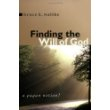
Book Review: Finding the Will of God?: A Pagan Notion? by Bruce K. Waltke

How To Seek His Kingdom and Do God’s Will

Right off the bat I have to say that one of the highlights of my academic career was taking a class from the author of this book on “Proverbs” about a decade ago. I was inspired to read everything Bruce Waltke writes, not only because he is one of the finest Hebrew Scholars and teachers of the Old Testament in the world, but also because he is a humble bible scholar who exudes the fruit of the Spirit as Paul describes it in Galatians 5:22-23. I will never forget his kindness shown to me as I picked his brain over theological and ministry issues I was wrestling with at the time, and how he patiently and wisely counseled me. I will forever be indebted to his wise advise, and believe that his counsel will continue to pay many dividends for others – as much of what he shared with me in that class on Proverbs are principles for the many who will read and apply in his very helpful book on decision making for followers of Jesus.

The Book is simply divided up into two parts. Part one is the shorter of the two parts and consists of chapters on: 1) Is Finding God’s Will a Biblical Idea? 2) How Pagans Divine the Will of God; and 3) God’s Will in the Old Testament. In summary Waltke does an excellent job of demonstrating that much of what passes for “finding” God’s will is sheer laziness and what the Bible condemns as the practice of divination. Waltke writes, “When we seek to ‘find’ God’s will, we are attempting to discover hidden knowledge by supernatural activity. If we are going to find his will on one specific choice, we will have to penetrate the divine mind to get his decision. ‘Finding’ in this sense is really a form of divination.”

Dr. Waltke gives a compelling case for Christians thinking in terms that are more Biblical – instead of trying to find God’s specific will – “Far too many Christians rely on faulty logic to divine the will of God. Their thinking goes like this: ‘God has a plan, and therefore He intends that I find it.’ That is a non sequitur, a conclusion that cannot logically follow the premise. Simply because God has a plan does not mean that He necessarily has any intention of sharing it with you; as a matter of fact the message of Job is in part that the Lord in His sovereignty may allow terrible things to happen to you, and you may never know why.”

Rather humorously (yet on a serious note related to how faith is manifested in a variety of ways for all believers) he continues, “Instructively, the outcomes of faith for the first three heroes of faith celebrated in Hebrews 11 vary considerably. Abel believed God, and he died; Enoch believed God, and he did not die; Noah believed God, and everybody else died! The only thing they all had in common is that they believed God and it pleased Him.”

Practically, Waltke states, “So when I wonder about what job offer to take, I don’t go through a divination process to discover the hidden message of God. Instead I examine how God has called me to live my life, what my motives are, what he has given me a heart for, where I am in my walk with Christ, and what God is saying to me through His Word and His people.”

He carefully evaluates many of the instances of Divine guidance recorded in the Old Testament and then shows what does, and does not carry over into the New Covenant. Which brings us to part two.

In part two Dr. Waltke breaks down how God guides us first through His Word, then through heartfelt desires, followed by the wise counsel of others, through our circumstances, and ultimately why we must rely on sound judgment based on all these previous factors.

Dr. Waltke says there are five primary factors to consider when seeking to be obedient and guided by the Holy Spirit in our decision making process:

1)    Make your decision in light of Scripture (our decision should be affirmed by and never contradict the teaching of the Bible – e.g. – Acts 15; Acts 13:46-47; Malachi 2:16 cf. with Matthew 5:32 & 1 Corinthians 7 with Galatians 2:14).

2)    Make your decision in light of your giftedness (In other words seek to operate in areas of your God-given strengths – e.g. – Acts 6:2-3; Rom. 12:3).

3)    Make your decision according to your ability (“Know who you are. Evaluate your abilities and talents. Don’t try to be what you’re not, because if you do you will live in a constant state of anxiety” – e.g. – Moses in Deuteronomy 34:10-12).

4)    Make your decision according to your circumstances (e.g. – Paul in Acts 16 & 1 Cor. 16:5-9 – he based his decisions on sound judgment in light of the circumstances he was in).

5)    Make your decision according to an Overall Strategy (e.g. – Paul in 2 Cor. 1:15-18, 23-24; 2:1).

The essence of Waltke’s thesis is summarized close to the end of the book where he writes, “He [God] never calls us in the New Testament to ‘seek His will,’ but rather to seek His kingdom and do His will. We ought to stamp out of our vocabulary the nonbiblical and misleading expression ‘finding God’s will.’ Rather than talk about ‘seeking the will of God,’ we ought to speak of following the guidance of God. This is not just semantically different, since He is calling us to draw close to Himself and to live holy lives. God’s will for us is that we be holy; there is no mystery to His will. As for questions about changing jobs, getting married, going to school, and the like, finding answers will require growing close to God [author’s emphasis in italics].”

Overall, I highly recommend this book for its theological and biblical foundations, it’s dismantling of the notion of divining God’s secretive will for us, it’s emphasis on closeness and intimacy with God as a key to His guidance, and for the excellent illustrations, practical applications, and how Dr. Waltke shares how God guides biblical characters and modern followers of Christ today throughout the book.


*Bruce K. Waltke (PhD, Dallas Theological Seminary; PhD, Harvard Divinity School), acknowledged to be one of the outstanding contemporary Old Testament scholars, is professor of Old Testament at Reformed Theological Seminary in Orlando, Florida, and professor emeritus of biblical studies at Regent College in Vancouver. He has authored and coauthored numerous books, commentaries, and articles, and contributed to dictionaries and encyclopedias.