Prayer: The Prelude To Revival by Dr. Roger Nicole

51DcbZQ8BbL._AC_UY436_QL70_.jpg

It is in keeping with Reformed thought that revival should be grounded in prayer, because in prayer we acknowledge God’s sovereignty. God alone is the One who can dispense revival. So, revival is not something that is within the reach of human beings; it is something God alone can provide.

Sometimes people have expressed the attitude they think we ought to have in a motto which goes like this: “You ought to pray like a Calvinist and preach like an Arminian.” That is, pray as if everything depended upon God and preach as if everything depended on you. I would like to suggest a change in this formula which will improve it by fifty percent: “You ought to pray like a Calvinist and preach like a Calvinist.” Do not pray as if everything depends on God. (There is no good reason to have an “as if” in that motto, because things do depend on God. He is the One who sovereignly ordains and blesses.) Then preach like a Calvinist, because there, too, the results depend on God. Do not imagine that either prayer or preaching are activities in which we suddenly take leave of the doctrine of God’s sovereignty.

What Does Prayer Change?

When we consider prayer, there are questions which often are disturbing to the minds of some people. The first question is: “Do you think that you can really change the mind of God? That is, can prayer make God modify His sovereign plan?” There are people who feel that unless you are prepared to say this, there is no great value in prayer. I do not know what the reader’s particular idea on this subject may be, but I would like to say that if you believe you can change the mind of God through prayer, I hope you are using some discretion. If that is the power you have, it is certainly a most dangerous thing. Surely God does not need our counsel in order to set up what is desirable. Surely God, whose knowledge penetrates all minds and hearts, does not need to have us intervene to tell Him what He ought to do. The thought that we are changing the mind of God by our prayers is a terrifying concept.

I will be frank to confess that if I really thought I could change the mind of God by praying, I would abstain. I would have to say, “How can I presume, with the limitations of my own mind and the corruptions of my own heart-how can I presume to interfere in the counsels of the Almighty?” It is almost as if you were to introduce somebody who is utterly ignorant of electronics to a weapons plant in which, by pushing certain buttons, one might precipitate an explosion. You say, “Go ahead and push buttons. Never mind what happens.” Oh, no! There is comfort for the child of God in being assured that our prayers will not change God’s mind. This is not what is involved in prayer, and we are not in danger of precipitating explosions by some rash desire on our part.

But then people say, “If you cannot change God’s mind, what is the point of praying? If prayer does not change things, prayer is worthless.”

Here you have perhaps noticed that I have changed the formula. I did not say,”change the mind of God,” but “change things.” I never said that prayer does not change things. Prayer does change things, but it does not change the mind of God. The reason prayer changes things but does not change God is that He has appointed prayer as an effectual means for accomplishing His own purpose. This effectual means is essential for this accomplishment. When we have a right understanding of the sovereignty of God, we recognize that God has established a plan in which not only the effects but also the causes are ordained. We cannot disconnect the causes from the effects or the effects from the causes.

For example, I lift a book in your sight. Because the book has risen into the air, I am in a position to say, “God has ordained that it should get to this particular place.” He must have ordained it because that is where the book is. But notice, God did not ordain for the book to rise all by itself. He ordained that it should rise at the end of my hand. He ordained that I should have strength in my arm to lift it. He ordained that I should choose this particular book in order to illustrate this particular point. There is a connection between the book’s rising and the subject I wish to develop. All these things are tied up together. If there were no lecture, there would be no point of illustrating the power of second causes. If there were no desire to illustrate the power of second causes, my hand would have remained at my side. If my hand had remained at my side, the book would not have risen. I think we can argue in this way.

God, however, ordained that there should be this lecture, that there should be a desire to show the correlation of causes and effects in His sovereign plan, that this particular illustration should come to my mind, and that I should implement it by the strength that He has given me. One cannot say, “If you hadn’t touched it, it would have risen anyway,” because God did not ordain that it should rise anyway. He ordained that it should rise through my hand.

That is exactly the case with prayer. Prayer is an effectual secondary cause that God has related to the effects involved. Just as the activity of human beings on earth is related to the effects that are produced, just as the book rising is related to the hand lifting, so are the effects of prayer related to the prayer that is offered. So although prayer does not change the mind of God, it does change things. God has appointed change through prayer, even though the way in which the cause is related to the effect is not perfectly clear to us.

The fact that the way this happens is not clear does not give us grounds for denying the relationship. We pray for healing. If God provides healing, we cannot say, “There would have been healing whether I prayed or not; I would have gotten well anyway.” God provided healing in relation to prayer.

We pray for an increase in the knowledge of God and earnestness in His service. If God is pleased to bless our lives in this way, we cannot say, “This would have happened whether I prayed or not.” God provides His blessing in relation to the prayer.

We pray for the salvation of someone we love, someone God placed on our hearts to intercede and plead for. That person is born again by the work of the Holy Spirit. We cannot say, “This would have happened whether I prayed or not.” It is related to our prayers. God, who has appointed the salvation, has also appointed prayer as the means to that salvation. We cannot omit any link in that chain and say that the chain will exist whether the link is there or not.

A final question is: “How can I pray if I do not see how prayer works?” That is not a wise way of handling the matter, since it is God who tells us that prayer is part of His plan for us. It is not necessary that we have an understanding of the ways in which God’s purposes are implemented. God has put this means at our disposal. He encourages us to pray. In 2 Chronicles 7:14 He says, “If My people, who are called by My name, will humble themselves and pray and seek My face and turn from their wicked ways, then will I hear from heaven and will forgive their sin and will heal their land.” To insist that we must have an understanding of how this works is a very unreasonable attitude.

Even in affairs of daily life we do not have this attitude. I am sure you have used a touch-system telephone. Do you understand how it works? Do you have that consummate knowledge of communications to know exactly what goes on when you press those little buttons? Do you know how those numbers are changed into binary code and used to track down the particular telephone you wish to call? Experts may understand this. But I must say, as far as I am concerned, when I am calling, I do not think of any of those things. I just pick up the phone and touch the buttons. I do not worry about how this happens. I am interested only in whom I am going to reach and what I will say.

It is the same with prayer. We do not have to know how it works. It is enough to know that it does work. Prayer is part of God’s sovereign plan and is an effectual means by which we can share with God in the fulfillment of that plan. When we pray, we are cooperating; we are working together with God in the work to which, in His own mercy, He has been pleased to call us.

Since prayer is part of God’s plan, we are not forcing God’s hand at any time by praying. We are not intruding our own will in a way that is disagreeable or uncomfortable to God. We do not need to fear that we are finagling with buttons about which we know nothing, which might bring disaster on ourselves and others. We are praying in line with the great purposes of God. Without prayer there are many things that would be different. It is by virtue of prayer that they are what God has planned them to be.

In Scripture, prayer is presented as a prerequisite for revival. It is a prelude. If you study the history of revivals, you will find that they are best documented not only in their effects but also in their preparatory prayer periods. This was true of the revival in New England under the ministry of Jonathan Edwards. It was true in the revival in Wales under Evan Roberts. It was true of the revivals attending the ministry of Charles Grandison Finney in the United States. Revival that is worthwhile is bathed in prayer. When He wants a revival, God is pleased to lead His people· to pray that revival might be forthcoming.

(1) The prayer that leads to revival must be believing prayer. This is the point the apostle James makes in his Epistle (James 1:5-7, “If any of you lacks wisdom, let him ask God, who gives generously to all without reproach, and it will be given him. But let him ask in faith, with no doubting, for the one who doubts is like a wave of the sea that is driven and tossed by the wind. For that person must not suppose that he will receive anything from the Lord”). When we come to the Lord we must come with the expectation that He is able and will do great things. If we come vacillating, wondering whether God is able to accomplish anything, whether the situation is really so desperate that even God cannot touch it, then obviously our prayer is lacking in fervency. We are just going through the motions, as it were. We are not really praying.

God wants us to come to Him in faith. Indeed, prayer is an exercise of faith in which we are steeped in the supreme greatness and ability of God, and have our eyes fixed on the majesty of His purpose and the superlative quality of His resources. Nothing is impossible for our God. Our God is able to move mountains. He is able to transform hearts, break resistances, reach out even underneath the conscious lives of people to transform them. So we should never say, “Here is somebody beyond God’s reach. The hardness of heart is so great, the wickedness of life is so manifest, that this cannot possibly be a candidate for acceptance into the kingdom of God. We might as well give up on this person.”

In spite of the fact that the early church had seen God do many great things, it undoubtedly thought this way about Paul. The early Christians thought. “This one is lost. There is no way God will bring Paul into the kingdom. He is a persecutor, an enemy, an opponent. There is no hope for him.” When Paul tried to join the church, they gave him the cold shoulder (Acts 9:26). They said, “We can’t trust this man. He will be spying on us and then use his knowledge to annihilate the church.” It took Barnabas to reason, “God saved me; maybe He can save Paul, too.” He went close to Paul and befriended him at great danger to himself. He made sure that Paul truly was a child of God. Then he brought him to the apostles (Acts 9:27). We, too, might think, “What less likely a candidate for election than Paul?” Yet God was pleased to reach him and change him. God made him the great apostle of the Gentiles, the benefit of whose ministry is still with us to this day. We need believing prayer, prayer that does not concentrate on the obstacles. We must not say, “He is hopeless,” or “Our country has gone to the dogs,” or “Our church has gone liberal.” Prayer must recognize that God is all-powerful and can do wonders. If anyone prays and does not believe, that one is unstable (James 1:6-7). He cannot expect anything. But if we come with faith, accepting the reality of the power of God, we will experience that effective prayer which changes things in keeping with God’s purpose.

(2) The second characteristic of the prayer that brings revival is submission. It must be submissive prayer. That is, we must be prepared to submit our own ideas, aims, and ambitions to the sovereign God. We must not intrude with our outlook, pressing it on God, as it were. Rather, we must come with a desire to understand God’s outlook and subordinate our desires to what He has ordained.

Some people say, ”That kind of prayer is not really effective. If you start by saying, ‘If it be Your will … ‘you are attempting to give God an out in case He is not going to do it. You are not believing.” That is not the point at all. We do not need to give God an out. God does not need an out. What we are doing when we say, “If it is Your will … ” is articulating the principle that we are not telling God what should be done but are actually identifying with His purpose and asking to work together with Him in fulfillment of that purpose.

We have a moving example of this kind of prayer on the lips of our Lord Himself. In Gethsemane He said, “If it is possible . . . Yet not as I will, but as You will” (Matt. 26:39). This is mysterious to us, for it indicates that at that point of His human consciousness, our Lord was left in suspense as to what the will of God was. “Not as I will, but as You will.” That is the condition of effective prayer-that we should be willing to accept what God has ordained in order that His purpose might be accomplished.

Sometimes it is hard for us to pray that way, because our will is so strong, and our understanding of what God should want is so clear that we do not even feel like saying, “Your will be done.” When we pray for revival, especially, we say, “We do not need to introduce conditional clauses. The very fact that God leads us to pray is an indication that He wills that some form of revival should come.” Still, the very essence of a consecrated prayer is that it should be in keeping with the will of God.

This is what is meant by praying in the name of Jesus. To pray in the name of Christ is not simply to have a little addition to your prayer, in which you use those words almost as a magical formula to insure success. To pray in the name of Christ is to identify yourself with Christ, with His aims, His purposes, His ministry. It is to say, “I am with Jesus, I am for Him and His purposes.” The one who prays in the name of Jesus does not need to fear disappointments, because unity with the purpose of God protects him from that. There is a submission to God which acknowledges with gratitude the way in which God is pleased to answer.

This prayer must be God-centered. It must relate itself to God’s glory rather than to our private desires. Of course, God permits us to present our private desires as well. There is nothing wrong in asking God to give us good weather for mountain climbing if good weather is important for it. But here again, it would be wise to say, “If it be Your will,” because there are also people, such as farmers, who need rain. Since the desire of the mountaineer may conflict with the desire of the farmer, it would be good for both of them to be submitted to whatever God is pleased to send. God permits us to present our desires, but we must have a supreme desire, especially in the prayer for revival, to see the glory of God manifested.

Some of the most effective prayers in Scripture do this. They are even argumentative at this point.Think of the prayer of Abraham when he prayed for Sodom and Gomorrah. He even argued with God, saying, “Is it right for You to destroy those cities if fifty … forty-five … forty: .. thirty… twenty… ten righteous people live there?” (Gen. 18:24-33). God blessed that prayer. So we can say that if Lot and his family were saved, it was because of the faithful intercession of Abraham, who did not relent, even though, in the end, the number he cited was not sufficiently small to warrant ID salvation of the wicked cities.

Think of the prayer of Moses who argued, “If You destroy Your people, what will happen to Your name? Your glory is at stake. Don’t do it” (Ex.32:11-13).God blessed that glorious intercessory prayer of Moses, who disregarded his personal ambitions in order to identify with the purposes of God.

A prayer for revival should be centered, not in the desire that we should have more money for our church (because there will be more people coming), not that there should be a new Vitality in our denomination (as compared with other denominations), nor that any other of our human desires and ambitions should be satisfied, but rather that the glory of God might be manifested. We should pray that His name might be exalted, that His kingdom might be made evident, that His glorious reign might be established even more widely in the hearts of men and women.

(3) Our prayer must be persistent. The Scripture emphasizes that we ought not easily be discouraged in prayer (Luke 18:1). If we do not receive at once the answer we are looking for, we ought not to reason, “Well, God just doesn’t want me to have that; I guess I’ll give up.” There are people who have been wonderfully persistent in prayer-for husbands or wives, children or parents-and God has blessed their persistence. Do not give up too soon. Do not conclude too rapidly that God is uninterested. So long as you have a burden on your heart, keep praying.

In the church in which I am a member there is a man who has moved me profoundly in this respect. It is a wonderful church now. We have a preacher who is a wonderful expositor of the Word of God. I never attend a service there at which my soul is not blessed. But some 40 years ago this church was exceedingly small-there were about 10 or 12 people on a Sunday morning-and it was passing through a veritable desert from the point of view of biblical ministry. I understand that at one time one of the pastors was actually a practicing Christian Scientist.

Throughout this bleak period this man, Deacon George Day, was praying. He did not say, “This church gives me nothing. There is nothing to be expected here, nothing to be hoped. I am going to find another fellowship that will be more fruitful for me.” No! This man said, “This is my church. I am not going to give up. Since I do not get any spiritual nurture from the sermons, I will get it from the Bible directly. I will attend some other meetings in other places, but I am still going to be in my own church on Sunday morning, and I am going to pray for this ministry.” Deacon Day kept praying for that church for years. Now he is an old man, more than 80. There is hardly any strength left in his body. When he can come to church he uses an earphone, because he is very deaf. But there is joy in his heart which moves one to tears. Whenever I see Deacon Day, I see the power of God to answer persistent prayer. I see a warrior who did not allow himself to be defeated, but who stayed at his post, pleading for his church and asking God’s blessing upon it.

(4) Finally, the prayer that leads to revival must be consistent prayer, in which we are prepared also to do what we can to achieve what we are asking. If we pray for the conversion of our loved ones, somehow we must give out witness, too. We must witness by life and words, when they can be effectually presented. If we pray for revival, we must be prepared to open our hearts so that God may revive them. We ought never to take prayer as a means of avoiding the actions God challenges us to.

My father had an experience which I would like to relate to illustrate this point. As a young minister he had been an assistant in a large church which had only two pastors in 50 years, one ministry of 25 years, followed by another of 25 years. After having been in that church, my father became pastor of a very small church in a little village in southern France. Prayer meeting was on Wednesday evening, and there was usually a very limited attendance. One Wednesday there was a frightful storm. The wind was blowing. Rain was falling in buckets. My father thought, “There is not going to be anybody at the prayer meeting tonight. If I go, I will only drench myself. I might as well stay home.” My father was very interested in Hebrew and was studying the song of Deborah in the book of Judges. The temptation was great to stay in his cozy home and deal with that.

As my father was wrestling with this, there came to his memory a sermon given at the time of his ordination. It was on the passage which says, “Go out and make them come in” (Luke 14:23). Most of the time we think about the expression “make them come in.” But on this occasion, the preacher had focused on the phrase, “Go out.” He had said, ” ‘Go out’ means to reach out for people; it means, do not stay in the coziness of your study. You must go out and reach out.” While the gales were blowing and the wind was hitting the windows, my father remembered that and concluded, “Well, I guess God wants me to go out. I do not expect many people. I do not expect very much of anything at this prayer meeting. But if God has told me to go out, I will go out and speak at the prayer meeting;” This was the meeting in which revival started in his church!

Prayer is the prelude to revival. Do you want revival? Then be prepared to pray. “If My people, who are called by My name, will humble themselves and pray . . . then will I hear from heaven and will forgive their sins and will heal their land.”

*This article was originally an address given at the 1982 Philadelphia Conference on Reformed Theology, Philadelphia, PA. and is adapted from Dr. Roger R. Nicole, “Prayer: The Prelude to Revival” in Reformation and Revival, A Quarterly Journal for Church Leadership (Volume 1, No. 3, Summer, 1992).

About the Author: Dr. Roger R. Nicole (1915-2010) was a native Swiss Reformed Baptist theologian and taught for many years at Gordon-Conwell Theological Seminary as well as the founder of the Evangelical Theological Society.

Book Review on David S. Steele’s “A Godward Gaze: The Holy Pursuit of John Calvin”

416HWmRy7xL._AC_UY436_QL70_.jpg

An Exhortation to God-Centered Living

By David P. Craig

It was such a joy and delight to read this new offering from my good friend David S. Steele. I highly recommend this book four five primary reasons:

  1. It’s brevity. It’s only 68 pages long. However, upon starting and completing the book in about an hour and a half – I was refreshed, renewed and rejuvenated in my passion for our Awesome God.
  2. It’s content. It’s a tour de force theologically. In it Steele brilliantly weaves the authority of the Scriptures, the gospel, and personal sanctification in a way that my heart, mind, and affections were stirred to continue to be faithful in my calling as a Christian Pastor.
  3. It’s snapshot of John Calvin. John Calvin – may be one of the least understood theologians in Church History; and yet perhaps the one theologian-pastor that should be most admired, studied, and emulated. Steele’s brief snippets from the life and pen of Calvin – will spur on the desire of those who read this book to go to the primary sources for more of Calvin – and that’s a good thing!
  4. It’s biblically saturated. Steele bleeds bibline. Every page “oosiates” Scripture. There is an authoritative ring of truth throughout the book. Therefore, one senses the presence of and the counsel of the Holy Spirit throughout the book.
  5. It’s convicting. The subject of the entire book is based on Isaiah 66:1-2. The themes of repentance, contrition, humility, and a love for God and His Word are hammered home throughout. As convicting as I was by the Spirit, I was also exhorted by the same Holy Spirit to be renewed in my joy in Christ and His gospel through repentance and faith in following the practical steps articulated in this excellent book to help me get back on track in my God-centered gaze.

*Which Comes First – Repentance or Revival?

Unknown.jpeg

If we all repent as Christians, will this bring revival to our land? We might also ask, “Will revival bring repentance to our land?” Which comes first? Will our repentance bring down revival upon us or will revival bring repentance upon us? These are interesting questions to ponder. Actually, we should always be repenting of our sins as Christians. This is a part of our daily lives. God always calls us to repentance. If we all live better Christian lives, will this then cause revival to break out? We could also ask that if God sends revival will it not cause all Christians to live better Christian lives? If we think that by our repenting that God will send revival, we may have the cart before the horse.

What is revival anyway? Iain Murray in his book Pentecost – Today? gives this definition for revival: “A revival is an outpouring of the Holy Spirit, brought about by the intercession of Christ, resulting in a new degree of life in the churches and a widespread movement of grace among the unconverted. It is an extraordinary communication of the Spirit of God, a superabundance of the Spirit’s operations, an enlargement of his manifest power.” (p. 23-24) By this definition, it seems that revival has it’s origin in God and that the result of sending revival is that repentance breaks out among both believers and unbelievers. It also indicates that revival is extraordinary and results in widespread evidence of its presence.

Alexander Moody Stuart in 1840 wrote, “While the Holy Ghost is always present in his church, there are times when he draws manifestly nearer and puts forth a greater energy of power. Every believer is conscious in his own soul of changes corresponding to this; for the Spirit is always with him, abiding in him, and yet there are times of unusual communion and far more than ordinary life. And as the Spirit draws near to an individual, so does he draw near to a land, and then religion is revived, spiritual life is revived, spiritual understanding, spiritual worship, spiritual repentance, spiritual obedience.” (quoted by Iain Murray in Pentecost-Today? p. 24-25) When true revival comes, spiritual repentance comes. It comes as a result of the revival not as a prerequisite. It is a fruit of the revival and comes because God has sent the revival. Now, we are talking about repentance on a large scale by a multitude of people resulting from a pouring out of God’s Spirit on that people.

In old times, revivals were called awakenings. They came from God and were sent to wake up a people to their spiritual condition bringing about great conviction of sin and widespread repentance. So, we have the First Great Awakening and the Second Great Awakening in America. They did not come because the Christians had all repented and brought on the Awakening. On the contrary, the Awakenings came as a surprise and brought repentance with it. Iain Murray writes, “The sheer unexpectedness of such events bears equally against the view that revivals are conditioned by the preceding actions and efforts of Christians. Those who believe that a certain line of conduct or prayer must secure revival have history against them. Revivals come unheralded. They are, as Edwards witnessed in Northampton in 1735, ‘the surprising work of God’. Of the Great Awakening of 1740 it is said that ‘it broke upon the slumbering churches like a thunderbolt rushing out of a clear sky’.” (p. 22-23)

What about 2 Chronicles 7:14? This verse says, “If my people, who are called by my name, will humble themselves and pray and seek my face and turn from their wicked ways, then will I hear from heaven and will forgive their sin and will heal their land.” This has been a very popular verse for the last forty years or so which has been commonly put forth as a formula for revival in the land. If all the evangelical Christians in America do what this verse says, will revival come? So far it hasn’t happened. 

First, all the evangelical Christians in the land have not repented and secondly revival has not yet come. This promise was given to the people of Israel concerning their nation. It was an Old Testament promise and if the people did what God asked them to do, He would surely heal their land. 

Today, not only do evangelical Christians need to repent of their sins but also the people of the whole nation. Such a wide scale repentance will come only when God pours out His Spirit in great convicting power on the land. Such a wide scale repentance has happened in times past such as in the First and Second Great Awakenings and again in the great revival of 1858-59. However, the people of the nation had not repented first before these revivals came. On the contrary, the revival itself caused people to repent. When such a large scale repentance happens, the land will be healed. Iain Murray makes this point concerning the above verse, “But if our actions do not determine revival what are we to make of such promises as the one given to Solomon in 2 Chronicles 7:14?…The first thing to say is surely that what is being promised is not revival, for the promise has to be understood, in the first instance, in relation to the time when it was given. It is of Old Testament Israel and her land of which healing is there spoken. The promise cannot be of revival, for revival has to do with the abundant giving of the Holy Spirit and that giving, as Old Testament Scripture made clear, lay in the future.” (p. 13, Pentecost-Today?) Well, this may be the case. However, this verse certainly describes what happens when revival comes. When God pours out His Spirit in great power, it humbles a people and causes them to repent and turn back to God. What we need to pray for is that what 2 Chronicles 7:14 says will happen in our land and that not only the Christians but the whole nation will repent and turn back to God.

A better Old Testament passage concerning revival can be found in Pslam 85:6 which says, “Will you not revive us again, that your people may rejoice in you?” I like the translation in the old Geneva Bible which says, “Wilt thou not turn again and quicken us that thy people may rejoice in thee?” This verse places the origin of revival in God and not man. It is God who must quicken us that we may be changed to a people that rejoice in the Lord. If God is the one who sends revival, then it is to Him that we must plead. We must ask Him to send revival on the land. We must cast ourselves on His mercy and ask that He send what we do not deserve. We deserve judgment as a nation for our sins, but we must intercede with God to have mercy upon us and to turn us around by His mighty power. The Geneva Bible translates Psalm 85:4 like this – “Turn us, O God of our salvation, and release thine anger toward us.” We need God’s mercy toward us in this hour that He might turn us around that we might be a people who will acknowledge Him and rejoice in Him.

What then should we do to bring on revival to the nation? We need to humble ourselves and realize that we can do nothing on our own. We need to realize that only God can send a revival to the land and we must humbly plead with Him in prayer to send such a revival in our day. We must be like the watchmen in Isaiah 62:6-7 where it says, “I have posted watchmen on your walls, O Jerusalem; they will never be silent day or night. You who call on the Lord, give yourselves no rest, and give him no rest till he establishes Jerusalem and makes her the praise of the earth.”

We should be watchmen for our nation and call on the Lord day and night to send revival to our land and make her to be the praise of the earth. When revival comes we can be a beacon of light to the whole world. This was the hope of the early Christians who came to America such as John Winthrop who wrote, “For we must consider that we shall be as a city upon a hill, the eyes of all people are upon us.” (p. 700, America’s God and Country) William Bradford wrote of his hope for the nation and the influence of the early Pilgrims when he said, “Thus out of small beginning greater things have been produced by His hand that made all things of nothing, and gives being to all things that are; and, as one small candle may light a thousand, so the light here kindled hath shone unto many, yea in some sort to our whole nation; let the glorious name of Jehovah have all the praise.” ( p. 67, America’s God and Country) Today, we need to call upon that same Jehovah who set a light in this nation so many years ago to rekindle that light and bring revival to this land. May we not rest until that light once more arises in our nation.

_____________

Works Cited

All Scripture quotations are from the New International Version unless indicated otherwise.

1599 Geneva Bible. Tolle Lege Press, White Hall, VIrginia,2006.

Federer, William J. America’s God and Country. Fame Publishing, Inc. 1996.

Murray, Iain H. Pentecost – Today?. The Banner of Truth Trust, Carlisle, Pennsylvania, 1998.

About Alex Dodson

Alex Dodson serves as president of Watchmen Radio Ministries International and as a staff evangelist. He has been in the gospel ministry for over thirty years. He was ordained in 1974 and has served as both a pastor and evangelist. He is a graduate of Reformed Theological Seminary and is presently a member of International Ministerial Fellowship. He has also done postgraduate studies at the School of World Mission at Fuller Theological Seminary. He and his wife Susan live in Portland, Oregon in the beautiful Northwest.

*Article by Alex Dodson adapted from ONEPLACE.COM


Ten Key Ideas from C.S. Lewis’s Works

41e9FVEBHIL._SX351_BO1,204,203,200_.jpg

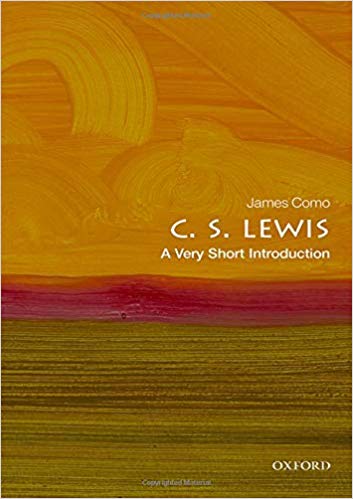
(Adapted from C.S. Lewis: A Very Short Introduction by James Como, Box 2)

These are central to Lewis’s  thinking: many of his arguments are based upon them and they were central to his life. Omitted are orthodox Christian ideas (e.g., the incarnation), as well as political ones (e.g., the danger of fetishizing equality: ‘I’m as good as you’):

  1. Joy (Sehnsucht): is a longing conveyed by some image or memory or event that does not originate in any of those but comes through them. It is from a place beyond the senses and kindles a hope that there is Heaven, that Heaven is our home, and that we will return there. It is painful because nothing in the world can satisfy it, no matter how hard we may try to do so; it is sweetly painful because we can intuit its origin and our destiny.
  2. Contemplation and Enjoyment (or At/Along), or knowing from the outside and from the inside, where a phenomenon (such as religious belief or being in love) may seem very different. We need both.
  3. Chronological snobbery: is the uncritical acceptance of our own intellectual climate, as though past beliefs or practices are useless simply because they came before us. A corollary is that our belief in progress is misplaced: we must ask what it is we are ‘progressing’ towards.
  4. Subjectivism is poisonous: because it leads to an exaltation of the Self, a form of idolatry, especially when applied to morality, as when something is deemed good because it feels good.
  5. Reason is objectively valid: and, though one’s logic may be flawed in any given case, is a sign of our non-material nature: atoms moving randomly in our brains is not thought. It is the ‘organ of truth’.
  6. Morality is objective: outside of any personal preference or perception and accessible to Reason. To be subjective respecting this Natural Law (the Tao) is to submit to those who have the power, especially the technological power, to enforce their preferences, leading to ‘the abolition of man’. It merits obedience.
  7. Imagination: especially when realized as metaphor, symbol, and myth, is the ‘organ of meaning’, antecedent to truth. It helps extend language without distorting or destroying it (‘verbicide’).
  8. Quiddity: is the ‘thingness’ of a thing, be it food, weather, or a person. We must pay attention to things as they are, name them appropriately, and respond ordinately to them.
  9. Personhood: is not at all the same as ‘personality’, the expression of which ought not to be one’s goal; rather we should apply the Law of Inattention, allowing us to pay attention to all sorts of signs outside of the Self, especially to other people. What am I feeling? matters less than What is that? After all, ‘feelings come and go, mostly they go’.
  10. Ultimate Reality: is not the plane of existence we occupy, which is but a ‘shadowland’, a sort of training camp for the realist thing. That solid place sends signs (e.g., Joy) and, because it is so much richer than our shadowland, must clothe those signs in words and objects that already have ordinary meaning to us (like erotic imagery symbolizing religious devotion). That is how sacramentalism works: a higher reality is transposed into a more limited key having ‘notes’ we recognize as ordinary.

About The Author: James T. Como holds a Ph.D. in Language, Literature, and Rhetoric from Columbia University and is now Professor Emeritus of Rhetoric and Public Communication at York College (CUNY). A founding member of the New York C. S. Lewis Society (1969), Dr. Como’s books include Branches to Heaven: The Geniuses of C. S. Lewis, a study of Lewis as a rhetorician, and Remembering C. S. Lewis. These, along with his many articles on Lewis in journals including The Wilson Quarterly and The New Criterion, and on-air commentary for five biographical documentaries, have established Dr. Como as one of the most highly-regarded Lewis scholars in the world. The Ten Key Ideas above are from his outstanding Introduction to C.S. Lewis in the series of books “A Very Short Introduction” published by Oxford University Press.

*Ask People How You Can Pray for Them

Unknown.jpeg

It’s a short, easily remembered question. You can use it with longtime friends or with people you’ve just met. It doesn’t seem too personal or pushy for those who’d rather give you a shallow answer just now, and yet it often leads to a full hearing of the gospel. You can ask it of people nearly every time you speak with them and it doesn’t get old. Just simply and sincerely ask, “How can I pray for you?” You’ll be surprised at the results.

Over and over I’ve seen one simple question open people’s hearts to hear the gospel. Until I asked this question, they showed no interest in spiritual matters. But then after six words—only seventeen letters in English—I’ve seen people suddenly begin to weep and their resistance fall. The question is, “How can I pray for you?”

This may not seem like such a powerful question to you. Perhaps that’s because you hear it, or a question like it, quite often. Your Bible study group or your church prayer meeting asks for prayer requests every week. You may even see requests for prayer solicited each Sunday morning in the worship bulletin.

But realize that most people in the world never hear such a question. And while many churchgoers know that a minister is willing to pray for them, in some traditions they’re expected to make a special donation to the church for such services. So when you ask, “How can I pray for you?” and it’s obvious that you’re asking out of love alone, it can touch a person more deeply than you imagine.

This question is similar to one that Jesus Himself sometimes asked: “What do you want me to do for you?” (Matthew 20:32). For what we are really asking is, “What do you want me to ask Jesus to do for you?” And by means of this question, we can show the love of Christ to people and open hearts previously closed to the gospel.

I had tried to talk about the things of God many times to a business-hardened, retired executive who lived next door. He was a pro at hiding his feelings and keeping conversations at a superficial level. But the day we stood between our homes and I asked, “How can I pray for you?” his eyes filled with tears as hisBut the day we stood between our homes and I asked, “How can I pray for you?” his eyes filled with tears as his façade of self-sufficiency melted. For the first time in seven years he let me speak with him about Jesus.

It’s a short, easily remembered question. You can use it with longtime friends or with people you’ve just met. It doesn’t seem too personal or pushy for those who’d rather give you a shallow answer just now, and yet it often leads to a full hearing of the gospel. You can ask it of people nearly every time you speak with them and it doesn’t get old. Just simply and sincerely ask, “How can I pray for you?” You’ll be surprised at the results.

*Excerpted from Donald S. Whitney, Simplify Your Spiritual Life (Colorado Springs, Colo.: NavPress, 2003). Copyright © 2003, Donald S. Whitney. All rights reserved. Read more sample chapters from this book at http://www.BiblicalSpirituality.org


David Mathis on “What Does the Bible Say About Baptism? Six Texts We Cannot Ignore”

ocean-baptism-9174396512

Martin Luther, the great Protestant Reformer, said, “There is on earth no greater comfort than baptism.” Luther was famous for fighting against sin and Satan by preaching to himself, “I am baptized! I am baptized!”

Luther was not claiming to be saved simply because he was baptized. Rather, he rightly perceived the wonder and glory of baptism. He saw the visible, external act of baptism as an objective reminder of the invisible, internal reality of new birth and the faith through which we are saved on the basis of Christ alone. Luther was, after all, the great champion of justification by faith — as well as one captivated by the power and grace of baptism.

Yet, as a baptist, I can’t help but observe that something was missing in Luther’s reminder to himself about his baptism. Luther was what we call a paedobaptist (or infant-baptist). He himself was baptized as an infant, not in response to a profession of his own faith, but because of the faith of his parents — the faith they prayed would be manifest someday in their newborn son. Luther himself supported and practiced infant-baptism not only of adult converts, but also of the infants of Christian parents.

How much more powerful would recalling his baptism be if he could actually recall it? What if his baptism would have been an expression of saving faith already plainly present in his soul, rather than just a hope and prayer of his parents?

Repent, Believe, Be Baptized

Luther is not alone in leaving something to be desired in his vision of baptism. God has embedded his sacraments with more than meets the eye. For all of us, the “visible words” of the ordinances teem with depths of wonder and power into which we grow and mature. Christians of all stripes can anticipate shades and textures of meaning in Christian baptism we have yet to realize.

Before I lay out six of the most important New Testament texts to consider, let me acknowledge at the outset that godly evangelical pastors, scholars, churches, and seminaries stand on both sides of this question. The issues are many, and the arguments often complex, and I have great respect for many dear infant-baptist brothers and sisters.

Nevertheless, we credobaptists (or believer-baptists) — who baptize, typically by immersion, only those who give a credible profession of faith — have a deeper case than only what’s on the surface of the biblical text. For instance, as you often hear from believer-baptists, if you go looking in the New Testament for an example of an infant being baptized, you won’t find one. We don’t overlook the obvious, but we do go further and deeper.

(1) Mark 1:5 

All the country of Judea and all Jerusalem were going out to [John] and were being baptized by him in the river Jordan, confessing their sins.

Without exception in the New Testament, baptism is tied to repentance and faith in the baptizee. John’s baptism, the precursor to Christian baptism, was explicitly, repeatedly, and irreducibly tied to repentance. “They were baptized by [John] in the river Jordan, confessing their sins (Matthew 3:6). John said, “I baptize you with water for repentance(Matthew 3:11). In the Gospels and Acts, John’s baptism is summarized as “a baptism of repentance for the forgiveness of sins” (Mark 1:4; Luke 3:3; also Acts 13:24; 19:4). 

Then, in telling the story of the early church, Acts repeatedly ties Christian baptism to repentance and faith:

  • Repent and be baptized every one of you in the name of Jesus Christ for the forgiveness of your sins” (Acts 2:38).
  • “Those who received his word were baptized” (Acts 2:41).
  • “When they believed Philip as he preached good news about the kingdom of God and the name of Jesus Christ, they were baptized, both men and women. Even Simon himself believed, and after being baptized he continued with Philip” (Acts 8:12–13).

(2) Acts 18:8 

Crispus, the ruler of the synagogue, believed in the Lord, together with his entire household. And many of the Corinthians hearing Paul believed and were baptized.

Infant-baptists often point to the “household baptisms” mentioned in Acts 16:33, 18:8, and 1 Corinthians 1:16 and argue that any infants in these households would have been baptized. However, as John Piper writes,

Nowhere in Scripture is there any instance of an infant’s being baptized. The “household baptisms” (mentioned in Acts 16:15, 33 and 1 Corinthians 1:16) are exceptions to this only if one assumes that the household included infants. But, in fact, Luke steers us away from this assumption, for example in the case of the Philippian jailer (Acts 16:32), by saying that Paul first “spoke the word of the Lord . . . to all who were in [the jailer’s] house,” and then baptized them. (Brothers, We Are Not Professionals: A Plea to Pastors for Radical Ministry,  156–157)

In Acts 18:8, Luke clarifies immediately, in the ensuing sentence, that simply being in the newly Christian household was not enough for baptism. Belief in Jesus was prerequisite: “Crispus, the ruler of the synagogue, believed in the Lord, together with his entire household. And many of the Corinthians hearing Paul believed and were baptized” (Acts 18:8).

The believer-baptist argument goes deeper than such instances in the Gospels and Acts, but we often begin here. And not just in the early-church narratives, which can be thorny in terms of prescription, but also in the Epistles. Four anchor texts in the apostolic letters bind baptism and faith with a clarity and simplicity that is unmatched in the infant-baptist argument.

(3) Galatians 3:26–27 

In Christ Jesus you are all sons of God, through faith. For as many of you as were baptized into Christ have put on Christ.

Paul assumes that those who have been baptized and those who have saving faith are the same group (with no sanctioned outliers). Faith and baptism belong together in the church’s practice and in the individual Christian’s experience. Those who evidence saving faith should be baptized. And those who have been baptized have given expression to saving faith.

No allowance or provision is made here, or elsewhere, for some who would have been baptized apart from a profession of faith, in anticipation of faith to come.

(4) Colossians 2:11–12

In [Christ] you were circumcised with a circumcision made without hands, by putting off the body of the flesh, by the circumcision of Christ, having been buried with him in baptism, in which you were also raised with him through faith in the powerful working of God, who raised him from the dead.

The mention of circumcision is important because one of the main arguments for infant-baptists is that as circumcision was administered to every male born into God’s first-covenant people, so baptism should be applied to every child (male and female) born into believing families of God’s new-covenant people, the church. However, this is not what Colossians 2, or any other New Testament text, says about circumcision.

Here “the circumcision of Christ” refers to his being cut off, at the cross, for our sins, and the “circumcision made without hands,” which Paul applies to every believer, is spiritual circumcision, that is, new birth (as commentator Doug Moo notes, “the connections . . . are between spiritual circumcision and baptism,” Colossians, 269, n18).

Of these new-covenant people who are born again, circumcised in heart, Paul expects the new-covenant inaugural rite of water baptism to have been applied. As we’ll explore more below, the new-covenant recipients of baptism, as the counterpart to old-covenant circumcision, are those who have new birth (not mere natural birth), a spiritual circumcision which does not happen apart from faith. Colossians 2:11–12, like Galatians 3:26–27, presumes active and professed faith in all baptized, not just their parents.

(5) Romans 6:3–4 

Do you not know that all of us who have been baptized into Christ Jesus were baptized into his death? We were buried therefore with him by baptism into death, in order that, just as Christ was raised from the dead by the glory of the Father, we too might walk in newness of life.

As in Colossians 2, the baptized are those who have been buried into Jesus’s death and raised to new life in him. Not only does the image suggest immersion, rather than sprinkling or pouring, but more importantly, “newness of life” testifies to new birth and its effects, not mere first birth.

An “old self,” into which we were born (Ephesians 2:1–3), has been crucified (Romans 6:6) or put off (Ephesians 4:22; Colossians 3:9). And Paul says such is true of “all of us,” all the baptized. We all now “walk in newness of life,” not in the oldness of our first birth. The infant-baptist argument that presumes faith in the newborn does not do justice to the litany of New Testament texts about conversion, putting off an old man, and walking in newness of life.

(6) 1 Peter 3:21

Baptism . . . now saves you, not as a removal of dirt from the body but as an appeal to God for a good conscience, through the resurrection of Jesus Christ.

This text is often avoided, by believer-baptists and infant-baptists alike, because it raises the question about what it meant by “baptism . . . now saves you.” However, if we understand the verse aright, we both clear up that confusion and see further confirmation that baptism is nothing less than an objective expression of subjective repentance and faith (new birth) already present (not simply hoped for) in the baptizee.

Peter anticipates we will be surprised to hear “baptism . . . saves you,” so he immediately explains. He does not mean that the external act of baptism, “as a removal of dirt from the body,” has salvific power on its own. Rather, the instrument connecting the believer to Christ for salvation is the invisible condition of the heart (faith) that is being externally expressed in baptism.

Baptism demonstrates objectively and externally the subjective and internal “appeal to God for a good conscience.” Baptism saves not as an outward act but through the inward faith it expresses. Peter’s statement hangs together on baptism expressing a saving, spiritually newborn condition of heart in the believer.

Plausible or Biblical?

Beyond the instances in the narratives, and the didactic words of the apostles tying baptism to faith, we also make our argument on theological and covenantal grounds. I’ll leave that for the next article, but there is something fitting about not moving on to those arguments too quickly. Essential to the credobaptist position is doing justice to the demonstrable teaching of the New Testament.

The best infant-baptist voices typically provide admirably plausible, reasonable, and consistent arguments. The key issue for us as Christians, however, should not be whether the argument is plausible and consistent, but whether it is taught by the actual text of Scripture.

While we must move on, in due course, to the more theological and covenantal arguments, we dare not pass too quickly over the plain, stubborn, obvious readings of the New Testaments texts. Whatever your tradition, a good argument for the nature and application of Christian baptism cannot ignore or minimize what the Bible actually says, including these six important texts.

*David Mathis (@davidcmathis) is executive editor for desiringGod.org and pastor at Cities Church in Minneapolis/St. Paul. He is a husband, father of four, and author of Habits of Grace: Enjoying Jesus through the Spiritual Disciplines. This article was adapted from David Mathis’ article entitled What Does the Bible Say About Baptism? Six Texts We Cannot Ignore, desiringgod.org (May 27, 2019).  

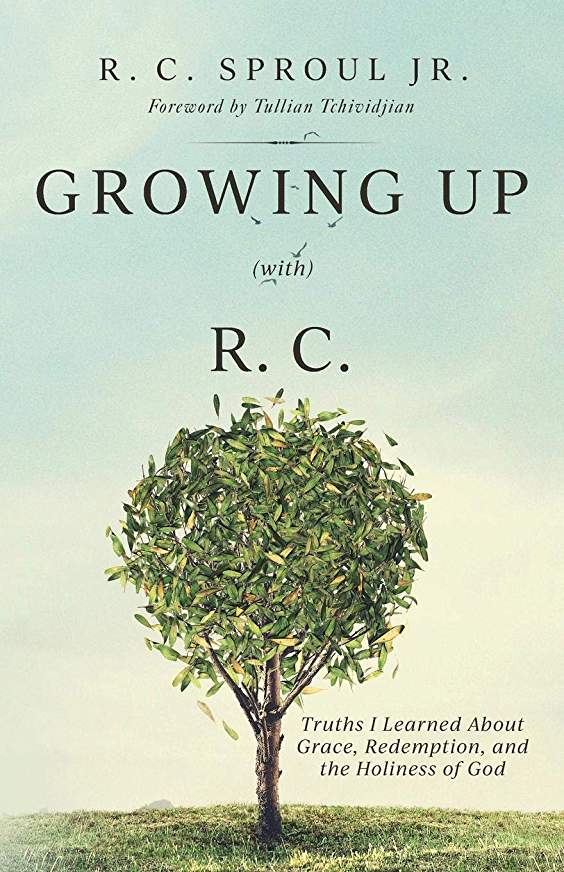
Book Review on R.C. Sproul Jr.’s – Growing Up With R.C. – Truths I Learned About Grace, Redemption, and The Holiness of God

71MhPDz6cHL._AC_UL872_QL65_.jpg

Reviewed By David P. Craig

I have to admit that I read this book with great reluctance. I was hoping it would not be another Franky Schaeffer angrily vomiting on his famous parents type of book. I was pleasantly surprised to read a book that endeared me even more to R.C. Sproul Sr., and made me appreciate the honesty and respect of R.C. Jr., for his wise and loving Heavenly and Earthly Father’s.

I am grateful that R.C. Jr. has written this book for three reasons: (1) It made me understand more of where he is coming from – I especially appreciated his transparency and humility in admitting his own struggles with the flesh; (2) I appreciated his insights and gleanings of grace and wisdom from his dad and mom over his lifetime; (3) I am grateful for his Christ-centered focus and glorying in the grace of God in the Gospel.

I just want to say “thank you” to R.C. Jr. for sharing your father with us. Thank you for owning up to your own struggles and modeling repentance and faith in Jesus alone. Thank you, Lisa (R.C. Jr.s, wife) for praying for and unconditionally loving your husband. And thank You R.C. Sr. and Vesta for your passion for Jesus and for the grace and mercy you have given your children. 

I heartily commend this book as a respectful tribute to R.C. Sr., and an even greater tribute to our Gracious and Merciful Lord and Savior – Jesus Christ.

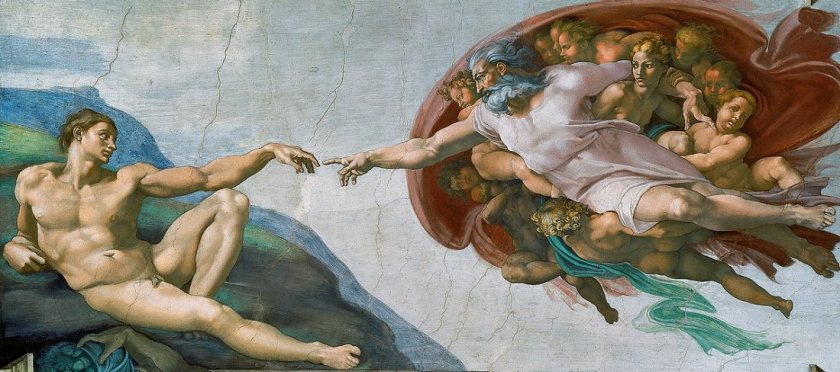
14 CLASSIC ARGUMENTS FOR THE EXISTENCE OF GOD

the-creation-of-adam.jpg

(1) The Argument from Motion There is motion (locomotion) in the universe. Something cannot move itself; an external agent or force is required. An infinite regress of forces is meaningless. Hence, there must be a being who is the ultimate source of all motion while not being moved itself. This being is God, the unmoved mover (*a posteriori) ~ Thomas Aquinas
(2) The Cosmological Argument Every effect has a cause. There must be an infinite regress of finite causes. Therefore, there must be an uncaused cause or necessary being. This being is God. (*a posteriori) ~ Thomas Aquinas
(3)The Argument from Possibility and Necessity Things exist in a network of relationships to other things. They can exist only within this network. Therefore, each is a dependent thing. However, an infinite regress of dependencies is contradictory. There must, then, be a being who is absolutely independent, not contingent on anything else. This being is God. (*a posteriori) ~ Thomas Aquinas
(4) The Argument from Perfection It can be observed from the universe that there is a pyramid of beings (e.g., from insects to humans), in an ever-increasing degree of perfection. There must be a final being who is absolutely perfect, the source of all perfection. This being is God. (*a posteriori) ~ Thomas Aquinas
(5) The Teleological Argument – Also Called The Argument from Design There is an observable order or design in the world that cannot be attributed to the object itself (e.g., inanimate objects). This observable order argues for an intelligent being who established this order. This being is God. (*a posteriori) ~ Thomas Aquinas
(6) The Moral or Anthropological Argument All people possess a moral impulse or categorical imperative. Since this morality is not always rewarded in this life, there must be some basis or reason for moral behavior that is beyond this life. This implies the existence of immortality, ultimate judgment, and a God who establishes and supports morality by rewarding good and punishing evil (*a posteriori) ~ Immanuel Kant, C.S. Lewis
(7) The Argument That God Is An Innate Idea All normal human beings are born with the idea of God implanted in the mind , though it is suppressed in unrighteousness (Romans 1:18). As the child grows into adulthood, this idea becomes clearer. Critical experience in the course of life may make this idea come alive.  (**a priori) ~ Augustine, John Calvin, Charles Hodge
(8) The Argument from Mysticism Mankind is able to have a direct mystical experience with God resulting in an ecstatic experience. This union with God is so uniquely overpowering that it self-validates the existence of God. (**a priori) ~ Evelyn Underhill
(9) The Argument from Truth All people believe that something is true. If God is the God of truth and the true God, then God is Truth. This Truth (capital T) is the context for all other truth. Therefore, the existence of truth implies the existence of Truth, which implies the existence of God. (**a priori) 
(10) The Ontological Argument Major premise: Mankind has an idea of an infinite and perfect being. Minor premise: Existence is a necessary part of perfection.

Conclusion: An infinite and perfect being exists, since the very concept of perfection requires existence.  (**a priori) ~ Anselm of Canterbury

(11) The Argument From Finitude Humans are aware of their finitude. What makes them aware of this? God is continually impressing humans with God’s infinitude. Therefore the sense of finitude itself is proof that an infinite being, God, exists. (**a priori) ~ Aristotle
(12) The Argument  From Blessed-ness Humans are restless, with a vague longing for blessedness until they rest in God. This longing was given by God. The presence of this longing is an indirect proof of God’s existence. (**a priori) ~ Augustine, Thomas Aquinas
(13) The Argument From Perception Human beings are able to perceive (sense) things. This cannot be caused either by physical events (perception as a mental act) or by human beings themselves. Therefore, the existence of perception implies Gods existence as the only rational explanation for human perceptions. (**a priori) ~ Bishop George Berkeley
(14) The Existential Argument  God proves Himself via the kerygma, which is His declaration of love, forgiveness, and justification of mankind. Those who decide for the kerygma then know God exists. No other evidence is needed. God is not so much proven as He is known, and this occurs existentially, from experiences in life. (**a priori) ~ Auguste Sabatier

*a posteriori = knowledge, thought, statements or arguments that logically follow from, arises after, or are dependent on, sense experience.

**a priori = knowledge, thought, statements or arguments that are logically prior to, or arising from a concept or principle that precedes empirical verification, or that occurs independently of experience.

Private Prayer by Dr. Joel Nederhood

Unknown.jpeg

Morning by morning, O Lord, You hear my voice; morning by morning I lay my requests before You and wait in expectation (Ps. 5:3).

Those who develop the habit of private prayer follow Jesus in a very special way. The Bible says, “Very early in the morning, while it was still dark, Jesus got up, left the house, and went off to a solitary place, where He prayed” (Mark 1:35).

This was Jesus’ habit. Luke tells us that, the night before He called His followers and chose 12 disciples, Jesus “went out to a mountainside to pray, and spent the night praying to God” (6:12).

The beautiful thing about being a Christian is that those who follow Christ can follow Him to the private place of prayer and can talk there with their Father in heaven. In this they may imitate their Savior in an extremely significant manner.

But what about this private prayer? I have a feeling that many Christians don’t know very much about it. Even those of us who know the secret of private prayer remember times when we called ourselves Christ’s followers but didn’t often follow Him to a private place to pray.

Those who do not know the joys and the power of private prayer must long for a deeper, more private relationship with God. Many of you who are reading this right now know something about Christianity, but you know virtually nothing about time spent alone in conversation with God. I don’t mean that you don’t pray. Of course you do. But your prayers are extremely brief. Once you have cried out in your need; you don’t know what else to say. The simple fact is that you spend very, very little time in actual prayer to God.

Don’t be satisfied with that. A little booklet called The Kneeling Christian says that prayerlessness is the secret of your failure. Often we talk about the secret of success, but what is the secret of the failure of gloomy, despondent,”unsuccessful” Christians? They do not speak freely about their Savior. They do not turn over their burdens to Him. They sometimes fall into gross sin. In their hearts, they harbor envy and anger and greed and all sorts of emotions that have no place in the lives of those who claim to follow Christ. Not one of us can claim that he or she has not experienced failure as a Christian. What is the secret of our failure? Our prayerlessness.

So we must follow Christ in prayer. We must look back across the centuries and see Him rise early in the morning and make His way to the solitary place where He prayed. We must follow Him to our own private place and there learn the reality of private prayer. It is a discipline, but, like every discipline, it yields freedom. Prayer is beautiful, and, if we are willing to let it, it can transform our lives. In this article, I wish to address whether we pray or not, where we pray, when we pray, what we pray for, how we pray (i.e., whether audibly or silently), what helps we need for our prayer, and what we should expect from private prayer. I write especially for those who have already confessed their sins and fled to Christ for salvation. I know that there are always readers who have not yet surrendered themselves to God’s saving grace—they have not asked Jesus to be the Lord of their lives. I hope, however, that, if you are not yet a Christian, you will continue to read about the blessings of private prayer. It could be that God will work in you and give you a holy jealousy so that you will not be able to rest until you enjoy private prayer yourself. I assure you that Jesus Christ wants nothing more than to have you come to Him in faith so that you can learn the glory of this holy exercise.

There are some people who believe in Christ but who don’t pray very much, because they tend to feel that it is really not very necessary to pray. If you ask them how they feel about prayer, they say something like this: “After all, God is in charge of everything anyway, and He will do what He wants, so why bother praying?” Then they say that God knows their needs anyway, that there’s no use telling Him about things He already knows. They pray occasionally, but they don’t arrange their lives so that they can have a time of private prayer.

I understand their feelings, and I am very thankful that the Bible contradicts them. In Luke 11, we have the record of Jesus’ disciples asking Him to teach them to pray. He does teach them—He gives them what we now know as the Lord’s Prayer. He also does more. He indicates that they should use the avenue of prayer, that they should not hesitate to approach God and make their needs known to Him, because God does hear and answer prayer.

Jesus told His disciples several brief parables—special stories—in connection with prayer in Luke 11. (Why not look them up and read them?) They all can be summed up in this statement: “Ask and it will be given to you; seek and you will find; knock and the door will be opened to you. For everyone who asks receives; he who seeks finds; and to him who knocks, the door will be opened” (Luke 11:9-10).

So let there be no question about whether we should pray. God is greater than our logic, and when it comes to the things of the Spirit, we must not be logical and biblical. Jesus not only teaches us to pray, but also encourages us in the strongest possible language to practice prayer. Those who do not arrange their lives so that they can enjoy the advantages of private prayer miss out on the full wonder of what it means to be a Christian.

Surely we should pray. About this there is no doubt whatsoever. But where? In a sense, location makes no difference. There is a form of continual prayer, which I cannot get into now, that Christians should be involved in all the time. That kind of prayer obviously can and should be done everywhere. But when it comes to private prayer, the kind by which we follow Christ to the solitary place, it is good to have a special place to pray.

In Matthew 6:6 Jesus tells us, “When you pray, go into your room, close the door, and pray to your Father, who is unseen.” Each of us should have a special room to go to in to pray. I realize that many of us just don’t have a room that we can use, because our apartments are too crowded. Some of you who are reading this little article are living in barracks or even in cell blocks. Privacy is very precious, and, unfortunately, many people these days have a hard time finding any. If you are in a situation in which privacy is scarce, you will have to use your ingenuity to try to find some somewhere. Maybe you’ll have to go out into the garage, or storeroom, or somewhere in the basement.

If you have a room available to you, that is the ideal place to go. And I strongly suggest that you have your private prayer in the same place as much as possible. It should be a place where you cannot be observed or heard, and where you cannot hear all the sounds of what is going on elsewhere.

Privacy is not just incidental in this kind of prayer. Private prayer must be between yourself and God. You should not discuss your prayers a great deal with others. Prayer is powerful when it is not affected in any way by the judgments of others.

Now, finding a private place can be related to your time of prayer, for some places are often more private at one time than at another. When should you pray? Well, there is a 

sense in which people pray all the time—they try to live in obedience to God and to think about His will for their lives, so what they do and say is a form of prayer. But private prayer—the kind of prayer Jesus clearly practiced and recommended that you practice—when should you have such prayer?

In answering this question, you must make allowances for the fact that people differ with respect to when they are most alert. We should remember that there are morning people and night people. It would be unrealistic to suggest that night people have their private prayers in the morning. One very fine Christian I know says very frankly that his faith is very imperfect before 9 a.m., especially before he has his first cup of coffee.

Even so, there is reason to believe that, when the Bible talks about private prayer, it considers that in many cases there will be morning prayers. Jesus’ solitary prayers were early morning prayers and prayers that went on through the night. Apparently, the important thing about the matter of time is that private prayer works best in a time of stillness. And it is not necessary to limit such praying only to one time of day. Psalm 55:17 says, “Evening, morning and noon I cry out in distress, and He hears my voice.”

There are, however, several advantages that come with early morning. First, the stillness of the time before dawn helps in private prayer. Second, and this is even more important, our own minds are still uncluttered by the events of the day; Then, too, when we rise early to call upon the Lord, it is often the easiest time to find a private place.

In connection with this, I also want to mention that private prayer should be of some substantial duration. Jesus spirit extended periods of time in private prayer. If you are new at praying in private, you may wish to start with five or ten minutes, but, before long, fifteen minutes will probably become a minimum for you. You will look forward to days when you don’t have to go to work, holidays and the like, when you can spend more time praying. Yes, there should be a time set aside that is approached carefully and arranged deliberately so that you do not pray quickly and then rush away as soon as possible. You may need some kind of clock that helps you make sure you get up on time and that signals when you should conclude your prayers (because there are other things that must be done). 

Many of you will have to arrange your lives so that you can get up on time to have your private prayers. This may mean that you will have to go to bed earlier in the evening, but all this is part of the discipline of prayer, a discipline that ultimately yields liberation.

How should you conduct your private prayers? Should they be audible or silent? It is possible to pray to God silently. When you have good control, your thoughts can march through your mind as efficiently as if you were speaking out loud. But you often do not have good control of your mind, do you? People who pray silently in the early morning are very apt to find themselves becoming drowsy and confused; when they are through, they may wonder what they have actually prayed about. In general, then, your time of private prayer is a time to formulate your prayers audibly. It is important, as well, to arrange your thoughts and to speak sensibly and coherently to the Lord. Many times, combinations of silent and audible prayer may work out well. The important thing is that you maintain your attention and do not think that you are praying when you are actually in the process of falling asleep.

Therefore, it is also important that you have proper posture in prayer. When it comes to prayer posture, no one has found an improvement on kneeling. For many, this is surely the posture of choice in private prayer. It would be a mistake to try to pray while lounging in one’s favorite easy chair. That is quite counterproductive.

Now the important question—what should you actually pray for, or pray about, during your time of private prayer? I cannot begin to answer this question in such a brief article, for there are so many subjects to pray about that will come up in your private prayers over a period of time, especially as you become more and more accustomed to having this special time with God each day.

You must remember, though, that the primary idea in prayer is asking. When Jesus’ disciples asked Him to teach them to pray, He taught them a prayer that was made up of requests. In Luke 11, we read that He encourages them to pray by saying that those who ask for things will receive them. In private prayer, you can lay all your needs before

the Lord. It is a time to pray for others, as we all are obligated to do. Often God brings difficult circumstances into our lives or the lives of those who are very precious to us so that we will learn to lean on Him in prayer. This is what Psalm 5:3 expresses when it says, “In the morning I lay my requests before You and wait in expectation.”

In your private prayers you will find that, along with your requests, you will also naturally offer praise and thanksgiving to God for all His mercies to you. One cannot experience the joy of private prayer without being moved to praise God for His goodness. You may find yourself calling out, in the words of Psalm 145, “I will exalt You, my God the King; I will praise Your name for ever and ever…. Great is the Lord and most worthy of praise; His greatness no one can fathom” (vv. 1,3).

There will also be your confession of sin. The person who meets God in private prayer grows to see himself or herself as the chief of sinners. There is nothing like private prayer for humbling people. The sins of others recede into the background, and pray-ers see themselves for what they really are. It is a time to bare your heart before the Lord and to ask Him once again—you always end up asking for something, you see—to cleanse you and to fill you with His Spirit.

In addition to all of this, you will need helps in order to get the full benefit of private prayer. You will need the Bible. Often when praising God, it is best to use the words He gives us in His Scripture. You should have it open before you as you pray, and, over a period of time, you will learn to look to special places for the words you want—to tell God how much you love Him and how much you want to magnify His name. In the Bible, too, are words of confession—Psalm 51 tells us about our own unworthiness. You may want to write passages on cards and use them as you pray. Over a period of time,· those words will be burned into your memory. Surely you need God’s Word right there with you in your solitary place.

lt is also good to have a prayer list—to make sure that you remember all you should remember when you come to God. As you pray more and more, you will realize that you have a great responsibility to pray for others and that you can do this best by having some kind of list. There will be in”stances in Which you should pray for speCific things for special people. And as you pray for the salvation of certain people whom God has put on your heart, you may find it helpful to have a special card for each person.

When you pray for someone who has cancer, for example, you should not simply ask God to bless that person, but pray that He will destroy cancer cells in that person’s body. You should pray as specifically as you can for people. You owe it to them; Those who belong to Christ have this high priestly responsibility.

The blessings that accompany private prayer are too numerous to list. l will conclude with a brief consideration of a few of the more obvious ones.

There is the joy of anticipation—you are always able to look forward to meeting God in that private place, and you know that there you will again be able to cast your burdens on Him. There is also the peace that passes all understanding. When you bring to God your deepest needs and the needs of others, you can feel the calm that comes from knowing that He is in control, and that you can trust Him. There are so many situations in life over which we have no control, but we can pray about them. 

Another blessing is this: as you learn the discipline of private prayer, you will know that one of the reasons these situations have happened is that God is heeding your request. Private prayer is an overwhelming privilege, and it is there for anyone who humbles himself before the Lord and learns to pray.

In our private places, we are in the presence of our loving Father, and we realize that He is preparing us for eternity- when we will be able to talk to God face to face.

Our continual prayer needs to be, “Lord, teach us to pray.” We have much to learn. We need to overcome our tendencies to put all sorts of things ahead of our need to pray. We need God’s help in arranging our lives so that we really do pray. And when we come to the private place, we need to be taught the wonder and glory of talking with such an awesome God!

About the author: Dr. Joel Nederhood, a minister of the Christian Reformed Church, serves as radio minister of The Back to God Hour,a weekly broadcast of his denomination. This article is an edited version of a radio address given by Dr. Nederhood in January 1986. Also available at biblical studies.org.uk/pdf/ref-rev/01-3/1-3_nedorhood.pdf. The article in full can be seen in Reformation and Revival: A Quarterly Journal for Church Leadership: Volume 1, No.3, Summer 1992.

*C.S. Lewis and 8 Reasons for Believing in Objective Morality

Unknown.jpeg

The cornerstone of the moral argument is the existence of an objective moral standard. If there really is a standard of right and wrong that holds true regardless of our opinions and emotions, then the moral argument has the ability to convince. However, apart from the existence of such an objective standard, moral arguments for God’s existence (and Christian theism) quickly lose their persuasive power and morality as a whole falls to the realm of subjective preference. Although I could say a fair amount about what the world would be like if morality really was a matter of preference (consider The Purge), the purpose of this article is to provide reasons for believing in objective morality (or “moral realism,” as philosophers call it).

Because of his continued focus on the objective nature of morality throughout his writings, and due to his unique ability to communicate and defend this concept in a clear and compelling manner, I will rely heavily on the thought of C. S. Lewis below. As I’ve read through a number of Lewis’s books, I’ve identified eight arguments he raises in favor of objective morality. Below is my attempt to list these eight arguments and offer a few thoughts of my own concerning each.

1)    Quarreling between two or more individuals. [1] When quarreling occurs, individuals assume there is an objective standard of right and wrong, of which each person is aware and one has broken. Why quarrel if no objective standard exists? 

By definition, quarreling (or arguing) involves trying to show another person that he is in the wrong. And as Lewis indicates, there is no point in trying to do that unless there is some sort of agreement as to what right and wrong actually are, just like there is no sense in saying a football player has committed a foul if there is no agreement about the rules of football. [2]

2)    It’s obvious that an objective moral standard exists. [3] Throughout history, mankind has generally agreed that “the human idea of decent behavior [is] obvious to everyone.” [4] For example, it’s obvious (or self-evident) that torturing a child for fun is morally reprehensible. 

As the father of two children, a daughter who is five and a son who is three, I have noticed that even my young children recognize that certain things are obviously right or wrong. For example, while watching a show like PJ Masks, my children can easily point out the good characters as well as the bad ones – even without my help. In short, the overwhelming obviousness that certain acts are clearly right or wrong indicates that an objective moral standard exists.

3)    Mistreatment. [5] One might say he does not believe in objective morality, however, the moment he is mistreated he will react as if such a standard exists. When one denies the existence of an objective standard of behavior, the moment he is mistreated, “he will be complaining ‘It’s not fair!’ before you can say Jack Robinson.” [6] 

Sean McDowell relays an example of this when he shares a story involving J. P. Moreland taking the stereo of a University of Vermont student who denied the existence of objective morality in favor of moral relativism. As Moreland was sharing the gospel with the university student, the student responded by saying he (Moreland) couldn’t force his views on others because “everything is relative.” Following this claim, in an effort to reveal what the student really believed about moral issues, Moreland picked up the student’s stereo from his dorm room and began to walk down the hallway, when the student suddenly shouted, “Hey, what are you doing? You can’t do that!” [7] 

Again, one might deny the existence of an objective standard of behavior through his words or actions, but he will always reveal what he really believes through his reactions when mistreated. (Note: Here at moralapologetics.com, we do not recommend you go around and mistreat others, as that wouldn’t be a moral way to do apologetics. See what I did there? Rather, we are simply bringing up the mistreatment issue as a way of exposing a deep flaw within moral relativism.)

4)    Measuring value systems. [8] When an individual states that one value system is better than another, or attempts to replace a particular value system with a better one, he assumes there is an objective standard of judgment. This objective standard of judgment, which is different from either value system, helps one conclude that one value system conforms more closely to the moral standard than another. Without some sort of objective measuring stick for value systems, there is no way to conclude that civilized morality, where humans treat one another with dignity and respect, is better than savage morality, where humans brutally murder others, even within their own tribe at times, for various reasons. 

To illustrate this point, Lewis says, “The reason why your idea of New York can be truer or less true than mine is that New York is a real place, existing quite apart from what either of us thinks. If when each of us said ‘New York’ each means merely ‘The town I am imagining in my own head,’ how could one of us have truer ideas than the other? There would be no question of truth or falsehood at all.” [9] In the same way, if there is no objective moral standard, then there is no sense in saying that any one value system has ever been morally good or morally bad, or morally superior or inferior to other value systems. 

5)    Attempting to improve morally. [10] Certainly, countless individuals attempt to improve themselves morally on a daily basis. No sane person wakes up and declares, “My goal is to become more immoral today!” [11] If there is no absolute standard of good which exists, then talk of moral improvement is nonsensical and actual moral progress is impossible. If no ultimate standard of right and wrong exists, then one might change his actions, but he can never improve his morality.

If there is hope of moral improvement, then there must be some sort of absolute standard of good that exists above and outside the process of improvement. In other words, there must be a target for humans to aim their moral efforts at and also a ruler by which to measure moral progress. Without an objective moral standard of behavior, then “[t]here is no sense in talking of ‘becoming better’ if better means simply ‘what we are becoming’ – it is like congratulating yourself on reaching your destination and defining destination as ‘the place you have reached.’” [12]  

6)    Reasoning over moral issues. [13] When men reason over moral issues, it is assumed there is an objective standard of right and wrong. If there is no objective standard, then reasoning over moral issues is on the same level as one arguing with his friends about the best flavor of ice cream at the local parlor (“I prefer this” and “I don’t like that”). In short, a world where morality is a matter of preference makes it impossible to have meaningful conversations over issues like adultery, sexuality, abortion, immigration, drugs, bullying, stealing, and so on.

7)    Feeling a sense of obligation over moral matters. [14] The words “ought” and “ought not” imply the existence of an objective moral law that mankind recognizes and feels obligated to follow. Virtually all humans would agree that one ought to try to save the life of a drowning child and that one ought not kill innocent people for sheer entertainment. It is also perfectly intelligible to believe that humans are morally obligated to possess (or acquire) traits such as compassion, mercifulness, generosity, and courage. [15]

8)    Making excuses for not behaving appropriately. [16] If one does not believe in an objective standard of behavior, then why should he become anxious to make excuses for how he behaved in a given circumstance? Why doesn’t he just go on with his life without defending himself? After all, a man doesn’t have to defend himself if there is no standard for him to fall short of or altogether break. Lewis maintains, “The truth is, we believe in decency so much – we feel the Rule of Law pressing on us so – that we cannot bear to face the fact that we are breaking it, and consequently we try to shift the responsibility.” [17] 

Although the eight reasons provided above do not cover all of the reasons for believing in objective morality, it is a starting point nonetheless. If any of the reasons above for believing in objective morality are valid, then the moral argument for God’s existence (and Christian theism) has the ability to get off the ground. In fact, if there are any good reasons (in this article or beyond it) for believing in an objective moral standard, then I think God’s existence becomes the best possible explanation for morality since such a standard at the least requires a transcendent, good, and personal source – which sounds a lot like the God of Christian theism.

        FOOTNOTES

[1] C. S. Lewis, Mere Christianity (New York, NY: HarperCollins, 2001), 3.

[2] Ibid., 4.

[3] Ibid., 5.

[4] Ibid. In the appendix section of The Abolition of Man, Lewis provides a list that illustrates the points of agreement amongst various civilizations throughout history. See C. S. Lewis, The Abolition of Man (New York, NY: HarperCollins, 2001), 83-101.

[5] Ibid., 6.

[6] Ibid.

[7] Sean McDowell, Ethix: Being Bold in a Whatever World (Nashville, TN: B&H Books, 2006), 45-46.

[8] C. S. Lewis, The Abolition of Man (New York, NY: HarperCollins, 2001), 43, 73. Also see Lewis, Mere Christianity, 13.

[9] Lewis, Mere Christianity, 13-14.

[10] C. S. Lewis, “Evil and God,” in God in the Dock, ed. Walter Hooper (Grand Rapids, MI: Wm. B. Eerdmans, 2014), 3-4.

[11] Even if someone’s goal is to become more immoral, he still needs an objective standard to measure the level of his badness.

[12] Ibid.

[13] C. S. Lewis, Miracles (New York, NY: HarperCollins, 2001), 54.

[14] C. S. Lewis, The Problem of Pain (New York, NY: HarperCollins, 2001), 10.

[15] C. Stephen Evans, God and Moral Obligation (New York, NY: Oxford University Press), 2-3.

[16] Lewis, Mere Christianity, 8.

[17] Ibid.

*About the Author: Stephen S. Jordan currently serves as a high school Bible teacher at Liberty Christian Academy. He is also a Bible teacher, curriculum developer, and curriculum editor at Liberty University Online Academy, as well as a PhD student at Liberty University. He and his wife, along with their two children and German shepherd, reside in Goode, Virginia. This article first appeared on January 18, 2019 at moral apologetics.com