*Reading The Bible For Personal Application by David Powlison

Powlison-David.jpg

It is a marvel how personally the Bible applies. The words pointedly address the concerns of long-ago people in faraway places, facing specific problems, many of which no longer exist. They had no difficulty seeing the application. Much of what they read was personal application to actual situations they were facing. But nothing in the Bible was written directly to you or specifically about what you face. We are reading someone else’s mail. Yet the Bible repeatedly affirms that these words are also written for us: “Whatever was written in former days was written for our instruction” (Rom. 15:4; cf. Deut. 29:29; 1 Cor. 10:11; 2 Tim . 3:15 –17). Application today discovers ways in which the Spirit reapplies Scripture in a timely fashion.

Furthermore, the Bible is primarily about God, not you. The essential subject matter is the triune Redeemer Lord, culminating in Jesus Christ. When Jesus “opened their minds to understand the Scriptures” (Luke 24:45), he showed how everything written—creation, promises, commands, history, sacrificial system, psalms, proverbs— reveals him. We are reading someone else’s biography. Yet that very story demonstrates how he includes us within his story. Jesus is the Word of God applied, all-wisdom embodied. As his disciples, we learn to similarly apply the Bible, growing up into his image. Application today experiences how the Spirit “rescripts” our lives by teaching us who God is and what he is doing.

“Personal application” proves wise when you reckon with these marvels. The Bible was written to others—but speaks to you. The Bible is about God—but draws you in. Your challenge is always to reapply Scripture afresh, because God’s purpose is always to rescript your life. How can you expand your wisdom in personal application? The following four ways are suggested.

1. Consolidate What You Have Already Learned

Assuming that you have listened well to some parts of the Bible, consider these personal questions. What chunk of Scripture has made the most difference in your life? What verse or passage have you turned to most frequently? What makes these exact words frequently and immediately relevant? Your answer will likely embody four foundational truths about how to read the Bible for wise application.

First, this passage becomes your own because you listen. You remember what God says. He is saying this to you. You need these words. This promise, revelation, or command must be true. You must act on this call to faith and love. When you forget, you drift, stray, and flounder. When you remember and put it to work, bright truth rearranges your life. The foundation of application is always attentive listening to what God says.

Second, the passage and your life become fused. It is not simply a passage in the Bible. A specific word from God connects to some pointed struggle inside you and around you. These inner and outer troubles express your experience of the dual evil that plagues every human heart: sin and confusion from within; trouble and beguilement from without (1 Kings 8:37–39; Eccles. 9:3). But something God says invades your darkness with his light. He meets your actual need with his actual mercies. Your life and God’s words meet. Application depends on honesty about where you need help. Your kind of trouble is everywhere in the Bible.

Third, your appropriation of this passage reveals how God himself does the applying. He meets you before you meet him. The passage arrested you. God arranged your struggle with sin and suffering so that you would need this exact help. Without God’s initiative (“I will write it on their hearts,” Jer. 31:33) you would never make the connection. The Spirit chose to rewrite your inner script, pouring God’s love into your heart, inviting you to live in a new reality. He awakens your sense of need, gives you ears to hear, and freely gives necessary wisdom. Application is a gift, because wisdom is a gift.

Fourth, the application of beloved passages is usually quite straightforward. God states something in general terms. You insert your relevant particulars. For example:

“Even though I walk through the valley of the shadow of death, I will fear no evil, for you are with me” (Ps. 23:4). What troubles are you facing? Who is with you?

“All we like sheep have gone astray; we have turned— every one—to his own way; and the Lord has laid on him the iniquity of us all” (Isa. 53:6). What is your particular way of straying? How does the Lamb of God connect with your situation?

“Do not be anxious about anything, but in everything by prayer and supplication with thanksgiving let your requests be made known to God” (Phil. 4:6). With what are you obsessed? What promises anchor your plea for help (Phil. 4:5, 7–9)?

Such words speak to common human experiences. A passage becomes personal when your details participate in what is said. The gap across centuries and between cultures seems almost to disappear. Your God is a very present help in trouble—this trouble. Application occurs in specifics.

2. Look for the Directly Applicable Passages

How do you widen your scope of application? Keep your eye out for straightforward passages. Typically they generalize or summarize in some manner, inviting personal appropriation. Consider the core promises of God, the joys and sorrows of many psalms, the moral divide in many proverbs, the call of many commands, the summary comment that interprets a story. As examples of the first, Exodus 34:6–7; Numbers 6:24–26; and Deuteronomy 31:6 state foundational promises that are repeatedly and variously applied throughout the rest of Scripture. Pay attention to how subsequent scriptures specifically reapply these statements, and to how the entire Bible illustrates them. Make such promises part of your repertoire of well pondered truth. They are important for a reason. Get a feel for how these words come to a point in Jesus Christ and can rescript every life, including yours.

Consider how generalization occurs. In narratives, details make the story come to life. But psalms and proverbs adopt the opposite strategy. They intentionally flatten out 

specific references, so anyone can identify. David was troubled when he wrote Psalm 25—his emotions are clearly felt. But he left his own story at the door: “For your name’s sake, O Lord, pardon my guilt, for it is great. . . . Consider my affliction and my trouble, and forgive all my sins” (Ps. 25:11, 18). He gives no details. We are given a template flexible enough to embrace any one of us. As you reapply, your sins and sufferings make Psalm 25 come to life as it leads you to mercy.

In matters of obedience, the Bible often proclaims a general truth without mentioning any of the multitude of possible applications. When Jesus says, “You cannot serve God and money” (Luke 16:13), he leaves you to puzzle out the forms of money-worship particular to your personality and your culture. In such cases, the Bible speaks in large categories, addressing many different experiences, circumstances, and actions. Sorting out what it specifically means is far from being mechanical and automatic, but the application process follows a rather direct line.

If you have a favorite Bible passage, it is likely one of these parts of Scripture whose application is relatively direct. But our experience of immediate relevance can skew our expectations for how the rest of God’s revelation applies to our lives.

3. Recognize the Sorts of Passages where Personal Application Is Less Direct

Here is the core dilemma. Most of the Bible does not speak directly and personally to you. How do you “apply” the stories in Genesis? What about genealogies and census data? Leviticus? The life stories of Esther, Job, Samson, or Paul? The distribution of land and villages in Joshua? The history of Israel’s decline detailed through 1 and 2 Kings? The prophetic woes scorching Moab, Philistia, Egypt, and Babylon, fulfilled so long ago? The ruminations of Ecclesiastes? The Gospel stories showing Jesus in action? The New Testament’s frequent preoccupation with Jew-Gentile relations? The apocalyptic images in the Revelation?

The Bible’s stories, histories, and prophecies—even many of the commands, teachings, promises, and prayers—take thoughtful work in order to reapply with current relevance. If you receive them directly—as if they speak directly to you, about you, with your issues in view—you will misunderstand and misapply Scripture. For example, the angel’s command to Joseph, “take the child and his mother and flee to Egypt” (Matt. 2:13), is not a command to anyone today to buy a ticket to Egypt! Those who attempt to take the entire Bible as if it directly applies today end up distorting the Bible. It becomes an omni-relevant magic book teeming with private messages and meanings. God does not intend that his words function that way.

These passages do apply. But most of the Bible applies differently from the passages tilted toward immediate relevance. What you read applies by extension and analogy, not directly. Less sizzle, but quietly significant. In one sense, such passages apply exactly because they are not about you. Understood rightly, such passages give a changed perspective. They locate you on a bigger stage. They teach you to notice God and other people in their own right. They call you to understand yourself within a story—many stories—bigger than your personal his- tory and immediate concerns. They locate you within a community far wider than your immediate network of relationships. And they remind you that you are always in God’s presence, under his eye, and part of his program.

4. Tackle the Application of Less-direct Passages

Application is a lifelong process, seeking to expand and deepen wisdom. At the simplest level, simply read through the Bible in its larger chunks. The cumulative acquisition of wisdom is hard to quantify. A sense of what truth means and how truth works is overheard as well as heard. But also wrestle to work out the implications of specific passages.

Consider two examples. The first presents an extreme challenge to personal application: a genealogy or census. These are directly irrelevant to your life. Your name is not on the list. The reasons for the list disappeared long ago. You gain nothing by knowing that “Koz fathered Anub, Zobebah, and the clans of Aharhel” (1 Chron. 4:8). But when you learn to listen rightly, such lists intend many good things—and each list has a somewhat different purpose. Among the things taught are these:

  • The Lord writes down names in his book of life.
  • Families and communities matter to him.
  • God is faithful to his promises through long history.
  • He enlists his people as troops in the redemptive reconquest of a world gone bad.
  • All the promises of God find their “Yes” in Jesus Christ (2 Cor. 1:20).

You “apply” a list of ancient names and numbers by extension, not directly. Your love for God grows surer and more intelligent when you ponder the kind of thing this is, rather than getting lost in the blizzard of names or numbers.

The second example presents a mid-level challenge. Psalms are often among the most directly relevant parts of Scripture. But what do you do when Psalm 21:1 says, “O Lord, in your strength the king rejoices”? The psalm is not talking about you, and it is not you talking—not directly. A train of connected truths apply this psalm to you, leading you out of yourself.

First, David lived and wrote these words, but Jesus Christ most fully lived—is now living, and will finally fulfill—this entire psalm. He is the greatest human king singing this song of deliverance; and he is also the divine Lord whose power delivers. We know from the perspective of NT fulfillment that this psalm is overtly by and about Jesus, not about any particular individual.

Second, you participate in the triumph of your King. You are caught up in all that the psalm describes, because you are in this Christ. So pay attention to his experience, because he includes you.

Third, your participation arises not as a solo individual but in company with countless brothers and sisters. You most directly apply this psalm by joining with fellow believers in a chorus of heartfelt gladness: “O Lord, we will sing and praise your power” (Ps. 21:13). The king’s opening joy in God’s power has become his people’s closing joy.

Finally, figuratively, you are also kingly in Christ. In this sense, Jesus’ experience of deliverance (the entire psalm) does apply to your life. Having walked through the psalm as an expression of the exultant triumph of Christ Jesus himself, you may now make it your experience too. You could even adapt Psalm 21 into the first person, insert- ing “I/me/my” in place of “the king” and “he/him/his.” It would be blasphemous to do that at first. It is fully proper and your exceeding joy to do this in the end. This is a song in which all heaven will join. As you grasp that your brothers and sisters share this same goal, you will love them and serve their joy more consistently.

God reveals himself and his purposes throughout Scripture. Wise application always starts there.

Conclusion

You started by identifying one passage that speaks persistently, directly, and relevantly into your life. You have seen how both the direct and the indirect passages intend to change you. Learning to wisely apply the harder, less relevant passages has a surprising benefit. Your whole Bible “applies personally.” This Lord is your God; this history is your history; these people are your people; this Savior has brought you in to participate in who he is and what he does. Venture out into the remotest regions of Scripture, seeking to know and love your God better.

Hopefully, you better understand why your most reliable passage so changed your life. Ponder those familiar words once more. You will notice that they also lift you out of self-preoccupation, out of the double evil of sin and misery. God brought his gracious care to you through that passage, and rearranged your life. You love him who first loved you, so you love his other children. And that is how the whole Bible, and each of its parts, applies personally.

*Article above by David Powlison. Source of original article is the ESV Study Bible.

iMonk interviews David Powlison on “Reading the Bible For Personal Application.”

Michael Spencer, who blogs at Internet Monk, has interviewed Dr. David Powlison about his contribution to the ESV Study Bible. Dr. Powlison contributed the article “Reading the Bible for Personal Application,” which is included in this pdf. I have posted Spencer’s introduction to Powlison and interview below:

David Powlison, M.Div., Ph.D. was a counselor and faculty member at CCEF and is the editor of the Journal of Biblical Counseling. He held a Ph.D. in History and Science of Medicine from the University of Pennsylvania, as well as a Master of Divinity degree from Westminster Theological Seminary (He recently passed away in May, 2019)

Dr. Powlison counseled for over thirty years. He wrote many books and articles on biblical counseling and the relationship between faith and psychology. Dr. Powlison was an adjunct professor at Westminster Theological Seminary and has taught across the world.

I want to thank Dr. Powlison for answering a few questions about his outstanding essay in the ESV Study Bible, “Reading the Bible for Personal Application.”

(1) You say “But nothing in the Bible was written directly to you or specifically about what you face…..Yet the Bible repeatedly affirms that these words are written for us…” Explain this important foundational irony about proper Biblical interpretation and application.

One marvelous characteristic of Scripture is that for the first recipients, these words were “immediately applicable personal and corporate application”. Scripture IS application to life, not an abstract treatise on topics. Sometimes actual names, circumstances, and locations appear in the body of what was written – even local weather, or what someone was wearing. At the same time, Scripture applies to us. Paul can reference the Exodus-Numbers stories about grumbling, and then leap over 1000 miles, more than a millennium, and vast cultural differences to tell believers in first-century Corinth that these words “were written down for our instruction” (1 Cor. 10:11). You and I are even further away in time, place, and culture, but we find that principle continues to bear fruit. Both the Exodus-Numbers stories and the 1 Corinthians exhortations speak to our temptations to grumble and complain.

There is a difference between “mere exposition” and sound interpretation of this Word. Scripture intends to “discern the thoughts and intentions of the heart” (Heb. 4:12), and is “able to make you wise for salvation” (2 Tim. 3:15). Application is a necessary part of true understanding. You always reckon with two things: the distance between your situation and the original, and the fusion of those “two horizons.”

In fact, wise application often reckons with multiple intervening horizons. For example, Exodus-Numbers on grumbling applies to you. But wisdom in rightly applying is influenced by numerous intermediate horizons, by numerous places where previous interpreters made their own timely application: e.g., Deuteronomy… Psalms 95 and 105… Jesus in 1 Corinthians 10Hebrews 3-4… Augustine… the reformers… and the person who first taught you the Bible. This paragraph capture the feel for how Protestants have highly valued “tradition” and the wisdom of our forebears in faith, while not making church history traditions normative.

2. How would you explain the relationship between Jesus as the Word and the Word of God as scripture?

You ask a vast question, and I’ll give only the seed of an answer. The Word written is about the Word incarnate. The Word incarnate lives the Word written. He walks out the promises: of course, the overtly messianic prophecies, but also the forgiveness by blood in the sacrifices, the promise of blessing in Numbers 6:24-26, the hope that the Lord will come himself to save his people in the Psalms, the dwelling of the Lord in his tabernacle, etc., etc. He walks out the commands: e.g., Jesus loves God and neighbor; Jesus lives the wisdom of the Proverbs and so gains life and blessing. We can rightly say, no Scripture, no Jesus, and no Jesus, no Scripture. It is a serious misstep to separate Jesus (and the Spirit) from the Word, as if he were some sort of lively wildcard factor, while the written words are stodgy, stultifying and a-relational. It is an equally serious misstep to separate the Word from Jesus (and the Spirit), as if the written words are all that remains after he vacated the scene. Wildfire spiritualities and tied-up-with-a-bow religiosities both lose the living connection.

(3) All of us know what it is like to encounter someone who develops some unique or unusual personal application of scripture because of mystical insight into the meaning of a verse. What are the safeguards for insuring good personal application?

I know a man who moved to Bethlehem, Pennsylvania, because he flipped open his Bible to the words, “He sent them to Bethlehem” (Luke 2:6). His Bible served as a magic book, a sanctified set of Tarot cards for divining God’s will in the minutiae of life. The safeguards against such things? Always read a text in context. One truth that will take you far in avoiding nutty uses of the Bible is to learn the difference between God’s will of command (to be known from Scripture, and obeyed) and his will of control (applying to all of life, only known in retrospect, and simply to be trusted, neither figured out nor obeyed).

But there’s no magic answer to protect us from magical, over-personalized uses of Scripture. Hang out with wise friends and teachers. There’s no substitute for being in a community that pursues wisdom. He who walks with the wise becomes wise. That community will be in part literary – there are many wise, balanced, penetrating Christian books, and many foolish semi-Christian books. Seek wisdom from God – he gives it to us when we lack. Again I’ll say, always read texts in context. And remember that God is interested in raising grownups – kings and queens – not puppets. Grownups have to make hard decisions in difficult, ambiguous circumstances; they have to make judgment calls; they don’t read tea leaves.

(4) How can Protestants balance the role of unified doctrine in the church and the role of the Holy Spirit as revealer of truth to the individual?

This question is equally penetrating when inverted: How can we balance the role of the Holy Spirit as revealer of truth in the church and the role of unified doctrine to the individual? Either way we ask it, we must hold in fruitful balance Truth-and-Spirit and individual-and-community. Tilt too far either way, and you lose something essential.

The Holy Spirit does not reveal “truths” that are not the teachings of Scripture, the revelation he inspired. And the teachings of Scripture include illumination on the person, role, and character of the Spirit.

I like your term “unified doctrine.” I assume you mean by it the attempt to grasp the relationship between truths, rather than simply collecting a grab bag of truths. My New Testament teacher, Dick Gaffin, used to say that “the greater part of wisdom consists in understanding the relationships between complementary truths.” The teaching of the Bible coheres, because God is coherent. He is always consistent with himself, in all that he does and says. But that doesn’t mean he hasn’t done and said different things in different times, places and circumstances. Nehemiah broke up marriages between Jews and Gentiles; 1 Corinthians and 1 Peter encouraged those in mixed marriages to love well in hopes of sustaining marital union.

The coherence in teaching comes in understanding different historical contexts and the ways in which the relative prominence of complementary truths will vary in applications from situation to situation. The coherence of biblical teaching is not always additive (e.g., Truth A + Truth B = a bigger pile of truths). It is usually dynamic (Truth A vis-à-vis Truth B = a wiser way of understanding the ways of God with his creatures).

(5) How does the Bible speak to universal human experiences in a way that we can say scripture is speaking specifically to our own situation?

I’ll give several examples from countless ones that could be given. For example, James speaks about your response to “various trials.” That’s a wildcard, inviting you to fill in your own particulars. Throughout the letter he then gives several examples of trials to key your thinking: wealth and poverty, power and powerlessness, physical illness, interpersonal conflict and destructive speech. Those are such universal experiences that you may well find your “trial” described generically in his examples. But if you face a different trial, James will still apply.

Here’s another example. The psalms intentionally flatten out the individual particulars of the author, but retain the experience of seeking and finding God’s grace. Because we usually don’t know the exact sufferings or sins in view, we are actually encouraged to import our own particulars, and to walk out our response to both God and our need along the pathway the psalmist walked.

(6) You warn about the tendency to make the Bible an “…omni-relevant magic book teeming with private messages and meanings.” What is lost in this all-too-common approach?

We lose many good things – including common sense! But more significantly, we lose our sense that the Bible is about God more than it is about me, and that one of God’s primary purposes in me is to free me from my all-consuming self-absorption. It is part of our redemption to read about God as God, and to read about long-ago brothers and sisters and enemies for who they actually were. You are enriched by being weaned off of yourself.

(7) Can a verse taken completely out of context still yield a Spirit-revealed application?

Just read the sermons of Charles Spurgeon! His applications were often wise and biblical because he had such a refined sense for the unified teaching of Scripture and Spirit. But he rarely communicates what any passage means in context, and I think that is a liability as a role model. Readers and preachers less grounded than Spurgeon will have fewer checks on the temptation to make odd applications.

I’d probably pose your question in a slightly different way, saying “yield a wise application” rather than “yield a Spirit-revealed application.” The Spirit is the source of all wisdom, for believers and unbelievers alike. If a secular psychotherapist says to an angry, entitled, manipulative husband, “You are angry, entitled, and manipulative, and you need to learn how to love your wife and not be so self-centered,” I’d rather say that those words are wise, cohere with Scripture, and express a common grace goodness of the Spirit, instead of saying they were Spirit-revealed. That counselor is missing the saving grace of Christ that is Spirit-revealed in the Word, and that ought to find expression in counseling.

(8) What would be your answer to someone who said that passages like the Old Testament histories or specific prophetic oracles have no application to the lives of believers today?

You don’t understand how the Old Testament works, though you do grasp a partial truth. You rightly see, for example, that Obadiah is fulfilled. Edom bit the dust. Case closed. But Obadiah was timely in the 580s B.C. exactly because he brought wide and deep truths to bear in his historical moment. God, whose words and actions Obadiah proclaims, speaks and acts in continuity to all that precedes this prophet and all that follows. The great reversals of God’s redemptions and judgments find expression throughout Scripture. Obadiah, like the rest of the Old Testament, points to and reveals Christ in the character, promises, and real-time workings of the Lord. The New Testament explicitly says that the Old makes us wise unto salvation, is given for our encouragement, reveals Jesus.

Obadiah is never going to be as significant as Romans or Luke for our doctrine, life, and ministry… but it’s no waste of time to read it once a year and to ponder what the Lord here reveals of himself and his ways. In fact, the seeds of Romans and Luke can be seen in Obadiah (e.g., mercy, judgment on evil, deliverance from enemies, the great reversal, the kingdom of God…). In the course of a long preaching ministry, you will benefit your hearers if you preach a time or two from Obadiah. It will help them to understand such connections, and will help their Bible come to life. Seeing such things actually brightens our understanding of Romans and Luke, and sharpens our love for God.

(9) Thank you, Dr. Powlison, for your time. We all appreciate your answers to these questions. In closing, would you share the importance of scriptural application in teaching and preaching scripture?

The application of Scripture is what teaching, preaching, worship, missions, mercy ministry, counseling and all other ministry are about. That application is both spoken and lived. This doesn’t mean, by the way, that every third word is “Jesus,” or that ministry involves assembling a pastiche of Bible quotations. I like the example shown in Paul’s sermons and speeches throughout Acts. In Acts 13, Paul weaves together one Scripture after another. But in Acts 14, he talks about weather and crops. Then in Acts 17 he quotes several contemporary Greek poets and philosophers. But all three talks are biblical, and all three proclaim Christ, and all three have life-changing implications, precisely because all three apply Scripture to these particular hearers in language and examples they can understand.

*iMonk interviews David Powlison on “Reading the Bible For Personal Application” above was posted on the Gospel Coalition Website: thegospelcoalition.org on August 18, 2008 by Justin Taylor and posted by James Grant.

About The Author: David Powlison (1949–2019) served as the executive director of the CCEF, senior editor of the Journal of Biblical Counseling, and as a Council member of The Gospel Coalition (2010-2019). David wrote extensively on biblical counseling and on the relationship between faith and psychology and his books include Seeing with New EyesSpeaking Truth in Love, The Biblical Counseling Movement: History and Context, and Good and AngryHe earned degrees at the University of Pennsylvania (PhD) and at Westminster Theological Seminary (MDiv). David and his wife, Nan, have three children.

Prayer: The Prelude To Revival by Dr. Roger Nicole

51DcbZQ8BbL._AC_UY436_QL70_.jpg

It is in keeping with Reformed thought that revival should be grounded in prayer, because in prayer we acknowledge God’s sovereignty. God alone is the One who can dispense revival. So, revival is not something that is within the reach of human beings; it is something God alone can provide.

Sometimes people have expressed the attitude they think we ought to have in a motto which goes like this: “You ought to pray like a Calvinist and preach like an Arminian.” That is, pray as if everything depended upon God and preach as if everything depended on you. I would like to suggest a change in this formula which will improve it by fifty percent: “You ought to pray like a Calvinist and preach like a Calvinist.” Do not pray as if everything depends on God. (There is no good reason to have an “as if” in that motto, because things do depend on God. He is the One who sovereignly ordains and blesses.) Then preach like a Calvinist, because there, too, the results depend on God. Do not imagine that either prayer or preaching are activities in which we suddenly take leave of the doctrine of God’s sovereignty.

What Does Prayer Change?

When we consider prayer, there are questions which often are disturbing to the minds of some people. The first question is: “Do you think that you can really change the mind of God? That is, can prayer make God modify His sovereign plan?” There are people who feel that unless you are prepared to say this, there is no great value in prayer. I do not know what the reader’s particular idea on this subject may be, but I would like to say that if you believe you can change the mind of God through prayer, I hope you are using some discretion. If that is the power you have, it is certainly a most dangerous thing. Surely God does not need our counsel in order to set up what is desirable. Surely God, whose knowledge penetrates all minds and hearts, does not need to have us intervene to tell Him what He ought to do. The thought that we are changing the mind of God by our prayers is a terrifying concept.

I will be frank to confess that if I really thought I could change the mind of God by praying, I would abstain. I would have to say, “How can I presume, with the limitations of my own mind and the corruptions of my own heart-how can I presume to interfere in the counsels of the Almighty?” It is almost as if you were to introduce somebody who is utterly ignorant of electronics to a weapons plant in which, by pushing certain buttons, one might precipitate an explosion. You say, “Go ahead and push buttons. Never mind what happens.” Oh, no! There is comfort for the child of God in being assured that our prayers will not change God’s mind. This is not what is involved in prayer, and we are not in danger of precipitating explosions by some rash desire on our part.

But then people say, “If you cannot change God’s mind, what is the point of praying? If prayer does not change things, prayer is worthless.”

Here you have perhaps noticed that I have changed the formula. I did not say,”change the mind of God,” but “change things.” I never said that prayer does not change things. Prayer does change things, but it does not change the mind of God. The reason prayer changes things but does not change God is that He has appointed prayer as an effectual means for accomplishing His own purpose. This effectual means is essential for this accomplishment. When we have a right understanding of the sovereignty of God, we recognize that God has established a plan in which not only the effects but also the causes are ordained. We cannot disconnect the causes from the effects or the effects from the causes.

For example, I lift a book in your sight. Because the book has risen into the air, I am in a position to say, “God has ordained that it should get to this particular place.” He must have ordained it because that is where the book is. But notice, God did not ordain for the book to rise all by itself. He ordained that it should rise at the end of my hand. He ordained that I should have strength in my arm to lift it. He ordained that I should choose this particular book in order to illustrate this particular point. There is a connection between the book’s rising and the subject I wish to develop. All these things are tied up together. If there were no lecture, there would be no point of illustrating the power of second causes. If there were no desire to illustrate the power of second causes, my hand would have remained at my side. If my hand had remained at my side, the book would not have risen. I think we can argue in this way.

God, however, ordained that there should be this lecture, that there should be a desire to show the correlation of causes and effects in His sovereign plan, that this particular illustration should come to my mind, and that I should implement it by the strength that He has given me. One cannot say, “If you hadn’t touched it, it would have risen anyway,” because God did not ordain that it should rise anyway. He ordained that it should rise through my hand.

That is exactly the case with prayer. Prayer is an effectual secondary cause that God has related to the effects involved. Just as the activity of human beings on earth is related to the effects that are produced, just as the book rising is related to the hand lifting, so are the effects of prayer related to the prayer that is offered. So although prayer does not change the mind of God, it does change things. God has appointed change through prayer, even though the way in which the cause is related to the effect is not perfectly clear to us.

The fact that the way this happens is not clear does not give us grounds for denying the relationship. We pray for healing. If God provides healing, we cannot say, “There would have been healing whether I prayed or not; I would have gotten well anyway.” God provided healing in relation to prayer.

We pray for an increase in the knowledge of God and earnestness in His service. If God is pleased to bless our lives in this way, we cannot say, “This would have happened whether I prayed or not.” God provides His blessing in relation to the prayer.

We pray for the salvation of someone we love, someone God placed on our hearts to intercede and plead for. That person is born again by the work of the Holy Spirit. We cannot say, “This would have happened whether I prayed or not.” It is related to our prayers. God, who has appointed the salvation, has also appointed prayer as the means to that salvation. We cannot omit any link in that chain and say that the chain will exist whether the link is there or not.

A final question is: “How can I pray if I do not see how prayer works?” That is not a wise way of handling the matter, since it is God who tells us that prayer is part of His plan for us. It is not necessary that we have an understanding of the ways in which God’s purposes are implemented. God has put this means at our disposal. He encourages us to pray. In 2 Chronicles 7:14 He says, “If My people, who are called by My name, will humble themselves and pray and seek My face and turn from their wicked ways, then will I hear from heaven and will forgive their sin and will heal their land.” To insist that we must have an understanding of how this works is a very unreasonable attitude.

Even in affairs of daily life we do not have this attitude. I am sure you have used a touch-system telephone. Do you understand how it works? Do you have that consummate knowledge of communications to know exactly what goes on when you press those little buttons? Do you know how those numbers are changed into binary code and used to track down the particular telephone you wish to call? Experts may understand this. But I must say, as far as I am concerned, when I am calling, I do not think of any of those things. I just pick up the phone and touch the buttons. I do not worry about how this happens. I am interested only in whom I am going to reach and what I will say.

It is the same with prayer. We do not have to know how it works. It is enough to know that it does work. Prayer is part of God’s sovereign plan and is an effectual means by which we can share with God in the fulfillment of that plan. When we pray, we are cooperating; we are working together with God in the work to which, in His own mercy, He has been pleased to call us.

Since prayer is part of God’s plan, we are not forcing God’s hand at any time by praying. We are not intruding our own will in a way that is disagreeable or uncomfortable to God. We do not need to fear that we are finagling with buttons about which we know nothing, which might bring disaster on ourselves and others. We are praying in line with the great purposes of God. Without prayer there are many things that would be different. It is by virtue of prayer that they are what God has planned them to be.

In Scripture, prayer is presented as a prerequisite for revival. It is a prelude. If you study the history of revivals, you will find that they are best documented not only in their effects but also in their preparatory prayer periods. This was true of the revival in New England under the ministry of Jonathan Edwards. It was true in the revival in Wales under Evan Roberts. It was true of the revivals attending the ministry of Charles Grandison Finney in the United States. Revival that is worthwhile is bathed in prayer. When He wants a revival, God is pleased to lead His people· to pray that revival might be forthcoming.

(1) The prayer that leads to revival must be believing prayer. This is the point the apostle James makes in his Epistle (James 1:5-7, “If any of you lacks wisdom, let him ask God, who gives generously to all without reproach, and it will be given him. But let him ask in faith, with no doubting, for the one who doubts is like a wave of the sea that is driven and tossed by the wind. For that person must not suppose that he will receive anything from the Lord”). When we come to the Lord we must come with the expectation that He is able and will do great things. If we come vacillating, wondering whether God is able to accomplish anything, whether the situation is really so desperate that even God cannot touch it, then obviously our prayer is lacking in fervency. We are just going through the motions, as it were. We are not really praying.

God wants us to come to Him in faith. Indeed, prayer is an exercise of faith in which we are steeped in the supreme greatness and ability of God, and have our eyes fixed on the majesty of His purpose and the superlative quality of His resources. Nothing is impossible for our God. Our God is able to move mountains. He is able to transform hearts, break resistances, reach out even underneath the conscious lives of people to transform them. So we should never say, “Here is somebody beyond God’s reach. The hardness of heart is so great, the wickedness of life is so manifest, that this cannot possibly be a candidate for acceptance into the kingdom of God. We might as well give up on this person.”

In spite of the fact that the early church had seen God do many great things, it undoubtedly thought this way about Paul. The early Christians thought. “This one is lost. There is no way God will bring Paul into the kingdom. He is a persecutor, an enemy, an opponent. There is no hope for him.” When Paul tried to join the church, they gave him the cold shoulder (Acts 9:26). They said, “We can’t trust this man. He will be spying on us and then use his knowledge to annihilate the church.” It took Barnabas to reason, “God saved me; maybe He can save Paul, too.” He went close to Paul and befriended him at great danger to himself. He made sure that Paul truly was a child of God. Then he brought him to the apostles (Acts 9:27). We, too, might think, “What less likely a candidate for election than Paul?” Yet God was pleased to reach him and change him. God made him the great apostle of the Gentiles, the benefit of whose ministry is still with us to this day. We need believing prayer, prayer that does not concentrate on the obstacles. We must not say, “He is hopeless,” or “Our country has gone to the dogs,” or “Our church has gone liberal.” Prayer must recognize that God is all-powerful and can do wonders. If anyone prays and does not believe, that one is unstable (James 1:6-7). He cannot expect anything. But if we come with faith, accepting the reality of the power of God, we will experience that effective prayer which changes things in keeping with God’s purpose.

(2) The second characteristic of the prayer that brings revival is submission. It must be submissive prayer. That is, we must be prepared to submit our own ideas, aims, and ambitions to the sovereign God. We must not intrude with our outlook, pressing it on God, as it were. Rather, we must come with a desire to understand God’s outlook and subordinate our desires to what He has ordained.

Some people say, ”That kind of prayer is not really effective. If you start by saying, ‘If it be Your will … ‘you are attempting to give God an out in case He is not going to do it. You are not believing.” That is not the point at all. We do not need to give God an out. God does not need an out. What we are doing when we say, “If it is Your will … ” is articulating the principle that we are not telling God what should be done but are actually identifying with His purpose and asking to work together with Him in fulfillment of that purpose.

We have a moving example of this kind of prayer on the lips of our Lord Himself. In Gethsemane He said, “If it is possible . . . Yet not as I will, but as You will” (Matt. 26:39). This is mysterious to us, for it indicates that at that point of His human consciousness, our Lord was left in suspense as to what the will of God was. “Not as I will, but as You will.” That is the condition of effective prayer-that we should be willing to accept what God has ordained in order that His purpose might be accomplished.

Sometimes it is hard for us to pray that way, because our will is so strong, and our understanding of what God should want is so clear that we do not even feel like saying, “Your will be done.” When we pray for revival, especially, we say, “We do not need to introduce conditional clauses. The very fact that God leads us to pray is an indication that He wills that some form of revival should come.” Still, the very essence of a consecrated prayer is that it should be in keeping with the will of God.

This is what is meant by praying in the name of Jesus. To pray in the name of Christ is not simply to have a little addition to your prayer, in which you use those words almost as a magical formula to insure success. To pray in the name of Christ is to identify yourself with Christ, with His aims, His purposes, His ministry. It is to say, “I am with Jesus, I am for Him and His purposes.” The one who prays in the name of Jesus does not need to fear disappointments, because unity with the purpose of God protects him from that. There is a submission to God which acknowledges with gratitude the way in which God is pleased to answer.

This prayer must be God-centered. It must relate itself to God’s glory rather than to our private desires. Of course, God permits us to present our private desires as well. There is nothing wrong in asking God to give us good weather for mountain climbing if good weather is important for it. But here again, it would be wise to say, “If it be Your will,” because there are also people, such as farmers, who need rain. Since the desire of the mountaineer may conflict with the desire of the farmer, it would be good for both of them to be submitted to whatever God is pleased to send. God permits us to present our desires, but we must have a supreme desire, especially in the prayer for revival, to see the glory of God manifested.

Some of the most effective prayers in Scripture do this. They are even argumentative at this point.Think of the prayer of Abraham when he prayed for Sodom and Gomorrah. He even argued with God, saying, “Is it right for You to destroy those cities if fifty … forty-five … forty: .. thirty… twenty… ten righteous people live there?” (Gen. 18:24-33). God blessed that prayer. So we can say that if Lot and his family were saved, it was because of the faithful intercession of Abraham, who did not relent, even though, in the end, the number he cited was not sufficiently small to warrant ID salvation of the wicked cities.

Think of the prayer of Moses who argued, “If You destroy Your people, what will happen to Your name? Your glory is at stake. Don’t do it” (Ex.32:11-13).God blessed that glorious intercessory prayer of Moses, who disregarded his personal ambitions in order to identify with the purposes of God.

A prayer for revival should be centered, not in the desire that we should have more money for our church (because there will be more people coming), not that there should be a new Vitality in our denomination (as compared with other denominations), nor that any other of our human desires and ambitions should be satisfied, but rather that the glory of God might be manifested. We should pray that His name might be exalted, that His kingdom might be made evident, that His glorious reign might be established even more widely in the hearts of men and women.

(3) Our prayer must be persistent. The Scripture emphasizes that we ought not easily be discouraged in prayer (Luke 18:1). If we do not receive at once the answer we are looking for, we ought not to reason, “Well, God just doesn’t want me to have that; I guess I’ll give up.” There are people who have been wonderfully persistent in prayer-for husbands or wives, children or parents-and God has blessed their persistence. Do not give up too soon. Do not conclude too rapidly that God is uninterested. So long as you have a burden on your heart, keep praying.

In the church in which I am a member there is a man who has moved me profoundly in this respect. It is a wonderful church now. We have a preacher who is a wonderful expositor of the Word of God. I never attend a service there at which my soul is not blessed. But some 40 years ago this church was exceedingly small-there were about 10 or 12 people on a Sunday morning-and it was passing through a veritable desert from the point of view of biblical ministry. I understand that at one time one of the pastors was actually a practicing Christian Scientist.

Throughout this bleak period this man, Deacon George Day, was praying. He did not say, “This church gives me nothing. There is nothing to be expected here, nothing to be hoped. I am going to find another fellowship that will be more fruitful for me.” No! This man said, “This is my church. I am not going to give up. Since I do not get any spiritual nurture from the sermons, I will get it from the Bible directly. I will attend some other meetings in other places, but I am still going to be in my own church on Sunday morning, and I am going to pray for this ministry.” Deacon Day kept praying for that church for years. Now he is an old man, more than 80. There is hardly any strength left in his body. When he can come to church he uses an earphone, because he is very deaf. But there is joy in his heart which moves one to tears. Whenever I see Deacon Day, I see the power of God to answer persistent prayer. I see a warrior who did not allow himself to be defeated, but who stayed at his post, pleading for his church and asking God’s blessing upon it.

(4) Finally, the prayer that leads to revival must be consistent prayer, in which we are prepared also to do what we can to achieve what we are asking. If we pray for the conversion of our loved ones, somehow we must give out witness, too. We must witness by life and words, when they can be effectually presented. If we pray for revival, we must be prepared to open our hearts so that God may revive them. We ought never to take prayer as a means of avoiding the actions God challenges us to.

My father had an experience which I would like to relate to illustrate this point. As a young minister he had been an assistant in a large church which had only two pastors in 50 years, one ministry of 25 years, followed by another of 25 years. After having been in that church, my father became pastor of a very small church in a little village in southern France. Prayer meeting was on Wednesday evening, and there was usually a very limited attendance. One Wednesday there was a frightful storm. The wind was blowing. Rain was falling in buckets. My father thought, “There is not going to be anybody at the prayer meeting tonight. If I go, I will only drench myself. I might as well stay home.” My father was very interested in Hebrew and was studying the song of Deborah in the book of Judges. The temptation was great to stay in his cozy home and deal with that.

As my father was wrestling with this, there came to his memory a sermon given at the time of his ordination. It was on the passage which says, “Go out and make them come in” (Luke 14:23). Most of the time we think about the expression “make them come in.” But on this occasion, the preacher had focused on the phrase, “Go out.” He had said, ” ‘Go out’ means to reach out for people; it means, do not stay in the coziness of your study. You must go out and reach out.” While the gales were blowing and the wind was hitting the windows, my father remembered that and concluded, “Well, I guess God wants me to go out. I do not expect many people. I do not expect very much of anything at this prayer meeting. But if God has told me to go out, I will go out and speak at the prayer meeting;” This was the meeting in which revival started in his church!

Prayer is the prelude to revival. Do you want revival? Then be prepared to pray. “If My people, who are called by My name, will humble themselves and pray . . . then will I hear from heaven and will forgive their sins and will heal their land.”

*This article was originally an address given at the 1982 Philadelphia Conference on Reformed Theology, Philadelphia, PA. and is adapted from Dr. Roger R. Nicole, “Prayer: The Prelude to Revival” in Reformation and Revival, A Quarterly Journal for Church Leadership (Volume 1, No. 3, Summer, 1992).

About the Author: Dr. Roger R. Nicole (1915-2010) was a native Swiss Reformed Baptist theologian and taught for many years at Gordon-Conwell Theological Seminary as well as the founder of the Evangelical Theological Society.

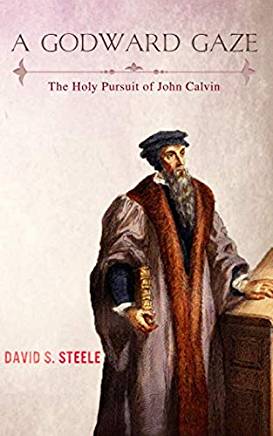
Book Review on David S. Steele’s “A Godward Gaze: The Holy Pursuit of John Calvin”

416HWmRy7xL._AC_UY436_QL70_.jpg

An Exhortation to God-Centered Living

By David P. Craig

It was such a joy and delight to read this new offering from my good friend David S. Steele. I highly recommend this book four five primary reasons:

  1. It’s brevity. It’s only 68 pages long. However, upon starting and completing the book in about an hour and a half – I was refreshed, renewed and rejuvenated in my passion for our Awesome God.
  2. It’s content. It’s a tour de force theologically. In it Steele brilliantly weaves the authority of the Scriptures, the gospel, and personal sanctification in a way that my heart, mind, and affections were stirred to continue to be faithful in my calling as a Christian Pastor.
  3. It’s snapshot of John Calvin. John Calvin – may be one of the least understood theologians in Church History; and yet perhaps the one theologian-pastor that should be most admired, studied, and emulated. Steele’s brief snippets from the life and pen of Calvin – will spur on the desire of those who read this book to go to the primary sources for more of Calvin – and that’s a good thing!
  4. It’s biblically saturated. Steele bleeds bibline. Every page “oosiates” Scripture. There is an authoritative ring of truth throughout the book. Therefore, one senses the presence of and the counsel of the Holy Spirit throughout the book.
  5. It’s convicting. The subject of the entire book is based on Isaiah 66:1-2. The themes of repentance, contrition, humility, and a love for God and His Word are hammered home throughout. As convicting as I was by the Spirit, I was also exhorted by the same Holy Spirit to be renewed in my joy in Christ and His gospel through repentance and faith in following the practical steps articulated in this excellent book to help me get back on track in my God-centered gaze.

*Which Comes First – Repentance or Revival?

Unknown.jpeg

If we all repent as Christians, will this bring revival to our land? We might also ask, “Will revival bring repentance to our land?” Which comes first? Will our repentance bring down revival upon us or will revival bring repentance upon us? These are interesting questions to ponder. Actually, we should always be repenting of our sins as Christians. This is a part of our daily lives. God always calls us to repentance. If we all live better Christian lives, will this then cause revival to break out? We could also ask that if God sends revival will it not cause all Christians to live better Christian lives? If we think that by our repenting that God will send revival, we may have the cart before the horse.

What is revival anyway? Iain Murray in his book Pentecost – Today? gives this definition for revival: “A revival is an outpouring of the Holy Spirit, brought about by the intercession of Christ, resulting in a new degree of life in the churches and a widespread movement of grace among the unconverted. It is an extraordinary communication of the Spirit of God, a superabundance of the Spirit’s operations, an enlargement of his manifest power.” (p. 23-24) By this definition, it seems that revival has it’s origin in God and that the result of sending revival is that repentance breaks out among both believers and unbelievers. It also indicates that revival is extraordinary and results in widespread evidence of its presence.

Alexander Moody Stuart in 1840 wrote, “While the Holy Ghost is always present in his church, there are times when he draws manifestly nearer and puts forth a greater energy of power. Every believer is conscious in his own soul of changes corresponding to this; for the Spirit is always with him, abiding in him, and yet there are times of unusual communion and far more than ordinary life. And as the Spirit draws near to an individual, so does he draw near to a land, and then religion is revived, spiritual life is revived, spiritual understanding, spiritual worship, spiritual repentance, spiritual obedience.” (quoted by Iain Murray in Pentecost-Today? p. 24-25) When true revival comes, spiritual repentance comes. It comes as a result of the revival not as a prerequisite. It is a fruit of the revival and comes because God has sent the revival. Now, we are talking about repentance on a large scale by a multitude of people resulting from a pouring out of God’s Spirit on that people.

In old times, revivals were called awakenings. They came from God and were sent to wake up a people to their spiritual condition bringing about great conviction of sin and widespread repentance. So, we have the First Great Awakening and the Second Great Awakening in America. They did not come because the Christians had all repented and brought on the Awakening. On the contrary, the Awakenings came as a surprise and brought repentance with it. Iain Murray writes, “The sheer unexpectedness of such events bears equally against the view that revivals are conditioned by the preceding actions and efforts of Christians. Those who believe that a certain line of conduct or prayer must secure revival have history against them. Revivals come unheralded. They are, as Edwards witnessed in Northampton in 1735, ‘the surprising work of God’. Of the Great Awakening of 1740 it is said that ‘it broke upon the slumbering churches like a thunderbolt rushing out of a clear sky’.” (p. 22-23)

What about 2 Chronicles 7:14? This verse says, “If my people, who are called by my name, will humble themselves and pray and seek my face and turn from their wicked ways, then will I hear from heaven and will forgive their sin and will heal their land.” This has been a very popular verse for the last forty years or so which has been commonly put forth as a formula for revival in the land. If all the evangelical Christians in America do what this verse says, will revival come? So far it hasn’t happened. 

First, all the evangelical Christians in the land have not repented and secondly revival has not yet come. This promise was given to the people of Israel concerning their nation. It was an Old Testament promise and if the people did what God asked them to do, He would surely heal their land. 

Today, not only do evangelical Christians need to repent of their sins but also the people of the whole nation. Such a wide scale repentance will come only when God pours out His Spirit in great convicting power on the land. Such a wide scale repentance has happened in times past such as in the First and Second Great Awakenings and again in the great revival of 1858-59. However, the people of the nation had not repented first before these revivals came. On the contrary, the revival itself caused people to repent. When such a large scale repentance happens, the land will be healed. Iain Murray makes this point concerning the above verse, “But if our actions do not determine revival what are we to make of such promises as the one given to Solomon in 2 Chronicles 7:14?…The first thing to say is surely that what is being promised is not revival, for the promise has to be understood, in the first instance, in relation to the time when it was given. It is of Old Testament Israel and her land of which healing is there spoken. The promise cannot be of revival, for revival has to do with the abundant giving of the Holy Spirit and that giving, as Old Testament Scripture made clear, lay in the future.” (p. 13, Pentecost-Today?) Well, this may be the case. However, this verse certainly describes what happens when revival comes. When God pours out His Spirit in great power, it humbles a people and causes them to repent and turn back to God. What we need to pray for is that what 2 Chronicles 7:14 says will happen in our land and that not only the Christians but the whole nation will repent and turn back to God.

A better Old Testament passage concerning revival can be found in Pslam 85:6 which says, “Will you not revive us again, that your people may rejoice in you?” I like the translation in the old Geneva Bible which says, “Wilt thou not turn again and quicken us that thy people may rejoice in thee?” This verse places the origin of revival in God and not man. It is God who must quicken us that we may be changed to a people that rejoice in the Lord. If God is the one who sends revival, then it is to Him that we must plead. We must ask Him to send revival on the land. We must cast ourselves on His mercy and ask that He send what we do not deserve. We deserve judgment as a nation for our sins, but we must intercede with God to have mercy upon us and to turn us around by His mighty power. The Geneva Bible translates Psalm 85:4 like this – “Turn us, O God of our salvation, and release thine anger toward us.” We need God’s mercy toward us in this hour that He might turn us around that we might be a people who will acknowledge Him and rejoice in Him.

What then should we do to bring on revival to the nation? We need to humble ourselves and realize that we can do nothing on our own. We need to realize that only God can send a revival to the land and we must humbly plead with Him in prayer to send such a revival in our day. We must be like the watchmen in Isaiah 62:6-7 where it says, “I have posted watchmen on your walls, O Jerusalem; they will never be silent day or night. You who call on the Lord, give yourselves no rest, and give him no rest till he establishes Jerusalem and makes her the praise of the earth.”

We should be watchmen for our nation and call on the Lord day and night to send revival to our land and make her to be the praise of the earth. When revival comes we can be a beacon of light to the whole world. This was the hope of the early Christians who came to America such as John Winthrop who wrote, “For we must consider that we shall be as a city upon a hill, the eyes of all people are upon us.” (p. 700, America’s God and Country) William Bradford wrote of his hope for the nation and the influence of the early Pilgrims when he said, “Thus out of small beginning greater things have been produced by His hand that made all things of nothing, and gives being to all things that are; and, as one small candle may light a thousand, so the light here kindled hath shone unto many, yea in some sort to our whole nation; let the glorious name of Jehovah have all the praise.” ( p. 67, America’s God and Country) Today, we need to call upon that same Jehovah who set a light in this nation so many years ago to rekindle that light and bring revival to this land. May we not rest until that light once more arises in our nation.

_____________

Works Cited

All Scripture quotations are from the New International Version unless indicated otherwise.

1599 Geneva Bible. Tolle Lege Press, White Hall, VIrginia,2006.

Federer, William J. America’s God and Country. Fame Publishing, Inc. 1996.

Murray, Iain H. Pentecost – Today?. The Banner of Truth Trust, Carlisle, Pennsylvania, 1998.

About Alex Dodson

Alex Dodson serves as president of Watchmen Radio Ministries International and as a staff evangelist. He has been in the gospel ministry for over thirty years. He was ordained in 1974 and has served as both a pastor and evangelist. He is a graduate of Reformed Theological Seminary and is presently a member of International Ministerial Fellowship. He has also done postgraduate studies at the School of World Mission at Fuller Theological Seminary. He and his wife Susan live in Portland, Oregon in the beautiful Northwest.

*Article by Alex Dodson adapted from ONEPLACE.COM


Ten Key Ideas from C.S. Lewis’s Works

41e9FVEBHIL._SX351_BO1,204,203,200_.jpg

(Adapted from C.S. Lewis: A Very Short Introduction by James Como, Box 2)

These are central to Lewis’s  thinking: many of his arguments are based upon them and they were central to his life. Omitted are orthodox Christian ideas (e.g., the incarnation), as well as political ones (e.g., the danger of fetishizing equality: ‘I’m as good as you’):

  1. Joy (Sehnsucht): is a longing conveyed by some image or memory or event that does not originate in any of those but comes through them. It is from a place beyond the senses and kindles a hope that there is Heaven, that Heaven is our home, and that we will return there. It is painful because nothing in the world can satisfy it, no matter how hard we may try to do so; it is sweetly painful because we can intuit its origin and our destiny.
  2. Contemplation and Enjoyment (or At/Along), or knowing from the outside and from the inside, where a phenomenon (such as religious belief or being in love) may seem very different. We need both.
  3. Chronological snobbery: is the uncritical acceptance of our own intellectual climate, as though past beliefs or practices are useless simply because they came before us. A corollary is that our belief in progress is misplaced: we must ask what it is we are ‘progressing’ towards.
  4. Subjectivism is poisonous: because it leads to an exaltation of the Self, a form of idolatry, especially when applied to morality, as when something is deemed good because it feels good.
  5. Reason is objectively valid: and, though one’s logic may be flawed in any given case, is a sign of our non-material nature: atoms moving randomly in our brains is not thought. It is the ‘organ of truth’.
  6. Morality is objective: outside of any personal preference or perception and accessible to Reason. To be subjective respecting this Natural Law (the Tao) is to submit to those who have the power, especially the technological power, to enforce their preferences, leading to ‘the abolition of man’. It merits obedience.
  7. Imagination: especially when realized as metaphor, symbol, and myth, is the ‘organ of meaning’, antecedent to truth. It helps extend language without distorting or destroying it (‘verbicide’).
  8. Quiddity: is the ‘thingness’ of a thing, be it food, weather, or a person. We must pay attention to things as they are, name them appropriately, and respond ordinately to them.
  9. Personhood: is not at all the same as ‘personality’, the expression of which ought not to be one’s goal; rather we should apply the Law of Inattention, allowing us to pay attention to all sorts of signs outside of the Self, especially to other people. What am I feeling? matters less than What is that? After all, ‘feelings come and go, mostly they go’.
  10. Ultimate Reality: is not the plane of existence we occupy, which is but a ‘shadowland’, a sort of training camp for the realist thing. That solid place sends signs (e.g., Joy) and, because it is so much richer than our shadowland, must clothe those signs in words and objects that already have ordinary meaning to us (like erotic imagery symbolizing religious devotion). That is how sacramentalism works: a higher reality is transposed into a more limited key having ‘notes’ we recognize as ordinary.

About The Author: James T. Como holds a Ph.D. in Language, Literature, and Rhetoric from Columbia University and is now Professor Emeritus of Rhetoric and Public Communication at York College (CUNY). A founding member of the New York C. S. Lewis Society (1969), Dr. Como’s books include Branches to Heaven: The Geniuses of C. S. Lewis, a study of Lewis as a rhetorician, and Remembering C. S. Lewis. These, along with his many articles on Lewis in journals including The Wilson Quarterly and The New Criterion, and on-air commentary for five biographical documentaries, have established Dr. Como as one of the most highly-regarded Lewis scholars in the world. The Ten Key Ideas above are from his outstanding Introduction to C.S. Lewis in the series of books “A Very Short Introduction” published by Oxford University Press.

*Ask People How You Can Pray for Them

Unknown.jpeg

It’s a short, easily remembered question. You can use it with longtime friends or with people you’ve just met. It doesn’t seem too personal or pushy for those who’d rather give you a shallow answer just now, and yet it often leads to a full hearing of the gospel. You can ask it of people nearly every time you speak with them and it doesn’t get old. Just simply and sincerely ask, “How can I pray for you?” You’ll be surprised at the results.

Over and over I’ve seen one simple question open people’s hearts to hear the gospel. Until I asked this question, they showed no interest in spiritual matters. But then after six words—only seventeen letters in English—I’ve seen people suddenly begin to weep and their resistance fall. The question is, “How can I pray for you?”

This may not seem like such a powerful question to you. Perhaps that’s because you hear it, or a question like it, quite often. Your Bible study group or your church prayer meeting asks for prayer requests every week. You may even see requests for prayer solicited each Sunday morning in the worship bulletin.

But realize that most people in the world never hear such a question. And while many churchgoers know that a minister is willing to pray for them, in some traditions they’re expected to make a special donation to the church for such services. So when you ask, “How can I pray for you?” and it’s obvious that you’re asking out of love alone, it can touch a person more deeply than you imagine.

This question is similar to one that Jesus Himself sometimes asked: “What do you want me to do for you?” (Matthew 20:32). For what we are really asking is, “What do you want me to ask Jesus to do for you?” And by means of this question, we can show the love of Christ to people and open hearts previously closed to the gospel.

I had tried to talk about the things of God many times to a business-hardened, retired executive who lived next door. He was a pro at hiding his feelings and keeping conversations at a superficial level. But the day we stood between our homes and I asked, “How can I pray for you?” his eyes filled with tears as hisBut the day we stood between our homes and I asked, “How can I pray for you?” his eyes filled with tears as his façade of self-sufficiency melted. For the first time in seven years he let me speak with him about Jesus.

It’s a short, easily remembered question. You can use it with longtime friends or with people you’ve just met. It doesn’t seem too personal or pushy for those who’d rather give you a shallow answer just now, and yet it often leads to a full hearing of the gospel. You can ask it of people nearly every time you speak with them and it doesn’t get old. Just simply and sincerely ask, “How can I pray for you?” You’ll be surprised at the results.

*Excerpted from Donald S. Whitney, Simplify Your Spiritual Life (Colorado Springs, Colo.: NavPress, 2003). Copyright © 2003, Donald S. Whitney. All rights reserved. Read more sample chapters from this book at http://www.BiblicalSpirituality.org


David Mathis on “What Does the Bible Say About Baptism? Six Texts We Cannot Ignore”

ocean-baptism-9174396512

Martin Luther, the great Protestant Reformer, said, “There is on earth no greater comfort than baptism.” Luther was famous for fighting against sin and Satan by preaching to himself, “I am baptized! I am baptized!”

Luther was not claiming to be saved simply because he was baptized. Rather, he rightly perceived the wonder and glory of baptism. He saw the visible, external act of baptism as an objective reminder of the invisible, internal reality of new birth and the faith through which we are saved on the basis of Christ alone. Luther was, after all, the great champion of justification by faith — as well as one captivated by the power and grace of baptism.

Yet, as a baptist, I can’t help but observe that something was missing in Luther’s reminder to himself about his baptism. Luther was what we call a paedobaptist (or infant-baptist). He himself was baptized as an infant, not in response to a profession of his own faith, but because of the faith of his parents — the faith they prayed would be manifest someday in their newborn son. Luther himself supported and practiced infant-baptism not only of adult converts, but also of the infants of Christian parents.

How much more powerful would recalling his baptism be if he could actually recall it? What if his baptism would have been an expression of saving faith already plainly present in his soul, rather than just a hope and prayer of his parents?

Repent, Believe, Be Baptized

Luther is not alone in leaving something to be desired in his vision of baptism. God has embedded his sacraments with more than meets the eye. For all of us, the “visible words” of the ordinances teem with depths of wonder and power into which we grow and mature. Christians of all stripes can anticipate shades and textures of meaning in Christian baptism we have yet to realize.

Before I lay out six of the most important New Testament texts to consider, let me acknowledge at the outset that godly evangelical pastors, scholars, churches, and seminaries stand on both sides of this question. The issues are many, and the arguments often complex, and I have great respect for many dear infant-baptist brothers and sisters.

Nevertheless, we credobaptists (or believer-baptists) — who baptize, typically by immersion, only those who give a credible profession of faith — have a deeper case than only what’s on the surface of the biblical text. For instance, as you often hear from believer-baptists, if you go looking in the New Testament for an example of an infant being baptized, you won’t find one. We don’t overlook the obvious, but we do go further and deeper.

(1) Mark 1:5 

All the country of Judea and all Jerusalem were going out to [John] and were being baptized by him in the river Jordan, confessing their sins.

Without exception in the New Testament, baptism is tied to repentance and faith in the baptizee. John’s baptism, the precursor to Christian baptism, was explicitly, repeatedly, and irreducibly tied to repentance. “They were baptized by [John] in the river Jordan, confessing their sins (Matthew 3:6). John said, “I baptize you with water for repentance(Matthew 3:11). In the Gospels and Acts, John’s baptism is summarized as “a baptism of repentance for the forgiveness of sins” (Mark 1:4; Luke 3:3; also Acts 13:24; 19:4). 

Then, in telling the story of the early church, Acts repeatedly ties Christian baptism to repentance and faith:

  • Repent and be baptized every one of you in the name of Jesus Christ for the forgiveness of your sins” (Acts 2:38).
  • “Those who received his word were baptized” (Acts 2:41).
  • “When they believed Philip as he preached good news about the kingdom of God and the name of Jesus Christ, they were baptized, both men and women. Even Simon himself believed, and after being baptized he continued with Philip” (Acts 8:12–13).

(2) Acts 18:8 

Crispus, the ruler of the synagogue, believed in the Lord, together with his entire household. And many of the Corinthians hearing Paul believed and were baptized.

Infant-baptists often point to the “household baptisms” mentioned in Acts 16:33, 18:8, and 1 Corinthians 1:16 and argue that any infants in these households would have been baptized. However, as John Piper writes,

Nowhere in Scripture is there any instance of an infant’s being baptized. The “household baptisms” (mentioned in Acts 16:15, 33 and 1 Corinthians 1:16) are exceptions to this only if one assumes that the household included infants. But, in fact, Luke steers us away from this assumption, for example in the case of the Philippian jailer (Acts 16:32), by saying that Paul first “spoke the word of the Lord . . . to all who were in [the jailer’s] house,” and then baptized them. (Brothers, We Are Not Professionals: A Plea to Pastors for Radical Ministry,  156–157)

In Acts 18:8, Luke clarifies immediately, in the ensuing sentence, that simply being in the newly Christian household was not enough for baptism. Belief in Jesus was prerequisite: “Crispus, the ruler of the synagogue, believed in the Lord, together with his entire household. And many of the Corinthians hearing Paul believed and were baptized” (Acts 18:8).

The believer-baptist argument goes deeper than such instances in the Gospels and Acts, but we often begin here. And not just in the early-church narratives, which can be thorny in terms of prescription, but also in the Epistles. Four anchor texts in the apostolic letters bind baptism and faith with a clarity and simplicity that is unmatched in the infant-baptist argument.

(3) Galatians 3:26–27 

In Christ Jesus you are all sons of God, through faith. For as many of you as were baptized into Christ have put on Christ.

Paul assumes that those who have been baptized and those who have saving faith are the same group (with no sanctioned outliers). Faith and baptism belong together in the church’s practice and in the individual Christian’s experience. Those who evidence saving faith should be baptized. And those who have been baptized have given expression to saving faith.

No allowance or provision is made here, or elsewhere, for some who would have been baptized apart from a profession of faith, in anticipation of faith to come.

(4) Colossians 2:11–12

In [Christ] you were circumcised with a circumcision made without hands, by putting off the body of the flesh, by the circumcision of Christ, having been buried with him in baptism, in which you were also raised with him through faith in the powerful working of God, who raised him from the dead.

The mention of circumcision is important because one of the main arguments for infant-baptists is that as circumcision was administered to every male born into God’s first-covenant people, so baptism should be applied to every child (male and female) born into believing families of God’s new-covenant people, the church. However, this is not what Colossians 2, or any other New Testament text, says about circumcision.

Here “the circumcision of Christ” refers to his being cut off, at the cross, for our sins, and the “circumcision made without hands,” which Paul applies to every believer, is spiritual circumcision, that is, new birth (as commentator Doug Moo notes, “the connections . . . are between spiritual circumcision and baptism,” Colossians, 269, n18).

Of these new-covenant people who are born again, circumcised in heart, Paul expects the new-covenant inaugural rite of water baptism to have been applied. As we’ll explore more below, the new-covenant recipients of baptism, as the counterpart to old-covenant circumcision, are those who have new birth (not mere natural birth), a spiritual circumcision which does not happen apart from faith. Colossians 2:11–12, like Galatians 3:26–27, presumes active and professed faith in all baptized, not just their parents.

(5) Romans 6:3–4 

Do you not know that all of us who have been baptized into Christ Jesus were baptized into his death? We were buried therefore with him by baptism into death, in order that, just as Christ was raised from the dead by the glory of the Father, we too might walk in newness of life.

As in Colossians 2, the baptized are those who have been buried into Jesus’s death and raised to new life in him. Not only does the image suggest immersion, rather than sprinkling or pouring, but more importantly, “newness of life” testifies to new birth and its effects, not mere first birth.

An “old self,” into which we were born (Ephesians 2:1–3), has been crucified (Romans 6:6) or put off (Ephesians 4:22; Colossians 3:9). And Paul says such is true of “all of us,” all the baptized. We all now “walk in newness of life,” not in the oldness of our first birth. The infant-baptist argument that presumes faith in the newborn does not do justice to the litany of New Testament texts about conversion, putting off an old man, and walking in newness of life.

(6) 1 Peter 3:21

Baptism . . . now saves you, not as a removal of dirt from the body but as an appeal to God for a good conscience, through the resurrection of Jesus Christ.

This text is often avoided, by believer-baptists and infant-baptists alike, because it raises the question about what it meant by “baptism . . . now saves you.” However, if we understand the verse aright, we both clear up that confusion and see further confirmation that baptism is nothing less than an objective expression of subjective repentance and faith (new birth) already present (not simply hoped for) in the baptizee.

Peter anticipates we will be surprised to hear “baptism . . . saves you,” so he immediately explains. He does not mean that the external act of baptism, “as a removal of dirt from the body,” has salvific power on its own. Rather, the instrument connecting the believer to Christ for salvation is the invisible condition of the heart (faith) that is being externally expressed in baptism.

Baptism demonstrates objectively and externally the subjective and internal “appeal to God for a good conscience.” Baptism saves not as an outward act but through the inward faith it expresses. Peter’s statement hangs together on baptism expressing a saving, spiritually newborn condition of heart in the believer.

Plausible or Biblical?

Beyond the instances in the narratives, and the didactic words of the apostles tying baptism to faith, we also make our argument on theological and covenantal grounds. I’ll leave that for the next article, but there is something fitting about not moving on to those arguments too quickly. Essential to the credobaptist position is doing justice to the demonstrable teaching of the New Testament.

The best infant-baptist voices typically provide admirably plausible, reasonable, and consistent arguments. The key issue for us as Christians, however, should not be whether the argument is plausible and consistent, but whether it is taught by the actual text of Scripture.

While we must move on, in due course, to the more theological and covenantal arguments, we dare not pass too quickly over the plain, stubborn, obvious readings of the New Testaments texts. Whatever your tradition, a good argument for the nature and application of Christian baptism cannot ignore or minimize what the Bible actually says, including these six important texts.

*David Mathis (@davidcmathis) is executive editor for desiringGod.org and pastor at Cities Church in Minneapolis/St. Paul. He is a husband, father of four, and author of Habits of Grace: Enjoying Jesus through the Spiritual Disciplines. This article was adapted from David Mathis’ article entitled What Does the Bible Say About Baptism? Six Texts We Cannot Ignore, desiringgod.org (May 27, 2019).  

Book Review on R.C. Sproul Jr.’s – Growing Up With R.C. – Truths I Learned About Grace, Redemption, and The Holiness of God

71MhPDz6cHL._AC_UL872_QL65_.jpg

Reviewed By David P. Craig

I have to admit that I read this book with great reluctance. I was hoping it would not be another Franky Schaeffer angrily vomiting on his famous parents type of book. I was pleasantly surprised to read a book that endeared me even more to R.C. Sproul Sr., and made me appreciate the honesty and respect of R.C. Jr., for his wise and loving Heavenly and Earthly Father’s.

I am grateful that R.C. Jr. has written this book for three reasons: (1) It made me understand more of where he is coming from – I especially appreciated his transparency and humility in admitting his own struggles with the flesh; (2) I appreciated his insights and gleanings of grace and wisdom from his dad and mom over his lifetime; (3) I am grateful for his Christ-centered focus and glorying in the grace of God in the Gospel.

I just want to say “thank you” to R.C. Jr. for sharing your father with us. Thank you for owning up to your own struggles and modeling repentance and faith in Jesus alone. Thank you, Lisa (R.C. Jr.s, wife) for praying for and unconditionally loving your husband. And thank You R.C. Sr. and Vesta for your passion for Jesus and for the grace and mercy you have given your children. 

I heartily commend this book as a respectful tribute to R.C. Sr., and an even greater tribute to our Gracious and Merciful Lord and Savior – Jesus Christ.

14 CLASSIC ARGUMENTS FOR THE EXISTENCE OF GOD

the-creation-of-adam.jpg

(1) The Argument from Motion There is motion (locomotion) in the universe. Something cannot move itself; an external agent or force is required. An infinite regress of forces is meaningless. Hence, there must be a being who is the ultimate source of all motion while not being moved itself. This being is God, the unmoved mover (*a posteriori) ~ Thomas Aquinas
(2) The Cosmological Argument Every effect has a cause. There must be an infinite regress of finite causes. Therefore, there must be an uncaused cause or necessary being. This being is God. (*a posteriori) ~ Thomas Aquinas
(3)The Argument from Possibility and Necessity Things exist in a network of relationships to other things. They can exist only within this network. Therefore, each is a dependent thing. However, an infinite regress of dependencies is contradictory. There must, then, be a being who is absolutely independent, not contingent on anything else. This being is God. (*a posteriori) ~ Thomas Aquinas
(4) The Argument from Perfection It can be observed from the universe that there is a pyramid of beings (e.g., from insects to humans), in an ever-increasing degree of perfection. There must be a final being who is absolutely perfect, the source of all perfection. This being is God. (*a posteriori) ~ Thomas Aquinas
(5) The Teleological Argument – Also Called The Argument from Design There is an observable order or design in the world that cannot be attributed to the object itself (e.g., inanimate objects). This observable order argues for an intelligent being who established this order. This being is God. (*a posteriori) ~ Thomas Aquinas
(6) The Moral or Anthropological Argument All people possess a moral impulse or categorical imperative. Since this morality is not always rewarded in this life, there must be some basis or reason for moral behavior that is beyond this life. This implies the existence of immortality, ultimate judgment, and a God who establishes and supports morality by rewarding good and punishing evil (*a posteriori) ~ Immanuel Kant, C.S. Lewis
(7) The Argument That God Is An Innate Idea All normal human beings are born with the idea of God implanted in the mind , though it is suppressed in unrighteousness (Romans 1:18). As the child grows into adulthood, this idea becomes clearer. Critical experience in the course of life may make this idea come alive.  (**a priori) ~ Augustine, John Calvin, Charles Hodge
(8) The Argument from Mysticism Mankind is able to have a direct mystical experience with God resulting in an ecstatic experience. This union with God is so uniquely overpowering that it self-validates the existence of God. (**a priori) ~ Evelyn Underhill
(9) The Argument from Truth All people believe that something is true. If God is the God of truth and the true God, then God is Truth. This Truth (capital T) is the context for all other truth. Therefore, the existence of truth implies the existence of Truth, which implies the existence of God. (**a priori) 
(10) The Ontological Argument Major premise: Mankind has an idea of an infinite and perfect being. Minor premise: Existence is a necessary part of perfection.

Conclusion: An infinite and perfect being exists, since the very concept of perfection requires existence.  (**a priori) ~ Anselm of Canterbury

(11) The Argument From Finitude Humans are aware of their finitude. What makes them aware of this? God is continually impressing humans with God’s infinitude. Therefore the sense of finitude itself is proof that an infinite being, God, exists. (**a priori) ~ Aristotle
(12) The Argument  From Blessed-ness Humans are restless, with a vague longing for blessedness until they rest in God. This longing was given by God. The presence of this longing is an indirect proof of God’s existence. (**a priori) ~ Augustine, Thomas Aquinas
(13) The Argument From Perception Human beings are able to perceive (sense) things. This cannot be caused either by physical events (perception as a mental act) or by human beings themselves. Therefore, the existence of perception implies Gods existence as the only rational explanation for human perceptions. (**a priori) ~ Bishop George Berkeley
(14) The Existential Argument  God proves Himself via the kerygma, which is His declaration of love, forgiveness, and justification of mankind. Those who decide for the kerygma then know God exists. No other evidence is needed. God is not so much proven as He is known, and this occurs existentially, from experiences in life. (**a priori) ~ Auguste Sabatier

*a posteriori = knowledge, thought, statements or arguments that logically follow from, arises after, or are dependent on, sense experience.

**a priori = knowledge, thought, statements or arguments that are logically prior to, or arising from a concept or principle that precedes empirical verification, or that occurs independently of experience.

Private Prayer by Dr. Joel Nederhood

Unknown.jpeg

Morning by morning, O Lord, You hear my voice; morning by morning I lay my requests before You and wait in expectation (Ps. 5:3).

Those who develop the habit of private prayer follow Jesus in a very special way. The Bible says, “Very early in the morning, while it was still dark, Jesus got up, left the house, and went off to a solitary place, where He prayed” (Mark 1:35).

This was Jesus’ habit. Luke tells us that, the night before He called His followers and chose 12 disciples, Jesus “went out to a mountainside to pray, and spent the night praying to God” (6:12).

The beautiful thing about being a Christian is that those who follow Christ can follow Him to the private place of prayer and can talk there with their Father in heaven. In this they may imitate their Savior in an extremely significant manner.

But what about this private prayer? I have a feeling that many Christians don’t know very much about it. Even those of us who know the secret of private prayer remember times when we called ourselves Christ’s followers but didn’t often follow Him to a private place to pray.

Those who do not know the joys and the power of private prayer must long for a deeper, more private relationship with God. Many of you who are reading this right now know something about Christianity, but you know virtually nothing about time spent alone in conversation with God. I don’t mean that you don’t pray. Of course you do. But your prayers are extremely brief. Once you have cried out in your need; you don’t know what else to say. The simple fact is that you spend very, very little time in actual prayer to God.

Don’t be satisfied with that. A little booklet called The Kneeling Christian says that prayerlessness is the secret of your failure. Often we talk about the secret of success, but what is the secret of the failure of gloomy, despondent,”unsuccessful” Christians? They do not speak freely about their Savior. They do not turn over their burdens to Him. They sometimes fall into gross sin. In their hearts, they harbor envy and anger and greed and all sorts of emotions that have no place in the lives of those who claim to follow Christ. Not one of us can claim that he or she has not experienced failure as a Christian. What is the secret of our failure? Our prayerlessness.

So we must follow Christ in prayer. We must look back across the centuries and see Him rise early in the morning and make His way to the solitary place where He prayed. We must follow Him to our own private place and there learn the reality of private prayer. It is a discipline, but, like every discipline, it yields freedom. Prayer is beautiful, and, if we are willing to let it, it can transform our lives. In this article, I wish to address whether we pray or not, where we pray, when we pray, what we pray for, how we pray (i.e., whether audibly or silently), what helps we need for our prayer, and what we should expect from private prayer. I write especially for those who have already confessed their sins and fled to Christ for salvation. I know that there are always readers who have not yet surrendered themselves to God’s saving grace—they have not asked Jesus to be the Lord of their lives. I hope, however, that, if you are not yet a Christian, you will continue to read about the blessings of private prayer. It could be that God will work in you and give you a holy jealousy so that you will not be able to rest until you enjoy private prayer yourself. I assure you that Jesus Christ wants nothing more than to have you come to Him in faith so that you can learn the glory of this holy exercise.

There are some people who believe in Christ but who don’t pray very much, because they tend to feel that it is really not very necessary to pray. If you ask them how they feel about prayer, they say something like this: “After all, God is in charge of everything anyway, and He will do what He wants, so why bother praying?” Then they say that God knows their needs anyway, that there’s no use telling Him about things He already knows. They pray occasionally, but they don’t arrange their lives so that they can have a time of private prayer.

I understand their feelings, and I am very thankful that the Bible contradicts them. In Luke 11, we have the record of Jesus’ disciples asking Him to teach them to pray. He does teach them—He gives them what we now know as the Lord’s Prayer. He also does more. He indicates that they should use the avenue of prayer, that they should not hesitate to approach God and make their needs known to Him, because God does hear and answer prayer.

Jesus told His disciples several brief parables—special stories—in connection with prayer in Luke 11. (Why not look them up and read them?) They all can be summed up in this statement: “Ask and it will be given to you; seek and you will find; knock and the door will be opened to you. For everyone who asks receives; he who seeks finds; and to him who knocks, the door will be opened” (Luke 11:9-10).

So let there be no question about whether we should pray. God is greater than our logic, and when it comes to the things of the Spirit, we must not be logical and biblical. Jesus not only teaches us to pray, but also encourages us in the strongest possible language to practice prayer. Those who do not arrange their lives so that they can enjoy the advantages of private prayer miss out on the full wonder of what it means to be a Christian.

Surely we should pray. About this there is no doubt whatsoever. But where? In a sense, location makes no difference. There is a form of continual prayer, which I cannot get into now, that Christians should be involved in all the time. That kind of prayer obviously can and should be done everywhere. But when it comes to private prayer, the kind by which we follow Christ to the solitary place, it is good to have a special place to pray.

In Matthew 6:6 Jesus tells us, “When you pray, go into your room, close the door, and pray to your Father, who is unseen.” Each of us should have a special room to go to in to pray. I realize that many of us just don’t have a room that we can use, because our apartments are too crowded. Some of you who are reading this little article are living in barracks or even in cell blocks. Privacy is very precious, and, unfortunately, many people these days have a hard time finding any. If you are in a situation in which privacy is scarce, you will have to use your ingenuity to try to find some somewhere. Maybe you’ll have to go out into the garage, or storeroom, or somewhere in the basement.

If you have a room available to you, that is the ideal place to go. And I strongly suggest that you have your private prayer in the same place as much as possible. It should be a place where you cannot be observed or heard, and where you cannot hear all the sounds of what is going on elsewhere.

Privacy is not just incidental in this kind of prayer. Private prayer must be between yourself and God. You should not discuss your prayers a great deal with others. Prayer is powerful when it is not affected in any way by the judgments of others.

Now, finding a private place can be related to your time of prayer, for some places are often more private at one time than at another. When should you pray? Well, there is a 

sense in which people pray all the time—they try to live in obedience to God and to think about His will for their lives, so what they do and say is a form of prayer. But private prayer—the kind of prayer Jesus clearly practiced and recommended that you practice—when should you have such prayer?

In answering this question, you must make allowances for the fact that people differ with respect to when they are most alert. We should remember that there are morning people and night people. It would be unrealistic to suggest that night people have their private prayers in the morning. One very fine Christian I know says very frankly that his faith is very imperfect before 9 a.m., especially before he has his first cup of coffee.

Even so, there is reason to believe that, when the Bible talks about private prayer, it considers that in many cases there will be morning prayers. Jesus’ solitary prayers were early morning prayers and prayers that went on through the night. Apparently, the important thing about the matter of time is that private prayer works best in a time of stillness. And it is not necessary to limit such praying only to one time of day. Psalm 55:17 says, “Evening, morning and noon I cry out in distress, and He hears my voice.”

There are, however, several advantages that come with early morning. First, the stillness of the time before dawn helps in private prayer. Second, and this is even more important, our own minds are still uncluttered by the events of the day; Then, too, when we rise early to call upon the Lord, it is often the easiest time to find a private place.

In connection with this, I also want to mention that private prayer should be of some substantial duration. Jesus spirit extended periods of time in private prayer. If you are new at praying in private, you may wish to start with five or ten minutes, but, before long, fifteen minutes will probably become a minimum for you. You will look forward to days when you don’t have to go to work, holidays and the like, when you can spend more time praying. Yes, there should be a time set aside that is approached carefully and arranged deliberately so that you do not pray quickly and then rush away as soon as possible. You may need some kind of clock that helps you make sure you get up on time and that signals when you should conclude your prayers (because there are other things that must be done). 

Many of you will have to arrange your lives so that you can get up on time to have your private prayers. This may mean that you will have to go to bed earlier in the evening, but all this is part of the discipline of prayer, a discipline that ultimately yields liberation.

How should you conduct your private prayers? Should they be audible or silent? It is possible to pray to God silently. When you have good control, your thoughts can march through your mind as efficiently as if you were speaking out loud. But you often do not have good control of your mind, do you? People who pray silently in the early morning are very apt to find themselves becoming drowsy and confused; when they are through, they may wonder what they have actually prayed about. In general, then, your time of private prayer is a time to formulate your prayers audibly. It is important, as well, to arrange your thoughts and to speak sensibly and coherently to the Lord. Many times, combinations of silent and audible prayer may work out well. The important thing is that you maintain your attention and do not think that you are praying when you are actually in the process of falling asleep.

Therefore, it is also important that you have proper posture in prayer. When it comes to prayer posture, no one has found an improvement on kneeling. For many, this is surely the posture of choice in private prayer. It would be a mistake to try to pray while lounging in one’s favorite easy chair. That is quite counterproductive.

Now the important question—what should you actually pray for, or pray about, during your time of private prayer? I cannot begin to answer this question in such a brief article, for there are so many subjects to pray about that will come up in your private prayers over a period of time, especially as you become more and more accustomed to having this special time with God each day.

You must remember, though, that the primary idea in prayer is asking. When Jesus’ disciples asked Him to teach them to pray, He taught them a prayer that was made up of requests. In Luke 11, we read that He encourages them to pray by saying that those who ask for things will receive them. In private prayer, you can lay all your needs before

the Lord. It is a time to pray for others, as we all are obligated to do. Often God brings difficult circumstances into our lives or the lives of those who are very precious to us so that we will learn to lean on Him in prayer. This is what Psalm 5:3 expresses when it says, “In the morning I lay my requests before You and wait in expectation.”

In your private prayers you will find that, along with your requests, you will also naturally offer praise and thanksgiving to God for all His mercies to you. One cannot experience the joy of private prayer without being moved to praise God for His goodness. You may find yourself calling out, in the words of Psalm 145, “I will exalt You, my God the King; I will praise Your name for ever and ever…. Great is the Lord and most worthy of praise; His greatness no one can fathom” (vv. 1,3).

There will also be your confession of sin. The person who meets God in private prayer grows to see himself or herself as the chief of sinners. There is nothing like private prayer for humbling people. The sins of others recede into the background, and pray-ers see themselves for what they really are. It is a time to bare your heart before the Lord and to ask Him once again—you always end up asking for something, you see—to cleanse you and to fill you with His Spirit.

In addition to all of this, you will need helps in order to get the full benefit of private prayer. You will need the Bible. Often when praising God, it is best to use the words He gives us in His Scripture. You should have it open before you as you pray, and, over a period of time, you will learn to look to special places for the words you want—to tell God how much you love Him and how much you want to magnify His name. In the Bible, too, are words of confession—Psalm 51 tells us about our own unworthiness. You may want to write passages on cards and use them as you pray. Over a period of time,· those words will be burned into your memory. Surely you need God’s Word right there with you in your solitary place.

lt is also good to have a prayer list—to make sure that you remember all you should remember when you come to God. As you pray more and more, you will realize that you have a great responsibility to pray for others and that you can do this best by having some kind of list. There will be in”stances in Which you should pray for speCific things for special people. And as you pray for the salvation of certain people whom God has put on your heart, you may find it helpful to have a special card for each person.

When you pray for someone who has cancer, for example, you should not simply ask God to bless that person, but pray that He will destroy cancer cells in that person’s body. You should pray as specifically as you can for people. You owe it to them; Those who belong to Christ have this high priestly responsibility.

The blessings that accompany private prayer are too numerous to list. l will conclude with a brief consideration of a few of the more obvious ones.

There is the joy of anticipation—you are always able to look forward to meeting God in that private place, and you know that there you will again be able to cast your burdens on Him. There is also the peace that passes all understanding. When you bring to God your deepest needs and the needs of others, you can feel the calm that comes from knowing that He is in control, and that you can trust Him. There are so many situations in life over which we have no control, but we can pray about them. 

Another blessing is this: as you learn the discipline of private prayer, you will know that one of the reasons these situations have happened is that God is heeding your request. Private prayer is an overwhelming privilege, and it is there for anyone who humbles himself before the Lord and learns to pray.

In our private places, we are in the presence of our loving Father, and we realize that He is preparing us for eternity- when we will be able to talk to God face to face.

Our continual prayer needs to be, “Lord, teach us to pray.” We have much to learn. We need to overcome our tendencies to put all sorts of things ahead of our need to pray. We need God’s help in arranging our lives so that we really do pray. And when we come to the private place, we need to be taught the wonder and glory of talking with such an awesome God!

About the author: Dr. Joel Nederhood, a minister of the Christian Reformed Church, serves as radio minister of The Back to God Hour,a weekly broadcast of his denomination. This article is an edited version of a radio address given by Dr. Nederhood in January 1986. Also available at biblical studies.org.uk/pdf/ref-rev/01-3/1-3_nedorhood.pdf. The article in full can be seen in Reformation and Revival: A Quarterly Journal for Church Leadership: Volume 1, No.3, Summer 1992.