BOOK REVIEW: JASON C. MEYER’S “PREACHING: A BIBLICAL THEOLOGY”

A BIBLICAL THEOLOGY OF THE MINISTRY OF THE WORD

PABT Meyer

Book Review by David P. Craig

I’ve been waiting for a book like this since my calling into the ministry thirty-one years ago. Meyer combines two of my favorite subjects: biblical theology and preaching with my greatest passion – the glory of God as revealed in Jesus. The thesis of this very enjoyable book is that “the ministry of the word in Scripture is stewarding and heralding God’s word in such a way that people encounter God through his word.”

What makes this book unique is that the author shows how “the whole Bible alone can give a holistic answer to what preaching is.” Meyer brilliantly and cogently examines what the whole of the Scriptures have to say broadly about the ministry of the Word and specifically in light of what this means for the expository preacher. The ultimate reason of preaching isn’t for the transfer of information, but to have an encounter with the living God.

Meyer takes the reader on a biblically saturated journey from Genesis to Revelation and unpacks what the entire Scriptures have to say about the ministry of the Word. He does a remarkable job of conveying how preaching the Word is grounded within the big picture story line of the gospel. Christ is the plot-line of the Scriptures and Meyer helps the minister build a foundation for preaching, paradigms for preaching, and demonstrates how biblical and systematic theology guides the preacher in ministering the Word so that we and our hearers encounter the glory of God in Christ.

I highly recommend this book for beginning and seasoned preachers, but also for all Christians. It is packed full with excellent illustrations, robust theological truths, and insightful applications. By helping us to interpret the whole Bible through the lenses of redemption Meyer helps us to see that Jesus is at the forefront of every passage we preach. I believe that any believer reading this book will come to understand the gospel better, and strive to minister the word with Jesus at the center of our proclamation so that we and our listeners will truly encounter our Awesome God.


R.C. SPROUL’S TESTIMONY: INTERVIEW CONDUCTED BY DICK STAUB

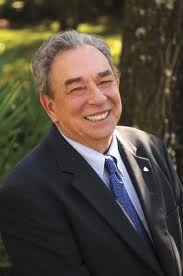
RC Sproul smiling image

How did you first become a Christian?

I had actually gone to a church-related college, but I went on a football scholarship, not because of any interest in the church. And at the end my first week, which had been spent in freshman orientation, my roommate and I decided to head out to town to hit some of the bars across the border. We come to the parking lot and I realized that I was out of cigarettes. So I went back in the dorm and went to the cigarette machine. I can still remember it was 25 cents for a pack of Luckys. And I got my Luckys and turned around and saw the captain of the football team sitting at a table. And he spoke to me and to my roommate and invited us to come over and chat. And we did. And this was the first person I ever met in my life that talked about Christ as a reality.

I’d never heard anything like it. And I was just absorbed, sat there for two or three hours, and he was talking. He didn’t give a traditional evangelism talk to me, he just kept talking to me about the-the wisdom of the word of God. And he quoted Ecclesiastes 11:3: “Whether a tree falls to the south or to the north, in the place where it falls, there will it lie.” I just feel certain I’m the only person in church history that was converted by that verse. God just took that verse and struck my soul with it. I saw myself as a log that was rotting in the woods. And I was going nowhere.

When I left that guy’s table I went up to my room. And into my room by myself, in the dark, and got on my knees and cried out to God to forgive me.

What was it that made you head down this highfalutin, rigorous academic preparation for your life?

To tell the truth, I hated school from first grade all the way through high school. The last thing I wanted to do was even go to college. But because it was a church-related college I had to take a course in the introduction to the Old Testament, first semester, and second semester an introduction to the New Testament. I’ll tell you, I just absolutely devoured the scripture. I just read it all day. At the end of the first semester I had an A in gym because I was on an athletic scholarship, an A in Bible, and all the rest Ds.

At the beginning of my sophomore year I had almost like a second conversion. And it was a strange thing. I had a required course in introduction to philosophy. The first assignment was on David Hume. I just thought this was so much nonsense, and I was so bored. I sat in the back of the class and I had Billy Graham sermons stuffed in behind my notebook. And while the professor was droning on about this stuff, I was getting edified by the Reverend Billy Graham sermons.

And then this one day he started to lecture on Augustine’s view of creation. And he got my attention. And I sat there, and I had an experience that was almost as powerful as my conversion where all of a sudden my understanding of the nature of God just had exploded. I went downstairs and changed my major to philosophy just so that I could learn a more in-depth understanding of God.

After I graduated from college then I went to seminary for three years, and then I went and did doctoral studies at the University of Amsterdam.

What was it that made you decide that you were called specifically to try to fill this gap, as you say, “between Sunday school and seminary” for everyday Christians?

Well, actually, when I went to graduate school my life’s ambition was to teach at seminary. And that came to pass when I was still in my 20s. I got an appointment at a seminary, and it was fun, but I was also involved in the local church. The pastor of the church asked me to teach an adult course on the person and work of Christ to the laypeople. I had doctors and lawyers and housewives and farmers and all kinds of adults in that class. And what I discovered was they were more interested in these things than my seminary students.

When our seminary left town, I had an opportunity to go with the seminary or I had an opportunity to teach laymen in a large church situation. And I took that route. And I always wanted to keep my hand in the academic world, but I always felt like if we were ever going to make a difference, we had to get to the people.

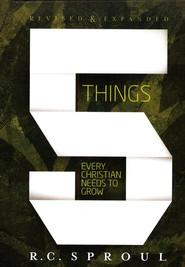
5TECNTG Sproul

Tell me about the inspiration behind Five Things Every Christian Needs to Grow. You’ve written 50 books, some of them very scholarly, And now we get to this little volume that really is back to the basics.

We have a lady that works at Ligonier Ministries, who is our chief financial officer. And really she’s a genius. I’ve never seen anybody so bright in her field. Yet she has a simple faith. And she said to me at a meeting a couple of years ago, “I like to hear you teach, but your books are too heavy for me. Can’t you write something for people that are just starting their Christian walk?”

I thought about the basic means of grace that God gives us, the ways in which he has provided for his people to grow from infancy, spiritual infancy, in the maturity and in the conformity to Jesus. And so I tried to make a very basic, practical, tool. Not just a teaching tool, but one for training.

You’ve recently started to learn the violin?

One of my dreams for heaven was to learn how to play the violin. And we started this church a few years ago. And we have a string quartet, and they’re so beautiful. I listen to violin music all the time. And I said, why wait? Why not get started now?

My teacher is this world-class performer from Russia. And she trained with some of the best teachers in Russia, so she tries to impose the same rigid Russian strictness on me that she went through. And so when I’m doing it wrong she smacks my hand and says, nyet, nyet, nyet. I’m learning more Russian than I am violin from this woman, but I am having an absolute ball. And when I have the opportunity, I’ll practice three hours a day. I just love it. It is so hard. And I screech so much. But it is so beautiful and worth it when you do get it right, you know?

It is a discipline, and we are called to be disciples. Millions of people start on piano lessons. They play one note with one finger and then they go to two fingers, and then two hands. There are different plateaus. And at each plateau another percentage of people get off the boat and give it up.

With people who start out in learning the Bible, it’s the same thing. I’ll frequently ask people if they have read the whole Bible cover to cover? Not just new Christians—we’re talking about people who have been Christians 20/30 years. And a very small minority say that they’ve read the whole Bible.

Almost everyone has read Genesis because it is narrative. People start off with good intentions to read the Bible through, but when they get into the technical dimensions of the Levitical purification codes and that sort of thing, it’s so foreign to the world they’re living  that they’re confused, they get lost, they lose their interest, then they give up.

So what’s your advice to them?

What I do is I give them an outline in this book on how to get the skeletal overview of the Bible. You read Genesis and Exodus and then you skip over to Joshua. Stay with the history. And read Judges. It’s like a novel. Then 1 Samuel. I get them to get an historical overview of the whole of the Old Testament. And I’ll have them read one major prophet, one minor prophet, a few psalms, a few proverbs, just to get a taste of it. Because if they get that overview, that overall structure and then they can go back and fill in the gaps.

[In violin,] if you’re not trained yourself, you have to get under the discipline of somebody else. I have to see this teacher every week and put up with her smacking my hand and saying, nyet, nyet, nyet, because if I didn’t I’d never get anywhere. For people who start out in learning the Bible, it’s the same thing. If you have trouble being disciplined, get in a Bible study group.

*Source: http://www.christianitytoday.com/ct/2002/decemberweb-only/12-30-21.0.html

MORE ABOUT SPROUL AND STAUB

Dr. R.C. Sproul was born in 1939 in Pittsburgh Pennsylvania. He is president of Ligonier Academy of Biblical and Theological Studies and the founder and chairman of the ministry that began in 1971 as the Ligonier Valley Study Center in Ligonier, Pennsylvania. In an effort to respond more effectively to the growing demand for Dr. Sproul’s teachings and the ministry’s othereducational resources, the general offices were moved to Orlando, Florida, in 1984, and the ministry was renamed “Ligonier Ministries.”

Ligonier Ministries is an international multimedia ministry located near Orlando, Florida. Dr. Sproul’s teaching can be heard on the programRenewing Your Mind with Dr. R. C. Sproul which is broadcast onhundreds of radio outlets in the United States and in more than 40 countries worldwide. He is executive editor of Tabletalk magazine and general editor ofThe Reformation Study Bible, also known as The New Geneva Study Bible. Dr. Sproul currently serves as the director of Serve International and senior minister of preaching and teaching at Saint Andrew’s in Sanford, FL.He is ordained as a teaching elder in the Presbyterian Church in America. He is the author of more than eighty books and scores of articles for national evangelical publications. 

Dr. Sproul has produced more than 300 lecture seriesand has recorded more than 80 video series on subjects such as the history of philosophy, theology, Bible study, apologetics, and Christian living. He signed the 1978 Chicago Statement on Biblical Inerrancy, which affirms the traditional view of biblical inerrancy, and he wrote a commentary on that document titled Explaining Inerrancy.

Dr. Sproul holds degrees from Westminster College, Pittsburgh Theological Seminary, and the Free University of Amsterdam, and he has had a distinguished academic teaching career at various colleges and seminaries, including Reformed Theological Seminary in Orlando, Florida, and Jackson, Mississippi.

Dick Staub was host of a eponymous daily radio show on Seattle’s KGNW and is the author of Too Christian, Too Pagan and The Culturally Savvy Christian. He currently runs The Kindlings, an effort to rekindle the creative, intellectual, and spiritual legacy of Christians in culture. His interviews appeared weekly on our site (CHRISTIANITY TODAY) from 2002 to 2004.

SUNDAY SERMON: Dr. Martyn Lloyd-Jones on “The Person of the Holy Spirit”

GDOTB Lloyd-Jones

THE PERSON OF THE HOLY SPIRIT

In our consideration of these biblical doctrines, our method has been to follow the order and the plan of salvation, so we come now, by a logical sequence, to the great doctrine of the Holy Spirit. Now I cannot begin to talk about this doctrine without pausing for a moment to express again my sense of wonder and amazement at the plan of salvation. I believe that people who are not interested in the plan of salvation as such, are robbing themselves of a great deal. When you try to stand back and look at it as a whole, you must at once be impressed by its glory, its greatness, its perfection in every part; each doctrine leads to the next until there it is, the complete whole.

It is a very good thing in the Christian life to stand back periodically and look at this great plan. That is why I think it is important to observe Christmas Day and Good Friday and Easter Sunday, and to preach on those days. They are convenient occasions for reminding ourselves of the whole plan of salvation. Look at it as a whole, look at the separate parts; but always remember that the parts must be kept in their relationship to the whole.

So it is very important that we should be studying the Bible in this particular way. I would always recommend that you read the Bible chapter by chapter, that you go steadily through it—that is also good. But in addition I do suggest that it is of vital importance to take out the great doctrines that are taught there, and look at them according to the plan or the scheme of salvation. The Church has done this from the very beginning, and it is a tragedy that it is done so infrequently at this present time because if you are content only with reading through the Scriptures, there is a danger of missing the wood for the trees. As you read through, you become so immersed in the details, getting the right translation, and so on, that you tend to forget the big, outstanding doctrines. So the reason for taking a series like this is to remind ourselves that the purpose of the Bible is to tell us God’s plan for the salvation of this world.

Another thing which I must emphasise is this: I know nothing which is such a wonderful proof of the unique, divine inspiration of the Scriptures as the study of Christian doctrine because we see then that this book is one, that it has one message though it was written at different times by different men in different circumstances. There is great unity in the message, one theme running from the beginning to the end. From the moment mankind fell, God began to put the plan of salvation into operation, and we can follow the steps and the stages right through the Bible. And so as we come to consider the doctrine of the Holy Spirit, we are reminded that here again is a doctrine that appears both in the Old and the New Testaments. We find a reference to the Holy Spirit in the second verse of the Bible, and the teaching goes right the way through. This amazing unity, I repeat, is proof of the unique, divine inspiration and infallibility of the Scriptures.

So, then, we find that in this great plan the Holy Spirit is the applier of salvation. It is His work to bring to us, and to make actual in us, in an experiential manner, that great salvation which we have been considering together and which the Son of God came into the world in order to work out. In the Godhead, the Holy Spirit is the executive, the executor. I shall have to come back to this again when we deal particularly and specifically with His work, but that is His great function in the plan.

Now it is a remarkable and an astonishing thing that this doctrine of the Holy Spirit, His person and His work, has been so frequently neglected in the Church—yet that is an actual fact of history. It is quite clear that the first Christians believed the doctrine, they almost took it for granted. Then you come to the early centuries of the Christian era and you find very little reference, comparatively speaking, to this doctrine. That is not surprising, in fact it was more or less inevitable, because the Church was constantly engaged, in those first centuries, in defending the doctrine concerning the Son. The Son of God had become incarnate: He had been here in this world. Jesus was preached, Jesus as the Christ, and, of course, the enemy was constantly attacking the person of Christ. This was the linchpin in the whole of the gospel and if it could be discredited, the whole scheme would collapse. So the attack was upon the person of the Son and the Church had to give herself in defence of that doctrine in order to establish it.

Tragically, the result was that the doctrine of the Holy Spirit was comparatively neglected, until the time of the Protestant Reformation. Now it is our custom to say that the Protestant Reformation is primarily the epoch in the history of the Church in which the great doctrine of justification by faith only was rediscovered in the Bible, and that is perfectly true. But let us never forget that it is equally true that the doctrine of the Holy Spirit was also rediscovered in a most amazing manner, and the great Dr B. B. Warfield is surely right when he says that John Calvin was the great theologian of the Holy Spirit. With the whole Roman system the Holy Spirit was ignored; the priesthood, the priests, the Church, Mary and the saints were put into the position of the Holy Spirit.

So the Protestant Reformation rediscovered this mighty doctrine; and let us, in Britain, take partial credit for that. The doctrine of the Holy Spirit was, beyond any question whatsoever, worked out most thoroughly of all by a Puritan divine who lived in this country in the seventeenth century. There is still no greater work on the doctrine of the Holy Spirit than the two volumes by the mighty Dr John Owen, who preached in London and who was also at one time, during the period of Cromwell, the Vice Chancellor of the University of Oxford. And not only John Owen. Thomas Goodwin and other Puritans also worked out the doctrine of the Holy Spirit. It has never been done so thoroughly since, and certainly had never been done before.

Now generally speaking, the position today is that the doctrine of the Holy Spirit is either neglected or it tends to be emphasised and exaggerated in a false manner. And I have no doubt at all that the second is partly the cause of the first. The doctrine of the Holy Spirit is neglected because people are so afraid of the spurious, the false and the exaggerated that they avoid it altogether. No doubt this is why many people also neglect the doctrine of prophecy, the last things and the second coming. ‘The moment you start on that,’ they say, ‘you get into these extravagances and these disputes.’ So they leave the whole thing alone and the doctrine is entirely neglected.

So it is with the doctrine of the Holy Spirit. Because of certain exaggerations, excesses and freak manifestations, and the crossing of the border line from the spiritual to the scientific, the political and the merely emotional, there are many people who are afraid of the doctrine of the Holy Spirit, afraid of being too subjective. So they neglect it altogether. I would also suggest that others have neglected the doctrine because they have false ideas with regard to the actual teaching concerning the person of the Holy Spirit.

In view of all this, therefore, it is obviously essential that we should consider this great doctrine very carefully. If we had no other reason for doing so, this is more than enough—that it is a part of the great doctrine of the blessed Holy Trinity. Let me put it very plainly like this: you would all agree that to neglect or to ignore the doctrine about the Father would be a terrible thing. We would all agree that it is also a terrible thing to neglect the doctrine and the truth concerning the blessed eternal Son. Do we always realise that it is equally sinful to ignore or neglect the doctrine of the blessed Holy Spirit? If the doctrine of the Trinity is true—and it is true—then we are most culpable if in our thinking and in our doctrine we do not pay the same devotion and attention to the Holy Spirit as we do to the Son and to the Father. So whether we feel inclined to do so or not, it is our duty as biblical people, who believe the Scripture to be the divinely inspired word of God, to know what the Scripture teaches about the Spirit. And, furthermore, as it is the teaching of the Scripture that the Holy Spirit is the one who applied salvation, it is of the utmost practical importance that we should know the truth concerning Him. I am very ready to agree with those who say that the low spiritual life of the Church, today or at any time, is largely due to the fact that so many fail to realise the truth concerning the person and the work of the Holy Spirit.

One other thing under this heading. I wonder whether you have ever noticed, those of you who are interested in hymns and in hymnology, that in most hymnbooks no section is so weak as the section devoted to the Holy Spirit? Here the hymns are generally weak, sentimental and subjective. For that reason, I have always found myself in great difficulties on Whit Sunday. We are lacking in great doctrinal hymns concerning the Holy Spirit and His work. Indeed, there are those who would say (and I am prepared to agree with them) that in many hymnbooks a vast majority of the hymns under the section of the Holy Spirit—these hymns that beseech Him to come into the Church and to come upon us, and to do this and that—are thoroughly unscriptural. That is another way of showing you again that this great doctrine has been neglected, that people have fought shy of it, and there is confusion concerning it.

The best way to approach the doctrine of the Holy Spirit is to start by noticing the names or the descriptive titles that are given to this blessed person. First of all, there are the many names that relate Him to the Father; let me enumerate some of them: the Spirit of God (Gen. 1:2); the Spirit of the Lord (Luke 4:18); the Spirit of our God (1 Cor. 6:11). Then another is, the Spirit of the Lord God, which is in Isaiah 61:1. Our Lord speaks, in Matthew 10:20, of the Spirit of your Father, while Paul refers to the Spirit of the living God (2 Cor. 3:3). My Spirit, says God, in Genesis 6:3, and the psalmist asks, ‘Whither shall I go from thy Spirit?’ (Ps. 139:7). He is referred to as his Spirit—God’s Spirit—in Numbers 11:29; and Paul, in Romans 8:11, uses the phrase the Spirit of him [God the Father] that raised up Jesus from the dead. All these are descriptive titles referring to the Holy Spirit in terms of His relationship to the Father.

In the second group are the titles that relate the Holy Spirit to the Son. First, ‘If any man have not the Spirit of Christ he is none of his’ (Rom. 8:9), which is a most important phrase. The word ‘Spirit’ here refers to the Holy Spirit. In Philippians 1:19, Paul speaks about the Spirit of Jesus Christ, and in Galatians 4:6 he says, ‘God hath sent forth the Spirit of his Son’. Finally He is referred to as the Spirit of the Lord (Acts 5:9).

Finally, the third group comprises the direct or personal titles, and first and foremost here, of course, is the name Holy Spirit or Holy Ghost. Some people are confused by these two terms but they mean exactly the same thing. The English language is a hybrid which has borrowed from other languages, and ‘Ghost’ is an old Anglo-Saxon word while ‘Spirit’ is derived from the Latin spiritus.

A second title in this group is the Spirit of holiness. Romans 1:4 reads, ‘Declared to be the Son of God with power, according to the spirit of holiness, by the resurrection from the dead.’ A further title is the Holy One: ‘But ye have an unction from the Holy One’ (1 John 2:20). In Hebrews 9:14 He is referred to as the eternal Spirit and Paul says in Romans 8:2, ‘For the law of the Spirit of life in Christ Jesus hath made me free from the law of sin and death.’ In John 14:17 He is called the Spirit of truth, and in chapters 14, 15 and 16 of John’s Gospel, He is referred to as the Comforter.

Those, then, are the main names, or descriptive titles, that are applied to Him. But have you ever thought of asking why He is called the Holy Spirit? Now if you put that question to people, I think you will find that they will answer, ‘He is described like that because He is holy.’ But that cannot be the true explanation because the purpose of a name is to differentiate someone from others, but God the Father is holy and God the Son is equally holy.

Why, then, is He called holy? Surely, the explanation is that it is His special work to produce holiness and order in all that He does in the application of Christ’s work of salvation. His objective is to produce holiness and He does that in nature and creation, as well as in human beings. But His ultimate work is to make us a holy people, holy as the children of God. It is also probable that He is described as the Holy Spirit in order to differentiate Him from the other spirits—the evil spirits. That is why we are told to test the spirits and to prove them, and to know whether they are of God or not (1 John 4:1).

Then the next great question is the personality or the person of the Spirit. Now this is vital because it is essential that I should put it like this. The person of the Holy Spirit is not only forgotten by those whom we describe as liberals or modernists in their theology (that is always true of them), but we ourselves are often guilty of precisely the same thing. I have heard most orthodox people referring to the Holy Spirit and His work as ‘it’ and ‘its’ influence and so on, as if the Holy Spirit were nothing but an influence or a power. And hymns, too, frequently make the same mistake. There is a confusion about the Holy Spirit and I am sure there is a sense in which many of us find it a little more difficult to conceive of the third person in the blessed Holy Trinity than to conceive of the Father or the Son. Now why is that? Why is there this tendency to think of Him as a force, or an influence, or an emanation?

There are a number of answers to that question. They are not good reasons, but we must consider them. The first is that His work seems to be impersonal, because it is a kind of mystical and secret work. He produced graces and fruits; He gives us gifts and He gives us various powers. And because of that, we tend to think of Him as if He were some influence. I am sure that this is a great part of the explanation.

But, furthermore, the very name and title tends to produce this idea. What does Spirit mean? It means breath or wind or power—it is the same word—and because of that, I think, we tend, almost inevitably and very naturally, unless we safeguard ourselves, to think of Him as just an influence rather than a person.

Then a third reason is that the very symbols that are used in speaking of Him and in describing Him tend to encourage us in that direction. He descended upon our Lord, as John baptised Him in the Jordan, in the semblance of a dove (Matt. 3:16). And again, the symbols that are used to describe Him and His work are oil and water and fire. In particular, there is the phrase in the prophecy of Joel, which was quoted by Peter in Jerusalem, on the Day of Pentecost, about the Spirit being poured out (Acts 2:17). That makes us think of liquid, something like water, something that can be handled—certainly not a person. So unless we are very careful and remember that we are dealing with the symbols only, the symbolic language of the Scripture tends to make us think of Him impersonally.

Another reason why it is that we are frequently in difficulties about the personality of the Holy Spirit is that very often, in the preliminary salutations to the various New Testament epistles, reference is made to the Father and the Son, and the Holy Spirit is not mentioned. Our Lord in the great high priestly prayer says, ‘And this is life eternal, that they might know thee, the only true God, and Jesus Christ, whom thou hast sent’ (John 17:3)—He makes no specific reference to the Holy Spirit. And then John says the same thing in his first epistle: ‘And truly our fellowship is with the Father, and with His Son Jesus Christ’ (1 John 1:3). He does not mention the Spirit specifically at that point.

Then also, the word Spirit in the Greek language is a neuter word, and, therefore, we tend to think of Him and of His work in this impersonal, neutral sense. And for that reason, the King James Version, I am sorry to say, undoubtedly fell into the trap at this point. In Romans 8:16 we have that great statement which reads, ‘The Spirit itself beareth witness with our Spirit, that we are the children of God.’ You notice the word ‘itself’, not ‘Himself’. Again in the same chapter we read, ‘Likewise the Spirit also helpeth our infirmities: for we know not what we should pray for as we ought; but the Spirit itself maketh intercession for us’ (Rom. 8:26). At this point the Revised Version is altogether superior since in both instances it gives the correct translation: ‘Himself’, even though in the Greek the pronoun, as well as the noun, is in the neuter.

And thus we have, it seems to me, these main reasons why people have found it difficult to realise that the Holy Spirit is a person. People have argued—many theologians would argue—that the Scripture itself says the ‘Spirit of Christ’. The Holy Spirit, they say, is not a distinct person; He is the Spirit of Christ, the Spirit of the Son, or of the Father, and thus they deny His personality.

How, then, do we answer all this? What is the scriptural reply to these reasons that are often adduced? Well, first of all, the personal pronoun is used of Him. Take John 16:7–8 and 13–15 where the masculine pronoun ‘He’ is used twelve times with reference to the Holy Spirit. Now that is a very striking thing. Jesus says, ‘Howbeit when he, the Spirit of truth, is come, he will guide you into all truth’ (v. 13)—and so on. And this, of course, is of particular importance when we remember that the noun itself is a neuter noun, so the pronoun attached to it should be in the neuter. Now this is not always the case but it is in the vast majority of instances. It is most interesting and it shows how important it is to realise that the inspiration of Scripture goes down even to words like pronouns! So that is the first argument, and those who do not believe in the person of the Spirit will have to explain why almost the whole Scripture uses the masculine pronoun.

The second reply to those who query the personality of the Spirit is that the Holy Spirit is identified with the Father and the Son in such a way as to indicate personality.

There are two great arguments here; the first is the baptismal formula: ‘baptizing them in the name of the Father, and of the Son, and of the Holy Ghost’ (Matt. 28:19). Here He is associated with the Father and the Son in a way that of necessity points to His personality. And notice, incidentally, that this baptismal formula does not say, ‘baptizing them in the names’ but ‘in the name’. It uses the unity of the three Persons—the Three in One—one name, one God, but still Father, Son and Holy Spirit. And so if you do not believe in the person and personality of the Holy Spirit, and think that He is just a power or a breath, you would have to say, ‘Baptizing them in the name of the Father, and of the Son, and of the breath’ or of ‘the power’. And at once it becomes impossible. The second argument is based on the apostolic benediction in 2 Corinthians 13:14: ‘The grace of the Lord Jesus Christ, and the love of God, and the communion of the Holy Ghost …’—obviously the Holy Spirit is a person in line with the person of the Father and of the Son.

The third reply is that in a most interesting way we can prove the personality of the Spirit by showing that He is identified with us, with Christians, in a way that indicates that He is a person. In Acts 15:28 we read, ‘For it seemed good to the Holy Ghost, and to us, to lay upon you no greater burden than these necessary things.’ This was a decision arrived at by members of the early Church, and as they were persons, so He must be a person. You cannot say, ‘It seemed good to a power and to us,’ because the power would be working in us. But here is someone outside us—‘It seemed good to him and to us’.

The fourth reply is that personal qualities are ascribed to Him in the Scriptures. He is said, for example, to have knowledge. Paul argues, ‘For what man knoweth the things of a man, save the spirit of man which is in him? even so the things of God knoweth no man, but the Spirit of God’ (1 Cor. 2:11).

But—and this is very important—He has a will also, a sovereign will. Read carefully 1 Corinthians 12 where Paul is writing about spiritual gifts, and the diversity of the gifts. This is what we are told: ‘But all these worketh that one and the selfsame Spirit, dividing to every man severally as he will’ (v. 11). Now that is a very important statement in the light of all the interest in spiritual healing. People say, ‘Why have we not got this gift in the Church, and why has every Christian not got it?’ To which the simple answer is that this is not a gift that anybody should claim. It is the Spirit who gives and who dispenses these gifts, according to His own will. He is a sovereign Lord, and he decides to whom and when and where and how and how much to give His particular gifts.

Then the next point is that He clearly has a mind. In Romans 8:27 we read, ‘And he that searcheth the hearts knoweth what is the mind of the Spirit’—this is in connection with prayer. He is also one who loves, because we read that ‘the fruit of the Spirit is love’ (Gal. 5:22); and it is His function to shed abroad the love of God in our hearts (Rom. 5:5). And, likewise, we know He is capable of grief, because in Ephesians 4:30, we are warned not to ‘grieve’ the Holy Spirit. The doctrine of the Holy Spirit, and especially this aspect of the doctrine which emphasises His personality, is of supreme importance. The ultimate doctrine about the Spirit, from the practical, experiential standpoint, is that my body is the temple of the Holy Spirit, so that whatever I do, wherever I go, the Holy Spirit is in me. I know nothing which so promotes sanctification and holiness as the realisation of that. If only we realised, always, in anything we do with our bodies, the Holy Spirit is involved! Remember, also, that Paul teaches that in the context of a warning against fornication. He writes, ‘Know ye not that your body is the temple of the Holy Ghost which is in you …?’ (1 Cor. 6:19). That is why fornication should be unthinkable in a Christian. God is in us, in the Holy Spirit: not an influence, not a power, but a person whom we can grieve.

So we are going through all these details not out of an academic interest, nor because I may happen to have a theological type of mind. No, I am concerned about these things, as I am a man trying myself to live the Christian life, and as I am called of God to be a pastor of souls, and feel the responsibility for the souls and the conduct and behavior of others. God forbid that anybody should regard this matter as remote and theoretical. It is vital, practical doctrine. Wherever you are, wherever you go, if you are a Christian, the Holy Spirit is in you and if you really want to enjoy the blessings of salvation, you do so by knowing that your body is His temple.

ABOUT THE PREACHER:

Lloyd-Jones preaching at WC London images

Dr. David Martyn Lloyd-Jones (1899-1981) [hereafter – DMLJ] was a British evangelical born and brought up within Welsh Calvinistic Methodism, he is most noted for his pastorate and expository preaching career at Westminster Chapel in London.

In addition to his work at Westminster Chapel, he published books and spoke at conferences and, at one point, presided over the Inter-Varsity Fellowship of Students (now known as UCCF). Lloyd-Jones was strongly opposed to the liberal theology that had become a part of many Christian denominations in Wales and England.

DMLJ’s most popular writings are collections of his sermons edited for publication, as typified by his multi-volume series’ on ActsRomansEphesians1 John, and Philippians. My favorite writings are his expositions on the Sermon on the MountRevivalJoy UnspeakableSpiritual Depression; and his recently revised 40th Anniversary edition of Preaching and Preachers. The sermon above is from Volume Two, Chapter One  in the compilation of sermons entitled Great Doctrines of the Bible.

Born in Wales, Lloyd-Jones was schooled in London. He then entered medical training at Saint Bartholomew’s Hospital, better known simply as Bart’s. Bart’s carried the same prestige in the medical community that Oxford did in the intellectual community. Martyn’s career was medicine. He succeeded in his exams so young that he had to wait to take his MD, by which time he was already chief clinical assistant to Sir Thomas Horder, one of the best and most famous doctors of the day. By the age of 26 he also had his MRCP (Member of the Royal College of Physicians).

Although he had considered himself a Christian, the young doctor was soundly converted in 1926. He gave up his medical career in 1927 and returned to Wales to preach and pastor his first church in Sandfields, Aberavon.

In 1935, Lloyd-Jones preached to an assembly at Albert Hall. One of the listeners was 72-year-old Dr. Campbell Morgan, pastor of Westminster Chapel in London. When he heard Martyn Lloyd-Jones, he wanted to have him as his colleague and successor in 1938. But it was not so easy, for there was also a proposal that he be appointed Principal of the Theological College at Bala; and the call of Wales and of training a new generation of ministers for Wales was strong. In the end, however, the call from Westminster Chapel prevailed and the Lloyd-Jones family finally committed to London in April 1939.

After the war, under Lloyd-Jones preaching, the congregation at Westminster Chapel grew quickly. In 1947 the balconies were opened and from 1948 until 1968 when he retired, the congregation averaged perhaps 1500 on Sunday mornings and 2000 on Sunday nights.

In his 68th year, he underwent a major medical operation. Although he fully recovered, he decided to retire from Westminster Chapel. Even in retirement, however, Lloyd-Jones worked as a pastor of pastors an itinerant speaker and evangelist. “The Doctor”, as he became known, was one of the major figureheads of British evangelicalism and his books and published sermons continue to be appreciated by many within the United Kingdom and beyond. DMLJ believed that the greatest need of the church was revival.


Stephen F. Olford on The Preacher’s Life With God

THE PREACHER AND THE LIFE OF GOD

AEP Olford

Walk in the Spirit, and you shall not fulfill the lust of the flesh.… If we live in the Spirit, let us also walk in the Spirit—Galatians 5:16, 25

Study Text: Galatians 5:13–6:5.

The renowned Puritan preacher, John Owen (1616–83), wrote prolifically on the person and work of the Holy Spirit. In his discourse On the Holy Spirit (1674) there occurs a remarkable passage in which he states: “The sin of despising [the person of the Holy Spirit] and rejecting His work now is the same nature with idolatry of old, and with the Jews’ rejection of the person of the Son” (emphasis ours). In plain terms, John Owen tells us that if the sin of Old Testament times was the rejection of God the Father, and the sin of New Testament times was the rejection of God the Son, then the sin of our times is the rejection of God the Holy Spirit. This message is both profound and poignant—especially as we think of our contemporary religious scene. Someone might say, “How can you talk about the rejection of the Holy Spirit when His person, work,—and especially His gifts—are the ‘buzz words’ in both Protestant and Catholic circles of discussion and debate?”

There is no simple answer to that question; but there is a serious one. With all the talk about the Holy Spirit, there is a rejection of Him in two respects—and both are sins. There is the sin of “escapism.” Some preachers will not even mention the Holy Spirit for fear of being “labeled.” For this reason their pulpits are silent on the subject. At the other end of the spectrum is the sin of “extremism.” The shallow ministry, subtle manipulations, and senseless manifestations that are so prevalent today do not square with the Word of God or, indeed, the glory of God. Both these sins—escapism and extremism—are, in fact, a rejection of the Holy Spirit in all the glory of His person, work, and gifts. What we need is biblical balance!

One thing is certain: No preacher can fulfill his ministry, in terms of his life and work, without the lordship and leading of the Holy Spirit. This article is about the life of God in the Spirit. While the text we have chosen does not specifically address the preacher/pastor, the truth it reveals concerns both members and leaders in the church of Jesus Christ. The life of the preacher matters! God is far more interested in what we are as preachers, than in what we do. The preacher must exemplify the life of God.

The verses assigned for reading unfold to us the evidences of this “walk” or life in the Spirit. Nothing is more important for the preacher in his personal, relational, and vocational life than to “walk [or live] in the Spirit” (v. 16). The verb walk (Gk. stoicho) is an exhortation to keep step with one another in submission of heart to the Holy Spirit, and therefore keeping step with Christ who is our life. It behooves us to ponder prayerfully the essential lessons that emerge from this passage.

Life In The Spirit Demands Spiritual Freedom

Paul begins chapter 5 of Galatians with a command—a command to keep on doing an action as one’s general habit or lifestyle. He urges us to “stand fast … in the liberty by which Christ has made us free, and do not be entangled again with a yoke of bondage.… For you, brethren, have been called to liberty; only do not use liberty as an opportunity for the flesh, but through love serve one another” (vv. 1, 13). The believers in Galatia were threatened by a twofold yoke of bondage. On the one hand, there was the bondage of religious legalities (see vv. 1–15), and on the other, the yoke of rebellious carnalities (see vv. 16–21). With this situation in mind Paul exclaims, “Stand fast therefore in the liberty by which Christ has made us free.” We, as preachers, must follow this command and serve in the liberty of the Spirit.

We Must Know Freedom from Religious Legalities

“Stand fast therefore in the liberty by which Christ has made us free, and do not be entangled again with a yoke of bondage” (v. 1). When Paul wrote these words, Judaizers had invaded the Galatian church and were attempting to bring the believers under the bondage of the law from which Christ had set them free through sovereign grace. Their religious legalities covered a whole range of regulations and limitations.

What was true then is also true now. We all know about personal legalism, denominational legalism, traditional legalism, ecclesiastical legalism, racial legalism, and even theological legalism (“boxing” God into self-serving theological concepts that have no biblical basis or balance).

Yet, we must remember that Christ came to set us free by the power of His cross and by the power of His Spirit. In a similar context, Paul affirms that “where the Spirit of the Lord is, there is liberty” (2 Cor. 3:17). This liberty is not license, nor limitation, but rather the power to do what we ought in the light of God’s Word and the power of God’s Spirit.

Are you free or are you bound? Read again the liberating words of the apostle: “It was for freedom that Christ set us free; therefore keep standing firm and do not be subject again to a yoke of slavery” (Gal. 5:1 NASB).

We Must Know Freedom from Rebellious Carnalities

“Walk [or live] in the Spirit, and you shall not fulfill the lust of the flesh.… Now the works of the flesh are evident” (vv. 16, 19), and Paul lists a grim catalog of them! Even though we are born again, we still possess the old nature. Until that old nature is brought under the mortifying power of the cross, through the applied ministry of the Holy Spirit, we can be plagued and fettered by rebellious carnalities. Paul details these carnalities under three categories: sexual sins, spiritual sins, and social sins.

Sexual Sins. “Adultery, fornication, uncleanness, lewdness” (v. 19). It is significant that the first sins to head the list have to do with sexual relations. This is not because sexual sins are intrinsically more evil than others, rather it is because sexual sins reveal more graphically the self-centeredness and rebellion of those who dare to prostitute God’s holy norms for human relationships. Alas, as preachers, we can be involved in these sexual sins—unless we know the liberating power of the Spirit.

Charles Colson in his book The Body observes that “the divorce rate among clergy is increasing faster than in any other profession. Numbers show that one in ten have had an affair with a member of their congregation, and 25 percent have had illicit sexual contact.” These are serious statistics that we need to face without fear or favor, and then fight in the power of the Spirit. God has called us to a life of victory and purity—and we must not relent (1 Pet. 1:15, 16; 1 Cor. 15:33–34, 57).

Spiritual Sins. “Idolatry, sorcery” (v. 20). Idolatry means anything or anyone who comes between God and ourselves, thereby becoming the center of our worship and attention. God has forever condemned idolatry, and the apostle John warns, “Little children, keep yourselves from idols” (v. 1 John 5:21). How many of us are guilty of worshiping idols! What about TVs, computers, Fl6s, and other inventions of our modern age? Sorcery can refer to the “use of drugs”—as we see all around us today. Indeed, drug taking has invaded the church of Jesus Christ. What Aldous Huxley and others predicted has come to pass. Even some pastors seek religious experiences through the “kicks” of substance abuse. The brainwashing of the New Age movement and other satanic activities has encouraged these subtle forms of addiction.

Social Sins “Envy, … drunkenness, revelries” (v. 21). These sins can be found in our hearts—unless we know what it is to be protected by the blood of Christ and the power of the Spirit. Paul is not talking about the act of sin so much as the habit of sin. While it is true that the believer is not under the law, but under grace, that is no excuse for sin (Rom. 6:15). If anything, it is a challenge to live in victory! Paul states in our text that we have been “called to liberty,” but he also reminds us: “Do not use liberty as an opportunity for the flesh, but through love serve one another” (v. 13, emphasis ours).

So we return to our theme: Walking or living in the Spirit. To do so demands spiritual freedom; and, thank God, “Where the Spirit of the Lord is, there is liberty” (2 Cor. 3:17).

Life In The Spirit Displays Spiritual Fruit

“The fruit of the Spirit is love, joy, peace, longsuffering, kindness, goodness, faithfulness, gentleness, self-control. Against such there is no law” (vv. 22–23). As we crucify “the flesh with its passions and desires” (24) by the power of the Spirit (Rom. 8:13), and as we yield to the control of the Spirit, spiritual fruit appears in our lives. There is no better portrayal of this spiritual fruitage than what is described in verses 22–23, and it is nothing less than a ninefold configuration of the life of Christ. John Stott describes this cluster of nine Christian graces as “[the believer’s] attitude to God, to other people, and to himself.”

The Believer’s Attitude to God

“Love, joy, peace” (v. 22). Love for God, joy in God, and peace with God are aspects of the God-centered life. In other words, we are describing unconditional love, unbelievable joy, and unperturbable peace. Can others see these characteristics in our lives as we stand behind our pulpits, walk the wards of the hospital, or enter the homes of our parishioners?

The Believer’s Attitude to Other People

“Longsuffering, kindness, goodness” (v. 22). Our social lives will display the longsuffering of courageous endurance without quitting; the kindness of Christian servanthood in a selfish world; and the goodness of agape love fleshed out in generosity and hospitality.

The Believer’s Attitude to Himself

“Faithfulness, gentleness, self-control” (vv. 22–23). In our personal lives we will manifest the fruit of faithfulness in dependability and in accountability in our service to God and man. We will manifest the fruit of gentleness in Christlike behavior in every situation of life. We will manifest the fruit of self-control in the God-given ability to harness natural passions for redemptive purposes.

Now while it is possible for the old nature to counterfeit some of the fruit of the Spirit, it can never produce the full-orbed character of Christ in us. When the Spirit produces fruit, God gets the glory and the Christian is not conscious of his spirituality. On the other hand, when the flesh is at work, the person is inwardly proud of himself and is pleased when others compliment him. Any preacher who says he does not enjoy a compliment is lying! But to whom do we ascribe the glory? The work of the Spirit is to make us more like Christ for His glory and not for the praise of men (note Luke 6:26a).

If the question be asked, “How can I know the fruit of the Spirit in my life?” the answer is clear. We must “be filled with the Spirit” (Eph. 5:18). This calls for a moment-by-moment openness to the Lord. We must “walk in the light as He is in the light” (1 John 1:7). We must not “grieve the Holy Spirit” (Eph. 4:30) by any known sin or “quench the Spirit” (1 Thess. 5:19) by giving place to self. This openness is an essential condition for a Spirit-filled life.

Along with the daily openness there must also be a daily obedience to the Lord. We are told that God has given the Holy Spirit “to those who obey him” (Acts 5:32). There is no substitute for total obedience to the Word of God. In practical terms, this means a disciplined quiet time on a regular basis (see chap. 2). It also calls for prayer that asks. Jesus promised, “If you then, being evil, know how to give good gifts to your children, how much more will your heavenly Father give the Holy Spirit to those who ask Him!” (Luke 11:13).

Our Lord confirmed these conditions for fruitful Christian living in that exquisite allegory in John 15 where He speaks of the vine and the branches. He taught: “Abide in Me, and I in you. As the branch cannot bear fruit of itself, unless it abides in the vine, neither can you, unless you abide in Me” (4). The whole concept of abiding is that of openness and obedience to the Lord. Indeed, Jesus said, “If you keep My commandments, you will abide in My love” (John 15:10). Then He added, “If you love Me, keep My commandments. And I will pray the Father, and He will give you another Helper [the Holy Spirit], that He may abide with you forever” (John 14:15–16; 15:10).

It is also important to understand that when Paul issued his command to be filled with the Spirit he employed the passive voice. His words were: “Let the Spirit fill you.” Quite clearly, he implied yieldedness and submission to the control of the Holy Spirit in dependence and obedience.

Life In The Spirit Directs Spiritual Focus

“Brethren, if a man is overtaken in any trespass, you who are spiritual restore such a one in a spirit of gentleness, considering yourself lest you also be tempted” (6:1). If we know the freedom of the Spirit and the fruit of the Spirit in our lives, then there is a focus of the Spirit that emerges in our daily ministry. Paul expounds this spiritual focus in these opening verses of the sixth chapter of Galatians. The more we examine these words, the more comprehensive becomes our ministry.

We Are to Restore the Fallen

“Brethren, if a man is overtaken in any trespass, you who are spiritual restore such a one in a spirit of gentleness, considering yourself lest you also be tempted” (6:1). Two of the ugliest sins of the church today are judgmentalism and unforgivingness. This is why there is so much bitterness in the Body. This is “why revival tarries.” If we walk in the Spirit there is a focus of ministry to be performed in and through us. In the first instance, it is to restore the fallen. Paul gives us an example of a man who had been overtaken in a sin. What are we to do if we are truly filled with the Spirit? The answer is precisely given: we are to restore such a person in the spirit of meekness, realizing that we also could be tempted to fall.

The verb restore is in the present active imperative. The term is used in Matthew 4:21 for mending nets and comes from a Greek root for “equipping thoroughly.” This does not mean that sin is to be compromised in any shape or form. Indeed, our pastoral duty is to rebuke sin (especially when committed by leaders) “in the presence of all, that the rest also may fear” (1 Tim. 5:20). But having applied the principles of discipline, the purpose of restoration is to bring a person back into fellowship and wholeness.

We Are to Release the Fettered

“Bear one another’s burdens, and so fulfill the law of Christ” (6:2). The legalist is not interested in lifting burdens. Instead, he adds to the burdens of others (Acts 15:10). This was one of the sins that the Master severely condemned: “They [the Pharisees] bind heavy burdens, hard to bear, and lay them on men’s shoulders; but they themselves will not move them with one of their fingers” (Matt. 23:4).

Paul uses the word burdens to show the subtlety and cruelty of legalism. In fact, legalists exacerbate the problems of those who are already weighed down.

By way of contrast, he who is Spirit-filled has a releasing ministry. In love he wants to see his brother set free for service (5:13)!

All around us are people who are fettered. They may not have fallen, but they are fettered. What a ministry to set such people free with the word of liberating authority through Jesus Christ our Lord! Jesus declared, “If the Son makes you free, you shall be free indeed” (John 8:36).

We Are to Rebuke the Foolish

Not only are we to restore the fallen and release the fettered, we also are to rebuke the foolish. “If anyone thinks himself to be something, when he is nothing, he deceives himself. But let each one examine his own work, and then he will have rejoicing in himself alone, and not in another. For each one shall bear his own load” (6:3–5). In this passage there are three corrective principles we must face if we would focus on the Spirit’s ministry in and through us.

We Must Get Right with Ourselves. “If anyone thinks himself to be something, when he is nothing, he deceives himself.” Pride issues in self-deception (Jer. 49:16) and leads to divine resistance (James 4:6).

Sure, we must accept who and what we are, as redeemed people in Christ, and rejoice in what grace has done; but to think ourselves to be something when actually we are nothing is to deceive ourselves in arrogant overevaluation. Jesus warned, “Without Me you can do nothing” (John 15:5, emphasis ours). To get right and stay right with ourselves we must constantly live in a spirit of repentance. And the first step in repentance is the correct appraisal of ourselves in the sight of God.

We Must Get Right with Our Service. “Let each one examine his own work, and then he will have rejoicing in himself alone, and not in another” (v. 4). God has given each of us a special task to perform. The apostle reminds us that “we are His workmanship, created in Christ Jesus for good works, which God prepared beforehand that we should walk in them” (Eph. 2:10). Our responsibility is not to be concerned with our brother’s business, but rather to find, follow, and finish what each of us has been called to do. You will remember that after his restoration Peter wanted to know what John was going to do. Jesus told him that it was none of his business; his task was to follow Jesus to the very end (John 21:21–23). The temptation to compare ourselves with others is another roadblock in our ministry, and it often leads to jealousy, strife, and division in the church of Jesus Christ.

We Must Get Right with Our Savior. “For each one shall bear his own load [or his ‘own pack’]” (v. 5). The reference here is to the final day of reckoning. Paul offers here what he expresses a little differently in Romans 14:12: “Each of us shall give account of himself to God.” Ultimately, it is what the Savior thinks or says that matters. No one can answer for his brother. Each one of us has to bear his own load of responsibility and accountability and answer for it at the judgment seat of Christ (1 Cor. 3:9–15).

So this is the sequence: we must get right with ourselves; we must get right with our service; and we must get right with our Savior. Very simply, the focus of the Holy Spirit in a yielded preacher is to restore the fallen, release the fettered, and rebuke the foolish—and that includes ourselves as preachers!

We must ask ourselves: Are we living in the Spirit? If we are, the clear evidence will be spiritual freedom, spiritual fruit, and spiritual focus in our lives, hour by hour and day by day.

One more thing needs to be added, and it is crucial. If we live in the Spirit, we must be led by the Spirit (vv. 16, 18). This leadership implies lordship, and “where the Spirit of the Lord is there is liberty” (2 Cor. 3:17). It is the Spirit who makes the lordship of Christ a reality in our lives. What God the Father has planned, and God the Son has purchased, can never be experiential until God the Holy Spirit personalizes that redemptive work in us as we yield “moment by moment” to His lordship.

Holy Spirit, reign in me,

With your own authority—

That my life, with constancy,

May “flesh out” your liberty.

—Stephen F. Olford article adapted from Chapter 3 of Anointed Expository Preaching. Nashvile, B&H Academic, 2003.

ABOUT STEPHEN F. OLFORD 

A Tribute to Stephen F. Olford
by Roger D. WillmoreHis was no ordinary life. In fact the extraordinary happenings that seemed to characterize his life and ministry began when he was still in his mother’s womb. Stephen Olford was born to missionary parents, Fredrick and Bessie Olford, on March 29, 1918. Fredrick Olford’s basic knowledge of medicine and the experience he had gained on the mission field caused him to anticipate that the birth of their first baby might be accompanied by complications. Rather than take a chance, he and Bessie made up their minds to make the thousand-mile trek from Angola to the British colony of Northern Rhodesia. Fred walked every step of the way while Bessie was carried in a hammock by A-Chokwe men.

The first seventeen years of his life were spent in the heart of Africa where he witnessed the marvelous power of God working through the lives of his godly parents. His experiences in Africa flavored his preaching. I can remember when I first heard Stephen Olford’s voice on the old reel to reel tape player in 1969; I was a senior in high school. His accounts of miracles from God among the A-Chokwe people captured my youthful imagination. I learned later how those experiences forged his character.

Stephen Olford left the home he had known and loved in Angola to live in England where he would pursue a career in engineering. In college his thesis project was carburetion. He developed a special carburetion system and took up motorcycle racing to demonstrate the efficiency of his invention. On his way home from a race on a cold rainy night he crashed his motorcycle and lay injured on the road in the rain for several hours. Pneumonia quickly set in. Doctors announced, “Two weeks to live.”

Laying on his death bed, Stephen Olford received a letter from his father in Africa. Fredrick Olford knew nothing of his son’s condition. It took three months for a letter to travel from Africa to England. But in God’s sovereignty the letter contained words that would forever change the life of Stephen F. Olford. His father wrote, Only one Life, ‘Twill soon be past, Only what is done for Christ will last. Stephen Olford fell under deep conviction. He slipped out of bed, dropped to his knees, and cried out to God. He prayed, Lord, You have won and I own You as King of Kings and Lord of lords…and Lord if you will heal my body, I will serve You anywhere, anytime, and at any cost. God answered his prayer and from that day until August 29, 2004, when he went to be with the Lord, Stephen Olford’s life was ablaze to the glory of God.

In 1959 Stephen Olford came to the United States to pastor the Calvary Baptist Church in New York City. He embarked upon this new chapter in his life with wife Heather and sons Jonathan and David at his side. It was from the famed Calvary pulpit that Dr. Olford’s anointed expository preaching began to impact people around the world. His days at Calvary made the world his parish.

It is appropriate that we as Southern Baptists pay tribute to Stephen Olford. His passionate and powerful expository preaching, along with his evangelistic zeal, made him a favorite on Southern Baptist Convention platforms across the country. He spoke at the SBC Pastors’ Conference numerous times and he was a frequent speaker at state conventions and conferences. One of my fondest memories will be of the 2001 Alabama Baptist Convention Pastors’ Conference. I had the privilege of serving as conference president, and Stephen Olford was our keynote speaker for two of the sessions. Our conference theme was Preach the Word.

It is the testimony of countless pastors and evangelists and missionaries in our Southern Baptist Convention that they really came into the blessings of the Lord under Dr. Olford’s ministry.

I am writing this article on behalf of my fellow Southern Baptists to honor the life and ministry of God’s faithful servant, Dr. Stephen F. Olford, and to express gratitude to God for giving such a wonderful gift to His Church. I also want to express our appreciation to his wife, Heather and to their two sons, Jonathan and David for sharing Dr. Olford with us.

In 1988 the Stephen Olford Center for Biblical preaching was founded in Memphis, Tennessee. I remember with clarity Dr. Olford casting the vision for a ministry of promoting biblical exposition and practical training for pastors, evangelists, and lay leaders. From the beginning Dr. Olford’s motto was, “Ministry to Ministers is Ministry to Multitudes.”

There are three beautiful banners prominently displayed in the Olford Center chapel which contain three foundation truths that guide the Olford ministry. The three banners contain these words: Jesus is LordBe Ye Holy; and Preach the Word. The life of Stephen Olford epitomized the truth of each of these banner statements. The powerful anointed preaching that characterized his preaching ministry emerged from a holy life lived under the Lordship of Jesus Christ. The passion of his life was to preach the Word. He often said, “The only thing that will ever replace preaching is greater preaching.”

Southern Baptists owe a debt of gratitude to God for the life of Stephen F. Olford. He has ministered effectively on our convention and conference platforms, in our churches, and in our seminaries. His friendship, his counsel, his godly life, and his anointed preaching have made an indelible impression on all of us. It is true that the world was his parish and he ministered to the masses, but who can forget that beaming smile, that radiant personality, and that loving hug. He never lost sight of the value of the individual. I will always remember the many times I have been with him after a conference when everyone else would be gone and Dr. Olford could be found sitting with a hurting pastor in need of counsel. He would embrace the crowd and then he would embrace the individual.

Lord, thank you for the faithful, selfless, and sacrificial service of your servant, Stephen F. Olford. Amen.

He being dead yet speaketh and the admonition is clear: PREACH THE WORD, PREACH THE WORD, PREACH THE WORD.

Roger D. Willmore is senior pastor of First Baptist Church, Boaz, Alabama, and vice chairman of the Trustee Board of LifeWay Christian Resources. He also serves as minister at large of Stephen Olford Ministries International, Memphis, Tennessee.


Dr. Robert L. Saucy on The Distinction of Israel and the Church

THE CHURCH AND ISRAEL

TCIGP Saucy

PART 1 IN A SERIES OF 3

Much discussion has centered around the relationship of the church and Israel. Some biblical interpreters, emphasizing their similarity, view them essentially as one people of God (Louis Berkhof, Systematic Theology, p. 571; cf. also the Roman Catholic position stated in the Dogmatic Constitution on the Church of Vatican II, Walter M. Abbott, ed., The Documents of Vatican II, pp. 24-37). The term Israel represents not a national people but the spiritual people of God. Therefore, the members of the church are considered to be New Israel. Spiritual Israel was related to national Israel in the Old Testament but it has now been enlarged to become a universal spiritual work in the church. The Israel of the Old Testament is thus superseded by the church, and the prophecies concerning the nation of Israel are, for the most part, no longer literally applied to the nation but rather to the church now and in the future.

A preferable position sees Israel and the church as distinct phases of God’s program; not so distinct as to preclude relationship in the historical plan and purpose of God, but having a distinction which recognizes the calling and election of Israel as a nation among nations (cf. Deu 7:6-8; 10:15-17; Num 23:9) to be “without repentance” (cf. Ro 11:27-29). This does not deny the spiritual qualifications necessary for Israel to enter into the fulfillment of her promises. Physical descent alone is not sufficient to reap God’s blessings. This was already true of Israel in the Old Testament. There has always been a true Israel within national Israel, but this true Israel is a part of the nation (Compare the concept of the Servant of the Lord in Isaiah, where in many places the Servant is identified merely with Israel [e.g., 41:8; 43:10; 44:21], but in other instances it is clear that only the true Israel is involved [51:1,7]). This interpretation allows for the natural understanding of the Old Testament prophecies portraying a future for Israel as a nation. It is also consistent with the New Testament teaching of the church as distinct from Israel and yet sharing in God’s salvation program.

THE CHURCH DISTINCT FROM ISRAEL

The New Testament never confuses Israel and the church. As opposed to the church, which is a religious body composed of individuals from all nations, the term Israel retains its reference to that people which came physically from the loins of Abraham. After the beginning of the church, Israel is still addressed as a national entity. When on the day of Pentecost Peter addresses his audience as “you men of Israel” (Ac 2:22), he is obviously referring to those of the physical nation and not the church. Similar uses of the term “Israel” are found throughout Acts, demonstrating the fact that the church had not taken this term for itself (Ac 3:12; 4:10; 5:21, 31, 35; 21:28). Paul’s prayer for “Israel” (Ro 10:1; cf. 11:1) and his references to Israel throughout the discussion of God’s program in Romans 9—11 concern his “kinsmen according to the flesh” (9:3). If “Israel” were a reference to the church, the reference to Israel’s “blindness in part … until the fulness of the Gentiles has come in” (11:25) would be meaningless.

Two references are often used against this consistent use of Israel for the nation in an attempt to substantiate that the church is New Israel. One is Paul’s statement: “For they are not all Israel, which are of Israel” [Ro 9:6] (Louis Berkhof, The Kingdom of God, p. 161; Arndt and Gingrich also define Israel in this passage as “a figurative sense of the Christians as the true nation of Israel” – W.F. Arndt and F.W. Gingrich, A Greek-English Lexicon of the New Testament and Other Early Christian Literature, p. 382). An examination of the context reveals, however, that Paul is speaking only of a division within Israel. He has introduced the subject concerning his “brethren, my kinsmen according to the flesh” who are identified as “Israelites” (vv. 3-4). The subsequent discussion concerns God’s elective purpose within the physical seed of Israel as illustrated in the choice of Isaac over Ishmael and the other children of Abraham and Jacob over Esau (vv. 7-13). Verse 6 then also has reference to Israel. “Those ‘of Israel’ are the physical seed, the natural descendants of the patriarchs” while in the other expression ‘they are not all Israel,” obviously the denotation is much more limited and the thought is that there is an ‘Israel’ within ethnic Israel” (John Murray, The Epistle to the Romans, 2:9). Gutbrod, linking this pasage with Romans 2:28-29, where a similar Jewish context is often overlooked, states forthrightly, “We are not told here that gentile Christians are the true Israel. The distinction at Romans 9:6, does not go beyond what is presupposed at John 1:47, and it corresponds to the distinction between Ioudaios en to krupto [a Jew inwardly] and loudaios en to phanero [a Jew outwardly] at Romans 2:28f., which does not imply that Paul is calling Gentiles true Jews” (Walter Gutbrod, “Israel” in TDNT, 3:387).

Perhaps the words most often cited for the identity of the church as Israel are those of the apostle to the Galatians: “And as many as walk according to this rule, peace be on them, and mercy, and upon the Israel of God” (Galatians 6:16). The meaning of “Israel of God” in this verse rests upon its relationship to the previous expression, “as many as walk according to this rule,” and this relationship depends upon one’s understanding of the “and” (Greek, kai) which connects them. Three different interpretations have been suggested. Lenski, expressing the view which sees the church as the Israel of God, understands kai in the explicative sense of “even.” “As many as will keep in line with the rule,’ constitute ‘the Israel of God'” (R.C.H. Lenski, The Interpretation of St. Paul’s Epistles to the Galatians, to the Ephesians and to the Philippians, p. 321; cf. J.B. Lightfoot, The Epistle of St. Paul to the Galatians, pp. 224-25). A second view clearly separating the two phrases as distinct groups is that of Walvoord, who states, “God’s blessing is declared on those who walk according to this rule (among the Galatians who were Gentiles), and also ‘upon the Israel of God'” (John F. Walvoord, The Millennial Kingdom, p. 170). According to this interpretation the kai (“and”) is used as simple copula joining two separate entities.

The third interpretation, which seems preferable, understands the use of the kai (“and”) as adding a specially important part of the whole in the sense of “and especially” (For this use of kai, see Arndt and Gingrich, p. 392). Ellicott interprets the passage according to this use as well as refuting the position of identity when he says,

Still, as it is doubtful whether kai is ever used by St. Paul in so marked explicative force as must be assigned…and as it seems still more doubtful whether Christians generally could be called “the Israel of God”…the simple copulative meaning seems most probable…St. Paul includes all in his blessing, of whatever stock and kindred; and then with his thought turning [as it ever did] to his own brethren after the flesh [Romans ix. 3], he pauses to specify those who were once Israelites according to the flesh [1 Cor. x. 18], but now are the Israel of God…true spiritual children of Abraham (Charles J. Ellicott, St. Paul’s Epistle to the Galatians, p. 139; Eadie comments, “The simple copulative meaning is not to be departed from, save on very strong grounds; and there is not ground for such departure here, so that the Israel of God are a party included in, and yet distinct from the hosoi [as many as]” – John Eadie, Commentary on the Epistle of Paul to the Galatians, p. 470).

The truth of Burton’s statement that “there is, in fact, no instance of his [Paul’s] using Israel except of the Jewish nation or a part thereof” (Ernest DeWitt Burton, A Critical and Exegetical Commentary on the Epistle to the Galatians, p. 358), renders the possibility of that use in this verse highly doubtful (Although the term Israel is used 38 times and Israelite occurs 8 times in Acts-Revelation, the absence of a clear reference to the church in any of these instances makes one suspect the validity of this popular theological equation. The statement of R.T. Stamm almost incredibly admits to theological deduction unrelated to the evidence: “But although he {Paul] did believe that Christians constituted the true Israel, he never called the church the Israel of God, but used the word ‘Israel’ to designate the Jewish nation” [The Interpreter’s Bible, ed. Geirge A. Buttrick. New York: Abingdon, 1953, 10:590-91]. If the New Testament writers actually do make the theological equation of the terms church and Israel, it is difficult to explain their reticence to make such an equation verbally).

The context of Galatians supports the inclusion of the Israel of God among those that “walk according to this rule.” The apostle wrote to ward off the threat of those Judaizers who insisted upon mingling law with the grace of the gospel, demanding that Christians be circumcised as well as have faith in Christ. It would seem logical to pronounce peace and mercy not only upon the Gentiles who rcognize that “neither circumcision availeth any thing, nor uncircumcision, but a new creation” (Galatians 6:15), but also upon those Jewish Christians who likewise recognize this rule of grace. The special mention of Jewish believers who rejected the error of the Judaizers is logical, as it would be these among the Galatians who would be most likely to succumb.

A further motive might be also suggested for their special mention. Paul’s attack upon the Judaizers might incite antagonism on the part of the Gentile believers against all Jews. Perhaps the special mention of the Israel of God was also designed to quell any such animostiy. Additional evidence for this interpretation is found in the similarity of this statement with the conclusion of Jewish prayers: “Shew mercy and peace upon us, and Thy people Israel” (Gutbrod, p. 388, n. 135; F.F. Bruce suggests that it is “perhaps an echo of Psalm 125:5, ‘Peace be upon Israel'” [The Letters of Paul: An Expanded Paraphrase, p. 39]).

The consistent witness of Scripture is to the distinctiveness of Israel and the church. Israel is an elect nation called to witness to the glory of God as a nation among nations and serve a distinct phase in the kingdom program. The prophecies declare that she will yet fulfill this calling. The church, on the other hand, is a people called out from every nation as “a people for his name” (Acts 15:14). She also bears witness to the glory of God and serves His kingdom program along with the nation of Israel.

Having noted this distinction, it is necessary to guard against a dichotomy which fails to see the place of the church as an integral part of God’s program along with Israel and thus a coheir of the promises (Gal. 3:29). This close relationship of Israel and the church is seen in the concepts of the seed of Abraham and the new covenant.

THE CHURCH AS THE SEED OF ABRAHAM

In the call of Abraham and the covenant promises made to him, God laid the basis of His program of redemption and the ultimate establishment of His rule on earth. It was in fulfillment of the Abrahamic promises that Christ came bringing salvation and will ultimately reign as King over the earth (Lk. 1:69-79′ Gal. 3:14; Acts 3:25-26). The believers in the church as the seed of Abraham share in this promise with Israel.

The biblical use and meaning of “seed of Abraham.” The expression “seed of Abraham” has three applications in Scripture. it is used first for the natural descendants of Abraham through Jacob. “But you, Israel, are my servant, Jacob whom I have chosen, the seed of Abraham my friend” (Is. 41:8; cf. 2 Ch. 20:7; Ps. 105:6; Rom. 11:1). Jesus likewise made reference to literal descendants when He said, “I know that you are Abraham’s seed” (John 8:37; cf. Luke 13:16; 19:9). He quickly denies, however, that physical lineage is the decisive factor when He says to the same individuals, “If you were Abraham’s children, you would do the works of Abraham” (John 8:39b). As there is a true Israel within ethnic Israel, so there is a genuine seed within the physical seed. The true seed are those “not of the circumcision only, but who also walk in the steps of that faith of…father Abraham” (Romans 4:12). However, the fact that the true seed includes spiritual characteristics does not negate the reality of the physical relationship in this use of the concept. It is hardly conceivable that Abraham understood it otherwise when God made reference to “your seed after you in their generations” (Gen. 17:7) and to his son Isaac “and…his seed after him” (v. 19b; cf. 28:13-14). A second use of this terminology is for Christ Himself. “Now to Abraham and his seed were promises made and to his offspring. It does not say ‘And to offsprings,’ referring to many, but referring to one, “And to your offspring,” who is Christ” (Gal. 3:16). The true posterity of Abraham is ultimately embodied in Christ. He is its summation and Head, for the promise was received through Him. All who inherit the promises inherit them through Christ.

The third application follows logically upon the second. All those in Christ are also Abraham’s seed. “And if you are Christ’s, then you are Abraham’s offspring, heirs according to promise” (Gal. 3:29). This includes all, whether Jew and Gentile, who are in Christ, and therefore in His body, the church. According to its usage, “seed of Abraham” thus has two basic significations in Scripture. It refers to a spiritual seed which is justified through Christ’s work by faith after the pattern of Abraham. It also denotes Abraham’s physical posterity through Isaac and Jacob which formed the nation of Israel. While all Israelites can be called Abraham’s seed, only those of faith are Abraham’s true seed who will inherit the promises. The primary significance is thus spiritual, and this spiritual seed is made up of true Israel as well as those outside Israel.

Both the church and Israel are therefore Abraham’s seed and heirs of the promise. But this does not therefore equate the church and Israel. Rather, Abraham is the father of both. Writing to the Romans, Paul states that Abraham is “the father of all them that believe, though they be not circumcised…And the father of circumcision to them who are not of the circumcision only, but who also walk the steps of that faith of our father Abraham, which he had being yet uncircumcised” (Rom. 4:11-12). Thus, as Godet explains, “There was a time in Abraham’s life when by his uncircumcision he represented the Gentiles, as later after his circumcision he became the representative of Israel” (F. Godet, Commentary on the Epistle to the Romans, p. 295). Children of Abraham may belong to one category or another, but “”children of Abraham’ are not necessarily ‘children of Israel’, for Israel is not the the only seed of Abraham” (D.W.B. Robinson, “The Salvation of Israel in Romans 9-11,” The Reformed Theological Review 26 [Sept-Dec. 1967]: 89). The members of the church are also Abraham’s seed as individuals out of all the families of the earth, while Israel is his seed as the great nation among nations “through whom the promise would eventually be held out to the rest of the nations” (Ibid).

Church participation in the Abrahamic promises. As seed of Abraham the members of the church participate in the Abraham covenant; they are “heirs according to the promise” (Gal. 3:29). The original promise to Abraham included this blessing upon those outside of Israel: “In you shall all the families of the earth be blessed” (Gen. 12:3), and the outworking of this promise is the subject of many of the Old Testament prophecies. The vast majority of these relate to that time when converted Israel will be a channel of blessing to all nations during the kingdom reign of Christ on earth (Is. 2:2-4; 60:1 ff.; 62:2; Zech. 8:22-23). However, with the institution of the mystery phase of the kingdom, the New Testament teaches that this blessing has already come to the Gentiles during the church age. This present blessing does not supersede or cancel the fulfillment of millennial blessings, but is rather part of that program of God which was not clearly revealed in prophecy. There are, in fact, indications of God’s turning from Israel to bring salvation to others even during this time before the restoration of Israel. He promises to provoke Israel to jealousy “with those which are not a people” (Deut. 32:21b). The apostle Paul sees this promise fulfilled in the salvation of the church (Rom. 11:11; 10:19). The participation of the church in the covenant promises made to Abraham rests, as we have seen, on the fact that these promises included blessing for all families of the earth (Gen. 12:3). When the apostle speaks of the blessing of Abraham coming on the church, he makes reference specifically  to this universal promise and not to the the national  promises of Israel. “Know then that it is those of faith who are the sons of Abraham. And the Scripture, foreseeing that God would justify the Gentiles by faith, preached the gospel beforehand to Abraham, saying, ‘In you shall all the nations be blessed.’ So then, those who are of faith are blessed along with Abraham, the man of faith” (Gal. 3:7-9).

The grafting in the Gentiles onto the root of the olive tree in Paul’s figure of Romans 11 represents the fulfillment of this universal promise. The root represents the foundation of God’s redemptive program in His covenant promises to Abraham, or perhaps Abraham himself as the father of all those sharing in the promise (It is possible also to understand the root as Christ, “the seed of Abraham to whom the promise was made” [see Galatians 3:16 ff.], and in whom it is fulfilled. Cf. H.L. Ellison, The Mystery of Israel, pp. 86-87; cf. Karl Barth, Church Dogmatics, 2, 2, 285 ff.). The natural branches represent Israel, while the wild branches which are grafted in are the Gentile believers. As branches, both partake of “the root and fatness of the olive tree” (v. 17b). In that Israel is the natural branches, the tree can be said to be “their own olive tree” (v. 24). They had received the promises and covenants and growth from the root as God formed the nation of Israel as His people. But now the Gentiles in the church, as wild branches with whom God had made no covenants, are grafted in to partake of the same root. The Gentiles which were “aliens from the commonwealth of Israel, and strangers from the covenant of promise, having not hope, and without God in the world…now…are made nigh by the blood of Christ” (Eph. 2:12-13). They do not now assume Israel’s promises to become a new Israel, but they have become “fellow heirs…and partakers of his [God’s] promise in Christ by the gospel” (Eph. 3:6). “The Gentiles have been made partakers of their [Israel’s] spiritual things” (Rom. 15:27b).

As seed of Abraham in Christ, the church “participates in all He does to bring the covenant to completion” (J. Dwight Pentecost, Things to Come, p. 90). The present blessings of salvation in Christ, as well as the future glory with Him, are all the realization of the promises made to Abraham. Members of the church are “joint-heirs with Christ” of the promise (Rom. 8:17; cf. Gal. 3:29). Although this participation is not in the place of Israel in the fulfillment of her national promises, the church nevertheless participates even in these through her relationship to Christ, the fulfillment of all promises.

THE CHURCH AND THE NEW COVENANT

The participation of the church in the promises is seen especially in the blessings of the new covenant which are applied to it. Paul as a minister of the gospel of grace which brings the life-giving Spirit describes himself as one whom God has made adequate as a minister of the new covenant (2 Cor. 3:6). Similarly, the writer of Hebrews cites the new covenant (Heb. 8:8 ff.; 10:15 ff.) in seeking to persuade his hearers of the superiority of Christ over the old covenant. These applications of the new covenant to the church have been variously interpreted. Some see them as evidence that the church is indeed the New Israel fulfilling the Old Testament prophecies addressed to Israel. “For the gospel age in which the living is that day foretold by the prophets when the law of God shall be written in the hearts of men (Jer. 31:33) and when the Spirit of God abiding in their hearts will enable them to keep it (Ez. 11:19, 36:26f). The gospel age is the age of the new covenant” (Oswald T. Allis, Prophecy and the Church, p. 42).

In an attempt to clearly distinguish the prophecies for Israel from those for the church, the position of two new covenants, one for Israel and another for the church, has been espoused. “There remains to be recognized a heavenly covenant for the heavenly people, which is also styled like the preceding one for Israel a ‘new covenant’…To suppose that these two covenants–one for Israel and one for the Church–are the same is to assume that there is a latitude of common interest between God’s purpose for Israel and His purpose for the Church” (Lewis Sperry Chafer, Systematic Theology, 7:98-99).

The Scriptures, however, do not reveal a separate new covenant. The blessings for the church of the indwelling Spirit and the inward law (2 Cor. 3:3-6) are the same as those promised to Israel (Jer. 31:33-34). Moreover, as has been indicated, Jeremiah’s prophecy is directly applied to believers in the book of Hebrews. The fact of only one new covenant does not, however, necessitate that the church is fulfilling Israel’s prophecy in her place. Rather, both Israel and the church share in this covenant, as in the Abrahamic covenant, for the new covenant is the realization of the salvation of the Abrahamic promise.

The promise of the new covenant. Against the background of the impeding judgment through Babylon because of the failure to keep the Mosaic covenant, God promised to “make a new covenant with the house of Israel, and with the house of Judah” (Jer. 31:31). The essence of this new covenant was in reality nothing but the renewal of the relationship promised in the old covenant: “I will…be their God, and they shall be my people” (v. 33b; cf. Lev. 26:12; Ex. 29:45). The newness, apart from its futurity, lay in its subjective reality. Whereas the old covenant could only command response, the new covenant contained provisions to effect it. The key provisions were the gracious forgiveness of sins (Jer. 31:34) and the writing of the law in the heart through the indwelling power of the Holy Spirit (v. 33). The result of this latter provision would be the universal knowledge of God (v. 34a). Provisions of the new covenant to Ezekiel further elaborate these covenant promises: “I will sprinkle clean water on you, and you shall be clean from all your uncleannesses, and from all your idols I will cleanse you. And I will give you a new heart, and a new spirit I will put within you. And I will remove the heart of stone from your flesh and give you a heart of flesh. And I will put my Spirit within you, and cause you to walk in my statutes and be careful to obey my rules. You shall dwell in the land that I gave your fathers, and you shall be my people, and I will be your God” (Ez. 36:25-28; cf. 11:19 ff.; 34:25-29; 37:26 ff.). The new covenant is also the subject of Isaiah’s prophecies concerning Messianic salvation (Is. 59:20-21). As the result of these spiritual provisions, Israel will also enjoy physical blessing.

In the contexts of the new covenant are promises of restoration to the land, which would continue forever, and multiplied prosperity (Jer. 31:36; Ex. 36:28-38). As the Abrahamic covenant looked forward to the same conditions, it is evident that the new covenant is in reality the gracious provisions for the fulfillment of the original promises given to Abraham. To him was promised a seed which would be a great nation inheriting the promised land as an everlasting possession (Gen. 12:2; 17:6-8). This connection is especially seen in the word of God spoken to Abraham concerning Israel: “I will be their God” (Gen. 17:8). As we have seen, this is, in fact, the culmination of the new covenant.

The new covenant is also related to the Davidic promises which are an amplification of the promises to Abraham (cf. Jer. 33:14-16; 20-26; Eze. 37:21-28). This same relationship is evident in the New Testament as well (Leon Morris, The Apostolic preaching of the Cross, pp. 93-94). Christ came as the fulfillment of God’s word “to perform the mercy promised to our fathers, and to remember his holy covenant: the oath which he swore to our father Abraham to grant us that we, being delivered from the hand of our enemies, might serve him without fear, in holiness and righteousness before him all our days. And you, child, will be called the prophet of the Most High; for you will go before the Lord to prepare his ways, to give knowledge of salvation to his people in the forgiveness of their sins, because of the tender mercy of our God, whereby the sunrise shall visit us from on high” (Luke 1:72-78). The forgiveness of sins through Christ and the coming of the Spirit are likewise connected to the fulfillment of Abraham’s covenant in the teaching of Peter (Acts 3:25-26) and Paul (Gal. 3:6 ff.). In summary, the new covenant contained the provisions for the realization of the Messianic promises which find their fulfillment in Jesus Christ, the Seed of Abraham.

Inauguration of the new covenant. The Old Testament prophecy of the new covenant connected the time of the new covenant with a coming Person. This one whom Isaiah saw as Servant of the Lord would be given “for a covenant of the people, for a light of the Gentiles” who would open blind eyes and free those who were in prisons of darkness (42:6-7; cf. 49:8). The same one is “the messenger of the covenant” in Malachi 3:1.

Christ clearly revealed Himself as that Person when in the upper room He linked His death with the new covenant. Taking the cup, He said, “This cup is the new covenant in my blood, even that which is poured out for you” (Lk. 22:20, ASV; cf. Mt. 26:28; Mk. 14:24; 1 Cor. 11:25). In this statement Christ was telling the disciples that His death would effect the final eschatological promise of the new covenant for the remission of sins [Mt. 26:28] (It is historically inconceivable that the Jewish disciples to whom these words were spoken could have thought of a new covenant other than that of Old Testament prophecy). The writer of Hebrews later expressly stated that with the death of Christ the covenant was in force (Heb. 9:15-18). He is the “mediator of a better covenant, which was established upon better promises” (8:6).

Thus, from the death and resurrection of Jesus Christ the new covenant stands open to all who receive it. The finished work of Christ at Calvary once and for all provides the basis for all new covenant blessings. To be sure, Israel as a nation has not entered into the provisions of Jeremiah 31 and therefore the specific national fulfillment of the covenant to the “house of Israel” and the “house of Judah” awaits their future conversion. But the “messenger of the covenant” has come, and those who receive Him receive the salvation of the new covenant.

Participation of the church in the new covenant. Although the Old Testament references to the new covenant were for the nation of Israel, the members of the church also share in its provisions. Like the Abrahamic covenant which was ratified with Abraham and his national seed and yet contained blessing for Gentiles, so the new covenant as an amplification of the salvation of the Abrahamic covenant can also be applied to Gentiles.

Old Testament prophecies looked forward to the salvation of the new covenant extending also to the Gentiles. The Servant of God not only restores Israel, but God says, “I will make you as light for the nations, that my salvation may reach to the end of the earth” (Is. 49:b; cf. 42:1, 6; 60:3). This prophecy looked forward to the establishment of the Messianic kingdom at the coming of Christ when salvation would flow through converted Israel to all nations. But this salvation has now come to the church during the time of the mysteries of the kingdom between Christ’s first and second comings as an earnest or guarantee of the final fulfillment. The enlargement of the new covenant to those outside of Israel is indicated in the words of Christ Himself when at the inauguration of the Lord’s supper He gave His disciples the cup, saying, “This is my blood of the new covenant, which is shed for many” (Mt. 26:28; Mk. 14:24). In using the word “many” in the Semitic sense of “all,” Christ for “the many” or “all” was already the subject of Isaiah’s prophecy (53:10-12) and was certainly the background for the Lord’s words at the inauguration of the memorial feast of the new covenant (Although in Greek there is a difference in polloi [“many”] and pontes [“all”], the Hebrew and Aramaic have no word for all in the sense of the sum as well as the totality. As a result, the Hebrew ha-rabbim [“the many”] is also used inclusively for “all.” Cr. Joachim Jeremias, “polloi” in TDNT, 6:536, 543-45).

The church thus enjoys the eschatological salvation of the new covenant. Full and final remission of sins is a reality for those in Christ (Eph. 1:7). The life-giving Spirit has come to indwell (2 Cor. 3:3-6) and work out the righteousness of the law in every believer (Rom. 8:2-4). No longer is the knowledge of God connected with the mediation of priests and prophets, but all are taught of the Spirit (1 John 2:27).

Conclusion

This brief study of the church and Israel reveals that the two are distinct, and yet both have a part in the outworking of God’s program. Prior to the launching of the church, God began His kingdom program through the elect nation of Israel. During this time of the mysteries of that kingdom, when Israel has temporarily been set aside and with her the full blessing of the world, God is calling out a people for His name from all the nations, and He is building the church. The church has therefore been grafted into the great promises of blessing which are foundational to God’s total salvation program which had prior to this time been covenanted only to Abraham and Israel. This engrafting is not to replace Israel nor to fulfill her specifically national prophecies. In this regard it is interesting to note that none of the physical blessings attendant upon the realizations of the new covenant for Israel are cited in the New Testament with regard to the church (cf. 2 Cor. 3:6-7; Heb. 8:8-13 with Jer. 31:31-40; Ezek. 36:24-38). Rather, both Israel and the church share in their distinctive phase in God’s program as the people of God through whom He will be glorified.

ABOUT THE AUTHOR

Robert Saucy

ROBERT LLOYD SAUCY (B.A., Westmont College; Th. D., Th. M., Dallas Theological Seminary) is a distinguished professor of systematic theology at Talbot Theological Seminary. He previously served as president of the Evangelical Theological Society and addresses that group frequently. He is author of numerous books, including The Church in God’s Program, The Bible: Breathed from God and The Case for Progressive Dispensationalism, and is the editor of Women and Men in Ministry: A Complementary Perspective. He also wrote the “Open But Cautious View” in Are Miraculous Gifts for Today? Four Views, edited by Dr. Wayne Grudem. His shorter works have appeared in many journals including Bibliotheca Sacra, Grace Theological Journal, andJournal of the Evangelical Theological Society. He also was one of only three scholars who worked both on the original 1971 translation of the New American Standard Bible as well as the 1995 update. Dr. Saucy resides in Anaheim, California.

STRANGE FIRE = STRANGE CHRISTIANITY

A PLEA FOR EVANGELICALS TO MAJOR ON THE MAJOR’S

yea nea

By David P. Craig

The recent John MacArthur “Strange Fire” Conference compelled me to write this article. I don’t want to address Cessationism vs. Non-Cessationism so much, as to wrestle with why major on issues of disagreement in the Body of Christ when we have larger fish to fry? What would happen if evangelicals were known more for our love, cooperation, and unity than for our disagreements? What would happen if we worked more on understanding one another than attacking each other? What would be the results of a Church that is known by our love rather than our animosity towards those who believe differently than we do? What if we were characterized by civility and humility rather than pride and arrogance?

It’s been awhile since I’ve read C.S. Lewis’ classic Mere Christianity – but its basic thesis is something I long for in the Evangelical Community around the globe today. Lewis was trying to get at the core or essence of Christianity. To this day perhaps few thinkers or writers have built as many bridges as Lewis in pointing people to Christ for both believers and non-believers.

In my own journey I have been a follower and lover of Jesus Christ since I was six years old. I have three degrees in theology and have been involved in church ministry since I was seventeen: in Brethren Churches, Baptist Churches, Evangelical Free Churches, Reformed Churches, Charismatic Churches, and various non-denominational churches. I have wrestled mightily, agonizingly, emotionally, subjectively, and objectively with issues of theology and methodology. Here are some of the positions I’ve wrestled with over the years:

Theology Proper – Process Theology? Open Theism? Augustinian-Calvinist? Modified Calvinist? Simple-Foreknowledge? Classical Free Will? Middle-Knowledge? Molinism?

Creation – 7 Literal Days? Young Earth? Old Earth? Day-Age View? Theistic Evolution? Framework Hypothesis? Gap Theory? Restoration View?

Bibliology – Infallibilist? Inerrantist?

Anthropology – Monism? Dichotomy? Trichotomy?

Soteriolgy – Pelagianism? Semi-Pelagianism? Augustinianism? Arminianism? Calvinism?

Predestination and Free Will – God Limits His Power? God Limits His Knowledge? God Ordains All Things? God Knows All Things?

Atonement – Christus Victor? Moral Government? Penal Substitution? Healing? Kaleidoscopic?

Justification – Deification? Traditional Reformed? Progressive Reformed? New Perspective?

Eternal Security – Classical Calvinist? Moderate Calvinist? Reformed Arminian? Wesleyan Arminian?

Sanctification – Wesleyan? Reformed? Pentecostal? Keswick? Augustinian-Dispensational?

Christology – Classical View? Kenotic View?

Eschatology – Amillennialism? Postmillennialism? Dispensational Premilillennialsm? Historic Premillennialism?

Hell – Annihilationism? Purgatory? Metaphorical? Conditional? Literal?

Pneumatology – Reformed? Dimensional Charismatic? Wesleyan? Catholic? Pentecostal?

Baptism – Symbol of Christ’s Saving Work? Sacrament of the Covenant? God’s Baptismal Act as Regenerative? Believer’s Baptism as the Biblical Occasion of Salvation?

Lord’s Supper – Christ’s True, Real, and Substantial Presence? Spiritual Presence of Christ? Christ’s Presence as Memorial?

Apologetics – Classical? Evidential? Cumulative Case? Presuppositional? Reformed Epistemology?

Law and Gospel – Non-Theonomic? Theonomic Reformed? God’s Gracious Guidance? Dispensational? Modified Lutheran?

Biblical Theology – Principalizing? Redemptive-Historical? Drama of Redemption? Redemptive-Movement?

Systematic Theology – Charismatic? Pentecostal? Dispensational? Progressive Dispensationalism? Covenant? Epangelical?

Destiny of the Unevangelized – Pluralism? Inclusivism? Particularism?

Women in Ministry – Egalitarian? Complementarian? Plural Ministry? Male Leadership?

Church Government – Episcopalianism? Presbyterianism? Single-Elder Congregationalism? Plural-Elder Congregationalism?

Counseling – Levels of Explanation? Integration? Christian Psychology? Transformational Psychology? Biblical?

Charismatic Gifts – Cessationism? Open but Cautious? Charismatic? Pentecostal? Third Wave?

I actually have 75 books in my library that have 2-5 views held by professing Christians on these and many more issues. What troubles me about the Strange Fire Conference and forthcoming book by John MacArthur is the time and effort into issues that divide rather than unite the body of Christ. This is a time for bridge building among Christians, not blowing them up! With the onslaught of immorality, relativism, and persecution on Christians around the world it’s more important than perhaps any other time in history that Christians unite and major on the majors and learn to minor on the minors.

The reality is no two theologians will agree on everything. I have a Jewish friend that jokingly says, “If you get three Rabbi’s in a room to debate an issue there will be four opinions.” I think the same can be said among any three random Protestant Pastors. The reality is that when we all get to Heaven we will find out we erred in many of our views. It doesn’t mean that we shouldn’t seek the truth and give up on finding the truth, but it does mean that we should humbly pursue truth and be patient with those who disagree with us. It’s a good thing the thief on the cross didn’t have to pass a theological exam to get into Heaven. He simply acknowledged that he was a sinner, deserved to be punished for his sin, and believed on the Lord Jesus Christ to save him – and we’ll see that guy in Heaven one day!

We need to rally around “Mere Christianity” and work towards being united with those who love Christ, His Word, and pursue His truth in humble and prayerful discussion together. Let’s not shoot our own wounded, but take care of one another’s wounds. Let’s patiently and lovingly pursue the truth together and agree to disagree on minor issues. Let’s unite on the greatness of God, and the glorious gospel, and the return of His Son. Let’s be more concerned about our own sins than the sins of others. Let’s become grace bound, grace oriented, and err on the side of grace. Let’s exalt Jesus and make Him our King, Lord, Savior, and find our satisfaction, joy, and delight in Him.

There’s only one man who had it all down perfectly and that was Jesus. He is and ever will be the lone perfect theologian who has perfect theology. Until He returns or takes us home we need to learn to submit to Him, point others to Him, seek Him, pursue His truth, and learn to get along by majoring on the majors and minoring on the minors. Let’s pursue the big ideas and big doctrines in the Bible and unite around those. There’s too much against us in the world for us to turn on one another.

As a Dodger fan, when I go to the baseball games I don’t focus on the guys political shirt next to me – I don’t argue with him over our differences. There’s simply one goal – cheer for our team to win. When Puig hits a home run – I high-five the guy next to me and we are full of joy because we are focused on what we agree on. Let’s stop arguing about what we’re wearing, how we’re worshipping, what style of music we’re listening to, and work together to win! We have one great commission; one great Book; one great Savior; one great King; one powerful Spirit; one powerful message; and one calling to bring glory to God; and as Paul said, “This one thing I do!” Let’s get out there and do it…together!

The strangest thing about the Strange Fire conference is that it represents a strange Christianity. Christians according to Jesus Himself are to be known by their love, not by burning each other down, but by building each other up. I am grateful for the fellowship, friendships, and learning that I have received from continuationists and non-continuationists. I know that we can’t all be right about everything, but I do know that we can do more together for the sake of Christ and His glory than we can apart. I also know that the fruit of the Spirit never burns but soothes – He is love, joy, peace, longsuffering, gentleness, goodness, faith, meekness, and temperance. As believers, let’s build each other up, not burn each other, let’s be controlled by the Spirit not grieve the Spirit, and let’s proclaim the glory of Christ by the power of the Spirit for our own good and God’s glory. Ironically the closer we get to the Son – the less likely we are to get burned, or burn others.

FRIDAY HUMOR: YOU’RE NEVER TOO OLD TO GET MARRIED!

Series: Friday Humor #30

elderly couple on skateboard

Maxie Dunham tells the story of an elderly man who began spending a significant amount of time with an elderly woman. Neither had ever been married and each had lived alone for many years. Gradually the old gentleman recognized a real attachment to her but was shy and afraid to reveal his feelings to her. After many days of anxiety and fear, he finally mustered up the courage to declare his intentions. He went over to her home and in a nervous frenzy blurted out, “Let’s get married!!!”

Surprised, she threw up her hands and shouted, “It’s a wonderful idea, but who in this world would have us?”

*SOURCE: 1001 Humorous Illustrations for Public Speaking. Compiled by Michael Hodgin. Grand Rapids: Zondervan.

THE POWER OF DISCIPLESHIP GROUPS FOR MULTIPLYING DISCIPLES

*EVANGELISTIC ADDITION VS. DISCIPLEMAKING MULTIPLICATION

crowd

YEAR EVANGELIST DISCIPLER D-GROUP OF 4
1 365 2 3
2 730 4 9
3 1,095 8 27
4 1,460 16 81
5 1,825 32 243
6 2,190 64 729
7 2,555 128 2,187
8 2,920 256 6,561
9 3,285 512 19,683
10 3,650 1,024 59,049
11 4,015 2,048 177,147
12 4,380 4,096 531,441
13 4,745 8,192 1,594,323
14 5,110 16,384 4,782,969
15 5,475 32,768 14,348,907
16 5,840 65,536 43,046,721

**Robby Gallaty on Discipleship Multiplication in D-Groups

God has always been interested in reproduction. In fact, His first command to Adam and Eve in the Garden was not to be spiritual, productive, or upstanding citizens of earth. Rather, it was to “be fruitful and multiply.” (Genesis 1:28). What God commanded the first humans to do physically is what Jesus commanded the first believers to do spiritually. The goal of every *D-Group is for the mentee, the one being discipled, to become a mentor; to multiply–make other disciples [*A D-Group is a closed group of 3-5 members of the same-sex consisting of believers who desire a deeper walk with Christ via intimate and accountable relationships resulting in community and multiplication of more disciples].

In essence, the D-Group is designed for the player to become a coach. If it is not discussed early on, members in the group will adopt a consumer mentality, with a short-sighted, self-serving focus. The heart of discipleship, as Christ modeled and instituted it, is that you are not learning only for yourself. You are learning for the person whom you will mentor in following Him.

The Great Commission is designed to be a team effort. Instead of the pastors/leaders/Sunday school teachers/deacons performing all the duties of ministry in the church, the saints are equipped to carry out the work. The ministers cannot carry out the command alone, as Paul clearly stated: “And he gave the apostles, the prophets, the evangelists, the shepherds and teachers, to equip the saints for the work of ministry” (Ephesians 4:11-12).

Greg Ogden, in his book Discipleship Essentials, expounds this point by graphically illustrating the contrast between someone personally seeing one person come to the Lord every day for a year, as compared to investing in the same two people for an entire year (see chart above). The evangelist hits the streets every day with the goal of sharing the gospel with as many people as needed to see God save one person. In contrast, the disciple-maker walks two people through a year of intensive discipleship.

The slow-moving discipleship process creeps forward with only four people being impacted in two years, compared to 730 converts through the solitary work of the busy evangelist. However, this radically changes with the passing of time. After sixteen years of the same activity, the evangelist would have seen almost 6,000 people come to faith in Christ, while the disciple would have impacted 65,536 people. Every person on the planet would be reached multiple times over after thirty years. It is a ministry shift from a strategy of addition, where the clergy performs the ministerial duties, to one of multiplication, where believers are expected and equipped to personally participate in the Great Commission.

Multiplication–not addition–is Jesus’ plan for reaching the world with gospel. And multiplication is the purpose of the D-Group. If the body of Christ would accept this plan, embrace it, and faithfulness obey it, then the Great Commission would be accomplished.

Nothing Grows under a Banyan Tree

The banyan is a massive tree that develops secondary trunks to support its enormous branches. A full-grown banyan tree can cover an entire acre. The tree provides shade and shelter for many animals with its branches, but nothing is able to grow under its dense foliage. Therefore, the earth beneath is barren.

A banana tree is exactly the opposite. Within six months, small shoots sprout from the ground. Six months later, another set of shoots spring up from the earth to join the others, which are now six months old. At about eighteen months, bananas burst forth from the main trunk of the tree. Humans, birds, and many other creatures benefit from its fruit before it dies. Every six months, the cycle is reproduced, with sprouts forming, fruit bearing, and shoots dying. The end result is a forest of banana trees.

These contrasting trees graphically illustrate a vital discipleship truth. Many people utilize a banyan style of leadership. Mitsuo Fukuda explained, “Banyan-style leaders have a tremendous ministry, but have difficulty finding a successor, because they do not generate leaders, only followers. It’s possible to grow followers in a relatively short space of time, and that’s a useful result on its own. But when the leader goes away, you are left only with a heavily dependent group of people, programmed with a list of instructions” (Mitsuo Fukuda, Upward, Outward, Inward: Passing on the Baton of Discipleship. Gloucester, UK: Wide Margin Books, 2010, p. 100).

Discipleship is about shoots and sprouts. These new sprouts are never a threat to the banana tree, for they ensure growth. In fact, they are expected. The goal of a D-Group is for the mentee to become a mentor, for the player to become a coach. Unless that happens, the group never progresses beyond a small group Bible study.

**Source: Chart is adapted from Greg Ogden, Discipleship Essentials: A Guide to Building Your Life in Christ (Downers Grove: IL.: IVP, 2007), 12. Article adapted from Robby Gallaty. Growing Up: How To Be A Disciple Who Makes Disciples. (Bloomington, IN.: CrossBooks, 2013), pp. 13-16. Thanks to Robby Gallaty for permission to print this article.

BOOK REVIEW: RANDY ALCORN’S “SEEING THE UNSEEN”

A DAILY DOSE OF ETERNAL PERSPECTIVE

STU Alcorn

MAKING YOUR DAYS COUNT FOR ETERNITY

Book Review By David P. Craig

This book assemble’s some of Alcorn’s best writings related to living for that which will last for eternity. It contains sixty days worth of devotions or meditations including perspectives from God’s Word and from God’s people in each daily reading. At the end of each devotional there is also a link to Alcorn’s blog where you can read more on the topic (in the Kindle version – you just click on the link and it takes you right there). Some of the topics addressed are as following: True Happiness; Homesick for Heaven; Grasping our need for Grace; Seeking God’s will; True Repentance; A Theology of Laughter; God’s Sovereignty; The Christian Optimist and God’s Glory and our Good.

Each day hones in on two to three key Scriptures on the topic; two to three great quotes from people like Spurgeon, Chambers, Lewis, Piper, Ryle, Sproul, Tozer and Luther; and focuses on the hope and joy that we have in our promises from the God who holds the future in His hands for our good and His glory. Alcorn’s insights from the Scriptures are clear, cogent, profound, and practical. This book makes a great gift for graduates, birthday’s, anniversaries, the elderly, and any disciple of Christ who needs comfort and encouragement for the ups and downs of life. We all need to reminded of the hope that we have in Christ. I highly recommend this excellent compilation of Alcorn’s finest thoughts on Heaven and living for eternity.

How Do Adults Learn Best?

TMPOAE Knowles

Malcolm Knowles identifies four principles unique to adult learning that can be applied to mentoring and discipleship:

1. Adults generally have a deep need for sellf directed learning, even if that need varies between adults. Implication: The mentor needs to understand this principle and capitalize on it as learning and growth are pursued. The mentoree should participate in designing his or her own development tasks. The mentor helps focus the learning/growth goal(s) and provides the resources, ideas, and feedback necessary for a sense of progress.

2. Adults increasingly appreciate learning that takes place through experience. Implication: For adult mentorees, experience is always a great teacher, as it draws upon their relevant knowledge and experience and stimulates the learning process. The alert mentor will use tasks and methods that are experience-based and/or include self-discovery experiences. Case studies, observation and design, discussion, experiment, simulation, field participation (activities that require application of concepts being learned), and evaluation are experience-based learning approaches.

3. The learning readiness of adults arises primarily from the need to accomplish tasks and solve problems that real life creates. Implication: Real-life situations create the questions and challenges that motivate mentorees to learn and grow in order to successfully deal with them. The wise mentor will take advantage of this motivation by helping the mentoree identify the appropriate solution (learning, personal growth, skill development, etc.) to his or her real-life need(s).

4. Adults see learning as a process through which they can raise their competence in order to reach full potential in their lives. They want to apply tomorrow what they learn today. Implication: Adults are motivated in the learning process by the results they perceive will benefit them personally. Therefore, the mentoree must perceive that there is significant personal growth in valued areas ahead and appropriate applications to present situations, otherwise he or she will abandon the process. The mentor needs to ensure that the connection between the mentoree’s desires for growth and anticipated results is clear, personal, and realistic; then the mentor can facilitate such growth. Adults are goal-oriented in their learning.

*Source: Malcolm Knowles. Modern Practice of Adult Education. From Pedagogy to Andagogy. Chicago: Foliet Publishing (1980:43-44).