Dr. James Montgomery Boice on Laying Your Burdens Before The Throne

“He drew me up from the pit of destruction, out of the miry bog, and set my feet upon a rock, making my steps secure.” – Psalm 40:2

“If You’re Defeated, Bring Your Defeats to God”

What is your slimy pit? Some people are caught in the mud and mire of sin. David himself was an example of this at one point in his life. He began his descent into this pit by staying home from battle in the season when kings were supposed to be at war. While enjoying himself in Jerusalem, he saw a woman named Bathsheba bathing herself on the roof of a home close to the palace. David brought her to the palace, slept with her, and then, when he learned she was pregnant, arranged to have her husband Uriah abandoned in battle so that he was killed by enemy soldiers. David continued nearly a year in this condition. The story is in 2 Samuel 11.

Maybe you are caught in just such a sin. Perhaps one sin has led to another. You know what is happening but you can’t get out of it. That is no surprise. Sin is like that. Romans Chapter One describes the downward pull of sin on all people. When you are caught in this way, there is no point beyond which you may not go. You need help. Where is your help to come from if not from God?

Some people have a very different kind of pit from which they need to be lifted. It is the pit of personal defeat, whether at work or school or in the home or in some other setting or relationship. Some people would say that their entire lives have been one long and unending defeat. They have never succeeded at anything.

I do not want to trivialize your discouragement. But I can tell you this. God does have things he wants you to succeed at, and he will enable you to succeed at those, even though they may be different from what you are doing now. The place to begin is where David began. He began by laying his problem before the Lord. There was a time early in his life when he could have spoken very graphically of his defeats. No matter what he did, he was unable to please King Saul, and Saul in his hatred and jealousy of David ruthlessly hounded the young man from place to place. It was many years before the Lord intervened to remove Saul and eventually bring David to the throne. If you are defeated, bring your defeats to God. Wait on God. David “waited patiently for the Lord.” That is how Psalm 40:1 begins: “I waited patiently for the Lord; He inclined to me and heard my cry.”

If you wait patiently, you too will learn that God has important things for you to do, and he will give you significant victories in his own perfect time.

 About James Montgomery Boice:

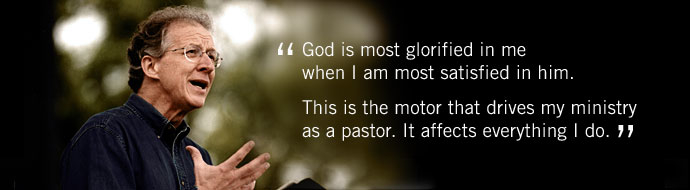
Dr. James Montgomery Boice, just 8 weeks after being diagnosed with a fatal liver cancer, died in his sleep on June 15, 2000. The senior pastor of Tenth Presbyterian Church in Philadelphia, he was a world-famous Bible teacher, author, and statesman for Reformed theology. He informed his congregation of 32 years of his condition on May 7, proclaiming his complete confidence in God’s sovereignty and goodness.

In the past 72 years, historic Tenth Presbyterian Church had two senior pastors, Donald Grey Barnhouse and James Montgomery Boice – previous to Dr. Philip Graham Ryken (Currently the President at Wheaton College). Founded in 1828, the church itself predates their tenure by another hundred years. Tenth Presbyterian Church lies in the very heart of the city and today has about 1,200 members.

James Montgomery Boice accepted the position as senior pastor in 1968, and was the teacher of the Bible Study Hour since 1969 and the more recent God’s Word Today broadcast as well. Dr. Boice held degrees from Harvard, Princeton Theological Seminary, and the University of Basel, Switzerland. He had written or contributed to nearly 50 books, including Foundations of the Christian FaithLiving by the Book, and exegetical commentaries on Genesis, Psalms, Acts, and Romans.

He was no less involved in the preserving of the fundamentals of the faith than his predecessor, Dr. Barnhouse. In 1985, Boice assumed the presidency of Evangelical Ministries, Inc., the parent organization of the Bible Study Hour, Bible Study Seminars, Bible Studies magazine, and other teaching ministries. In 1997, Evangelical Ministries merged with Christians United for Reformation and the Alliance of Confessing Evangelicals, taking the latter as the new organization’s name, and Dr. Boice assumed the presidency. In 1997, he was a founding member of, and chaired, the International Council on Biblical Inerrancy.

Of particular concern to Boice was the matter of the church and her relationship to and engagement of society. His recent book, Two Cities, Two Loves, maintains that Christians are citizens of the kingdom of this world and the kingdom of heaven and that they have responsibilities in each. He urged Christians to “participate in secular life rather than merely shoot from the sidelines at secular people.”

His wife, Linda, and three daughters survive Dr. Boice. Characteristic of his ministry was his pushing Christians to commit themselves to staying in one place. He lived what he preached, committing to the church and his downtown neighborhood for 30 years. A gifted pastor and leader, he turned down many attractive opportunities in order to build a sense of permanence and belonging. And he urged his parishioners to do the same.

The article above is adapted from a Book of Sermons by Dr. Boice entitled: Psalm 1-41: An Exposition of the Psalms, Volume 1. Grand Rapids: Baker, 1994/2004, pages 348-349.

5 Questions Dr. Tim Keller Asks of a Biblical Passage

David Cooke has posted Keller’s Five Questions over at Cookies Days (a blog full of Gospel centered resources worth frequenting). David first posted these questions Keller asks in 2009.

Tim Keller said these are five questions he asks of a biblical text as he reads it for himself. Helpful.

  1. How can I praise him?
  2. How can I confess my sins on the basis of this text?
  3. If this is really true, what wrong behavior, what harmful emotions or false attitudes result in me when I forget this? Every problem is because you have forgotten something. What problems are you facing?
  4. What should I be aspiring to on the basis of this text?
  5. Why is God telling me this today?

About Dr. Tim Keller:

In 1989 Dr. Timothy J. Keller, his wife and three young sons moved to New York City to begin Redeemer Presbyterian Church. In 20 years it has grown to meeting for five services at three sites with a weekly attendance of over 5,000. Redeemer is notable not only for winning skeptical New Yorkers to faith, but also for partnering with other churches to do both mercy ministry and church planting.  Redeemer City to City is working to help establish hundreds of new multi-ethnic congregations throughout the city and other global cities in the next decades.

Dr. Tim Keller is the author of several phenomenal Christo-centric books including:

Every Good Endeavor: Connecting Your Work to God’s Plan for the World. New York, Penguin Publishing, November, 2012.

Center Church: Doing Balanced, Gospel-Centered Ministry in Your City. Grand Rapids: Zondervan, September, 2012.

The Freedom of Self Forgetfulness. New York: 10 Publishing, April 2012.

Generous Justice: How God’s Grace Makes Us Just. New York: Riverhead Trade, August, 2012.

The Gospel As Center: Renewing Our Faith and Reforming Our Ministry Practices (editor and contributor). Wheaton: Crossway, 2012.

The Meaning of Marriage: Facing the Complexities of Commitment with the Wisdom of God. New York, Dutton, 2011.

The Prodigal God. New York, Dutton, 2011.

King’s Cross: The Story of the World in the Life of Jesus. New York, Dutton, 2011.

Counterfeit Gods: The Empty Priorities of Money, Sex, and Power, and the Only Hope That Matters. New York, Riverhead Trade, 2011.

The Reason For God: Belief in an Age of Skepticism. New York, Dutton, 2009.

Worship By The Book (contributor). Grand Rapids: Zondervan, 2002.

Ministries of Mercy: The Call of the Jericho Road. Phillipsburg: P&R Publishing, 1997.

Warren Wiersbe on the Question: How Can We Trust God When Going Through the Furnace of Pain?

“Through The Furnace of Pain”

Nearly two hundred years ago, Thomas Jefferson wrote a letter to his friend Mrs. Cosway, and in it he said, “The art of life is the avoiding of pain.” Thomas Jefferson was a great man and a brilliant thinker, but I disagree. When we first hear that statement, it appears to be true. None of us deliberately looks for pain as we go about our daily activities. When it comes time for our six-month’s dental checkup or our annual visit to the doctor, we really wish we didn’t have to go. After all, the dentist might have to fill a cavity, or the doctor might order an operation or a diet! Generally speaking, all of us do our best to avoid pain.

But when you take a deeper look at the statement, you see that it fails to live up to the facts of history. Thomas Jefferson himself paid a price to help bring the American independence! Many of the patriots of that day lost their names, their homes, their fortunes, and some their lives, in order to win liberty. Our liberty was purchased by pain and death; and our liberty has been protected by pain and death. History itself shows us that human progress can only be made when somebody suffers for that which is true and right.

Even apart from history, our own personal experience teaches us the folly of this statement. The deepest pains are not physical; they are emotional and spiritual. All of us have suffered pain during our pilgrimage of life. We could have avoided the pain, but we have learned that the most important things in life usually involve suffering. If people lived to avoid pain, they would never want to grow up. But just think of what they would miss!

Take the matter of human birth. To be sure, we have modern scientific methods to protect mothers, but there is still a certain amount of pain. Jesus Himself used this as an illustration of His own suffering when He said, “A woman when she is in travail hath sorrow, because her hour is come: but as soon as she is delivered of the child, she remembereth no more the anguish, for joy that a man is born into the world” (John 16:2 1).

Think, too, of the pain and sorrow that the mother and father experience as they seek to raise that child. The old proverb says, “When they are little, children step on your feet; but when they are older, they step on your heart.” Often this is true. In my ministry I have met dedicated Christian parents whose hearts have been broken because of wayward children who failed to heed their instruction and example. If everybody really lived to avoid pain, nobody would get married and raise a family; yet people do it all the time.

We must never think that pain is something sinful. Some suffering comes because of disobedience; but not all pain is the result of sin. If Adam in the Garden of Eden had tripped over a rock, he would have felt it. To be sure, the pain of sickness and physical decline is ultimately caused by sin; but even the pain of sickness can have a good result. If you and I never felt pain when something was wrong in our bodies, we would die from neglect. A pain somewhere in the body is a danger signal, and we ought to be thankful for it. But for the Christian believer, pain has much higher ministries. I often hear people say that Christians suffer more than other people do, but I’m not so sure this can be proved. As I visit hospitals and nursing homes, I meet many unsaved people who are suffering. In fact, I believe that the dedicated Christian probably avoids a lot of the physical suffering that comes to a person who defiles and destroys his body through sin and selfishness.

What are the higher ministries of pain? Well, for one thing, pain can have a purifying power. The apostle Peter writes in 1 Peter 4:1, “For he that hath suffered in the flesh hath ceased from sin.” One of the modern translations puts it, “You must realize then that to be dead to sin inevitably means pain.” I once went through intense physical suffering, and it very definitely had a purifying effect on my heart and mind. It made me see spiritual things a lot more clearly. My priorities were rearranged. Granted, pain by itself can never accomplish this; but when we yield to Christ and ask for His help, pain can purify us.

A secondary ministry of pain is that of fellowship with Christ. In Philippians 3:10 Paul writes about “the fellowship of his [Christ’s] sufferings.” Some people turn against God when they go through suffering, but this need not be so. You and I can be drawn closer to God by faith when we are going through the furnace of pain. None of us has ever experienced all that Jesus experienced on the cross. The unsaved person has no idea of the wonderful joy and peace the believer experiences in his heart even in the midst of constant pain.

A third ministry of pain is bringing glory to God. This doesn’t mean that God deliberately makes us suffer just so He can receive glory. But it does mean that God can use our suffering to glorify His name. When Jesus faced the hour of His death, He said, “Father, glorify thy name.” And God was glorified in the suffering and death of His Son, and God honored Christ and raised Him from the dead in great glory. I have visited Christians in hospitals and homes whose lives were glorifying God even in their suffering.

Pain purifies. Pain draws the Christian closer to Christ. Pain glorifies God. But we must also remember that pain today means glory and honor tomorrow. Paul wrote, “The sufferings of this present time are not worthy to be compared with the glory which shall be revealed in us” (Rom. 8:18). God doesn’t always settle His accounts in this life. In fact, no Christian should expect to receive much reward in this world. Jesus said, “In the world you shall have tribulation.” A man said to me one day, “I don’t believe in hell or heaven. You have your hell or heaven here on earth.” That man was wrong. The unsaved person had better enjoy this world all he can, because it’s the only heaven he will ever see! “It is appointed unto men once to die but after this the judgment.”

But the Christian is looking forward to the glory of heaven. Jim Elliot, one of the martyred missionaries of Ecuador, wrote in his journal: “He is no fool to give what he cannot keep, to gain what he cannot lose.” If we suffer with Christ today, it only means glory with Christ tomorrow. For the Christian, the best is yet to come.

Have you surrendered your pain to Christ and asked Him to use it for your good and His glory? I suggest that you do so by faith. God doesn’t promise to remove our pain, or even to relieve our pain; but He does promise to transform it and use it for His eternal purposes.

The great apostle Paul was in pain. He had a thorn in the flesh, given to him by God to help keep him humble and useful. Paul did what any Christian would have done-he prayed for the pain to be removed. God did not answer his prayer, but He did meet his need. He gave Paul all the grace he needed to transform that weakness into strength, that suffering into glory. And God will give grace to you and me if only we will yield our all to Him.

About the Author:

Warren W. Wiersbe is the Distinguished Professor of Preaching at Grand Rapids Baptist Seminary, and is the author of more than 100 books. Billy Graham calls him “one of the greatest Bible expositors of our generation.” Interestingly, Warren’s earliest works had nothing to do with scriptural interpretation. His interest was in magic, and his first published title was Action with Cards (1944).

“It was sort of imbecilic for a fifteen-year-old amateur magician to have the audacity to write a book and send it to one of the nation’s leading magic houses,” Warren says. But having a total of three books published by the L.L. Ireland Magic Company—before the age of 20—gave him a surge of confidence. In later years, he applied his confidence and writing talent to the Youth for Christ (YFC) ministry.

Warren wrote many articles and guidebooks for YFC over a three-year period, but not all his manuscripts were seen by the public eye. One effort in particular, The Life I Now Live, based on Galatians 2:20, was never published. The reason, Warren explains with his characteristic humor, is simple: it was “a terrible book…Whenever I want to aggravate my wife, all I have to say is, ‘I think I’ll get out that Galatians 2:20 manuscript and work on it.’” Fortunately, Warren’s good manuscripts far outnumbered the “terrible” ones, and he was eventually hired by Moody Press to write three books.

The much-sought-after author then moved on to writing books for Calvary Baptist Church. It was during his ten years at Calvary that Expository Outlines on the New Testament and Expository Outlines on the Old Testament took shape. These two works later became the foundation of Warren’s widely popular Bible studies known as the Be series, featuring such titles as Be Loyal (a study on Matthew) and Be Delivered (a study on Exodus). Several of these books have been translated into Spanish.

His next avenue of ministry was Chicago’s Moody Memorial Church, where he served for seven years. He wrote nearly 20 books at Moody before moving to Lincoln, Nebraska, where he and his wife, Betty, now live. Prior to relocating, he had been the senior pastor of Moody Church, a teacher at Trinity Evangelical Divinity School, and a producer of the Back to the Bible radio program.

During all these years of ministry, Warren held many more posts and took part in other projects too numerous to mention. His accomplishments are extensive, and his catalog of biblical works is indeed impressive and far-reaching (many of his books have been translated into other languages). But Warren has no intention of slowing down any time soon, as he readily explains: “I don’t like it when people ask me how I’m enjoying my ‘retirement,’ because I’m still a very busy person who is not yet living on Social Security or a pension. Since my leaving Back to the Bible, at least a dozen books have been published, and the Lord willing, more are on the way.”

Wiersbe’s recent books include Your Next MiracleThe 20 Essential Qualities of a Child of GodClassic Sermons on the Fruit of the SpiritClassic Sermons on Jesus the ShepherdKey Words of the Christian LifeLonely PeopleA Gallery of GraceReal Peace: Freedom and Conscience in the Christian Life, and On Being a Leader for God.

The article above was adapted from Warren W. Wiersbe’s classic encouraging devotional: The Bumps Are What You Climb On: Encouragement For Difficult Days. Tappan, N.J.: Fleming H. Revell, 1996.

John Piper on the Question: How Can We Be Thankful In The Midst of Suffering?

Thanksgiving in Suffering

“Since we have a great high priest, Jesus, the Son of God, who has passed through the heavens [or: gone into heaven], let us hold fast our confession. For we do not have a high priest who is unable to sympathize with our weaknesses, but one who in every respect has been tested as we are, yet without sin. Let us then with confidence draw near to the throne of grace, that we may receive mercy and find grace to help in time of need” (Hebrews 4:14-16).

I want to present Jesus to you as a sympathetic Go-between for you and God. I want you to understand how Jesus, the Son of God, is alive today, and stands ready to serve you as your advocate with God the Father. I want you to see why you can draw near to the throne of God with Jesus as your Go-between and Advocate, and expect to find mercy and grace to help in times of need. If it’s true that we can always go to God’s throne and find mercy and help in times of need, then there can always be thanksgiving, even in suffering—and that’s my theme, “Thanksgiving in Suffering.”

A Wrong Way to View Jesus as a Go-Between

Now when I call Jesus a “Go-between” for you and God, I realize that I might be creating a false picture in your mind. You might take me to mean that God is the bad guy and we are the victims and Jesus is the good guy, and Jesus comes between us and God the way a level-headed son comes in between a furious father and a helpless child and rescues the child by grabbing the father’s arms and saying, “Cool it! Cool it, dad.”

We Are Not Victims but Sinners

There are three things wrong with that picture. You and I are not victims of God, we are sinners against God. The Bible says, “All have sinned and fallen short of God’s glory” (Romans 3:23). Our consciences tell us plainly that we have not even lived up to our own standards, let alone God’s.

Sending Jesus Was God’s Idea

The second thing wrong with that picture is that Jesus did not intrude himself between us and God. He didn’t jump in to wrestle God away from us against God’s will. God put Jesus between us and himself. “For God so love the world that he GAVE his only begotten Son, that whoever believes on him might have everlasting life” (John 3:16). The Go-between was God’s idea. He took the initiative to make a way for sinners to come to him through Jesus.

God Is Never Impulsive or Rash or Reckless

The third thing wrong with that picture is that God does not lose his cool. He is not impulsive or rash or reckless. He is perfectly righteous and unswervingly just and infinitely holy and pure. He never plays fast and loose with truth or with virtue. He upholds his law with unimpeachable equity and integrity. No shady deals. No bribery. No skeletons in the closet. “God is light and in him is no darkness at all” (1 John 1:5).

The Right Understanding of Jesus as a Go-Between

That’s why we need a Go-between. The Bible says, “Your iniquities have made a separation between you and your God, and your sins have hid his face from you” (Isaiah 59:2). God is like a blazing fire of light and truth and righteousness, and I am like a broken, dark, dead, dry piece of wood. If I get near him, I will be consumed.

And so God sends a Go-between—his Son. He takes on human nature, he lives a perfect life, he dies to bear the sins of many, and he rises to vindicate the saving power of his death. Now Jesus says, “I am the way the truth and the life, no one comes to the Father but by me” (John 14:6). Jesus is the only true Go-between with God. The apostle Peter said, “Christ died for sins once for all, the righteous for the unrighteous, that he might bring us to God” (1 Peter 3:18). Only Jesus can bring us to God. The apostle Paul said, “We were reconciled to God by the death of his Son” (Romans 5:10). Only Jesus can save us from the separation and alienation that cuts us off from the Father. “There is salvation in no one else, for there is no other name under heaven given among men by which we must be saved” (Acts 4:12). It’s Jesus or alienation.

He came into the world and took on himself our human nature, our weaknesses, our pain, and our death. He was tested in every way like we are, and yet he didn’t sin. Since he didn’t sin, he can be a perfect High Priest—a Go-between—for us. And since he suffered and was tested and tempted, he can be a sympathetic Go-between.

The Amazing Invitation of Hebrews 4:16

I say all of this just to lay the foundation for the amazing invitation that God gives to us in Hebrews 4:16. He says, “Therefore, let us with confidence [not hesitation, not reluctance, but with confidence let us] draw near to the throne of grace, that we may receive mercy and find grace to help in time of need.” When Jesus is your Go-between, the throne of God is a throne of grace, not judgment, and what you find there is mercy and grace to help in time of need.

What this means is that when Jesus, the perfect Go-between, has met your need for forgiveness and acceptance with God, he doesn’t take off and say, “You’re on your own now; see you in heaven.” Instead, he stands ready to serve you all the rest of your life.

The Christian life begins with forgiveness and reconciliation with God. It’s like a great homecoming, with tears of repentance and hope and joy and acceptance. For some it’s almost too good to be true. But then the Christian life continues, and it’s a life of ongoing dependence on the grace of God. We don’t escape the pain and stress and disappointments and suffering and calamities and tragedies and frustrations and pressures of life in this world.

In fact, sometimes becoming a Christian and obeying the Word of the Lord increases our troubles rather than lessening them. But the difference now is, first, that the outcome of life is settled—it will be eternal life with infinite happiness (Romans 8:17–18)—and, second, all along the way in this world God helps us in times of need through our Go-between, Jesus. God’s invitation to everyone is, first, come to Jesus for forgiveness and reconciliation with me, and then, second, “Draw near to the throne of grace, that you may receive mercy and find grace to help in time of need.”

The Story of Sandra Tarlen

I want to illustrate this power and willingness of God to help you in time of need by introducing you to one more person who is living evidence that God gives mercy and grace to help in time of need.

This person is Sandra Tarlen. She has been part of our fellowship since early this year. Her story goes like this.

My major crisis started when I was four years old! I was burned in a gasoline fire. A little boy threw a can of gasoline into a fire and I was standing on the other side. The gas went through the fire and into my face and the flames followed. My face suffered 1st, 2nd, and 3rd degree burns. These burns left ugly, disfiguring scars. When I started school it was very difficult. I felt different from the rest of the children and a lot of them were very cruel to me. I didn’t like school much, but I didn’t like summers either, because that always meant I would have to have another surgery on my face.

My father became an alcoholic and the word love or any action of love was not heard or seen in my family that I can ever remember. An old man who lived next door to us was always very nice and would buy or make me things—but there was a price to pay for gifts. He fondled and molested me repeatedly. One night when I was 13 years old, I was walking home from the show, and a gang of young men picked me up and raped me.

Although these things caused me to feel dirty and empty inside, they also gave me the feeling that at least somebody wanted me for something. I began to fill a lot of loneliness with sexual relationships. My heart began to get hard and bitter and full of hate. The hate began to eat at me from the inside out.

I became anorexic, then bulimic. I had chronic migraine headaches, ulcers, a hysterectomy, and other major surgeries. I was in and out of doctor’s offices constantly looking for a remedy. I experimented with alcohol, drugs and a couple of times even suicide! By the time I was 17 I already had two children and by the time I was 25 I had been married four times. Life seemed pretty hopeless.

I knew there had to be more to life than what I was living. In search for that, I went with my best friend Sherry to a Victorious Christian Living Conference. There I heard David Ritzenthaler talk about the Gospel. He explained how much God loved me, enough to send His own Son to die for me and save me from my sins. I knew that this God David was talking about was not the God of my life and I desperately wanted to know Him. Five days after hearing this, I called David. I went to his office and he shared with me the “Four Spiritual Laws.” That night on March 12, 1982, at 7:30 PM, I prayed and confessed I was a sinner in need of a Savior, I invited Jesus into my heart to be Lord of my life. At that very moment God gave me new life.

That was just the beginning of new life for Sandra. We will give her time to tell her story early next year. But there remained 11 more surgeries to bring the total to 32 in her life. She speaks of surgeries and scar tissue on the inside too. Broken relationships and broken dreams being healed. Amazingly Sandra writes,

He gave me new dreams as I continued to seek Him. Today after all those surgeries, I can honestly say with a joyful heart that I am thankful for the experiences I’ve gained as a result of them all. God has used each one to strengthen me and my relationship with Him and when I share my experience, it has helped to strengthen others.

The point of Sandra Tarlen’s story and the point of God’s word in Scripture is that Jesus is a very sympathetic, caring, and powerful Go-between with God. Because he loved us and died for us and rose from the dead, anyone—any one of you—who trusts him can draw near to the throne of grace to receive mercy and grace to help in time of need.

Sermon/ Article Above Used by Permission. By Dr. John Piper. © 2012 Desiring God Foundation. Website: desiringGod.org. Thanksgiving in Suffering is a synopisis of John Piper’s sermon in  a Celebration of Thanksgiving at Maranatha Hall on November 18,1990.

About Dr. John Piper

John Piper was pastor for preaching and vision for over thirty years at Bethlehem Baptist Church in the Twin Cities of Minnesota. He grew up in Greenville, South Carolina, and studied at Wheaton College, Fuller Theological Seminary (B.D.), and the University of Munich (D.theol.). For six years he taught Biblical Studies at Bethel College in St. Paul, Minnesota, and in 1980 accepted the call to serve as pastor at Bethlehem. John is the author of more than 40 books and more than 30 years of his preaching and teaching is available free at desiringGod.org. John and his wife, Noel, have four sons, one daughter, and twelve grandchildren.

Tim Keller’s 5 Steps to a Wise and Godly Life from Proverbs

Proverbs: A Mini Guide to LIfe

There are five things that comprise a wise, godly life. They function both as means to becoming wise and godly as well as signs that you are growing into such a life:

1. Put your heart’s deepest trust in God and his grace. Every day remind yourself of his unconditioned, covenantal love for you. Do not instead put your hopes in idols or in your own performance.

“Let love and faithfulness never leave you; bind them around your neck, write them on the tablet of your heart. Then you will win favor and a good name in the sight of God and man. Trust in the LORD with all your heart.” (Proverbs 3:3-5a)

2. Submit your whole mind to the Scripture. Don’t think you know better than God’s word. Bring it to bear on every area of life. Become a person under authority.

“Lean not on your own understanding; in all your ways acknowledge him, and he will make your paths straight.” (Proverbs 3:5b-6)

3. Be humble and teachable toward others. Be forgiving and understanding when you want to be critical of them; be ready to learn from others when they come to be critical of you.

“Do not be wise in your own eyes; fear the LORD and shun evil. This will bring health to your body and nourishment to your bones.” (Proverbs 3:7-8)

4. Be generous with all your possessions, and passionate about justice. Share your time, talent, and treasure with those who have less.

“Honor the LORD with your wealth, with the first fruits of all your crops; then your barns will be filled to overflowing, and your vats will brim over with new wine.” (Proverbs 3:9-10)

5. Accept and learn from difficulties and suffering. Through the gospel, recognize them as not punishment, but a way of refining you.

“My son, do not despise the LORD’s discipline and do not resent his rebuke, because the LORD disciplines those he loves, as a father the son he delights in.” (Proverbs 3:10-11)

As I meditated on these five elements–rooted in his grace, obeying and delighting in his Word, humble before other people, sacrificially generous toward our neighbor, and steadfast in trials–I thought of Jesus.

The New Testament tells us that the personified ‘divine wisdom’ of the Old Testament is actually Jesus.

The Son of Man came eating and drinking, and they say, ‘Look at him! A glutton and a drunkard, a friend of tax collectors and sinners!’ Yet wisdom is justified by her deeds.” (Matthew 11:19)

And I realized that:

a) Jesus showed the ultimate trust and faithfulness to God and to us by going to the cross,

b) Jesus was saturated with and shaped by Scripture,

c) Jesus was meek and lowly in heart

“Come to me, all who labor and are heavy laden, and I will give you rest. Take my yoke upon you, and learn from me, for I am gentle and lowly in heart, and you will find rest for your souls. For my yoke is easy, and my burden is light.” (Matthew 11:28-30),

d) Jesus, though rich, became poor for us,

e) and he bore his suffering, for us, without complaint. We can only grow in these five areas if you know you are saved by costly grace. That keeps you from idols, from self-sufficiency and pride, from selfishness with your things, and from crumbling under troubles. Jesus is wisdom personified, and believing his gospel brings these character qualities into your life.

For a number of weeks I have been spending time praying for these five things for my family and my church leaders. There’s no better way to instill these great things in your own heart, than to pray intensely for them in the lives of those you love.

– Tim Keller, Excerpted from the March 16, 2010 post on RCTC – http://redeemercitytocity.com/blog/view.jsp?Blog_param=146; Click on this link: Proverbs: A Mini-Guide to Life

 About Dr. Tim Keller

In 1989 Dr. Timothy J. Keller, his wife and three young sons moved to New York City to begin Redeemer Presbyterian Church. In 20 years it has grown to meeting for five services at three sites with a weekly attendance of over 5,000. 
Redeemer is notable not only for winning skeptical New Yorkers to faith, but also for partnering with other churches to do both mercy ministry and church planting. Redeemer City to City is working to help establish hundreds of new multi-ethnic congregations throughout the city and other global cities in the next decades.

 Books Authored By Dr. Tim Keller:

Every Good Endeavor: Connecting Your Work to God’s Plan for the World. New York, Penguin Publishing, November, 2012.

Center Church: Doing Balanced, Gospel-Centered Ministry in Your City. Grand Rapids: Zondervan, September, 2012.

The Freedom of Self Forgetfulness. New York: 10 Publishing, April 2012.

Generous Justice: How God’s Grace Makes Us Just. New York: Riverhead Trade, August, 2012.

The Gospel As Center: Renewing Our Faith and Reforming Our Ministry Practices (editor and contributor). Wheaton: Crossway, 2012.

The Meaning of Marriage: Facing the Complexities of Commitment with the Wisdom of God. New York, Dutton, 2011.

The Prodigal God. New York, Dutton, 2011.

King’s Cross: The Story of the World in the Life of Jesus. New York, Dutton, 2011.

Counterfeit Gods: The Empty Priorities of Money, Sex, and Power, and the Only Hope That Matters. New York, Riverhead Trade, 2011.

The Reason For God: Belief in an Age of Skepticism. New York, Dutton, 2009.

Worship By The Book (contributor). Grand Rapids: Zondervan, 2002.

Ministries of Mercy: The Call of the Jericho Road. Phillipsburg: P&R Publishing, 1997.

It’s Friday, But Sunday is Coming! By Dr. David P. Craig

“Thank God for Sunday!”

I think the first time I ever heard the phrase, “It’s Friday, but Sunday is Coming!” was from a message that Tony Campolo delivered in Chapel in the mid 1980’s at Multnomah School of the Bible (Now called Multnomah University in Portland, Oregon).

Yesterday, I had a “procedure” a nicer and more sweet sounding term than “surgery” at a hospital in Irvine, CA. I was recently diagnosed with Cancer – Squamous Cell Carcinoma – that started on the back of my tongue and has resulted in a huge mass the size of a lemon in my neck.

I had a “G-tube” inserted in my stomach because doctors and former patients I’ve consulted with say that weeks 3-6 of radiation and chemotherapy will be “brutal” – my throat will hurt “200 times worse than strep throat” (Doctor’s exact words). Also, that I will not be able to eat or drink anything orally during that time because of the pain. I recently talked with a friend of a friend who had the exact same cancer two years ago (and by God’s grace is cancer free now), and he lost 80 pounds during treatment and had the G-tube “procedure” in a weakened state mid-way through treatment. His advice was “get the G-tube NOW!”

So yesterday – with a tube in my nose that went to my stomach and feeling like I was battling in a kick boxing match with Chuck Norris and Jackie Chan I was thinking of the aforementioned phrase by Tony Campolo, “It’s Friday, but Sunday is coming.”

During surgery – I was awake during the “procedure” and in a lot of pain – I tried quoting Bible verses and singing hymns (I can never remember the new songs – only classics like “And Can It Be; “How Great Thou Art”; and “Amazing Grace”); and trying to take my focus off of the pain. Quoting verses or hymns just didn’t seem to work – I couldn’t concentrate on anything other than the pain.

So the Holy Spirit  began take my focus off of my pain and on to Jesus – what He did for me on the cross 2000 years ago. I visualized the torture He endured – the lashes; the insults; the crown of thorns; suffocating; the blood, sweat, and tears. Ultimately being unrecognizable, forsaken, and dying for my sins. He was perfect and never did anything wrong – and yet He volunteered to endure more torture than I could imagine. I endured what seemed like torture for 45 minutes – and now its done. I didn’t accomplish any atoning work for anyone. Yet His righteousness was imputed to me, and His voluntary sacrifice in payment for my sin were absolutely necessary to make me right with a Holy and perfect God.

Jesus was crucified on a Friday, but rose again on Sunday. I can’t even come close to comparing my “torture” with His. However, I do have a deeper appreciation for what He endured in His 33 years on earth: facing temptation without sinning; completely obeying God the Father in every way; and becoming the “Lamb that was slain” so that He could be my Savior and Lord.

I don’t know what will become of my cancer, I hope and pray that God will take it away. One thing I do know, is that He has already wiped away my sin, and that everything He allows is for my good and ultimately for the Glory of His Son.  I hope and pray that God will use my cancer for the furtherance of the glorious Gospel. However, I know that even if I’m silent the rocks will cry out of His glorious works. I know that I am weak and frail and but a mere sinful vessel. I also know that Jesus was weak, suffered, and died in my place, and rose from the dead on Sunday. He is so strong that no one and nothing can defeat Him. Today is Friday. But Sunday is coming! Last time He came as a humble servant. Next time He comes as King!

Today may be a tough day for you my friend. But remember that anyone who comes to Him will not be cast away. Our confession of sin in exchange for His righteousness. We can never earn our salvation – but Jesus has earned the right to be trusted and believed in unto salvation. “The righteous for the unrighteous, to bring us to God.”

Today, I’m doing better, but will continue down a rough road with radiation and chemotherapy ahead. However, I am grateful that because of the righteous life, death, burial, and resurrection of my Lord and Savior Jesus Christ, that no matter how many “Friday’s” I will have in this trial – that because of Jesus finished work on the cross, my future hope is that “Sunday is coming!”

Some Scriptures God The Holy Spirit Used To Comfort Me in my Pain:

“My God, my God, why have you forsaken me? Why are you so far from saving me, from the words of my groaning?” – Psalm 22:1

“For he grew up before him like a young plant, and like a root out of dry ground; he had no form or majesty that we should look at him, and no beauty that we should desire him. He was despised and rejected by men; a man of sorrows, and acquainted with grief; and as one from whom men hide their faces he was despised, and we esteemed him not. Surely he has borne our griefs and carried our sorrows; yet we esteemed him stricken, smitten by God, and afflicted. But he was pierced for our transgressions; he was crushed for our iniquities; upon him was the chastisement that brought us peace, and with his wounds we are healed. All we like sheep have gone astray; we have turned—every one—to his own way; and the Lord has laid on him the iniquity of us all. He was oppressed, and he was afflicted, yet he opened not his mouth; like a lamb that is led to the slaughter, and like a sheep that before its shearers is silent, so he opened not his mouth. – Isaiah 53:2-7

Yet it was the will of the Lord to crush him; he has put him to grief; when his soul makes an offering for guilt, he shall see his offspring; he shall prolong his days; the will of the Lord shall prosper in his hand. Out of the anguish of his soul he shall see and be satisfied; by his knowledge shall the righteous one, my servant, make many to be accounted righteous, and he shall bear their iniquities. Therefore I will divide him a portion with the many, and he shall divide the spoil with the strong, because he poured out his soul to death and was numbered with the transgressors; yet he bore the sin of many, and makes intercession for the transgressors. – Isaiah 53:10-12

Therefore, we are ambassadors for Christ, God making his appeal through us. We implore you on behalf of Christ, be reconciled to God. For our sake he made him to be sin who knew no sin, so that in him we might become the righteousness of God. – 2 Corinthians 5:20-21

Since then we have a great high priest who has passed through the heavens, Jesus, the Son of God, let us hold fast our confession. For we do not have a high priest who is unable to sympathize with our weaknesses, but one who in every respect has been tempted as we are, yet without sin. Let us then with confidence draw near to the throne of grace, that we may receive mercy and find grace to help in time of need. – Hebrews 4:14-16

For to this you have been called, because Christ also suffered for you, leaving you an example, so that you might follow in his steps. He committed no sin, neither was deceit found in his mouth. When he was reviled, he did not revile in return; when he suffered, he did not threaten, but continued entrusting himself to him who judges justly. He himself bore our sins in his body on the tree, that we might die to sin and live to righteousness. By his wounds you have been healed. For you were straying like sheep, but have now returned to the Shepherd and Overseer of your souls. – 1 Peter 2:21-25

For it is better to suffer for doing good, if that should be God’s will, than for doing evil. For Christ also suffered once for sins, the righteous for the unrighteous, that he might bring us to God, being put to death in the flesh but made alive in the spirit. – 1 Peter 3:17-18

Beloved, do not be surprised at the fiery trial when it comes upon you to test you, as though something strange were happening to you. But rejoice insofar as you share Christ’s sufferings, that you may also rejoice and be glad when his glory is revealed…Yet if anyone suffers as a Christian, let him not be ashamed, but let him glorify God in that name [the name of Christ]. – 1 Peter 4:12-13, 16

Since therefore Christ suffered in the flesh, arm yourselves with the same way of thinking, for whoever has suffered in the flesh has ceased from sin, so as to live for the rest of the time in the flesh no longer for human passions but for the will of God. – 1 Peter 4:1-2

My little children, I am writing these things to you so that you may not sin. But if anyone does sin, we have an advocate with the Father, Jesus Christ the righteous. He is the propitiation for our sins, and not for ours only but also for the sins of the whole world. 1 John 2:1-2

The sting of death is sin, and the power of sin is the law. But thanks be to God, who gives us the victory through our Lord Jesus Christ. Therefore, my beloved brothers, be steadfast, immovable, always abounding in the work of the Lord, knowing that in the Lord your labor is not in vain. – 1 Corinthians 15:56-58

Dr. Gleason L. Archer on the Question: Does Proverbs 22:6 Always Work for the Children of Believers?

Proverbs 22:6 – One of The Most Misunderstood Bible Verses

Proverbs 22:6 says, “Train up a child in the way he should go, even when he is old he will not depart from it” (NASB). The NIV renders the second line thus: “And when he is old he will not turn from it.”

 Does Proverbs 22:6 always work for the children of believers?

Before discussing the practical application of this verse, we should examine quite carefully what it actually says. The literal rendering of the Hebrew is “Initiate, train the boy” (na’ar refers to a young male from childhood until he reaches majority); the verb does not occur elsewhere in the Old Testament with the meaning “train up.” Normally the verb means “dedicate” (a house or a temple [Deut. 20:5; 1 Kings 8:63; 2 Chron. 7:5], or else a dedication offering [Num. 7:10]). This seems to be a cognate with the Egyptian h-n-k-n-k (“give to the gods,” “set up something for divine service”).

This gives us the following range of possible meanings: “Dedicate the child to God,” “Prepare the child for his future responsibilities,” “Exercise or train the child for adulthood.”

Next we come to what is translated “in the way he should go.” Literally, it is “according to his way” (’al-pîC darkôC); ‘al-pîC (lit., “according to the mouth of”) generally means “after the measure of,” “conformably to,” or “according to.” As for darkôC, it comes from dere (“way”); and this may refer to “the general custom of, the nature of, the way of acting, the behavior pattern of” a person. This seems to imply that the manner of instruction is to be governed by the child’s own stage of life, according to his personal bent, or else, as the standard translations render it, according to the way that is proper for him—in the light of God’s revealed will, according to the standards of his community or his cultural heritage. In this highly theological, God-centered context (“Yahweh is the maker” of both the rich and the poor [v.2]; “The reward of humility and the fear of Yahweh is riches, honor, and life” [v.4]), there can be little doubt that “his way” here implies “his proper way” in the light of the goals and standards set forth in v.4 and tragically neglected by the “perverse” in v.5. Yet there may also be a connotation that each child is to be reared and trained for God’s service according to the child’s own personal and peculiar needs and traits.

The second line reads gam kîC (“even when”) yazqîCn (“he gets old”—zāqēn is the word for “old” or “an elder”), lō’ yāsûCr (“he will not turn away”) mimmennāh (“from it,” i.e., from his derek), which seems to strengthen the interpretation “his proper way,” “behavior pattern,” or “lifestyle” as a well-trained man of God or good citizen in his community.

What this all adds up to, then, is the general principle (and all the general maxims in Proverbs concerning human conduct are of this character, rather than laying down absolute guarantees to which there may never be an exception) that when a godly parent gives proper attention to the training of his child for adult responsibility and for a well-ordered life lived for God, then he may confidently expect that that child—even though he may stray during his young adulthood—will never be able to get away completely from his parental training and from the example of a Godfearing home. Even when he becomes old, he will not depart from it. Or else, this gam kîC may imply that he will remain true to this training throughout his life, even when he gets old.

Does this verse furnish us with an iron-clad guarantee that all the children of conscientious, God-fearing, nobly living parents will turn out to be true servants of God? Will there never be any rebellious children, who will turn their backs on their upbringing and fall into the guilt and shame of a Satan-dominated life? One might construe the verse that way, perhaps; but it is more than doubtful that the inspired Hebrew author meant it as an absolute promise that would apply in every case. These maxims are meant to be good, sound, helpful advice; they are not presented as surefire promises of infallible success.

The same sort of generality is found in Proverbs 22:15: “Foolishness is bound up in the heart of a child; the rod of discipline will remove it far from him” (NASB). This surely does not mean that all children are equally willful and rebellious and that all of them stand in need of the same amount and type of discipline. Nor does it guarantee that a person brought up in a well-disciplined home will never stray off into the folly of sin. There may be exceptions who turn out to be worldly-minded egotists or even lawbreakers who end up in prison. But the rate of success in childrearing is extremely high when the parents follow the guidelines of Proverbs.

What are those guidelines? Children are to be accepted as sacred trusts from God; they are to be trained, cherished, and disciplined with love; and they are to be guided by a consistent pattern of godliness followed by the parents themselves. This is what is meant by bringing them up “in the discipline and instruction of the Lord” (Eph. 6:4). This type of training implies a policy of treating children as even more important than one’s own personal convenience or social life away from home. It means impressing on them that they are very important persons in their own right because they are loved by God, and because He has a wonderful and perfect plan for their lives. Parents who have faithfully followed these principles and practices in rearing their children may safely entrust them as adults to the keeping and guidance of God and feel no sense of personal guilt if a child later veers off course. They have done their best before God. The rest is up to each child himself.

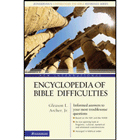
Article adapted from the outstanding reference book by Dr. Gleason L. Archer Jr., New International Encyclopedia of Bible Difficulties (Zondervan’s Understand the Bible Reference Series) (Kindle Locations 6571-6579). Grand Rapids: Zondervan (Reprinted 2011).

 About Dr. Gleason L. Archer

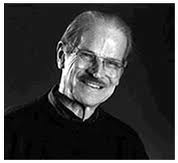
Gleason L. Archer Jr. (1916-2004 – B.A., M.A., Ph.D., Harvard University; B.D., Princeton Theological Seminary; L.L.B., Suffolk Law School) was a biblical scholar, theologian, educator, and author. He served as an assistant pastor of Park Street Church in Boston from 1945 to 1948. He was a Professor at Fuller Theological Seminary for 16 years, teaching New Testament, Greek, Hebrew, and Arabic. From 1965 to 1986 he served as a Professor of Old Testament and Semitics at Trinity Evangelical Divinity School, Deerfield, Illinois. He became an emeritus faculty member in 1989. He also served for many years as a minister of the Evangelical Free Church of America.

The remainder of his life was spent researching, writing, and lecturing. Archer served as one of the 50 original translators of the NASB published in 1971. He also worked on the team which translated the NIV Bible published in 1978. I give this introduction, because many people are not familiar with Archer (unfortunately), but he was a brilliant Christian scholar who could have excelled as a lawyer (his father was the founder and president of Suffolk Law School), and chose to use his exceptional gifts to defend the inerrancy and integrity of the Scriptures over the span of his entire adult life. I would say that along with Bruce Waltke and Walter Kaiser Jr., he was one of the most influential Old Testament Evangelical Scholars at the end of the Twentieth Century. Legend has it, (I have not been able to verify whether this is 100% true or not) that he was so gifted in languages that for fun (and as a challenge) he would study the Bible in a different language every year to continue to grow and develop mentally.

Dr. Steve W. Brown on the Question: Why Does God Have Rules?

“God’s Rules”

Someone gave me several great rules of diet. Let me give you some of them:

  • If you eat something and no one sees you eat it, it has no calories.

  • If you drink a diet soda with a candy bar, the diet soda cancels out the calories in the candy bar.

  • When you eat with other people, calories don’t count if don’t eat more than they do.

  • Cookie pieces contain no calories; the process of breaking causes calorie leakage.

Don’t you wish those were true?

You see, there are certain inviolable rules built into the universe, so I’m afraid that wishing for fewer calories won’t make it so. The other rules of God are like that too. He doesn’t have rules to make you unhappy. Just the opposite. His word is simply the way the world works. Someone has said, “You don’t break the Ten Commandments. You break yourself against them.”

We would find life more enjoyable if we stopped fighting against God’s rules.

For Meditation & Application: Read Psalm 119

Circle, highlight, or underline all the benefits of God’s Word and knowing and obeying it as mentioned in Psalm 119. You’ll begin to get a taste of all that awaits those who guide their lives by God’s loving counsel.

About the Author:

Dr. Steve Brown is one of the most sought after preachers and conference speakers in the country. Having had extensive radio experience before entering the ministry, he is now heard weekdays on the national radio program, Key Life, and one minute feature, “Think Spots”. Steve also hosts a weekly radio talk show, “Steve Brown, Etc.”. He served as the senior pastor of Key Biscayne Presbyterian Church for 17 years before joining the Reformed Theological Seminary (RTS) faculty as Professor of Preaching. After teaching full time for almost two decades at RTS, Dr. Brown retired and is Emeritus Professor of Preaching but remains an Adjunct Professor of Preaching teaching occasional classes each year.

Dr. Brown is the author of many (16 and counting) books and also serves on the Board of the National Religious Broadcasters and Harvest USA (He earned his B.A. from High Point College; an S.T.B. from Boston University School of Theology; and an Litt.D. from King College). Steve is one of my favorite writers and speakers because he is authentic, a great story-teller, is a theologian in disguise, and really knows how to address the realities of how sinful humans can experience the amazing grace of God. The article above was adapted from page 176 in his excellent book on surviving and thriving in a tough world: Jumping Hurdles, Hitting Glitches, and Overcoming Setbacks. Colorado Springs: NavPress, 1992.

Steve Brown Has Authored These Outstanding Grace-Filled Books:

Three Free Sins: God’s Not Mad at You. New York: Simon and Schuster/ Howard Books, 2012.

A Scandalous Freedom. New York: Simon and Schuster/ Howard Books, 2009.

What Was I Thinking? Things I’ve learned Since I Knew It All. New York: Simon and Schuster/ Howard Books, 2006.

Follow the Wind: Our Lord, the Holy Spirit. Grand Rapids: Baker, 1999.

Approaching God: How to Pray. New York: Howard, 1996.

Living Free: How to Live a Life of Radical Freedom and Infectious Joy. Grand Rapids: Baker, 1994.

Born Free: How to Find Radical Freedom and Infectious Joy in an Authentic Faith. Grand Rapids: Baker, 1993.

How To Talk So People Will Listen. Grand Rapids: Baker, 1993.

If Jesus Has Come: Thoughts on the Incarnation for Skeptics, Christians and Skeptical Christians by a Former Skeptic. Grand Rapids: Baker, 1992.

Jumping Hurdles, Hitting Glitches, Overcoming Setbacks. Colorado Springs: NavPress, 1992.

No More Mr. Nice Guy! Saying Goodbye to “Doormat” Christianity. Nashville: Thomas Nelson, 1991.

When Being Good Isn’t Good Enough. Nashville: Thomas Nelson, 1990.

Welcome to the Family: A Handbook for Living the Christian Life. Old Tappan, New Jersey: Fleming H. Revell, 1990.

When Your Rope Breaks: Christ-centered advice on how to go on living—when making it through another day is the hardest thing in the world. Nashville: Thomas Nelson, 1988.

Heirs with the Prince. Nashville: Thomas Nelson, 1985.

If God is in Charge: Thoughts On The Nature of God For Skeptics, Christians, and Skeptical Christians. Grand Rapids: Baker 1983.

Randy Alcorn on the Question: “Will There Be Animals on the New Earth?”

(When Randy Alcorn wrote his Biblical Theology of Heaven in 2004 simply entitled “Heaven” I preached a series at my church on the subject for three months. I read half a dozen books in my series preparation, and His book was by far the best of the bunch. It’s Theologically deep; contains every passage in the Bible that addresses Heaven and the New Earth; extremely well organized; thought provoking; and full of good argumentation for his interpretations and ideas based on his extensive study.  Honestly, I was never that excited about Heaven until I read his book! Now I can barely contain myself about how awesome it will be to be with Jesus for eternity! Alcorn’s writings are always saturated with Scripture, cogently articulated, and interesting. Here is a sampling of his thoughts on animals on the New Earth – enjoy! – By the way, another excellent thought provoking book on this topic is Peter Kreeft’s Heaven: The Heart’s Deepest Longing –  DPC)

Animals in Heaven?

I have included two full chapters on this fascinating subject in the book Heaven but I will try to summarize the main points here (Randy Alcorn. Heaven. Wheaton: Tyndale 2004 – pictured above). Animals were part of God’s perfect original design for Earth and mankind. “God made the wild animals according to their kinds, the livestock according to their kinds, and all the creatures that move along the ground according to their kinds. And God saw that it was good” (Genesis 1:25).

Because animals were a significant part of life on the original Earth and Scripture makes it clear that God will remake the earth just as he will remake mankind, it stands to reason that animals will be part of the New Earth. (Why wouldn’t they be?)

We’re told that animals, along with all creation, long for the deliverance that will be theirs at the time of the redemption of our bodies, at the resurrection (Romans 8:19, 23). They await and long for it, because they will be part of it.

As the entire creation, including animals, plants, and nature itself, fell on humanity’s coattails, so shall the entire creation rise on our coattails, as beneficiaries of Christ’s redemptive work.

Isaiah 11, 60, and 65 depict animals on the New Earth. (For reasons I explain in the book – Heaven, the application of these passages cannot be restricted only to the millennial kingdom.)

God’s plan for a renewed Earth after the Flood—the judgment of water—prominently involved animals. Wouldn’t we expect his plan for a renewed Earth after the future judgment of fire to likewise include animals? The rescue of mankind and animals in the ark is a picture of the resurrection, through which people and animals are rescued to live on the New Earth. Since according to Romans 8 it is those presently suffering and groaning who will be delivered, it’s likely that some of the same animals on the present Earth will be remade to live on the New Earth.

Because the New Earth will be earthly, we shouldn’t be surprised to realize it will have animals. Like all of God’s other creations, they will declare his attributes and we will find joy in God by finding joy in them.

 About Randy Alcorn

Randy Alcorn is a versatile and prolific author, and the founder and director of Eternal Perspective Ministries (EPM), a nonprofit ministry dedicated to teaching principles of God’s Word and assisting the church in ministering to the unreached, unfed, unborn, uneducated, unreconciled, and unsupported people around the world. His ministry focus is communicating the strategic importance of using our earthly time, money, possessions and opportunities to invest in need-meeting ministries that count for eternity. He accomplishes this by analyzing, teaching, and applying the biblical truth.

Before starting EPM in 1990, Randy served as a pastor for fourteen years. He has an MA degree in Biblical Studies from Multnomah University and an Honorary Doctorate from Western Seminary in Portland, Oregon and has taught on the adjunct faculties of both.

A New York Times bestselling author, Randy has written more than forty books, including the bestsellers Heaven, The Treasure Principle, and the Gold Medallion winner Safely Home.His books in print exceed seven million and have been translated into over thirty languages.Randy has written for many magazines including EPM’s quarterly issues-oriented magazine Eternal Perspectives. He is active daily on Facebook and Twitter, has been a guest on more than 700 radio, television and online programs including Focus on the Family, FamilyLife Today, Revive Our Hearts, The Bible Answer Man, and The Resurgence.

Randy resides in Gresham, Oregon, with his wife, Nanci. They have two married daughters and are the proud grandparents of five grandsons. Randy enjoys hanging out with his family, biking, tennis, research, and reading.

The short article above was adapted from Randy Alcorn. Heaven: Biblical Answers to Common Questions (booklet). Tyndale House Publishers. Wheaton, 2009. Check out Randy’s excellent website featuring all kinds of fantastic resources: http//www.epm.org.

Deidre Maloney on 10 Tough Truths About Leadership

“The Ten Leadership Lessons We Don’t Talk About”

Truth #1: Politics are Everywhere

(*DPC [see below] – would add stick to the truth and your convictions and seek to be a bridge builder. The apostle Paul sates it this way in Romans 12:18-3:1, “Repay no one evil for evil, but give thought to do what is honorable in the sight of all. If possible, so far as it depends on you, live peaceably with all. Beloved, never avenge yourselves, but leave it to the wrath of God, for it is written, “Vengeance is mine, I will repay, says the Lord.” To the contrary, “if your enemy is hungry, feed him; if he is thirsty, give him something to drink; for by so doing you will heap burning coals on his head.” Do not be overcome by evil, but overcome evil with good. Let every person be subject to the governing authorities. For there is no authority except from God, and those that exist have been instituted by God.”)

 Truth #2: Great Leaders Aren’t Liked Very Much

(DPC – you can’t please all of the people all of the time, only some of the people some of the time – it goes with the territory – some will not like your mission/vision/ some will be jealous and want your job; and some people are just rebels! As Rick Warren often likes to say, “Live for an Audience of One.” Ultimately if you are seeking to please God and uphold the Gospel you will be well pleasing to Him and be benefiting everyone around you. The important thing is that you seek to bring glory and honor to God as the Apostle Paul specifies, “So whether you eat, or drink, or whatever you do, do it all to the glory of God.”– 1 Corinthians 10:31).

 Truth #3: Nobody Will Find You as Interesting as You Do

(DPC – The reality is everyone likes to be encouraged, praised, and appreciated for his or her talents, skills, accomplishments, and so forth. People know if you care more about your own agenda, or if you are genuinely interested in their welfare. In the famous “golden rule” Jesus states, “You shall love the Lord your God with all your heart and with all your soul and with all your strength and with all your mind, and your neighbor as yourself” – Luke 10:27 – Nobody can ever question Jesus’ love for them – as the Apostle John states in his version of the golden rule based on Christ’s death on the cross for our sins, “This is my commandment, that you love one another as I have loved you. Greater love has no one than this, that someone lay down his life for his friends – John 15:12-13).

Truth #4: Every Single Person, Even the Greatest Leader Out There, is Afraid

(DPC – God’s Word says that perfect love; God’s providential dealings; and meditating on and applying His Scriptures help us to overcome fear: “There is no fear in love, but perfect love casts out fear. For fear has to do with punishment, and whoever fears has not been perfected in love… “Fear not, for I have redeemed you; I have called you by name, you are mine. When you pass through the waters, I will be with you; and through the rivers, they shall not overwhelm you; when you walk through fire you shall not be burned, and the flame shall not consume you… This Book of the Law shall not depart from your mouth, but you shall meditate on it day and night, so that you may be careful to do according to all that is written in it. For then you will make your way prosperous, and then you will have good success. Have I not commanded you? Be strong and courageous. Do not be frightened, and do not be dismayed, for the Lord your God is with you wherever you go” [1 John 4:18 to all Disciples of Jesus; Isaiah 43:1a-2, to the people of Israel; and Joshua 1:8-9, God to Moses’ successor – Joshua]).

Truth #5: Someone is Always Watching You

(“But let each one test his own work, and then his reason to boast will be in himself alone and not in his neighbor. For each will have to bear his own load. Let the one who is taught the word share all good things with the one who teaches. Do not be deceived: God is not mocked, for whatever one sows, that will he also reap. For the one who sows to his own flesh will from the flesh reap corruption, but the one who sows to the Spirit will from the Spirit reap eternal life. And let us not grow weary of doing good, for in due season we will reap, if we do not give up. So then, as we have opportunity, let us do good to everyone, and especially to those who are of the household of faith.” – The Apostle Paul in Galatians 6:5-10).

Truth #6: Great Leaders Diligently Protect Their Energy

(The Prophet Isaiah is helpful here: “but they who wait for the Lord shall renew their strength; they shall mount up with wings like eagles; they shall run and not be weary; they shall walk and not faint”– Isaiah 40:31).

Truth #7: Great Leaders Possess Supreme, Undying Confidence

(DPC – I would add: in the Gospel and in the power of the Holy Spirit – as the Apostle Paul says – “Put no confidence in the flesh” – and “it is the power of God unto salvation for everyone who believes”– Philippians 3:3a & Romans 1:16a).

Truth #8: Great Leaders Never, Ever Talk Trash

(DPC – It’s hard to beat what the Apostle Paul says about the power of encouraging words in Ephesians 4:26-29, “Be angry and do not sin; do not let the sun go down on your anger, and give no opportunity to the devil. Let the thief no longer steal, but rather let him labor, doing honest work with his own hands, so that he may have something to share with anyone in need. Let no corrupting talk come out of your mouths, but only such as is good for building up, as fits the occasion, that it may give grace to those who hear.”

And what James says about the power of words: “Not many of you should become teachers, my brothers, for you know that we who teach will be judged with greater strictness. For we all stumble in many ways. And if anyone does not stumble in what he says, he is a perfect man, able also to bridle his whole body. If we put bits into the mouths of horses so that they obey us, we guide their whole bodies as well. Look at the ships also: though they are so large and are driven by strong winds, they are guided by a very small rudder wherever the will of the pilot directs. So also the tongue is a small member, yet it boasts of great things. How great a forest is set ablaze by such a small fire! And the tongue is a fire, a world of unrighteousness. The tongue is set among our members, staining the whole body, setting on fire the entire course of life, and set on fire by hell. For every kind of beast and bird, of reptile and sea creature, can be tamed and has been tamed by mankind, but no human being can tame the tongue. It is a restless evil, full of deadly poison. With it we bless our Lord and Father, and with it we curse people who are made in the likeness of God. From the same mouth come blessing and cursing. My brothers, these things ought not to be so. Does a spring pour forth from the same opening both fresh and salt water? Can a fig tree, my brothers, bear olives, or a grapevine produce figs? Neither can a salt pond yield fresh water.

Who is wise and understanding among you? By his good conduct let him show his works in the meekness of wisdom. But if you have bitter jealousy and selfish ambition in your hearts, do not boast and be false to the truth. This is not the wisdom that comes down from above, but is earthly, unspiritual, demonic. For where jealousy and selfish ambition exist, there will be disorder and every vile practice. But the wisdom from above is first pure, then peaceable, gentle, open to reason, full of mercy and good fruits, impartial and sincere. And a harvest of righteousness is sown in peace by those who make peace” – James 3:1-18).

Truth #9: Great Leaders Know What They Want and Go After it Relentlessly

(DPC – The greatest Person whoever lived – Jesus – focused on one thing: “For the Son of Man did not come to be served, but to give His life as a ransom for many” – Matthew 20:28. In Luke 19:10 Jesus put it this way, “For the Son of Man came to seek and to save the lost.” In John 14:6 Jesus said, “I am the way, the truth, and the life; no one comes to the Father except through me.” In other words, Jesus came to earth and lived the perfect life we could never live in order to give us His righteousness in exchange for our sin, so that we can be saved from the just punishment of our sins before a Holy God, and give us eternal life through repentance and faith in His life, death, burial, and resurrection – His paying the death penalty that we rightly deserved and giving us His righteousness so that we can have a relationship with God forever. Paul summarizes our salvation made possible by Jesus’ mission in this way, “For our sake he made him to be sin who knew no sin, so that in him we might become the righteousness of God” – 2 Corinthians 5:21. The Apostle Peter describes it this way in 1 Peter 2:24 & 3:18, “For Christ also suffered once for sins, the righteous for the unrighteous, that he might bring us to God, being put to death in the flesh but made alive in the spirit, He himself bore our sins in his body on the tree, that we might die to sin and live to righteousness. By his wounds you have been healed”).

The greatest church planter and leader of all time and author of half the New Testament – The Apostle Paul – summed up his mission this way: “But whatever gain I had, I counted as loss for the sake of Christ. Indeed, I count everything as loss because of the surpassing worth of knowing Christ Jesus my Lord. For his sake I have suffered the loss of all things and count them as rubbish, in order that I may gain Christ and be found in him, not having a righteousness of my own that comes from the law, but that which comes through faith in Christ, the righteousness from God that depends on faith—that I may know him and the power of his resurrection, and may share his sufferings, becoming like him in his death, that by any means possible I may attain the resurrection from the dead.

Not that I have already obtained this or am already perfect, but I press on to make it my own, because Christ Jesus has made me his own. Brothers, I do not consider that I have made it my own. But one thing I do: forgetting what lies behind and straining forward to what lies ahead, I press on toward the goal for the prize of the upward call of God in Christ Jesus”).

Truth #10: Great Leaders Insist On Excellent, Pristine Communication

 (DPC – There is a ton of Biblical guidance on communication. Here is a small sampling:

Titus 3:1-7, “Remind them to be submissive to rulers and authorities, to be obedient, to be ready for every good work, to speak evil of no one, to avoid quarreling, to be gentle, and to show perfect courtesy toward all people. For we ourselves were once foolish, disobedient, led astray, slaves to various passions and pleasures, passing our days in malice and envy, hated by others and hating one another. But when the goodness and loving kindness of God our Savior appeared, he saved us, not because of works done by us in righteousness, but according to his own mercy, by the washing of regeneration and renewal of the Holy Spirit, whom he poured out on us richly through Jesus Christ our Savior, so that being justified by his grace we might become heirs according to the hope of eternal life.”

The Apostle Paul in Colossians 4:1-6, “Masters, treat your bondservants justly and fairly, knowing that you also have a Master in heaven. Continue steadfastly in prayer, being watchful in it with thanksgiving. At the same time, pray also for us, that God may open to us a door for the word, to declare the mystery of Christ, on account of which I am in prison—that I may make it clear, which is how I ought to speak. Walk in wisdom toward outsiders, making the best use of the time. Let your speech always be gracious, seasoned with salt, so that you may know how you ought to answer each person.”

James 4:11-12, “Do not speak evil against one another, brothers. The one who speaks against a brother or judges his brother, speaks evil against the law and judges the law. But if you judge the law, you are not a doer of the law but a judge. There is only one lawgiver and judge, he who is able to save and to destroy. But who are you to judge your neighbor?”

1 Thessalonians 5:12-18, “We ask you, brothers, to respect those who labor among you and are over you in the Lord and admonish you, and to esteem them very highly in love because of their work. Be at peace among yourselves. And we urge you, brothers, admonish the idle, encourage the fainthearted, help the weak, be patient with them all. See that no one repays anyone evil for evil, but always seek to do good to one another and to everyone. Rejoice always, pray without ceasing, give thanks in all circumstances; for this is the will of God in Christ Jesus for you.”

1 Peter 4:8-11, “Above all, keep loving one another earnestly, since love covers a multitude of sins. Show hospitality to one another without grumbling. As each has received a gift, use it to serve one another, as good stewards of God’s varied grace:  whoever speaks, as one who speaks oracles of God; whoever serves, as one who serves by the strength that God supplies—in order that in everything God may be glorified through Jesus Christ. To him belong glory and dominion forever and ever. Amen.”)

*DPC – stands for David P. Craig – A Pastoral Life Coach who views everything through the lenses of Scripture and a Christ Centered Perspective. All the Scripture references are from the English Standard Version (ESV). I think her book stands alone and will help any leader – whether non-profit; business; or even in the home. The verses and comments are DPC’s are not to be associated or attributed to Deidre Maloney. Deidra Maloney’s “10 truths” are elaborated on in her new book Tough Truth’s mentioned below.

 About Deidre Maloney:

Deidre is a nationally recognized speaker and author who uses her brand of “mild audacity” to validate and inspire. She passionately runs Momentum LLC, which helps organizations meet their goals…and their leaders sleep better at night. Her first book, The Mission Myth, helps nonprofits meet their missions through better business. Maloney currently resides in San Diego with her husband Jason. You can follow Deidre on twitter @Deidre_Maloney. The 10 leadership lessons listed above are elaborated on in her excellent new 100-page book: Tough Truths: The Ten Leadership Lessons We Don’t Talk About. Business Solutions Press: San Diego, 2012.