“How Can I Become A Christian?” By John R.W. Stott

“Becoming A Christian”

 The Fundamental Problem

Ignorance is probably the greatest enemy of the Christian faith today, and muddle-headedness is one of the sins of the age. Hundreds of people reject Christianity without any clear understanding of what it is, and hundreds more would like to become Christians if they only knew how. It is the purpose of this article to outline simply how to become a Christian, for the sake of those who really want to know.

Christianity claims to be God’s solution to man’s greatest problem. It is, of course, impossible to understand the solution, let alone accept it, unless we are clear about the problem. This then is where we must begin.

Let the Bible state it: “This is the message we have heard from him and proclaim to you, that God is light and in him is no darkness at all. If we say we have fellowship with him while we walk in darkness, we lie and do not live according to the truth” (1 John 1:5-6). It is true that John wrote this verse in a letter to people who were already Christians. Nevertheless, man’s fundamental problem is clearly set out here. It can be summarized in three statements of fact.

First, men “walk in darkness.” Or, dropping the metaphor, all men are sinners. Sin is a distasteful subject, but we cannot close our eyes to an obvious fact which the Bible declares and experience confirms. The darkness of selfishness and sin overshadows our whole life.

Secondly, “God is light.” Unlike men there is in him “no darkness at all.” He is absolutely pure and spotless.

Thirdly, as light and darkness can never live together, neither can God and sin. This is the logical conclusion. He “dwells in unapproachable light” (1 Timothy 6:16). Just as darkness is dispelled by light, so the sinner is inevitably banished from God’s holy presence, and he cannot “have fellowship with Him” until his sin has been cleansed away. As the prophet Habakkuk had said years before, “You are of purer eyes than to behold evil and canst not look on iniquity” (1:13).

The problem is now laid bare before us. How can I who am a banished sinner be reconciled to a holy God? How can my sins be forgiven so that I can have fellowship with God?

The Christian Answer

Once again, let the Bible state the answer in its own words, “The saying is sure and worthy of full acceptance, that Christ Jesus came into the world to save sinners” (1 Timothy 1:15). The Lord Jesus Christ came into the world to solve man’s fundamental problem. He came to be the Savior of men. “For us men and for our salvation He came down from heaven,” and he accomplished this salvation when he died on the cross. Indeed he came to earth principally not to live but to die. The shadow of the cross lay athwart his path from the beginning, although then “his hour had not yet come” (John 7:30). Later, he “set His face steadfastly to go to Jerusalem” (Luke 9:51), knowing perfectly well that death awaited him there. Several times indeed, he clearly predicted it. The night on which he was betrayed, in the upper room, when he broke bread and poured out wine, he had not foretold his death but explained its purpose. ‘This is My blood of the [new] covenant, which is poured out for many for the forgiveness of sins” (Matthew 26:28).

What connection has his death with our forgiveness? The real meaning of the cross is not to be found in the excruciating physical agony of crucifixion, nor in the mental pain of his friends’ desertion and his enemies’ abuse, but in the spiritual anguish which he endured for three bitter hours. From 12 noon until 3 o’clock there was darkness over the face of the land. It was but an impressive outward symbol of the darkness of our sin which was engulfing the soul of the Savior. “All we like sheep have gone astray; we have turned every one to his own way; and the Lord has laid on Him the iniquity of us all” (Isaiah 53:6). Paul went so far as to say in simple, awe-inspiring monosyllables, “For our sake [God] made him to be sin who knew no sin” (2 Corinthians 5:21). But even this is not all. As the prophet Isaiah had foretold in the verse preceding the one quoted above, “He was wounded for our transgressions; He was bruised for our iniquities; the chastisement of our peace was upon Him; and with His stripes we are healed.” He bore not only our sins but the penalty of our sins. Now, as we have seen, this penalty—the inevitable consequence of the holiness of God—is death, or separation from God (Romans 6:23). God who is light and in whom is no darkness at all could not be in fellowship with darkness even when his dear, only begotten Son was enveloped in it for us. So, being of purer eyes than to behold evil, he turned away his face, and Jesus cried out in desolate abandonment, “My God, My God, why hast Thou forsaken Me?”

When he had borne “our sins in his body on the tree” (1 Peter 2:24), he cried out again, this time not in despair but in triumph, “It is finished” (John 19:30). The work of salvation was accomplished. Then, as if to confirm the truth of the words which Jesus had spoken, God gave his dramatic reply. “The curtain of the temple was torn in two, from top to bottom” (Mark 15:38). The thick veil which for centuries had stood as a symbol of the barrier which sin had erected between the sinner and God was hurled aside. The righteousness of God was perfectly satisfied; Christ had fully borne the  penalty for the sins of the whole world and so had “opened the gate of Heaven to all believers.”

There was none other good enough

To pay the price of sin.

He only could unlock the gate

Of heaven and let us in.

In order to give final decisive proof that Christ’s sacrifice had been effective for the removal of sin and that He was satisfied, God raised him from the dead and exalted him to his own right hand. There Christ is represented as seated, for he is resting after perfectly completing the work he had been given to do. He made on the cross, the Prayer Book declares, “a full, perfect and sufficient sacrifice, oblation and satisfaction for the sins of the whole world.” Man’s sin is the fundamental problem. Christianity is therefore primarily what Paul called a “message of reconciliation” (2 Corinthians 5:19). It is a “gospel,” that is, good news of what God has done in Christ to put away our sins.

What Must I Do?

 That Christ finished his work is certain. But some people thoughtlessly suppose that, through his death on the cross, forgiveness of sins is automatically conferred upon all men. God’s solution to the fundamental problem of sin is, however, not mechanical and impersonal. He does not impose salvation on those who do not want it. He still respects his own gift of free will to mankind. He offers me salvation. He does not oblige me to accept it. We cannot achieve it by our own efforts, but we must receive it from God if we are to possess it. How?

To be quite direct and personal, if I am to benefit from Christ’s death I must take three simple steps, of which the first two are preliminary and the third so final that to take it will make me a Christian. The reader should consider these steps very carefully, looking up the verses mentioned.


(1) I must acknowledge myself to be in God’s sight a helpless sinner. In Romans 3:22,23 this unequivocal statement is made: “There is no distinction; since all have sinned and fall short of the glory of God.” All men are sinners indiscriminately. That is to say, there may be some distinction between men in the degree to which they have sinned; there is no difference in the fact. This statement includes me. In thought, word and deed I have continually disobeyed God’s commandments and fallen short of what I should have been. Consequently, I have been banished from his presence as Isaiah 59:1, 2 makes clear. “Your iniquities have separated you and your God, and your sins have hid his face from you.” Moreover, I am helpless to remedy the situation. No amount of good deeds on my part can win God’s favor. I am a hopeless, helpless sinner. I need a Savior to bring me back to God.

(2) I must believe that Jesus Christ died on the cross to be the very Savior I have just admitted I need. “The Son of God loved me and gave himself for me” (Galatians 2:20). He bore my sins in his own body. He was made sin for me. More than that, he voluntarily endured the penalty which those sins of mine deserved. He was wounded for my transgressions and bruised for my iniquities. Clearest of all verses is 1 Peter 3:18, which says that, in order to bring me back to God, Christ, the innocent One, suffered for the sins which I, the guilty one, had committed.

(3) I must come to Christ and claim my personal share in what he did for everybody. He died to be the Savior of the world; I must ask him to be my Savior. He bore the sins of all men; I must ask him to take sins away. He suffered to bring everybody back to God. I must ask him to bring me. Exactly what I must do is explained by Christ in Revelation 3:20, “Behold, I stand at the door and knock; if any one hears my voice and opens the door, I will come in to him.” The house is a picture of my life. Christ stands outside the front door. He will not put his shoulder to it. He does not use a battering ram. He waits patiently until I open the door. Then he will come in, and on entering he will have become to me the Savior I have acknowledged I need, and I shall find myself reconciled to God, enjoying that fellowship with him for which I was created.

Some Sobering Thoughts

Before taking this step, it will be wise to pause to consider thoughtfully its implications. The Lord Jesus himself constantly discouraged people from following him if they were in danger of being swept into his allegiance by irresponsible emotion. He urged them not to begin building until they had worked out the cost of construction. We too, before accepting him, must think out what is involved in the step. There is rich compensation in Christ, but there is a price to be paid. What demands does Christ make on me, both at the time of accepting him, and afterwards?

(1) I must repent of my sin. “Repent and believe,” he said (Mark 1:15). The faith which receives Christ must be accompanied by the repentance which rejects sin. Repentance does not mean that I must simply be sorry for the past. Sorrow is not enough. I must repent. That is, I must resolutely turn my back on everything in my past like which I know to be wrong, and I must be willing for Christ to cast it out of my life forever. I shall not be able to do it by myself. I must be willing for him to do it. If my repentance is genuine it will include making restitution, wherever my sin has affected someone else, by repaying stolen money or property or time, by making some needed apology, by contradicting false reports about others which I have been spreading, and so on.

(2) I must surrender to Christ. He wants to be my Lord as well as my Savior. He wants to take possession of my house and rule in it so that from today onwards his Word is law to me. I shall consult him before making and decisions, pray constantly about my career, and do my utmost to discover and obey his will in little things and big. I shall never forget what he said about denying myself and following him (Mark 8:34).

(3) I must confess Christ before men. I realize that I cannot be a secret disciple. If I open the door to him today, I will tell someone what I have done. Then I shall not be ashamed to show by my life that I am a Christian, and if I am challenged, I will own up to the fact. I am quite well aware that this may lose me some of my old friends, and will bring me many a sneer, but Christ told me not to be ashamed of him (Matthew 10:32,33; Mark 8:38). I shall count it a privilege to suffer for his sake (Acts 5:41).

A Prayer

We have seen what it means to be a Christian, and also what it costs to be a Christian. The issues are clearly before us. If Christ makes exacting demands, he also gives handsome rewards. Nothing can compare in this world with the deep, inward satisfaction of knowing him (Philippians 3:8). And then there is the cross. Even if we were the losers by coming to him, his dying love is such that we cannot turn away.

If the reader has clearly understood what Christ accomplished on the cross and has considered carefully the demands he makes, there is nothing to stop him from becoming a Christian. The best thing for him to do would be to go somewhere where he can be quiet and alone, without fear of interruption. Then he can pray some such prayer of faith as this:

“Lord Jesus Christ, I humbly acknowledge that I have sinned in my thinking and speaking and acting, that I am guilty of deliberate wrongdoing, and that my sins have separated me from Your holy presence, and that I am helpless to commend myself to You.

I firmly believe that You died on the cross for my sins, bearing them in Your own body and suffering in my place the condemnation they deserved.

I have thoughtfully counted the cost of following You. I sincerely repent, turning away from my past sins. I am willing to surrender to You as Lord and Master. Help me not to be ashamed of You;

So now I come to You. I believe that for a long time You have been patiently standing outside the door knocking. I now open the door. Come in, Lord Jesus, and be my Savior and Lord forever. Amen.”

Some Final Suggestions

Here are some concluding words of advice for those readers who have humbly and sincerely echoed this prayer, and received the Lord Jesus Christ:

(1) Tell somebody today what you have done.

(2) Do not be in doubt that the Lord Jesus has come into your life. Do not worry if you do not feel any different. His sure promise, not your fluctuating feelings, is to be ground of your certainty. Read Revelation 3:20 and John 6:37. He has promised to come in if you received him, and to receive you if you come to him. Believe his Word. He will not break it.

(3) Join a Christian fellowship. God does not intend us to live the Christian life alone. Sunday worship is a Christian duty.

(4) Maintain and develop your new friendship with Christ by disciplining yourself to have a daily time, morning and evening, of quiet Bible reading and prayer. You will find this indispensable.

(5) As soon as you have found your feet, start praying for someone else to bring to Christ. You cannot enjoy a monopoly of the gospel.
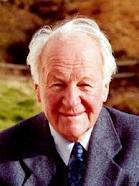
About the Author: John R.W. (Robert Walmsley) Stott died on July 27, 2011 at the age of ninety. He was a world-renowned pastor, theologian, and author of numerous bestselling books and Rector Emeritus of All Souls Church in London.

New York Times columnist David Brooks wrote (quoting Michael Cromartie of the Ethics and Public Policy Center) that if evangelicals chose a pope, they would likely select John Stott. As a principal framer of the Lausanne Covenant (1974), a defining statement for evangelical Christians, Stott was at the heart of evangelical renewal in the U.K. for more than half a century. In 2005, he was honored by Time magazine as one of the “100 Most Influential People in the World.” His many books and sermons have inspired and transformed millions throughout the world.

Stott was born April 27, 1921, in London to Sir Arnold Stott, a leading physician, and his wife, Emily. His father was an agnostic, while his mother was a Lutheran who attended church at All Souls, Langham Place. He converted to Christianity at Rugby School in 1938, and after finishing there he went on to study modern language at Trinity College, Cambridge. After earning double firsts in French and theology, he transferred to Ridley Hall Theological College, Cambridge, and was ordained as an Anglican clergyman in 1945. Stott became a curate at All Souls Church (1945–1950) and then rector (1950–1975). He resigned as rector in 1975, although he remained in the church and was appointed Rector Emeritus. In 1974 he founded Langham Partnership International (known as John Stott Ministries in the U.S.), a ministry that seeks to equip Majority World churches for mission and spiritual growth. Stott finally retired from public ministry in 2007 at the age of eighty-six.

Stott’s influence on evangelicalism throughout the world is extensive. He has written more than fifty books, including various Bible studies and Bible commentaries. As Stott’s main publisher in the U.S., Intervarsity Press enjoyed a wonderful partnership with the man they called “Uncle John.” IVP associate publisher for editorial Andy Le Peau said that Stott’s works were embraced for their “clear, balanced, sound perspective on Scripture and life. He was filled with a grace and strength that will be dearly missed in this era of extreme viewpoints and harsh rhetoric.”

“We are deeply grateful for this long publishing partnership and friendship with one of the most influential and beloved evangelical leaders for the past half-century,” said Intervarsity Press publisher Bob Fryling. “John Stott was not only revered; he was loved. He had a humble mind and a gracious spirit. He was a pastor-teacher whose books and preaching not only became the gold standard for expository teaching, but his Christian character was a model of truth and godliness. We will miss ‘Uncle John’ but we celebrate his life and writings as an extraordinary testimony of one who was abundantly faithful to his Lord Jesus Christ.”

Derek Thomas’ reflects on John Stott: “Any theology which cannot be communicated as gospel is of minimal value.” So wrote John Stott (Culture and the Bible [IVP, 1981], 38). And as I now think about the massive contribution he made to twentieth century evangelicalism, it is his communication of the gospel that comes to mind. His writings will remain as definitive expositions for a long time to come. His commentaries on Romans, Acts, the Pastoral Epistles, for example, are essential reading — who else has made Romans as accessible as John Stott? Your Mind MattersBasic ChristianityChristian Mission in the Modern World, Between Two Worlds: The Challenge of Preaching Today and The Cross of Christ are classics in their own right. The Preacher’s Portrait, New Testament word study analysis of what preachers are and do was for me groundbreaking. His more recent contribution (2007), The Living Church: Convictions of a Lifelong Pastor, was breathtaking in its provocative advocacy of a biblical approach to such things as worship, evangelism, giving and ministry. One thinks, too, of the (yes, for American readers, controversial) green-edged politics of his ethical-social analysis of war and conservation issues in Issues facing Christians Today. And we could go on.

Summing up a biographical study of John Stott (2-volumes, 1,000+ pages), Timothy Dudley-Smith cites one of Stott’s study assistant’s: “People ask me, ‘What is John Stott’s secret?’ This is an annoying question, to which there is no good answer. Instead of answering directly, I have taken to telling people that although you have no ‘secret’ there are several characteristics. I have observed in you that I will seek to emulate for the rest of my life. The three things I always mention are rigorous self-discipline, absolute humility and a prayerful spirit. Perhaps the most important thing I have learned from you is that, by grace, faithfulness to God is a combination of these three qualities.” (John Stott: A Biography, Volume 2 The Later Years [IVP, 453]).
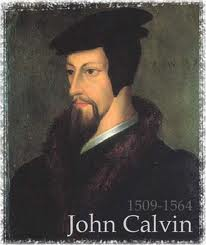
John Calvin’s Last Will & Testament – On April 25, 1564

Series: On This Day in Church History

 He Was The Great Theologian of the Reformation – By Mike and Sharon Rusten

We know his John Calvin, but he was born Jean Cauvin on July 10, 1509, in Picarcy, France. He studied in Paris and was converted in 1533. He later wrote, “God drew me from obscure and lowly beginnings and conferred on me the most honorable office of herald and minister of the gospel…What happened first was that by an unexpected conversion he tamed to teachableness a mind too stubborn for its years.” Three years later at age twenty-six, he wrote the first edition of his Institutes of the Christian Religion, probably the most influential systematic theology of all time.

In 1536 he left Catholic France to avoid persecution and went to Geneva. Except for an interlude of three years, he remained in Geneva until his death.

John Calvin was the leader of the French Reformation, the father of the theology called Calvinism, and the founder of the Reformed churches of the world. He lived modestly, never owned his own home, had few possessions, and refused salary increases. Plagued with ill health, he nevertheless preached an average of five sermons a week and wrote commentaries on nearly every book of the Bible. When his associates were concerned for his health and encouraged him to rest, he shot back: “What! Would you have the Lord find me idle while he comes?”

During the last few months of his life, he slowed down but refused to give up. He was carried to the church to preach his last sermon on February 6, 1564. Two months later, on April 25, 1564, feeling it was time to make his will, he called Peter Chenalat, notary of Geneva, to his home and dictated to him:

In the name of the Lord, Amen. I, John Calvin, minister of the Word of God in this Church of Geneva, being afflicted and oppressed with various diseases…give thanks to God, that taking mercy on me, whom He had created and placed in this world…And I testify and declare, that it is my intention to spend what yet remains of my life in the same faith and religion which He has delivered to me by His gospel…With my whole soul I embrace the mercy which He has exercised towards me through Jesus Christ, atoning for my sins…that under His shadow I may be able to stand at the judgment seat. I likewise declare, that…I have endeavored, both in my sermons and also in my writings and commentaries, to preach His Word purely and chastely, and faithfully to interpret His sacred Scriptures…I also testify and declare, that…with the enemies of the gospel, I have acted candidly and sincerely in defending the truth. But woe is me!…I confess I have failed innumerable times to execute my office properly, and had not He, of His boundless goodness, assisted me, all that zeal had been fleeting and vain…As God is the Father of mercy, He will show Himself such a Father to me, who acknowledge myself to be a miserable sinner.

The second half of the will is devoted to distribution of the “slender patrimony which God has bestowed upon me” to various family members and friends. In the next month he quickly declined and died on May 27, 1564, shortly before his fifty-fifth birthday.

John Calvin worked tirelessly, almost up to his death, literally using up his life in the service of his Savior.”

Reflection

John Calvin’s legacy was much more than the few possessions he left to family and friends. His real legacy was the Reformed faith and the Reformed churches of the world.

When you depart this life, what will you leave behind?

In addition to your material possessions, what will be the primary contributions you will have made?

What will you leave to your family and friends?

“I have fought a good fight, I have finished the race, and I have remained faithful.” – 2 Timothy 4:7

Author’s of the Article Above: Mike and Sharon Rusten are not only marriage and business partners; they also share a love for history. Mike studied at Princeton (B.A.), the University of Minnesota (M.A.), Westminster Theological Seminary (M.Div.), Trinity Evangelical Divinity School (Th.M.), and New York University (Ph.D.). Sharon studied at Beaver College, Lake Forest College, and the University of Minnesota (B.A.), and together with Mike has attended the American Institute of Holy Land Studies (now Jerusalem University College). The Rustens have two grown children and live in Minnetonka, Minnesota. This article was adapted from the April 25th entry in their wonderful book The One Year Book of Christian History, Carol Stream, IL: Tyndale, 2003.

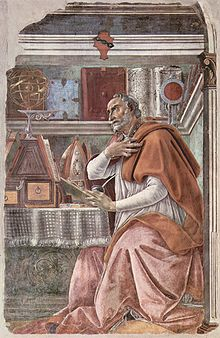
St. Augustine Was Baptized On This Day – April 25 in 387

Series: On This Day in Christian History – “Raised to New Life”

 By A. Kenneth Curtis and Daniel Graves

“And we were baptized and all anxiety for our past life vanished away.” With these joyous words Augustine recorded his entrance into the church on this day in 387.

It had taken Augustine thirty-three years to get to the public confession of Christ that was represented by his baptism. He was born in North Africa in 354 to a Christian mother and a pagan father. He became a student in Carthage at twelve years of age. At sixteen, he began to teach grammar.

While he was young, he became promiscuous. He tells in his famous Autobiography that he boasted of sins he had not had the opportunity to commit, rather than seem to have fallen behind his peers.

His mother, Monica, was determined to see him converted. He was equally determined to have pleasures. He took a mistress, and she bore him a son, whom they named Adeodatus, which means “gift of God.” For awhile Augustine resented the lad but soon became inseparable from him.

When he was twenty-nine, Augustine’s restless spirit drove him to Italy. His mother decided to accompany him so that her prayers might be reinforced by her presence. But Augustine gave her the slip, sailing away while she knelt praying in a chapel.

In Rome he taught rhetoric for a year, but was cheated of his fees. And so he looked for a more fertile field of labor and settled on Milan. His mother caught up with him and prevailed upon him to attend the church of St. Ambrose. Augustine found that Christian singing moved him deeply, and in spite of himself he began to drift toward his mother’s faith. He found the writings of the Apostle Paul deeply stirring and more satisfying than the cool abstractions of philosophy. He wrestled with deep conviction but was unable to yield himself to God because of his strong attachment to the flesh.

Finally he reached a day when his inner struggles were too great to bear. He tried reading Scripture but abandoned the effort. Unable to act on the truth he knew, he began to weep and threw himself behind a fig tree. “How long, O Lord,” he cried. And his heart answered “Why not now?” A child’s sing song voice came clearly to him, repeating over and over, “Take it and read it.” It seemed a message from God. Augustine snatched up the Bible and read Paul’s words:

“Let us behave decently…not in orgies and drunkenness, not in sexual immorality and debauchery, not in dissension and jealousy. Rather, clothe yourselves with the Lord Jesus Christ, and do not think about how to gratify the desires of the flesh” (Romans 13:13-14).

Faith flooded upon him. He immediately thrust aside the sins of the flesh that had held him in bondage. “But faith would not let me be at ease about my past sins, since these had not yet been forgiven me by means of your baptism.” He entered the water and was relieved.

After his mother’s death, Augustine returned to Africa, where he founded a monastery and became the bishop of Hippo and a brilliant and prolific theologian. More than any other man, his imprint was stamped upon the medieval Church.

Other Significant Events on April 25th in Church History:

799: Pope St. Leo III’s eyes were stabbed and his tongue torn out in a conspiracy by the nephews of an earlier pope. He recovered and crowned Charlemagne emperor.

974: Ratherius, who raised a ruckus to end clergy marriages, died on this day.

1475: A young Savonarola left home and walked to Bologna, taking the family Bible with him. He became a monk and later a reformer. He was eventually martyred for his faith.

1800: William Cowper, a depressed but original poet and hymn writer, died. He is remembered for his friendship with ex-slaver John Newton and for his hymn “There is a Fountain Filled with Blood.”

1879: Joseph Barber Lightfoot, considered the greatest biblical scholar of his day, was consecrated as bishop of Durham. He was a godly man and became one of the greatest bishops of the day.

1911: A rare Gutenberg Bible sold for $50,000, the equivalent of at least $500,000 today.

Adapted from the April 25th entry in This Day In Christian History, edited by A Kenneth Curtis and Daniel Graves, Camp Hill, PA: Christian Publications

Ratherius – The Combative Bishop

Series: On This Day in Church History

April 25, 975 – By R.J. Morgan

 No generation is without its Christian heroes, but they were scarce in the tenth century. Ratherius might have been one but for his headstrong style. He was brilliant and religious, but opinionated and envious.

Ratherius was born near Verona, Italy. He excelled in school and eventually became a monk. In 931 he was consecrated Bishop of Verona. His tenure was turbulent, for he railed against the sins of the clergy. “The cohabitation of clergy with women,” he wrote, “is so customary, so public, that they think it lawful.” It wasn’t just immoral relationships that Ratherius had in mind, but wedded ones. He was merciless on priests who married, calling their unions “adulteries.”

The concept of a celibate clergy reaches early into church history. In the Eastern Church, the early councils approved marriage for clergymen. But the Western Church wasn’t so sure. At the Council of Nicaea, an idea arose for ministers to leave their wives and devote themselves to the single life. The scheme was rejected, but a few years later Pope Siricius ordered celibacy for priests. Later, Pope Leo decreed that if a married man entered the ministry, he was not to “put away” his wife, but to live with her “as brother and sister.”

The issue was being vigorously debated during the days of Ratherius, and the Bishop of Verona knew what he believed—that the single life allows full devotion to Christ. But his aggressive stance on that and other issues provoked backlash. He was deposed and imprisoned for two years, during which time, being without books, he wrote one entitled The Combat. He escaped to Southern France and supported himself by tutoring rich children. Being restored to his bishopric, he was soon deposed again. This time he became abbot of Alna, but he argued with his monks about the Eucharist. They sighed with relief when he returned a third time to Verona. Once again he was exiled, returning to the abbotship of Alna. He stayed there awhile then moved to other positions here and there before dying on April 25, 974.

Love each other as brothers and sisters and honor others more than you do yourself. Never give up. Eagerly follow the Holy Spirit and serve the Lord. Let your hope make you glad. Be patient in time of trouble and never stop praying. And do your best to live at peace with everyone. Romans 12:10-12,18

Adapted from the April 25 entry Robert J. Morgan. On This Day. Nashville: Thomas Nelson, 1997.

Do You Have Assurance of Your Salvation? 5 Indicators from Hebrews 6

“How To KNOW that You KNOW HIM” By Steve W. Brown

The nature of the God of the universe is not to bring you to a saving knowledge of Jesus Christ, then to make you wonder for the rest of your life whether or not you have a saving knowledge of Jesus Christ. God does not say, “Trust me,” then for the rest of your life make you wonder if you really trust him. It is his business and desire for us to have assurance of salvation. How do you know that you know him?

Check out five indicators from the writer of Hebrews 6:

(1) The direction in which your life is going.

(2) The love your life is showing.

(3) The service your life is sharing.

(4) The concern for godliness you are feeling.

(5) The longing in your desire for fellowshiping.

First, if you are looking for assurance check out your life. The writer of Hebrews casts sobering words at those who inhabit the fringes of faith, desiring to taste but never receiving God’s mercy and producing weeds instead of fruits in their lives. The believer’s life, however, holds a far more positive promise:

Even though we speak like this, dear friends, we are confident of better things in your case—things that accompany salvation. God is not unjust; he will not forget your work and the love you have shown him as you have helped his people and continue to help them. We want each of you to show this same diligence to the very end in order to make your hope sure. We do not want you to become lazy, but to imitate those who through faith and patience inherit what has been promised [Heb. 6:9–12].

Most people think that God looks at where you are along the road of life. We do that, but God doesn’t. God asks only two things:

First, he wants to know from where you have come; second he wants to know the direction in which you are going. In other words, I might be a lot more terrible than you, but the point is that we are moving in the same direction. You are just further down the road than I am. God’s pleasure and our assurance come from moving in that right direction. That is how the writer of Hebrews could look at his hearers and be “confident of better things in your case—things that accompany salvation” (vs. 9b).

If you were to wake up tomorrow morning to discover that God does not exist, what difference would it make in your life? I would be devastated. A lot that is happening in my life would be wiped out. If you do not have an answer to that question, aside from the fact that you would not attend church once a week, then you need to read 6:4–8 once again. According to this passage you may have a serious problem.

One time a pastor friend of mine was talking to a girl in New England who had recently become a Christian. She was very angry and bitter. She asked, “Why do I have to go through all this hurt? Why is there all this pain in the world? Why do I have all these problems?” My friend asked a classic question: “Would you rather not have known him?”

She understood. As she thought about her answer to that question she found assurance of her relationship with Jesus Christ.

Second, in looking for assurance you should check out your love. Look again at verse 10: “God is not unjust; he will not forget your work and the love you have shown him as you have helped his people and continue to help them.”

The writer of Hebrews is not just talking about a tingle up your spine or a wonderful love song. He is talking about love in action, the kind of love you show to the saints for his sake. Love is not a noun; it is a verb. What do you do to show love for someone else? When you give a cup of cold water in the name of Christ, regardless of how you feel about that person, the giving is in love. When you reach out to a brother or sister who is in need, no matter how you feel about them, that is love, too. The writer of Hebrews is saying that you, as a Christian, have a love that you have shown, not that you have felt. This is a sign of your relationship with Christ, for that is an indication of your relationship with Christ in your Christlikeness:

Greater love has no one than this, that he lay down his life for his friends [John 15:13].

You see, at just the right time, when we were still powerless, Christ died for the ungodly [Rom. 5:6].

Love is action! Are you acting in obedience to him, showing love to your brothers and sisters? If you are you are on the road to assurance.

Third, make sure to check out your level—the level of a servant. We spent a lot of years in Massachusetts. At least at that time they believed that having a driver’s license is not a right; it is a privilege. So, if the head of the Department of Motor Vehicles decides you are guilty of some offense, whether you are guilty or not, the director can take your license away from you, and you don’t have any recourse.

When you and I became Christians, at that point we gave up every right. We are servants. As a Christian you have privileges, but you should not presume on those privileges. If your Christian faith is used to manipulate other people it is not the real thing. If your Christian faith is a vehicle for being a master it is not the real thing. Jesus said, “Whoever wants to become great among you must be your servant” (Matt. 20:26). When you see yourself willing to be a servant, willing not to take the credit, willing to just stand behind someone else and make them great, then you are on the road to assurance.

Fourth, if you are looking for assurance of your salvation, check out your liveliness. Hebrews 6:11 speaks of the author’s desire for “each of you to show this same diligence to the very end in order to make your hope sure.” We might call this diligence earnestness to realize full assurance. When people asked Charles Spurgeon how they could know if they were of the elect he would answer: “If you are worried about it, then you are.”

Now, if you have been struggling with assurance, plagued with the constant thought that “I may not really belong to God,” the very fact that you are earnestly concerned is a good sign that you may belong to him, when that earnestness stands alongside other evidence of the fruits of the Spirit.

You may remember the demonstration of Solomon’s wisdom in 1 Kings 3:16–28. Two women were brought to him, both claiming to be the mother of one baby. Each of the mothers had had a baby. One of the babies was dead. One mother said to Solomon, “Her baby died, and at night she switched her dead baby for my live one.” The second mother made the same accusation. So they came to Solomon, asking him to determine to whom the baby really belonged. Solomon had one of his servants take a sword and hold the baby up. Then Solomon said, “Cut the living child in two and give half to one and half to the other.” While one of the mothers agreed that his idea sounded reasonable, the other said, “No! Don’t do that. Give the baby to her.” Solomon at that point exercised a principle built into the very nature of things, so that he knew who was the real mother.

The principle was this: Concern is manifested in direct proportion to how much you care.

The same principle works to help you know about your relationship with God. If you are concerned about your relationship with Christ, if you are earnest about it or diligent, that is an indication that you are in Christ. You are on the road to assurance.

Fifth, if you are looking for assurance, check out your longing. The writer of Hebrews is saying: “I desire that you come to the point at which you know that you know that you know that you know.” There are those who say you can never know. They say the only way you can get assurance is to die and find out whether your feet are cold.

If you have heard and believed that, you have believed a lie. It is God’s desire that his people come into a relationship with the Father that is so close we know and feel secure with him.

I have a friend who adopted a teenager who had been shifted from foster home to foster home. When I first visited them I noticed that this boy was jumping to do everything possible to please his new parents. He made up his bed. He wanted to dry dishes and to vacuum the rug. Whenever a teenager gets that good I get uncomfortable. Something is wrong. I didn’t understand it at first, but then I thought about what that boy had been through. He had been kicked out of so many homes, and he was going to hang onto this one by being good.

A year later I visited the home and saw the teenager again. He was the most secure young man I have ever seen. He was relaxed and normal. He had to be nudged to do the things he was supposed to do. What happened? He had achieved assurance, assurance that this mom and dad were not going to kick him out.

We are like that. Maybe right now you are working very hard at being obedient because you don’t have assurance. Maybe right now you are scared that you are not really a Christian. What should you do about that in order to have assurance? My advice is to persevere and “keep on truckin’.” One day you will be so tired of obedience, so tired of holding on with a grip that makes your knuckles turn white. Then you will let go. At that moment you will make a wonderful discovery: He was holding you all along. You will know that you know him. And that is called “assurance.”

About the Author: Steve Brown is a radio broadcaster, seminary professor and author. He previously served as a pastor for over twenty-five years and now devotes much of his time to the radio broadcast, Key Life.

With such varied experience and unique perspective on life, Steve is an original. He refuses to be a “guru,” doesn’t want to be anyone’s mother and gives, in his teaching, the freedom to think. Overall, Steve has become known for his refreshing and practical Biblical applications.

Steve serves as Professor Emeritus of Preaching and Pastoral Ministry at Reformed Theological Seminary. He sits on the board of the National Religious Broadcasters and Harvest USA. Traveling extensively, Steve is a much-in-demand speaker.

Steve is the author of numerous books including A Scandalous Freedom, Approaching God, When Being God Isn’t Good Enough, What Was I Thinking? and Three Free Sins. His articles appear in such magazines and journals as Leadership, Decision, Plain Truth and Today’s Christian Woman. The article above has been adapted from Chapter 11 in the excellent book edited by R.C. Sproul entitled Doubt & Assurance. Grand Rapids, Baker, 2000.

Ross Douthat on the “Character of Christianity’s Decline,” Part 1 By Tim Keller

18th of April 2012 by Tim Keller

Ross Douthat’s new book, Bad Religion: How We Became a Nation of Heretics, is very helpful for Christians seeking to understand why the Church is in decline in the U.S. Before the book’s publication I gave a high-level look at its basic theses. In these next posts, I’ll share more details of Ross’s proposals and interact somewhat with his material.

Ross Douthat speaks of “five major catalysts” for the decline.

First, he points to the political polarization between Left and Right that drew many churches into it.

Mainline Protestants and some Catholics were pulled into line with the political positions of liberalism, while the evangelical churches (and again, some Catholics) became instruments of conservative political policy. He writes: “Issues that were swiftly turned to partisan ends by politicians in both parties…divided churches against one another as no controversies had since slavery.” As Robert Putnam has demonstrated in American Grace, this has greatly weakened the credibility of Christianity in the culture. Since so many parts of the Christian church are now strongly tied to one end of the political spectrum or the other, it means each branch of Christianity can be dismissed by a majority of the population (moderates and those on the other end of the spectrum) as partisan pawns. It has been particularly damaging to see white evangelicals voting overwhelmingly in the opposite way as black evangelicals. This has all given rise to a broadly held perception that religion is really not about God and the Bible but about politics.

We should keep in mind that in the 1950s, the two great enemies were the fascism of Hitler and the Communism of Stalin and Mao—both movements that had severely persecuted their national churches. Marxism was of course intensely atheist. And so in the average American’s mind, religion and Christianity were associated with freedom and democracy while secularism and atheism were not. Today, post 9-11, that has been completely reversed. In the average American’s mind religion and fundamentalism are associated with political extremism and terrorism. They are now seen as the enemies of pluralistic, western society.

Second, he points to the sexual revolution and the birth control pill that made it possible.

“Before the sexual revolution,” Douthat writes, “a rigorous ethic of chastity and monogamy had seemed self-evidently commonsensical even to many non-Christians.” Why? The fear of “illegitimacy, abandonment, and disease.” But the pill changed all this. “Over the course of a decade or so, a large swath of America decided that two millennia of Christian teaching on marriage and sexuality were simply out of date.” The arguments against the traditional ethic had been around for centuries, but the hard reality was that sex produced babies and so the only really safe sex was married sex. The pill swept that argument away. Now far more people wanted (and were free) to believe these arguments for extra-marital sex because of “the new sexual possibilities” that the birth control pill afforded.

The importance of the sexual revolution for the loss of Christianity’s credibility can’t be over-estimated. For centuries individuals have justified and rationalized sex outside of marriage, but this had never occurred on a culture-wide basis as it now did in the West. Today there are enormous numbers of professing Christians, including card-carrying evangelical believers, who simply have stopped practicing the Christian sex ethic. It is seen as unrealistic and even perverse by thousands of people who identify as believers. This is massively discrediting and makes Biblical faith implausible to hundreds of millions both inside and outside the church.

The new sexual view of the world is one of the main barriers today to belief in historic Christianity. Most apologetics books (including mine!) give a chapter to each of the main objections to the faith, and yet few address what is almost the number 1 “defeater” for young skeptics—the regressive and supposedly unrealistic Christian view of sex and homosexuality.

The third factor has been the dawn of globalization and the impression that Christianity was imperialistically “western”.

After World War II, the “Third World” de-colonialized—dozens of former Western colonies were given their freedom. “To celebrate the new global civilization was to celebrate the eclipse of European dominance…[and] to cast a cold eye across the many sins of Western civilization.” This occurred during the 1960s through the 1980s with the rise of academic studies of colonialism and western imperialism, through books about U.S. genocide toward Native Americans (e.g. Dee Brown’s Bury My Heart At Wounded Knee), through discovery of southern white churches’ resistance to Civil Rights (e.g. The 1988 film Mississippi Burning), and to the uncovering of the history of the European church’s support of anti-Semitism in the wake of the Nazi Holocaust. Meanwhile “the more the world was swept up in the drama of decolonialization and Third World empowerment, the more tainted Christianity seemed by its centuries of association with the now-discredited imperial projects of the European West.” Out of “Christian guilt” over all this, the number of professing Christians who were willing to say that their faith is the one, true faith plummeted. Globalization has seemed to support those who attack Christianity’s claims to uniqueness.

The fourth factor in Christianity’s decline, according to Douthat, is the enormous growth in the kind of material prosperity that generally works against faith.

This explanation was striking to me personally. Most religious-cultural analysts do not go here, but I found this argument persuasive. John Wesley was famous for his insistence that whenever a society (or a portion of society) becomes more wealthy, Christianity loses its power. Why? One underrated reason for the decline in the quality and quantity of those pursuing the ministry as a vocation is that other professions now provide far more wealth and status (as they did not 50 years ago). Another is that Biblical Christianity actually contains a very trenchant, powerful critique of greed and acquisition, as it does of sexual immorality. Just as the sexual revolution makes it hard for people to stomach one part of Biblical wisdom, so a highly materialistic society makes it hard to stomach the other. In addition, the consumerism of our culture is so pervasive and powerful that it has shaped American Christians’ attitude toward the church—namely, it makes the church irrelevant. Americans are conditioned to think of themselves as customers of goods and services, and churches as vendors that can be used or discarded on the basis of cost-benefit analysis. Douthat adds that in a materialistic society people are extremely mobile and they tend to commute long-distances to work. “Religious community proved harder to sustain in the new commuter society than it had been in an America of small towns and urban neighborhoods.” That’s right. In a society of increasing wealth, human community becomes less important for sustaining your life. Both church and neighborhood becomes superfluous.

The fifth and final factor in Christianity’s decline is the loss of the elites and the academic and cultural institutions they control.

In some ways all of the other four factors have had their most powerful impact on what Christopher Lasch called the “knowledge classes”—the most educated and affluent, and this in turn magnifies secularization, because this class controls the media, newspapers, and networks, the academy, publishing, the arts, the most powerful and rich foundations, and much of the government and business world. Here Ross sounds a lot like Lasch (The Revolt of the Elites: And the Betrayal of Democracy) or James Hunter’s To Change the World. He argues that the educated and affluent have “gained the most from the new sexual freedoms and…suffered the least from their darker repercussions.” They were more cosmopolitan, multi-cultural, and well-traveled, and so they held more intensely to the view that religion was culturally narrow and imperialistic. The result is that the cultural elites have not merely “rejected” the faith. “Orthodoxy was less rejected than dismissed, reflexively, as something unworthy of an educated person’s intellect and interest.”

Article above posted originally on April 18, 2012 at: http://redeemercitytocity.com/blog/

All quotes taken from Ross Douthat, Bad Religion: How We Became a Nation of Heretics (Free Press, 2012) pp.65-81

About Ross Gregory Douthat: (pronounced /ˈdaʊθət/; born November 28, 1979) is a conservative American author, blogger and New York Times columnist. He was a senior editor at The Atlantic and is author of Privilege: Harvard and the Education of the Ruling Class (Hyperion, 2005) and, with Reihan Salam, Grand New Party (Doubleday, 2008), which David Brooks called the “best single roadmap of where the Republican Party should and is likely to head.” He is a film critic for National Review and has also contributed to The New York Times, The Wall Street Journal, The Weekly Standard, the Claremont Review of Books, GQ, Slate, and other publications.


About Tim Keller: was born and raised in Pennsylvania, and educated at Bucknell University, Gordon-Conwell Theological Seminary, and Westminster Theological Seminary. He was first a pastor in Hopewell, Virginia. In 1989 he started Redeemer Presbyterian Church in Manhattan with his wife, Kathy, and their three sons. Today, Redeemer has more than five thousand regular attendees at five services, a host of daughter churches, and is planting churches in large cities throughout the world. He is the author of KING’S CROSS, THE MEANING OF MARRIAGE, COUNTERFEIT GODS, THE PRODIGAL GOD, and the New York Times bestseller THE REASON FOR GOD, SELF-FORGETFULNESS  & the forthcoming CENTER CHURCH (August 2012).


Why Does God Seem To Move So Slowly?

“God Isn’t In A Hurry” By Warren W. Wiersbe

Although I was weary from a long flight, the sign on the mission guesthouse bulletin board made me laugh aloud. It said, “Lord, please make me patient—and do it right now.”

Patience was one of the first lessons we had to learn in childhood. The child who does not learn to be patient is not likely to learn much of anything else. It takes patience to be able to learn to read, to spell, to write, and to master multiplication tables. It even takes patience to grow! God has ordained that maturity is a slow process, not an instant experience; and I am glad that he arranged things that way. It gives me time to get accustomed to growing up.

Impatience is usually a mark of immaturity. At least James felt that way. “But let patience have its perfect work, that you may be perfect and complete, lacking nothing” (James 1:4). Little children think you have arrived at your destination when you stop for the first spotlight. A short wait at the doctor’s office is unbearable. I once asked a lad in Scotland how many years he had left in school, and he replied, “I don’t know, sir. I’m just trying to get through next week.”

But adults have their share of impatience. Abraham got weary of waiting for the promised son; so he hurried and took Hagar as a second wife, and she bore him Ishmael. Moses got impatient and killed a man. This necessitated forty years of postgraduate work in the pastures of Midian. Years later, Moses became impatient again, smote the rock, and lost a trip to the Holy Land.

“Do not be like the horse or as the mule,” warns Psalm 32:9, and it is a warning that we need. The mule is stubborn and has a tendency to hold back. The horse is impulsive and wants to rush ahead. Personality differences may enter in here, but we all have the same problem—it is difficult to wait on God.

Part of the problem is that we are prone to walk by sight and not by faith. God assures us in his Word that he is busy on our behalf, but we still want to see something happen. At the exodus, the Israelites were sure that God had deserted them and destruction was on its way. Listen to that wind! See how dark it is! And yet God was working for his people in the wind and in the darkness. “All these things are against me,” cried Jacob (Gen. 42:36) when, in reality, all things were working for him.

I believe that it was F.B. Meyer who used to say, “God’s delays are not God’s denials.” They are usually the means which God uses to prepare us for something better. God is always at work for the good of his people, and he is working in all things (see Rom. 8:28). This includes the things that perplex us and that pain us. The only way God can teach us patience is to test and try us, and the only way we can learn patience is to surrender and let God have his way.

God can grow a mushroom overnight, but he will take time to grow an oak or a giant sequoia. It took him thirteen years to get Joseph ready for the prime minister’s office in Egypt, and he invested eighty years preparing Moses for forty years of service. David was a youth when Samuel anointed him king of Israel, but David had to experience a great deal of suffering before he finally ascended that throne. We are the richer for it, because out of those years of preparation came many of David’s greatest psalms.

Our Lord spent thirty years getting ready for three years of public ministry. He patiently obeyed the Father’s will as he carried out that ministry. “My hour has not yet come,” he told Mary (John 2:4). “Are there not twelve hours in the day?” he asked his impatient disciples (11:9). God has his times as well as his purposes, and to miss his times is to delay his purposes.

When I was a student in seminary, I was privileged to pastor a church on weekends. God blessed in many ways, and at one point I was tempted to leave school and devote my full-time to the church. My faculty counselor set me straight. “God has waited a long time for you to come along,” he reminded me, “and he can wait until you graduate. Don’t sacrifice the permanent for the immediate.” He was right, and today I am glad I followed his counsel.

Perhaps the hardest place to wait is in the furnace of suffering. God does not always explain what he is doing or why he is doing it. It is in the hour of suffering that we need to “imitate those who through faith and patience inherit the promises” (Heb. 6:12). “For you have need of endurance, so that after you have done the will of God, you may receive the promise” (10:36). Knowing that the Father is near us and that he is working out his wonderful purposes ought to encourage us, but we often get impatient just the same.

“Why has God made me this way?” a suffering saint once bitterly asked her pastor. Gently, he replied, “God has not made you—he is making you.” How true! And how easy it is for us to forget this truth!

If God can make a believer patient, then God can trust that believer with whatever is in his gracious will. But the school of patience never produces any graduates, and it never grants any honorary degrees. We are always learning, always maturing. Sometimes we fail the examination even before we know what the lesson is! No matter; our loving Father is guiding us and making us more like his beloved Son, and that is all that matters.

“Lord, make me patient!” God will answer that prayer, often in ways that will startle us. “And do it right now!” That prayer he cannot answer, for even Almighty God must take time to turn clay into useful vessels. The best thing you and I can do is to stop looking at our watches and calendars and simply look by faith into the face of God and let him have his way—in his time.

About the Author:

Warren W. Wiersbe is the Distinguished Professor of Preaching at Grand Rapids Baptist Seminary, Warren Wiersbe is the author of more than 100 books. Billy Graham calls him “one of the greatest Bible expositors of our generation.” Interestingly, Warren’s earliest works had nothing to do with scriptural interpretation. His interest was in magic, and his first published title was Action with Cards (1944).

“It was sort of imbecilic for a fifteen-year-old amateur magician to have the audacity to write a book and send it to one of the nation’s leading magic houses,” Warren says. But having a total of three books published by the L.L. Ireland Magic Company—before the age of 20—gave him a surge of confidence. In later years, he applied his confidence and writing talent to the Youth for Christ (YFC) ministry.

Warren wrote many articles and guidebooks for YFC over a three-year period, but not all his manuscripts were seen by the public eye. One effort in particular, The Life I Now Live, based on Galatians 2:20, was never published. The reason, Warren explains with his characteristic humor, is simple: it was “a terrible book…Whenever I want to aggravate my wife, all I have to say is, ‘I think I’ll get out that Galatians 2:20 manuscript and work on it.’” Fortunately, Warren’s good manuscripts far outnumbered the “terrible” ones, and he was eventually hired by Moody Press to write three books.

The much-sought-after author then moved on to writing books for Calvary Baptist Church. It was during his ten years at Calvary that Expository Outlines on the New Testament and Expository Outlines on the Old Testament took shape. These two works later became the foundation of Warren’s widely popular Bible studies known as the Be series, featuring such titles as Be Loyal (a study on Matthew) and Be Delivered (a study on Exodus). Several of these books have been translated into Spanish.

His next avenue of ministry was Chicago’s Moody Memorial Church, where he served for seven years. He wrote nearly 20 books at Moody before moving to Lincoln, Nebraska, where he and his wife, Betty, now live. Prior to relocating, he had been the senior pastor of Moody Church, a teacher at Trinity Evangelical Divinity School, and a producer of the Back to the Bible radio program.

During all these years of ministry, Warren held many more posts and took part in other projects too numerous to mention. His accomplishments are extensive, and his catalog of biblical works is indeed impressive and far-reaching (many of his books have been translated into other languages). But Warren has no intention of slowing down any time soon, as he readily explains: “I don’t like it when people ask me how I’m enjoying my ‘retirement,’ because I’m still a very busy person who is not yet living on Social Security or a pension. Since my leaving Back to the Bible, at least a dozen books have been published, and the Lord willing, more are on the way.”

Some of Wiersbe’s recent books include Your Next MiracleThe 20 Essential Qualities of a Child of GodThe Bumps are What You Climb OnClassic Sermons on the Fruit of the SpiritClassic Sermons on Jesus the ShepherdKey Words of the Christian LifeLonely PeopleA Gallery of GraceReal Peace: Freedom and Conscience in the Christian Life, and On Being a Leader for GodThe article above is adapted from Chapter One in his book God Isn’t In A Hurry: Learning to Slow Down and Live. Grand Rapids: Baker, 1994.

A Tribute To Charles Hodge – One of The Greatest Theologians America Has Ever Produced

Series: On This Day in Christian History – April 24

 “A Gifted Mind and Still Greater Heart”

By Mike and Sharon Rusten

(Princeton University Library – Pictured on left)

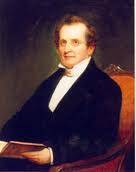
Charles Hodge was born in Philadelphia on December 27, 1797, and raised by his mother because his father died six months after Charles’s birth. A gifted student, Charles entered the College of New Jersey, later Princeton University, in 1812 at the age of fourteen. As a senior he publicly confessed his faith in Christ during a campus revival, where over half of the student body gave their allegiance to Jesus. After entering Princeton Seminary in 1816, he excelled in his studies and graduated at age twenty-two. A year later he became professor of biblical languages at the school and the seminary’s third professor.

Hodge taught at Princeton Seminary for over fifty years and became America’s leading Reformed theologian of the nineteenth century. His three-volume Systematic Theology remains in print today.

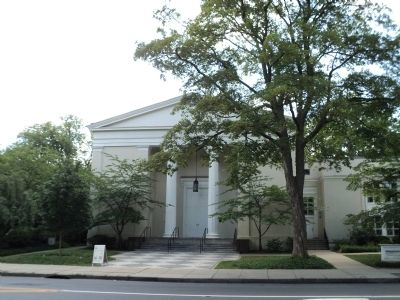
On April 24, 1872, a unique celebration took place in Princeton to honor Charles Hodge for his fifty years of teaching. On that day all the shops in town closed, and people from near and far gathered in the First Presbyterian Church to honor the town’s most distinguished citizen. Present were Charles’ wife, Mary, their eight children, and a large number of grandchildren. Also in attendance were four hundred graduates of the seminary, almost 15 percent of the total alumni of the school. There were presidents and faculty representatives from many other colleges and seminaries as well as officials from virtually every denomination. (1st Presbyterian of Princeton pictured at left – it was built in 1836 and still stands today)

That day Henry Boardman spoke on behalf of the seminary trustees. He pointed out that celebrations for national heroes were not uncommon, but here was “the spontaneous homage paid to a simple teacher of God’s Word and defender of its truth.” Then addressing Dr. Hodge he said:

What honor, beloved Brother, has God put upon you! For fifty years you have been training men to preach the glorious gospel of grace of God to their fellow-sinners. The teacher of teachers, your pupils have become professors in numerous Colleges and Seminaries at home and abroad. Not to speak of one or two thousand pastors, who are exerting an ameliorating influence upon this nation more potent than that of an equal number of men belonging to any other calling, you are helping, through your students, to educate a great body of Christian ministers, not a few of whom are to be employed in laying the foundations of Christianity on pagan lands.

At that time Charles Hodge had personally taught twenty-seven hundred students—no other seminary in the country had even enrolled that many. In his address Boardman pointed out that there were men scattered around the world who honored Hodge for the gifted mind God had given him and who “love him for his still greater heart.”

During the program the seventy-five-year-old Hodge sat on a sofa off to the side of the platform, out of sight of the audience. Almost overcome by emotion after fifteen men had spoken their words of tribute, he came to the lectern to respond: “When I say thank you for all your respect, confidence and love, I am nothing, I am powerless. I can only bow down before you with tearful gratitude, and call on God to bless you, and to reward you a hundred-fold for all your goodness.”

(pictured at left is the altar at the Princeton University Chapel)

That night before retiring, the tired but grateful Hodge summed up the day by writing in his journal: “April 24th. The apex of my life…altogether affording an imposing and most affecting testimony of the unity of faith, and of common love to the same gospel, and to our common God and Savior Jesus Christ.”

Reflection:

Most of us are not gifted teachers like Charles Hodge, but God intends for us to impact the lives of those around us. God placed thousands of students in Hodge’s life. He may place one or two people in your life to disciple. It isn’t the number that matters; it is the faithfulness with which you invest yourself.

“We are telling you about what we ourselves have actually seen and heard, so that you may have fellowship with us. And our fellowship is with the Father and with his Son, Jesus Christ.” – 1 John 1:3

More on Charles Hodge

Charles Hodge [1797-1898], was an American Presbyterian theologian, was ordained in 1821, and taught at Princeton for almost his whole life. In 1825 he founded the Biblical Repository and Princeton Review, and during forty years was its editor, and the principal contributor to its pages. He received the degree of D.D. from Rutgers College in 1834, and that of LL.D. from Washington College, Pennsylvania, in 1864. In 1840 Dr. Hodge was transferred to the chair of didactic theology, retaining still, however, the department of New Testament exegesis, the duties of which he continued to discharge until his death.

“His most important works are his commentaries on Romans (1835), Ephesians (1856), 1 Corinthians (1857), 2 Corinthians (1859), as well as Constitutional History of the Presbyterian Church in the United States (2 vols., 1839-40), Systematic Theology (3 vols., 1871-3), and What is Darwinism? (1874). He was an outstanding defender of Calvinism, and has a claim to be considered one of the best theologians and Bible commentators America has produced.” Charles Hodge was the father of the influential theologian A.A. Hodge.

The Author’s: Mike and Sharon Rusten are not only marriage and business partners; they also share a love for history. Mike studied at Princeton (B.A.), the University of Minnesota (M.A.), Westminster Theological Seminary (M.Div.), Trinity Evangelical Divinity School (Th.M.), and New York University (Ph.D.). Sharon studied at Beaver College, Lake Forest College, and the University of Minnesota (B.A.), and together with Mike has attended the American Institute of Holy Land Studies (now Jerusalem University College). The Rustens have two grown children and live in Minnetonka, Minnesota. This article was adapted from the April 24th entry in their fantastic book The One Year Book of Christian History, Carol Stream, IL: Tyndale, 2003.

The 10 Commandments of Human Relations By Robert G. Lee

(1) Speak to people. There is nothing as nice as a cheerful word of greeting.

(2) Smile at people. It takes seventy-two muscles to frown, only fourteen to smile.

(3) Call people by name. The sweetest music to anyone’s ears is the sound of his or her name.

(4) Be friendly and helpful. If you would have friends, be friendly.

(5) Be cordial. Speak and act as if everything you do is a genuine pleasure.

(6) Be genuinely interested in people. You can like almost anybody if you try.

(7) Be generous with praise—cautious with criticism.

(8) Be considerate with the feelings of others. There are usually three sides to a controversy; yours, the other fellow’s and the right one.

(9) Be alert to give service. What counts most in life is what we do for others.

(10) Add to this a good sense of humor, a big dose of patience and a dash of humility, and you will be rewarded many-fold.


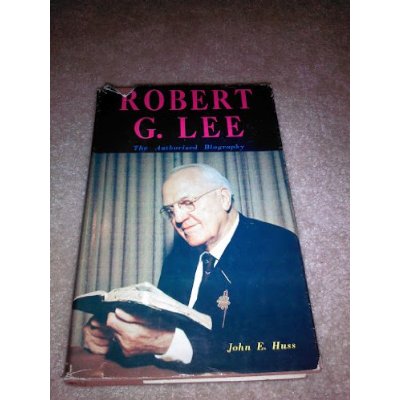
About the Author: Robert G. Lee, (1886-1978), Southern Baptist minister and leader, was born in Post Mill, South Carolina, the son of a devout Baptist sharecropper and his wife.  Despite the family’s poverty Lee was able to attend Furman Prep School and after spending time working on the Panama Canal to earn enough money, attended Furman College, where he graduated with a B.A. degree in 1913.  Believing he was called to preach, he refused an offer to take a position teaching Latin at Furman and accepted a position at a small church in Saluda, SC.  Lee quickly gained a reputation for his pulpiteering and moved on in a progression of successively larger churches until accepting the pastorate of Bellevue Baptist Church in Memphis, TN in 1927.  He spent the next 33 years at Bellevue, during which Sunday morning attendance grew from a more-than-respectable 2,000 to nearly 10,000 per week.  During his time at the church Lee earned a national reputation as a master preacher, publishing over fifty volumes of his sermons and delivering his most famous sermon, “Payday, Someday”, nearly 1,300 times to audiences around the world.  Lee served five years as the president of the Tennessee Baptist Convention and three years (1948-1950) as president of the Southern Baptist Convention.  Although a Southern Baptist loyalist, Lee was well-respected both within post-war evangelical networks and the separatist ranks of the fundamentalist movement.

For further reading, see John E. Huss, Robert G. Lee: The Authorized Biography (Zondervan, 1967).

“Revival on God’s Terms” By Dr. Walter C. Kaiser Jr.

An Exposition of 2 Chronicles 7:14 by Dr. Walter Kaiser*

The verb to revive in our English Bibles is almost exclusively an Old Testament word. It occurs in the NIV only five times in the Old Testament (Pss. 80:18; 85:6; Isa. 57:15; and Hos. 6:2). The sole New Testament occurrences were found in the King James Version of Romans 7:9; 14:9. Thus we are mainly limited to the five passages mentioned in the Old Testament where the Hebrew verb hayah to live,” to recover,” or to revive appears.

The major reference to being revived, of course, is Psalm 85:6. But we must not think that all the references to revival in the Bible will mention this word, for, as we have found out, the Scriptures will refer to the concept of revival without using this word more frequently than it does with it.

Each of the sixteen revivals in the Bible had very distinctive characteristics. Most of them began as one or two individuals saw the need for a heavenly visitation. All of them were addressed in the first place to the body of believers. In fact, five out of seven churches addressed in the Book of Revelation were told to repent and return to God. Therefore, revivals are definitely aimed at the believing church and not at the unsaved. The purpose of these revivals is to call the church back to a new hearing of and responding to the Word of God. It must involve a forsaking of sin, a confession of that sin, and a deep desire to reverse the pattern of spiritual declension and apostasy that has begun to typify that ministry, either locally, regionally, or nationally.

Most will agree that the divine response given to Solomon, when he prayed that great dedicatory prayer, after the completion of the temple of God, forms one of the great hallmarks in Scripture for expecting revival in any period of history. Solomon prayed that God would forgive the sins of Israel when they would confess their guilt, after being visited by some future drought, famine, or pestilence as a result of their sin (2 Chronicles 6:26-31).

God’s reply to Solomon’s petition in 2 Chronicles 7:12-16 was put in such formulaic terms that this response would serve forever after as the basis for true revival and renewal to any people in any nation at any time. The heart of this central text, in the gallery of revival texts, was verse 14: “If my people, who are called by my name, will humble themselves and pray and seek my face and turn from their wicked ways, then I will hear from heaven and will forgive their sin and will heal their land.” Note that “my people” are identified by the appositional clause “who are called by my name.” Since this clause is used in both the Old Testament and the New Testament for all believers, the scope of this promise goes far beyond Israel to include any and all believers in all times.

The Promise of 2 Chronicles 7:14

Philip R. Newell noted three great facts about this remarkable promise, we will describe here:

(1) The promise is for us today;

(2) The promise is descriptive of current times; and

(3) The promise of deliverance is conditional

(1)  This Promise Is Intended for Us Today

This promise was originally given to the nation of Israel. However, the qualifying clause that immediately follows the references to my people is one that opens up this promise to more than the Jewish people—it was the clause that read, “who are called by my name.” That phraseology is used to describe everyone who has become part of the family of God and over whom God had put his protective name.

We also have assurance from Romans 15:4 that “everything that was written in the past was written to teach us, so that through endurance and the encouragement of Scriptures [which up to this point, was only the Old Testament] we might have hope.” Likewise, 1 Corinthians 10:11 exhorts, “These things happened to them [i.e.’ to the Old Testament saints] as examples and were written down as warnings for us, on whom the fulfillment of the ages has come.”

It is incumbent on us to apply these same words of 2 Chronicles 7:14 to our own times, nation, churches, and families, as did the ancient Israelites. The principles by which God operates his kingdom remain the same; we dare not assume less.

(2) The Promise Is Descriptive of Current Times

The conditions of 2 Chronicles 7:13 imply that when national disasters begin to afflict a nation, people, or group of believers, it is time to ask what it is that God is trying to say to them or to us. Naturally, one emergency or disaster cannot automatically be converted into the voice of God, for there are more factors at work in this world than reducing them all to a single factor; there is, however, that which is sinful and wicked. Ask Job about his experiences along this line. But when those tragedies start coming in a series, such as Amos 4:6-12 illustrated, then it is high time for the believer to sit up and take notice. Be sure that God is calling a nation away from unrighteousness and back to himself. In Amos’s case, God sent first famine (Amos 4:6), then drought (v.7-8), then locusts, blight, and mildew (v. 9), then plagues similar to the ones that hit Egypt (v. 10), and finally the defeat of some of their cities (v. 11); but in each case the sad refrain was, “yet you have not returned to me, declares the LORD” (vv. 6b, 8b, 9b, 10b, 11b). Not one of the calamities of that day forced any of the people of God to turn back to Him.

And because the people had not returned to the Lord, there would not only be no revival; the nation would exist no longer as well: “Therefore this is what I will do to you, Israel, and because I will do this to you, prepare to meet your God, O Israel” (v. 12). Many have taken this verse to be a salvation text, for one used to see it out in the countryside printed on large oval discs as one drove along: “Prepare to Meet Your God!” Unfortunately, that is not what the prophet of God meant here; he meant that since there was not repentance, or heeding to the national signs of disaster that were lovingly sent to those who had ignored the Word of God written and announced by his messengers, God would be obligated to send his wrath and judgment on that nation.

Likewise, God warned Solomon in 2 Chronicles 7:13, “When I shut up the heavens so that there is no rain, or command locusts to devour the land or send a plague among my people,” then it was time that Israel met the four conditions of the famous verse 14 in 2 Chronicles 7.

The question needs to be asked by every generation and culture: Have we yet reached the point described in verse 13? Only the Lord knows for sure, but one would hardly need the skills of a prophet to conclude that the current pace of evil in America has accelerated to such a rate that it is almost a foregone conclusion that God must intervene with unusual punishment soon, if an immediate repentance to God and a revival from God is to prevent such a judgment from falling on any one of the modern nations of our day.

It is not necessary to spiritualize the drought, famine, or pestilence of verse 13 in order to make the principle of this text applicable to our times, as Newell apparently decided to do. Those spiritual declensions follow the other forms of ethical, moral, and legislative deteriorations already mentioned: both are just as real and of equal importance to our Lord.

(3) The Promise of Deliverance Is Conditional

 It is all too easy in these days of stressing the love and grace of our Lord (which is correct and legitimate in and of itself, of course) to ignore the stipulated conditions attached to our participating in the blessings of God. The four conditions mentioned in this text were not of human origin, but divine. This was God’s word to Solomon but it is nonetheless his word to us as well.

Some will object: “But this is yet another form of legalism.” However, that would be wrong, for legalism is the attempt to earn our salvation by working for it—a form that is totally antithetical to Scripture. Salvation is God’s free gift; it cannot be earned in any shape or form.

But if we are talking about fellowship and communion with our Lord, then let it be noted that God cannot be present or work where sin is present. That is why revival is called for under such circumstances.

The conditionality of “If my people…will humble themselves and pray and seek my face and turn from their wicked ways” is no more offensive than John 14:21, “Whoever has my commands and obeys them, he is the one who loves me”: or John 15:7, “If you remain in me and my words remain in you, ask whatever you wish, and it will be given you.” The conditions, then, were not for entrance into heaven or possessing eternal life, but for the maintenance of fellowship and communion, and for the enjoyment of life to its fullness in these mortal bodies.

The old hymn writer said it best: “Trust and obey, for there’s no other way, to be happy in Jesus, but to trust and obey.” And if that is true of an individual, it is also true for a nation and church denominations as well.

The Four Conditions of 2 Chronicles 7:14

(1) “If My People Humble Themselves”

So large is the topic of humbling ourselves in the Old Testament that there are more than a dozen Hebrew words translating this single word humble, with over eighty references. The one used in 2 Chronicles 7:14 is ‘kana’, meaning to subdue,” as Gideon subdued Midian (Judges 8:28). The picture is one of bending the knee or bending the neck in deference to another.

God calls for his people to render to him complete and voluntary subjection. The precedent for doing this is to be found in the example of our Lord in Philippians 2:8, where Jesus humbled himself.” Those who follow our Lord must be willing to deny themselves and take up his or her cross and follow Christ (Matt. 16:24).

Humbling ourselves, then, is a voluntary denial of every impulse we have to exalt ourselves instead of following the pattern set by the world. We must go into spiritual bankruptcy (“Blessed are the poor in spirit”) if we are to have the mind-set and frame of thinking that was in our Lord Jesus (Phil. 2:5).

The two revivals in 2 Chronicles indicate that more is intended by this condition of humbling ourselves.” Both Rehoboam and Josiah had to come to the point of saying that if God did not extricate them from the trouble they were in, then no one or nothing else would be able to help them.

That is the point to which the modern church must also come. God dwells with those who are of a contrite and humble spirit, reviving their spirits and reviving the hearts of those who are contrite (Isaiah 57:15).

(2) “If My People Will Pray

There are ten different words for payer in the Hebrew text, but the one used here focuses on intercession. It is well illustrated by Samuel, who assures God’s people, “As for me, far be it from me that I should sin against the LORD by failing to pray for you” (1 Sam. 12:23).

S.D. Gordon, in his Quiet Talks on Prayer, combines the various forms of prayer into three groups: petition, communion, and intercession. Most Christians know how to petition God in prayer, for that is what we do best. Like little children, we are always asking—and the Lord does not rebuke us for doing so. Fewer believers have learned about staying in God’s presence in order to commune with him and to meditate on the things of God. The joy of worshipful adoration of the Most High God and Lord of lords often goes unclaimed by many who stay in prayer only for a passing minute or two.

But the work of entering into prayer as a ministry of intercession, praying for the world and its problems and needs, is a task that is rarely entered into by believers. In intercession we participate with God in the great conflict between God and our archenemy, the devil. True intercession takes the persons and places in the world where evil is assaulting the kingdom of God and pleads that the strong hand of God might defeat evil. It prays that the lost might see the glorious offer of grace given by our Lord Jesus and that they might come to trust him personally.

Just as Jehoshaphat was taught to stand still and pray for the defeat of the enemy, so too we need to prepare for the work we attempt to do in God’s name by means of intercessory prayer. When Moses’ hands were held high in prayer by Aaron and Hur, Amalek was vanquished, and forces fell back in defeat. But when Moses dropped his hands out of exhaustion, thereby relaxing in his prayer for Joshua and the troops engaged in the conflict on the valley floor, the enemy surged forward against the forces of good (Exod. 17:8-15). This is the lesson the church needs to learn in all our current skirmishes with evil. This does not mean that this is all we must do, for that could be an easy excuse to exempt us from getting our hands dirty in the various services for Christ. But if this is not the very atmosphere in which God’s work goes forward, then we must count on being soundly thrashed by the present world system in our families, our churches, our courts, and our nations. Mark it well: where intercession goes thin or ceases altogether, there the saints and the churches drift into spiritual lethargy, and the forces of evil have a field day in the culture.

The weapons our Lord gave for our warfare are only two: (1) “the sword of the Spirit, which is the word of God,” and (2) “all kinds of prayer and requests…praying for all the saints…” (Eph. 6:17-18). No other provisions are needed for us to successfully thwart the devil’s attacks.

Newell quoted from both Alexander Whyte and Andrew Murray on this matter of prayer. Cried Whyte,

My brethren, will nothing teach you to pray? Will all His examples, and all His promises, and all your needs, and cares, and distresses, not teach you to pray? Will you not tell your Savior what a dislike, even to downright antipathy, you have at secret prayer; how little you attempt it, and how soon you are weary of it? Only pray, O you prayerless people of His, and Heaven will soon open to you also, and you will hear your Father’s voice, and the Holy Ghost will descend like a dove upon you” (cited in Philip R. Newell, Revival on God’s Terms: A Consideration of Scriptural Conditions Which God Waits for His People to Fulfill. Chicago: Moody Press, 1959).

Andrew Murray, in the introduction to his book The Ministry of Intercession, urged us to consider the fact that our Lord attempted, in this connection, to get two main truths across to us:

[First] that Christ actually meant prayer to be the great power by which His Church should do its work, and that the neglect of prayer is the great reason the Church has not greater power over the masses in Christian and in heathen countries; [and second] that we have far too little conception of the place that intercession, as distinguished from prayer for ourselves, ought to have the Church and the Christian life (cited in Newell).

Murray continued to express amazement that in Israel’s day, God

Often had to wonder and complain that there was no intercessor, none to stir himself up to take hold of His strength. And He still waits and wonders in our day, that there are not more intercessors, that all His children do not give themselves to this highest and holiest work…Ministers of His gospel complain…that their duties do not allow them to find time for this, which He counts their first, their highest, their most delightful, their alone effective work…His sons and daughters, who have forsaken home and friends for His sake and the gospel’s, come…so short in what He meant to e their abiding strength—receiving day by day all they needed to impart to the…heathen. He wonders to find multitudes of His children who have hardly any conception of what intercession is. He wonders to find multitudes who have learned that it is their duty, and seek to obey it, but confess that they know but little of taking hold upon God or prevailing with Him (Cited in Newell).

Is it not clear that we ought to pray, and to pray in an intercessory way? What a wonderful discovery it would be if we should suddenly come to the end of all of our attempts to bypass this most inexorable condition, and if we concluded that the condition of praying was what we needed to meet for God to act in our day on our behalf! The world would be changed like it had never been changed in our lifetime.

(3) “If My People Will Seek My Face”

Some things we long for so much that we can almost taste them. But what of our desire to seek God’s face?

The “face” of God signifies not his literal face, for, as Scripture often reminds us, no one can see God’s face and still live (e.g., Exod. 33:20). What the “face” of God signifies is the joy and the benefits that come from experiencing his presence, his approval, and his communion with the likes of humanity.

So how can we go about seeking his presence, communion, and approval? By drawing near to him, advises James 4:8. That is how God is able to draw near to us.

But how can we draw near to God if we have unclean hands and an impure heart (Ps. 24:3-4)? We must forsake our wicked ways and our unrighteous thought (Isa. 55:7) and ask for the cleansing work of God’s forgiveness to take place (2 John 1:9).

Only as we abide in Christ are we able to bear fruit (John 15). So, if we are raised with Christ, we must seek those things that are above, where Christ is seated at the right hand of the Father (Col. 3:1). That is where we will find fullness of joy (Ps. 16:11), for when we seek our Lord with all our heart, then he will be found, promised Jeremiah (29:13).

(4) “If My People Will Turn from Their Wicked Ways”

The fourth and final condition that would allow revival to take place, in the sovereign plan of God, is if God’s people would turn from their sin by repenting of the evil they have done. If there is no turning from evil, the genuineness of the confession of sin must be doubted. Newell quotes a bit of quaint verse from another century that admonished us about this very need for being authentic and genuine in our request for forgiveness.

‘Tis not to cry God mercy, or to sit

And droop, or to confess that thou hast failed;

‘Tis to bewail the sins thou didst commit –

And not commit those sins thou has bewailed.

He that bewails, and not forsakes them too,

Confesses rather what he means to do.

Jacob was told that he had to put away the idols that were in his household and to be clean if he wished to experience the blessing of God and his reviving power (Gen. 35:1-4). Likewise, Joshua commanded the nation of Israel that they also had to “throw away the gods your forefathers worshiped beyond the River and in Egypt, and serve the LORD” (Josh. 24:14). No less insistent was the prophet Isaiah when he also rebuked Israel by saying, “Take your evil deeds out of my sight! Stop doing wrong, learn to do right!” (Isa. 1:16b-17a). And in the very same train of thought came John the Baptist declaring, “Repent, for the kingdom of heaven is near…Produce fruit in keeping with repentance” (Matt. 3:2a, 8). The whole case built by all of those we have mentioned can be summarized by the apostle Paul’s injunction, “Everyone who confesses the name of the Lord must turn away from wickedness” (2 Tim. 2:19c).

God wants us to be clean persons, channels through which his blessings, witness, and interventions in this sinful world can flow. But if we are to be clean, we must renounce all bitterness, wrath, malice, harshness, unforgiving spirits, filthiness, and immorality; in short, anything that would “give the devil a foothold” (Eph. 4:27) in our lives, in our churches, in our families, and in our nation.

If the constant and key cry of the prophets of the Old Testament was for the people to “turn,” and “return to the Lord,” can the constant cry of our hearts be any less than that in our day?

Conclusion

There is only one conclusion that we can draw from all these matters. We all agree that our nations and we are in desperate need of revival. We also agree that if God does not intervene we are headed for a time of divine judgment; probably, such as we have never seen before. So what is this one logical conclusion to which we believers must all come? It is the one found in John 13:17- “Now that you know these things, you will be blessed if you do them.”

About the Author: Walter C. Kaiser Jr. (PhD, Brandeis University) is the distinguished professor emeritus of Old Testament and president emeritus of Gordon-Conwell Theological Seminary in South Hamilton, Massachusetts. Dr. Kaiser has written over 40 books, including Toward an Exegetical Theology: Biblical Exegesis for Preaching and Teaching; A History of Israel; The Messiah in the Old Testament; Recovering the Unity of the Bible; The Promise-Plan of God; Preaching and Teaching The Last Things; and coauthored (with Moises Silva) An Introduction to Biblical Hermeneutics. Dr. Kaiser and his wife, Marge, currently reside at Kerith Farm in Cedar Grove, Wisconsin. Dr. Kaiser’s website is www.walterckaiserjr.com. This article is adapted from the Epilogue is his outstanding book Revive Us Again, Nashville, B&H, 1999.