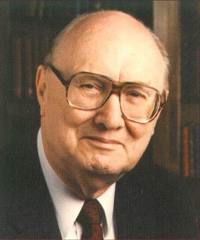
Book Review on John Piper’s Risk is Right

Risk Makes Sense for the Christian – A Book Review on “Risk is Right” by David P. Craig

RIR Piper

I have to own up to the fact that I own every book that John Piper has written and yet find that I have a hard time reading most of his books. He writes with such depth and verbosity that I often have started his books and left many of them unfinished. I do better with his devotionals and shorter works like this one. This is a very short book that can be read by slow readers like me in less than four hours (I read at the speed of the spoken word – due to 3 detached retinas in my right eye in the last several months). One of the common denominators that make Piper’s books and preaching so compelling is that he is a man who walks the talk. John Piper has addressed virtually all of the so-called “Politically Correct” issues of the day like abortion, homosexuality, racism, and numerous other issues head on in his ministry and has never veered to the left or to the right to teach, preach, and write on the whole counsel of God no matter what the cost or consequences.

If anyone has earned the right to speak on “risk” in the Christian community its John Piper. He owns up to his own sin and imperfections and always exults in the cross, forgiveness of sins, and God’s glorious grace. This book is to sanctification what Pascal’s wager is to justification. The gist of Piper’s writing in this book is that everyone is risking their life in one way or another. Therefore, the greatest use of one’s life is to risk it for and in Christ. The greatest risk of all is to not live for Christ – that is a tragic risk that is not worth taking.

In the Introduction David Platt writes,

“This [risk] is the picture of Jesus in the gospel. He is something–someone–worth losing for. When we really believe this, then risking everything we are and everything we have, to know and obey Christ is no longer a matter of sacrifice. It’s just common sense. To let go of the pursuits, possessions, pleasures, safety, and security of this world in order to follow Jesus wherever he leads, no matter what it costs, is not sacrificial as much as it is smart. In the words of Jim Elliott, “He is no fool who gives what he cannot keep to gain what he cannot lost.”

The truth of the matter is that Jesus risked his own relationship with the Father and the Spirit in going to the cross. He was totally forsaken so that we could be forgiven and accepted by the Father. However, He did this for the joy that was set before Him (Hebrews 12:2). What makes this book powerful is that John Piper has modeled a life of risk – in his faithfulness to God’s Word; entrusting his finances totally to God (he doesn’t earn a penny from his writings), and in his sold out total dedication to his tireless endeavors of spreading the gospel for the glory of God – so that everything he says about risk carries the weight of his own integrity (1 Timothy 4:16).

Giving examples from both the Old and New Testaments on risk, and honing in on the greatest risk taker of them all – the Lord Jesus Christ – Piper does an excellent job of tackling the objections we all have to taking risks. He then demonstrates the tremendous joy and how ironically low the risk actually is for the life of the Christian.  When we fully entrust our lives to living in faith on the promises of God in Christ there is ultimately nothing to lose, but everything to gain. In Piper-esque fashion at the end of the book one is left being satisfied in Christ and in the glory of God and with a desire and passion to spread the gospel among the nations so that they like us may live to worship Him in all His splendor. Piper motivates and stirs up a passion for Christ and His gospel in the soul like few others – and for that this book is definitely recommended and worth your time, mediation, and application of the truths explicated.

50 Reasons For a Pretribulational Rapture By Dr. John F. Walvoord

Dr. John Walvoord’s 50 Arguments For A Pretribulational Rapture
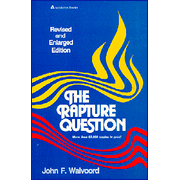
TRQ Walvoord

In previous discussion of premillennialism in relation to the Tribulation, the respective arguments for pretribulationism, partial rapture, posttribulationism, and midtribulationism have been examined and the pretribulational position in general sustained. By way of conclusion and summary, some fifty arguments for pretribulationism can now be proposed. It is not presumed that the statement of these arguments in themselves establishes their validity but rather that the previous discussion supports and justifies this summary of reasons for the pretribulational view.

For the sake of brevity, the term rapture or translation is used for the coming of Christ for His church, while the term second coming is uniformly used as a reference to His coming to the earth to establish His millennial kingdom, an event that all consider posttribulational. While the words rapture and translation are not quite identical, they refer to the same event. By the term rapture, reference is made to the fact that the church is “caught up” from the earth and taken to heaven. By the term translation the thought is conveyed that those who are thus raptured are transformed in their physical bodies from natural and corruptible bodies to spiritual, incorruptible, and immortal bodies. Strictly speaking, the dead are raised while the living are translated. In common usage, however, this distinction is not normally maintained.

In the discussion, the posttribulational view is considered the principal contender against pretribulationism and is primarily in mind in the restatement of the arguments. The other positions, however, are also mentioned insofar as they oppose pretribulationism on some special point. The preceding discussion has pointed to the preponderance of argument in support of the pretribulational position, and the following restatement should serve to clarify the issues involved.

 Historical Argument

1. While posttribulationism appeared as early as 2 Thessalonians 2, many in the early church believed in the imminency of the Lord’s return, which is an essential doctrine of pretribulationism.

2. The detailed development of pretribulational truth during the past few centuries does not prove that the doctrine is new or novel. Its development is similar to that of other major doctrines in the history of the church. Hermeneutics

3. Pretribulationism is the only view that allows literal interpretation of all Old and New Testament passages on the Great Tribulation.

4. Pretribulationism distinguishes clearly between Israel and the church and their respective programs.

Nature of the Tribulation

5. Pretribulationism maintains the scriptural distinction between the Great Tribulation and tribulation in general that precedes it.

6. The Great Tribulation is properly interpreted by pretribulationists as a time of preparation for Israel’s restoration (Deut. 4:29-30; Jer. 30:4-11). It is not the purpose of the Tribulation to prepare the church for glory.

7. None of the Old Testament passages on the Tribulation mention the church (Deut. 4:29-30; Jer. 30:4-11; Dan. 8:24-27; 12:1-2).

8. None of the New Testament passages on the Tribulation mention the church (Matt. 13:30, 39-42, 48-50; 24:15-31; 1 Thess. 1:9-10, 5:4-9; 2 Thess. 2:1-11; Rev. 4-18).

9. In contrast to midtribulationism, the pretribulational view provides an adequate explanation for the beginning of the Great Tribulation in Revelation 6. Midtribulationism is refuted by the plain teaching of Scripture that the Great Tribulation begins long before the seventh trumpet of Revelation 11.

10. The proper distinction is maintained between the prophetic trumpets of Scripture by pretribulationism. There is no proper ground for the pivotal argument of midtribulationism that the seventh trumpet of Revelation is the last trumpet in that there is no established connection between the seventh trumpet of Revelation 11, the last trumpet of 1 Corinthians 15:52, and the trumpet of Matthew 24:31. They are three distinct events.

11. The unity of Daniel’s seventieth week is maintained by pretribulationists. By contrast, posttribulationism and midtribulationists destroy the unity of Daniel’s seventieth week and confuse Israel’s program with that of the church.

Nature of the Church

12. The translation of the church is never mentioned in any passage dealing with the second coming of Christ after the Tribulation.

13. The church is not appointed to wrath (Rom. 5:9; 1 Thess. 1:9-10; 5:9). The church therefore cannot enter “the great day of their wrath” (Rev. 6:17).

14. The church will not be overtaken by the day of the Lord (1 Thess. 5:1-9), which includes the Tribulation.

15. The possibility of a believer escaping the Tribulation is mentioned in Luke 21:36.

16. The church of Philadelphia was promised deliverance from “the hour of trial that is going to come upon the whole world to test those who live on the earth” (Rev. 3:10).

17. It is characteristic of divine dealing to deliver believers before a divine judgment is inflicted on the world as illustrated in the deliverance of Noah, Lot, Rahab, etc. (2 Peter 2:5-9).

18. At the time of the translation of the church, all believers go to the Father’s house in heaven (John 14:3) and do not immediately return to the earth after meeting Christ in the air as posttribulationists teach.

19. Pretribulationism does not divide the body of Christ at the Rapture on a works principle. The teaching of a partial rapture is based on the false doctrine that the translation of the church is a reward for good works. It is rather a climactic aspect of salvation by grace.

20. The Scriptures clearly teach that all, not part, of the church will be raptured at the coming of Christ for the church (1 Cor. 15:51-52; 1 Thess. 4:17).

21. As opposed to a view of a partial rapture, pretribulationism is founded on the definite teaching of Scripture that the death of Christ frees from all condemnation.

22. The godly remnant of the Tribulation are pictured as Israelites, not members of the church as maintained by the posttribulationists.

23. The pretribulational view, as opposed to posttribulationism, does not confuse general terms like elect and saints, which apply to the saved of all ages, with specific terms like church and those in Christ, which refer to believers of this age only.

Doctrine of Imminency

24. The pretribulational interpretation teaches that the coming of Christ is actually imminent.

25. The exhortation to be comforted by the coming of the Lord (1 Thess. 4:18) is very significant in the pretribulational view and is especially contradicted by most posttribulationists.

26. The exhortation to look for “the glorious appearing” of Christ to His own (Titus 2:13) loses its significance if the Tribulation must intervene first. Believers in that case should look for signs.

27. The exhortation to purify ourselves in view of the Lord’s return has most significance if His coming is imminent (1 John 3:2-3).

28. The church is uniformly exhorted to look for the coming of the Lord, while believers in the Tribulation are directed to look for signs.

The Work of the Holy Spirit

29. The Holy Spirit as the restrainer of evil cannot be taken out of the world unless the church, which the Spirit indwells, is translated at the same time. The Tribulation cannot begin until this restraint is lifted.

30. The Holy Spirit as the restrainer must be taken out of the world before “the lawless one,” who dominates the tribulation period, can be revealed (2 Thess. 2:6-8).

31. If the expression “except there come a falling away first” (KJV) is translated literally, “except the departure come first,” it would plainly show the necessity of the Rapture taking place before the beginning of the Tribulation.

Necessity of an Interval Between the Rapture and the Second Coming

32. According to 2 Corinthians 5:10, all believers of this age must appear before the judgment seat of Christ in heaven, an event never mentioned in the detailed accounts connected with the second coming of Christ to the earth.

33. If the twenty-four elders of Revelation 4:1-5:14 are representative of the church as many expositors believe, it would necessitate the rapture and reward of the church before the Tribulation.

34. The coming of Christ for His bride must take place before the Second Coming to the earth for the wedding feast (Rev. 19:7-10).

35. Tribulation saints are not translated at the second coming of Christ but carry on ordinary occupations such as farming and building houses, and they will bear children (Isa. 65:20-25). This would be impossible if all saints were translated at the Second Coming to the earth, as posttribulationists teach.

36. The judgment of the Gentiles following the Second Coming (Matt. 25:31-46) indicates that both saved and unsaved are still in their natural bodies. This would be impossible if the translation had taken place at the Second Coming.

37. If the translation took place in connection with the Second Coming to the earth, there would be no need of separating the sheep from the goats at a subsequent judgment, but the separation would have taken place in the very act of the translation of the believers before Christ actually sets up His throne on earth (Matt. 25:31).

38. The judgment of Israel (Ezek. 20:34-38), which occurs subsequent to the Second Coming, indicates the necessity of regathering Israel. The separation of the saved from the unsaved in this judgment obviously takes place sometime after the Second Coming and would be unnecessary if the saved had previously been separated from the unsaved by translation.

Contrasts Between the Rapture and the Second Coming

39. At the time of the Rapture the saints meet Christ in the air, while at the Second Coming Christ returns to the Mount of Olives to meet the saints on earth.

40. At the time of the Rapture the Mount of Olives is unchanged, while at the Second Coming it divides and a valley is formed to the east of Jerusalem (Zech. 14:4-5).

41. At the Rapture living saints are translated, while no saints are translated in connection with the second coming of Christ to the earth.

42. At the Rapture the saints go to heaven, while at the Second Coming to the earth the saints remain on the earth without translation.

43. At the time of the Rapture the world is unjudged and continues in sin, while at the Second Coming the world is judged and righteousness is established in the earth.

44. The translation of the church is pictured as a deliverance before the day of wrath, while the Second Coming is followed by the deliverance of those who have believed in Christ during the Tribulation.

45. The Rapture is described as imminent, while the Second Coming is preceded by definite signs.

46. The translation of living believers is a truth revealed only in the New Testament, while the Second Coming with its attendant events is a prominent doctrine of both Testaments.

47. The Rapture concerns only the saved, while the Second Coming deals with both saved and unsaved.

48. At the Rapture Satan is not bound, while at the Second Coming Satan is bound and cast into the abyss.

49. No unfulfilled prophecy stands between the church and the Rapture, while many signs must be fulfilled before the Second Coming.

50. No passage dealing with the resurrection of saints at the Second Coming ever mentions translation of living saints at the same time. The blessed hope of the return of the Lord for His church is a precious aspect of faith and expectation. While learned and devout saints have not always agreed as to the content of this hope, the present discussion has attempted to justify this important aspect of truth. May the promise of our Lord “I will come back and take you to be with me that you also may be where I am” (John 14:3) bring comfort and hope to us in a modern world as it was intended to do for the disciples in the upper room on that dark night before the Crucifixion. “The Spirit and the bride say, ‘Come!’ And let him who hears say, ‘Come!’…He who testifies to these things says, ‘Yes, I am coming soon’“ (Rev. 22:17, 20).

Article adapted from John F. Walvoord. The Rapture Question. Grand Rapids, MI. Zondervan, 1979 (Chapter 20).

About Dr. John F. Walvoord

Walvoord J F image

John F. Walvoord (May 1, 1910 – December 20, 2002) was a Christian theologian, pastor, and president of Dallas Theological Seminary from 1952 to 1986. He was the author of over 30 books, focusing primarily on eschatology and theology including The Rapture Question, and was co-editor of The Bible Knowledge Commentary with Roy B. Zuck. He earned AB and DD degrees from Wheaton College, an AM degree from Texas Christian University in philosophy, a ThB, ThM, and ThD in Systematic Theology from Dallas Theological Seminary, and a LittD from Liberty Baptist Seminary.

Walvoord was brought up in a Christian home, but had little interest in the faith until he was fifteen, when his family moved to Racine after his father accepted a position as superintendent of the junior high. They joined the Union Gospel Tabernacle where he committed his life to Christ after attending a Bible study on Galatians.

After continuing his education at Wheaton College, Walvoord went on to Texas Christian University and Dallas Theological Seminary where he completed his ThD in 1936. Seminary president and mentor Lewis Sperry Chafer appointed Walvoord registrar. During his tenure, he also taught systematic theology at the seminary, and pastored the Rosen Heights Presbyterian church in Fort Worth. Walvoord became more involved in the administration of the school, serving as Chafer’s assistant and secretary to the faculty, and upon Chafer’s death in 1952, became the seminary’s second president where he served until his retirement in 1986.

In addition to his responsibilities at the seminary, Walvoord earned a reputation as one of the most influential dispensational theologians of the 20th century and played a prominent role in advocating a rapture of Christians from the earth prior to a time of great tribulation, followed by a literal thousand-year millennial reign of Christ, and a renewed focus of God on the nation of Israel as distinct from the church.

Books Authored

The Revelation of Jesus Christ. Chicago. Moody Publishers (1966).

Daniel: The Key to Prophetic Revelation. Chicago. Moody Publishers (1971).

Philippians. Chicago. Moody Publishers (1971).

Armageddon, Oil and the Middle East Crisis. Grand Rapids: Zondervan (1974, rev. ed. 1976 and 1990).

Jesus Christ Our Lord. Chicago. Moody Publishers (1974).

Major Bible Themes (with Lewis Sperry Chafer) Grand Rapids: Zondervan (1974).

The Blessed Hope and the Tribulation: A Historical and Biblical Study of Posttribulationism (1976).

The Rapture Question. Grand Rapids: Zondervan (1979).

The Millennial Kingdom. Grand Rapids: Zondervan (1983).

The Bible Knowledge Commentary, (with Roy B. Zuck). Wheaton: Cook Communications (1989).

The Holy Spirit: A Comprehensive Study of the Person and Work of the Holy Spirit Chicago: Moody Press (1991).

(Contributor: “The Augustinian-Dispensational Perspective”) Five Views on Sanctification. Grand Rapids: Zondervan (1996).

(Contributor: “The Literal View”) Four Views on Hell. Grand Rapids: Zondervan (1996).

Matthew: Thy Kingdom Come, The Moody Bible Institute of Chicago (1974).

The Final Drama: Fourteen Keys to Understanding the Prophetic Scriptures. Grand Rapids: Kregel Publications (1997).

Every Prophecy of the Bible. Colorado Springs: Cook Communications (1990, 2011).

The Church in Prophecy: Exploring God’s Purpose for the Present Age. Grand Rapids: Kregel Publications (1999).

The Power of Praying Together: Experiencing Christ Actively in Charge, (with Oliver W. Price). Grand Rapids: Kregel Publications (1999).

Major Bible Prophecies. Grand Rapids: Zondervan (1999).

Blessed Hope. (Autobiography with Mal Couch), AMG Publishers (2001).

Prophecy in the New Millennium. Grand Rapids: Kregel Publications (2001).

1 & 2 Thessalonians. Chicago: Moody Publishers (Reprinted, 2012).

Why is Tim Keller Indebted to Dr. David Martyn Lloyd-Jones?

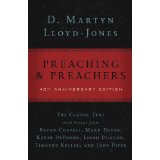
3 Important Reminders on Preaching Dr. Tim Keller Gleaned from Dr. D. Martyn Lloyd-Jones’ Classic Preaching and Preachers  

Preaching and Preachers Image 

DAVID MARTYN LLOYD-JONES’ Preaching and Preachers remains astonishingly up-to-date. In particular I find these three reminders helpful to me, and have been over the years.

(1) Give preaching the primacy— despite the resistance.

Lloyd-Jones was lecturing in 1969 out of a British context where many claimed that Christian preaching would no longer be effective. World War II had given Europeans a suspicion of “great orators” (think Hitler). Television and radio had changed people’s attention spans and created an appetite for intimate, informal speech. The culture’s loss of belief in authority was another factor; in a post-Christian society how could we think it effective to bring people to hear a monologue? Instead, the objectors proposed using new media (television and radio), or putting greater emphasis on liturgy and art, or making the church more of a social service and counseling agency. Some called churches to abandon their current form totally. Christians, they said, should disperse, throwing themselves into addressing people’s personal and social problems out in the world. Then, when holding gatherings, they should be small, informal, and characterized by dialogue and discussion.

It is surprising how similar this sounds to proposals that have been made in United States more recently under the heading of “the emerging church.” Lloyd-Jones’ answers to these objections are still compelling. He shows how in Acts 6 the apostles appointed others to the important ministry of mercy so they could devote themselves to the primary thing—” prayer and the ministry of the Word” (Acts 6: 4). He argues that people sense a power and experience a sermon very differently in person, in a gathered assembly, than they do through media. Most boldly he takes on the main objection—” people just won’t come.” He retorts: “The answer is that they will come, and that they do come when it is true preaching.” Speaking from the heart of secular, pluralistic, late-modern Manhattan, this preacher completely agrees with him.

(2) Don’t preach as if everyone is a Christian— or as if the gospel is not for Christians.

Lloyd-Jones warns preachers not to “assume that all … who are members of the church, are … Christians. This, to me, is the most fatal blunder of all.” He goes on to say that many people have accepted Christianity intellectually but have never come under the power of the Word and the Gospel and therefore have “not truly repented.” Under real Gospel preaching there will always be a steady stream of church members who, every year, come forward and confess that they had never understood the Gospel and had, over the past months, finally repented and believed truly.

There is a flip side to this. Lloyd-Jones calls us not only to evangelize as we edify, but insists that we can edify Christians as we evangelize. As he put it, believers need to feel the power of the Gospel again and again and “almost” go through the experience of conversion again. Lloyd-Jones preached sermons in the evening that were primarily evangelistic and sermons in the morning that were primarily edification, but he insisted that his members come to both and that preachers not make “too rigid” a distinction. The Gospel edifies and evangelizes at the same time.

When I came to New York City in 1989, I listened to scores of Lloyd-Jones recordings. I heard how expository and theological his evangelistic preaching was, and how evangelistic and Gospel-centered his edificational preaching was. It was an epiphany for me. I realized that the Willow Creek strategy of light “seeker talks” every weekend was misguided. I also saw that the reaction against Willow Creek— the move to lengthy, didactic, expository teaching that assumed all were Christians— was inappropriate for Manhattan as well. New York City in the late 1980s was more like midcentury London than anywhere else in the U.S., and so I listened to recordings of sermons by Lloyd-Jones and Dick Lucas, another London preacher. I learned to preach evangelistic-edificational sermons and edificational-evangelistic sermons.

(3) Don’t preach just to make the truth clear— but to make it real.

In 1968, during convalescence after surgery, Lloyd-Jones visited many of the churches pastored by members of his Westminster Ministerial Fellowship. He was disappointed by the preaching he heard. On October 9 of that year he gave the Fellowship an informal lecture (preserved by Iain Murray in Lloyd-Jones: Messenger of Grace, 2008, pp. 99ff.) saying that “once evangelical preaching was too subjective— now it is too objective.” In their concern to avoid entertainment and storytelling, their preaching addressed only the mind and not “the whole man.”

These concerns reemerge in Preaching and Preachers. He speaks against the idea that expository preaching is just a “running commentary.” A sermon must have progression to a climax, it must be life-related with argument and passion. In fact, in a 1976 lecture on Jonathan Edwards, Lloyd-Jones argued that the primary object of preaching is not only to give information to be used later, but to make an impression on the heart on the spot. For this reason he even discouraged people from taking notes. The point of preaching is not just to expound doctrine, but to make the doctrine real to the heart and therefore permanently life-changing.

This message was and is important for those circles that do believe in the primacy of preaching, especially expository preaching. Lloyd-Jones argued strenuously against what he called “the pew dictating to the pulpit,” or overcontextualization. Yet Lloyd-Jones saw that his disciples had overreacted. In his October 9 lecture he appealed to them: “Let us present the sermon the best we can— the best language, the best of everything. We have got the curious notion, ‘It’s the doctrine that matters,’ and ignore this. With the message we have got, it is tragic if we can be cold, lifeless, and dull.”

Preaching and Preachers contains many statements about preaching that many will quibble with, including me. But his main themes and messages to preachers are powerful and still so, so timely. This book likely flies in the face of the last five or six books you have read on preaching. But it is one of the most important books on preaching in print. I personally owe it a debt I can never repay.

*The essay above A “Tract for the Times” was written by Dr. Tim Keller following Chapter 4 (The Form of the Sermon) in the special 40th Anniversary of D. Martyn Lloyd-Jones. Preaching and Preachers. Grand Rapids: Zondervan (2012 Reprint of 1972 edition).

 About the Author

Tim Keller in office image

Dr. Timothy Keller is founding pastor of Redeemer Presbyterian Church (PCA) in New York City and the author of numerous books, including Galatians For You, Every Good Endeavor, Center Church, The Meaning of MarriageThe Reason for GodKing’s CrossCounterfeit GodsThe Prodigal God, and Generous Justice. Be watching out for his new book Encounters with Jesus: Unexpected Answers to Life’s Biggest Questions coming in November 2013.

Dr. Sidney Greidanus on Ten Steps from Text to Sermon

Dr. Greidanus’ *Ten Steps from Text to Sermon

Sidney Greidanus

(1) Select the preaching text.

Select the preaching text with an eye to congregational needs. The text must be a literary unit and contain a vital theme.

(2) Read the text in its literary context.

Read and reread the text in its context and jot down initial questions.

(3) Outline the structure of the text.

In the Hebrew/Aramaic or Greek text, note the major affirmations, clausal flow, plot line, scenes, or other literary structures. Mark major units with headings and verse references.

(4) Interpret the text in its own historical setting.

a. Literary interpretation

b. Historical interpretation

c. Theocentric interpretation

Review your results with the help of some good commentaries.

(5) Formulate the text’s theme, goal, and need addressed.

a. State the textual theme in a brief sentence that summarizes the message of the text for its original hearers: subject and predicate. What is the text saying?

b. State the goal of the author for his original hearers. What is the text doing? Does the author aim to persuade, to motivate, to urge, to warn, to comfort? Be specific.

c. State the need the author addressed – the question behind the text.

(6) Understand the message in the contexts of canon and redemptive history.

a. Canonical interpretation: interpret the message in the context of the whole canon;

b. Redemptive-historical interpretation: understand the message in the context of God’s redemptive history from creation to new creation;

c. Christocentric interpretation: explore the ways of (1) redemptive-historical progression, (2) promise-fulfillment, (3) typology, (4) analogy, (5) longitudinal themes, (6) New Testament references, and (7) contrast.

(7) Formulate the sermon theme, goal, and need addressed.

a. Ideally, your sermon theme will be the same as your textual theme (Step 5a). If Step 6 forces a change, stay as close as possible to the textual theme. Your theme will guide especially the development of the body of the sermon.

b. Your goal must be in harmony with the author’s goal (Step 5b) and match the sermon theme. Your goal will guide the style of the sermon as well as the content of its conclusion.

c. State the need you are addressing. This need should be similar to the need addressed by the author. The need will inform the content of your introduction.

(8) Select a suitable sermon form.

Select a sermon form that respects the form of the text (didactic or narrative, deductive or inductive) and that achieves the goal of the sermon.

(9) Prepare the sermon outline.

If possible, follow the flow of the text (Step 3) in the body of the sermon. Main points, derived from the text, support the theme. The introduction should expose the need. The conclusion should clinch your goal.

(10) Write the sermon in oral style.

Say it out loud as you write it. Write in oral style, using short sentences, vivid words, strong nouns and verbs, active voice, present tense, images and illustrations.

PCFD Greidanus

*Adapted from Appendix One in Sidney Greidanus. Preaching Christ From Daniel (Foundations For Expository Sermons). Grand Rapids, MI. Eerdmans, 2012.

About the Author:

Sidney Greidanus received his B.A. from Calvin College in Grand Rapids, MI, his B.D. from Calvin Theological Seminary, also in Grand Rapids, and his Th.D. from the Free University in Amsterdam, The Netherlands. His dissertation, Sola Scriptura: Problems and Principles in Preaching Historical Texts, was first published in 1970 and reprinted in 1979. Since returning to North America, he served as pastor of two Christian Reformed Churches in Canada, taught at Calvin College in Grand Rapids, MI, The King’s College in Edmonton, AB, Canada, and since 1990 has been professor of preaching at Calvin Theological Seminary.

Besides many articles and sermons, he has published several excellent scholarly and theologically rich books on preaching including:

Preaching Christ from Daniel: Foundations for Expository Sermons. Grand Rapids: Eerdmans, 2012.

Preaching Christ from Ecclesiastes: Foundations for Expository Sermons. Grand Rapids: Eerdmans, 2010.

Preaching Christ from Genesis: Foundations for Expository Sermons. Grand Rapids: Eerdmans, 2007.

Sola Scriptura: Problems and Principles in Preaching Historical Texts. Wipf & Stock Publishers, 2001.

Preaching Christ from the Old Testament: A Contemporary Hermeneutical Method. Grand Rapids: Eerdmans, 1999. (from which the article above is adapted).

The Modern Preacher and the Ancient Text: Interpreting and Preaching Biblical Literature: Grand Rapids: Eerdmans. 1989. Selected “The 1990 Book of the Year” by the Journal Preaching.

The Problem of Anxiety by Dr. Tim Keller

praying man on one knee image

Series: Modern Problems; Ancient Solutions

October 24, 1993, Manhattan, N.Y. Based on Psalm 27

“The Problem of Anxiety” by Tim Keller

We’ve been looking at the book of Psalms in the fall, and we’ve been trying to bring them to bear on what we’ve been calling “modern problems,” which, of course, if you can bring the Psalms (a 3,000-year-old book) to bear on them, they’re not that modern, but we always like to flatter ourselves that our problems are worse than anyone else’s. I mean, every age has always felt that way. So I’m pandering to our arrogance and suggesting we do have modern problems (yet which have solutions) that are very ancient. Now let me read to you Psalm 27 in its entirety.

The Lord is my light and my salvation—whom shall I fear? The Lord is the stronghold of my life—of whom shall I be afraid? When evil men advance against me to devour my flesh, when my enemies and my foes attack me, they will stumble and fall. Though an army besiege me, my heart will not fear; though war break out against me, even then will I be confident. One thing I ask of the Lord, this is what I seek: that I may dwell in the house of the Lord all the days of my life, to gaze upon the beauty of the Lord and to seek him in his temple.For in the day of trouble he will keep me safe in his dwelling;he will hide me in the shelter of his tabernacle and set me high upon a rock.Then my head will be exalted above the enemies who surround me; at his tabernacle will I sacrifice with shouts of joy; I will sing and make music to the Lord. Hear my voice when I call, O Lord; be merciful to me and answer me. My heart says of you, “Seek his face!” Your face, Lord, I will seek. Do not hide your face from me, do not turn your servant away in anger; you have been my helper. Do not reject me or forsake me, O God my Savior. 10 Though my father and mother forsake me, the Lord will receive me. 11 Teach me your way, O Lord; lead me in a straight path because of my oppressors. 12 Do not turn me over to the desire of my foes, for false witnesses rise up against me, breathing out violence. 13 I am still confident of this: I will see the goodness of the Lord in the land of the living. 14 Wait for the Lord; be strong and take heartand wait for the Lord.

That’s God’s Word

Now this psalm is all about fear, worry, anxiety, and how the Bible tells us to deal with it. Now when we look at the psalm, we’re going to see a very refreshing realism, even though it’s full of tremendous promises, because the realism is important. I was just reading an author, a man named Ernest Becker, who said, “I think that taking life seriously means something such as this: that whatever man does on this planet has to be done in the lived truth of the terror of creation, of the grotesque, of the rumble of panic underneath everything. Otherwise, it is false.”

He must have lived in New York. There’s always this rumble of panic. It’s really the subway, but you walk along and you feel this rumble of panic, and you say, “Why do I feel so disconcerted?” Then you realize you’re on Park Avenue, and there goes the subway. Ernest Becker is right, and here’s why.

So many of the articles and the books I survey (and I constantly do) … Whenever I see a book in a store or an article in a newspaper or a magazine saying, “How to Overcome Worry” or “How to Overcome Anxiety,” almost always what they essentially say is, “The things you’re worried about may never happen. What a waste of time it is to be worrying about things that may never happen. Instead, visualize a future that is satisfying and focus on that. Visualize that future. Focus on that. Don’t sit around and visualize all the things that could go wrong.”

Is that the way David does it? No. You know, for example, in verse 10, he says, “Though my father and mother forsake me …” Now there is no indication David’s mother and father had actually forsaken him. It says, “Though an entire army was encamped against me …” He doesn’t say, “It has encamped against me …” It says, “Even if it did …” What is David doing? He is doing the opposite of what the articles say. He is actually imagining the worst things that can happen. He is visualizing the worst things that can happen. Why? Because he wants to have a strategy of life, a strategy of dealing with fears and anxieties, that can stand up to anything.

He doesn’t listen to the advice that says, “Maybe none of these things will ever happen, so don’t think about them.” Oh no. As Ernest Becker says, any attitude toward life that minimizes the evil and terror of things is phony. Well, he would have been very happy with Psalm 27. David goes so far as to imagine the worst. The fierce realism of the Bible is seen right here. The Bible says you can have a way of dealing with anger and with anxiety and fear that assumes the worst things may and can happen, that your father and mother forsake you, that an army encamps against you. Think about it! Go ahead. It doesn’t matter, because you can use this on anything.

So what is that strategy? I’ll tell you, whatever it was, we ought to look at it because David had literal enemies, and they had real weapons. They were people who were literally after their lives. Most of you, that’s probably not true. Therefore, if he was able to find a strategy that enabled him to deal with the fears of his life, don’t you think it ought to work for most of us? So let’s see what he says this great strategy is. Actually, it’s all in verse 4.

In verse 3, he says, “I have so much freedom from anxiety and fear that I have enough left over that if an army came up, I’d be okay. I’d be able to handle it.” That’s what he says in verse 3. Then in verse 4 he tells us the secret. There are three verbs: to dwell, to gaze, and to seek. Those are the three. So let’s take a look. How can you have a strategy that will enable you to face any of the anxieties, the stresses of life? I don’t know how you’re doing right now with this, but I know you can improve. Take a look.

1. Dwelling

In verse 4, he says, “One thing I ask of the Lord … that I may dwell in the house of the Lord …” Now what does that mean? What does it mean to dwell in the house of the Lord? Now one of the things you have to think about is David is not thinking so much about a physical spot. First of all, he couldn’t dwell in the house of the Lord literally. You can’t live in a temple. He wasn’t asking for that. Only the Levites could live in there, and nobody could live right there in the Holy of Holies.

What he is actually asking for is to experience the unbroken presence of God, because the thing he is really after is the face of God. The face! “I want to gaze on your beauty. I want to be in your presence.” The house of God or the temple of God was the place where God’s paniym (which is the Hebrew word for face, his presence) dwelt. What David says is, “I want to be always in your presence.” What’s that mean?

Now people always ask this question at this point: “What does that mean? I thought God was present everywhere!” The answer is always best given through an illustration … something like this. You know, Tammy (who was playing the piano) and Steve (on the flute and the sax), you are in their presence, aren’t you? I mean, you’ve already heard them playing. You’re in their presence. Of course. You’ve listened to them and you’re in their presence, and yet nobody can say (yet) that you have met them unless after the service you walk on up and you come up face to face.

Because, you see, your face is the relational gate into your heart. From far away, you can’t have a relationship. You actually have to come up face to face. When you come up to somebody, you can’t look at their kneecap or their shoulder. You have to look in their face if you want to have a personal transaction, a personal interaction, because the face is the place where I see and hear you and the face is the place where you see and hear me. So you have to come face to face.

Now why am I saying that? Last week we said Psalm 19 says the heavens are telling of the glory of God. Psalm 19 says when you go out and see the stars, are you in God’s presence? Sure! The Bible insists you can’t know God personally through nature. It insists on it. Now we looked at that last week in some detail, but let me just put it out again this way. When you come into the presence of a pianist and you listen to her play, as great as it is to be in her presence, you haven’t had a friendship with her by that. You have to come up face to face.

If you want to have a friendship with Henry Ford, you don’t do it by putting your head under a Model T and saying, “Henry? Are you in there, Henry?” To be in the presence of the handiwork, to be in the general presence of someone, is not the same thing as to have a personal relationship. The Bible says, therefore, what David is after here is, “I don’t want to know you distantly. I don’t want to obey you in a general way. I don’t want to have a kind of general inspirational belief in you. I want to know you personally and intimately. That’s what I want.”

That’s the whole secret to a fearless life. Now why? Why? Why does verse 4 answer and explain verse 3? Why would verse 4 be the answer to fear? Here it is. When David says, “The one thing I want is to dwell in your house and gaze on your beauty and seek you in your temple,” that’s the secret right there. Let me put it this way, and then we’ll unpack it. What David is saying is, “My fears are directly proportional to the vulnerability of the things that are my greatest joys. If the thing that is my greatest joy is God, I will live without fear. If my one thing … the thing I most want … is God, I am safe.”

You see, when David says, “I’ll be safe in your dwelling place …” You see it in verse 5. He says, “I’ll be safe in the tabernacle, the tent of God.” David is not thinking physically. He isn’t! He is not so stupid as to think that these people who are after him with their real knives and their real swords, if he runs into the tabernacle, somehow if they come in after him in an Indiana Jones style kind of scene, the ark of the covenant will zap all the bad guys. That’s not what he is thinking.

What he is saying is, “I’m only safe not when I’m physically inside the dwelling of the tabernacle or the temple. I’m only safe when you are the one thing I want most of all. Then I’m safe. Then I’m fearless.” Let me show you how that works. There’s a man over at Drew University named Thomas Oden. He is a great theological teacher, and he is an expert on the early church writers. It’s call patristics, meaning the church fathers. I was reading some of his work on Saint Augustine. Saint Augustine had an amazingly relevant (especially for us today looking at Psalm 27) and intriguing way to understand anxiety.

Augustine said, “Here’s where anxiety comes from. All of us have good things in our lives, and we love them, and we desire them. Good things! Parents and children are good things. A career is a good thing. Romance is a good thing. Sex is a good thing. All sorts of things are good things. We have lots of good things in our lives.” But Augustine says, “When something which is finite becomes …”

In other words, when the good things become the “one thing” we think we have to have in order to be happy, when the good things become the “one thing,” we gaze on them. We seek them. We gaze on their beauty. We adore them, and we believe we cannot receive life joyfully unless we have it. So when good things become “one things,” when good desires become inordinate desires, disproportional-to-their-being desires, Augustine says that’s when anxiety comes.

Why? Because anxiety is like the smoke, and you can follow the smoke down to the fire. The fire is this. Anxiety is always the result of the implosion or the collapse of a false god. “When good things become ‘one things,’ you see, when things that are good to have become things you have to have, when they become the central values of your life, that’s where anxiety comes from,” says Augustine, “because anxiety is always a sign of the collapse of a false god.”

Now let me tell you one of the reasons we squirm with this and one of the reasons some of you may squirm. Some of you may be eaten up with worry and anxiety right now, and you think this is unfair, because you’re worried about a person, or you’re worried about how you’re going to feed your family because of the finances. You’re worried about a lot of things, and they’re good things. See, this is what’s so hard. The things that turn into little idols in our lives are always good things. They were created by God. They’re wonderful. That’s the reason they can slip into the center.

Let me put it this way. A little anxiety is always a very good thing. Remember, there is a place where Paul says, “I have on me the daily anxiety of all the churches.” So a little anxiety shows you’re a caring person, but debilitating anxiety and devastating anxiety shows good things have become “one things.” Now you’re gazing on their beauty and you’re seeking them above all. You think, “Unless I have that, I cannot be happy.” That is what creates debilitating anxiety and fear.

So do you see what David is saying is, “If you’re my ‘one thing,’ if you’re the one thing I require, the one thing I ask for … to gaze on your beauty, to seek you in the temple … I’m fearless?” Because, see, anything but God and his will is subject to the vicissitudes of time and life. Anything but God and his will is vulnerable. Nothing can take God away from you. Nothing can take that away from you. Now you’re fearless. But anything else you set your heart on like this can be taken away. When there’s a threat to it, you go to pieces.

Now David gives us a great example of this. Let’s just use one example. “Though my father and mother forsake me, the Lord will receive me.” Now is there anything wrong with the love between parents and children? Of course not! God invented love between parents and children. God commands love between parents and children. Therefore, for you to want, for example, the love of your parents is something good. For you to want it very deeply is something good. Not only is it something very good; it’s something inevitable that you want it.

Yet what happens if your mother and father forsake you, which of course happens, does it not? What happens? There are people who I’ve talked to, who you’ve talked to (and maybe some of you are), who say, “My mother and father have forsaken me, and I will not be consoled. I will not! I will never forget what they did. I will never forget what they failed to do. I will never be okay. I will always feel worthless. I will always be unhappy!” You just refuse to be consoled. What is that? A good thing (parent love) has become the “one thing,” and you’re gazing at its beauty, and you’re longing for it, and you’re seeking after it. You’re worshiping it in the temple.

As a result, you will be anxious and fearful all of your life. Don’t you see? “If my father and mother forsake me, if my spouse forsakes me, if my career forsakes me, if romance forsakes me, if my looks forsake me, the Lord will receive me. The Lord will receive me!” Unless you get that into your blood, unless you understand the reason we get anxious is because good things become “one things,” and they slide into the center, unless we actually are …

You know, Augustine said anxiety is a very, very helpful thing. It tells you a lot about yourself, because you can always follow your worries to those things which enslave you. You can always follow your worries. Anxiety is always the result of the collapse of a false god, the implosion. Do you understand that? Unless you’re able to get this into your blood you’re going to live a fearful life.

So the question then is … How do we make sure God becomes our “one thing?” How do we do that? I would say the text is actually telling us two ways. The two ways are right there in verse 4. You see, when David says, “There’s only one thing I want,” and then he says, “… to dwell, to gaze, and to seek,” now wait a minute; that’s three things. So what does he mean? He has to mean dwelling and gazing and seeking are basically all the “one thing.” In fact, I think seeking and gazing are actually two ways we dwell in the house. I think seeking and gazing is just a kind of breakdown of what it means to dwell in God’s house.

Do you want to live in his presence? Do you want him to be the “one thing?” Do you want that so you can live a fearless life? The question is … How? You have to gaze on his beauty, and you have to seek him in his temple. Now the reason I think that’s true, by the way, that these two things are the ways in which you dwell in the house (gazing on his beauty and seeking him in the temple) is because the rest of the psalm breaks into two parts.

Starting in verse 8, he says, “Show me your face.” Verses 8 through 10: “Show me your face.” Then verses 11–14 are, “Teach me your way.” Those are the same two things! “Show me your face” is the same thing as gazing on his beauty. “Teach me your way” is the same thing as seeking him. Let me show you these two things. These are the two things you have to do in order to make him your “one thing.”

2. Gazing

First of all, you have to gaze on his beauty. Now if you don’t mind, I’ll just tip my hat to those of you who were here at the end of August because I gave a sermon once on this at the end of August in the evening. When David says, “I’ve come to the temple to gaze on your beauty,” do we think it means a literal vision, something he saw with his physical eyes? I doubt it. Well, I’m not saying David, being a prophet and being a great king and so on, could never have had a vision, but I doubt very much that’s what he is talking about. There’s no indication it means every time he goes in he gets a vision. Oh no!

What does it mean to gaze on his beauty? This is what we’ve called communion with God. This is the difference between knowing about God and knowing God. This is the difference between knowing he is holy and loving and experiencing his holiness and his love. Let me go back to Saint Augustine. Some of you might remember this from two months ago, the sermon in the evening.

Saint Augustine was a great African theologian of the church. He lived in the fourth and fifth century AD. Augustine actually lays out in one of his sets of writings what it really means to actually see God. He says there are three parts: retentio, contemplatio, and dilectio? Remember? Retentio, he says, is finding a truth, getting it out of the Bible. Retentio is the word for retain. You retain it. You distill the truth, and you say, “There it is.” You see it, and you learn it, and you know it.

Augustine stays, “Ah, but you don’t stop there. Oh no! You mustn’t stop there. Once you get that truth, you see God is holy, you see God is wise, you don’t just close your book. You don’t close your notebook and say, ‘Ah, now I know that! I know another attribute of God. I know it!’ Oh no! Now, secondly, you move from retenetio to contemplatio, which means you contemplate or you look at God through the truth. You gaze at God through the truth.”

That means you start to ask yourself questions. “What does this verse tell me about God? What does it show me about God? What does it show me about how marvelous he is, how holy he is, how loving he is? Do I really understand he is holy? Do I really understand it? Am I living it out? What false attitudes and false emotions come when I forget this?” What Augustine means is this is a discipline of the mind in which you’re reaching out and you’re actually saying, “I want to see you.” You stretch every nerve to not see him with the eyes of your eyes but to see him, as Paul says in Ephesians, with the eyes of your heart. You stretch out.

Because we have the Holy Spirit, sometimes to some degree or another, we move to the third of the three phases: dilectio, which means to delight in him. Sometimes we find if we really spend the time seeking to see him, to gaze on his beauty, ideas about him get very real. Ideas about his holiness or his love begin to comfort us, begin to disturb us, begin to thrill us. Now don’t look at me like, “What is all this?” Don’t you remember what Augustine said? Everybody does this with everything but God. We all gaze at the beauty of these good things that have become “one things.”

You know what it means to gaze on the beauty of something. You turn it over in your imagination, the thing you want. It may be a career. It may be a house at the beach. It may be a particular person, and you think what life will be like if you get it. You gaze on the beauty of it. See? You fill your mind with it. You taste it. You rest in it. We do it with everything else but God. Now do it with him! That’s the only way to make the real one thing the “one thing.” Gaze on his beauty. Do you know how to do that? Do you take time to do that? David says unless you do that, you’ll not be dwelling in his house and you’ll have a fearful life.

3. Seeking

He doesn’t just say, “I want to gaze on your beauty,” but, “I want to seek him.” Now the word seek is a very, very specific Hebrew word. It actually means to go and get counsel. So what it means is, “When I come to you, I am trying to find out what your will is, Oh Lord.” He wants to obey. He wants to find out God’s will, and he wants to submit to it.

Boy, this is extremely important. These are the two parts of what it really means to be a Christian. These are the two parts of true religion: gazing on the beauty and seeking God’s will. If you only seek God’s will to obey, to find out what he teaches and disobey it day in and day out, if that’s all you do without gazing on the beauty, it will be all phariseeism and legalism. On the other hand, if you just try to gaze on his beauty, just have this great experience, but you don’t want to find out his will and do daily obedience, well, it won’t work either, and I’ll show you why.

Just think of marriage. A good marriage is a wonderful thing because you can fall in each other’s arms every so often. You see, you gaze on each other’s beauty. You have intimate fellowship, but you can’t walk around all the time in each other’s arms. There’s a life to live. You have to go to work and so on.

Let me tell you what 95 percent of what marriage is: finding out how to serve the other person and how to do for them. Because if you want to experience the other person’s love and yet the other person says, “Hey, would you do this and this and this for me?” and you say, “Oh no. That’s too inconvenient. I don’t like to do that,” if you live like a selfish person, if you don’t learn what the other person’s wishes are, if you don’t serve that other person in the little things day in and day out, it will be the end of intimacy.

Don’t you see? You can’t just live selfishly. You can’t just walk around and do anything you want, not trying to find out how to serve that person, not making sacrifices for that person, not obeying the needs and the wishes of that person and then expect to just jump in bed and have a wonderful, wonderful time of gazing on her beauty or his beauty. If you think that’s going to work, it doesn’t! It never works!

A human being is not a computer. There’s not an entrance sequence that you just poke in and then you get everything you want. In a relationship if you want intimacy, if you want to gaze on the beauty of the other person, if you want to commune with that person in love, you also have to find out that person’s will and do it. That’s just the way it works! What does that mean? I’ll tell you what this means.

A lot of people have wanted desperately to gaze on God’s beauty and get these experiences I’m talking about. You know, I was reading the other day. Here’s a guy who wrote a friend near the end of his life. There was a minister who prayed every day but began to really get a breakthrough, began to gaze on God’s beauty. Almost every week he began to just have these breakthroughs.

He wrote a friend, and he said, “Almost every week, a measure of his great love comes down upon my heart. He has unlocked every compartment of my being and filled and flooded them all with the light of his radiant presence. The inner spot has been touched, and the flintiness of my heart has been melted in the presence of love divine, all love’s excelling.”

What is that? He is in the temple. He is dwelling in the house of the Lord. He is gazing on the beauty, and all of his fears are going. Somebody says, “Ah! I want that so much.” A lot of us go to church just seeking that. A lot of us try to find church that will give us this great sense of highness, that we’ve touched God during the worship services. That’s good. That’s fine, but I’ll tell you this. To gaze on his beauty without seeking his will will never work. You want to gaze on his beauty? There’s a way to do that.

Do you remember blind Bartimaeus? He knew Jesus was going to come by on a certain road, so he pitched his tent there. He just cried out, “Lord, have mercy on me!” Do you want to experience the beauty of God? Do you want to gaze on his beauty? Do you want to have the sense of love these great people I always am reading from their journals have? Do you want that? Of course you want that. Well, how do you get it? You don’t get it by running around trying to get it. You pitch your tent on the road Jesus inevitably will come down, and that road is the road of obedience, seeking him.

There are disciplines to seeking his will. You read the Bible. You pray. You meditate. You take the sacraments at church. Those are the inner disciplines. Then you have the outer disciplines. Be simple in your lifestyle instead of materialistic. Be chaste in your lifestyle instead of impure. Be forgiving in your lifestyle instead of bitter. Have a servant heart instead of an ambitious and selfish heart. These are disciplines. Obey, seek him, and you’ll gaze on his beauty. Otherwise, no.

Okay, you want to dwell in his house? There’s the discipline of gazing on his beauty, and there’s the discipline of seeking his will. Now let me close this way. Some of you are probably finding this a pretty odd thing (gazing on God’s beauty), and you’re thinking, “Well, that’s great. I’d love to have an experience like that. How do I do it?” Here’s how you do it. You have to seek him in his temple. You have to gaze on his beauty in his temple.

Ah, but what is his temple? It says in John 2, Jesus Christ looked at the temple, and he said to the religious leaders, “Tear this temple down, and I will build it up again in three days.” They all looked at him and said, “You’re crazy! It took 40 years to build this temple. You’re going to build it up in three days?” The text tells us he was referring to himself. Jesus is the temple. Now let me explain what I mean.

David gazed at the beauty of God. Now remember we said Augustine says the way you gaze on God is you take certain truths and you look at God through the truths. You look at God through them. So when we’re told David gazed on the beauty of God at the temple, what did that mean? We said he probably didn’t have a vision. It means he went and he watched the temple ritual, and he saw the beauty of God through it. How did that happen?

Well, like this. You know what happened in the temple ritual? Animals were constantly getting slaughtered on the block and sacrificed up to God. David saw the beauty of the Lord, he gazed on the beauty of the Lord, through the sacrifices. How could that happen? Well, when he saw the animals being slain, he saw the beauty of God’s justice and holiness. He said, “Here is a God who requires sin be paid for. Here is a God who is so good and so holy, he cannot count men’s sin. Here’s a God who can’t overlook it. Here’s a God who must deal with evil. What a good God. What a just God. What a holy God.”

On the other hand, when he looked at the sacrifices, he also saw a merciful God. “Here’s a God who wants to deal with our sins so we can still approach him. Here’s a God who wants to forgive us our sins. Here’s a God who wants to find us a way to himself.” Now here’s the point. If David was able to gaze at the beauty of God through the tabernacle and the temple worship, how much more of the beauty of God will we see if we gaze at God through the face of Jesus?

You see, when we look at God today, we don’t have to look at him through a bull being slaughtered on the block. We see the face of a human being, the most loving human being ever, dying for us, suffocating on the cross, his ribs snapping as he suffocates, the blood and the sweat flowing down on his face, looking at us and saying, “You don’t know what you’re doing. I’ve been forsaken for you.”

Now let me tell you something. If David saw so much of the beauty of God in the temple, so much of the beauty of God that it turned him into a great heart so that he could handle an army, how much more of the beauty of God do you think you and I can see if we do what Paul said? What did Paul say? He says, “We are beholding with unveiled faces the light of the glory of God in the face of Jesus Christ.”

That’s what we look at. Gaze on him. Look at him. Look at what he is doing. Look at him dying for you. Gaze on the beauty of God. If the beauty David saw could turn him into someone who could handle an army, what do you think it’s going to turn you into? How much more of the beauty of God can we see? How much more are we going to be able to look at God and say, “You’re my ‘one thing.’ I see your beauty. It fills me up so I’m afraid of nothing anymore. I have the only thing I need?”

This is what it means to seek him. You have to seek the Father. You have to gaze at his beauty through Jesus. It says in John 1:12, “But as many as received him, to them gave he power to become the sons of God …” So if you want him, if you want all the things we’re talking about, it’s not an abstract thing. It’s not a technique. You have to go to God through Jesus. That’s how you gaze on his beauty.

Now, Christian friends, just think about this. There are a number of you who are saying, “Okay, this is very interesting. In fact, this is very moving. This is very powerful, but I’m scared right now about something that’s going to happen on Thursday. That’s four days away. What do I do till then?”

Listen. It’s true the Bible gives you this tremendous solution to anxiety. It says learn to gaze on his beauty and seek him in his temple. Eventually you develop a habit of the heart. You develop a whole orientation toward God. Of course that’s not something that happens really quickly. So the fact of the matter is I can’t give you something that really quickly will overcome all of your anxiety between now and Thursday. The books in the bookstores do. The magazines in the grocery store do.

They give you those little behavior modification grids, and they give you these little rational motive techniques on thought control. They teach you how to turn away from the negative thoughts and put on the positive thoughts. Let me tell you something. The Bible is giving you an antidote to anxiety too, but it’s not a patch. It’s not a Band-Aid. It’s regeneration. It’s a new heart, a new way of life, a new way of doing everything.

So I admit this is something that takes a long time to develop. This is not a quick fix, but you can start right now. You know, “A journey of a thousand miles begins with a single step,” right? You know that cliché? Okay, let’s use it. Do you know what the first step is? Today you can say, “One thing. Finally, Lord God, I’m going to make you the ‘one thing.’ One thing. I’m going to make you my highest priority.

I today determine that gazing on your beauty and seeking you, I can no longer let other things crowd it out of my schedule. I can no longer let other things crowd it out of my energy. I can no longer let other things crowd it out of my creativity. Today you’re the ‘one thing.’ Finally I ditch all other competition. I ditch all other competing concerns. I ditch everything else. I insist on this. I will make time for it. I will do it.” That’s the first step, so do it.

Last of all, let me just give you a quick read of something. In a minute we’re going to sing the hymn that goes, “We rest on Thee, our shield and our defender.” Do you remember several years ago we had a woman here named Betty Elliot who was a missionary? She told us her husband, Jim Elliot, 40 years ago or so now, and six other missionaries decided they were going to go into the jungles of Ecuador and make contact with a very primitive tribe they were going to try to meet, try to live with, try to learn their language, try to give them a written version of their language, bring in literacy and give them a copy of the Bible in their own language.

They were going to do literacy work and Bible translation. They knew it was dangerous, so the night before they were to contact these Indians, they sat around a table, and they sang this hymn together.

We rest on Thee,

Our shield and our defender!

We go not forth alone against the foe;

Strong in Thy strength,

Safe in Thy keeping tender

We rest on Thee,

And in Thy name we go.

Strong in Thy strength,

Safe in Thy keeping tender,

We rest on Thee,

And in Thy name we go.

The next day they were all speared to death by the Indians. Do you remember that story? Elisabeth Elliot, a friend of ours, will say that’s interesting. “We rest on Thee,” they sang. “Strong in Thy strength and safe in Thy keeping.” The next day they were speared. So does it not work? “Of course it works,” she said. They also sang,

Jesus our righteousness,

Our sure foundation,

Our Prince of glory,

And our King of love.

You see, if the one thing that’s non-negotiable in your life, if the one thing you really want, if the one thing you really need, if the one thing is to gaze on the beauty of God, you’re absolutely safe, because the worst thing that could happen to you is a spear gets thrown through your heart (which is exactly what happened), in which case you gaze on the beauty of the Lord in a way you never have before.

Or there was an English missionary named Allen Gardiner. In 1851 he was on his way to South America to start a new mission, and he was shipwrecked on a very remote island. He and his companions tried their very best to stay alive until somebody came to find them, but nobody did. Finally he died, far away from everybody, far away from his loved ones, far away from his family, dying of thirst, dying of hunger. A horrible, horrible way to go.

When they finally discovered his body they found right next to his body was his quiet time notebook, his journal. They opened it up, and they saw on the very last page, he had written out Psalm 34:10. This is what it says: “The young lions do lack, and suffer hunger: but they that seek the Lord shall not want any good thing.” Right underneath it, the last words he penned were, “I am overwhelmed with a sense of the goodness of God.”

Huh? What do you mean, “I am overwhelmed with a sense of the goodness of God?” Why wasn’t he mad? Why wasn’t he angry? Why wasn’t he scared? Because he had the “one thing,” and there was nothing to be afraid of. Don’t you see it’s your only hope? Come and get it. Dwell. Gaze. Seek. Let’s pray.

Father, now we pray everybody in this room might be enabled to say, “The one thing I want is to dwell in your house and gaze on your beauty and seek you in your temple.” Father, for some of us, that’s going to mean actually to get ourselves converted to say that. For a lot of the rest of us, it means we’re going to have to reshuffle our priorities around and realize we’re living like pagans. Many, many good things have become our “one things,” and we’re being just jerked around by them. I pray today you will enable, by the power of your Spirit, to let everybody in this room say, “One thing I ask. One thing only will I seek.” We pray this in Jesus’ name, amen.[1]

 About the Author

Tim Keller seated image

Timothy Keller is founding pastor of Redeemer Presbyterian Church (PCA) in New York City and the author of numerous books, including The Reason for GodKing’s CrossCounterfeit GodsThe Prodigal God, and Generous Justice.


[1] Keller, T. J. (2013). The Timothy Keller Sermon Archive. New York City: Redeemer Presbyterian Church.

The Goodness of God and the Reality of Evil by Dr. Albert Mohler

lightning striking 7 times

Every thoughtful person must deal with the problem of evil. Evil acts and tragic events come to us all in this vale of tears known as human life. The problem of evil and suffering is undoubtedly the greatest theological challenge we face.

Most persons face this issue only in a time of crisis. A senseless accident, a wasting disease, or an awful crime demands some explanation. Yesterday, evil showed its face again as a giant tornado brought death and destruction to Moore, Oklahoma.

For the atheist, this is no great problem. Life is a cosmic accident, morality is an arbitrary game by which we order our lives, and meaning is non-existent. As Oxford University’s Professor Richard Dawkins explains, human life is nothing more than a way for selfish genes to multiply and reproduce. There is no meaning or dignity to humanity.

For the Christian Scientist, the material world and the experience of suffering and death are illusory. In other religions suffering is part of a great circle of life or recurring incarnations of spirit.

Some Christians simply explain suffering as the consequence of sins, known or unknown. Some suffering can be directly traced to sin. What we sow, so shall we reap, and multiple millions of persons can testify to this reality. Some persons suffer innocently by the sinful acts of others.

But Jesus rejected this as a blanket explanation for suffering, instructing His disciples in John 9 and Luke 13 that they could not always trace suffering back to sin. We should note that the problem of evil and suffering, the theological issue of theodicy, is customarily divided into evil of two kinds, moral and natural. Both are included in these passages. In Luke 13, the murder of the Galileans is clearly moral evil, a premeditated crime–just like the terrorist acts in New York and Washington. In John 9, a man is blind from birth, and Jesus tells the Twelve that this blindness cannot be traced back to this man’s sin, or that of his parents.

Natural evil comes without a moral agent. A tower falls, an earthquake shakes, a tornado destroys, a hurricane ravages, a spider bites, a disease debilitates and kills. The world is filled with wonders mixed with dangers. Gravity can save you or gravity can kill you. When a tower falls, it kills.

People all over the world are demanding an answer to the question of evil. It comes only to those who claim that God is mighty and that God is good. How could a good God allow these things to happen? How can a God of love allow killers to kill, terrorists to terrorize, and the wicked to escape without a trace?

No superficial answer will do. Our quandary is well known, and the atheists think they have our number. As a character in Archibald MacLeish’s play, J.B. asserts, “If God is God He is not good, if God is good He is not God; take the even, take the odd . . . .” As he sees it, God can be good, or He can be powerful, but He cannot be both.

We will either take our stand with God’s self-revelation in the Bible, or we are left to invent a deity of our own imagination. The Bible quickly excludes two false understandings.

First, the Bible reveals that God is omnipotent and omniscient. These are unconditional and categorical attributes. The sovereignty of God is the bedrock affirmation of biblical theism. The Creator rules over all creation. Not even a sparrow falls without His knowledge. He knows the number of hairs upon our heads. God rules and reigns over all nations and principalities. Not one atom or molecule of the universe is outside His active rule.

The sovereignty of God was affirmed by King Nebuchadnezzar, who confessed that God “does according to His will in the host of heaven and among the inhabitants of the earth; and no one can ward off His hand or say to Him, ‘What have You done?’” [Daniel 4:36]. Process theologians have attempted to cut God’s power down to size, rendering the Creator as one power among others. The evangelical revisionists pushing open theism have attempted to cut God’s omniscience down to size, rendering Him as one mind among others.

Rabbi Harold Kushner argues that God is doing the best He can under the circumstances, but He lacks the power to either kill or cure. The openness theists argue that God is always ready with Plan B when Plan A fails. He is infinitely resourceful, they stress, just not really sovereign.

These are roads we dare not take, for the God of the Bible causes the rising and falling of nations and empires, and His rule is active and universal. Limited sovereignty is no sovereignty at all.

The second great error is to ascribe evil to God. But the Bible does not allow this argument. God is absolute righteousness, love, goodness, and justice. Most errors related to this issue occur because of our human tendency to impose an external standard–a human construction of goodness–upon God. But good does not so much define God as God defines good.

How then do we speak of God’s rule and reconcile this with the reality of evil? Between these two errors the Bible points us to the radical affirmation of God’s sovereignty as the ground of our salvation and the assurance of our own good. We cannot explain why God has allowed sin, but we understand that God’s glory is more perfectly demonstrated through the victory of Christ over sin. We cannot understand why God would allow sickness and suffering, but we must affirm that even these realities are rooted in sin and its cosmic effects.

How does God exercise His rule? Does He order all events by decree, or does He allow some evil acts by His mere permission? This much we know–we cannot speak of God’s decree in a way that would imply Him to be the author of evil, and we cannot fall back to speak of His mere permission, as if this allows a denial of His sovereignty and active will.

A venerable confession of faith states it rightly: “God from eternity, decrees or permits all things that come to pass, and perpetually upholds, directs, and governs all creatures and all events; yet so as not in any way to be the author or approver of sin nor to destroy the free will and responsibility of intelligent creatures.”

God is God, and God is good. As Paul affirms for the church, God’s sovereignty is the ground of our hope, the assurance of God’s justice as the last word, and God’s loving rule in the very events of our lives: “And we know that God causes all things to work together for good to those who love God, who are the called according to His purpose.” [Romans 8:28]

We dare not speak on God’s behalf to explain why He allowed these particular acts of evil to happen at this time to these persons and in this manner. Yet, at the same time, we dare not be silent when we should testify to the God of righteousness and love and justice who rules over all in omnipotence. Humility requires that we affirm all that the Bible teaches, and go no further. There is much we do not understand. As Charles Spurgeon explained, when we cannot trace God’s hand, we must simply trust His heart.

And so, we weep with those who weep, and we reach out with acts of care and compassion. We pray for those who are grieving and have experienced such loss. We cry for the children lost in this storm, even as we are so thankful for brave people who did their best to save lives as the winds raged. And, we pray: Even so, Lord come quickly.

Article originally appeared on August 20, 2005 and reposted again @ http://www.albertmohler.com/2013/05/21/the-goodness-of-god-and-the-reality-of-evil-4/

About Dr. Albert Mohler:

R Albert Mohler

Dr. R. Albert Mohler Jr. serves as president of The Southern Baptist Theological Seminary – the flagship school of the Southern Baptist Convention and one of the largest seminaries in the world.

Dr. Mohler has been recognized by such influential publications as Time and Christianity Today as a leader among American evangelicals. In fact, Time.com called him the “reigning intellectual of the evangelical movement in the U.S.”

In addition to his presidential duties, Dr. Mohler hosts two programs: “The Briefing,” a daily analysis of news and events from a Christian worldview; and “Thinking in Public,” a series of conversations with the day’s leading thinkers. He also writes a popular blog and a regular commentary on moral, cultural and theological issues. All of these can be accessed through Dr. Mohler’s website, http://www.AlbertMohler.com. Called “an articulate voice for conservative Christianity at large” by The Chicago Tribune, Dr. Mohler’s mission is to address contemporary issues from a consistent and explicit Christian worldview.

Widely sought as a columnist and commentator, Dr. Mohler has been quoted in the nation’s leading newspapers, including The New York Times, The Wall Street Journal, USA Today, The Washington Post, The Atlanta Journal/Constitution and The Dallas Morning News. He has also appeared on such national news programs as CNN’s “Larry King Live,” NBC’s “Today Show” and “Dateline NBC,” ABC’s “Good Morning America,” “The NewsHour with Jim Lehrer” on PBS, MSNBC’s “Scarborough Country” and Fox’s “The O’Reilly Factor.”

Dr. Mohler is a theologian and an ordained minister, having served as pastor and staff minister of several Southern Baptist churches. He came to the presidency of Southern Seminary from service as editor of The Christian Index, the oldest of the state papers serving the Southern Baptist Convention.

A native of Lakeland, Fla., Dr. Mohler was a Faculty Scholar at Florida Atlantic University before receiving his Bachelor of Arts degree from Samford University in Birmingham, Ala. He holds a master of divinity degree and the doctor of philosophy (in systematic and historical theology) from Southern Seminary. He has pursued additional study at the St. Meinrad School of Theology and has done research at University of Oxford (England).

Dr. Mohler also serves as the Joseph Emerson Brown Professor of Christian Theology at Southern Seminary. His writings have been published throughout the United States and Europe. In addition to contributing to a number of collected volumes, he is the author of several books, including Culture Shift: Engaging Current Issues with Timeless Truth (Multnomah); Desire & Deceit: The Real Cost of the New Sexual Tolerance (Multnomah); Atheism Remix: A Christian Confronts the New Atheists (Crossway); He Is Not Silent: Preaching in a Postmodern World (Moody); The Disappearance of God: Dangerous Beliefs in the New Spiritual Openness (Multnomah); and Words From the Fire: Hearing the Voice of God in the Ten Commandments (Moody). From 1985 to 1993, he served as associate editor of Preaching, a journal for evangelical preachers, and is currently editor-in-chief of The Southern Baptist Journal of Theology.

A leader within the Southern Baptist Convention, Dr. Mohler has served in several offices including a term as Chairman of the SBC Committee on Resolutions, which is responsible for the denomination’s official statements on moral and doctrinal issues. He also served on the seven-person Program and Structure Study Committee, which recommended the 1995 restructuring of the nation’s largest Protestant denomination. In 2000, Dr. Mohler served on a blue-ribbon panel that made recommendations to the Southern Baptist Convention for revisions to the Baptist Faith and Message, the statement of faith most widely held among Southern Baptists. Most recently, he served on the Great Commission Task Force, a denominational committee that studied the effectiveness of SBC efforts to fulfill the Great Commission. He currently serves as chairman of the Southern Baptist Convention’s Council of Seminary Presidents.

Dr. Mohler has presented lectures or addresses at institutions including Columbia University, the University of Virginia, Wheaton College, Samford University, Trinity Evangelical Divinity School, the University of Richmond, Mercer University, Cedarville University, Beeson Divinity School, Reformed Theological Seminary, The Master’s Seminary, Geneva College, Biola University, Covenant Theological Seminary, The Cumberland School of Law, The Regent University School of Law, Grove City College, Vanderbilt University and the historic Chautauqua Institution, among many others.

Dr. Mohler is listed in Who’s Who in America and other biographical reference works and serves on the boards of several organizations including Focus on the Family. He is a member of the Council for Biblical Manhood and Womanhood and serves as a council member for The Gospel Coalition.

He is married to Mary, and they have two children, Katie and Christopher.

John Piper – 12 Ways to Love Your Wayward Child

suffering image man with hand over head

Many parents are brokenhearted and completely baffled by their unbelieving son or daughter. They have no clue why the child they raised well is making such awful, destructive decisions. I’ve never been one of these parents, but I have been one of these sons. Reflecting back on that experience, I offer these suggestions to help you reach out to your wayward child.

1. Point them to Christ.

Your rebellious child’s real problem is not drugs or sex or cigarettes or pornography or laziness or crime or cussing or slovenliness or homosexuality or being in a punk rock band. The real problem is that they don’t see Jesus clearly. The best thing you can do for them—and the only reason to do any of the following suggestions—is to show them Christ. It is not a simple or immediate process, but the sins in their life that distress you and destroy them will only begin to fade away when they see Jesus more like he actually is.

2. Pray.

Only God can save your son or daughter, so keep on asking that he will display himself to them in a way they can’t resist worshiping him for.

3. Acknowledge that something is wrong.

If your daughter rejects Jesus, don’t pretend everything is fine.

For every unbelieving child, the details will be different. Each one will require parents to reach out in unique ways. Never acceptable, however, is not reaching out at all. If your child is an unbeliever, don’t ignore it. Holidays might be easier, but eternity won’t be.

4. Don’t expect them to be Christ-like.

If your son is not a Christian, he’s not going to act like one.

You know that he has forsaken the faith, so don’t expect him to live by the standards you raised him with. For example, you might be tempted to say, “I know you’re struggling with believing in Jesus, but can’t you at least admit that getting wasted every day is sin?”

If he’s struggling to believe in Jesus, then there is very little significance in admitting that drunkenness is wrong. You want to protect him, yes. But his unbelief is the most dangerous problem—not partying. No matter how your child’s unbelief exemplifies itself in his behavior, always be sure to focus more on the heart’s sickness than its symptoms.

5. Welcome them home.

Because the deepest concern is not your child’s actions, but his heart, don’t create too many requirements for coming home. If he has any inkling to be with you, it is God giving you a chance to love him back to Jesus. Obviously there are some instances in which parents must give ultimatums: “Don’t come to this house if you are…” But these will be rare. Don’t lessen the likelihood of an opportunity to be with your child by too many rules.

If your daughter smells like weed or an ashtray, spray her jacket with Febreze and change the sheets when she leaves, but let her come home. If you find out she’s pregnant, then buy her folic acid, take her to her twenty-week ultrasound, protect her from Planned Parenthood, and by all means let her come home. If your son is broke because he spent all the money you lent him on loose women and ritzy liquor, then forgive his debt as you’ve been forgiven, don’t give him any more money, and let him come home. If he hasn’t been around for a week and a half because he’s been staying at his girlfriend’s—or boyfriend’s—apartment, plead with him not to go back, and let him come home.

6. Plead with them more than you rebuke them.

Be gentle in your disappointment.

What really concerns you is that your child is destroying herself, not that she’s breaking rules. Treat her in a way that makes this clear. She probably knows—especially if she was raised as a Christian—that what she’s doing is wrong. And she definitely knows you think it is. So she doesn’t need this pointed out. She needs to see how you are going to react to her evil. Your gentle forbearance and sorrowful hope will show her that you really do trust Jesus.

Her conscience can condemn her by itself. Parents ought to stand kindly and firmly, always living in the hope that they want their child to return to.

7. Connect them to believers who have better access to them.

There are two kinds of access that you may not have to your child: geographical and relational. If your wayward son lives far away, try to find a solid believer in his area and ask him to contact your son. This may seem nosy or stupid or embarrassing to him, but it’s worth it—especially if the believer you find can also relate to your son emotionally in a way you can’t.

Relational distance will also be a side effect of your child leaving the faith, so your relationship will be tenuous and should be protected if at all possible. But hard rebuke is still necessary.

This is where another believer who has emotional access to your son may be very helpful. If there is a believer who your son trusts and perhaps even enjoys being around, then that believer has a platform to tell your son—in a way he may actually pay attention to—that he’s being an idiot. This may sound harsh, but it’s a news flash we all need from time to time, and people we trust are usually the only ones who can package a painful rebuke so that it is a gift to us.

A lot of rebellious kids would do well to hear that they’re being fools—and it is rare that this can helpfully be pointed out by their parents—so try to keep other Christians in your kids lives.

8. Respect their friends.

Honor your wayward child in the same way you’d honor any other unbeliever. They may run with crowds you’d never consider talking to or even looking at, but they are your child’s friends. Respect that—even if the relationship is founded on sin. They’re bad for your son, yes. But he’s bad for them, too. Nothing will be solved by making it perfectly evident that you don’t like who he’s hanging around with.

When your son shows up for a family birthday celebration with another girlfriend—one you’ve never seen before and probably won’t see again—be hospitable. She’s also someone’s wayward child, and she needs Jesus, too.

9. Email them.

Praise God for technology that lets you stay in your kids’ lives so easily!

When you read something in the Bible that encourages you and helps you love Jesus more, write it up in a couple lines and send it to your child. The best exhortation for them is positive examples of Christ’s joy in your own life.

Don’t stress out when you’re composing these as if each one needs to be singularly powerful. Just whip them out one after another, and let the cumulative effect of your satisfaction in God gather up in your child’s inbox. God’s word is never proclaimed in vain.

10. Take them to lunch.

If possible, don’t let your only interaction with your child be electronic. Get together with him face to face if you can. You may think this is stressful and uncomfortable, but trust me that it’s far worse to be in the child’s shoes—he is experiencing all the same discomfort, but compounded by guilt. So if he is willing to get together with you for lunch, praise God, and use the opportunity.

It will feel almost hypocritical to talk about his daily life, since what you really care about is his eternal life, but try to anyway. He needs to know you care about all of him. Then, before lunch is over, pray that the Lord will give you the gumption to ask about his soul. You don’t know how he’ll respond.  Will he roll his eyes like you’re an idiot? Will he get mad and leave? Or has God been working in him since you talked last? You don’t know until you risk asking.

(Here’s a note to parents of younger children: Set up regular times to go out to eat with your kids. Not only will this be valuable for its own sake, but also, if they ever enter a season of rebellion, the tradition of meeting with them will already be in place and it won’t feel weird to ask them out to lunch. If a son has been eating out on Saturdays with his dad since he was a tot, it will be much harder for him later in life to say no to his father’s invitation—even as a surly nineteen-year-old.)

11. Take an interest in their pursuits.

Odds are that if your daughter is purposefully rejecting Christ, then the way she spends her time will probably disappoint you. Nevertheless, find the value in her interests, if possible, and encourage her. You went to her school plays and soccer games when she was ten; what can you do now that she’s twenty to show that you still really care about her interests?

Jesus spent time with tax collectors and prostitutes, and he wasn’t even related to them. Imitate Christ by being the kind of parent who will put some earplugs in your pocket and head downtown to that dank little nightclub where your daughter’s CD release show is. Encourage her and never stop praying that she will begin to use her gifts for Jesus’ glory instead her own.

12. Point them to Christ.

This can’t be over-stressed. It is the whole point. No strategy for reaching your son or daughter will have any lasting effect if the underlying goal isn’t to help them know Jesus.

Jesus.

It’s not so that they will be good kids again; it’s not so that they’ll get their hair cut and start taking showers; it’s not so that they’ll like classical music instead of deathcore; it’s not so that you can stop being embarrassed at your weekly Bible study; it’s not so that they’ll vote conservative again by the next election; it’s not even so that you can sleep at night, knowing they’re not going to hell.

The only ultimate reason to pray for them, welcome them, plead with them, email them, eat with them, or take an interest in their interests is so that their eyes will be opened to Christ.

And not only is he the only point—he’s the only hope. When they see the wonder of Jesus, satisfaction will be redefined. He will replace the pathetic vanity of the money, or the praise of man, or the high, or the orgasm that they are staking their eternities on right now. Only his grace can draw them from their perilous pursuits and bind them safely to himself—captive, but satisfied.

He will do this for many. Be faithful and don’t give up.

©2013 Desiring God Foundation. Used by Permission.

Permissions: You are permitted and encouraged to reproduce and distribute this material in any format provided that you do not alter the wording in any way and do not charge a fee beyond the cost of reproduction. For web posting, a link to this document on our website is preferred. Any exceptions to the above must be approved by Desiring God.

Please include the following statement on any distributed copy: By John Piper. May 9, 2007 ©2013 Desiring God Foundation. Website: desiringGod.org

Friday Humor: “Don’t Fill Him, Lord…” by R.C. Sproul

Series: Friday Humor #10

R.C. Sproul sitting in green chair 

We know people who have been “converted” many times. Every time there is a church revival they go to the altar and get “saved.” One minister told of a man in his congregation who had been “saved” seventeen times. During a revival meeting the evangelist made an altar call for all who wanted to be filled with the Spirit. The man who had been converted so often made his way toward the altar again. A woman from the congregation shouted, “Don’t fill him, Lord. He leaks!” … Those who become “unconverted” were never converted in the first place. – R.C. Sproul from a sermon.

How To Shape Your Life With Intentionality by Dr. David P. Craig

A TEMPLATE FOR SHAPING MY LIFE WITH INTENTIONALITY

Developed by Dr. David Craig – Pastor and Life Coach – Vertical Living Ministries

prayer in field w sunset

 “So whether you eat or drink, or whatever you do. Do all to the glory of God.” – 1 Corinthians 10:31

Head –            Convictions                          What do I need to Know?                         Personal

Heart –       Communication                         What do I need to Say/Convey?               Relational

Hands –       Contribution                             What do I need to Do?                            Practical

For each of the nine areas below set goals in light of the above 3 questions: What will I study or need to know about_____; What will I feel or communicate about _____; and what will I do or what actions shall I take about ______. Each goal is meant to turn what you value into an intentional habit that will make a great difference cumulatively in others lives, your own life, and for the sake of God’s ultimate glory.

 Nine Primary Areas of Living Intentionally:

(1) SpirituallyYour Relationship to God through The Lordship of Jesus Christ. Psalm 37:3-7; 1 Peter 1:3-11; 2 Tim. 2:15; 1 Thess. 5:17

(2) MarriageYour triune covenantal relationship with Christ at the center. Gen. 2:18-25; 1 Cor. 7:1-7; 13:1-8; Eph. 5:22-31

(3) Family/ParentingHow to be a Christ-centered family and raise Children that love Jesus above all else. Deut. 6:1-9; Proverbs; Eph. 6:1-4; 1 Tim. 5:8

(4) VocationallyYour Work in the World and with the Church. Genesis 2:15; Colossians 3:23-25; 1 Cor. 3:5-23

(5) HealthTaking care of the Temple that God will use on this earth until the day of your final glorification. 1 Tim. 4:7-8; 1 Cor. 6:19-20; 10:31; Philippians 4:4-9

(6) FriendshipYour connections and building bridges with others as you reflect Christ in your community. Matt. 5:13-16; Gal. 6:9-10; Eph. 5:15-18; Col. 4:5-6; Lk. 6:27-31

(7) FinanciallyYour stewardship of God’s resources. Matt. 6:19-24; 1 Tim. 6:6-11, 17-19; 1 Cor. 16:1; 2 Cor. 9:6-8

(8) MentoringYour investing in Others Using your Unique Skills, Gifting, Talents, and Personality. Prov. 27:17; 2 Tim. 2:2; Titus 2:4; 1 Thess. 5:11

(9) DiscipleshipYour Investing in the Spiritual Growth of other followers and would-be followers of Christ. Lk. 6:40; Matt. 28:19-20; 1 Tim. 4:16; 2 Tim. 3:10


The Hour That Changes The World – A 12 Step Way to Pray By Dick Eastman

In the United States today is the “National Day of Prayer” and do we ever need to be praying. Our nation is crumbling before our eyes spiritually, morally, economically, and in many other ways. The only way I can fathom any significant change is for the gospel to go forth in power resulting in repentance and faith in Christ in droves.

One of the mysterious means God has given us as Christians to work in this world is the gift of prayer. Whereby Christ mediates our prayers in the power and through the working of the Holy Spirit to the throne room of God the Father. God answers our prayers in accordance with His sovereign plans.

Today I will be working through the twelve steps of prayer below presented as a template and expounded upon in the excellent book on prayer by Dick Eastman entitled: “The Hour That Changes The World.” Dick Eastman’s book is highly recommended in that it provides a plethora of outstanding resources on how to pray biblically, and therefore with great effectiveness and power. Today I will be praying through these twelve steps with a special emphasis on praying for the USA – and it’s much-needed revival!

Dick Eastman suggests using this template to pray for an hour. You may not be able to pray for an hour – and that’s ok. It’s not the time that matters. It’s really about your intimacy with God and focusing in and honing in on what’s important to Him so it’s also important to you – and you become a doer of what He wants done on earth. Revival starts with the Church and then results in penetrating culture. I hope you will join me today in praying for our beloved country and for all the nations of the earth that so desperately need to repent of their sins and trust in Jesus’ provision for them on the cross, and through His resurrection.

HTCTW Eastman

The Hour That Changes The World – By Dick Eastman 

(1) Begin with Praise – Recognize God’s Nature

Psalm 63:3, “Because your steadfast love is better than life, my lips will praise you.

(2) Waiting – Silent Soul Surrender

Psalm 46:10, “Be still, and know that I am God. I will be exalted among the nations, I will be exalted in the earth!”

(3) Confession – Temple Cleansing Time

Psalm 139:23-24, “Search me, O God, and know my heart! Try me and know my thoughts! And see if there be any grievous way in me, and lead me in the way everlasting!”

(4) Scripture Praying – Word Enriched Prayer

Jeremiah 23:29, “Is not my word like fire, declares the Lord, and like a hammer that breaks the rock in pieces?”

(5) Watching – Develop Holy Alertness

Colossians 4:2, “Continue steadfastly in prayer, being watchful in it with thanksgiving.”

(6) Intercession – Remember The World

1 Timothy 2:1-2, “First of all, then, I urge that supplications, prayers, intercessions, and thanksgivings be made for all people, 2 for kings and all who are in high positions, that we may lead a peaceful and quiet life, godly and dignified in every way.”

(7) Petition – Share Personal Needs

Matthew 7:7, “Ask, and it will be given to you; seek, and you will find; knock, and it will be opened to you.”

(8) Thanksgiving – Confess My Blessings

1 Thessalonians 5:18, “give thanks in all circumstances; for this is the will of God in Christ Jesus for you.”

(9) Singing – Worship In Song

Psalm 100:2, “Serve the Lord with gladness! Come into his presence with singing! 

 (10) Meditation – Ponder Spiritual Themes

Joshua 1:8, “This Book of the Law shall not depart from your mouth, but you shall meditate on it day and night, so that you may be careful to do according to all that is written in it. For then you will make your way prosperous, and then you will have good success.”

(11) Listening – Receive Spiritual Instruction

Ecclesiastes 5:2, “Be not rash with your mouth, nor let your heart be hasty to utter a word before God, for God is in heaven and you are on earth. Therefore let your words be few.”

(12) Praise – Recognize God’s Nature

Psalm 52:9, “I will thank you forever, because you have done it. I will wait for your name, for it is good, in the presence of the godly.