Dr. John Maxwell’s 5 Reasons to Live on Purpose

THE POWER OF PURPOSE

John C Maxwell seated

But I want you to know, brethren, that the things which happened to me have actually turned out for the furtherance of the gospel, so that it has become evident to the whole palace guard, and to all the rest, that my chains are in Christ; and most of the brethren in the Lord, having become confident by my chains, are much more bold to speak the word without fear. – PhiIippians 1:12-14

Paul might have been forgiven had he chosen to take a little sabbatical as he sat in prison, awaiting his trial. Yet he used even this opportunity to advance the gospel. Paul was a leader who never drifted from his mission. He determined to leave his mark wherever he went. How did Paul’s sense of purpose keep him in the battle as he sat in prison? What did he learn behind bars? Consider the following:

  1. A purpose will motivate you.
  2. A purpose will keep your priorities straight.
  3. A purpose will develop your potential.
  4. A purpose will give you power to live in the present.
  5. A purpose will help you evaluate your progress.

Article adapted from John C. Maxwell. Leadership Promises for Every Day (Kindle Locations 80-86). Kindle Edition.

“The Sinfulness of Sin” on “Cosmic Treason” by R.C. Sproul

TTOTC Sproul

“The sinfulness of sin” sounds like a vacuous redundancy that adds no information to the subject under discussion. However, the necessity of speaking of the sinfulness of sin has been thrust upon us by a culture and even a church that has diminished the significance of sin itself. Sin is communicated in our day in terms of making mistakes or of making poor choices. When I take an examination or a spelling test, if I make a mistake, I miss a particular word. It is one thing to make a mistake. It is another to look at my neighbor’s paper and copy his answers in order to make a good grade. In this case, my mistake has risen to the level of a moral transgression. Though sin may be involved in making mistakes as a result of slothfulness in preparation, nevertheless, the act of cheating takes the exercise to a more serious level. Calling sin “making poor choices” is true, but it is also a euphemism that can discount the severity of the action. The decision to sin is indeed a poor one, but once again, it is more than a mistake. It is an act of moral transgression.

In my book The Truth of the Cross I spend an entire chapter discussing this notion of the sinfulness of sin. I begin that chapter by using the anecdote of my utter incredulity when I received a recent edition of Bartlett’s Familiar Quotations. Though I was happy to receive this free issue, I was puzzled as to why anyone would send it to me. As I leafed through the pages of quotations that included statements from Immanuel Kant, Aristotle, Thomas Aquinas, and others, to my complete astonishment I came upon a quotation from me. That I was quoted in such a learned collection definitely surprised me. I was puzzled by what I could have said that merited inclusion in such an anthology, and the answer was found in a simple statement attributed to me: “Sin is cosmic treason.” What I meant by that statement was that even the slightest sin that a creature commits against his Creator does violence to the Creator’s holiness, His glory, and His righteousness. Every sin, no matter how seemingly insignificant, is an act of rebellion against the sovereign God who reigns and rules over us and as such is an act of treason against the cosmic King.

Cosmic treason is one way to characterize the notion of sin, but when we look at the ways in which the Scriptures describe sin, we see three that stand out in importance. First, sin is a debt; second, it is an expression of enmity; third, it is depicted as a crime. In the first instance, we who are sinners are described by Scripture as debtors who cannot pay their debts. In this sense, we are talking not about financial indebtedness but a moral indebtedness. God has the sovereign right to impose obligations upon His creatures. When we fail to keep these obligations, we are debtors to our Lord. This debt represents a failure to keep a moral obligation.

The second way in which sin is described biblically is as an expression of enmity. In this regard, sin is not restricted merely to an external action that transgresses a divine law. Rather, it represents an internal motive, a motive that is driven by an inherent hostility toward the God of the universe. It is rarely discussed in the church or in the world that the biblical description of human fallenness includes an indictment that we are by nature enemies of God. In our enmity toward Him, we do not want to have Him even in our thinking, and this attitude is one of hostility toward the very fact that God commands us to obey His will. It is because of this concept of enmity that the New Testament so often describes our redemption in terms of reconciliation. One of the necessary conditions for reconciliation is that there must be some previous enmity between at least two parties. This enmity is what is presupposed by the redeeming work of our Mediator, Jesus Christ, who overcomes this dimension of enmity.

The third way in which the Bible speaks of sin is in terms of transgression of law. The Westminster Shorter Catechism answers the fourteenth question, “What is sin?” by the response, “Sin is any want of conformity to, or transgression of, the law of God.” Here we see sin described both in terms of passive and active disobedience. We speak of sins of commission and sins of omission. When we fail to do what God requires, we see this lack of conformity to His will. But not only are we guilty of failing to do what God requires, we also actively do what God prohibits. Thus, sin is a transgression against the law of God.

When people violate the laws of men in a serious way, we speak of their actions not merely as misdemeanors but, in the final analysis, as crimes. In the same regard, our actions of rebellion and transgression of the law of God are not seen by Him as mere misdemeanors; rather, they are felonious. They are criminal in their impact. If we take the reality of sin seriously in our lives, we see that we commit crimes against a holy God and against His kingdom. Our crimes are not virtues; they are vices, and any transgression of a holy God is vicious by definition. It is not until we understand who God is that we gain any real understanding of the seriousness of our sin. Because we live in the midst of sinful people where the standards of human behavior are set by the patterns of the culture around us, we are not moved by the seriousness of our transgressions. We are indeed at ease in Zion. But when God’s character is made clear to us and we are able to measure our actions not in relative terms with respect to other humans but in absolute terms with respect to God, His character, and His law, then we begin to be awakened to the egregious character of our rebellion.

Not until we take God seriously will we ever take sin seriously. But if we acknowledge the righteous character of God, then we, like the saints of old, will cover our mouths with our hands and repent in dust and ashes before Him.

© Tabletalk magazine 
Permissions: You are permitted and encouraged to reproduce and distribute this material in any format provided that you do not alter the wording in any way, you do not charge a fee beyond the cost of reproduction, and you do not make more than 500 physical copies. http://www.ligonier.org/tabletalk. Any exceptions to the above must be formally approved by Tabletalk. Article from May 1, 2008 – Tabletalk Magazine Online.

Please include the following statement on any distributed copy: From Ligonier Ministries and R.C. Sproul. © Tabletalk magazine. Website: http://www.ligonier.org/tabletalk. Email: tabletalk@ligonier.org. Toll free: 1-800-435-4343.

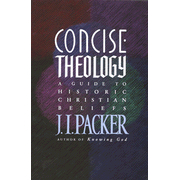
WHY THE INCARNATION? GOD SENT HIS SON, TO SAVE US by J.I. Packer

The Word became flesh and made his dwelling among us. We have seen his glory, the glory of the One and Only, who came from the Father, full of grace and truth. JOHN 1:14

CT Packer

Trinity and Incarnation belong together. The doctrine of the Trinity declares that the man Jesus is truly divine; that of the Incarnation declares that the divine Jesus is truly human. Together they proclaim the full reality of the Savior whom the New Testament sets forth, the Son who came from the Father’s side at the Father’s will to become the sinner’s substitute on the cross (Matt. 20:28; 26:36-46; John 1:29; 3:13-17; Rom. 5:8; 8:32; 2 Cor. 5:19-21; 8:9; Phil. 2:5-8).

The moment of truth regarding the doctrine of the Trinity came at the Council of Nicaea (A.D.325), when the church countered the Arian idea that Jesus was God’s first and noblest creature by affirming that he was of the same “substance” or “essence” (i.e., the same existing entity) as the Father. Thus there is one God, not two; the distinction between Father and Son is within the divine unity, and the Son is God in the same sense as the Father is. In saying that Son and Father are “of one substance,” and that the Son is “begotten” (echoing “only-begotten,” John 1:14, 18; 3:16, 18, and NIV text notes) but “not made,” the Nicene Creed unequivocally recognized the deity of the man from Galilee.

A crucial event for the church’s confession of the doctrine of the Incarnation came at the Council of Chalcedon (A.D.451), when the church countered both the Nestorian idea that Jesus was two personalities—the Son of God and a man—under one skin, and the Eutychian idea that Jesus’ divinity had swallowed up his humanity. Rejecting both, the council affirmed that Jesus is one divine-human person in two natures (i.e., with two sets of capacities for experience, expression, reaction, and action); and that the two natures are united in his personal being without mixture, confusion, separation, or division; and that each nature retained its own attributes. In other words, all the qualities and powers that are in us, as well as all the qualities and powers that are in God, were, are, and ever will be really and distinguishably present in the one person of the man from Galilee. Thus the Chalcedonian formula affirms the full humanity of the Lord from heaven in categorical terms.

The Incarnation, this mysterious miracle at the heart of historic Christianity, is central in the New Testament witness. That Jews should ever have come to such a belief is amazing. Eight of the nine New Testament writers, like Jesus’ original disciples, were Jews, drilled in the Jewish axiom that there is only one God and that no human is divine. They all teach, however, that Jesus is God’s Messiah, the Spirit-anointed son of David promised in the Old Testament (e.g., Isa. 11:1-5; Christos, “Christ,” is Greek for Messiah). They all present him in a threefold role as teacher, sin-bearer, and ruler—prophet, priest, and king. And in other words, they all insist that Jesus the Messiah should be personally worshiped and trusted—which is to say that he is God no less than he is man. Observe how the four most masterful New Testament theologians (John, Paul, the writer of Hebrews, and Peter) speak to this.

John’s Gospel frames its eyewitness narratives (John 1:14; 19:35; 21:24) with the declarations of its prologue (1:1-18): that Jesus is the eternal divine Logos (Word), agent of Creation and source of all life and light (vv. 1-5, 9), who through becoming “flesh” was revealed as Son of God and source of grace and truth, indeed as “God the only begotten” (vv. 14, 18; NIV text notes). The Gospel is punctuated with “I am” statements that have special significance because I am (Greek: ego eimi) was used to render God’s name in the Greek translation of Exodus 3:14; whenever John reports Jesus as saying ego eimi, a claim to deity is implicit. Examples of this are John 8:28, 58, and the seven declarations of his grace as (a) the Bread of Life, giving spiritual food (6:35, 48, 51); (b) the Light of the World, banishing darkness (8:12; 9:5); (c) the gate for the sheep, giving access to God (10:7, 9); (d) the Good Shepherd, protecting from peril (10:11, 14); (e) the Resurrection and Life, overcoming our death (11:25); (f) the Way, Truth, and Life, guiding to fellowship with the Father (14:6); (g) the true Vine, nurturing for fruitfulness (15:1, 5). Climactically, Thomas worships Jesus as “my Lord and my God” (20:28). Jesus then pronounces a blessing on all who share Thomas’s faith and John urges his readers to join their number (20:29-31).

Paul quotes from what seems to be a hymn that declares Jesus’ personal deity (Phil. 2:6); states that “in Christ all the fullness of the Deity lives in bodily form” (Col. 2:9; cf. 1:19); hails Jesus the Son as the Father’s image and as his agent in creating and upholding everything (Col. 1:15-17); declares him to be “Lord” (a title of kingship, with divine overtones), to whom one must pray for salvation according to the injunction to call on Yahweh in Joel 2:32 (Rom. 10:9-13); calls him “God over all” (Rom. 9:5) and “God and Savior” (Titus 2:13); and prays to him personally (2 Cor. 12:8-9), looking to him as a source of divine grace (2 Cor. 13:14). The testimony is explicit: faith in Jesus’ deity is basic to Paul’s theology and religion.

The writer to the Hebrews, purporting to expound the perfection of Christ’s high priesthood, starts by declaring the full deity and consequent unique dignity of the Son of God (Heb. 1:3, 6, 8-12), whose full humanity he then celebrates in chapter 2. The perfection, and indeed the very possibility, of the high priesthood that he describes Christ as fulfilling depends on the conjunction of an endless, unfailing divine life with a full human experience of temptation, pressure, and pain (Heb. 2:14-17; 4:14-5:2; 7:13-28; 12:2-3).

Not less significant is Peter’s use of Isaiah 8:12-13 (1 Pet. 3:14). He cites the Greek (Septuagint) version, urging the churches not to fear what others fear but to set apart the Lord as holy. But where the Septuagint text of Isaiah says, “Set apart the Lord himself,” Peter writes, “Set apart Christ as Lord” (1 Pet. 3:15). Peter would give the adoring fear due to the Almighty to Jesus of Nazareth, his Master and Lord.

The New Testament forbids worship of angels (Col. 2:18; Rev. 22:8-9) but commands worship of Jesus and focuses consistently on the divine-human Savior and Lord as the proper object of faith, hope, and love here and now. Religion that lacks these emphases is not Christianity. Let there be no mistake about that!

From: Concise Theology: A Guide To Historic Christian Beliefs

Friday Humor: “Be Who You Are!” By Steve Brown

Series: Friday Humor #7

Image

The first axiomatic statement is this: Almost all frustration and anxiety come from a refusal to be what one is. In other words, frustration and anxiety are the result of playing a part other than the one you have been given.

Someone tells the story of a man who was out of work. His unemployment compensation benefits had run out, and he was desperate. He went to the zoo to ask for work, and the zoo keeper told him they didn’t really have any work, but he could make a few extra dollars by taking the place of a gorilla who had died the day before.

Ordinarily the man would not have done it, but he really needed money. He accepted the job, put on the gorilla suit, and made his way back to the gorilla cage. It really wasn’t a bad job. All he had to do was to eat bananas and swing from a rope, and after a while he began to like the job. But alas, all good things must come to an end. One day his rope broke and he fell over the fence into the lion’s cage. He started yelling for help, and the closer the lion came to him, the louder he yelled. Finally the lion came right up next to him, nudged him, and said, “Hey Buddy, will you shut up! We are both going to be out of a job!”

Now the difference between some Christians and the man in the gorilla outfit is that whereas he was forced into his role, we aren’t. We choose a role for which we are not suited, and in that choice is the source of much of our misery and frustration.

Have you ever seen Christians who seemed to be very pure and very spiritual—and very miserable? The problem with those Christians is that they were playing a role for which they were not suited. Jesus said, “No one is good except God” (Mark 10:18). If Jesus was right, and I have every reason to believe He was, then we pretend to be good and pure, we have just climbed into a gorilla suit.

And then there are those Christians who feel that everything they say comes as if from Sinai. They make all sorts of political and social pronouncements as if God Himself had given them a corner on truth. They are very serious—and very miserable. God says, “The heart is more deceitful than all else” (Jeremiah 17:9a). If that is true, then the person who believes and acts as if he or she had a corner on truth (when only God has that corner) has started wearing a gorilla costume.

We see countless examples of Christian men and women who play parts for which they were not created in the pride that so often is the a mark of modern Christianity, in the anger we feel when our plans are crossed, or in the way we want the world to revolve around our selfish desires. It is important that we understand that the source of much of our frustration and anxiety is our proclivity toward being something we aren’t.

*This humorous anecdote was adapted from the excellent book by Stephen Brown. If God is In Charge. Thomas Nelson: Nashville, 1983. Pages 61-62.

The Art of Cultivating a Heart of Gratitude in the Character of Christ by Dr. Ken Boa

Ken Boa

Our culture teaches us that people are basically good and that their internal problems are the result of external circumstances. But Jesus taught that no outside-in program will rectify the human condition, since our fundamental problems stem from within (Mark 7:20-23). Holiness is never achieved by acting ourselves into a new way of being. Instead, it is a gift that God graciously implants within the core of those who have trusted in Christ. All holiness is the holiness of God within us—the indwelling life of Christ. Thus, the process of sanctification is the gradual diffusion of this life from the inside (being) to the outside (doing), so that we become in action what we already are in essence. Our efforts faithfully reveal what is within us, so that when we are dominated by the flesh we will do the deeds of the flesh, and when we walk by the Spirit we will bear the fruit of the Spirit (Galatians 5:16-26).

A Process from the Inside to the Outside

Holiness is a new quality of life that progressively flows from the inside to the outside. As J. I. Packer outlines it in Keep in Step with the Spirit, the nature of holiness is transformation through consecration; the context of holiness is justification through Jesus Christ; the root of holiness is co-crucifixion and co-resurrection with Jesus Christ; the agent of holiness is the Holy Spirit; the experience of holiness is one of conflict; the rule of holiness is God’s revealed law; and the heart of holiness is the spirit of love. When we come to know Jesus we are destined for heaven because He has already implanted His heavenly life within us. The inside-out process of the spiritual life is the gradual outworking of this kingdom righteousness. This involves a divine-human synergism of dependence and discipline so that the power of the Spirit is manifested through the formation of holy habits. As Augustine put it, “Without God we cannot; without us, He will not.” Disciplined grace and graceful discipline go together in such a way that God-given holiness is expressed through the actions of obedience. Spiritual formation is not a matter of total passivity or of unaided moral endeavor, but of increasing responsiveness to God’s gracious initiatives. The holy habits of immersion in Scripture, acknowledging God in all things, and learned obedience make us more receptive to the influx of grace and purify our aspirations and actions.

“Beloved, if our heart does not condemn us, we have confidence before God” (1 John 3:21). It is wise to form the habit of inviting God to search your heart and reveal “any hurtful way” (Psalm 139:23) within you. Sustained attention to the heart, the wellspring of action, is essential to the formative process. By inviting Jesus to examine our intentions and priorities, we open ourselves to His good but often painful work of exposing our manipulative and self-seeking strategies, our hardness of heart (often concealed in religious activities), our competitively-driven resentments, and our pride. “A humble understanding of yourself is a surer way to God than a profound searching after knowledge” (Thomas A Kempis, The Imitation of Christ). Self-examining prayer or journaling in the presence of God will enable us to descend below the surface of our emotions and actions and to discern sinful patterns that require repentance and renewal. Since spiritual formation is a process, it is a good practice to compare yourself now with where you have been. Are you progressing in Christlike qualities like love, patience, kindness, forgiveness, compassion, understanding, servanthood, and hope? To assist you, here is a prayer sequence for examination and encouragement that incorporates the ten commandments, the Lord’s prayer, the beatitudes, the seven deadly sins, the four cardinal and three theological virtues, and the fruit of the Spirit. This can serve as a kind of spiritual diagnostic tool:

Search me, O God, and know my heart; Try me and know my anxious thoughts;

And see if there be any hurtful way in me, And lead me in the everlasting way. (Psalm 139:23-24)

Watch over your heart with all diligence, For from it flow the springs of life. (Proverbs 4:23)

The Ten Commandments

  1. You shall have no other gods before Me.
  2. You shall not make for yourself an idol.
  3. You shall not take the name of the Lord your God in vain.
  4. Remember the sabbath day, to keep it holy.
  5. Honor your father and your mother.
  6. You shall not murder.
  7. You shall not commit adultery.
  8. You shall not steal.
  9. You shall not bear false witness against your neighbor.
  10. You shall not covet.

The Lord’s Prayer
Our Father who is in heaven,

Hallowed be Your name.

Your kingdom come,

Your will be done,

On earth as it is in heaven.

Give us this day our daily bread.

And forgive us our debts, as we also have forgiven our debtors.

And do not lead us into temptation,

But deliver us from evil.

For Yours is the kingdom and the power and the glory forever.

The Beatitudes

Poverty of spirit (nothing apart from God’s grace)

Mourning (contrition)

Gentleness (meekness, humility)

Hunger and thirst for righteousness

Merciful to others

Purity of heart (desiring Christ above all else)

Peacemaking

Bearing persecution for the sake of righteousness

The Seven Deadly Sins

Pride

Avarice

Envy

Wrath

Sloth

Lust

Gluttony

The Four Cardinal and Three Theological Virtues

Prudence (wisdom, discernment, clear thinking, common sense)

Temperance (moderation, self-control)

Justice (fairness, honesty, truthfulness, integrity)

Fortitude (courage, conviction)

Faith (belief and trust in God’s character and work)

Hope (anticipating God’s promises)

Love (willing the highest good for others, compassion)

The Fruit of the Spirit

Love

Joy

Peace

Patience

Kindness

Goodness

Faithfulness

Gentleness

Self-control

Letting Loose of Control and Results

One of the great enemies of process spirituality is the craving to control our environment and the desire to determine the results of our endeavors. Many of us have a natural inclination to be manipulators, grabbers, owners, and controllers. The more we seek to rule our world, the more we will resist the rule of Christ; those who grasp are afraid of being grasped by God. But until we relinquish ownership of our lives, we will not experience the holy relief of surrender to God’s good and loving purposes. Thomas Merton put it this way in New Seeds of Contemplation:

This is one of the chief contradictions that sin has brought into our souls: we have to do violence to ourselves to keep from laboring uselessly for what is bitter and without joy, and we have to compel ourselves to take what is easy and full of happiness as though it were against our interests, because for us the line of least resistance leads in the way of greatest hardship and sometimes for us to do what is, in itself, most easy, can be the hardest thing in the world.

Our resistance to God’s rule even extends to our prayerful attempts to persuade the Lord to bless our plans and to meet our needs in the ways we deem best. Instead of seeking God’s will in prayer, we hope to induce Him to accomplish our will. Thus, even in our prayers, we can adopt the mentality of a consumer rather than a servant.

Perhaps the most painful lesson for believers to learn is the wisdom of being faithful to the process and letting loose of the results.

Opportunity Obedience Outcome
Divine Sovereignty Human Responsibility Divine Sovereignty

We have little control over opportunities we encounter and the outcomes of our efforts, but we can be obedient to the process.

Distorted dreams and selfish ambitions must die before we can know the way of resurrection. We cannot be responsive to God’s purposes until we abandon our strategies to control and acknowledge His exclusive ownership of our lives. At the front end, this surrender to the life of Christ in us appears to be the way of renunciation, but on the other side of renunciation we discover that it is actually the way of affirmation. “For whoever wishes to save his life will lose it, but whoever loses his life for My sake, he is the one who will save it” (Luke 9:24). The better we apprehend our spiritual poverty and weakness, the more we will be willing to invite Jesus to increase so that we may decrease (John 3:30).

Another key to staying in the process is learning to receive each day and whatever it brings as from the hand of God. Instead of viewing God’s character in light of our circumstances, we should view our circumstances in light of God’s character. Because God’s character is unchanging and good, whatever circumstances He allows in the life of His children are for their good, even though they may not seem so at the time. Since His will for us is “good and acceptable and perfect” (Romans 12:2), the trials, disappointments, setbacks, tasks, and adversities we encounter are, from an eternal vantage point, the place of God’s kingdom and blessing. This Romans 8:28-39 perspective can change the way we pray. Instead of asking the Lord to change our circumstances to suit us, we can ask Him to use our circumstances to change us. Realizing that “the sufferings of this present time are not worthy to be compared with the glory that is to be revealed to us” (Romans 8:18), we can experience “the fellowship of [Christ’s] sufferings” through “the power of His resurrection” (Philippians 3:10). Thus, Blaise Pascal prayed in his Pensees:

With perfect consistency of mind, help me to receive all manner of events. For we know not what to ask, and we cannot ask for one event rather than another without presumption. We cannot desire a specific action without presuming to be a judge, and assuming responsibility for what in Your wisdom You may hide from me. O Lord, I know only one thing, and that is that it is good to follow You and wicked to offend You. Beyond this, I do not know what is good for me, whether health or sickness, riches or poverty, or anything else in this world. This knowledge surpasses both the wisdom of men and of angels. It lies hidden in the secrets of Your providence, which I adore, and will not dare to pry open.

We are essentially spiritual beings, and each “today” that is received with gratitude from God’s hand contributes to our preparation for our glorious and eternal destiny in His presence. In “the sacrament of the present moment” as Jean-Pierre de Caussade described it, “It is only right that if we are discontented with what God offers us every moment, we should be punished by finding nothing else that will content us” (Abandonment to Divine Providence). It is when we learn to love God’s will that we can embrace the present moment as a source of spiritual formation.

As we grow in dependence on Christ’s life and diminish in dependence on our own, the fulfillment of receiving His life gradually replaces the frustration of trying to create our own. It is in this place of conscious dependence that God shapes us into the image of His Son. Here we must trust Him for the outcome, because we cannot measure or quantify the spiritual life. We know that we are in a formative process and that God is not finished with us yet, but we must also remember that we cannot control or create the product. Furthermore, we cannot measure our ministry or impact on others in this life. If we forget this, we will be in a hurry to accomplish significant things by the world’s standard of reckoning. Frances Felenon noted that “the soul, by the neglect of little things, becomes accustomed to unfaithfulness” (Christian Perfection). It is faithfulness in the little daily things that leads to faithfulness in much (Luke 16:10). Henri Nouwen used to ask God to get rid of his interruptions so he could get on with his ministry. “Then I realized that interruptions are my ministry.” As servants and ambassadors of the King, we must be obedient in the daily process even when we cannot see what difference our obedience makes.

Cultivating a Heart of Gratitude

A young man with a bandaged hand approached the clerk at the post office. “Sir, could you please address this post card for me?” The clerk did so gladly, and then agreed to write a message on the card.

He then asked, “Is there anything else I can do for you?” The young man looked at the card for a moment and then said, “Yes, add a PS: ‘Please excuse the handwriting.’”

We are an ungrateful people. Writing of man in Notes from the Underground, Dostoevsky says, “If he is not stupid, he is monstrously ungrateful! Phenomenally ungrateful. In fact, I believe that the best definition of man is the ungrateful biped.” Luke’s account of the cleansing of the ten lepers underscores the human tendency to expect grace as our due and to forget to thank God for His benefits. “Were there not ten cleansed? But the nine—where are they? Was no one found who turned back to give glory to God, except this foreigner?” (Luke 17:17-18).

Remember: God’s Deliverance in the Past

Our calendar allocates one day to give thanks to God for His many benefits, and even that day is more consumed with gorging than with gratitude. Ancient Israel’s calendar included several annual festivals to remind the people of God’s acts of deliverance and provision so that they would renew their sense of gratitude and reliance upon the Lord.

In spite of this, they forgot: “they became disobedient and rebelled against You . . . . they did not remember Your abundant kindnesses . . . . they quickly forgot His works” (Nehemiah 9:26;Psalm 106:7, 13). The prophet Hosea captured the essence of this decline into ingratitude: “As they had their pasture, they became satisfied, and being satisfied, their heart became proud; therefore, they forgot Me” (13:6). When we are doing well, we tend to think that our prosperity was self-made; this delusion leads us into the folly of pride; pride makes us forget God and prompts us to rely on ourselves in place of our Creator; this forgetfulness always leads to ingratitude.

Centuries earlier, Moses warned the children of Israel that they would be tempted to forget the Lord once they began to enjoy the blessings of the promised land. “Then your heart will become proud and you will forget the Lord your God who brought you out from the land of Egypt, out of the house of slavery. . . . Otherwise, you may say in your heart, ‘My power and the strength of my hand made me this wealth’” (Deuteronomy 8:14, 17). The antidote to this spiritual poison is found in the next verse: “But you shall remember the Lord your God, for it is He who is giving you power to make wealth” (8:18).

Our propensity to forget is a mark of our fallenness. Because of this, we should view remembering and gratitude as a discipline, a daily and intentional act, a conscious choice. If it is limited to spontaneous moments of emotional gratitude, it will gradually erode and we will forget all that God has done for us and take His grace for granted.

Remember: God’s Benefits in the Present

“Rebellion against God does not begin with the clenched fist of atheism but with the self-satisfied heart of the one for whom ‘thank you’ is redundant” (Os Guinness, In Two Minds). The apostle Paul exposes the error of this thinking when he asks, “What do you have that you did not receive? And if you did receive it, why do you boast as if you had not received it?” (1 Corinthians 4:7). Even as believers in Christ, it is quite natural to overlook the fact that all that we have and are—our health, our intelligence, our abilities, our very lives—are gifts from the hand of God, and not our own creation. We understand this, but few of us actively acknowledge our utter reliance upon the Lord throughout the course of the week. We rarely review the many benefits we enjoy in the present. And so we forget.

We tend toward two extremes when we forget to remember God’s benefits in our lives. The first extreme is presumption, and this is the error we have been discussing. When things are going “our way,” we may forget God or acknowledge Him in a shallow or mechanical manner. The other extreme is resentment and bitterness due to difficult circumstances. When we suffer setbacks or losses, we wonder why we are not doing as well as others and develop a mindset of murmuring and complaining. We may attribute it to “bad luck” or “misfortune” or not “getting the breaks,” but it really boils down to dissatisfaction with God’s provision and care. This lack of contentment and gratitude stems in part from our efforts to control the content of our lives in spite of what Christ may or may not desire for us to have. It also stems from our tendency to focus on what we do not possess rather than all the wonderful things we have already received.

“Rejoice always; pray without ceasing; in everything give thanks; for this is God’s will for you in Christ Jesus” (1 Thessalonians 5:16-18). We cannot give thanks and complain at the same time. To give thanks is to remember the spiritual and material blessings we have received and to be content with what our loving Lord provides, even when it does not correspond to what we had in mind. Gratitude is a choice, not merely a feeling, and it requires effort especially in difficult times. But the more we choose to live in the discipline of conscious thanksgiving, the more natural it becomes, and the more our eyes are opened to the little things throughout the course of the day that we previously overlooked. G. K. Chesterton had a way of acknowledging these many little benefits: “You say grace before meals. All right. But I say grace before the concert and the opera, and grace before the play and pantomime, and grace before I open a book, and grace before sketching, painting, swimming, fencing, boxing, walking, playing, dancing and grace before I dip the pen in the ink.” Henri Nouwen observed that “every gift I acknowledge reveals another and another until, finally, even the most normal, obvious, and seemingly mundane event or encounter proves to be filled with grace.”

Remember: God’s Promises for the Future

If we are not grateful for God’s deliverance in the past and His benefits in the present, we will not be grateful for His promises for the future. Scripture exhorts us to lay hold of our hope in Christ and to renew it frequently so that we will maintain God’s perspective on our present journey. His plans for His children exceed our imagination, and it is His intention to make all things new, to wipe away every tear, and to “show the surpassing riches of His grace in kindness toward us in Christ Jesus” in the ages to come (Ephesians 2:7).

Make it a daily exercise, either at the beginning or the end of the day, to review God’s benefits in your past, present, and future. This discipline will be pleasing to God, because it will cultivate a heart of gratitude and ongoing thanksgiving.

The Secret of Contentment

“We want a whole race perpetually in pursuit of the rainbow’s end, never honest, nor kind, nor happy now, but always using as mere fuel wherewith to heap the altar of the future every real gift which is offered them in the Present.” Uncle Screwtape’s diabolical counsel to his nephew Wormwood in C. S. Lewis’ The Screwtape Letters is a reminder that most of us live more in the future than in the present. Somehow we think that the days ahead will make up for what we perceive to be our present lack. We think, “When I get this or when that happens, then I’ll be happy,” but this is an exercise in self-deception that overlooks the fact that even when we get what we want, it never delivers what it promised.

Most of us don’t know precisely what we want, but we are certain we don’t have it. Driven by dissatisfaction, we pursue the treasure at the end of the rainbow and rarely drink deeply at the well of the present moment, which is all we ever have. The truth is that if we are not satisfied with what we have, we will never be satisfied with what we want.

The real issue of contentment is whether it is Christ or ourselves who determine the content (e.g., money, position, family, circumstances) of our lives. When we seek to control the content, we inevitably turn to the criterion of comparison to measure what it should look like. The problem is that comparison is the enemy of contentment—there will always be people who possess a greater quality or quantity of what we think we should have. Because of this, comparison leads to covetousness. Instead of loving our neighbors, we find ourselves loving what they possess.

Covetousness in turn leads to a competitive spirit. We find ourselves competing with others for the limited resources to which we think we are entitled. Competition often becomes a vehicle through which we seek to authenticate our identity or prove our capability. This kind of competition tempts us to compromise our character. When we want something enough, we may be willing to steamroll our convictions in order to attain it. We find ourselves cutting corners, misrepresenting the truth, cheating, or using people as objects to accomplish our self-driven purposes.

It is only when we allow Christ to determine the content of our lives that we can discover the secret of contentment. Instead of comparing ourselves with others, we must realize that the Lord alone knows what is best for us and loves us enough to use our present circumstances to accomplish eternal good. We can be content when we put our hope in His character rather than our own concept of how our lives should appear.

Writing from prison to the believers in Philippi, Paul affirmed that “I have learned to be content in whatever circumstances I am. I know how to get along with humble means, and I also know how to live in prosperity; in any and every circumstance I have learned the secret of being filled and going hungry, both of having abundance and suffering need” (Philippians 4:11-12). Contentment is not found in having everything, but in being satisfied with everything we have. As the Apostle told Timothy, “we have brought nothing into the world, so we cannot take anything out of it either. If we have food and covering, with these we shall be content” (1 Timothy 6:7-8). Paul acknowledged God’s right to determine his circumstances, even if it meant taking him down to nothing. His contentment was grounded not in how much he had but in the One who had him. Job understood this when he said, “Naked I came from my mother’s womb, and naked I shall return there. The Lord gave and the Lord has taken away. Blessed be the name of the Lord” (Job 1:21). The more we release temporal possessions, the more we can grasp eternal treasures. There are times when God may take away our toys to force us to transfer our affections to Christ and His character.

A biblical understanding of contentment leads to a sense of our competency in Christ. “I can do all things through Him who strengthens me” (Philippians 4:13). As Peter put it, “His divine power has granted to us everything pertaining to life and godliness” (2 Peter 1:3). “Not that we are adequate in ourselves to consider anything as coming from ourselves, but our adequacy is from God” (2 Corinthians 3:5). Contentment is not the fulfillment of what we want, but the realization of how much we already possess in Christ.

A vision of our competency in Christ enables us to respond to others with compassion rather than competition, because we understand that our fundamental needs are fulfilled in the security and significance we have found in Him. Since we are complete in Christ, we are free to serve others instead of using them in the quest to meet our needs. Thus we are liberated to pursue character rather than comfort and convictions rather than compromise.

Notice the contrast between the four horizontal pairs in this chart:

WHO DETERMINES THE CONTENT OF YOUR LIFE?

SELF

CHRIST

Comparison

Covetousness

Competition

Compromise

Contentment

Competency

Compassion

Character

As we learn the secret of contentment, we will be less impressed by numbers, less driven to achieve, less hurried, and more alive to the grace of the present moment.

Article adapted from several sources on the Internet – most likely originally from Bible.org or Monergism.com. Dr. Ken Boa is an outstanding Bible scholar, and Spiritual director, and author of numerous helpful books including the Outstanding Textbook on the Subject of Sanctification and Spiritual Formation: Conformed To His Image.

The Danger of The Gospel by Dr. David Martyn Lloyd-Jones

Lloyd-Jones preaching at WC London images

The Gospel makes us seeour real danger. These are the problems — not the Esaus we put up. These are the problems — my relationship to God, my relationship to myself, yes, and my real danger. Now to Jacob of course the danger was this, that Esau might rob him of a certain amount of his goods, or that Esau might kill his wives and children, or indeed that Esau might go so far as to take the life of Jacob — that to Jacob was the danger. As we look and watch him as he paces backwards and forwards, he says, “What is Esau going to do to me? I may lose this wonderful stock, that I bred in the land of Laban, I may lose it, it would be a terrible loss — I may lose my wives and children, I may lose my life, isn’t this terrible.” And he prays to God frantically. But what does God do? “Jacob,” says God, “you haven’t realized your greatest danger — your greatest danger is that you may lose your soul. Jacob,” said God to him, “these things about which you are worrying are things which of necessity sooner or later you are bound to lose. There is a day coming when you are going to die and, then you will have to lose your stock, you will have to leave your wives and children and all your possessions.… But at that moment and hour you will still have your soul and you will have to render up an account to me of that soul. I have given you that soul, Jacob — your greatest danger at this moment is the loss of your soul and not being the man I want you to be, the man with the birthright blessing — that is the danger — the wrong relationship to me that leads to wrath and punishment and hell and destruction.”…

The Gospel, I say, reveals to man that he worries and troubles about the wrong problem, it then goes on to show him the real problem, but thank God it does not stop at that. It then reveals to man the blessings of life, possibilities infinitely greater and transcending everything that man has ever thought of or dreamed of or imagined. Look at it in terms of Jacob. Jacob stands there and he says to himself, “Now what about my future, if only I can appease Esau I will cross the river, I will settle down and be a wealthy and prosperous man — I will have stock and the crop, I will have the wives and the children — that will be a wonderful life.” This is what he coveted. But when God met him there that night Jacob was given such a vision of blessing that he forgot all about Esau and his stock and crop and everything else. He saw God and he met God. God revealed to him the blessing that he had in store for him and Jacob said, “I will not let thee go, I will let my animals go, I will let my wives and children go, I will let everything go, but I will not let thee go and the blessing of God.” He had met the God who was offering him pardon for his failure, who assured him that He would place His hand upon him, who gave him there a vision of his own future as the father of a nation, the father ultimately of the Lord Jesus Christ who was to be the Savior of the world. Jacob, I believe, was given a glimpse of that — out of his seed even the Messiah shall come — and he said, “I will not let thee go. What are earthly honors and goods and possessions when I see that through me and out of this nation will come Shiloh, the Deliverer” — that is the blessing — the new name, no longer Jacob but “Israel.” And that is what the Gospel says to every man who hears it by the power of the Holy Spirit. It offers us, let me say it again, pardon, forgiveness, assurance that God blots out our sins as a thick cloud and casts them behind him. Can you think of anything greater in this world tonight than that, having your conscience cleansed, being able to face and look at God and say, “I am guilty but Christ suffered for my sin and I am free, pardoned and forgiven.” It means a new start in life, a new nature — the nature of God Himself, being made a child of God.… He offers new power and strength and new might; He will enable us to conquer old sins and get rid of the things that have spoilt and ruined our past existence; He gives us righteousness and joy and peace; He removes the fear of death and the grave; He enables you to smile at death and the grave and say, “I have gone from death to life, through judgment to eternity.” And it gives us an everlasting hope that can never fade away. In other words, what the Gospel tells us is something like this: It tells us that this world is ultimately going to be rid of sin. It tells us that Jesus of Nazareth, the Son of God, is coming back into this world; He is going to destroy all His enemies…. It tells us that everything that is sinful and evil is going to be taken out of the world, even out of creation itself — that there is going to be “a new heaven and a new earth in which dwelleth righteousness” and that those who are Christian are going to live in that world with Christ at their head, looking into the face of God and enjoying everlasting and eternal bless. It offers that. That is why I said at the beginning that the Gospel surprises us. It does not mean just pulling yourself together and trying to be a better man — No, no, it means that God will make you a child of His own; it means He will put His own nature into you, He will make you an heir of that bliss which I have tried to describe so inadequately; it means death will have no terror for you; you can look forward to that glorified existence. That is the blessing which He offers us. We have but to realize our need of Him, the failure of our life, the danger to the soul, and believe on the Lord Jesus Christ, and those are the things we receive.

An excerpt from a sermon, “The Life-Changing Meeting,” by D. Martyn Lloyd-Jones from Old Testament Evangelistic Sermons, published by The Banner of Truth Trust, Edinburgh, Scotland, 1995. Used by permission. All rights reserved. 

“Charles Haddon Spurgeon’s Humor”

Dr. Larry J. Michael and C.H. Spurgeon on “The Medicine of Laughter”

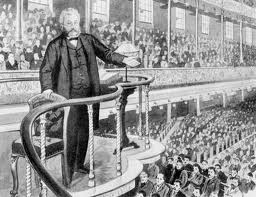
Spurgeon in pulpit image

Dr. Larry Michael is senior pastor at First Baptist Church in Clanton, Ala. He serves as an adjunct professor at Beeson Divinity School in Birmingham. This article is an adaptation of writings from the upcoming book, Spurgeon on Leadership, Kregel Publications, scheduled for release October 2003.

Some years ago there was a documented case in the British Medical Journal about a man who laughed himself well. He actually had a terminal illness, and through the employment of laughter therapy, he allowed his body to successfully fight the disease.

While we may smilingly acknowledge the merit of such a case, for the most part, we find such an incident almost incredible. Can laughter really be that good for us? The Bible definitely supports such a notion.

The Bible advocates laughter

The writer of Ecclesiastes stated: “There’s a time to laugh, and a time to cry” (Ecclesiastes 3:4). We know that there are plenty of reasons to cry. Just a casual glance at our world, with its wars, hatred, violence and evil — makes us sad. Every day we see/hear on the news horrible accounts of hurting people who hurt others. We are grieved at the plight of so many persons who are living in darkness and have rejected the light of Christ. The stark reality of sin in our world is indeed sobering.

It’s not surprising that many of us as leaders may be more inclined toward sadness than to joy. Given the nature and demands of Christian leadership in an increasingly challenging world, one could cynically surmise that leaders may have more reason to be glum than glad these days. The pressures of our organizational responsibilities, and the accompanying stresses, can drag us down. Handling church conflict, losing someone special, helplessly seeing a marriage dissolve, experiencing personal betrayal, facing an unsuspected tragedy — all may give cause for tears.

To counter the sad times, the Scripture also advises that there is a time to laugh. Leaders need to know the balancing therapy of laughter. Toward that goal, we should fully embrace the joys of ministry — celebrating special moments with members, “high-fiving” family achievements, relishing the reaching of hard-earned goals, and savoring the blessing of spiritual growth. But those experiences may still fall short of the biblical pronouncement regarding laughter. C’mon, when was the last time you laughed so hard you cried?! Or, you actually had a good belly laugh?

Spurgeon’s great sense of humor

Many evangelicals know well the stern side of C. H. Spurgeon and his serious pursuit of the holy life. Indeed, his stands for righteous causes, and countering doctrinal error are often recounted. But many readers may not know that he was a man with a great sense of humor. Spurgeon knew the value of laughter and mirth. He virtually took to heart the word in Proverbs 17:22: “A merry heart doeth good like a medicine.”

Spurgeon laughed as often as he could. He laughed at the ironies of life, he laughed at comical incidents, he laughed at the amusing elements of nature. He sometimes laughed at his critics. He loved to share wholesome jokes with his friends and colleagues in ministry. He was known to tell humorous stories from the pulpit. William Williams, a fellow pastor who kept company with Spurgeon, was a near and dear friend in the latter years of Spurgeon’s life. He wrote:

What a bubbling fountain of humour Mr. Spurgeon had! I laughed more, I verily believe, when in his company than during all the rest of my life besides. He had the most fascinating gift of laughter . . . and he had also the greatest ability for making all who heard him laugh with him. When someone blamed him for saying humourous things in his sermons, he said, “He would not blame me if he only knew how many of them I keep back.” 1

Spurgeon considered humor such an integral part of his ministry that a whole chapter in his autobiography is devoted to it. Humor permeates his sermons and writings, often woven into the fabric of his messages. It’s one reason among many why he is still so readable today.

The therapy of laughter

Spurgeon knew the blessing of the treatment of humor. He often spoke of his illness in humorous terms: “I have had sharp pains,” he wrote to a friend, “but I am recovering. Only my back is broken, and I need a new vertebrae.” 2 Once, when he was feeling depressed, he spoke of the remedy of laughter:

The other evening I was riding home after a heavy day’s work. I felt wearied and sore depressed, when swiftly and suddenly that text came to me, ‘My grace is sufficient for thee.’ I reached home and looked it up in the original, and at last it came to me in this way. ‘My grace is sufficient for THEE.’ And I said, ‘I should think it is, Lord,’ and I burst out laughing. I never understood what the holy laughter of Abraham was till then. It seemed to make unbelief so absurd…O brethren, be great believers. Little faith will bring your souls to heaven, but great faith will bring heaven to your souls. 3

Some of Spurgeon’s humor even bordered on the cynical — like the time he was embroiled in the Baptismal Regeneration Controversy. When Spurgeon took on the Church of England clerics because of their belief in baptismal regeneration, he had a baptismal font installed in his back garden as a birdbath. He referred to it as “the spoils of war.” While the great “Prince of Preachers” may have gone over the top on that one, for the most part, his humor was balanced and appropriate.

Laughter a needful release

Laughter is an important release in a leader’s life. It is much-needed therapy for positions that are most often fraught with stress and the burdens of the day. Certainly there is a time to be sober as we face many tough situations in our lives and ministries. But, we need to learn how to experience the relief of laughter. Part of the problem is that too many of us take ourselves way too seriously. When we forget that God has a sense of humor, we need to do as one leader suggested — go look in the mirror!

Spurgeon knew the value of laughter and humor. Both in tough times and sick times, humor was a means for him to deal with his situation. It was a coping mechanism for him. There will always be seasons of sadness and joy for the conscientious leader. But, the leader who learns to balance the two, will learn the discipline of employing laughter and joy in his life. It could very well make a difference in his fulfillment and purpose in his service to the Lord.

Article adapted from Reformed Perspectives Magazine, Volume 9, Number 40, Septemeber 30 to October 6, 2007.

Notes: 1. William Williams, Personal Remembrances of Charles Haddon Spurgeon (London: Passmore and Alabaster, 1895), 24; 2. Ibid, 231; 3. Ibid, 25.

Dr. Tim Keller on The Gospel and Humor

Humor in the Gospel?

Tim Keller seated image

I was reading a review of the movie ‘Prince Caspian’ in a newspaper for urban downtown-types, and the article dripped with sarcastic, sneering, smirking humor that, among other things, referred to Susan’s horn as a phallic symbol. Humor is like seasoning on food—everything is flat without it. But something was amiss here. I began to ask myself, ‘Does the gospel have an effect on our sense of humor?’ The answer has to be yes—but why and how?

Your humor has a lot to do with how you regard yourself. Many people use humor to put down others, keep themselves in the driver’s seat in a conversation and setting, and to remind the hearers of their superior vantage point. They use humor not to defuse tension and put people at ease, but to deliberately belittle the opposing view.

Rather than showing respect and doing the hard work of true disagreement, they mock others’ points of view and dismiss them without actually engaging the argument.

Ultimately, sarcastic put-down humor is self-righteous, a form of self-justification, and that is what the gospel demolishes.

When we grasp that we are unworthy sinners saved by infinitely costly grace it destroys both our self- righteousness and our need to ridicule others. This is also true of self-directed ridicule. There are some people who constantly, bitterly, mock themselves. At first it looks like a form of humility, or realism, but really it is just as self-absorbed as the other version. It is a sign of an inner disease with one’s self, a profound spiritual restlessness.

There is another kind of self-righteousness, however, that produces a person with little or no sense of humor. Moralistic persons often have no sense of irony because they take themselves too seriously, or because they are too self-conscious and self-absorbed in their own struggles to be habitually joyful.


The gospel, however, creates a gentle sense of irony. Our doctrine of sin keeps us from being over-awed by anyone (especially ourselves) or shocked, shocked by any behavior. We find a lot to laugh at, starting with our own weaknesses. They don’t threaten us any more because our ultimate worth is not based on our record or performance.

Our doctrine of grace and redemption also keeps us from seeing any situation as hopeless. This ground note of joy and peace makes humor spontaneous and natural.

In gospel-shaped humor we don’t only poke fun at ourselves, we also can gently poke fun at others, especially our friends. But it is always humor that takes the other seriously and ultimately builds them up as a show of affection.

“We are not to be perpetually solemn. We must play. But our merriment must be of that kind (and it is, in fact, the merriest kind) which exists between people who have, from the outset, taken each other seriously— no flippancy, no superiority, no presumption.” (C.S. Lewis, “The Weight of Glory”)

So how do we get such a sense of humor? That’s the wrong question. The gospel doesn’t change us in a            mechanical way. To give the gospel primacy in our lives is not always to logically infer a series of principles from it that we then ‘apply’ to our lives.

Recently I heard a sociologist say that, for the most part, the frameworks of meaning by which we navigate our lives are so deeply embedded in us that they operate ‘pre-reflectively.’ They don’t exist only as a list of propositions and formulations, but also as themes, motives, attitudes, and values that are as affective and emotional as they are cognitive and intellectual. When we listen to the gospel preached, or meditate on it in the Scripture, we are driving it so deeply into our hearts, imaginations, and thinking, that we begin to instinctively “live out” the gospel.

I have definitely seen the gospel transform a person’s sense of humor, but it would be artificial to say that there are ‘gospel-principles of humor’ that we must apply to our lives. It just happens, as we believe the gospel more and more.


*Article by Tim Keller from the Redeemer Church Manhattan Report – June 2008.

Dare To Pray Like Daniel by John Piper

“Prayer: A Warrior’s Weapon”

In Daniel 10, the prophet receives a word from the Lord (v. 1) — a vision of conflict that stunned him with its greatness. So Daniel set himself with tears and fasting and prayer to seek the meaning of the vision, and for three weeks he wrestled in prayer over this vision and sought to know God’s will.

After three weeks he went out to the banks of the Tigris River (v. 4). There he had a vision that was so awesome he could hardly bear it. To make matters worse (in v. 10), a hand reached out and touched him so that he shook terribly on his hands and knees. Then the voice said (vv. 11–12): “O Daniel, man greatly loved, understand the words that I speak to you, and stand upright, for now I have been sent to you…. Fear not, Daniel, for from the first day that you set your heart to understand and humbled yourself before your God, your words have been heard, and I have come because of your words.”

Now this is immensely important for understanding prayer. Notice the words: “I have come because of your words.” Put that together with the words in verse 11: “I have been sent to you.” That is, God sent him. So the point is that God answered Daniel’s prayer as soon as he began to pray three weeks ago. “From the first day that you humbled yourself before your God your words [your prayers] have been heard, and I have come because of your words [your prayer].”

So this heavenly being has come because Daniel prayed and humbled himself before God and fasted. And the three-week delay was not because God took three weeks to hear. What was it then?

Verse 13: “The prince of the kingdom of Persia withstood me twenty-one days, but Michael, one of the chief princes, came to help me.” The reason the messenger of God was detained is because a spiritual being called “the prince of the kingdom of Persia” stood against him. And the reason this angelic messenger got free from this opposition was because the angel Michael came to help him.

This is the clearest example in all the Bible of what is called by some people a “territorial spirit.” Verse 13 refers to “the prince of the kingdom of Persia.” The natural meaning of this phrase would be that among the supernatural beings opposed to God, at least one is assigned to a territory or, more accurately, to a kingdom, in this case Persia. Presumably his job is to darken the people of Persia — to keep them from having the truth and the light of God’s Word.

But this spirit is not the only one mentioned. Look at verse 20–21: “Then he [the messenger from God] said, ‘Do you know why I have come to you? But now I will return to fight against the prince of Persia; and when I go out, behold, the prince of Greece will come. But I will tell you what is inscribed in the book of truth: there is none who contends by my side against these except Michael, your prince.’”

So it appears that there was a spirit over Persia and a spirit over Greece. But it also seems that Michael, the good angel, has some special assignment for Israel, because it says at the end of verse 21: “Michael, your prince.” And the “your” there is plural. This is not a reference to Daniel’s guardian angel, but to Israel’s guardian angel.

How then shall we do ministry in view of this reality of territorial spirits?

First, we ought to take the supernatural seriously and realize that we are in a warfare that cannot and should not be domesticated by reinterpreting everything in the biblical worldview so that it fits nicely with secular, naturalistic ways of thinking about the world.

Secondly, notice that Daniel’s prayer that has such powerful effects in the spiritual realm did not focus on angels and territorial spirits. Rather, he was wrestling for truth and for the good of God’s people. He was totally shocked when an angel appeared to him. And he knew nothing about the conflict with the prince of the kingdom of Persia.

But it’s no accident that the messenger said that his struggle with the prince of Persia lasted exactly the same amount of time that Daniel’s fasting and prayer did — twenty-one days. The reason for this is that the warfare in the spirit realm was being fought in a real sense by Daniel in the prayer realm.

And so it is with more of our prayers than we realize. But the point is this: Daniel’s praying was not about angels. And probably ours shouldn’t be either. We should wrestle in prayer and fasting for the things that we know are God’s will in our lives and our families and our church and our city and our world. But by and large we should probably leave it to God how He will use angels to get His work done. If God shows us more, we will use it. But the essence of the matter is not knowing the spirits but knowing God and praying in the power of Holy Spirit.

So let us be about prayer with all our might. May the Lord make us a people who pray like Daniel.

Article Information: From Tabletalk Magazine (Ligonier Ministries), July 1st, 2007 by Former Preaching Pastor of Bethlehem Baptist Church, and founder of Desiring God – Dr. John Piper.

“Every Day With Jesus is Like A Thanksgiving Holiday” By Dr. David P. Craig

I have so much to be thankful for – now 15 treatments into Chemo and Radiation – almost half way done with my 33 treatments here are my reflections on Thanksgiving Day. DPC

lifecoach4God's avatarLifeCoach4God

“Thank God It’s Thanksgiving Everyday – Especially on Thursday’s!”

I have always loved the Thanksgiving Holiday. It’s one of the few times of the year where our very large family can come together from all over the United States and enjoy giving thanks for our many blessings. This year more than likely I’ll be having liquid formula through a feeding tube in my stomach. I already had the G-Tube surgically implanted in my stomach this past week. During chemotherapy and radiation around Thanksgiving time will be a time of great testing for me, when according to my Doctors I will be unable to swallow and chew due to the severity of my treatment for throat and neck cancer. Watching every one I love dearest passing around the turkey with all the trimmings will be something my eyes will enjoy, but not my taste buds. However, I’m good with that. I’m…

View original post 3,962 more words