John C. Maxwell on “Listening to the Voices of Vision”

THE VOICES OF VISION

T21IQOAL Maxwell

Where does vision come from? To find the vision that is indispensable to leadership, you have to become a good listener. You must listen to several voices.

The Inner Voice: Vision starts within. Do you know your life’s mission? What stirs your heart? What do you dream about? If what you’re pursuing in life doesn’t come from a desire within—from the very depths of who you are and what you believe—you will not be able to accomplish it.

The Unhappy Voice: Where does inspiration for great ideas come from? From noticing what doesn’t work. Discontent with the status quo is a great catalyst for vision. Are you on complacent cruise control? Or do you find yourself itching to change your world? No great leader in history has fought to prevent change.

The Successful Voice: Nobody can accomplish great things alone. To fulfill a big vision, you need a good team. But you also need good advice from someone who is ahead of you in the leadership journey. If you want to lead others to greatness, find a mentor. Do you have an adviser who can help you sharpen your vision?

The Higher Voice: Although it’s true that your vision must come from within, you shouldn’t let it be confined by your limited capabilities. A truly valuable vision must have God in it. Only He knows your full capabilities. Have you looked beyond yourself, even beyond your own lifetime, as you’ve sought your vision? If not, you may be missing your true potential and life’s best for you.   —The 21 Indispensable Qualities of a Leader  

MAKE SURE YOUR VISION CONTAINS ALL THAT IT MUST FOR YOU TO REACH YOUR POTENTIAL.

Source: Maxwell, John C. (2008-10-28). The Maxwell Daily Reader: 365 Days of Insight to Develop the Leader Within You and Influence Those Around You (Kindle Locations 5088-5102). Thomas Nelson – A. Kindle Edition.

Right Field Is Really Messed Up! By Tony Evans

Series: Friday Humor #8

 baseball fielder cartoon

The humorous story is told of a baseball manager who decided to play a rookie in right field one day. The regular right fielder wasn’t happy about it and loudly made it known from the bench that it was a mistake to play the kid. Well, as it turned out the rookie was so nervous that he messed up big-time. He made a couple of errors and misjudged several other fly balls that could have been called errors. And each time he messed up, the veteran complained loudly on the bench. Finally, late in the game the manager replaced the rookie with the veteran, mostly to shut the veteran up. Sure enough, he muffed the first ball hit to him for an error. As he came off the field at the end of the inning, everyone on the bench got very quiet to hear what he would say. The manager was waiting for the veteran too, but before the manager could say anything, the man slammed his glove down in disgust and said, ‘Skip, that kid has right field so messed up nobody can play it!’

That’s the way many Christians feel about the teachings surrounding the great doctrine of salvation in Jesus Christ. They feel as if church ‘professionals’ have so mixed up and complicated the issues that no one can get them straight anymore. Too many pastors, teachers, and theologians have added to the problem by failing to communicate the wonder of the unspeakable gift of salvation in Christ in language the everyday person can relate to. As a result, this truth is far too misunderstood, underappreciated, and even abused. That’s unfortunate, because there are few teachings in the Bible more glorious than the truth that God has delivered us from His wrath and given us the guarantee of heaven in the salvation He has provided through the death and resurrection of Jesus Christ.

Anecdote above adapted from Tony Evans. Totally Saved: Understanding, Experiencing, and Enjoying the Greatness of Your Salvation (Kindle Locations 77-91). Moody Publishers. Kindle Edition. 2003.

Dr. John Oswald Sanders on the Leader and His Prayer Life


SL Sanders

Prayer and Leadership

 I urge then, first of all, that requests, prayers, intercession and thanksgiving be made for everyone. 1 Timothy 2:1

The spiritual leader should outpace the rest of the church, above all, in prayer. And yet the most advanced leader is conscious of the possibility of endless development in his prayer life. Nor does he ever feel that he has “already attained.” Dean C. J. Vaughan once said: “If I wished to humble anyone, I should question him about his prayers. I know nothing to compare with this topic for its sorrowful self-confessions.”

Prayer is the most ancient, most universal, and most intensive expression of the religious instinct. It includes the simplest speech of infant lips, and the sublime entreaties of older age. All reach the Majesty on high. Prayer is indeed the Christian’s vital breath and native air.

But, strange paradox, most of us find it hard to pray. We do not naturally delight in drawing near to God. We sometimes pay lip service to the delight and power of prayer. We call it indispensable; we know the Scriptures call for it. Yet we often fail to pray.

Let us take encouragement from the lives of saintly leaders who overcame this natural reluctance and became mighty in prayer. Of Samuel Chadwick it was said: He was essentially a man of prayer. Every morning he would be astir shortly after six o’clock, and he kept a little room which was his private sanctum for his quiet hour before breakfast. He was mighty in public prayer because he was constant in private devotion. . . . When he prayed he expected God to do something. “I wish I had prayed more,” he wrote toward the end of his life, “even if I had worked less; and from the bottom of my heart I wish I had prayed better” (N.G. Dunning, Samuel Chadwick. London: Hodder & Stoughton, 1934, 19).

“When I go to prayer,” confessed an eminent Christian, “I find my heart so loath to go to God, and when it is with Him, so loath to stay.” Then he pointed to the need for self-discipline. “When you feel most indisposed to pray, yield not to it,” he counseled, “but strive and endeavor to pray, even when you think you cannot.”

Mastering the art of prayer, like anything else, takes time. The time we give it will be a true measure of its importance to us. We always find the time for important things. The most common excuse for little time spent in prayer is the list of “to-dos” that crowd our day—all our many duties. To Martin Luther, an extra load of duties was reason enough to pray more, not less. Hear his plans for the next day’s work: “Work, work from early till late. In fact I have so much to do that I shall spend the first three hours in prayer.” If Luther was busy, and prayed, so can we.

Try to explain exactly how prayer works and you will quickly run against some very difficult puzzles. But people who are skeptical of prayer’s validity and power are usually those who do not practice it seriously or fail to obey when God reveals His will. We cannot learn about prayer except by praying. No philosophy has ever taught a soul to pray. The intellectual problems associated with prayer are met in the joy of answered prayer and closer fellowship with God.

The Christian leader who seeks an example to follow does well to turn to the life of Jesus Himself. Our belief in the necessity of prayer comes from observing His life. Surely if anyone could have sustained life without prayer, it would be the very Son of God Himself. If prayer is silly or unnecessary, Jesus would not have wasted His time at it. But wait! Prayer was the dominant feature of His life and a recurring part of His teaching. Prayer kept His moral vision sharp and clear. Prayer gave Him courage to endure the perfect but painful will of His Father. Prayer paved the way for transfiguration. To Jesus, prayer was not a hasty add-on, but a joyous necessity.

In Luke 5:16 we have a general statement which throws a vivid light on the daily practice of the Lord. “And He withdrew Himself in the deserts and prayed.” It is not of one occasion but of many that the evangelist speaks in this place. It was our Lord’s habit to seek retirement for prayer. When He withdrew Himself from men, He was accustomed to press far into the uninhabited country—He was in the deserts. The surprise of the onlookers lay in this, that one so mighty, so richly endowed with spiritual power, should find it necessary for Himself to repair to the source of strength, that there He might refresh His weary spirit. To us, the wonder is still greater, that He, the prince of Life, the Eternal word, the Only-begotten of the Father, should prostrate Himself in meekness before the throne of God, making entreaty for grace to help in time of need (D.M. McIntyre, The Prayer Life of Our Lord. London: Morgan & Scott, n.d., 30–31).

Christ spent full nights in prayer (Luke 6:12). He often rose before dawn to have unbroken communion with His Father (Mark 1:35). The great crises of His life and ministry began with periods of special prayer, as in Luke 5:16: “Jesus often withdrew to lonely places and prayed”—a statement that indicates a regular habit. By word and example He instructed His disciples on the importance of solitude in prayer (Mark 6:46, following the feeding of the five thousand; Luke 9:28, preceding the Transfiguration). To the person on whom devolves the responsibility for selecting personnel for specific spiritual responsibilities, the example of the Lord’s spending the night in prayer before making His choice of apostles (Luke 6:12) is luminous.

Both our Lord and His bond slave Paul made clear that true prayer is not dreamy reverie. “All vital praying makes a drain on a man’s vitality. True intercession is a sacrifice, a bleeding sacrifice,” wrote J. H. Jowett. Jesus performed miracles without a sign of outward strain, but “he offered up prayers and petitions with loud cries and tears” (Hebrews 5:7).

Sometimes our prayers are pale and weak compared to those of Paul or Epaphras. “Epaphras . . . is always wrestling in prayer for you,” wrote Paul in Colossians 4:12. And to the same group: “I want you to know how much I am struggling for you” (Colossians 2:1). The Greek word used for “struggle” here is the root for our words “agony” and “agonize.” It is used to describe a person struggling at work until utterly weary (Colossians 1:29) or competing in the arena for an athletic prize (1 Corinthians 9:25). It describes a soldier battling for his life (1 Timothy 6:12), or a man struggling to deliver his friends from danger (John 18:36). True prayer is a strenuous spiritual exercise that demands the utmost mental discipline and concentration.

We are encouraged to note that Paul, probably the greatest human champion of prayer, confessed, “We do not know what we ought to pray for.” And then he hastened to add, “The Spirit intercedes for us with groans that words cannot express. And he who searches our hearts knows the mind of the Spirit, because the Spirit intercedes for the saints in accordance with God’s will” (Romans 8:26–28). The Spirit joins us in prayer and pours His supplications into our own.

Pray in the Spirit

All Christians need more teaching in the art of prayer, and the Holy Spirit is the master teacher. The Spirit’s help in prayer is mentioned in the Bible more frequently than any other help He gives us. All true praying comes from the Spirit’s activity in our souls. Both Paul and Jude teach that effective prayer is “praying in the Spirit.” That phrase means that we pray along the same lines, about the same things, in the same name, as the Holy Spirit. True prayer rises in the spirit of the Christian from the Spirit who indwells us.

To pray in the Spirit is important for two reasons. First, we are to pray in the realm of the Spirit, for the Holy Spirit is the sphere and atmosphere of the Christian’s life. In this we often fail. Much praying is physical rather than spiritual, in the realm of the mind alone, the product of our own thinking and not of the Spirit’s teaching. But real prayer is deeper. It uses the body, requires the cooperation of the mind, and moves in the supernatural realm of the Spirit. Such praying transacts its business in the heavenly realm.

Second, we are to pray in the power and energy of the Spirit. “Give yourselves wholly to prayer and entreaty; pray on every occasion in the power of the Spirit” (Ephesians 6:18 NEB). For its superhuman task, prayer demands more than human power. We have the Spirit of power as well as the Spirit of prayer. All the human energy of heart, mind, and will can achieve great human results, but praying in the Holy Spirit releases supernatural resources. The Spirit delights to help us pray. In each of our three chief handicaps, we can count on the Spirit’s help. Sometimes we are kept from prayer by sin in our heart. As we grow in trust and submission, the Holy Spirit leads us to the blood of Christ, which cleanses every stain.

Sometimes the ignorance of our minds hinders our prayers. But the Spirit knows the mind of God and shares that knowledge with us as we wait and listen. The Spirit does this by giving us a clear conviction that a particular prayer request is part of God’s will for us, or not.

Sometimes we are earthbound because of the infirmity of the body. We get sick, we feel ill, we are weak. The Spirit will quicken our bodies and enable us to rise above weaknesses, even those imposed by sultry tropical climates.

Then, as if these three conditions were not enough, the spiritual leader must oppose Satan in prayer. Satan will try to depress, to create doubt and discouragement, to keep a leader from communion with God. In the Holy Spirit, we have a heavenly ally against this supernatural foe.

Spiritual leaders should know the experience of praying in the Spirit as part of their daily walk. Do we ever try to live independently of the Spirit? Do we fail to see full answers to prayer? We can read all day about prayer, and experience little of its power, and so stunt our service.

The Bible often explains prayer as spiritual warfare. “For our struggle is . . . against the rulers, against the authorities, against the powers of this dark world and against the spiritual forces of evil in the heavenly realms” (Ephesians 6:12). In this struggle phase of prayer, three personalities are engaged. Between God and the devil stands the Christian at prayer. Though weak alone, the Christian plays a strategic role in the struggle between the dragon and the Lamb. The praying Christian wields no personal power, but power nonetheless delegated by the victorious Christ to whom that faithful believer is united by faith. Faith is like a reticulating system through which the victory won on Calvary reaches the devil’s captives and delivers them from darkness into light.

Jesus was not so much concerned over wicked people and their deeds as with the forces of evil that caused those people to sin. Behind Peter’s denial and Judas’s betrayal was the sinister hand of Satan. “Get thee behind me, Satan,” was the Lord’s response to Peter’s presumptuous rebuke. All around us are people bound in sin, captives to the devil. Our prayers should ascend not only for them but against Satan who holds them as his prize. Satan must be compelled to relax his grip, and this can only be achieved by Christ’s victory on the cross.

As Jesus dealt with sin’s cause rather than effect, so the spiritual leader should adopt the same method in prayer. And the leader must know how to help those under his charge who are also involved in that same spiritual warfare.

In a telling illustration, Jesus compared Satan to a strong man, fully armed. Before anyone can enter such a man’s house and set captives free, the man must first be bound. Only then can a rescue succeed (Matthew 12:29). What could it mean to “tie up the strong man” except to neutralize his might through the overcoming power of Christ who came “to destroy (nullify, render inoperative) the works of the devil”? And how can that happen except by the prayer of faith that lays hold of the victory of Calvary and claims it for the problem at hand? We cannot hope to effect a rescue from Satan’s den without first disarming the adversary. God makes available His divine authority through prayer, and we can confidently claim it. Jesus promised His disciples: “I have given you authority . . . to overcome all the power of the enemy” (Luke 10:19).

The spiritual leader will be alert to the most effective way to influence people. Hudson Taylor is well known for his expression, “It is possible to move men, through God, by prayer alone.” During his missionary career he demonstrated the truth of his claim a thousand times.

Practice

It is one thing to believe such power is available in prayer, but another thing to practice it. People are difficult to move; it is much easier to pray for things or provisions than to deal with the stubbornness of the human heart. But in just these intricate situations, the leader must use God’s power to move human hearts in the direction he believes to be the will of God. Through prayer the leader has the key to that complicated lock.

It is the supreme dignity and glory of the human creature to be able to say yes or no to God. Humans have been given free will. But this poses a problem. If by prayer we can influence the conduct of others, does such power encroach on free will? Will God temper one person’s freedom to answer another person’s prayer? It seems difficult to imagine. And yet, if prayers cannot influence the course of events, why pray?

The first point to make is that God is consistent with Himself always. God does not contradict Himself. When God promises to answer prayer, the answer will come—always in a manner consistent with divine nature, for “he cannot disown himself” (2 Timothy 2:13). No word or action from God will contradict any other word or action of God.

The second point in resolving these questions is that prayer is a divine ordinance. God has commanded prayer, and we can be confident that as we meet revealed conditions for prayer, answers will be granted. God sees no contradiction between human free will and divine response to prayer. When God commands us to pray “for kings and those in authority,” there is implied power to influence the course of men and events. If not, why pray? Our obligation to pray stands above any dilemma concerning the effects of prayer.

Third, we can know the will of God concerning the prayer we raise. Our capacity to know God’s will is the basis for all prayers of faith. God can speak to us clearly through our mind and heart. The Bible instructs us directly concerning the will of God on all matters of principle. In our hearts the Holy Spirit ministers to instruct us in the will of God (Romans 8:26–27). As we patiently seek the will of God concerning our petition, the Spirit will impress our minds and convince our hearts. Such God-given conviction leads us beyond the prayer of hope to the prayer of faith.

When God lays a burden on our hearts and thus keeps us praying, He obviously intends to grant the answer. George Mueller was asked if he really believed that two men would be converted, men for whom Mueller had prayed for over fifty years. Mueller replied: “Do you think God would have kept me praying all these years if He did not intend to save them?” In fact, both men were converted, one shortly after Mueller’s death (George Mueller [1805–1898] was a Plymouth Brethren leader who refused a salary, believing that God would supply his needs by prayer alone. He established an orphanage in Bristol for two thousand youngsters on the strength of prayer and promoted prayer during a seventeen-year world tour).

In prayer we deal directly with God and only in a secondary sense other people. The goal of prayer is the ear of God. Prayer moves others through God’s influence on them. It is not our prayer that moves people, but the God to whom we pray.

Prayer Moves The Arm That moves the world To bring deliverance down.

To move people, the leader must be able to move God, for God has made it clear that He moves people in response to prayer. If a scheming Jacob was given “power with God and with men,” then surely any leader who follows God’s prayer principles can enjoy the same power (Genesis 32:28).

Prevailing prayer that moves people is the outcome of a right relationship with God. The Bible is very clear on the reasons why prayers go unanswered, and every reason centers on the believer’s relationship with God. God will not cooperate with prayers of mere self-interest, or prayers that come from impure motives. The Christian who clings to sin closes the ear of God. Least of all will God tolerate unbelief, the chief of sins. “Anyone who comes to him must believe” (Hebrews 11:6). In all our prayers the paramount motive is the glory of God.

Great leaders of the Bible were great at prayer. “They were not leaders because of brilliancy of thought, because they were exhaustless in resources, because of their magnificent culture or native endowment, but because, by the power of prayer, they could command the power of God” (E. M. Bounds, Prayer and Praying Men. London: Hodder & Stoughton, 1921). Edward McKendree Bounds [1835–1913] was an American Methodist Episcopal minister who served churches throughout the South. He was a captain in the Confederate army).

Article adapted from the classic work on Leadership by, J. Oswald Sanders (2007-05-01). Spiritual Leadership (Kindle Locations 1579-1736). Moody Publishers. Kindle Edition. 

About Dr. J.O. Sanders

Dr. John Oswald Sanders (October 17, 1902—October 24, 1992) was a general director of Overseas Missionary Fellowship (then known as China Inland Mission) in the 1950s and 1960s. He authored more than forty books on the Christian life. He became an elder statesman and worldwide conference speaker from his retirement until his death. Sanders was born in Invercargill, New Zealand and gained a law degree in 1922. He attended the Bible Training Institute in Auckland and joined its staff in 1926. In 1931, he married Edith Mary Dobson. Sanders left a promising law practice in his native New Zealand to serve as an instructor and administrator at the Bible College of New Zealand. In 1954 he became general director of the China Inland Mission and led the reorganization of the CIM into the Overseas Missionary Fellowship. He was instrumental in beginning many new missions projects throughout East. Upon his retirement in 1969, he continued to teach worldwide and to write prolifically.

The Pastor as Theologian by R. Albert Mohler, Jr.

Mohler Al image

Every pastor is called to be a theologian. This may come as a surprise to some pastors who see theology as an academic discipline taken during seminary rather than as an ongoing and central part of the pastoral calling. Nevertheless, the health of the church depends on its pastors functioning as faithful theologians—teaching, preaching, defending, and applying the great doctrines of the faith.

The transformation of theology into an academic discipline more associated with the university than the church has been one of the most lamentable developments of the last several centuries. In the earliest eras of the church, and through the annals of Christian history, the central theologians of the church were its pastors. This was certainly true of the great Reformation of the sixteenth century. From the Patristic era, we associate the discipline and stewardship of theology with names such as Athanasius, Irenaeus, and Augustine. Similarly, the great theologians of the Reformation were, in the main, pastors such as John Calvin and Martin Luther. Of course, their responsibilities often ranged beyond those of the average pastor, but they could not have conceived of the pastoral role without the essential stewardship of theology.

The emergence of theology as an academic discipline coincides with the development of the modern university. Theology was one of the three major disciplines taught in the medieval university. Yet, so long as the medieval synthesis was intact, the university was always understood to be in direct service to the church and its pastors.

The rise of the modern research university led to the development of theology as merely one academic discipline among others—and eventually to the redefinition of theology as “religious studies” separated from ecclesiastical control or concern. In most universities, the secularization of the academy has meant that the academic discipline of theology has no inherent connection to Christianity, much less to its central truth claims.

These developments have caused great harm to the church, separating ministries from theology, preaching from doctrine, and Christian care from conviction. In far too many cases the pastor’s ministry has been evacuated of serious doctrinal content and many pastors seem to have little connection to any sense of theological vocation.

All this must be reversed if the church is to remain true to God’s Word and the gospel. Unless the pastor functions as a theologian, theology is left in the hands of those who, in many cases, have little or no connection or commitment to the local church.

The Pastor’s Calling

The pastoral calling is inherently theological. Given the fact that the pastor is to be the teacher of the Word of God and the teacher of the gospel, it cannot be otherwise. The idea of the pastorate as a nontheological office is inconceivable in light of the New Testament. Though this truth is implicit throughout the Scriptures, this emphasis is perhaps most apparent in Paul’s letters to Timothy. In these letters Paul affirmed Timothy’s role as a theologian—affirming that all of Timothy’s fellow pastors were to share in the same calling. Paul emphatically encouraged Timothy concerning his reading, teaching, preaching, and study of Scripture. All of this is essentially theological, as is made clear when Paul commanded Timothy to “retain the standard of sound words which you have heard from me, in the faith and love which are in Christ Jesus. Guard, through the Holy Spirit who dwells in us, the treasure which has been entrusted to you” (2 Tim. 1:13—14).1 Timothy was to be a teacher of others who would also teach. “The things which you have heard from me in the presence of many witnesses, these entrust to faithful men, who will be able to teach others also” (2 Tim. 2:2).

As Paul completed his second letter to Timothy, he reached a crescendo of concern as he commanded Timothy to preach the Word, specifically instructing him to “reprove, rebuke, exhort, with great patience and instruction” (2 Tim. 4:2). Why? “For the time will come when they will not endure sound doctrine; but wanting to have their ears tickled, they will accumulate for themselves teachers in accordance to their own desires; and will turn away their ears from the truth and will turn aside to myths” (2 Tim. 4:3–4).

As Paul makes clear, the pastoral theologian must be able to defend the faith even as he identifies false teachings and makes correction by the Word of God. There is no more theological calling than this—guard the flock of God for the sake of God’s truth.

Clearly this will require intense and self-conscious theological thinking, study, and consideration. Paul made this abundantly clear in writing to Titus when he defined the duty of the overseer or pastor as one who is “holding fast the faithful word which is in accordance with the teaching, that he may be able both to exhort in sound doctrine and to refute those who contradict” (Titus 1:9). In this single verse Paul simultaneously affirmed the apologetical and polemical facets of the pastor-theologian’s calling.

In reality there is no dimension of the pastor’s calling that is not deeply, inherently, and inescapably theological. There is no problem the pastor will encounter in counseling that is not specifically theological in character. There is no major question in ministry that does not come with deep theological dimensions and the need for careful theological application. The task of leading, feeding, and guiding the congregation is as theological as any other vocation conceivable.

Beyond all this, the preaching and teaching of the Word of God is theological from beginning to end. The preacher functions as a steward of the mysteries of God, explaining the deepest and most profound theological truths to a congregation that must be armed with the knowledge of these truths in order to grow as disciples and meet the challenge of faithfulness in the Christian life.

Evangelism is a theological calling as well, for the act of sharing the gospel is, in short, a theological argument presented with the goal of seeing a sinner come to faith in the Lord Jesus Christ. In order to be a faithful evangelist, the pastor must first understand the gospel and then understand the nature of the evangelist’s calling. At every step of the way, the pastor is dealing with issues that are irrefutably theological.

As many observers have noted, today’s pastors are often pulled in many directions simultaneously—and the theological vocation is often lost amidst the pressing concerns of a ministry that has been reconceived as something other than what Paul intended for Timothy. The managerial revolution has left many pastors feeling more like administrators than theologians, dealing with matters of organizational theory before ever turning to the deep truths of God’s Word and the application of these truths to everyday life. The rise of therapeutic concerns within the culture means that many pastors, and many of their church members, believe that the pastoral calling is best understood as a “helping profession.” As such, the pastor is seen as someone who functions in a therapeutic role in which theology is often seen as more of a problem than a solution.

All this is a betrayal of the pastoral calling as presented in the New Testament. Furthermore, it is a rejection of the apostolic teaching and of the biblical admonition concerning the role and responsibilities of the pastor. Today’s pastors must recover and reclaim the pastoral calling as inherently and cheerfully theological. Otherwise pastors will be nothing more than communicators, counselors, and managers of congregations that have been emptied of the gospel and of biblical truth.

The Pastor’s Concentration

The pastor’s stewardship of the theological task requires a clear sense of pastoral priority, a keen pastoral ear, and careful attention to the theological dimensions of church life and Christian discipleship. This must be foundational to the ministry of the local church, and ministry must emerge from a fundamentally theological foundation.

In a real sense, Christians live out their most fundamental beliefs in everyday life. One essential task of the pastor is to feed the congregation and to assist Christians to think theologically in order to demonstrate discernment and authentic discipleship.

All this must start with the pastor. The preacher must give attention, study, time, and thought to the theological dimensions of ministry. A ministry that is deeply rooted in the deep truths of God’s Word will be enriched, protected, and focused by a theological vision.

The pastor’s concentrated attention to the theological task is necessary for the establishment of faithful preaching, God-honoring worship, and effective evangelism in the local church. Such a theological vision is deeply rooted in God’s truth and in the truth about God that forms the basis of Christian theology.

The pastor’s concentration is a necessary theological discipline. Thus, the pastor must develop the ability to isolate what is most important in terms of theological gravity from that which is less important.

I call this the process of theological triage. As anyone who visits a hospital emergency room is aware, a triage nurse is customarily in place in order to make a first-stage evaluation of which patients are most in need of care. A patient with a gunshot wound is moved ahead of a sprained ankle in terms of priority. This makes medical sense, and to misconstrue this sense of priority would amount to medical malpractice.

In a similar manner, the pastor must learn to discern different levels of theological importance. First-order doctrines are those that are fundamental and essential to the Christian faith. The pastor’s theological instincts should seize upon any compromise on doctrines such as the full deity and humanity of Christ, the doctrine of the Trinity, the doctrine of atonement, and essentials such as justification by faith alone. Where such doctrines are compromised, the Christian faith falls. When a pastor hears an assertion that Christ’s bodily resurrection from the dead is not a necessary doctrine, he must respond with a theological instinct that is based in the fact that such a denial is tantamount to a rejection of the gospel itself.

Second-order doctrines are those that are essential to church life and necessary for the ordering of the local church but that, in themselves, do not define the gospel. That is to say, one may detect an error in a doctrine at this level and still acknowledge that the person in error remains a believing Christian. Nevertheless, such doctrines are directly related to how the church is organized and its ministry is fulfilled. Doctrines found at this level include those most closely related to ecclesiology and the architecture of theological systems. Calvinists and Arminians may disagree concerning a number of vital and urgently important doctrines—or, at the very least, the best way to understand and express these doctrines. Yet both can acknowledge each other as genuine Christians. At the same time these differences can become so acute that it is difficult to function together in the local congregation over such an expansive theological difference.

Third-order doctrines are those that may be the ground for fruitful theological discussion and debate but that do not threaten the fellowship of the local congregation or the denomination. Christians who agree on an entire range of theological issues and doctrines may disagree over matters related to the timing and sequence of events related to Christ’s return. Yet such ecclesiastical debates, while understood to be deeply important because of their biblical nature and connection to the gospel, do not constitute a ground for separation among believing Christians.

Without a proper sense of priority and discernment, the congregation is left to consider every theological issue to be a matter of potential conflict or, at the other extreme, to see no doctrines as worth defending if conflict is in any way possible.

The pastor’s theological concentration establishes a sense of proper proportion and a larger frame of theological reference. At the same time this concentration on the theological dimension of ministry also reminds the pastor of the necessity of constant watchfulness.

At crucial points in the history of Christian theology, the difference between orthodoxy and heresy has often hung on a single word, or even a syllable. When Arius argued that the Son was to be understood as being of a similar substance as the Father, Athanasius correctly understood that the entirety of the gospel was at risk. As Athanasius faithfully led the church to understand, the New Testament clearly teaches that the Son is of the same substance as the Father. In the Greek language the distinction between the word offered by Arius and the correction offered by Athanasius was a single syllable. Looking back, we can now see that when the Council of Nicea met in AD 325, the gospel was defended and defined at this very point. Without the role of Athanasius as both pastor and theologian, the heresy of Arius might have spread unchecked, leading to disaster for the young church.

 The Pastor’s Conviction

As a theologian the pastor must be known for what he teaches as well as for what he knows, affirms, and believes. The health of the church depends on pastors who infuse their congregations with deep biblical and theological conviction. The means of this transfer of conviction is the preaching of the Word of God.

We will be hard pressed to define any activity as being more inherently theological than the preaching of God’s Word. The ministry of preaching is an exercise in the theological exposition of Scripture. Congregations that are fed nothing more than ambiguous “principles” supposedly drawn from God’s Word are doomed to spiritual immaturity, which will become visible in compromise, complacency, and a host of other spiritual ills.

Why else would the Apostle Paul command Timothy to preach the Word in such solemn and serious terms: “I solemnly charge you in the presence of God and of Christ Jesus, who is to judge the living and the dead, and by His appearing and His kingdom: preach the word; be ready in season and out of season; reprove, rebuke, exhort, with great patience and instruction” (2 Tim. 4:1–2).

As we have already seen, this text points to the inescapably theological character of ministry. In these preceding verses Paul specifically ties this theological ministry to the task of preaching—understood to be the pastor’s supreme calling. As Martin Luther rightly affirmed, the preaching of the Word of God is the first mark of the church. Where it is found, there one finds the church. Where it is absent, there is no church, whatever others may claim.

Paul had affirmed Scripture as “inspired by God and profitable for teaching, for reproof, for correction, for training in righteousness” (2 Tim. 3:16). Through the preaching of the Word of God, the congregation is fed substantial theological doctrine directly from the biblical text. Expository preaching is the most effective means of imparting biblical knowledge to the congregation and thus arming God’s people with deep theological conviction.

In other words, the pastor’s conviction about theological preaching becomes the foundation for the transfer of these convictions into the hearts of God’s people. The divine agent of this transfer is the Holy Spirit, who opens hearts, eyes, and ears to hear, understand, and receive the Word of God. The preacher’s responsibility is to be clear, specific, systematic, and comprehensive in setting out the biblical convictions that are drawn from God’s Word and that, taken together, frame a biblical understanding of the Christian faith and the Christian life.

The Pastor’s Confession

All this assumes, of course, that the pastoral ministry is first rooted in the pastor’s own confession of faith—the pastor’s personal theological convictions.

The faithful pastor does not teach merely that which has historically been believed by the church and is even now believed by faithful Christians; he teaches out of his own personal confession of belief. There is no sense of theological detachment or of academic distance when the pastor sets out a theological vision of the Christian life.

All true Christian preaching is experiential preaching, set before the congregation by a man who is possessed by deep theological passion, specific theological convictions, and an eagerness to see these convictions shared by his congregation.

Faithful preaching does not consist in the preacher presenting a set of theological options to the congregation. Instead, the pastor should stand ready to define, defend, and document his own deep convictions, drawn from his careful study of God’s Word and his knowledge of the faithful teaching of the church.

Our model for this pastoral confidence is, once again, the Apostle Paul. Paul’s personal testimony is intertwined with his own theology. Consider Paul’s retrospective analysis of his own attempts at human righteousness, coupled with his bold embrace of the gospel as grounded in grace alone.

“But whatever things were gain to me, those things I have counted as loss for the sake of Christ,” Paul asserted. “More than that, I count all things to be loss in view of the surpassing value of knowing Christ Jesus my Lord, for whom I have suffered the loss of all things, and count them but rubbish in order that I may gain Christ, and may be found in Him, not having a righteousness of my own derived from the Law, but that which is through faith in Christ, the righteousness which comes from God on the basis of faith, that I may know Him and the power of His resurrection and the fellowship of His sufferings, being conformed to His death; in order that I may attain to the resurrection from the dead” (Phil. 3:7–11).

In other words, Paul did not hide behind any sense of academic neutrality from the doctrines he so powerfully taught. Nor did he set before his congregation in Philippi a series of alternate renderings of doctrine. Instead, he taught clearly, defended his case, and made clear that he embraced these doctrines as the substance of his life and faith.

Of course, the experiential nature of the pastor’s confession does not imply that the authority for theology is in personal experience. To the contrary, the authority must always remain the Word of God. The experiential character of the pastor’s theological calling underlines the fact that the preacher is speaking from within the circle of faith as a believer, not from a position of detachment as a mere teacher.

The pastor’s confession of his faith and personal example add both authority and authenticity to the pastoral ministry. Without these the pastor can sound more like a theological consultant than a faithful shepherd. The congregation must be able to observe the pastor basing his life and ministry upon these truths, not merely teaching them in the pulpit.

In the end every faithful pastor’s theological confession must include an eschatological confidence that God will preserve his work to the end. As Paul confessed, “For this reason I also suffer these things, but I am not ashamed; for I know whom I have believed and I am convinced that He is able to guard what I have entrusted to Him until that day” (2 Tim. 1:12).

In the end, every preacher receives the same mandate that Paul handed down to Timothy: “Retain the standard of sound words which you have heard from me, in the faith and love which are in Christ Jesus. Guard, through the Holy Spirit who dwells in us, the treasure which has been entrusted to you” (2 Tim. 1:13–14).

n other words, we are the stewards of sound words and the guardians of doctrinal treasure that has been entrusted to us at the very core of our calling as pastors. The pastor who is no theologian is no pastor.

*All Scriptures unless otherwise noted are from the NASB.

Article adapted from “The Pastor as Theologian” in Akin, Daniel (2007-07-01). A Theology for the Church (Kindle Locations 24731-24908). B&H Publishing. Kindle Edition.

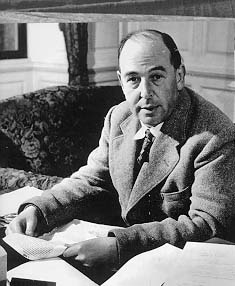
Is It Wrong to Want Heaven Now? By C.S. Lewis

C S Lewis image

We are very shy nowadays of even mentioning heaven. We are afraid of the jeer about ‘pie in the sky’, and of being told that we are trying to ‘escape’ from the duty of making a happy world here and now into dreams of a happy world elsewhere. But either there is ‘pie in the sky’ or there is not. If there is not, then Christianity is false, for this doctrine is woven into its whole fabric. If there is, then this truth, like any other, must be faced, whether it is useful at political meetings or no. Again, we are afraid that heaven is a bribe, and that if we make it our goal we shall no longer be disinterested. It is not so. Heaven offers nothing that a mercenary soul can desire. It is safe to tell the pure in heart that they shall see God, for only the pure in heart want to. There are rewards that do not sully motives. A man’s love for a woman is not mercenary because he wants to marry her, nor his love for poetry mercenary because he wants to read it, nor his love of exercise less disinterested because he wants to run and leap and walk. Love, by definition, seeks to enjoy its object.

(Lewis, C. S. A Year with C. S. Lewis (p. 357). Harper Collins, Inc., excerpted from The Problem of Pain).

 Aim At Heaven

Hope is one of the Theological virtues. This means that a continual looking forward to the eternal world is not (as some modern people think) a form of escapism or wishful thinking, but one of the things a Christian is meant to do. It does not mean that we are to leave the present world as it is. If you read history you will find that the Christians who did most for the present world were just those who thought most of the next. The Apostles themselves, who set on foot the conversion of the Roman Empire, the great men who built up the Middle Ages, the English Evangelicals who abolished the Slave Trade, all left their mark on Earth, precisely because their minds were occupied with Heaven. It is since Christians have largely ceased to think of the other world that they have become so ineffective in this. Aim at Heaven and you will get earth ‘thrown in’: aim at earth and you will get neither. It seems a strange rule, but something like it can be seen at work in other matters. Health is a great blessing, but the moment you make health one of your main, direct objects you start becoming a crank and imagining there is something wrong with you. You are only likely to get health provided you want other things more—food, games, work, fun, open air. In the same way, we shall never save civilisation as long as civilisation is our main object. We must learn to want something else even more.
Lewis, C. S. (2009-03-17). A Year with C. S. Lewis (p. 358). Harper Collins, Inc., excerpted from Mere Christianity).

Zig Ziglar on “Being Gratefull For Your Problems”

Gene Tunney Boxer

We all frequently deal with people who complain about the trials and tribulations of their daily lives. Life seems to be one big problem for them. I would like to take a commonsense, realistic approach and address this mind-set. If there were no problems on your job, then your employer would hire a much less capable person than you to do the routine things that don’t require much thought. In the business world, those who are able to solve complex problems are the ones who are the most valuable to the employer.

Many times the problems or challenges we face force us to grow and become more capable. The runner who trains for the mile run in the Olympics by running downhill will have no chance of winning the medal. The runner who trains by running uphill is far more likely to develop the speed, mental toughness, and endurance needed to win the medal. The best thing that ever happened to boxer Gene Tunney was that he broke both hands in the ring. His manager felt that he could never again punch hard enough to be the heavyweight champion. Instead, Tunney decided that he would become a scientific boxer and win the title as a boxer, not a slugger. Boxing historians will tell you that he developed into one of the best boxers who ever fought. They also will tell you that as a puncher, he would not have had a chance against Jack Dempsey, who was considered by many to be the hardest hitter in heavyweight history. Tunny would never have been champion had he not had the problem of his broken hands.

Message: The next time you encounter a difficult climb, obstacle, or problem, you should smile and say, “Here’s my chance to grow”

*Article adapted from the very encouraging book by Zig Ziglar. Something to Smile About: Encouragement and Inspiration for Life’s Ups and Downs (Kindle Locations 1138-1141). Kindle Edition.

“Living Gratitude” by Ellen Vaughn

RG Vaughn

On the whole, I do not find Christians, outside of the catacombs, sufficiently sensible of conditions. Does anyone have the foggiest idea what sort of power we so blithely invoke? Or, as I suspect, does no one believe a word of it? The churches are children playing on the floor with their chemistry sets, making up a batch of TNT to kill a Sunday morning. It is madness to wear ladies’ hats and straw hats and velvet hats to church; we should all be wearing crash helmets! Ushers should issue life preservers and signal flares; they should lash us to our pews. For the sleeping god may wake someday and take offense, or the waking god may draw us out to where we can never return. Annie Dillard

Having considered gratitude’s surprising blessings, as well as some of the obstacles that can block its flow, how then to develop a perpetual mindset of thankfulness? Is gratitude yet another discipline to be mastered, a potential source of guilt, another daily check box goal that grinds and binds us? No.

After a chat with Chuck Colson one day, off I went to the dentist. Chuck and I had been talking about gratitude, and in passing I mistakenly used the word “discipline” to describe it. Memo to self: Never use an imprecise word with Chuck Colson.

“Gratitude is not a discipline,” he growled, straightening his Prison Fellowship tie pin. “It is the response of the believer to the Spirit’s work.”

Soon after this I left Chuck’s office, arrived at the dentist’s, and settled into the chair. Dr. Funk injected Novocain in my front gum under my nose and in my jaw near my ear. Within a few minutes I couldn’t smell or hear, but I was feeling no pain. Then the doctor called in a dental assistant, and the two of them commenced military operations in my mouth. To remove myself from the stress of the immediate situation, my brain and I entered a deep and reflective meditative state, pondering Chuck’s words.

“He’s quite right,” we thought. Dr. Funk ground away. Tooth fragments flew through the air and settled in a fine dust on my soggy bib. “Gratitude is not a discipline. You can’t fall into the trap of treating it like one. You can’t resolve to be more grateful. Can’t conjure it up by your own determined effort, or it will blow away in the first strong breeze. Can’t go around telling yourself and others that we all must be grateful, we just really must, or you become a nag and no one invites you to Thanksgiving dinner.

“No, if grace is the gift of God, so too is the gratitude that grace creates.”

Ah. My dental-chair epiphany was quite freeing, even after the Novocain wore off. But while a perpetually thankful heart is a gift, receiving it does depend on a discipline or two. Four, actually.

There are four things that we can do to practice the presence of gratitude. When we do, we find that God further uncorks a flood of thankfulness. The four things are quite simple. Any child can do them. So can most adults. First, we remember. Second, we forget. Third, we look up to God. Fourth, we look around to His people.

Adapted from Ellen Vaughn (2009-05-19). Radical Gratitude: Discovering Joy through Everyday Thankfulness (Kindle Locations 1604-1624). Zondervan. Kindle Edition.

“The Sinfulness of Sin” on “Cosmic Treason” by R.C. Sproul

TTOTC Sproul

“The sinfulness of sin” sounds like a vacuous redundancy that adds no information to the subject under discussion. However, the necessity of speaking of the sinfulness of sin has been thrust upon us by a culture and even a church that has diminished the significance of sin itself. Sin is communicated in our day in terms of making mistakes or of making poor choices. When I take an examination or a spelling test, if I make a mistake, I miss a particular word. It is one thing to make a mistake. It is another to look at my neighbor’s paper and copy his answers in order to make a good grade. In this case, my mistake has risen to the level of a moral transgression. Though sin may be involved in making mistakes as a result of slothfulness in preparation, nevertheless, the act of cheating takes the exercise to a more serious level. Calling sin “making poor choices” is true, but it is also a euphemism that can discount the severity of the action. The decision to sin is indeed a poor one, but once again, it is more than a mistake. It is an act of moral transgression.

In my book The Truth of the Cross I spend an entire chapter discussing this notion of the sinfulness of sin. I begin that chapter by using the anecdote of my utter incredulity when I received a recent edition of Bartlett’s Familiar Quotations. Though I was happy to receive this free issue, I was puzzled as to why anyone would send it to me. As I leafed through the pages of quotations that included statements from Immanuel Kant, Aristotle, Thomas Aquinas, and others, to my complete astonishment I came upon a quotation from me. That I was quoted in such a learned collection definitely surprised me. I was puzzled by what I could have said that merited inclusion in such an anthology, and the answer was found in a simple statement attributed to me: “Sin is cosmic treason.” What I meant by that statement was that even the slightest sin that a creature commits against his Creator does violence to the Creator’s holiness, His glory, and His righteousness. Every sin, no matter how seemingly insignificant, is an act of rebellion against the sovereign God who reigns and rules over us and as such is an act of treason against the cosmic King.

Cosmic treason is one way to characterize the notion of sin, but when we look at the ways in which the Scriptures describe sin, we see three that stand out in importance. First, sin is a debt; second, it is an expression of enmity; third, it is depicted as a crime. In the first instance, we who are sinners are described by Scripture as debtors who cannot pay their debts. In this sense, we are talking not about financial indebtedness but a moral indebtedness. God has the sovereign right to impose obligations upon His creatures. When we fail to keep these obligations, we are debtors to our Lord. This debt represents a failure to keep a moral obligation.

The second way in which sin is described biblically is as an expression of enmity. In this regard, sin is not restricted merely to an external action that transgresses a divine law. Rather, it represents an internal motive, a motive that is driven by an inherent hostility toward the God of the universe. It is rarely discussed in the church or in the world that the biblical description of human fallenness includes an indictment that we are by nature enemies of God. In our enmity toward Him, we do not want to have Him even in our thinking, and this attitude is one of hostility toward the very fact that God commands us to obey His will. It is because of this concept of enmity that the New Testament so often describes our redemption in terms of reconciliation. One of the necessary conditions for reconciliation is that there must be some previous enmity between at least two parties. This enmity is what is presupposed by the redeeming work of our Mediator, Jesus Christ, who overcomes this dimension of enmity.

The third way in which the Bible speaks of sin is in terms of transgression of law. The Westminster Shorter Catechism answers the fourteenth question, “What is sin?” by the response, “Sin is any want of conformity to, or transgression of, the law of God.” Here we see sin described both in terms of passive and active disobedience. We speak of sins of commission and sins of omission. When we fail to do what God requires, we see this lack of conformity to His will. But not only are we guilty of failing to do what God requires, we also actively do what God prohibits. Thus, sin is a transgression against the law of God.

When people violate the laws of men in a serious way, we speak of their actions not merely as misdemeanors but, in the final analysis, as crimes. In the same regard, our actions of rebellion and transgression of the law of God are not seen by Him as mere misdemeanors; rather, they are felonious. They are criminal in their impact. If we take the reality of sin seriously in our lives, we see that we commit crimes against a holy God and against His kingdom. Our crimes are not virtues; they are vices, and any transgression of a holy God is vicious by definition. It is not until we understand who God is that we gain any real understanding of the seriousness of our sin. Because we live in the midst of sinful people where the standards of human behavior are set by the patterns of the culture around us, we are not moved by the seriousness of our transgressions. We are indeed at ease in Zion. But when God’s character is made clear to us and we are able to measure our actions not in relative terms with respect to other humans but in absolute terms with respect to God, His character, and His law, then we begin to be awakened to the egregious character of our rebellion.

Not until we take God seriously will we ever take sin seriously. But if we acknowledge the righteous character of God, then we, like the saints of old, will cover our mouths with our hands and repent in dust and ashes before Him.

© Tabletalk magazine 
Permissions: You are permitted and encouraged to reproduce and distribute this material in any format provided that you do not alter the wording in any way, you do not charge a fee beyond the cost of reproduction, and you do not make more than 500 physical copies. http://www.ligonier.org/tabletalk. Any exceptions to the above must be formally approved by Tabletalk. Article from May 1, 2008 – Tabletalk Magazine Online.

Please include the following statement on any distributed copy: From Ligonier Ministries and R.C. Sproul. © Tabletalk magazine. Website: http://www.ligonier.org/tabletalk. Email: tabletalk@ligonier.org. Toll free: 1-800-435-4343.

WHY THE INCARNATION? GOD SENT HIS SON, TO SAVE US by J.I. Packer

The Word became flesh and made his dwelling among us. We have seen his glory, the glory of the One and Only, who came from the Father, full of grace and truth. JOHN 1:14

CT Packer

Trinity and Incarnation belong together. The doctrine of the Trinity declares that the man Jesus is truly divine; that of the Incarnation declares that the divine Jesus is truly human. Together they proclaim the full reality of the Savior whom the New Testament sets forth, the Son who came from the Father’s side at the Father’s will to become the sinner’s substitute on the cross (Matt. 20:28; 26:36-46; John 1:29; 3:13-17; Rom. 5:8; 8:32; 2 Cor. 5:19-21; 8:9; Phil. 2:5-8).

The moment of truth regarding the doctrine of the Trinity came at the Council of Nicaea (A.D.325), when the church countered the Arian idea that Jesus was God’s first and noblest creature by affirming that he was of the same “substance” or “essence” (i.e., the same existing entity) as the Father. Thus there is one God, not two; the distinction between Father and Son is within the divine unity, and the Son is God in the same sense as the Father is. In saying that Son and Father are “of one substance,” and that the Son is “begotten” (echoing “only-begotten,” John 1:14, 18; 3:16, 18, and NIV text notes) but “not made,” the Nicene Creed unequivocally recognized the deity of the man from Galilee.

A crucial event for the church’s confession of the doctrine of the Incarnation came at the Council of Chalcedon (A.D.451), when the church countered both the Nestorian idea that Jesus was two personalities—the Son of God and a man—under one skin, and the Eutychian idea that Jesus’ divinity had swallowed up his humanity. Rejecting both, the council affirmed that Jesus is one divine-human person in two natures (i.e., with two sets of capacities for experience, expression, reaction, and action); and that the two natures are united in his personal being without mixture, confusion, separation, or division; and that each nature retained its own attributes. In other words, all the qualities and powers that are in us, as well as all the qualities and powers that are in God, were, are, and ever will be really and distinguishably present in the one person of the man from Galilee. Thus the Chalcedonian formula affirms the full humanity of the Lord from heaven in categorical terms.

The Incarnation, this mysterious miracle at the heart of historic Christianity, is central in the New Testament witness. That Jews should ever have come to such a belief is amazing. Eight of the nine New Testament writers, like Jesus’ original disciples, were Jews, drilled in the Jewish axiom that there is only one God and that no human is divine. They all teach, however, that Jesus is God’s Messiah, the Spirit-anointed son of David promised in the Old Testament (e.g., Isa. 11:1-5; Christos, “Christ,” is Greek for Messiah). They all present him in a threefold role as teacher, sin-bearer, and ruler—prophet, priest, and king. And in other words, they all insist that Jesus the Messiah should be personally worshiped and trusted—which is to say that he is God no less than he is man. Observe how the four most masterful New Testament theologians (John, Paul, the writer of Hebrews, and Peter) speak to this.

John’s Gospel frames its eyewitness narratives (John 1:14; 19:35; 21:24) with the declarations of its prologue (1:1-18): that Jesus is the eternal divine Logos (Word), agent of Creation and source of all life and light (vv. 1-5, 9), who through becoming “flesh” was revealed as Son of God and source of grace and truth, indeed as “God the only begotten” (vv. 14, 18; NIV text notes). The Gospel is punctuated with “I am” statements that have special significance because I am (Greek: ego eimi) was used to render God’s name in the Greek translation of Exodus 3:14; whenever John reports Jesus as saying ego eimi, a claim to deity is implicit. Examples of this are John 8:28, 58, and the seven declarations of his grace as (a) the Bread of Life, giving spiritual food (6:35, 48, 51); (b) the Light of the World, banishing darkness (8:12; 9:5); (c) the gate for the sheep, giving access to God (10:7, 9); (d) the Good Shepherd, protecting from peril (10:11, 14); (e) the Resurrection and Life, overcoming our death (11:25); (f) the Way, Truth, and Life, guiding to fellowship with the Father (14:6); (g) the true Vine, nurturing for fruitfulness (15:1, 5). Climactically, Thomas worships Jesus as “my Lord and my God” (20:28). Jesus then pronounces a blessing on all who share Thomas’s faith and John urges his readers to join their number (20:29-31).

Paul quotes from what seems to be a hymn that declares Jesus’ personal deity (Phil. 2:6); states that “in Christ all the fullness of the Deity lives in bodily form” (Col. 2:9; cf. 1:19); hails Jesus the Son as the Father’s image and as his agent in creating and upholding everything (Col. 1:15-17); declares him to be “Lord” (a title of kingship, with divine overtones), to whom one must pray for salvation according to the injunction to call on Yahweh in Joel 2:32 (Rom. 10:9-13); calls him “God over all” (Rom. 9:5) and “God and Savior” (Titus 2:13); and prays to him personally (2 Cor. 12:8-9), looking to him as a source of divine grace (2 Cor. 13:14). The testimony is explicit: faith in Jesus’ deity is basic to Paul’s theology and religion.

The writer to the Hebrews, purporting to expound the perfection of Christ’s high priesthood, starts by declaring the full deity and consequent unique dignity of the Son of God (Heb. 1:3, 6, 8-12), whose full humanity he then celebrates in chapter 2. The perfection, and indeed the very possibility, of the high priesthood that he describes Christ as fulfilling depends on the conjunction of an endless, unfailing divine life with a full human experience of temptation, pressure, and pain (Heb. 2:14-17; 4:14-5:2; 7:13-28; 12:2-3).

Not less significant is Peter’s use of Isaiah 8:12-13 (1 Pet. 3:14). He cites the Greek (Septuagint) version, urging the churches not to fear what others fear but to set apart the Lord as holy. But where the Septuagint text of Isaiah says, “Set apart the Lord himself,” Peter writes, “Set apart Christ as Lord” (1 Pet. 3:15). Peter would give the adoring fear due to the Almighty to Jesus of Nazareth, his Master and Lord.

The New Testament forbids worship of angels (Col. 2:18; Rev. 22:8-9) but commands worship of Jesus and focuses consistently on the divine-human Savior and Lord as the proper object of faith, hope, and love here and now. Religion that lacks these emphases is not Christianity. Let there be no mistake about that!

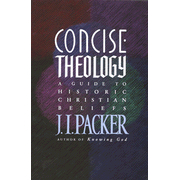
From: Concise Theology: A Guide To Historic Christian Beliefs

Friday Humor: “Be Who You Are!” By Steve Brown

Series: Friday Humor #7

Image

The first axiomatic statement is this: Almost all frustration and anxiety come from a refusal to be what one is. In other words, frustration and anxiety are the result of playing a part other than the one you have been given.

Someone tells the story of a man who was out of work. His unemployment compensation benefits had run out, and he was desperate. He went to the zoo to ask for work, and the zoo keeper told him they didn’t really have any work, but he could make a few extra dollars by taking the place of a gorilla who had died the day before.

Ordinarily the man would not have done it, but he really needed money. He accepted the job, put on the gorilla suit, and made his way back to the gorilla cage. It really wasn’t a bad job. All he had to do was to eat bananas and swing from a rope, and after a while he began to like the job. But alas, all good things must come to an end. One day his rope broke and he fell over the fence into the lion’s cage. He started yelling for help, and the closer the lion came to him, the louder he yelled. Finally the lion came right up next to him, nudged him, and said, “Hey Buddy, will you shut up! We are both going to be out of a job!”

Now the difference between some Christians and the man in the gorilla outfit is that whereas he was forced into his role, we aren’t. We choose a role for which we are not suited, and in that choice is the source of much of our misery and frustration.

Have you ever seen Christians who seemed to be very pure and very spiritual—and very miserable? The problem with those Christians is that they were playing a role for which they were not suited. Jesus said, “No one is good except God” (Mark 10:18). If Jesus was right, and I have every reason to believe He was, then we pretend to be good and pure, we have just climbed into a gorilla suit.

And then there are those Christians who feel that everything they say comes as if from Sinai. They make all sorts of political and social pronouncements as if God Himself had given them a corner on truth. They are very serious—and very miserable. God says, “The heart is more deceitful than all else” (Jeremiah 17:9a). If that is true, then the person who believes and acts as if he or she had a corner on truth (when only God has that corner) has started wearing a gorilla costume.

We see countless examples of Christian men and women who play parts for which they were not created in the pride that so often is the a mark of modern Christianity, in the anger we feel when our plans are crossed, or in the way we want the world to revolve around our selfish desires. It is important that we understand that the source of much of our frustration and anxiety is our proclivity toward being something we aren’t.

*This humorous anecdote was adapted from the excellent book by Stephen Brown. If God is In Charge. Thomas Nelson: Nashville, 1983. Pages 61-62.