50 Reasons For a Pretribulational Rapture By Dr. John F. Walvoord

Dr. John Walvoord’s 50 Arguments For A Pretribulational Rapture

TRQ Walvoord

In previous discussion of premillennialism in relation to the Tribulation, the respective arguments for pretribulationism, partial rapture, posttribulationism, and midtribulationism have been examined and the pretribulational position in general sustained. By way of conclusion and summary, some fifty arguments for pretribulationism can now be proposed. It is not presumed that the statement of these arguments in themselves establishes their validity but rather that the previous discussion supports and justifies this summary of reasons for the pretribulational view.

For the sake of brevity, the term rapture or translation is used for the coming of Christ for His church, while the term second coming is uniformly used as a reference to His coming to the earth to establish His millennial kingdom, an event that all consider posttribulational. While the words rapture and translation are not quite identical, they refer to the same event. By the term rapture, reference is made to the fact that the church is “caught up” from the earth and taken to heaven. By the term translation the thought is conveyed that those who are thus raptured are transformed in their physical bodies from natural and corruptible bodies to spiritual, incorruptible, and immortal bodies. Strictly speaking, the dead are raised while the living are translated. In common usage, however, this distinction is not normally maintained.

In the discussion, the posttribulational view is considered the principal contender against pretribulationism and is primarily in mind in the restatement of the arguments. The other positions, however, are also mentioned insofar as they oppose pretribulationism on some special point. The preceding discussion has pointed to the preponderance of argument in support of the pretribulational position, and the following restatement should serve to clarify the issues involved.

 Historical Argument

1. While posttribulationism appeared as early as 2 Thessalonians 2, many in the early church believed in the imminency of the Lord’s return, which is an essential doctrine of pretribulationism.

2. The detailed development of pretribulational truth during the past few centuries does not prove that the doctrine is new or novel. Its development is similar to that of other major doctrines in the history of the church. Hermeneutics

3. Pretribulationism is the only view that allows literal interpretation of all Old and New Testament passages on the Great Tribulation.

4. Pretribulationism distinguishes clearly between Israel and the church and their respective programs.

Nature of the Tribulation

5. Pretribulationism maintains the scriptural distinction between the Great Tribulation and tribulation in general that precedes it.

6. The Great Tribulation is properly interpreted by pretribulationists as a time of preparation for Israel’s restoration (Deut. 4:29-30; Jer. 30:4-11). It is not the purpose of the Tribulation to prepare the church for glory.

7. None of the Old Testament passages on the Tribulation mention the church (Deut. 4:29-30; Jer. 30:4-11; Dan. 8:24-27; 12:1-2).

8. None of the New Testament passages on the Tribulation mention the church (Matt. 13:30, 39-42, 48-50; 24:15-31; 1 Thess. 1:9-10, 5:4-9; 2 Thess. 2:1-11; Rev. 4-18).

9. In contrast to midtribulationism, the pretribulational view provides an adequate explanation for the beginning of the Great Tribulation in Revelation 6. Midtribulationism is refuted by the plain teaching of Scripture that the Great Tribulation begins long before the seventh trumpet of Revelation 11.

10. The proper distinction is maintained between the prophetic trumpets of Scripture by pretribulationism. There is no proper ground for the pivotal argument of midtribulationism that the seventh trumpet of Revelation is the last trumpet in that there is no established connection between the seventh trumpet of Revelation 11, the last trumpet of 1 Corinthians 15:52, and the trumpet of Matthew 24:31. They are three distinct events.

11. The unity of Daniel’s seventieth week is maintained by pretribulationists. By contrast, posttribulationism and midtribulationists destroy the unity of Daniel’s seventieth week and confuse Israel’s program with that of the church.

Nature of the Church

12. The translation of the church is never mentioned in any passage dealing with the second coming of Christ after the Tribulation.

13. The church is not appointed to wrath (Rom. 5:9; 1 Thess. 1:9-10; 5:9). The church therefore cannot enter “the great day of their wrath” (Rev. 6:17).

14. The church will not be overtaken by the day of the Lord (1 Thess. 5:1-9), which includes the Tribulation.

15. The possibility of a believer escaping the Tribulation is mentioned in Luke 21:36.

16. The church of Philadelphia was promised deliverance from “the hour of trial that is going to come upon the whole world to test those who live on the earth” (Rev. 3:10).

17. It is characteristic of divine dealing to deliver believers before a divine judgment is inflicted on the world as illustrated in the deliverance of Noah, Lot, Rahab, etc. (2 Peter 2:5-9).

18. At the time of the translation of the church, all believers go to the Father’s house in heaven (John 14:3) and do not immediately return to the earth after meeting Christ in the air as posttribulationists teach.

19. Pretribulationism does not divide the body of Christ at the Rapture on a works principle. The teaching of a partial rapture is based on the false doctrine that the translation of the church is a reward for good works. It is rather a climactic aspect of salvation by grace.

20. The Scriptures clearly teach that all, not part, of the church will be raptured at the coming of Christ for the church (1 Cor. 15:51-52; 1 Thess. 4:17).

21. As opposed to a view of a partial rapture, pretribulationism is founded on the definite teaching of Scripture that the death of Christ frees from all condemnation.

22. The godly remnant of the Tribulation are pictured as Israelites, not members of the church as maintained by the posttribulationists.

23. The pretribulational view, as opposed to posttribulationism, does not confuse general terms like elect and saints, which apply to the saved of all ages, with specific terms like church and those in Christ, which refer to believers of this age only.

Doctrine of Imminency

24. The pretribulational interpretation teaches that the coming of Christ is actually imminent.

25. The exhortation to be comforted by the coming of the Lord (1 Thess. 4:18) is very significant in the pretribulational view and is especially contradicted by most posttribulationists.

26. The exhortation to look for “the glorious appearing” of Christ to His own (Titus 2:13) loses its significance if the Tribulation must intervene first. Believers in that case should look for signs.

27. The exhortation to purify ourselves in view of the Lord’s return has most significance if His coming is imminent (1 John 3:2-3).

28. The church is uniformly exhorted to look for the coming of the Lord, while believers in the Tribulation are directed to look for signs.

The Work of the Holy Spirit

29. The Holy Spirit as the restrainer of evil cannot be taken out of the world unless the church, which the Spirit indwells, is translated at the same time. The Tribulation cannot begin until this restraint is lifted.

30. The Holy Spirit as the restrainer must be taken out of the world before “the lawless one,” who dominates the tribulation period, can be revealed (2 Thess. 2:6-8).

31. If the expression “except there come a falling away first” (KJV) is translated literally, “except the departure come first,” it would plainly show the necessity of the Rapture taking place before the beginning of the Tribulation.

Necessity of an Interval Between the Rapture and the Second Coming

32. According to 2 Corinthians 5:10, all believers of this age must appear before the judgment seat of Christ in heaven, an event never mentioned in the detailed accounts connected with the second coming of Christ to the earth.

33. If the twenty-four elders of Revelation 4:1-5:14 are representative of the church as many expositors believe, it would necessitate the rapture and reward of the church before the Tribulation.

34. The coming of Christ for His bride must take place before the Second Coming to the earth for the wedding feast (Rev. 19:7-10).

35. Tribulation saints are not translated at the second coming of Christ but carry on ordinary occupations such as farming and building houses, and they will bear children (Isa. 65:20-25). This would be impossible if all saints were translated at the Second Coming to the earth, as posttribulationists teach.

36. The judgment of the Gentiles following the Second Coming (Matt. 25:31-46) indicates that both saved and unsaved are still in their natural bodies. This would be impossible if the translation had taken place at the Second Coming.

37. If the translation took place in connection with the Second Coming to the earth, there would be no need of separating the sheep from the goats at a subsequent judgment, but the separation would have taken place in the very act of the translation of the believers before Christ actually sets up His throne on earth (Matt. 25:31).

38. The judgment of Israel (Ezek. 20:34-38), which occurs subsequent to the Second Coming, indicates the necessity of regathering Israel. The separation of the saved from the unsaved in this judgment obviously takes place sometime after the Second Coming and would be unnecessary if the saved had previously been separated from the unsaved by translation.

Contrasts Between the Rapture and the Second Coming

39. At the time of the Rapture the saints meet Christ in the air, while at the Second Coming Christ returns to the Mount of Olives to meet the saints on earth.

40. At the time of the Rapture the Mount of Olives is unchanged, while at the Second Coming it divides and a valley is formed to the east of Jerusalem (Zech. 14:4-5).

41. At the Rapture living saints are translated, while no saints are translated in connection with the second coming of Christ to the earth.

42. At the Rapture the saints go to heaven, while at the Second Coming to the earth the saints remain on the earth without translation.

43. At the time of the Rapture the world is unjudged and continues in sin, while at the Second Coming the world is judged and righteousness is established in the earth.

44. The translation of the church is pictured as a deliverance before the day of wrath, while the Second Coming is followed by the deliverance of those who have believed in Christ during the Tribulation.

45. The Rapture is described as imminent, while the Second Coming is preceded by definite signs.

46. The translation of living believers is a truth revealed only in the New Testament, while the Second Coming with its attendant events is a prominent doctrine of both Testaments.

47. The Rapture concerns only the saved, while the Second Coming deals with both saved and unsaved.

48. At the Rapture Satan is not bound, while at the Second Coming Satan is bound and cast into the abyss.

49. No unfulfilled prophecy stands between the church and the Rapture, while many signs must be fulfilled before the Second Coming.

50. No passage dealing with the resurrection of saints at the Second Coming ever mentions translation of living saints at the same time. The blessed hope of the return of the Lord for His church is a precious aspect of faith and expectation. While learned and devout saints have not always agreed as to the content of this hope, the present discussion has attempted to justify this important aspect of truth. May the promise of our Lord “I will come back and take you to be with me that you also may be where I am” (John 14:3) bring comfort and hope to us in a modern world as it was intended to do for the disciples in the upper room on that dark night before the Crucifixion. “The Spirit and the bride say, ‘Come!’ And let him who hears say, ‘Come!’…He who testifies to these things says, ‘Yes, I am coming soon’“ (Rev. 22:17, 20).

Article adapted from John F. Walvoord. The Rapture Question. Grand Rapids, MI. Zondervan, 1979 (Chapter 20).

About Dr. John F. Walvoord
Walvoord J F image

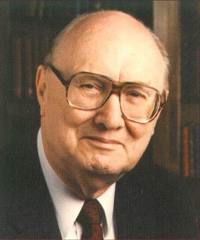
John F. Walvoord (May 1, 1910 – December 20, 2002) was a Christian theologian, pastor, and president of Dallas Theological Seminary from 1952 to 1986. He was the author of over 30 books, focusing primarily on eschatology and theology including The Rapture Question, and was co-editor of The Bible Knowledge Commentary with Roy B. Zuck. He earned AB and DD degrees from Wheaton College, an AM degree from Texas Christian University in philosophy, a ThB, ThM, and ThD in Systematic Theology from Dallas Theological Seminary, and a LittD from Liberty Baptist Seminary.

Walvoord was brought up in a Christian home, but had little interest in the faith until he was fifteen, when his family moved to Racine after his father accepted a position as superintendent of the junior high. They joined the Union Gospel Tabernacle where he committed his life to Christ after attending a Bible study on Galatians.

After continuing his education at Wheaton College, Walvoord went on to Texas Christian University and Dallas Theological Seminary where he completed his ThD in 1936. Seminary president and mentor Lewis Sperry Chafer appointed Walvoord registrar. During his tenure, he also taught systematic theology at the seminary, and pastored the Rosen Heights Presbyterian church in Fort Worth. Walvoord became more involved in the administration of the school, serving as Chafer’s assistant and secretary to the faculty, and upon Chafer’s death in 1952, became the seminary’s second president where he served until his retirement in 1986.

In addition to his responsibilities at the seminary, Walvoord earned a reputation as one of the most influential dispensational theologians of the 20th century and played a prominent role in advocating a rapture of Christians from the earth prior to a time of great tribulation, followed by a literal thousand-year millennial reign of Christ, and a renewed focus of God on the nation of Israel as distinct from the church.

Books Authored

The Revelation of Jesus Christ. Chicago. Moody Publishers (1966).

Daniel: The Key to Prophetic Revelation. Chicago. Moody Publishers (1971).

Philippians. Chicago. Moody Publishers (1971).

Armageddon, Oil and the Middle East Crisis. Grand Rapids: Zondervan (1974, rev. ed. 1976 and 1990).

Jesus Christ Our Lord. Chicago. Moody Publishers (1974).

Major Bible Themes (with Lewis Sperry Chafer) Grand Rapids: Zondervan (1974).

The Blessed Hope and the Tribulation: A Historical and Biblical Study of Posttribulationism (1976).

The Rapture Question. Grand Rapids: Zondervan (1979).

The Millennial Kingdom. Grand Rapids: Zondervan (1983).

The Bible Knowledge Commentary, (with Roy B. Zuck). Wheaton: Cook Communications (1989).

The Holy Spirit: A Comprehensive Study of the Person and Work of the Holy Spirit Chicago: Moody Press (1991).

(Contributor: “The Augustinian-Dispensational Perspective”) Five Views on Sanctification. Grand Rapids: Zondervan (1996).

(Contributor: “The Literal View”) Four Views on Hell. Grand Rapids: Zondervan (1996).

Matthew: Thy Kingdom Come, The Moody Bible Institute of Chicago (1974).

The Final Drama: Fourteen Keys to Understanding the Prophetic Scriptures. Grand Rapids: Kregel Publications (1997).

Every Prophecy of the Bible. Colorado Springs: Cook Communications (1990, 2011).

The Church in Prophecy: Exploring God’s Purpose for the Present Age. Grand Rapids: Kregel Publications (1999).

The Power of Praying Together: Experiencing Christ Actively in Charge, (with Oliver W. Price). Grand Rapids: Kregel Publications (1999).

Major Bible Prophecies. Grand Rapids: Zondervan (1999).

Blessed Hope. (Autobiography with Mal Couch), AMG Publishers (2001).

Prophecy in the New Millennium. Grand Rapids: Kregel Publications (2001).

1 & 2 Thessalonians. Chicago: Moody Publishers (Reprinted, 2012).

Dr. Sidney Greidanus on Ten Steps from Text to Sermon

Dr. Greidanus’ *Ten Steps from Text to Sermon

Sidney Greidanus

(1) Select the preaching text.

Select the preaching text with an eye to congregational needs. The text must be a literary unit and contain a vital theme.

(2) Read the text in its literary context.

Read and reread the text in its context and jot down initial questions.

(3) Outline the structure of the text.

In the Hebrew/Aramaic or Greek text, note the major affirmations, clausal flow, plot line, scenes, or other literary structures. Mark major units with headings and verse references.

(4) Interpret the text in its own historical setting.

a. Literary interpretation

b. Historical interpretation

c. Theocentric interpretation

Review your results with the help of some good commentaries.

(5) Formulate the text’s theme, goal, and need addressed.

a. State the textual theme in a brief sentence that summarizes the message of the text for its original hearers: subject and predicate. What is the text saying?

b. State the goal of the author for his original hearers. What is the text doing? Does the author aim to persuade, to motivate, to urge, to warn, to comfort? Be specific.

c. State the need the author addressed – the question behind the text.

(6) Understand the message in the contexts of canon and redemptive history.

a. Canonical interpretation: interpret the message in the context of the whole canon;

b. Redemptive-historical interpretation: understand the message in the context of God’s redemptive history from creation to new creation;

c. Christocentric interpretation: explore the ways of (1) redemptive-historical progression, (2) promise-fulfillment, (3) typology, (4) analogy, (5) longitudinal themes, (6) New Testament references, and (7) contrast.

(7) Formulate the sermon theme, goal, and need addressed.

a. Ideally, your sermon theme will be the same as your textual theme (Step 5a). If Step 6 forces a change, stay as close as possible to the textual theme. Your theme will guide especially the development of the body of the sermon.

b. Your goal must be in harmony with the author’s goal (Step 5b) and match the sermon theme. Your goal will guide the style of the sermon as well as the content of its conclusion.

c. State the need you are addressing. This need should be similar to the need addressed by the author. The need will inform the content of your introduction.

(8) Select a suitable sermon form.

Select a sermon form that respects the form of the text (didactic or narrative, deductive or inductive) and that achieves the goal of the sermon.

(9) Prepare the sermon outline.

If possible, follow the flow of the text (Step 3) in the body of the sermon. Main points, derived from the text, support the theme. The introduction should expose the need. The conclusion should clinch your goal.

(10) Write the sermon in oral style.

Say it out loud as you write it. Write in oral style, using short sentences, vivid words, strong nouns and verbs, active voice, present tense, images and illustrations.

PCFD Greidanus

*Adapted from Appendix One in Sidney Greidanus. Preaching Christ From Daniel (Foundations For Expository Sermons). Grand Rapids, MI. Eerdmans, 2012.

About the Author:

Sidney Greidanus received his B.A. from Calvin College in Grand Rapids, MI, his B.D. from Calvin Theological Seminary, also in Grand Rapids, and his Th.D. from the Free University in Amsterdam, The Netherlands. His dissertation, Sola Scriptura: Problems and Principles in Preaching Historical Texts, was first published in 1970 and reprinted in 1979. Since returning to North America, he served as pastor of two Christian Reformed Churches in Canada, taught at Calvin College in Grand Rapids, MI, The King’s College in Edmonton, AB, Canada, and since 1990 has been professor of preaching at Calvin Theological Seminary.

Besides many articles and sermons, he has published several excellent scholarly and theologically rich books on preaching including:

Preaching Christ from Daniel: Foundations for Expository Sermons. Grand Rapids: Eerdmans, 2012.

Preaching Christ from Ecclesiastes: Foundations for Expository Sermons. Grand Rapids: Eerdmans, 2010.

Preaching Christ from Genesis: Foundations for Expository Sermons. Grand Rapids: Eerdmans, 2007.

Sola Scriptura: Problems and Principles in Preaching Historical Texts. Wipf & Stock Publishers, 2001.

Preaching Christ from the Old Testament: A Contemporary Hermeneutical Method. Grand Rapids: Eerdmans, 1999. (from which the article above is adapted).

The Modern Preacher and the Ancient Text: Interpreting and Preaching Biblical Literature: Grand Rapids: Eerdmans. 1989. Selected “The 1990 Book of the Year” by the Journal Preaching.

Thomas Watson’s 24 Steps To Serious Bible Study

Thomas Watson

1. Remove hindrances. (a) remove the love of every sin. (b) remove the distracting concerns of this world, especially covetousness [Matthew 13:22, “As for what was sown among thorns, this is the one who hears the word, but the cares of the world and the deceitfulness of riches choke the word, and it proves unfruitful]. (c) Don’t make jokes with and out of Scripture. 

2. Prepare your heart. [1 Samuel 7:3, And Samuel said to all those of the house of Israel, “If you are returning to the Lord with all your heart, then put away the foreign gods and the Ashtaroth from among you and direct your heart to the Lord and serve him only, and he will deliver you out of the hand of the Philistines.”Do this by: (a) collecting your thoughts (b) purging unclean affections and desires (c) not coming to it rashly or carelessly.

3. Read it with reverence, considering that each line is God speaking directly to you.

4. Read the books of the Bible in order.

5. Get a true understanding of Scripture. [Psalm 119:73, “Your hands have made and fashioned me; give me understanding that I may learn your commandments.”] This is best achieved by comparing relevant parts of Scripture with each other.

6. Read with seriousness. [Deuteronomy 32:47, “For it is no empty word for you, but your very life, and by this word you shall live long in the land that you are going over the Jordan to possess.”] The Christian life is to be taken seriously since it requires striving [Luke 13:24, “Strive to enter through the narrow door. For many, I tell you, will seek to enter and will not able.“] and not falling short [Hebrews 4:1, “Therefore, while the promise of entering his rest still stands, let us fear lest any of you should seem to have failed to reach it”].

7. Persevere in remembering what you read. [Psalm 119:52, “When I think of your rules from of old, I take comfort, O LORD “] Don’t let it be stolen from you [Matthew 13:4, 19, “And as he sowed, some fell along the path, and the birds came and devoured them…When anyone hears the word of the kingdom and does not understand it, the evil one comes and snatches away what has been sown in his heart. This is what was sown along the path“]. If it doesn’t stay in your memory it is unlikely to be much benefit to you.

8. Meditate on what you read. [Psalm 119:15, “I will meditate on your precepts and fix my eyes on your ways.“] The Hebrew word for meditate means to be intense in the mind. Meditation without reading is wrong and bound to err, reading without meditation is barren and fruitless. It means to stir the affections, to be warmed by the fire of meditation [Psalm 39:3, “My heart became hot within me. As I mused, the fire burned; then I spoke with my tongue”].

9. Read with a humble heart. Acknowledge that you are unworthy that God should reveal himself to you [James 4:6b, “God opposes the proud, but gives grace to the humble”].

10. Believe it all to be God’s Holy Word. [2 Timothy 3:16, “All Scripture is God-breathed and profitable for teaching, for reproof, for correction, and for training in righteousness”]. We know that no sinner could have written it because of the way it describes sin. No saint could blaspheme God by pretending his own Word was God’s. No angel could have written it of the same reason [Hebrews 4:2, “For good news came to us just as to them, but the message they heard did not benefit them, because they were not united by faith with those who listened”].

11. Prize the Bible highly. [Psalm 119:72, “The law of your mouth is better to me than thousands of gold and silver pieces”]. It is your lifeline; you were born by it [James 1:18, “Of his own will he brought us forth by the word of truth, that we should be a kind of firstfruits of his creatures“]; you need to grow by it [1 Peter 2:2, “Like newborn infants, long for the pure spiritual milk, that by it you may grow up into salvation”].

12. Love the Bible ardently [Psalm 119:72, “The law of your mouth is better to me than thousands of gold and silver pieces”].

13. Come to read it with an honest heart [Luke 8:15, “As for that in the good soil, they are those who, hearing the word, hold it fast in an honest and good heart, and bear fruit with patience”]. (a) Willing to know the entire and complete will of God (b) reading in order to be changed and made better by it [John 17:17, “Sanctify them in the truth; your word is truth”].

14. Apply to yourself everything that you read, take every word as spoken to yourself. Its condemnation of sins as the condemnation of your own sins; the duty that it requires as the duty God would require from you [2 Kings 22:11, “When the king heard the words of the Book of the Law, he tore his clothes.”].

15. Pay close attention to the commands of the Word as much as the promises. Think of how you need direction just as much as you need comfort.

16. Don’t get carried away with the minor details, rather make sure to pay closest attention to the great things [Hosea 8:12, “Were I to write for him my laws by the ten thousands, they would be regarded as a strange thing”].

17. Compare yourself with the Word. How do you compare? Is your heart something of a transcript of it, or not?

18. Pay special attention to those passages that speak to your individual, particular and present situation. e.g. (a) Affliction – [Hebrews 12:7, “It is for discipline that you have to endure. God is treating you as sons. For what son is there whom his father does not discipline?”; Isaiah 27:9, “Therefore by this guilt of Jacob will be atoned for, and this will be the fruit of the removal of his sin: when he makes all the stones of the altars like chalkstones to pieces, no Asherim or incense altars will remain standing.”; John 16:20, “Truly, truly, I say to you, you will weep and lament, but the world will rejoice. You will be sorrowful, but your sorrow will turn into joy.”]; 2 Corinthians 4:17, “For this light momentary affliction is preparing for us an eternal weight of glory beyond all comparison”]. (b) Sense of Christ’s presence and smile withdrawn – Isaiah 54:8, “In overflowing anger for a moment I hid my face from you, but with everlasting love I will have compassion on you,’ says the LORD, your redeemer.”; Isaiah 57:16, “For I will not contend forever, nor will I always be angry; for the spirit would grow faint before me, and the breath of life that I made.”; Psalm 97:11, “Light is sown for the righteous, and joy for the upright in heart”]. (c) Sin – Galatians 5:24, “And those who belong to Christ Jesus have crucified the flesh with its passions and desires.”; James 1:15, “Then desire when it has conceived gives birth to sin, and sin when it is fully grown brings forth death.”; 1 Peter 2:11, “Beloved, I urge you as sojourners and exiles to abstain from the passions of the flesh, which wage war against your soul.”; Proverbs 7:10,14, 22-23, “And behold, the woman meets him, dressed as a prostitute, wily of heart…The mouth of forbidden women is a deep pit; he with whom the LORD is angry will fall into it. Do not rob the poor, because he is poor, or crush the afflicted at the gate, for the LORD will plead their cause and rob life of those who rob them.”  (d) Unbelief – Isaiah 26:3, “You keep him in perfect peace whose mind is stayed on you, because he trusts in you.”; 2 Samuel 22:31, “This God–his way is perfect; the word of the LORD proves true; he is a shield for all those who take refuge in him.”; John 3:15, “that whoever believes in him may have eternal life.”; 1 John 5:10, “Whoever believes in the Son of God has the testimony in himself. Whoever does not believe God has made him a liar, because he has not believed in the testimony that God has borne concerning his Son.”; John 3:36, “Whoever believes in the Son has eternal life; whoever does not obey the Son shall not see life, but the wrath of God remains on him.”

19. Pay special attention to the examples and lives of people in the Bible as living sermons. (a) Punishments – Nebuchadnezzar and Herod (b) mercies and deliverances – Daniel, Jeremiah, the 3 youths in the fiery furnace.

20. Don’t stop reading the Bible until you have your heart warmed. [Psalm 119:93, “I will never forget your precepts, for by them you have given me life.” Let it not only inform you but also inflame you – Jeremiah 23:29, “Is not my word like fire, declares the LORD, and like a hammer that breaks the rock in pieces?”; Luke 24:32, They said to each other, “Did not our hearts burn within us while he talked to us on the road, while he opened to us the Scriptures?”

21. Put into practice what you read. [Psalm 119:66 & 105 “Teach me good judgment and knowledge, for I believe in your commandments…Your word is a lamp to my feet and a light to my path”; Deuteronomy 17:19, “And it shall be with him, and he shall read in it all the days of his life, that he may learn to fear the LORD his God by keeping all the words of this law and these statutes, and doing them.

22. Christ is for us Prophet, Priest and King. Make use of His office as Prophet [Revelation 5:5, “And one of the elders said to me, ‘Weep no more; behold, the Lion of the tribe of Judah, the Root of David, has conquered, so that he can open the scroll and its seven seals.”; John 8:12, Again Jesus spoke to them, saying, “I am the light of the world. Whoever follows me will not walk in darkness, but will have the light of life.”; Psalm 119:102-103, “I do not turn aside from your rules, for you have taught me…How sweet are your words to my taste, sweeter than honey to my mouth!“] Get Christ not only to open the Scriptures up to you, but to open up your mind and understanding [Luke 24:45, “Then he opened their minds to understand the Scriptures“].

23. Make sure to put yourself under a true ministry of the Word, faithfully and thoroughly expounding the Word [Proverbs 8:34, “Blessed is the one who listens to me, watching daily at my gates, waiting beside my doors”]. be earnest and eager waiting on it.

24. Pray that you will profit from reading the Word [Isaiah 48:17, “Thus says the LORD, your Redeemer, the Holy One of Israel: ‘I am the LORD your GOd, who teaches you to profit, who leads you in the way you should go.”; Psalm 119:18, “Open my eyes, that I may behold wondrous things out of your law.”; Nehemiah 9:20, “My soul is consumed with longing for your rules at all times”].

 About Thomas Watson (c. 1620-1686)
Excerpt from Meet the Puritans
by Dr. Joel Beeke and Randall J. Pederson

Thomas Watson was probably born in Yorkshire. He studied at Emmanuel College, Cambridge, earning a Bachelor of Arts degree in 1639 and a Master of Arts degree in 1642. During his time at Cambridge, Watson was a dedicated scholar. After completing his studies, Watson lived for a time with the Puritan family of Lady Mary Vere, the widow of Sir Horace Vere, baron of Tilbury. In 1646, Watson went to St. Stephen’s, Walbrook, London, where he served as lecturer for about ten years, and as rector for another six years, filling the place of Ralph Robinson.

In about 1647, Watson married Abigail Beadle, daughter of John Beadle, an Essex minister of Puritan convictions. They had at least seven children in the next thirteen years; four of them died young.

During the Civil War, Watson began expressing his strong Presbyterian views. He had sympathy for the king, however. He was one of the Presbyterian ministers who went to Oliver Cromwell to protest the execution of Charles I. Along with Christopher Love, William Jenkyn, and others, he was imprisoned in 1651 for his part in a plot to restore the monarchy. Although Love was beheaded, Watson and the others were released after petitioning for mercy. Watson was formally reinstated to his pastorate in Walbrook in 1652.

When the Act of Uniformity passed in 1662, Watson was ejected from his pastorate. He continued to preach in private—in barns, homes, and woods—whenever he had the opportunity. In 1666, after the Great Fire of London, Watson prepared a large room for public worship, welcoming anyone who wished to attend. After the Declaration of Indulgence took effect in 1672, Watson obtained a license for Crosby Hall, Bishopsgate, which belonged to Sir John Langham, a patron of nonconformists. Watson preached there for three years before Stephen Charnock joined him. They ministered together until Charnock’s death in 1680. Watson kept working until his health failed. He then retired to Barnston, in Essex, where he died suddenly in 1686 while engaged in private prayer. He is buried in the same grave as his father-in-law who served as a minister at Barnston.

Watson’s depth of doctrine, clarity of expression, warmth of spirituality, love of application, and gift of illustration enhanced his reputation as a preacher and writer. His books are still widely read today.

Modern Reprints

All Things for Good (BTT; 128 pages; 1988). Watson once said he faced two great difficulties in is ministry: to make the unbeliever sad without grace and to make the believer glad with grace. In this study of Romans 8:28, formerly titled A Divine Cordial (first printed in 1663, one year after two thousand ministers were ejected from the Church of England), Watson encourages God’s people to rejoice. He explains how the best and worst experiences work for good. He writes, “To know that nothing hurts the godly, is a matter of comfort; but to be assured that all things which fall out shall co-operate for their good, that their crosses shall be turned into blessings, that showers of affliction water the withering root of their grace and make it flourish more; this may fill their hearts with joy till they run over.”

If someone asks, “Why do bad things happen to good people?” or “How can I know if I am called by God?,” offer them this book. Its chapters on the love of God, effectual calling, and the purpose of God are especially helpful in understanding Romans 8:28. Chapter 5, on the “tests of love to God,” is particularly searching.

The Art of Divine Contentment (SDG; 133 pages; 2001). Watson’s works are all marked by profound spirituality, terse style, impressive remarks, and practical illustrations. This book, first printed in 1653, is no exception. Based on Philippians 4:11, “I have learned, in whatsoever state I am therewith to be content,” Watson writes, “For my part, I know not any ornament in religion that doth more bespangle a Christian, or glitter in the eye of God and man, than this of contentment. Nor certainly is there any thing wherein all the Christian virtues do work more harmoniously, or shine more transparently, than in this orb. If there is a blessed life before we come to heaven, it is the contented life.”

Godly contentment is a theme missing from many pulpits today. A serious reading of this treatise or Jeremiah Burroughs’s Rare Jewel of Christian Contentment would do much to fill this void.

The Beatitudes (BTT; 307 pages; 1971). First published in 1660, this exposition of Matthew 5:1-12 is rich with instruction. For example, in explaining the blessedness of meekness (5:5), Watson explains meekness towards God as submission to His will and flexibility to His Word. Meekness towards man, he says, involves bearing injuries, forgiving injuries, and recompensing good for evil. In bearing injuries, meekness opposes a hasty spirit, malice, revenge, and speaking evil of others. In forgiving injuries, meekness forgives truly, fully, and often. In recompensing good for evil, Watson says, “To render evil for evil is brutish; to render evil for good is devilish; to render good for evil is Christian.” He offers numerous reasons why Christians should be meek, such as: Jesus Christ is meek; meekness is a great ornament to a Christian; meekness is the way to be like God; meekness argues a noble and excellent spirit; meekness is the best way to conquer and melt the heart of an enemy; meekness contains great promises, for the meek shall inherit the earth; and an un-meek spirit hinders peace. All of this is cogently explained in a mere fifteen pages (pp. 105-119).

A Body of Divinity (BTT; 316 pages; 1998). This book, first published after Watson’s death in 1692, was his magnum opus and became his most famous work. Following the questionand-answer format of the Westminster Shorter Catechism, it offers 176 sermons on the essential teachings of Christianity. It shows the author’s deep understanding of spiritual truths and his ability to make them clear to anyone. Unlike most other systematic theologies, it weds knowledge and piety together, and can be used effectively in daily devotions. It is perhaps the most experiential systematic theology ever written, with the exception of Wilhelmus à Brakel’s The Christian’s Reasonable Service.

The Lord’s Prayer and The Ten Commandments (cf. below) complete Watson’s exposition of the Shorter Catechism. This trilogy on the Shorter Catechism has been reprinted often over the centuries in one or three volumes.

The Duty of Self-Denial and Ten Other Sermons (SDG; 210 pages; 2001). This book includes eight chapters on self-denial, based on Luke 9:23, and ten additional sermons, seven of which have not been reprinted since the seventeenth century. Watson teaches that “self-denial is the first principle of Christianity.” He describes what self-denial is, then demonstrates the Christ-asserting nature of every self-denying act. The additional sermons in this volume are also valuable, particularly those on God as the reward of His people (Gen. 15:1), “kissing” the Son (Ps. 2:12), the comforting rod (Ps. 23:4), and the Judgment Day (Acts 17:31).

The Fight of Faith Crowned (SDG; 191 pages; 1996). This book contains six sermons that had not yet been reprinted in the twentieth century. They include “The Crown of Righteousness” (2 Tim. 4:8), “The Righteous Man’s Weal and the Wicked Man’s Woe” (Isa. 3:10-11), “Time’s Shortness” (a funeral sermon for the Puritan preacher John Wells, based on 1 Cor. 7:29), “The Fight of Faith Crowned” (a funeral sermon for Henry Stubbs, based on 1 Tim. 4:7-8), “A Plea for Alms” (Ps. 112:9), and “The One Thing Necessary” (Phil. 2:12). The last sermon strips away every excuse for not seeking God and pleads that we bow to the demands of the gospel. Watson concludes by explaining six helps for working out one’s salvation: Christ’s strength, diligence, love, humility, hope, and prayer.

Gleanings from Thomas Watson (SDG; 144 pages; 2001). This work offers quotations from Watson’s writings. It sorts them according to fifteen areas of the believer’s walk with Christ, including contentment, persecution, temptation, preaching, prayer, and meditation. Watson had the gift of presenting profound doctrinal truth in vivid images and colorful metaphors that are particularly memorable.

Here are a few samples:

• He who is ashamed of Christ is a shame to Christ.
• Worldly sorrows hasten our funerals.
• They that bear the cross patiently shall wear the crown triumphantly.

The Godly Man’s Picture (BTT; 252 pages; 1992). This work is subtitled Drawn with a Scripture Pencil, or, Some Characteristics of a Man who is Going to Heaven. After explaining the nature of godliness, Watson describes twenty-four marks of a godly man, including “moved by faith,” “fired with love,” “prizes Christ,” “loves the Word,” “is humble,” “is patient,” and “loves the saints.” The concluding chapters offer helps to godliness, advice on how to persevere in godliness, counsel and comfort for the godly, and teaching on the mystical union between Christ and His people.

Harmless as Doves: A Puritan’s View of the Christian Life (CFP; 188 pages; 1994). This book contains ten excellent sermons that provide a biblical picture of practical Christian living. They include “Christian Prudence and Innocency,” “On Becoming A New Creature,” “The Evil Tongue,” “Not Being Weary in Well-Doing,” “On Knowing God and Doing Good,” “Christ All in All,” “The Preciousness of the Soul,” “The Soul’s Malady and Cure,” “The Beauty of Grace,” and “The Trees of Righteousness Blossoming.” These sermons reveal Watson’s colorful and compelling style of preaching. They are experiential and practical and make excellent devotional reading.

Heaven Taken by Storm (SDG; 135 pages; 1992). This is an excellent handbook—perhaps the best ever written—on how to use the various means of grace. Based on Matthew 11:12, Watson describes how the Christian is to take the kingdom of heaven by holy violence through the reading and exposition of Scripture, prayer, meditation, self-examination, conversation, and keeping the Lord’s Day. He explains how the believer is to battle against self, Satan, and the world, and counters objections and hindrances to offering such violence. An appendix to the book includes two additional sermons: “The Happiness of Drawing Near to God” and “How We May Read the Scriptures with Most Spiritual Profit.”

This book helped lead Colonel James Gardiner (1688-1745) as well as many others to conversion. It is an excellent book to give to those who want to start reading the Puritans.

The Lord’s Prayer (BTT; 332 pages; 1994). Originally produced as a companion to A Body of Divinity on the Shorter Catechism, Watson continues the question-and-answer format to explain the petitions of Jesus’ model prayer. In our opinion, this book matches Herman Witsius’s The Lord’s Prayer in usefulness. Witsius’s work is more deliberate and theological, while Watson’s is more devotional and practical.

The Mischief of Sin (SDG; 176 pages; 1994). This is Watson’s most definitive treatment of sin. It includes four parts: “The Mischief of Sin,” “The Desperateness of Sinners,” “An Alarm to Sinners,” and “Hell’s Furnace Heated Hotter.” “The Mystery of the Lord’s Supper” is included in an appendix.

John MacArthur writes, “Thomas Watson’s study of sin is profound, convicting, thought-provoking, and filled with rich spiritual insight. It distills the best attributes of Puritan writing. As devotional as it is doctrinal, as practical as it is biblically sound, and as delightful as it is convicting, this books cuts to the very heart of the biblical issues regarding sin. You cannot read it and remain indifferent toward sin in your own life.”

A Plea for the Godly and Other Sermons (SDG; 480 pages; 1997). This collection containing some of Watson’s best work includes: “Comfort for the Church,” “The Happiness of Drawing Near to God,” “The Tongue, a World of Iniquity,” “The Mystical Temple,” “Christ All in All,” “The Perfume of Love,” “A New Creature,” “The Heavenly Race,” “The Fiery Serpents,” and Watson’s farewell sermon.

The Puritan Pulpit: Thomas Watson (c.1620-1686) (SDG; 233 pages; 2004). This book, the second in the Puritan Pulpit Series, is a collection of ten sermons not found in any other work of Watson’s in print today: “A Christian on Earth Still in Heaven,” “Christ’s Loveliness,” “God’s Anatomy Upon Man’s Heart,” “The Beauty of Grace,” “The Preciousness of the Soul,” “The Saint’s Desire to be with Christ,” “The Saint’s Spiritual Delight,” “The Soul’s Malady and Cure,” “The Tree of Righteousness Blossoming and Bringing Forth Fruit,” and “The Spiritual Watch.” These sermons are vintage Watson—pastoral and easy to understand, rich with illustration and abounding in application.

Religion Our True Interest (BB; 144 pages; 1992). This work consists of Watson’s notes on Malachi 3:16-18. It offers helpful teaching on religious conversation, God-centered thinking, God’s disposition toward His people, and the fear of God, which Watson defines as “reverencing and adoring God’s holiness, and setting ourselves always under His sacred inspection.” Today, we’re sorely in need of such teaching, for too many people who call themselves Christians lack this mark of grace, which Watson calls “the best certificate to show for heaven” though “the fear of God is not our plea, yet [it is] our evidence for heaven.”

The covenant-keeping character of God is evident as Watson explains God’s promise “They shall be mine” from the book of Malachi. Believers belong to God, Watson says, but God and all His riches also belong to believers. God says, “My wisdom shall be yours to teach you, my holiness shall be yours to sanctify you, my mercy shall be yours to save you,” to which Watson responds, “What richer dowry than deity? God is a whole ocean of blessedness. If there is enough in Him to fill the angels, then surely He has enough to fill us.” This book is rich fare for the encouraging, enlightening, and admonishing of believers.

Sermons of Thomas Watson (SDG; 745 pages; 1997). This work was originally titled Discourses on Interesting and Important Subjects, being the Select Works of the Reverend Thomas Watson (2 volumes). With the exception of The Beatitudes, this reprint puts everything in the original two volumes under one cover. It includes “The Christian’s Charter of Privileges,” “The Saint’s Spiritual Delight,” “A Treatise Concerning Meditation,” “The Upright Man’s Character,” and “The Godly Man’s Picture Drawn with a Scripture Pencil.” The treatise on meditation is particularly valuable. Edward Reynolds writes in the introductory epistle: “Meditation is the palate of the soul whereby we taste the goodness of God; the eye of the soul whereby we view the beauties of holiness; the askesis and gymnasia, whereby our spiritual senses are exercised,… it is the key to the wine-cellar, to the banqueting house, to the garden of spices, which letteth us in unto him whom our soul loveth; it is the arm whereby we embrace the promises at a distance, and bring Christ and our souls together.”

The Ten Commandments (BTT; 245 pages; 1998). This third volume that Watson wrote on the Shorter Catechism examines the moral law as a whole as well as each of its commandments. Watson repeatedly shows the various ploys of indwelling sin. In view of the importance of law in Christian living, this is an extremely valuable work.

The Hour That Changes The World – A 12 Step Way to Pray By Dick Eastman

In the United States today is the “National Day of Prayer” and do we ever need to be praying. Our nation is crumbling before our eyes spiritually, morally, economically, and in many other ways. The only way I can fathom any significant change is for the gospel to go forth in power resulting in repentance and faith in Christ in droves.

One of the mysterious means God has given us as Christians to work in this world is the gift of prayer. Whereby Christ mediates our prayers in the power and through the working of the Holy Spirit to the throne room of God the Father. God answers our prayers in accordance with His sovereign plans.

Today I will be working through the twelve steps of prayer below presented as a template and expounded upon in the excellent book on prayer by Dick Eastman entitled: “The Hour That Changes The World.” Dick Eastman’s book is highly recommended in that it provides a plethora of outstanding resources on how to pray biblically, and therefore with great effectiveness and power. Today I will be praying through these twelve steps with a special emphasis on praying for the USA – and it’s much-needed revival!

Dick Eastman suggests using this template to pray for an hour. You may not be able to pray for an hour – and that’s ok. It’s not the time that matters. It’s really about your intimacy with God and focusing in and honing in on what’s important to Him so it’s also important to you – and you become a doer of what He wants done on earth. Revival starts with the Church and then results in penetrating culture. I hope you will join me today in praying for our beloved country and for all the nations of the earth that so desperately need to repent of their sins and trust in Jesus’ provision for them on the cross, and through His resurrection.

HTCTW Eastman

The Hour That Changes The World – By Dick Eastman 

(1) Begin with Praise – Recognize God’s Nature

Psalm 63:3, “Because your steadfast love is better than life, my lips will praise you.

(2) Waiting – Silent Soul Surrender

Psalm 46:10, “Be still, and know that I am God. I will be exalted among the nations, I will be exalted in the earth!”

(3) Confession – Temple Cleansing Time

Psalm 139:23-24, “Search me, O God, and know my heart! Try me and know my thoughts! And see if there be any grievous way in me, and lead me in the way everlasting!”

(4) Scripture Praying – Word Enriched Prayer

Jeremiah 23:29, “Is not my word like fire, declares the Lord, and like a hammer that breaks the rock in pieces?”

(5) Watching – Develop Holy Alertness

Colossians 4:2, “Continue steadfastly in prayer, being watchful in it with thanksgiving.”

(6) Intercession – Remember The World

1 Timothy 2:1-2, “First of all, then, I urge that supplications, prayers, intercessions, and thanksgivings be made for all people, 2 for kings and all who are in high positions, that we may lead a peaceful and quiet life, godly and dignified in every way.”

(7) Petition – Share Personal Needs

Matthew 7:7, “Ask, and it will be given to you; seek, and you will find; knock, and it will be opened to you.”

(8) Thanksgiving – Confess My Blessings

1 Thessalonians 5:18, “give thanks in all circumstances; for this is the will of God in Christ Jesus for you.”

(9) Singing – Worship In Song

Psalm 100:2, “Serve the Lord with gladness! Come into his presence with singing! 

 (10) Meditation – Ponder Spiritual Themes

Joshua 1:8, “This Book of the Law shall not depart from your mouth, but you shall meditate on it day and night, so that you may be careful to do according to all that is written in it. For then you will make your way prosperous, and then you will have good success.”

(11) Listening – Receive Spiritual Instruction

Ecclesiastes 5:2, “Be not rash with your mouth, nor let your heart be hasty to utter a word before God, for God is in heaven and you are on earth. Therefore let your words be few.”

(12) Praise – Recognize God’s Nature

Psalm 52:9, “I will thank you forever, because you have done it. I will wait for your name, for it is good, in the presence of the godly. 

“Aslan and Jesus” Louis A. Markos with C.S. Lewis

Aslan and Narnia

Aslan


As an English professor, I have spent the last two decades guiding college students through the great books of the western intellectual tradition.   And yet, though I have taught (and loved) the works of Homer, Sophocles, Virgil, Dante, Chaucer, Shakespeare, Milton, and Dickens, I do not hesitate to assert that Aslan is one of the supreme characters in all of literature.   Though many readers assume that Aslan, the lion king of Narnia who dies and rises again, is an allegory for Christ, Lewis himself disagreed.

According to his creator, Aslan is not an allegory for Christ but the Christ of Narnia.   The distinction is vital.   Were Aslan only an allegory, a mere stand-in for the hero of the gospels, he would not engage the reader as he does.   In fact, as Lewis explained, Aslan is what the Second Person of the Trinity (God the Son) might have been like had he been incarnated in a magical world of talking animals and living trees.   As such, Aslan takes on a force and a reality that speaks to us through the pages of the Chronicles of Narnia.

In Aslan, we experience all the mighty paradoxes of the Incarnate Son: he is powerful yet gentle, filled with righteous anger yet rich with compassion; he inspires awe and even terror (for he is not a tame lion), yet he is as beautiful as he is good; The modern world has ripped apart the Old and New Testament, leaving us with two seemingly irreconcilable deities:

an angry, wrathful Yahweh who cannot be approached, and a meek and mild Jesus who is too timid to defend his followers from evil. Aslan allows us to reintegrate—not just intellectually and theologically, but emotionally and viscerally as well—the two sides of the Triune God who calls out to us on every page of the Bible, from Genesis to Revelation.

Every time a character comes into the presence of Aslan, he learns, to his great surprise, that something can be both terrible and beautiful, that it can provoke, simultaneously, feelings of fear and joy. Borrowing a word from Rudolph Otto, Lewis referred to this dual feeling as the numinous. The numinous is what Isaiah and John felt when they were carried, trembling and awe-struck, into the throne room of God, and heard the four-faced cherubim cry out “holy, holy, holy!”   It is what Moses felt as he stood before the Burning Bush, or Jacob when he wrestled all night with God, or Job when Jehovah spoke to him from the whirlwind, or David when he was convicted of his sin with Bathsheba and experienced (all at once) the wrathful judgment and infinite mercy of the Holy One of Israel.

Our age has lost its sense of the numinous, for it has lost its sense of the sacred.   Through the character of Aslan, Lewis not only instructs us in the nature of the numinous, but trains us how to react when we are in its presence.   When we finish the Chronicles, we may not be able to define the numinous, but we know we have felt it: each and every time Aslan appears on the page.

Jesus

No person has ever had a greater impact on the history of the world, and yet no person has been the focal point of more controversy and strife.   No person has ever been worshipped with such devotion or manipulated with such selfish ingenuity.   For well over a century, an ever-changing band of biblical “scholars” (some of them genuine, but most of them self-appointed) have organized themselves under the rubric of the Jesus Seminar and have taken as their goal the grail-like search for the “historical Jesus.”   Sadly, though the majority of their findings are based on their readings of Matthew, Mark, Luke, and John (with an occasional gnostic gospel thrown in),

most members of the Jesus Seminar refuse to treat the canonical gospels with the respect they deserve.   And that despite the growing number of historians and textual critics who have judged the gospels to be reliable historical documents based on eyewitness accounts that corroborate, rather than duplicate, one another.

Though C. S. Lewis was not a trained biblical scholar, he was an expert reader of literature with a fine eye for the distinctions between genres.   Long before modern scholarship confirmed the historical accuracy of the gospels, Lewis had already explained to his readers that the Jesus of the gospels and the “historical Jesus” of revisionist scholarship were one and the same.

Anyone who reads the gospels alongside other ancient texts will immediately see the difference.   There is nothing legendary about the gospels.   They are, Lewis asserts, sober biographies grounded in real, down-to-earth details— the kind of details that do not appear in literature until the 19th century.   As for Jesus himself, he emerges from the gospels with a concrete
As for Jesus himself, he emerges from the gospels with a concrete reality that surpasses all other figures in the ancient world (only Socrates comes close).   When we read the gospels, we know Jesus in a way we do not know anyone else before the modern period.

As for the claims Jesus makes in the gospels, Lewis, in what is perhaps his best known apologetical argument, defuses all those critics who would treat Jesus as a good teacher or prophet and nothing more.   In Mere Christianity (II. 3), Lewis gives the lie to this attempt to domesticate and defang the historical Jesus of the gospels.

Again and again, Lewis reminds us, Jesus makes incredible claims about himself: he is the Way, the Truth and the Life; he is the Resurrection and the Life; he is one with the Father; he has the authority to forgive sins; he calls on people to follow him (and not just his teachings); he takes upon himself the power to reinterpret the Law.

A person who made these claims and was not the Son of God would not be a prophet or even a good man. He would either be a deceiver on a grand scale or a certifiable maniac. Yet the overwhelming consensus of the gospels and of those who knew Jesus rule out the possibility that he was either a liar or a lunatic. Once these two options are eliminated, however, we are left with only one possibility: that he was who he claimed to be.

And that is why Lewis concludes that we can shut Jesus up as a lunatic, kill him as a devil, or fall at his feet in worship—but “let us not come with any patronizing nonsense about His being a great human teacher. He has not left that open to us. He did not intend to.”

Articles adapted from Markos, Louis A. (2012-10-01). A To Z With C. S. Lewis (Kindle Locations 74-79 & 377-379).  . Kindle Edition.

Jesus: Our Perfect High Priest by Nancy Guthrie


OYBODJITOT Guthrie 

None of Israel’s high priests ever lived up to what God intended for those he set apart to serve him in his Temple. Aaron sinned by leading the people in false worship. His sons sinned by offering unholy fire on God’s altar. Eli sinned by failing to discipline his sons who were such wicked priests that God struck them both down on the same day. Eventually the priesthood broke down altogether, so that the Old Testament ends with this warning: “The words of a priest’s lips should preserve knowledge of God, and people should go to him for instruction, for the priest is the messenger of the LORD of Heaven’s Armies. But you priests have left God’s paths. Your instructions have caused many to stumble into sin. You have corrupted the covenant I made with the Levites,” says the LORD of Heaven’s Armies. (Malachi 2: 7-8)

While the priesthood was responsible for its sinful failure, it was never meant to last forever, but rather to prepare God’s people for the perfect Priest God would send. Jesus came, not to fit into the earthly system of priestly ministry, but to fulfill and put an end to that human priesthood, and to orient our attention to his ministry on our behalf in heaven. As our perfect High Priest, Jesus ministers in a superior place— not in the Temple, but in heaven itself. “For Christ did not enter into a holy place made with human hands, which was only a copy of the true one in heaven. He entered into heaven itself to appear now before God on our behalf” (Hebrews 9: 24).

Jesus ministers to us with superior righteousness— not external, like a holy set of clothes, but intrinsic to his own holy person. “He is holy and blameless, unstained by sin” (Hebrews 7:26).

Jesus ministers to us with superior sympathy— he “understands our weaknesses, for he faced all of the same testings we do, yet he did not sin” (Hebrews 4:15).

Jesus ministers to us with superior longevity“There were many priests under the old system, for death prevented them from remaining in office. But because Jesus lives forever, his priesthood lasts forever” (Hebrews 7: 23-24).

And Jesus ministers to us, offering a superior sacrifice— not by the repeated sacrifices of animals, but with the once-for-all sacrifice of himself. “With his own blood— not the blood of goats and calves— he entered the Most Holy

Place once for all time and secured our redemption forever” (Hebrews 9:12).

Prayer: Jesus, my merciful and faithful High Priest, you are the kind of priest I need because you are holy and blameless, unstained by sin.

Article adapted from the FABULOUS RESOURCE by Nancy Guthrie (2012-10-08). The One Year Book of Discovering Jesus in the Old Testament (Kindle Locations 7946-7965). Tyndale House Publishers. Kindle Edition.

Guthrie Nancy image

About Nancy Guthrie (In Her Own Words):

“God has been preparing me my whole life for teaching his Word,” says Nancy Guthrie. “He has blessed me with so many sound Bible teachers to sit under–from my days as a college student in Bible classes, to terrific Bible Study Fellowship leaders, gifted pastors — as well as several teachers like Tim Keller and John Piper that I listen to almost daily on my ipod.”

Nancy’s life experience–dealing with the loss of two of her children–has significantly affected her teaching substance and style. “I’ve had to dig into God’s Word in search of answers to hard questions about how he works, and I and that my listeners usually have the same struggles and questions. And while I openly share the deep hurts in my life, I also like to laugh. People who hear me teach say that I’m very real, and that is certainly what I want to be.” “To me, God’s Word is a treasure to be mined,” Nancy says. “The deeper I go in it, the more I see its wisdom, the more it authenticates itself, the more it reveals to me the amazing mystery of God.”

Nancy is the author of six books including Holding on to Hope, The One Year Book of Hope, Hoping for Something Better, Dinner Table Devotions, Hearing Jesus Speak Into Your Sorrow, and When Your Family’s Lost a Loved One (co-written with her husband, David). She is also the editor of several anthologies published by Crossway, collections of great writing by noted classic and contemporary Bible teachers and theologians including Come Thou Long Expected Jesus, Jesus, Keep Me Near the Cross, Be Still My Soul, and O Love That Will Not Let Me Go.

She is currently working on another book for Tyndale’s One Year line that will be One Year of Discovering Jesus in the Old Testament.

Nancy and her husband David live in Nashville, Tennessee while their son, Matt is off to Western Kentucky University.In addition to teaching opportunities at her church, Christ Presbyterian Church in Nashville, Nancy speaks regularly at conferences and events around the country such as the Ravi Zacharias International Ministries Conference, The Brooklyn Tabernacle, Second Baptist Church of Houston, Taylor University, Covenant College, and in countries including Scotland and Colombia.

John C. Maxwell on “Listening to the Voices of Vision”

THE VOICES OF VISION

T21IQOAL Maxwell

Where does vision come from? To find the vision that is indispensable to leadership, you have to become a good listener. You must listen to several voices.

The Inner Voice: Vision starts within. Do you know your life’s mission? What stirs your heart? What do you dream about? If what you’re pursuing in life doesn’t come from a desire within—from the very depths of who you are and what you believe—you will not be able to accomplish it.

The Unhappy Voice: Where does inspiration for great ideas come from? From noticing what doesn’t work. Discontent with the status quo is a great catalyst for vision. Are you on complacent cruise control? Or do you find yourself itching to change your world? No great leader in history has fought to prevent change.

The Successful Voice: Nobody can accomplish great things alone. To fulfill a big vision, you need a good team. But you also need good advice from someone who is ahead of you in the leadership journey. If you want to lead others to greatness, find a mentor. Do you have an adviser who can help you sharpen your vision?

The Higher Voice: Although it’s true that your vision must come from within, you shouldn’t let it be confined by your limited capabilities. A truly valuable vision must have God in it. Only He knows your full capabilities. Have you looked beyond yourself, even beyond your own lifetime, as you’ve sought your vision? If not, you may be missing your true potential and life’s best for you.   —The 21 Indispensable Qualities of a Leader  

MAKE SURE YOUR VISION CONTAINS ALL THAT IT MUST FOR YOU TO REACH YOUR POTENTIAL.

Source: Maxwell, John C. (2008-10-28). The Maxwell Daily Reader: 365 Days of Insight to Develop the Leader Within You and Influence Those Around You (Kindle Locations 5088-5102). Thomas Nelson – A. Kindle Edition.

Right Field Is Really Messed Up! By Tony Evans

Series: Friday Humor #8

 baseball fielder cartoon

The humorous story is told of a baseball manager who decided to play a rookie in right field one day. The regular right fielder wasn’t happy about it and loudly made it known from the bench that it was a mistake to play the kid. Well, as it turned out the rookie was so nervous that he messed up big-time. He made a couple of errors and misjudged several other fly balls that could have been called errors. And each time he messed up, the veteran complained loudly on the bench. Finally, late in the game the manager replaced the rookie with the veteran, mostly to shut the veteran up. Sure enough, he muffed the first ball hit to him for an error. As he came off the field at the end of the inning, everyone on the bench got very quiet to hear what he would say. The manager was waiting for the veteran too, but before the manager could say anything, the man slammed his glove down in disgust and said, ‘Skip, that kid has right field so messed up nobody can play it!’

That’s the way many Christians feel about the teachings surrounding the great doctrine of salvation in Jesus Christ. They feel as if church ‘professionals’ have so mixed up and complicated the issues that no one can get them straight anymore. Too many pastors, teachers, and theologians have added to the problem by failing to communicate the wonder of the unspeakable gift of salvation in Christ in language the everyday person can relate to. As a result, this truth is far too misunderstood, underappreciated, and even abused. That’s unfortunate, because there are few teachings in the Bible more glorious than the truth that God has delivered us from His wrath and given us the guarantee of heaven in the salvation He has provided through the death and resurrection of Jesus Christ.

Anecdote above adapted from Tony Evans. Totally Saved: Understanding, Experiencing, and Enjoying the Greatness of Your Salvation (Kindle Locations 77-91). Moody Publishers. Kindle Edition. 2003.

Dr. John Oswald Sanders on the Leader and His Prayer Life


SL Sanders

Prayer and Leadership

 I urge then, first of all, that requests, prayers, intercession and thanksgiving be made for everyone. 1 Timothy 2:1

The spiritual leader should outpace the rest of the church, above all, in prayer. And yet the most advanced leader is conscious of the possibility of endless development in his prayer life. Nor does he ever feel that he has “already attained.” Dean C. J. Vaughan once said: “If I wished to humble anyone, I should question him about his prayers. I know nothing to compare with this topic for its sorrowful self-confessions.”

Prayer is the most ancient, most universal, and most intensive expression of the religious instinct. It includes the simplest speech of infant lips, and the sublime entreaties of older age. All reach the Majesty on high. Prayer is indeed the Christian’s vital breath and native air.

But, strange paradox, most of us find it hard to pray. We do not naturally delight in drawing near to God. We sometimes pay lip service to the delight and power of prayer. We call it indispensable; we know the Scriptures call for it. Yet we often fail to pray.

Let us take encouragement from the lives of saintly leaders who overcame this natural reluctance and became mighty in prayer. Of Samuel Chadwick it was said: He was essentially a man of prayer. Every morning he would be astir shortly after six o’clock, and he kept a little room which was his private sanctum for his quiet hour before breakfast. He was mighty in public prayer because he was constant in private devotion. . . . When he prayed he expected God to do something. “I wish I had prayed more,” he wrote toward the end of his life, “even if I had worked less; and from the bottom of my heart I wish I had prayed better” (N.G. Dunning, Samuel Chadwick. London: Hodder & Stoughton, 1934, 19).

“When I go to prayer,” confessed an eminent Christian, “I find my heart so loath to go to God, and when it is with Him, so loath to stay.” Then he pointed to the need for self-discipline. “When you feel most indisposed to pray, yield not to it,” he counseled, “but strive and endeavor to pray, even when you think you cannot.”

Mastering the art of prayer, like anything else, takes time. The time we give it will be a true measure of its importance to us. We always find the time for important things. The most common excuse for little time spent in prayer is the list of “to-dos” that crowd our day—all our many duties. To Martin Luther, an extra load of duties was reason enough to pray more, not less. Hear his plans for the next day’s work: “Work, work from early till late. In fact I have so much to do that I shall spend the first three hours in prayer.” If Luther was busy, and prayed, so can we.

Try to explain exactly how prayer works and you will quickly run against some very difficult puzzles. But people who are skeptical of prayer’s validity and power are usually those who do not practice it seriously or fail to obey when God reveals His will. We cannot learn about prayer except by praying. No philosophy has ever taught a soul to pray. The intellectual problems associated with prayer are met in the joy of answered prayer and closer fellowship with God.

The Christian leader who seeks an example to follow does well to turn to the life of Jesus Himself. Our belief in the necessity of prayer comes from observing His life. Surely if anyone could have sustained life without prayer, it would be the very Son of God Himself. If prayer is silly or unnecessary, Jesus would not have wasted His time at it. But wait! Prayer was the dominant feature of His life and a recurring part of His teaching. Prayer kept His moral vision sharp and clear. Prayer gave Him courage to endure the perfect but painful will of His Father. Prayer paved the way for transfiguration. To Jesus, prayer was not a hasty add-on, but a joyous necessity.

In Luke 5:16 we have a general statement which throws a vivid light on the daily practice of the Lord. “And He withdrew Himself in the deserts and prayed.” It is not of one occasion but of many that the evangelist speaks in this place. It was our Lord’s habit to seek retirement for prayer. When He withdrew Himself from men, He was accustomed to press far into the uninhabited country—He was in the deserts. The surprise of the onlookers lay in this, that one so mighty, so richly endowed with spiritual power, should find it necessary for Himself to repair to the source of strength, that there He might refresh His weary spirit. To us, the wonder is still greater, that He, the prince of Life, the Eternal word, the Only-begotten of the Father, should prostrate Himself in meekness before the throne of God, making entreaty for grace to help in time of need (D.M. McIntyre, The Prayer Life of Our Lord. London: Morgan & Scott, n.d., 30–31).

Christ spent full nights in prayer (Luke 6:12). He often rose before dawn to have unbroken communion with His Father (Mark 1:35). The great crises of His life and ministry began with periods of special prayer, as in Luke 5:16: “Jesus often withdrew to lonely places and prayed”—a statement that indicates a regular habit. By word and example He instructed His disciples on the importance of solitude in prayer (Mark 6:46, following the feeding of the five thousand; Luke 9:28, preceding the Transfiguration). To the person on whom devolves the responsibility for selecting personnel for specific spiritual responsibilities, the example of the Lord’s spending the night in prayer before making His choice of apostles (Luke 6:12) is luminous.

Both our Lord and His bond slave Paul made clear that true prayer is not dreamy reverie. “All vital praying makes a drain on a man’s vitality. True intercession is a sacrifice, a bleeding sacrifice,” wrote J. H. Jowett. Jesus performed miracles without a sign of outward strain, but “he offered up prayers and petitions with loud cries and tears” (Hebrews 5:7).

Sometimes our prayers are pale and weak compared to those of Paul or Epaphras. “Epaphras . . . is always wrestling in prayer for you,” wrote Paul in Colossians 4:12. And to the same group: “I want you to know how much I am struggling for you” (Colossians 2:1). The Greek word used for “struggle” here is the root for our words “agony” and “agonize.” It is used to describe a person struggling at work until utterly weary (Colossians 1:29) or competing in the arena for an athletic prize (1 Corinthians 9:25). It describes a soldier battling for his life (1 Timothy 6:12), or a man struggling to deliver his friends from danger (John 18:36). True prayer is a strenuous spiritual exercise that demands the utmost mental discipline and concentration.

We are encouraged to note that Paul, probably the greatest human champion of prayer, confessed, “We do not know what we ought to pray for.” And then he hastened to add, “The Spirit intercedes for us with groans that words cannot express. And he who searches our hearts knows the mind of the Spirit, because the Spirit intercedes for the saints in accordance with God’s will” (Romans 8:26–28). The Spirit joins us in prayer and pours His supplications into our own.

Pray in the Spirit

All Christians need more teaching in the art of prayer, and the Holy Spirit is the master teacher. The Spirit’s help in prayer is mentioned in the Bible more frequently than any other help He gives us. All true praying comes from the Spirit’s activity in our souls. Both Paul and Jude teach that effective prayer is “praying in the Spirit.” That phrase means that we pray along the same lines, about the same things, in the same name, as the Holy Spirit. True prayer rises in the spirit of the Christian from the Spirit who indwells us.

To pray in the Spirit is important for two reasons. First, we are to pray in the realm of the Spirit, for the Holy Spirit is the sphere and atmosphere of the Christian’s life. In this we often fail. Much praying is physical rather than spiritual, in the realm of the mind alone, the product of our own thinking and not of the Spirit’s teaching. But real prayer is deeper. It uses the body, requires the cooperation of the mind, and moves in the supernatural realm of the Spirit. Such praying transacts its business in the heavenly realm.

Second, we are to pray in the power and energy of the Spirit. “Give yourselves wholly to prayer and entreaty; pray on every occasion in the power of the Spirit” (Ephesians 6:18 NEB). For its superhuman task, prayer demands more than human power. We have the Spirit of power as well as the Spirit of prayer. All the human energy of heart, mind, and will can achieve great human results, but praying in the Holy Spirit releases supernatural resources. The Spirit delights to help us pray. In each of our three chief handicaps, we can count on the Spirit’s help. Sometimes we are kept from prayer by sin in our heart. As we grow in trust and submission, the Holy Spirit leads us to the blood of Christ, which cleanses every stain.

Sometimes the ignorance of our minds hinders our prayers. But the Spirit knows the mind of God and shares that knowledge with us as we wait and listen. The Spirit does this by giving us a clear conviction that a particular prayer request is part of God’s will for us, or not.

Sometimes we are earthbound because of the infirmity of the body. We get sick, we feel ill, we are weak. The Spirit will quicken our bodies and enable us to rise above weaknesses, even those imposed by sultry tropical climates.

Then, as if these three conditions were not enough, the spiritual leader must oppose Satan in prayer. Satan will try to depress, to create doubt and discouragement, to keep a leader from communion with God. In the Holy Spirit, we have a heavenly ally against this supernatural foe.

Spiritual leaders should know the experience of praying in the Spirit as part of their daily walk. Do we ever try to live independently of the Spirit? Do we fail to see full answers to prayer? We can read all day about prayer, and experience little of its power, and so stunt our service.

The Bible often explains prayer as spiritual warfare. “For our struggle is . . . against the rulers, against the authorities, against the powers of this dark world and against the spiritual forces of evil in the heavenly realms” (Ephesians 6:12). In this struggle phase of prayer, three personalities are engaged. Between God and the devil stands the Christian at prayer. Though weak alone, the Christian plays a strategic role in the struggle between the dragon and the Lamb. The praying Christian wields no personal power, but power nonetheless delegated by the victorious Christ to whom that faithful believer is united by faith. Faith is like a reticulating system through which the victory won on Calvary reaches the devil’s captives and delivers them from darkness into light.

Jesus was not so much concerned over wicked people and their deeds as with the forces of evil that caused those people to sin. Behind Peter’s denial and Judas’s betrayal was the sinister hand of Satan. “Get thee behind me, Satan,” was the Lord’s response to Peter’s presumptuous rebuke. All around us are people bound in sin, captives to the devil. Our prayers should ascend not only for them but against Satan who holds them as his prize. Satan must be compelled to relax his grip, and this can only be achieved by Christ’s victory on the cross.

As Jesus dealt with sin’s cause rather than effect, so the spiritual leader should adopt the same method in prayer. And the leader must know how to help those under his charge who are also involved in that same spiritual warfare.

In a telling illustration, Jesus compared Satan to a strong man, fully armed. Before anyone can enter such a man’s house and set captives free, the man must first be bound. Only then can a rescue succeed (Matthew 12:29). What could it mean to “tie up the strong man” except to neutralize his might through the overcoming power of Christ who came “to destroy (nullify, render inoperative) the works of the devil”? And how can that happen except by the prayer of faith that lays hold of the victory of Calvary and claims it for the problem at hand? We cannot hope to effect a rescue from Satan’s den without first disarming the adversary. God makes available His divine authority through prayer, and we can confidently claim it. Jesus promised His disciples: “I have given you authority . . . to overcome all the power of the enemy” (Luke 10:19).

The spiritual leader will be alert to the most effective way to influence people. Hudson Taylor is well known for his expression, “It is possible to move men, through God, by prayer alone.” During his missionary career he demonstrated the truth of his claim a thousand times.

Practice

It is one thing to believe such power is available in prayer, but another thing to practice it. People are difficult to move; it is much easier to pray for things or provisions than to deal with the stubbornness of the human heart. But in just these intricate situations, the leader must use God’s power to move human hearts in the direction he believes to be the will of God. Through prayer the leader has the key to that complicated lock.

It is the supreme dignity and glory of the human creature to be able to say yes or no to God. Humans have been given free will. But this poses a problem. If by prayer we can influence the conduct of others, does such power encroach on free will? Will God temper one person’s freedom to answer another person’s prayer? It seems difficult to imagine. And yet, if prayers cannot influence the course of events, why pray?

The first point to make is that God is consistent with Himself always. God does not contradict Himself. When God promises to answer prayer, the answer will come—always in a manner consistent with divine nature, for “he cannot disown himself” (2 Timothy 2:13). No word or action from God will contradict any other word or action of God.

The second point in resolving these questions is that prayer is a divine ordinance. God has commanded prayer, and we can be confident that as we meet revealed conditions for prayer, answers will be granted. God sees no contradiction between human free will and divine response to prayer. When God commands us to pray “for kings and those in authority,” there is implied power to influence the course of men and events. If not, why pray? Our obligation to pray stands above any dilemma concerning the effects of prayer.

Third, we can know the will of God concerning the prayer we raise. Our capacity to know God’s will is the basis for all prayers of faith. God can speak to us clearly through our mind and heart. The Bible instructs us directly concerning the will of God on all matters of principle. In our hearts the Holy Spirit ministers to instruct us in the will of God (Romans 8:26–27). As we patiently seek the will of God concerning our petition, the Spirit will impress our minds and convince our hearts. Such God-given conviction leads us beyond the prayer of hope to the prayer of faith.

When God lays a burden on our hearts and thus keeps us praying, He obviously intends to grant the answer. George Mueller was asked if he really believed that two men would be converted, men for whom Mueller had prayed for over fifty years. Mueller replied: “Do you think God would have kept me praying all these years if He did not intend to save them?” In fact, both men were converted, one shortly after Mueller’s death (George Mueller [1805–1898] was a Plymouth Brethren leader who refused a salary, believing that God would supply his needs by prayer alone. He established an orphanage in Bristol for two thousand youngsters on the strength of prayer and promoted prayer during a seventeen-year world tour).

In prayer we deal directly with God and only in a secondary sense other people. The goal of prayer is the ear of God. Prayer moves others through God’s influence on them. It is not our prayer that moves people, but the God to whom we pray.

Prayer Moves The Arm That moves the world To bring deliverance down.

To move people, the leader must be able to move God, for God has made it clear that He moves people in response to prayer. If a scheming Jacob was given “power with God and with men,” then surely any leader who follows God’s prayer principles can enjoy the same power (Genesis 32:28).

Prevailing prayer that moves people is the outcome of a right relationship with God. The Bible is very clear on the reasons why prayers go unanswered, and every reason centers on the believer’s relationship with God. God will not cooperate with prayers of mere self-interest, or prayers that come from impure motives. The Christian who clings to sin closes the ear of God. Least of all will God tolerate unbelief, the chief of sins. “Anyone who comes to him must believe” (Hebrews 11:6). In all our prayers the paramount motive is the glory of God.

Great leaders of the Bible were great at prayer. “They were not leaders because of brilliancy of thought, because they were exhaustless in resources, because of their magnificent culture or native endowment, but because, by the power of prayer, they could command the power of God” (E. M. Bounds, Prayer and Praying Men. London: Hodder & Stoughton, 1921). Edward McKendree Bounds [1835–1913] was an American Methodist Episcopal minister who served churches throughout the South. He was a captain in the Confederate army).

Article adapted from the classic work on Leadership by, J. Oswald Sanders (2007-05-01). Spiritual Leadership (Kindle Locations 1579-1736). Moody Publishers. Kindle Edition. 

About Dr. J.O. Sanders

Dr. John Oswald Sanders (October 17, 1902—October 24, 1992) was a general director of Overseas Missionary Fellowship (then known as China Inland Mission) in the 1950s and 1960s. He authored more than forty books on the Christian life. He became an elder statesman and worldwide conference speaker from his retirement until his death. Sanders was born in Invercargill, New Zealand and gained a law degree in 1922. He attended the Bible Training Institute in Auckland and joined its staff in 1926. In 1931, he married Edith Mary Dobson. Sanders left a promising law practice in his native New Zealand to serve as an instructor and administrator at the Bible College of New Zealand. In 1954 he became general director of the China Inland Mission and led the reorganization of the CIM into the Overseas Missionary Fellowship. He was instrumental in beginning many new missions projects throughout East. Upon his retirement in 1969, he continued to teach worldwide and to write prolifically.

The Pastor as Theologian by R. Albert Mohler, Jr.

Mohler Al image

Every pastor is called to be a theologian. This may come as a surprise to some pastors who see theology as an academic discipline taken during seminary rather than as an ongoing and central part of the pastoral calling. Nevertheless, the health of the church depends on its pastors functioning as faithful theologians—teaching, preaching, defending, and applying the great doctrines of the faith.

The transformation of theology into an academic discipline more associated with the university than the church has been one of the most lamentable developments of the last several centuries. In the earliest eras of the church, and through the annals of Christian history, the central theologians of the church were its pastors. This was certainly true of the great Reformation of the sixteenth century. From the Patristic era, we associate the discipline and stewardship of theology with names such as Athanasius, Irenaeus, and Augustine. Similarly, the great theologians of the Reformation were, in the main, pastors such as John Calvin and Martin Luther. Of course, their responsibilities often ranged beyond those of the average pastor, but they could not have conceived of the pastoral role without the essential stewardship of theology.

The emergence of theology as an academic discipline coincides with the development of the modern university. Theology was one of the three major disciplines taught in the medieval university. Yet, so long as the medieval synthesis was intact, the university was always understood to be in direct service to the church and its pastors.

The rise of the modern research university led to the development of theology as merely one academic discipline among others—and eventually to the redefinition of theology as “religious studies” separated from ecclesiastical control or concern. In most universities, the secularization of the academy has meant that the academic discipline of theology has no inherent connection to Christianity, much less to its central truth claims.

These developments have caused great harm to the church, separating ministries from theology, preaching from doctrine, and Christian care from conviction. In far too many cases the pastor’s ministry has been evacuated of serious doctrinal content and many pastors seem to have little connection to any sense of theological vocation.

All this must be reversed if the church is to remain true to God’s Word and the gospel. Unless the pastor functions as a theologian, theology is left in the hands of those who, in many cases, have little or no connection or commitment to the local church.

The Pastor’s Calling

The pastoral calling is inherently theological. Given the fact that the pastor is to be the teacher of the Word of God and the teacher of the gospel, it cannot be otherwise. The idea of the pastorate as a nontheological office is inconceivable in light of the New Testament. Though this truth is implicit throughout the Scriptures, this emphasis is perhaps most apparent in Paul’s letters to Timothy. In these letters Paul affirmed Timothy’s role as a theologian—affirming that all of Timothy’s fellow pastors were to share in the same calling. Paul emphatically encouraged Timothy concerning his reading, teaching, preaching, and study of Scripture. All of this is essentially theological, as is made clear when Paul commanded Timothy to “retain the standard of sound words which you have heard from me, in the faith and love which are in Christ Jesus. Guard, through the Holy Spirit who dwells in us, the treasure which has been entrusted to you” (2 Tim. 1:13—14).1 Timothy was to be a teacher of others who would also teach. “The things which you have heard from me in the presence of many witnesses, these entrust to faithful men, who will be able to teach others also” (2 Tim. 2:2).

As Paul completed his second letter to Timothy, he reached a crescendo of concern as he commanded Timothy to preach the Word, specifically instructing him to “reprove, rebuke, exhort, with great patience and instruction” (2 Tim. 4:2). Why? “For the time will come when they will not endure sound doctrine; but wanting to have their ears tickled, they will accumulate for themselves teachers in accordance to their own desires; and will turn away their ears from the truth and will turn aside to myths” (2 Tim. 4:3–4).

As Paul makes clear, the pastoral theologian must be able to defend the faith even as he identifies false teachings and makes correction by the Word of God. There is no more theological calling than this—guard the flock of God for the sake of God’s truth.

Clearly this will require intense and self-conscious theological thinking, study, and consideration. Paul made this abundantly clear in writing to Titus when he defined the duty of the overseer or pastor as one who is “holding fast the faithful word which is in accordance with the teaching, that he may be able both to exhort in sound doctrine and to refute those who contradict” (Titus 1:9). In this single verse Paul simultaneously affirmed the apologetical and polemical facets of the pastor-theologian’s calling.

In reality there is no dimension of the pastor’s calling that is not deeply, inherently, and inescapably theological. There is no problem the pastor will encounter in counseling that is not specifically theological in character. There is no major question in ministry that does not come with deep theological dimensions and the need for careful theological application. The task of leading, feeding, and guiding the congregation is as theological as any other vocation conceivable.

Beyond all this, the preaching and teaching of the Word of God is theological from beginning to end. The preacher functions as a steward of the mysteries of God, explaining the deepest and most profound theological truths to a congregation that must be armed with the knowledge of these truths in order to grow as disciples and meet the challenge of faithfulness in the Christian life.

Evangelism is a theological calling as well, for the act of sharing the gospel is, in short, a theological argument presented with the goal of seeing a sinner come to faith in the Lord Jesus Christ. In order to be a faithful evangelist, the pastor must first understand the gospel and then understand the nature of the evangelist’s calling. At every step of the way, the pastor is dealing with issues that are irrefutably theological.

As many observers have noted, today’s pastors are often pulled in many directions simultaneously—and the theological vocation is often lost amidst the pressing concerns of a ministry that has been reconceived as something other than what Paul intended for Timothy. The managerial revolution has left many pastors feeling more like administrators than theologians, dealing with matters of organizational theory before ever turning to the deep truths of God’s Word and the application of these truths to everyday life. The rise of therapeutic concerns within the culture means that many pastors, and many of their church members, believe that the pastoral calling is best understood as a “helping profession.” As such, the pastor is seen as someone who functions in a therapeutic role in which theology is often seen as more of a problem than a solution.

All this is a betrayal of the pastoral calling as presented in the New Testament. Furthermore, it is a rejection of the apostolic teaching and of the biblical admonition concerning the role and responsibilities of the pastor. Today’s pastors must recover and reclaim the pastoral calling as inherently and cheerfully theological. Otherwise pastors will be nothing more than communicators, counselors, and managers of congregations that have been emptied of the gospel and of biblical truth.

The Pastor’s Concentration

The pastor’s stewardship of the theological task requires a clear sense of pastoral priority, a keen pastoral ear, and careful attention to the theological dimensions of church life and Christian discipleship. This must be foundational to the ministry of the local church, and ministry must emerge from a fundamentally theological foundation.

In a real sense, Christians live out their most fundamental beliefs in everyday life. One essential task of the pastor is to feed the congregation and to assist Christians to think theologically in order to demonstrate discernment and authentic discipleship.

All this must start with the pastor. The preacher must give attention, study, time, and thought to the theological dimensions of ministry. A ministry that is deeply rooted in the deep truths of God’s Word will be enriched, protected, and focused by a theological vision.

The pastor’s concentrated attention to the theological task is necessary for the establishment of faithful preaching, God-honoring worship, and effective evangelism in the local church. Such a theological vision is deeply rooted in God’s truth and in the truth about God that forms the basis of Christian theology.

The pastor’s concentration is a necessary theological discipline. Thus, the pastor must develop the ability to isolate what is most important in terms of theological gravity from that which is less important.

I call this the process of theological triage. As anyone who visits a hospital emergency room is aware, a triage nurse is customarily in place in order to make a first-stage evaluation of which patients are most in need of care. A patient with a gunshot wound is moved ahead of a sprained ankle in terms of priority. This makes medical sense, and to misconstrue this sense of priority would amount to medical malpractice.

In a similar manner, the pastor must learn to discern different levels of theological importance. First-order doctrines are those that are fundamental and essential to the Christian faith. The pastor’s theological instincts should seize upon any compromise on doctrines such as the full deity and humanity of Christ, the doctrine of the Trinity, the doctrine of atonement, and essentials such as justification by faith alone. Where such doctrines are compromised, the Christian faith falls. When a pastor hears an assertion that Christ’s bodily resurrection from the dead is not a necessary doctrine, he must respond with a theological instinct that is based in the fact that such a denial is tantamount to a rejection of the gospel itself.

Second-order doctrines are those that are essential to church life and necessary for the ordering of the local church but that, in themselves, do not define the gospel. That is to say, one may detect an error in a doctrine at this level and still acknowledge that the person in error remains a believing Christian. Nevertheless, such doctrines are directly related to how the church is organized and its ministry is fulfilled. Doctrines found at this level include those most closely related to ecclesiology and the architecture of theological systems. Calvinists and Arminians may disagree concerning a number of vital and urgently important doctrines—or, at the very least, the best way to understand and express these doctrines. Yet both can acknowledge each other as genuine Christians. At the same time these differences can become so acute that it is difficult to function together in the local congregation over such an expansive theological difference.

Third-order doctrines are those that may be the ground for fruitful theological discussion and debate but that do not threaten the fellowship of the local congregation or the denomination. Christians who agree on an entire range of theological issues and doctrines may disagree over matters related to the timing and sequence of events related to Christ’s return. Yet such ecclesiastical debates, while understood to be deeply important because of their biblical nature and connection to the gospel, do not constitute a ground for separation among believing Christians.

Without a proper sense of priority and discernment, the congregation is left to consider every theological issue to be a matter of potential conflict or, at the other extreme, to see no doctrines as worth defending if conflict is in any way possible.

The pastor’s theological concentration establishes a sense of proper proportion and a larger frame of theological reference. At the same time this concentration on the theological dimension of ministry also reminds the pastor of the necessity of constant watchfulness.

At crucial points in the history of Christian theology, the difference between orthodoxy and heresy has often hung on a single word, or even a syllable. When Arius argued that the Son was to be understood as being of a similar substance as the Father, Athanasius correctly understood that the entirety of the gospel was at risk. As Athanasius faithfully led the church to understand, the New Testament clearly teaches that the Son is of the same substance as the Father. In the Greek language the distinction between the word offered by Arius and the correction offered by Athanasius was a single syllable. Looking back, we can now see that when the Council of Nicea met in AD 325, the gospel was defended and defined at this very point. Without the role of Athanasius as both pastor and theologian, the heresy of Arius might have spread unchecked, leading to disaster for the young church.

 The Pastor’s Conviction

As a theologian the pastor must be known for what he teaches as well as for what he knows, affirms, and believes. The health of the church depends on pastors who infuse their congregations with deep biblical and theological conviction. The means of this transfer of conviction is the preaching of the Word of God.

We will be hard pressed to define any activity as being more inherently theological than the preaching of God’s Word. The ministry of preaching is an exercise in the theological exposition of Scripture. Congregations that are fed nothing more than ambiguous “principles” supposedly drawn from God’s Word are doomed to spiritual immaturity, which will become visible in compromise, complacency, and a host of other spiritual ills.

Why else would the Apostle Paul command Timothy to preach the Word in such solemn and serious terms: “I solemnly charge you in the presence of God and of Christ Jesus, who is to judge the living and the dead, and by His appearing and His kingdom: preach the word; be ready in season and out of season; reprove, rebuke, exhort, with great patience and instruction” (2 Tim. 4:1–2).

As we have already seen, this text points to the inescapably theological character of ministry. In these preceding verses Paul specifically ties this theological ministry to the task of preaching—understood to be the pastor’s supreme calling. As Martin Luther rightly affirmed, the preaching of the Word of God is the first mark of the church. Where it is found, there one finds the church. Where it is absent, there is no church, whatever others may claim.

Paul had affirmed Scripture as “inspired by God and profitable for teaching, for reproof, for correction, for training in righteousness” (2 Tim. 3:16). Through the preaching of the Word of God, the congregation is fed substantial theological doctrine directly from the biblical text. Expository preaching is the most effective means of imparting biblical knowledge to the congregation and thus arming God’s people with deep theological conviction.

In other words, the pastor’s conviction about theological preaching becomes the foundation for the transfer of these convictions into the hearts of God’s people. The divine agent of this transfer is the Holy Spirit, who opens hearts, eyes, and ears to hear, understand, and receive the Word of God. The preacher’s responsibility is to be clear, specific, systematic, and comprehensive in setting out the biblical convictions that are drawn from God’s Word and that, taken together, frame a biblical understanding of the Christian faith and the Christian life.

The Pastor’s Confession

All this assumes, of course, that the pastoral ministry is first rooted in the pastor’s own confession of faith—the pastor’s personal theological convictions.

The faithful pastor does not teach merely that which has historically been believed by the church and is even now believed by faithful Christians; he teaches out of his own personal confession of belief. There is no sense of theological detachment or of academic distance when the pastor sets out a theological vision of the Christian life.

All true Christian preaching is experiential preaching, set before the congregation by a man who is possessed by deep theological passion, specific theological convictions, and an eagerness to see these convictions shared by his congregation.

Faithful preaching does not consist in the preacher presenting a set of theological options to the congregation. Instead, the pastor should stand ready to define, defend, and document his own deep convictions, drawn from his careful study of God’s Word and his knowledge of the faithful teaching of the church.

Our model for this pastoral confidence is, once again, the Apostle Paul. Paul’s personal testimony is intertwined with his own theology. Consider Paul’s retrospective analysis of his own attempts at human righteousness, coupled with his bold embrace of the gospel as grounded in grace alone.

“But whatever things were gain to me, those things I have counted as loss for the sake of Christ,” Paul asserted. “More than that, I count all things to be loss in view of the surpassing value of knowing Christ Jesus my Lord, for whom I have suffered the loss of all things, and count them but rubbish in order that I may gain Christ, and may be found in Him, not having a righteousness of my own derived from the Law, but that which is through faith in Christ, the righteousness which comes from God on the basis of faith, that I may know Him and the power of His resurrection and the fellowship of His sufferings, being conformed to His death; in order that I may attain to the resurrection from the dead” (Phil. 3:7–11).

In other words, Paul did not hide behind any sense of academic neutrality from the doctrines he so powerfully taught. Nor did he set before his congregation in Philippi a series of alternate renderings of doctrine. Instead, he taught clearly, defended his case, and made clear that he embraced these doctrines as the substance of his life and faith.

Of course, the experiential nature of the pastor’s confession does not imply that the authority for theology is in personal experience. To the contrary, the authority must always remain the Word of God. The experiential character of the pastor’s theological calling underlines the fact that the preacher is speaking from within the circle of faith as a believer, not from a position of detachment as a mere teacher.

The pastor’s confession of his faith and personal example add both authority and authenticity to the pastoral ministry. Without these the pastor can sound more like a theological consultant than a faithful shepherd. The congregation must be able to observe the pastor basing his life and ministry upon these truths, not merely teaching them in the pulpit.

In the end every faithful pastor’s theological confession must include an eschatological confidence that God will preserve his work to the end. As Paul confessed, “For this reason I also suffer these things, but I am not ashamed; for I know whom I have believed and I am convinced that He is able to guard what I have entrusted to Him until that day” (2 Tim. 1:12).

In the end, every preacher receives the same mandate that Paul handed down to Timothy: “Retain the standard of sound words which you have heard from me, in the faith and love which are in Christ Jesus. Guard, through the Holy Spirit who dwells in us, the treasure which has been entrusted to you” (2 Tim. 1:13–14).

n other words, we are the stewards of sound words and the guardians of doctrinal treasure that has been entrusted to us at the very core of our calling as pastors. The pastor who is no theologian is no pastor.

*All Scriptures unless otherwise noted are from the NASB.

Article adapted from “The Pastor as Theologian” in Akin, Daniel (2007-07-01). A Theology for the Church (Kindle Locations 24731-24908). B&H Publishing. Kindle Edition.