Book Review: Gospel Centered Family by Ed Moll and Tim Chester

Helping Parents Become What God Wants Them To Be

 Parenting is difficult at times, and also very rewarding. Moll and Chester state, “Good parenting is not about adopting certain techniques. It’s about living as part of God’s story and letting God’s good news shape your values, attitudes, and behavior.” I couldn’t agree more. This outstanding workbook for parents offers 12 chapters in four sections on helping families become: 1) Gospel-centered; 2) Grace-centered; 3) Word-centered; and 4) Mission-centered.

Each chapter stands alone and contains the following five sections:

Consider this – A scenario—often based on a real-life situation—which raises some kind of dilemma or frustration in gospel ministry.

Biblical background – A relevant Bible passage together with some questions to help you think it through.

Read all about it – A discussion of the principle, both in terms of its theological underpinning and its contemporary application.

Questions for reflection – Questions that can be used for group discussion or personal reflection.

Ideas for action – Some ideas or an exercise to help people think through the application of the principle to their own situation.

The chapters are short, chalked full of great advice and ideas for implementation, and very encouraging. I believe that God will use this workbook to help parents be more focused and intentional in equipping their families for impacting culture with the gospel. I highly recommend this book as well as the Gospel Centered Church, Gospel Centered Marriage, and The Gospel Centered life – all outstanding workbooks for individuals and especially for small group/community discipleship.

Book Review: The Essential Commandment by Greg Ogden

Another Winner by Greg Ogden to Help You Make Multiplying Disciples

 I finished reading Ogden’s 3rd workbook for making disciples this morning and I’m really excited about how God will use this book in building up His church through the multiplication of disciples around the world. The focus in this discipleship resource is on what it means to practically love God and others by studying, discussing, and applying the many principles gleaned from God’s Word related to what we call the “great commandment.”

Ogden has done an exceptional job (once again) of writing a discipleship workbook that is based on specific Bible passages, non-wordy, provides deep food for thought, and giving great insights and discussion questions along the way. I have used the two previous workbooks by Ogden and found that they work best in groups of three or four people.

Each Chapter in this book provides a: 1) Core truth – “the nugget around which each lesson is built;” 2) Memory Verse – “so that God’s viewpoint on the topic at hand becomes our own;” 3) Inductive Bible Study – “The place to discover reality from the only perspective that counts is the Bible;” 4) Reading – “Each lesson concludes with a teaching printed in the guide. This reading is intended to provide a contemporary discussion of the eternal core truth that will challenge our lifestyle and stimulate our thinking. The follow-up questions will make the learning concrete.”

I can’t recommend this workbook highly enough. Ogden is an expert at making disciples and knows how to get groups thinking, talking, praying, and serving together – resulting in what the church is supposed to be all about – making multiplying disciples. He has done a great service to the church by adding to his two previous works in this series (Discipleship Essentials, and Leadership Essentials). I hope that many will buy this book and use it repeatedly with triads and quads so that we continue to obey the great commandment and the great commission together for God’s glory.

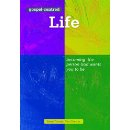
Book Review: The Gospel Centered Life by Tim Chester and Steve Timmis

How To Live For God’s Glory

 This is a fantastic concise guide written by two experienced church planters in England designed for individuals, one-on-one, or in small groups. This is one of four books in a series of guides on the themes of being gospel centered. All four of these guides (also on the Church, Marriage, and Family) are loaded with great topics, questions for discussion, and saturated with good theology and biblically based. The best thing about this guide is that it is short, without sacrificing depth – for people who don’t have a lot of time, or simply don’t like to read. It gets you straight and to the point of discussion quickly – designed for action.

This book has 14 short chapters that each contain these elements: 1) A Principle based on the biblical topic being discussed; 2) Consider this – a short case study on the topic at hand; 3) a biblical background reading on the subject of the case study; 4) Read all about it – a brief discussion on the topic tying in the context, bridging the biblical passage, and it’s relevancy to the topic; and 5) Questions for reflection and discussion.

Here are the Principles and Key Biblical Passages Developed in the Three Sections of this book:

Part One: Gospel-Centered Change

Chapter 1: “A Life for God” – Principle: “It’s not about me—it’s about God and His glory.” The Biblical background for this chapter comes from 1 Corinthians 8:1-11:1.

Chapter 2: “A Life for others” – Principle: “It’s not about me—it’s about loving God and others.” The Biblical background for this chapter comes from Matthew 22:34-40.

Chapter 3: “A Life of change” – Principle: “God is making me more like Jesus for His glory and my good.” The Biblical background for this chapter comes from Hebrews 12:1-11.

Chapter 4: “A Life of Miracles“ – Principle: “The Holy Spirit changes me through the gospel.” The Biblical background for this chapter comes from Romans 8:1-17.

Part Two: Gospel Centered Perspectives

Chapter 5:  “Look up to God” – Principle: “I respond to the gospel with daily repentance and faith.” The Biblical background for this chapter comes from Acts 20:17-24.

Chapter 6: “Look back to the cross” – Principle: “The cross is the foundation and pattern of my life.” The Biblical background for this chapter comes from Romans 8:28-39.

Chapter 7: “Look around at the Christian community” – Principle: “Belonging to Jesus means I belong to His community.” The Biblical background for this chapter comes from Colossians 3:1-17.


Chapter 8:  “Look forward to eternity” – Principle: “Eternal glory offers more than this life.” The Biblical background for this chapter comes from Hebrews 11:8-11, 24-26; 12:1-3.


Part Three: Gospel Centered Living

Chapter 9: “Decisions” – Principle: “My top priority is serving Christ.” The Biblical background for this chapter comes from 1 Thessalonians 4:3-12.

Chapter 10: “Relationships” – Principle: “I have a duty of care for others that involves taking the initiative to serve and resolve conflict.” The Biblical background for this chapter comes from James 3:1-4:12.

Chapter 11: “Friends” – Principle: “My willingness to speak about Jesus arises from my delight in Jesus.” The Biblical background for this chapter comes from Colossians 1:13-20.

Chapter 12: “Horizons” – Principle: “The gospel enlarges my horizons, giving me a concern for God’s world.” The Biblical background for this chapter comes from Isaiah 12.

Chapter 13: “Possessions” – Principle: “God gives me blessing that I might glorify Him.” The Biblical background for this chapter comes from 1 Timothy 6:6-19.

Chapter 14: “Suffering” – Principle: “God gives me suffering that I might glorify Him.” The Biblical background for this chapter comes from 2 Corinthians 1:3-7.

I highly recommend this book for all followers of Christ. The most beneficial way to read it will be in the context of community with other believers so that the many ideas in this book can be immediately fleshed out among real life. It is theologically sound, biblically saturated; Christ centered, and will truly help you live a more gospel-centered life.

Book Review: The Gospel Centered Marriage by Tim Chester

Concise and Helpful Guide For Marriage

Tim Chester is a church planter and writer in England. I appreciated the way he elevated Christ, His church, and how he applies the gospel in every facet of married life. The chapters designed for couples and small groups are concise, biblically and theologically based, Christo-centric, thorough, practical, and tailor made to promote discussion and application.

Some of the features of this book that are highlighted in each chapter are the following sections:

Consider this – “A scenario—often based on a real-life—situation which raises some kind of dilemma or frustration in marriage.”

Biblical background – “A relevant Bible passage together with some questions to help you think it through.”

Read all about it – “A discussion of the principle, both in terms of its theological underpinning and its contemporary application.”

Questions for reflection – “Questions that can be used for group discussion or personal reflection.”

Ideas for action – “Some ideas or an exercise to help people think through the application of the principle to their own situation.”

What I have done below to give you a taste of the book is to give the principle elaborated on in each chapter and the key Scriptures covered in each chapter.

Part One: Gospel-Centered Marriage – The Five Chapters in this section are on:

Chapter One – “Marriage and the passion of God” illuminates the principle: “Your marriage is an illustration of the relationship of Christ to His people.” The key passage in this chapter is a study of Hosea 1-3.

Chapter Two – “Marriage and the purposes of God” states the principle: “The purpose of your marriage is companionship and partnership in mission.” The biblical background for this principle is found in Genesis 1:26-28 and 2:18-24.

Chapter Three – “Marriage and the kingdom of God” contends the principle: “Your marriage is to demonstrate that it’s good to live under God’s reign.” The biblical basis for the thesis of this chapter is from Ephesians 5:22-33.

Chapter Four – “Marriage and the Submission of God’s people” states the principle: “As the church submits to Christ, so wives put their husband’s will before their own.” The background for the principle discussed in this chapter is from 1 Peter 3:1-7.

Chapter Five – “Marriage and the Loving authority of Christ” discusses the principle: “As Christ loves the church, husbands put their wife’s interests before their own.” The basis for discussion in this chapter is from Mark 10:40-45.

Part Two: Gospel-Centered Relationships – The Five Chapters in this section cover:

Chapter Six – “Grace” – The principle on grace is that “grace means we can always begin again.” The key passages are Titus 3:3-8; 1 Corinthians 6:9-11; Titus 2:11-14; and Ephesians 4:26-27.

Chapter Seven – “Love” – Enumerates the principle: “daily thoughtfulness matters more than grand gestures.” The biblical content for this chapter is based on John 13:1-17.

Chapter Eight – “Conflict” – States the principle: “Conflict begins when my selfish desires are denied by my spouse.” The passage dealing with conflict is from James 3:13-18.

Chapter Nine – “Reconciliation” – Focuses on the principle: “Reconciliation begins when my selfish desires are denied by me.” The biblical basis of discussion for this chapter comes from James 4:1-12.

Chapter Ten – “Forgiveness” – Highlights the principle: “Trust must be earned and forgiveness must be given.” The key text on forgiveness is from Matthew 18:21-35.

Part Three: Gospel-Centered Sex – The five chapters in this section are on:

Chapter 11: “Enjoying sex” on the principle: “it’s our duty to enjoy marital sex.” The featured passage in this chapter is Song of Songs 4:12-5:1.

Chapter 12: “Loving sex” elaborates on the principle: “Good sex begins long before you take your clothes off.” The primary passage for this chapter is Song of Songs 4:1-16.

Chapter 13: “Transforming sex” develops the principle: “We get sex wrong because we get God wrong.” The key biblical passage developed is Romans 1:18-25.

Chapter 14: “Gospel-centered beauty” hones in on the principle: “Love finds us beautiful and love makes beautiful.” The numerous passages developed are Song of Songs 1:5-6, 8-10; Romans 12:2; Proverbs 5:18-19; 1 Peter 3:3.

Chapter 15: The conclusion of the book “Marriage is not forever” solidifies the principle: “Find your identity and joy in God rather than in marriage.” The main biblical passages developed are John 4:4-26; Mark 12:18-25; Revelation 21:3-4.

I thoroughly enjoyed this book. I will be using it in the context of counseling and coaching couples who desire marriage; those who are already married; and be using it in the context of small groups in the church. I highly recommend this book because it is indeed gospel centered; it covers the major bases of a Christian marriage; and is not overwhelming for those who are not readers. I especially recommend it for guys (and gals) who don’t enjoy reading, or simply don’t have a lot of time on their hands. Each chapter is only a few pages long, and you can get a lot of substance and help in a short amount of time if you just want to read on a specific topic in the book. It gives excellent food for thought and discussion and will be very beneficial to any couple no matter how long they have been married.

What Makes for a Beautiful Woman or a Gallant Man (I Suppose)?

A Helpful Acronym on G.R.A.C.E

(Book Excerpt from *Bruce K. Waltke’s, Finding The Will of God?: A Pagan Notion?)

          I once introduced a famous colleague who was giving a speech entitled “The Most Beautiful Woman I know.” We had all assumed the man was going to speak metaphorically about something beautiful, but instead he told us of this beautiful woman who attended his church. She had an inner radiance that just seemed to light up a room when she entered. One day my friend got up the courage to ask her how she became so beautiful. Her response was, “Grace. Every day I take time to focus on grace.” Then she explained that she used the word “grace” as an acronym for her prayer time.

G is for Gratitude. She began each day praising God for His many blessings.

R is for Reading God’s Word. She spent time each day learning from the Lord.

A is for Appropriating. After reading the mind of God, she sought ways to appropriate it into her life.

C is for Charity. Since Christians will be known by their love, she looked for ways to help others.

E is for Expectation. This woman fully expected God to work through her.

Spending time in prayer and reading God’s Word, and then seeking an outlet for using what you have learned will lead you to the mind of God, and will cause the Lord to work through you. Coming to Him with an expectant heart, ready to be used by God, allows Him to shape your life and character. But it first requires an attitude that you will come to Scripture ready and willing to learn what the Lord wants to teach you.

*Bruce K. Waltke (PhD, Dallas Theological Seminary; PhD, Harvard Divinity School), acknowledged to be one of the outstanding contemporary Old Testament scholars, is professor of Old Testament at Reformed Theological Seminary in Orlando, Florida, and professor emeritus of biblical studies at Regent College in Vancouver. He has authored and coauthored numerous books, commentaries, and articles, and contributed to dictionaries and encyclopedias.

Book Review: Going Deep by Gordon MacDonald

Go Deeper and Out of the Shallows

 I am a fan of Gordon MacDonald’s books because he has a unique style of writing where he synergistically integrates principles, personal experiences, and biblical insights in such a way that he makes one think and desire to put into practice what he is writing about.

In his newest offering – continuing in the context of what he wrote about in a previous book, “Who Stole My Church” – MacDonald sets out to explore and develop the statement, “The future of the Christian faith will not be determined by the number of people who fill the pews but by the spiritual depth of those people…We seem to know how to get unchurched people to visit our buildings. We even seem to know how to draw them across the line into a declaration of personal faith in Jesus. But what we do not seem to know is how to cultivate spiritually deep people. Tomorrow’s church could be headed for trouble.” This book is a fictional exploration in answering these observations based on the experiences of the fictional pastor – GMAC – and his large congregation set in New England in the modern era. Macdonald sets out to “offer a detailed plan of helping churches cultivate people of depth–spiritually mature Christians that truly desire to make a difference for Christ with their lives, that will help grow the church.”

I personally enjoyed the book because as a pastor myself I can relate to almost every story, person, thought, and implication in the book. Like MacDonald I am a pastor that has had many ups and downs with people in seeking to be a “deep Christian” and what that means in the context of seeking to grow a disciple making church. I think pastors will enjoy this book more than most people – because they will be able to identify more with the story than non-pastors will. I would recommend this book either be read while on vacation, or a chapter a day – for Type A people – you will get frustrated because the story line will move too slow for you. As for the more reflective and melancholy types – you will enjoy the story more because it will appeal to you emotionally and you will be more patient with the developing story.

I am very concerned about the shallowness and lack of depth of most churches today, and I am all for “going deep” and think that MacDonald’s book will be used to help steer many church leaders, and thus churches in a positive direction. I hope that this type of book will spur church leaders toward deeper thinking, and result in developing disciples that are deeper and less shallow than what our previous leaders have done with their churches.

I received this book free from the publisher through the BookSneeze®.com book review bloggers program. I was not required to write a positive review. The opinions I have expressed are my own. I am disclosing this in accordance with the Federal Trade Commission’s 16 CFR, Part 255


Gordon MacDonald has been a pastor and author for over forty years. For many years he pastored Grace Chapel in Lexington, Massacusetts and continues to serve as Pastor Emertius. He has also provided leadership to influential ministries such as Intervarsity Christian Fellowship, which he served as President for three years, and World Relief, which he currently serves as Chairman. Gordon’s best-selling books include Ordering Your Private WorldMid-Course Correction and, most recently, A Resilient Life. He also writes and serves as Editor-at-Large for Christianity Today’s Leadership Journal. When not writing, leading or speaking at conferences, Gordon and his wife Gail can be found hiking the trails of New England.

Vision: The Difference Between Day and Night!

A Great Statement on Vision

“All men dream: but not equally. Those who dream by night in the dusty recesses of their minds wake in the day to find it was vanity: but the dreamers of the day are dangerous men, for they may act their dreams with open eyes, to make it possible. This I did.” – T.E. Lawrence from his introduction to Seven Pillars of Wisdom

Book Review: Making the Best of a Bad Decision by Erwin Lutzer

 Encouragement and Hope For The Journey Ahead

Book Reviewed By David P. Craig

The subtitle of this book is “how to put your regrets behind you, embrace grace, and move toward a better life.” *Lutzer definitely does that, and much more in this very helpful book on how God’s sovereignty plays out in our lives, even when we sin, fail, make mistakes, and blow it every which way. The good news is that God works things out for our good even when we have messed things up pretty bad.

Using biblical examples like David, Moses, Paul, and numerous others, as well as numerous real life examples from his many years as a pastor, Lutzer shows time and time again that we can have a fresh start, a new hope, and be forgiven of our sins. Nothing we have done is too difficult for God to redeem through the shed blood of Christ, and in His sovereign plans.

Specifically, the author addresses bad decisions we have made in marriage, morally, financially, vocationally, and when we have hurt others. He gives biblical counsel for each of these poor decisions (most of us have and will make), and each chapter always has practical steps in how to deal with the past, the present, and gives much hope for the future. In the final two chapters he tackles how we can learn from our past and make wise decisions in the present and future. And lastly, he deals with the most important decision you can ever make – related to where you will spend your eternity.

The book also features a discussion guide for individual or group study. I highly recommend this book – especially for people who have ever said, or are saying things like: “My life is over;” I’ve sinned so much I could never be forgiven;” “I think I married the wrong person;” “I’m in debt up to my eyeballs, there is no way I can ever get out of this mess;” “I can never forgive ___________ for what they did to me;” “How can I ever repay ____________ back for how much I hurt them?” And any other question you have asked when you feel hopeless.

Lutzer’s book is easy to read, thorough, very applicable, and full of helpful biblical wisdom to help you get back on the right track – no matter where you got off! I believe that this book will help a lot of people recover, find redemption, and hope to help make the journey in the future a lot better than the past.

*Since 1980, Erwin W. Lutzer has served as senior pastor of the world-famous Moody Church in Chicago, where he provide leadership to Chicago pastors. Dr. Lutzer earned his B.Th. from Winnipeg Bible College, a Th.M. from Dallas Theological Seminary, an M.A. in philosophy from Loyola University, an LL.D. from Simon Greenleaf School of Law, and a D.D. from Western Conservative Baptist Seminary.

ABOUT DR. ERWIN LUTZER

Dr. Lutzer is a featured radio speaker on the Moody Broadcasting Network and the author of numerous books, including The Vanishing Power of DeathCries from the Cross, the best-selling One Minute Before You Die and Hitler’s Cross, which received the Evangelical Christian Publishers Association (EPCA) Gold Medallion Book Award. He speaks both nationally and internationally at Bible conferences and tours and has led tours of the cities of the Protestant Reformation in Europe.

Dr. Lutzer and his wife, Rebecca, live in the Chicago area and are the parents of three grown children. (Courtesy of Multnomah Publishers)

An Atheist and a Little Girl: Good For a Few Laughs

An atheist seated next to a little girl on a plane said, “Do you want to talk? Flights go  quicker that way.” The little girl, who had just started to read her book, replied to the stranger, “What do you want to talk about?” “How about why there is no God, Heaven, Hell, or life after death?” “OK,” she said. “That could be interesting, first let me ask you this, “A horse, a cow and a deer all eat the same stuff – grass. Yet a deer excretes little pellets, a cow turns out a flat patty, but a horse produces clumps. Why?” … The atheist, surprised by the girls intelligence, thinks then says, “I have no idea.” To which she replies, “Do you really feel qualified to discuss why there is no God, or no Heaven or Hell, or life after death, when you don’t know crap?” And she went back to reading her book. – Source Unknown

Book Review: How To Lead and Still Have a Life by Dale Burke

Helping You To Go From Surviving to Thriving!

The two books I give away to help people (especially leaders) balance their lives more than any others are this one by Burke and “Life Focus” by Jerry Foster. As a professional Life Coach and Pastor I have found in over 25 years of ministry that most people (even leaders) are merely surviving and very few are actually thriving. The principles and practices articulated in this book by Burke (former pastor of Fullerton Evangelical Free Church for many years) are biblical, logical, practical, and when applied – liberating.

In the first chapter Burke talks about how difficult it is to be a leader today and explicates the following ten facts:

1) The Rules Have Changed
2) Life is Faster
3) Change is Accelerating
4) Expectations Are Higher
5) The Culture Is in Moral Decay
6) Servant-leadership Is Stretching
7) You Are a Limited Resource
8) Leadership Is a Draining Experience
9) More is Not the Answer
10) There Is Hope

In my experience as a leader, pastor, and life coach I see leaders respond to these challenges by trying to do more (like a juggler who drops all the plates because he’s trying to do too much), or they give up – because it’s just too hard.

Burke offers a solution as an antidote to doing more, or giving up, by doing less by utilizing your strengths, your schedule, and by operating in each of these areas when you are at your best in short blocks of time. I for one, and many others I’ve coached have been helped immensely by applying the “less is more” philosophy.

In the rest of the book Burke breaks down leadership into manageable categories and responsibilities:

Section One: The Inner Ring–the Heart of the Leader

Section Two: The Middle Ring–The Heart of Leadership

Section Three: The Outer Ring–The Heart of Execution

Honestly, I am amazed that more people haven’t read this book or heard of Dale Burke. He is a leader who knows what he’s talking about – by knowledge, action, and experience, and he is an excellent communicator. I believe that this book will help any person who desires to be less overwhelmed with the responsibilities of life, and have more balance and effectiveness immensely. Read it and than give a copy away to your disciple, apprentice, or mentoree – you and they will be glad you did and so will those you live and work with – guaranteed!