
Category: Spiritual Life


26 Excellent Self Evaluation Questions By Gordon MacDonald
 Accountability Questions For You and Your Mentoree/Disciple
(Adapted from *Gordon MacDonald, Restoring Joy to Your Inner World, Inspiration Press, p. 573)
“Chances are that you have a physical once a year or every two years. I recommend that you also have a “spiritual” once a year as well. Your soul care is just as important as your body care! This is an excellent list of questions to help care for your soul.” – Dr. David P. Craig
(1) Where are you right now in your relationship with God?
(2) What have you read in the Bible in the last week?
(3) What has God been saying to you in this?
(4) Where do you find yourself resisting God these days?
(5) What specific things do you find yourself praying for regarding others?
(6) What specific things do you find yourself praying for yourself?
(7) What specific tasks are facing you that you consider incomplete?
(8) What habits are intimidating you at present?
(9) What have you read in the secular press this week?
(10) What general reading have you been doing?
(11) What have you done to play this week?
(12) How are you doing with your spouse/kids?
(13) If I were to ask your spouse about your state of mind, spirit, etc., what would he/she say?
(14) Are you sensing any spiritual attacks from the enemy this week? Today?
(15) If Satan were to try to invalidate you as a servant of God, where or how would he attack you?
(16) What is the state of your sexual life (temptation, fantasy, etc)?
(17) Where are you at financially (Do you have control, debts, etc)?
(18) Are there any unresolved conflicts (ailing relatives, stress, disputes) in your circle of relationships right now (family, friends those among whom we’re supposed to feel safe)?
(19) When was the last time you spent time with a friend of the same gender?
(20) What kind of time have you spent with a non-Christian this past week?
(21) What challenges do you expect to face in the coming month?
(22) What are your fears at the present time (letting family down, bodies letting us down, etc)?
(23) Are you sleeping well?
(24) What three things are you most thankful for?
(25) Do you like yourself at this point of your pilgrimage?
(26) What are you greatest confusions about your relationship with God?
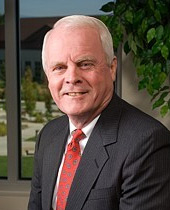 *Gordon MacDonald has been a pastor and author for over forty years. For many years he pastored Grace Chapel in Lexington, Massachusetts and continues to serve as Pastor Emeritus. He has also provided leadership to influential ministries such as Intervarsity Christian Fellowship, which he served as President for three years, and World Relief, which he currently serves as Chairman. Gordon’s best-selling books include Ordering Your Private World, Mid-Course Correction and, most recently, A Resilient Life. He also writes and serves as Editor-at-Large for Christianity Today’s Leadership Journal. When not writing, leading or speaking at conferences, Gordon and his wife Gail can be found hiking the trails of New England.
Jonathan Edwards “Resolved” by Dr. Steven Lawson
 For the last seven years, I have spoken at a conference on the West Coast called “Resolved.” The name is drawn from the Resolutions of Jonathan Edwards and is aimed at college students and “twenty-somethings” in the next generation. As an eighteen and nineteen year old, young Edwards wrote seventy resolutions, which became his personal mission statement to guide his life. To launch the first conference, I spoke from Edward’s first resolution, what Edwards determined would be the single most important pursuit in his life — the glory of God.
Edwards began his Resolutions with what he desired to be the driving force of his life — an all-absorbing passion to pursue the glory of God. “Resolved: that I will do whatsoever I think to be most to God’s glory and to my own good, profit, and pleasure, in the whole of my duration, without any consideration of the time, whether now or never so many myriads of ages hence. Resolved: to do whatever I think to be my duty, and most for the good and advantage of mankind in general. Resolved: to do this whatever difficulties I meet with, how ever so many and how ever so great.”
With this before his eyes weekly, this first resolution set the tone for his entire life. In every arena, he resolved to honor God supremely. Everything else in his life would be subsidiary to this one driving pursuit.
What is the glory of God? The Bible speaks of it in two ways. First, there is His intrinsic glory, the revelation of all that God is. It is the sum total of all His divine perfections and holy attributes. There is nothing that man can do to add to His intrinsic glory. Second, there is God’s ascribed glory, which is the praise and honor due His name. This is the glory that man must give to God.
For Edwards, to be resolved to live for God’s glory means to exalt His most glorious name. It means to live consistently with His holy character. It means to proclaim and promote His supreme greatness. This is the highest purpose for which God created us.
Why did Edwards place this resolution first? He understood that Scripture places the glory of God first in all things. Edwards was gripped with a transcendent, high view of God. As a result, in writing his “resolutions,” he knew he must live wholeheartedly for this awesome, sovereign God.
Thus, Edwards intentionally chose to “do whatsoever I think is most to God’s glory.” Here is the interpretive principle for everything in life. You want to know what God’s will is? You want to know whom to marry? You want to know what job to take? You want to know what ministry to pursue? You want to know how to invest your resources? You want to know how to spend your time?
There it is! Everything in life fits under this master theme. Anything out of alignment with this principle pursuit is in dangerous territory. Sometimes our decisions are not between right and wrong. Sometimes they are between good, better, and best. These are sometimes the hardest decisions. Edwards said that he would not live for what is merely good. Nor for what is better. He purposed to live only for what is best. Whatever is most to the glory of God — that is what is best!
Edwards believed that God’s glory was inseparably connected with his “own good, profit, and pleasure.” Whenever he sought God’s glory, he was confident that it would inevitably yield God’s greatest good for his life. The glory of God produced his greatest “pleasure.” So it is with us. Would you know unspeakable joy? Abundant peace? True contentment? Then pursue God’s glory.
With unwavering determination, young Edwards chose this first resolution to mark “the whole of my duration.” As long as he was alive, this was to be the driving thrust of his life. He must always live for God’s glory. He would never outgrow this central theme. He must never exchange it for a lesser glory.
Also, Edwards’ believed that his commitment to God’s glory would bring the greatest “good of mankind.” By seeking God’s honor, the greatest advantage would accrue to others. Thus, living for the glory of God would lead to the greatest influence of the Gospel upon the world. Souls would be converted. Saints would be edified. Needs would be met.
Would you have maximum impact upon this world? Would you lead others to Christ? Would you live for eternity? There it is! Live for God’s glory.
No matter what, Edwards resolved to live for God’s glory despite “whatever difficulties I meet with, how ever so many and ever so great.” Regardless the cost, despite the pain, he would pursue God’s honor. Even if it meant persecution or poverty, his mind was made up, his will resolved. He would pay any price to uphold the glory of God, regardless of the hardship that awaited him.
This is my challenge to the next generation: Would you seek the highest goal? Would you know the deepest joy? Would you realize the greatest good? Would you cast the widest influence? Would you overcome the greatest difficulties?
Then make this first resolution of Jonathan Edwards your chief aim. Be resolved to live for God’s glory.
 *Article originally appeared in Tabletalk Magazine, August 1, 2008. Dr. Steven J. Lawson is the senior pastor of Christ Fellowship Baptist Church in Mobile, Alabama. Dr. Lawson serves on the board of directors of The Master’s College and on the ministerial board for Reformed Theological Seminary, and teaches with Dr. John MacArthur at the Expositor’s Institute. In addition, Dr. Lawson has written numerous books, including Foundations of Grace and Famine in the Land: A Passionate Call for Expository Preaching, The Unwavering Resolve of Jonathan Edwards, and his recent offering The Gospel Focus of Charles Spurgeon.
15 Great Questions for Personal Evaluation by Carson Pue
(Adapted from *Carson Pue, Mentoring Leaders, Grand Rapids, MI: Baker, 2005, p. 243)
Spiritual Questions
Distractions: Have you used anything other than God in an attempt to meet your emotional or spiritual needs this week?
God’s Word: Have you been purposefully filling your mind with the knowledge of God’s Word daily? If not, how often? How do you plan to change?
Fasting: Have you fasted and prayed in the last month? If not, when was the last time? When have you next scheduled these disciplines?
Obedience: Is your conscience clear? If not, why? How do you plan to attain a clear conscience?
Physical Health Questions
Sleep: Are you getting enough sleep each night? If not, how much are you getting? How do you plan to change?
Exercise: Are you exercising daily? If not, how often are you exercising? How do you plan to change?
Eating: Are you eating properly? If not, what are you eating/not eating? How do you plan to change?
Substances: Are you abusing harmful substances? If not, when and how often have you taken them? How do you plan to change?
Action Oriented Questions
Finances: Where are you financially right now? Are things under control? Are you feeling anxious? Is there any great debt? How are you planning to proceed in this area of your life?
Purity: Have you kept your mind pure (thoughts of anger, bitterness, movies, magazines, Internet pornography, other)? If not, when did you fall?
What temptations need to be removed or precautions taken to prevent it?
Material Goods: Do you have anything that is used for evil needing to be destroyed or removed? If so, what? When and how will you (we) destroy or remove them?
Control: Have you lost control either verbally or otherwise since we last met? If so, when? When and how will you do something to restore and correct your actions?
Relational Questions
Deposits: Have you made positive emotional and spiritual deposits with your kids and your spouse? If not, why? What might you be able to do to make this a natural response?
Family: Have you offended any family member since we last met? If so, when? When and how will you restore and correct those actions?
Truthfulness: Have you told the whole truth in your answers to the questions I have asked you? If not, what do you need to correct? What actions do we need to take to stay and remain accountable?
Process: Is the asking of any of these questions adequate for you? If not, what changes are needed? Who else needs to be a part of this process?
*Carson Pue is the Executive Director at First Baptist Church right smack in the heart of downtown Vancouver, Canada. He describes the church this way, “Congregating in this historic stone building in the very heart of the downtown is a community. We are young, old and in-between, rich, poor, employed and re-training, multicultural, families and singles, Bible scholars, seekers. All share a heart for the city.”
 For fourteen years Carson served as CEO of Arrow Leadership a ministry recognized as a global leader in Christian leadership development. Arrow develops leaders worldwide “to be led more by Jesus, lead more like Jesus, and to lead more to Jesus.” They have been highly successful in transforming and enriching the lives and leadership of men and women who are now deployed around the world.
Recognized as a leader of leaders Carson has an ability to identify leaders and invest wisdom into their development through mentoring, teaching and spiritual guidance.He is also best-selling author: “Mentoring Leaders: Wisdom for Developing Character, Calling and Competency” by Baker Books and his new Mentoring Wisdom: Living and leading well. Carson is known through his speaking at conferences, published articles, national radio programs and commentaries. Through referrals over 50,000 leaders benefit from his monthly leadership emails “To the Point” “Mentoring Questions” and magazine columns.
With his encouraging style, creative ideas, engaging humor and ministry experience, people find Carson well fitted for his role. In a straightforward manner Carson shares both from success and failure in ministry, believing that leaders learn from both. He is a popular keynote speaker on themes around leadership, spiritual development and the realities of being a pastor today.Carson extends his leadership by serving on the board of directors for World Vision, Crossroad Communications and CTS Television Network. In addition he is an advisor for the boards of The Billy Graham Center, Truefaced, and the Entrepreneurial Leaders Organization. He is a trusted advisor to Christian leaders across Canada and the USA and connects globally with The Lausanne Movement and World Evangelical Alliance.
When not traveling the world encouraging leaders, he loves sailing with his BFF and first mateBrenda whom he has been married to since 1976. He loves time with his three sons, two daughters by marriage and three grandsons. He is also restored by laughter, sailing, Ireland, writing and spiritual retreats.
Dr. Tim Keller On The Importance of Gospel Repentance
*Dr. Tim Keller: “All of Life is Repentance”

Martin Luther opened the Reformation by nailing “The Ninety-Five Theses” to the door of Wittenberg Cathedral. The very first of the theses was: “Our Lord and Master Jesus Christ…willed the entire life of believers to be one of repentance.” On the surface this looks a little bleak! Luther seems to be saying Christians will never be making much progress in the Christian life. Indeed, pervasive, all-of-life-repentance is the best sign that we are growing deeply into the character of Jesus.
The Transformation of Repentance:
It is important to consider how the gospel affects and transforms the act of repentance. In ‘religion’ the purpose of repentance is basically to keep God happy so he will continue to bless you and answer your prayers. This means that ‘religious repentance’ is a) selfish, b) self-righteous, c) and bitter all the way to the bottom. But in the gospel the purpose of repentance is to repeatedly tap into the joy of union with Christ in order to weaken our need to do anything contrary to God’s heart.
“Religious” repentance is selfish:
In religion we only are sorry for sin because of its consequences to us. It will bring us punishment – and we want to avoid that. So we repent. But the gospel tells us that sin can’t ultimately bring us into condemnation (Rom. 8:1) its heinousness is therefore what it does to God-it displeases and dishonors him. Thus in religion, repentance is self-centered; the gospel makes it God-centered. In religion we are mainly sorry for the consequences of sin, but in the gospel we are sorry for the sin itself.
Furthermore, ‘religious’ repentance is self-righteous. Repentance can easily become a form of ‘atoning’ for the sin. Religious repentance often becomes a form of self-flagellation in which we convince God (and ourselves) that we are truly miserable and regretful that we deserve to be forgiven. In the gospel, however, we know that Jesus suffered and was miserable for our sin. We do not have to make ourselves suffer in order to merit forgiveness. We simply receive the forgiveness earned by Christ. 1 John 1:8 says that God forgives us because he is ‘just.’ That is a remarkable statement. It would be unjust of God to ever deny us forgiveness, because Jesus earned our acceptance! In religion we earn forgiveness with our repentance, but in the gospel we just receive it.
Last, religious repentance is “bitter all the way down.” In religion our only hope is to live a good enough life for God to bless us. Therefore every instance of sin and repentance is traumatic, unnatural, and horribly threatening. Only under great duress does a religious person admit they have sinned-because their only hope is their moral goodness. But in the gospel the knowledge of our acceptance in Christ makes it easier to admit we are flawed (because we know we won’t be cast off if we confess the true depths of our sinfulness).
Our hope is in Christ’s righteousness, not our own-so it is not so traumatic to admit our weaknesses and lapses. In religion we repent less and less often. But the more accepted and loved in the gospel we feel the more and more often we will be repenting. And though of course there is always some bitterness in any repentance, in the gospel there is ultimately sweetness. This creates a radical new dynamic for personal growth. The more you see your own flaws and sins, the more precious, electrifying, and amazing God’s grace appears to you. But on the other hand, the more aware you are of God’s grace and acceptance in Christ, the more able you are to drop your denials and self-defenses and admit the true dimensions of your sin. The sin under all other sins is a lack of joy in Christ.
The Disciplines of Gospel-Repentance:
If you clearly understood these two different ways to go about repentance, then (and only then!) you can profit greatly from a regular and exacting discipline of self-examination and repentance. I’ve found that the practices of the 18th century Methodist leaders George Whitefield and John Wesley have been helpful to me here. In January 9, 1738, in a letter to a friend, George Whitefield laid out an order for regular repentance. (He ordinarily did his inventory at night) He wrote: “God give me a deep humility and a burning love, a well-guided zeal and a single eye, and then let men and devils do their worst!” Here is one way to use this order in gospel-grounded repentance.
Deep Humility vs. Pride:
Have I looked down on anyone? Have I been too stung by criticism? Have I felt snubbed and ignored?
Repent like this: Consider the free grace of Jesus until I sense a) decreasing disdain (since I am a sinner too), b) decreasing pain over criticism (since I should not value human approval over God’s love). In light of his grace I can let go of the need to keep up a good image-it is too great a burden and now unnecessary. Consider free grace until I experience grateful, restful joy.
Burning love vs. Indifference:
Have I spoken or thought unkindly of anyone? Am I justifying myself by caricaturing (in my mind) someone else? Have I been impatient and irritable? Have I been self-absorbed and indifferent and inattentive to people?
Repent like this: Consider the free grace of Jesus until there is a) no coldness or unkindness (think of the sacrificial love of Christ for you), b) no impatience (think of his patience with you), and c) no indifference. Consider free grace until I show warmth and affection. God was infinitely patient and attentive to me, out of grace.
Wise Courage vs. Anxiety:
Have I avoided people or tasks that I know I should face? Have I been anxious and worried? Have I failed to be circumspect or have I been rash and impulsive?
Repent like this: Consider the free grace of Jesus until there is a) no cowardly avoidance of hard things (since Jesus faced evil for me), b) no anxious or rash behavior (since Jesus’ death proves God cares and will watch over me). It takes pride to be anxious – I am not wise enough to know how my life should go. Consider free grace until I experience calm thoughtfulness and strategic boldness.
Godly motivations (a ‘single eye’):
Am I doing what I am doing for God’s glory and the good of others or am I being driven by fears, need for approval, love of comfort and ease, need for control, hunger for acclaim and power, or the ‘fear of man?’ Am I looking at anyone with envy? Am I giving in to any of even the first motions of lust or gluttony? Am I spending my time on urgent things rather than important things because of these inordinate desires?
Repent like this: How does Jesus provide for me in what I am looking for in these other things? Pray: “O Lord Jesus, make me happy enough in you to avoid sin and wise enough in you to avoid danger, that I may always do what is right in your sight, in your name I pray, Amen.”
 *Dr. Tim Keller is the founding pastor of Redeemer Presbyterian Church in Manhattan, New York, and the author of The Reason for God: Belief in an age of Skepticism (In my opinion the best book to date on apologetics for a postmodern culture—I think this book will do for post moderns what Mere Christianity by C.S. Lewis did for moderns).

Developing Vision in Those You Are Mentoring By Asking Great Questions by Bobb Biehl
 Developing Vision in Your Mentoree/Disciple
(Adapted from Bobb Biehl, Mentoring, pp. 201-202)
DREAMING…about the Future in a Practical Way
- God: What three changes in me would most please our Eternal God in His Holy Heaven?
- Dream/Purpose: What can I do to make the most significant difference for God in my lifetime? Why am I on the earth? What is the very best organizational context for my dream?
- Primary Result: What is the single best measurable indicator that I am making progress with my dream?
- Life Priorities: If I could accomplish only three measurable priorities before I die, what would I accomplish?
- Ten-Year Focus: If I could accomplish only three measurable priorities in the next ten years what would make a 50% difference in my life-long contribution, what would I accomplish?
- Annual Focus:
- Focus – What single word best captures the focus of my next year?
- Opportunity – Where was my greatest unexpected success last year? Why? What three steps could I take now to take full advantage of this “Window of Opportunity” this coming year?
- Land Mines – What three land mines or roadblocks need my immediate attention? What have I been praying most about in the past 30 days? What three changes could reduce my “risk” by 50%?
- 30/10/50% – If I could only accomplish three measurable priorities in the next twelve months that would make a 50% difference in my contribution in the next ten years, which 3 things would I most want to accomplish?
- Quarterly Focus: What three measurable priorities could I accomplish in the next ninety days to make a 50% difference in the results I see by the end of the year?
- Organization: What three categories could I make to see a 50% difference in our morale as a family or team?
- Cash: If I had to cut my budget 21%, what would be the first three things to go? If I got a surprise gift of 21% of my budget, what three things would I do immediately?
- Quality: What three changes could improve the quality of my work by 50% in the next twelve months?
 *Bobb Biehl is an executive mentor. He graduated from Michigan State University (psychology major) in 1964 and received a Master’s degree (counseling) from Michigan State in 1966.
In 1976, Bobb founded Masterplanning Group International. As its president, he has consulted personally with over 400 clients. In that time, he has met one-on-one with over 3,500 executives (board members, senior executives, and staff members) and invested an estimated 40,000 hours in private sessions with some of the finest leaders of our generation. His clients are primarily large or fast-growing churches, nonprofit organizations, for profit corporations, and government agencies.
Based on these thousands of hours of practical “rubber-meets-the-runway” experience, Bobb has originated 35 resources (books, tapes, notebooks) in the area of personal and organizational development. These resources include published books entitled Boardroom Confidence, Dreaming, Leading with Confidence, Masterplanning, Mentoring, Stop Setting Goals, and Why You Do What You Do. His latest book, Dreaming Big, is co-authored with Dr. Paul Swets.
Bobb is a founding member of the board of directors of Focus on the Family. He is also a member of the board of directors of Liquid Metal (publicly traded). Prior to starting Masterplanning Group, Bobb was on the executive staff of World Vision International. While at World Vision he designed and developed the Love Loaf program, which has raised millions of dollars worldwide.
Bobb and his wife, Cheryl, have been married since 1964.
The Discipleship Process by Glenn C. Daman

Going From Conversion To Completion in Christ in the Discipleship Process:
(Adapted from Glenn C. Daman’s Shepherding the Small Church, Grand Rapids, MI: Kregel, 2008, p. 170)
|
STAGE 1 – INFANT |
STAGE 2 – MATURE |
STAGE 3 – LEADER |
| Scripture Reading | Doctrine & Theology | Leadership Skills |
| Prayer | Bible Study Skills | Mentoring Relationships |
| Obedience | Conduct | Personal Vision |
| Fellowship | Service | Encourage Others |
| Service | Disciple Infants | Disciple the Mature |
| Stewardship | Shedding the Horizontal | Vertically Focused |
8 Words of Wisdom for Singles Seeking Marriage by Tim Keller
(Condensed from Chapter 7 in his book co-authored with his wife Kathy – The Meaning of Marriage, New York: Dutton, 2011)
(1) Recognize that there are seasons for not doing marriage-seeking: When you are going through a significant transition — starting a new job, starting a new school, death of a parent, or some other fairly absorbing time or event — it might not at all be a good time to begin a relationship.
(2) Understand the ‘gift of singleness’: Paul calls singleness a gift in 1 Corinthians 7:7: But what Paul speaks of is neither a condition without any struggle nor on the other hand an experience of misery. It is fruitfulness in life and ministry through the single state.
(3) Get more serious about marriage seeking as you get older: The older you are, and the more often you ‘go out’, the quicker both people must be to acknowledge that you are doing marriage-seeking.
(4) Do not allow yourself deep emotional involvement with a non-believing person: The essence of intimacy in marriage is that finally you have someone who will eventually come to understand you and accept you as you are. You should not deliberately marry someone who does not share your Christian faith.
(5) Understand “attraction” in the most comprehensive sense: So many people choose their marriage partner on the basis of looks and money — rather than character, mission, future-self, and mythos — that they often find themselves married to a person they don’t really respect that much.
(6) Don’t let things get too passionate too quickly: Refuse to have sex before you are married. Sexual activity triggers deep passions in you for the other person before you have gotten a good look at him or her. Put friendship development before romantic development.
(7) Don’t become a ‘faux’ spouse for someone who won’t commit to you: If a relationship has dragged on for years with no signs of deepening or progressing towards marriage, it may be that one person has found a level of relationship (short of marriage) in which they are receiving all they want and feels no need to take it to the final stage of commitment.
(8) Get and submit to lots of community input: Married Christians should look for ways to “share” their marriages with the singles and other married couples in their community.
 *TIMOTHY KELLER was born and raised in Pennsylvania, and educated at Bucknell University, Gordon-Conwell Theological Seminary, and Westminster Theological Seminary. He was first a pastor in Hopewell, Virginia. In 1989 he started Redeemer Presbyterian Church in Manhattan with his wife, Kathy, and their three sons. Today, Redeemer has more than five thousand regular attendees at five services, a host of daughter churches, and is planting churches in large cities throughout the world. He is the author of KING’S CROSS, COUNTERFEIT GODS, THE PRODIGAL GOD, and the New York Times bestseller THE REASON FOR GOD, THE MEANING OF MARRIAGE (reviewed on this blog) & the forthcoming CENTER CHURCH (August 2012).
12 Ways To Prepare Yourself For Listening to Biblical Preaching by Dr. David P. Craig
 (1) Only those who have been saved from sin by grace through faith in Christ can truly understand the truth of God’s Word.
“Test yourselves to see if you are in the faith” … “The natural person does not accept the things of the Spirit of God, for they are folly to him, and he is not able to understand them because they are spiritually discerned. The spiritual person judges all things, but is himself to be judged by no one. For who has understood the mind of the Lord so as to instruct him? But we have the mind of Christ. – 2 Corinthians 13:5 & 1 Corinthians 2:14-16
(2) A Commitment to listening to Biblical Preaching helps you grow spiritually.
“Make them pure and holy by teaching them your words of truth.” – John 17:17
“You must crave pure spiritual milk so that you can grow into the fullness of your salvation. Cry out for nourishment as a baby cries for milk.” – 1 Peter 2:2
“And we also thank God continually because, when you received the word of God, which you heard from us, you accepted it not as the word of men, but as it actually is, the word of God, which is at work in you who believe.” – 1 Thessalonians 2:13
(3) Confess and Forsake your sins continually.
“If we confess our sins, he is faithful and just to forgive us our sins and to cleanse us from all unrighteousness.” – 1 John 1:9
(4) Through prayer and disciplined thought, adjust your attitude prior to the service so that you expect to hear exciting and life-changing truths from God’s Word.
“Open my eyes to see the wonderful truths in your law. I long to obey your commandments! Renew my life with your commandments. Give discernment to me, your servant; then I will understand your decrees. I rejoice in your word like one who finds great treasure.” -Psalm 119:18, 40, 125, 162
(5) Eliminate any potential distractions that might hinder your attentiveness during the message.
“But put on the Lord Jesus Christ, and make no provision for the flesh, to gratify its desires.” – Romans 13:14
(6) Make a concerted effort during the worship service to understand and retain as much as you can from the teaching by taking notes and writing down in your own words the primary lessons you learn and the questions raised in your mind.
“I have hidden your Word in my heart that I might not sin against You.” – Psalm 119:11
(7) Practice and develop your skills of discernment by examining the teaching carefully, but remember to maintain a humble, teachable spirit.
“Now these [Bereans] were more noble than those in Thessalonica; they received the Word with all eagerness, examining the Scriptures daily to see if these things were so.” – Acts 17:11
(8) Discuss the message after the service & throughout the week with other Christians, asking them questions and sharing the encouragement and challenges you received.
“I am fully convinced, dear brothers and sisters, that you are full of goodness. You know these things so well that you are able to teach others all about them.” – Romans 15:14
“Think of ways to encourage one another to outbursts of love and good deeds.” – Hebrews 10:24
(9) Study the passage or topic further by discussing it with the teacher/preacher or another knowledgeable Christian, and by referring to commentaries or other reference books on the topic.
“Do your best to present yourself to God as one approved, a worker who has no need to be ashamed, rightly handling the word of truth.” – 2 Timothy 2:15
(10) Purpose in your heart to make any changes necessary as a result of what you have learned, pray about those changes and practice them daily (see James 1:22-25; Hebrews 13:7-17)
“But be doers of the word, and not hearers only, deceiving yourselves.” – James 1:22
(11) Devote yourself to supporting those who teach you.
“Anyone who receives instruction in the word must share all good things with his teacher.” Galatians 6:6
“Christian workers should be paid by those they serve.” – 1 Corinthians 9:10b
“Devote yourselves to prayer with an alert mind and a thankful heart. Don’t forget to pray for us, too, that God will give many opportunities to preach about His secret plan—that is also for you Gentiles. That’s why I am here in chains. Pray that I will proclaim this message as clearly as I ought.” – Colossians 4:2-4
(12) Prepare yourself for the message the night before by getting to bed early. Also, by rising early enough to have plenty of time to get ready for a smooth ride to church (plan for a peaceful rather than a stressful rushed morning).
How Do the Law and Gospel Relate? An Excellent Sermon by Ray Comfort
 “Hell’s Best Kept Secret” by Ray Comfort
In the late seventies, God very graciously opened an itinerant ministry to me. As I began to travel, I found that I had access to church growth records, and found to my horror that something like 80 to 90% of those making a decision for Christ were falling away from the faith. That is, modern evangelism with its methods is creating something like 80 to 90 of what we commonly call backsliders for every hundred decisions for Christ.
Let me make it more real for you. In 1991, in the first year of the decade of harvest, a major denomination in the U.S. was able to obtain 294,000 decisions for Christ. That is, in one year, this major denomination of 11,500 churches was able to obtain 294,000 decisions for Christ. Unfortunately, they could only find 14,000 in fellowship, which means they couldn’t account for 280,000 of their decisions, and this is normal, modern evangelical results, and something I discovered way back in the late seventies; it greatly concerned me. I began to study the book of Romans intently and, specifically, the gospel proclamation of men like Spurgeon, Wesley, Moody, Finney, Whitfield, Luther, and others that God used down through the ages, and I found they used a principle which is almost entirely neglected by modern evangelical methods. I began teaching that principle; I was eventually invited to base our ministry in southern California, the city of Bellflower, specifically to bring this teaching to the church of the U.S.
Things were quiet for the first three years, until I received a call from Bill Gothard, who had seen the teaching on video. He flew me to San Jose in northern California; I shared it with a thousand pastors. Then in 1992 he screened that video to 30,000 pastors. The same year David Wilkerson called from New York. He called from his car. (He had been listening to the teaching in his car and called me on his car phone.) Immediately, he flew me 3,000 miles from L.A. to New York to share the one-hour teaching with his church; he considered it to be that important. And recently I heard of a pastor who had listened to the audio tape 250 times. I’d be happy if you’d listen just once to this teaching which is called “Hell’s Best Kept Secret.”
The Bible says in Psalm 19, verse 7, “The law of the Lord is perfect converting the soul.” What is it that the Bible says is perfect and actually converts the soul? Why scripture makes it very clear: “The law of the Lord is perfect converting the soul.” Now to illustrate the function of God’s law, let’s just look for a moment at civil law. Imagine if I said to you, “I’ve got some good news for you: someone has just paid a $25,000 speeding fine on your behalf.”
You’d probably react by saying, “What are you talking about? That’s not good news: it doesn’t make sense. I don’t have a $25,000 speeding fine.” My good news wouldn’t be good news to you: it would seem foolishness. But more than that, it would be offensive to you, because I’m insinuating you’ve broken the law when you don’t think you have. However, if I put it this way, it may make more sense: “On the way to this meeting, the law clocked you at going 55 miles an hour through an area set aside for a blind children’s convention. There were ten clear warning signs stating that fifteen miles an hour was the maximum speed, but you went straight through at 55 miles an hour. What you did was extremely dangerous; there’s a $25,000 fine. The law was about to take its course, when someone you don’t even know stepped in and paid the fine for you. You are very fortunate.”
Can you see that telling you precisely what you’ve done wrong first actually makes the good news make sense. If I don’t clearly bring instruction and understanding that you’ve violated the law, then the good news will seem foolishness; it will seem offensive. But once you understand that you’ve broken the law, then that good news will become good news indeed.
Now in the same way, if I approach an impenitent sinner and say, “Jesus Christ died on the cross for your sins,” it will be foolishness and offensive to him. Foolishness because it won’t make sense. The Bible says that: “The preaching of the cross is to them that perish foolishness” (1Cor. 1:18). And offensive because I’m insinuating he’s a sinner when he doesn’t think he is. As far as he’s concerned, there are a lot of people far worse than him.
But if I take the time to follow in the footsteps of Jesus, it may make more sense. If I take the time to open up the divine law, the ten commandments, and show the sinner precisely what he’s done wrong, that he has offended God by violating His law, then when he becomes, as James says, “convinced of the law as a transgressor” (Jam. 2:9), the good news of the fine being paid for will not be foolishness, it will not be offensive, it will be “the power of God unto salvation” (Rom. 1:16).
Now, with those few thoughts in mind by way of introduction, let’s now look at Romans 3, verse 19. We’ll look at some of the functions of God’s law for humanity. Romans 3, verse 19: “Now we know that whatsoever things the law says, it says to them who are under the law that every mouth may be stopped and all the world may become guilty before God.” So one function of God’s law is to stop the mouth. To stop sinners justifying themselves and saying, “There’s plenty of people worse than me. I’m not a bad person. Really.” No, the law stops the mouth of justification and leaves the whole world, not just the Jews, but the whole world guilty before God. Romans 3, verse 20: “Therefore by the deeds of the law there shall no flesh be justified in his sight: for by the law is the knowledge of sin.” So God’s law tells us what sin is. 1 John 3:4 says, “Sin is transgression of the law.”
Romans 7, verse 7: “What shall we say then?” says Paul. “Is the law sin? God forbid! No, I had not known sin but by the law.” Paul says, “I didn’t know what sin was until the law told me.” In Galatians 3:24, “Wherefore, the law was our schoolmaster to bring us to Christ that we might be justified by faith.” God’s law acts as a schoolmaster to bring us to Jesus Christ that we might be justified through faith in His blood. The law doesn’t help us; it just leaves us helpless. It doesn’t justify us; it just leaves us guilty before the judgment bar of a holy God.
And the tragedy of modern evangelism is because around the turn of the century when it forsook the law in its capacity to convert the soul, to drive sinners to Christ, modern evangelism had to, therefore, find another reason for sinners to respond to the gospel. And the issue that modern evangelism chose to attract sinners was the issue of “life enhancement”. The gospel degenerated into “Jesus Christ will give you peace, joy, love, fulfillment, and lasting happiness.” Now to illustrate the unscriptural nature of this very popular teaching, I’d like you to listen very carefully to this following anecdote, because the essence of what I’m saying pivots on this particular illustration; so please listen carefully.
Two men are seated in a plane. The first is given a parachute and told to put it on as it would improve his flight. He’s a little skeptical at first because he can’t see how wearing a parachute in a plane could possibly improve the flight. After a time he decides to experiment and see if the claim is true. As he puts it on he notices the weight of
it upon his shoulders and he finds that he has difficulty in sitting upright. However, he consoles himself with the fact that he was told the parachute would improve the flight. So, he decides to give the thing a little time. As he waits he notices that some of the other passengers are laughing at him, because he’s wearing a parachute in a plane. He
begins to feel somewhat humiliated. As they begin to point and laugh at him and he can stand it no longer, he slinks in his seat, unstraps the parachute, and throws it to the floor. Disillusionment and bitterness fill his heart, because, as far as he was concerned, he was told an outright lie. The second man is given a parachute, but listen to what he’s told. He’s told to put it on because at any moment he’d be jumping 25,000 feet out of the plane. He gratefully puts the parachute on; he doesn’t notice the weight of it upon his shoulders, nor that he can’t sit upright. His mind is consumed with the thought of what would happen to him if he jumped without that parachute.
Let’s analyze the motive and the result of each passenger’s experience. The first man’s motive for putting the parachute on was solely to improve his flight. The result of his experience was that he was humiliated by the passengers; he was disillusioned and somewhat embittered against those who gave him the parachute. As far as he’s concerned it’ll be a long time before anyone gets one of those things on his back again. The second man put the parachute on solely to escape the jump to come, and because of his knowledge of what would happen to him without it, he has a deep-rooted joy and peace in his heart knowing that he’s saved from sure death. This knowledge gives him the ability to withstand the mockery of the other passengers. His attitude towards those who gave him the parachute is one of heart-felt gratitude.
Now listen to what the modern gospel says. It says, “Put on the Lord Jesus Christ. He’ll give you love, joy, peace, fulfillment, and lasting happiness.” In other words, “Jesus will improve your flight.” So the sinner responds, and in an experimental fashion, puts on the Savior to see if the claims are true. And what does he get? The promised temptation, tribulation, and persecution. The other passengers mock him. So what does he do? He takes off the Lord Jesus Christ, he’s offended for the word’s sake (Mark 4:17), he’s disillusioned and somewhat embittered, and quite rightly so. He was promised peace, joy, love, fulfillment, and lasting happiness, and all he got were trials and humiliation. His bitterness is directed toward those who gave him the so-called “good news”. His latter end becomes worse than the first: another inoculated and bitter backslider.
Saints, instead of preaching that Jesus improves the flight, we should be warning the passengers they’re going to have to jump out of the plane. That it’s “appointed unto man once to die, but after this the judgment” (Heb. 9:27). And when a sinner understands the horrific consequences of breaking God’s law, then he will flee to the Savior solely to escape the wrath that’s to come. And if we’re true and faithful witnesses, that’s what we’ll be preaching. That there is wrath to come; that God “commands all men everywhere to repent” (Acts 17:30). Why? “Because He has appointed a day, in which He will judge the world in righteousness” (vs. 31). You see, the issue isn’t one of happiness, but one of righteousness. It doesn’t matter how happy a sinner is, how much he’s enjoying “the pleasures of sin for a season” (Heb. 11:25). Without the righteousness of Christ, he’ll perish on the day of wrath. “Riches profit not on the day of wrath, but righteousness delivers from death” (Prov. 11:4).
Peace and joy are legitimate fruits of salvation, but it’s not legitimate to use these fruits as a draw card for salvation. If we continue to do so, sinners will respond with an impure motive lacking repentance. Now, can you remember why the second passenger had joy and peace in his heart? It was because he knew that parachute was going to save him from sure death. And as a believer, I have, as Paul says, “joy and peace in believing” (Rom. 15:13), because I know that the righteousness of Christ is going to deliver me from the wrath that’s to come.
Now with that thought in mind, let’s take a close look at an incident on board the plane. We have a brand new stewardess. She’s carrying a tray of boiling hot coffee. It’s her first day; she wants to leave an impression on the passengers, and she certainly does. Because as she’s walking down the aisle, she trips over someone’s foot and slops that boiling hot coffee all over the lap of our second passenger. Now what’s his reaction as that boiling liquid hits his tender flesh? Does he go, “Ssssfffff! Man that hurt”? Mmm-hhh. He feels the pain. But then does he rip the parachute from his shoulders, throw it to the floor and say, “The stupid parachute!”? No. Why should he? He didn’t put the parachute on for a better flight. He put it on to save him from the jump to come. If anything, the hot coffee incident causes him to cling tighter to the parachute and even look forward to the jump.
Now if you and I have put on the Lord Jesus Christ for the right motive, to flee from the wrath that’s to come, when tribulation strikes, when the flight gets bumpy, we won’t get angry at God; we won’t lose our joy and peace. Why should we? We didn’t come to Jesus for a happy lifestyle: we came to flee from the wrath that’s to come. And if anything, tribulation drives the true believer closer to the Savior. And sadly we have literally multitudes of professing Christians who lose their joy and peace when the flight gets bumpy. Why? They’re the product of a man-centered gospel. They came lacking repentance, without which you can’t be saved.
I was in Australia recently ministering; Australia is a small island off the coast of New Zealand. And I preached sin, law, righteousness, holiness, judgment, repentance, and hell, and I wasn’t exactly crushed by the amount of people wanting to “give their hearts to Jesus.” In fact, the air went very tense. After the meeting, they said, “There’s a young guy down in the back who wants to give his life to Christ.” I went down the back and found a teenage lad who could not pray the sinner’s prayer because he was weeping so profusely.
Now, for me it was so refreshing, because for many years I suffered from the disease of “evangelical frustration”. I so wanted sinners to respond to the gospel I unwittingly preached a man-centered message. The essence of which was this: “You’ll never find true peace without Jesus Christ; you’ve a God-shaped vacuum in your heart that only God can fill.” I’d preach Christ crucified; I’d preach repentance. A sinner would respond to the alter; I’d open an eye and say, “Oh no. This guy wants to give his heart to Jesus and there’s an 80% chance he’s going to backslide. And I am tired of creating backsliders. So I’d better make sure this guy really means it. He’d better be sincere!” So I’d approach the poor guy in a Gestapo spirit. I’d walk up and say, “Vhat do you vant?” He’d say, “I’m here to become a Christian.” I’d say, “Do you mean it?” He’d say, “Yeah.” I’d say, “Do you REALLY MEAN IT!?” He’d say, “Yeah, I reckon.” “Okay, I’ll pray with you, but you’d better mean it from your heart.” He said, “Okay, okay.” “Now you repeat this prayer sincerely after me and mean it from your heart sincerely and really mean it from your heart sincerely and make sure you mean it. ‘Oh, God, I’m a sinner.’ ” He’d say, “Uh…oh, God, I’m a sinner.” And I’d think, “Man, why isn’t there a visible sign of contrition. There’s no outward evidence the guy is inwardly sorry for his sins.” Now, if I could have seen his motive, I would have seen he was 100% sincere. He really did mean his decision with all his heart. He sincerely wanted to give this Jesus thing a go to see if he could get a buzz out of it. He had tried sex, drugs, materialism, alcohol. “Why not give this Christian bit a go and see if it’s as good as all these Christians say it is: peace, joy, love, fulfillment, lasting happiness.”
He wasn’t fleeing from the wrath that was to come, because I hadn’t told him there was wrath to come. There was this glaring omission from my message. He wasn’t broken in contrition, because the poor guy didn’t know what sin was. Remember Romans 7, verse 7? Paul said, “I had not known sin but by the law.” How can a man repent if he doesn’t know what sin is? Any so-called “repentance” would be merely what I call “horizontal repentance”. He’s coming because he’s lied to men, he’s stolen from men.
But when David sinned with Bathsheba and broke all ten of the ten commandments (when he coveted his neighbor’s wife, lived a lie, stole his neighbor’s wife, committed adultery, committed murder, dishonored his parents, and thus dishonored God), he didn’t say “I’ve sinned against man.” He said, “Against you, and you only, have I sinned, and done this evil in your sight” (Ps. 51:4). When Joseph was tempted sexually, he said, “How can I do this thing and sin against God?” (Gen. 39:9). The prodigal son said, “I’ve sinned against heaven” (Luke 15:21). Paul preached “repentance toward God” (Acts 20:21). And the Bible says, “Godly sorrow works repentance” (2Cor. 7:10). And when a man doesn’t understand that his sin is primarily vertical, he’ll merely come and exercise superficial, experimental, and horizontal repentance, and fall away when tribulation, temptation, and persecution come.
A.B. Earl said, “I have found by long experience that the severest threatenings of the law of God have a prominent place in leading men to Christ. They must see themselves lost before they will cry for mercy; they’ll not escape danger until they see it.” Now I’d like you to do something a little unusual. I’ll not embarrass you; I give you my word. But I would like to ask, how many of you were thinking of something else when I was reading that quote from A.B. Earl? Now, I want to admit something to you. I was thinking of something else when I was reading that quote from A.B. Earl: I was thinking, “Nobody’s listening to me; they’re thinking of something else.” So, to make a very important point, I’d like you to be really honest. If you were thinking of something else and you haven’t got a clue what A.B. Earl said, could you raise your hand up nice and high…up nice and high.
It’s usually half to two- thirds and we’ve got that here tonight. Let’s try again….God bless you, Pastor, for your honesty. A.B. Earl was a famous evangelist of the last century who had 150,000 converts to substantiate his claims. Satan doesn’t want you to get a grip of this, so listen very closely. A.B. Earl said, “I have found by long experience [that’s the true test] that the severest threatenings of the law of God have a prominent place in leading men to Christ. They must see themselves lost before they will cry for mercy; they’ll not escape danger until they see it.”
You see, you try and save a man from drowning when the man doesn’t believe he’s drowning, he’ll not be too happy with you. You see him swimming out in the lake; you think, “I think he’s drowning. Yes, I believe he is.” You dive in, pull him to the shore, without telling him anything. He’s not going to be very happy with you. He won’t want to get saved until he sees that he’s in danger. They’ll not escape danger until they see it. You see, if you came to me and said, “Hey, Ray,” and I said, “Yeah.” You said, “This is a cure to Groaninzin’s disease; I sold my house to raise the money to get this cure. I’m giving it to you as a free gift.” I’d probably react something like this: “What? Cure to what? Groaninzin’s disease? You sold your house to raise the money to get this cure? You’re giving it to me as a free gift? Why, thanks a lot. Bye….That guy’s a nut.” I mean, that’s probably how I’d react if you sold your house to raise the money to get a cure for a disease I’d never heard of and your giving it to me as free gift, I’d think you’re rather strange.
But instead, if you came to me and said, “Ray, you’ve got Groaninzin’s disease. I can see ten clear symptoms on your flesh. You’re going to be dead in two weeks.” And I became convinced I had the disease (the symptoms were so evident), and said, “Oh! What shall I do?” And then you said, “Don’t worry. This is a cure to Groaninzin’s disease. I sold my house to raise the money to get this cure. I’m giving it to you as a free gift.” I’m not going to despise your sacrifice; I’m going to appreciate it and I’m going to appropriate it. Why? Because I’ve seen the disease that I might appreciate the cure.
And sadly, what’s happened in the U.S. and the Western world as follow is that we have preached the cure without first convincing of the disease. We have preached a gospel of grace without first convincing men of the law, that they’re transgressors; and, consequently, almost everyone I try and witness to in southern California or around the Bible belt has been born-again six or seven times. You say, “You need to give your life to Jesus Christ.” “Uh, I did that when I was seven, eleven, seventeen, twenty-three, twenty-five, twenty-eight, thirty-two…” You know the guy’s not a Christian. He’s a fornicator. He’s a blasphemer, but he thinks he’s saved because he’s been “born-again”. What’s happening? He’s using the grace of our God for an occasion of the flesh. He doesn’t esteem the sacrifice. For him it’s not a bad thing to trample the blood of Christ underfoot (Heb. 10:29). Why? Because he’s never been convinced of the disease that he might appreciate the cure.
Biblical evangelism is always, without exception, law to the proud and grace to the humble. Never will you see Jesus giving the gospel, the good news, the cross, the grace of our God, to a proud, arrogant, self-righteous person. No, no. With the law he breaks the hard heart and with the gospel he heals the broken heart. Why? Because He always did those things that please the Father. God resists the proud and gives grace to the humble (Jam. 4:6; 1Pet. 5:5). “Everyone who is proud of heart,” scripture says, “is an abomination to the Lord” (Prov. 16:5).
Jesus told us whom the gospel is for. He said, “The spirit of the Lord is upon me because he has anointed me to preach the gospel to the poor, the broken-hearted, the captives and the blind” (Luke 4:18). Now, they are spiritual statements. The poor in spirit (Mat. 5:3). The broken hearted are the contrite ones (Is. 57:15). The captives are those of whom Satan has taken captive to do his will (2Tim. 2:26); and the blind are those of whom the god of this world has blinded lest the light of the gospel should shine on them (2Cor. 4:4). Only the sick need a physician (Mark 2:17), and only those who are convinced of the disease will appreciate and appropriate a cure. So we’re going to now very briefly look at examples of law to the proud and grace to the humble. Luke 10:24…Luke 10:24. And when I give you a reference from the pulpit I’ll give it twice, because I know that men are present, and men need to be told things twice….Men need to be told things twice. This can be backed up biblically.
When God speaks to men in the Bible he uses their name twice. “Abraham, Abraham…Saul, Saul…Moses, Moses…Samuel, Samuel…” Because men need to be told things twice. Women once. I don’t know how many times I’ve sat in a pew, preacher said, “Ah, Luke 10:25.” I turn to my wife and say, “What’d he say?” She says, “Luke 10:25.” I say, “Thank you, dear.” HELP-MATE. That’s why God created women, because men could not handle it on their own. The whole thing is: men lose things, women find things. “Where’s the keys love?” “Hangin’ on your nose, Dear.” I mean, I don’t know how many times I’ve opened the cupboard, “[Burp] There’s no honey here, Honey!” She says, “Here is here, Dear.” Where would man be without women? Mm? Still in the Garden of Eden. Eve found the tree. Adam didn’t really know what was going on. In fact, if you look at the creation of woman, to create woman the Bible says God put man into a deep sleep. And Scripture doesn’t say he ever came out of it.
In Luke 10:25 we see a certain lawyer stood up and tempted Jesus. This is not an attorney, but a professing expert on God’s law. He stood up and he said to Jesus, “How can I get everlasting life?” Now, what did Jesus do? He gave him law. Why? Because he was proud, arrogant, self-righteous. Here we have a professing expert on God’s law tempting the Son of God. And the spirit of his question was, “And what do you think we’ve got to do to get everlasting life?” So Jesus gave him law. He said, “What is written in the law? What is your reading of it?” He says, “Ah, you should love the Lord your God with all your heart, mind, soul, and strength; love your neighbor as yourself.” And Jesus said, “This do and you shall live.”
And then the Scripture says, “But He, willing to justify Himself, said to Jesus, ‘Who’s my neighbor?’ ” The Living Bible brings out more clearly the effect of the law on the man. It said, “The man wanted to justify his lack of love for some kinds of people; so he asked, ‘Which neighbors?’ ” See, he didn’t mind Jews, but he didn’t like Samaritans. So Jesus then told him the story of what we call the “good Samaritan” who was not “good” at all. In loving his neighbor as much as he loved himself, he merely obeyed the basic requirements of God’s law. And the effect of the essence of the law, the spirituality of the law (of what the law demands in truth), was that that man’s mouth was stopped. See, he didn’t love his neighbor to that degree. The law was given to stop every mouth and leave the whole world guilty before God.
Similarly, in Luke 18, verse 18, the rich, young ruler came to Jesus. He said, “How can I get everlasting life?” I mean, how would most of us react if someone came up and said, “How can I get everlasting life?” We’d say, “Oh…quickly say this prayer before you change your mind.” But what did Jesus do with His potential convert? He pointed Him to the law. He gave him five horizontal commandments, commandments to do with his fellow men. And when he said, “Ah, I’ve kept those from my youth,” Jesus said, “One thing you lack.” And he used the essence of the first of the ten commandments: “I am the Lord your God…You shall have no other Gods before me” (Ex. 20:2– 3). He showed this man that His god was His money, and “you cannot serve God and mammon” (Mt. 6:24). Law to the proud.
Then we see grace being given to the humble in the case of Nicodemus (John 3). Nicodemus was a leader of the Jews. He was a teacher in Israel. Therefore, he was thoroughly versed in God’s law. He was humble of heart, because he came to Jesus and acknowledged the Deity of the Son of God. A leader in Israel? “We know that you’ve come from God for no man can do these miracles that you do unless God is with Him.”
So Jesus gave the sincere seeker of truth, who had a humble heart and a knowledge of sin by the law, the good news of the fine being paid for and “For God so loved the world that He gave his only begotten Son.” And it was not foolishness to Nicodemus but the “power of God to salvation.” Similarly, in the case of Nathaniel (John 1:43–51). Nathaniel was an Israelite brought up under the law in deed, not just in word, in whom there was no guile; there was no deceit in his heart. Obviously the law was a schoolmaster to bring this godly Jew to Christ.
Similarly with the Jews on the day of Pentecost (Acts 2). They were devout Jews, godly Jews, who, therefore, ate, drank, and slept God’s law. Matthew Henry, the Bible commentator, said the reason they were gathered together on the day of Pentecost was to celebrate the giving of God’s law on Mt. Sinai. So when Peter stood up to preach to these godly Jews, he didn’t preach wrath. No, the law works wrath; they knew that. He didn’t preach righteousness or judgment. No, no. He just told them the good news of the fine being paid for, and they were pricked in their hearts and cried, “Men and brethren, what shall we do?” (vs. 37).
The law was a schoolmaster to bring them to Christ that they might be justified through faith in His blood. And the hymn-writer said, “By God’s word at last my sin I learned; then I trembled at the law I’d spurned, till my guilty soul imploring turned to Calvary.”
1 Timothy, chapter 1, verse 8, says, “But we know that the law is good if it used lawfully for the purpose for which it was designed.” God’s law is good if it’s used lawfully for the purpose for which it was designed. Well, what was the law “designed” for? The following verse tells us: “The law was not made for a righteous man but for sinners.” It even lists the sinners: homosexuals, fornicators. If you want to bring a homosexual to Christ, don’t get into an argument with him over his perversion; he’s ready for you with his boxing gloves on. No, no. Give him the ten commandments.
The law was made for homosexuals. Show him that he is damned despite his perversion. If you want to bring a Jew to Christ, lay the weight of the law upon him; let it prepare his heart for grace as happened on the day of Pentecost. If you want to bring a Moslem to Christ, give him the law of Moses; they accept Moses as a prophet. Well, give them the law of Moses and strip them of their self-righteousness and bring them to the foot of a blood-stained cross. I heard of a Moslem reading our book Hell’s Best Kept Secret, and God soundly saved him purely through reading the book. Why? Because the law of the Lord is perfect converting the soul.
Think of the woman caught in the act of adultery (John 8:1–11). Violation of the seventh commandment. The law called for her blood (Lev. 20:10). She found herself in between a rock and a hard place. She had no avenue but to fling herself at the feet of the Son of God for mercy; and that is the function of God’s law. Paul spoke of being shut up under the law (Gal. 3:23). It condemns. You say, “You can’t condemn sinners.” Saints, they’re already condemned. John 3, verse 18: “He that believes not is condemned already.” All the law does is show him himself in his true state.
Ladies, you might recognize this. Your table needs dusting in your living room. So you dust it clean; all the dust is gone. Then you draw back the curtains and let in the early morning sunlight. What do you see on the table? Dust. What do you see in the air? Dust. Did the light create the dust? No, the light merely exposed the dust. And when you and I take the time to draw back the curtains of the holy of holies and let the light of God’s law shine upon the sinner’s heart, all that happens, is that he sees himself in truth. “The commandment is a lamp and the law is light” (Prov. 6:23). That’s why Paul said, “By the law is the knowledge of sin” (Rom. 3:20). That’s why he said, “By the commandment sin became exceedingly sinful” (Rom. 7:13). In other words, the law showed him sin in its true light.
Now, normally at this stage of this teaching I go through the ten commandments one by one, but what I’ll do is share with you how I witness personally because I think it would be more beneficial. Now, I’m a strong believer in following in the footsteps of Jesus. Never, ever, would I approach someone and say, “Jesus loves you.” Totally unbiblical; there’s no precedent for that in Scripture. Neither would I go up to someone and say, “I’d like to talk to you about Jesus Christ.” Why? Because if I wanted to awaken you from a deep sleep, I wouldn’t use a flashlight in your eyes. That will offend you. I’d turn on the light dimmer very gently.
First, the natural, then the spiritual. Why? Because “the natural man receives not the things of the spirit of God; neither can he know them. They are foolishness to him because they are spiritually understood” (1Cor. 2:14). The precedent in Scripture is given in John 4 for personal witness. You can see Jesus’ example with the woman at the well. He started in the natural realm, swung to the spiritual, brought conviction using the seventh commandment, and then revealed Himself as the Messiah. So, when I meet someone, I’ll talk about the weather, I’ll talk about sport: let them feel a little bit of sanity. Get to know them; maybe joke here and there and then deliberately swing from the natural to the spiritual. Now, the way I do this is that I use gospel tracts. We have something like 24, 25 different tracts; we’re a ministry to the body of Christ. We’ve printed millions and millions of tracts and our tracts are unusual. If you get a hold of them, what you’ll have to do is have a stack on you because people chase you and ask for more. Let me give you an example. This is our optical illusion tract. Which looks bigger, if you can see? Does the pink look bigger? Can you see that? For those listening by tape…They’re the same size; it’s an optical illusion. I say, “It’s actually a gospel tract; instructions are on the back…how to get saved, actually.” I say, “You can keep that.” He says, “Hey…thanks a lot! This is neat…Whoa!” “Got another gift for you.” And out of my pocket I get a pressed penny with the ten commandments on it.
We have a machine that does this. We buy the pennies new from the bank; nice golden-looking pennies and we feed them into this machine and it presses them, or it will do your thumbnail if you want to hold still. But it presses them with the ten commandments. It’s legal to do this: this is considered art. It’s not defacing a penny. So I say, “Here’s a gift.” He says, “Oh…what is it?” I say, “It’s a penny with the ten commandments on it; I did it with my teeth….I do the i’s with my eye teeth but the e’s are really difficult.”
Now, what I’m doing is putting out a feeler to see if he’s open to spiritual things. If he negatively says, “Ten commandments? Thanks a lot,” he’s not open. But the usual reaction is, “Ten commandments…Hey, thanks! I appreciate this.” I say, “Ah, do you think you’ve kept the ten commandments?” He says, “Ah, yeah…pretty much.” I say, “Let’s go through them. Ever told a lie?” He says, “Ah, yeah…yeah, one or two.” I say, “What does that make you?” He says, “A sinner.” I say, “No, no. Specifically, what does it make you?” He says, “Well, man, I’m not a liar.” I say, “How many lies, then, do you have to tell to be a liar? Ten and a bell rings and ‘ppppbbbbtttt’ across your forehead? Isn’t it true if you tell one lie, it makes you a liar?” He says, “Yeah…I guess you’re right.”
I say, “Have you ever stolen something?” He says, “No.” I say, “Come on; you’ve just admitted to me you’re a liar.” I say, “Ever stolen something, even if its small?” and he says, “Yeah.” I say, “What does that make you?” He says, “A thief.” I say, “Jesus said, ‘If you look at a woman and lust after her, you commit adultery with her in your heart’ (Mat. 5:28). Ever done that?” He says, “Yeah, plenty of times.” “Then from your own admission, you’re a lying, thieving, adulterer at heart, and you have to face God on judgment day; and we’ve only looked at three of the ten commandments. There’s another seven with their cannons pointed at you. Have you used God’s name in vain?”
“Yeah…I’ve been trying to stop.” “You know what you’re doing? Instead of using a four-letter filth word beginning with ‘s’ to express disgust, you’re using God’s name in its place. That’s called blasphemy; and the Bible says, ‘Every idle word a man speaks he’ll give account thereof on the day of judgment’ (Mat. 12:36). ‘The Lord will not hold him guiltless who takes his name in vain’ (Ex. 20:7).
The Bible says if you hate someone, you are a murderer (1 John 3:15).” Now the wonderful thing about God’s law is that God has taken the time to write it upon our heart. Romans 2, verse 15: “…which show the work of the law written in their hearts, their conscience bearing witness…” Now, conscience means “with knowledge.” Con is “with,” science is “knowledge.” Conscience. So when he lies, lusts, fornicates, blasphemes, commits adultery, he does it with knowledge that it’s wrong.
God has given light to every man. The Holy Spirit convicts them of sin, righteousness, and judgment (John 16:8). Sin which is transgression of the law (1 John 3:4); righteousness which is of the law (Rom. 10:5; Philip. 3:9); judgment which is by the law. His conscience accuses him—the work of the law written on his heart (Rom. 2:15)—and the law condemns him. So I say, “So if God judges you by this standard on the day of judgment, are you going to be innocent or guilty?” He says, “Guilty.” I say, “Well, do you think you’ll go to heaven or hell?” And the usual answer is, “Heaven.”
A product of the modern gospel. I say, “Why do you feel like that? Is it because you think God is good and he’ll overlook your sins?” He says, “Yeah, that’s it. He’ll overlook my sins.” “Yeah, well, try that in a court of law. You’ve committed rape, murder, drug pushing—very serious crimes. The judge says, ‘You’re guilty. All the evidence is here. Have you anything to say before I pass sentence?’ And you say, ‘Yes, Judge. I’d like to say I believe you’re a good man and you’ll overlook my crimes.’ The judge would probably say, ‘You’re right about one thing. I am a good man, and because of my goodness, I’m going to see that justice is done. Because of my goodness, I’m going to see that you’re punished.’ ”
And the very thing sinners are hoping will save them on the day of judgment, the goodness of God, will be the very thing that will condemn them. Because if God is good, He must by nature punish murderers, rapists, thieves, liars, fornicators, and blasphemers. God is going to punish sin wherever it’s found. So with this knowledge, he’s now able to understand. He now has light that his sin is primarily vertical: that he has “sinned against heaven” (Luke 15:21). That he has violated God’s law and that He has angered God and the wrath of God abides upon Him (John 3:36). He can now see that He is “weighed in the balance” of eternal justice and “found wanting” (Dan. 5:27). He now understands the need for a sacrifice. “Christ redeemed from the curse of the law being made a curse for us” (Gal. 3:13). “God commended His love toward us in that while we were yet sinners Christ died for us” (Rom. 5:8). We broke the law; he paid the fine. It’s as simple as that. And if a man will repent, if a woman will repent and put their faith in Jesus, God will remit their sins so that on the day of judgment, when their court case comes up, God can say, “Your case is dismissed through lack of evidence.” “Christ redeemed from the curse of the law being made a curse for us.” And, therefore, exercise repentance towards God, faith toward our Lord Jesus Christ (Acts 20:21), put his hand to the plough and not look back because he’s fit for the kingdom (Luke 9:62). That word fit means “ready for use”. The soil of his heart has been turned that he might receive the engrafted word which is able to save his soul (Jam. 1:21).
Now, I haven’t got time to share these quotes with you, but their in our literature. I’m sure you’ll recognize these names. John Wycliffe, the Bible translator. He said, “The highest service to which a man may obtain on earth is to preach the law of God.” Why? Because it will drive sinners to faith in the Savior, to everlasting life. Martin Luther said, “The first duty of the gospel preacher is to declare God’s law and to show the nature of sin.” In fact, as we read these quotes, these men have so much conviction you can feel their teeth grit. They say things like, “If you do not use the law in gospel proclamation, you will fill the church with false converts.” Stony ground hearers who will receive the word with joy and gladness. Listen to what Martin Luther said. He said, “Satan, the god of all dissension stirs up daily new sects. And last of all which of all others I should never have foreseen or once suspected, he has raised up a sect such as teach that men should not be terrified by the law, but gently exhorted by the preaching of the grace of Christ.” So what’s Luther saying? He saying, “Listen, guys. There’s a demonic, Satanic sect that’s just risen up. Man, I never, ever would have believed this could happen. He’s raised up a sect such as teach that men should not be terrified by the law, but gently exhorted by the preaching of the grace of Christ,” which perfectly sums up most of our evangelism.
John Wesley said to a friend, in writing to a young evangelist, “Preach 90 percent law and 10 percent grace.” And you say, “90 percent law and 10 percent grace? Pretty heavy. Couldn’t it be 50-50.” Think of it like this. I’m a doctor; you’re a patient. You have a terminal disease. I have a cure, but it’s absolutely essential that you are totally committed to this cure; if you’re not 100 percent committed, it will not work. How am I going to handle it? Probably like this. “Come in here. Sit down. I’ve some very serious news for you: you have a terminal disease.” I see you begin to shake. I think to myself, “Good. He’s beginning to see the seriousness of this situation.” I bring out charts; I bring out x-rays. I show you the poison seeping through your system. I speak to you for ten whole minutes about this terrible disease. How long, then, do you think I’m going to have to talk about the cure? Not long at all. When you’re sitting there trembling after ten minutes, I say, “By the way, here’s the cure.” You grab it and gulp it down.
Your knowledge of the disease and its horrific consequence has made you desire the cure. You see, before I was a Christian, I had as much desire for righteousness as a four-year-old boy has for the word “bath.” What’s the point? See, Jesus said, “Blessed are those who hunger and thirst for righteousness.” How many non-Christians do you know who are hungering and thirsting after righteousness? The Bible says, “There is none who seek after God” (Rom. 3:11). It says they love the darkness, they hate the light; neither will they come to the light least there deeds be exposed (John 3:19–20). The only thing they drink in is iniquity like water (Job 15:16). But the night I was confronted with the spiritual nature of God’s law and understood that God requires truth in the inward parts (Ps. 51:6), that He saw my thought-life and considered lust to be the same as adultery, hatred the same as murder, I began to say, “I can see I’m condemned. What must I do to be made right?” I began to thirst for righteousness. The law put salt on my tongue. It was a schoolmaster to bring me to Christ. Charles Spurgeon said, “They will never accept grace until they tremble before a just and holy law.” D.L. Moody, John Bunyan, John Newton, who wrote “Amazing Grace” (and if anyone had a grip on grace it was Newton), he said that “the correct understanding of the harmony between law and grace is to preserve oneself from being entangled by errors on the right hand and on the left.” And Charles Finney said, “Evermore the law must prepare the way for the gospel.” He said, “To overlook this in instructing souls is almost certain to result in false hope, the introduction of a false standard of Christian experience, and to fill the church with false converts.”
Saints, the first thing David Wilkerson said to me when he called me on his car phone was, “I thought I was the only one who didn’t believe in follow-up.” Now, I believe in feeding a new convert; I believe in nurturing him. I believe in discipling him—biblical and most necessary. But I don’t believe in following him. I can’t find it in Scripture.
The Ethiopian eunuch was left without follow-up. How could he survive? All he had was God and the Scriptures. You see, follow-up…now let me explain follow-up for those of you who don’t know. Follow-up is when we get decisions, either through crusades or local church, and we take laborers from the harvest field, who are few as it is, and give them this disheartening task of running after these decisions to make sure they’re going on with God.
What it is, is a sad admission of the amount of confidence we have in the power of our message and in the keeping power of God. If God has saved them, God will keep them. If they’re born of God, they’ll never die. If He’s begun a good work in them, He’ll complete it to that day (Philip. 1:6); if He’s the author of their faith, He’ll be the finisher of their faith (Heb. 12:2). He’s able to save to the uttermost them that come to God by Him (Heb. 7:25). He’s able to keep them from falling and present them faultless before the presence and glory with exceeding joy (Jude 24). Jesus said, “No one will pluck you from my father’s hand” (John 10:29).
You see, saints, the problem is that Lazarus is four days dead (John 11). We can run in the tomb, we can pull him out, we can prop him up, we can open his eyes, but “he stinketh” (vs. 39). He needs to hear the voice of the Son of God. And the sinner is four days dead in his sins. We can run up and say, “Say this prayer.” Still, he needs to hear the voice of the Son of God, or there is no life in him; and the thing that primes the sinner’s ear to hear the voice of the Son of God is the law. It’s a schoolmaster to bring him to Christ that he might be justified through faith (Gal. 3:24). Saints, the law works; it converts the soul (Ps. 19:7). It makes the person a new creature in Christ. That old things pass away; behold, all things are become new (2Cor. 5:17). So find yourself a sinner, and experiment on him. But as you do so, remember this one anecdote.
You’re sitting on a plane, sipping you’re coffee, biting a cookie, and watching a movie. It’s a good flight, very pleasurable, when suddenly you hear, “This is your captain speaking. I have an announcement to make. As the tail section has just fallen off of this plane, we’re about to crash. There’s a 25,000 foot drop. There’s a parachute under your seat; we’d appreciate it if you’d put it on. Thank you for your attention, and thank you for flying with this airline.” You say, “What!? 25,000 feet!? Man, am I glad to be wearing this parachute!” You look next to you; the guy next to you is biting his cookie, sipping his coffee, and watching the movie. You say, “Excuse me, did you hear the captain? Put the parachute on.” He turns to you and says, “Oh, I really don’t think the captain means it. Besides, I’m quite happy as I am, thanks.” Don’t turn to him in sincere zeal and say, “Oh, please, put the parachute on. It will be better than the movie.” Now, that doesn’t make sense. If you tell him that somehow the parachute will improve his flight, he’s going to put it on for a wrong motive. If you want him to put it on and keep it on, tell him about the jump. You say, “Excuse me, ignore the captain if you wish. Jump without a parachute…SPLAT!” He says, “I’m sorry; I beg your pardon.” “I said, if you jump without a parachute, law of gravity. ‘Ppppbbbbtttt’ on the ground.” “Ah! Goodness me! I see what you’re saying! Thank you very much!”
And as long as that man has knowledge he has to pass through the door and face the consequences of breaking the law of gravity, there’s no way you’re going to get that parachute off his back, because his very life depends on it. Now, if you look around you, you’ll find there are plenty of passengers enjoying the flight. They’re enjoying the pleasures of sin for a season. Go up and say, “Excuse me. Did you hear the command from our Captain about salvation, ‘Put on the Lord Jesus Christ.’ ” He turns to you and says, “Oh, I really don’t think God means it. God is love. Besides, I’m quite happy as I am, thanks.” Don’t turn to him in sincere zeal without knowledge and say, “Please, put on the Lord Jesus Christ. He’ll give you love, joy, peace, fulfillment, and lasting happiness. You’ve got a God-shaped vacuum in your heart only God can fill. If you have a marriage problem, drug problem, alcohol problem, just give your heart to Jesus.” No. You’ll give him the wrong motive for his commitment.
Instead say, “Oh, God, give me courage!” and tell him about the jump. Just say, “Hey, it’s appointed to man once to die. If you die in your sins, God will be forced to give you justice, and His judgment is going to be so thorough. Every idle word a man speaks he’ll give account thereof on the day of judgment; if you’ve lusted, you’ve committed adultery. If you’ve hated someone, you’ve committed murder. And Jesus warned that justice will be so thorough, the fist of eternal wrath will come upon you and [SMACK] grind you to powder. God bless.”
Now saints, I’m not talking about hell-fire preaching. Hell-fire preaching will produce fear-filled converts. Using God’s law will produce tear-filled converts. This one comes because why? He wants to escape the fires of hell. But in his heart, he thinks God is harsh and unjust, because the law hasn’t been used to show him the exceeding sinful nature of sin. He doesn’t see hell as being his just desert, that he deserves hell.
Therefore, he doesn’t understand mercy or grace; and, therefore, he lacks gratitude to God for His mercy. And gratitude is the prime motivation for evangelism. There’ll be no zeal in the heart of a false convert to evangelize. But this one comes knowing he has sinned against heaven. That God’s eye is in every place beholding the evil and the good and God has seen darkness, as though it were pure light. He’s seen his thought life. If God in His holiness on the day of wrath made manifest all the secret sins of his heart, all the deeds done in darkness, if he made manifest all the evidence of his guilt, God could pick him up as an unclean thing and cast him into hell and do that which is just. But instead of giving him justice, he’s given him mercy. He’s commended his love toward him in that while he’s yet a sinner Christ died for him. He falls on his knees before that blood-stained cross, and he says, “Oh, God, if You do that for me, I’ll do anything for You. I delight to do Your will, oh, my God. Your law is written upon my heart.” And like the man who knew he had to pass through the door and face the consequences of breaking the law of gravity and would never take his parachute off because his very life depended on it, so he who comes to the Savior, knowing he has to face a holy God on the day of wrath, would never forsake the righteousness of God in Christ because His very life depends on it.
Let me see if I can coagulate this teaching as we draw it to a close. I was in a store some time ago, and the owner of the store was serving a customer and using God’s name in blasphemy. Now, if somebody used my wife’s name in blasphemy, I would be extremely offended if they used her name as a curse word in that sense. But this guy was using God’s name as a curse word, when God had given him life, his eyes, the ability to think, his children, his food; every pleasure he’s ever had was given to him by the goodness of God, and he’s using God’s name as a curse word. Indignantly, between him and his customer, I leaned and said, “Excuse me. Is this a religious meeting?” The guy says, “What? H-E-L-L no!” “Yes it is, because now you’re talking about hell. Let me get you one of my books.”
So I went out to my car and got a book that I’ve written called God Doesn’t Believe in Atheists: Proof the Atheist Doesn’t Exist. And it’s a book which uses logic, humor, reason, and rationalism to prove the existence of God, which you can do in two minutes without the use of faith. It’s a very simple thing to conclusively, absolutely prove God’s existence; and it proves also that the atheist doesn’t exist. In fact, let me show you our bumper sticker. “National Atheist’s Day: April 1.” So I gave him this book, and two months later I went in and gave him another book I’ve written called My Friends Are Dying! A book which is a true and gripping story about the ministering of the gospel in the most murderous portion of Los Angeles; a book which also uses humor in its presentation. I gave him those books and he called me and told me what had happened. He told me his wife kept giving him filthy looks, because there he was reading a book called My Friends Are Dying! and laughing every two minutes. But he was cleaning out his room and he picked up God Doesn’t Believe in Atheists. He said, “Ah,” and he opened it up and read the first page and then he read the whole book, 260 pages. He said, “It was weird because I hate reading.”
Then he read My Friends Are Dying!, gave his life to Christ, bought himself a Bible, came around to say, “Hi,” and told me after two days of being a Christian, in his Bible he was already up to what he called the book of “Lev-ih-tie- kus.” And I guess he was going to read “Palms” and then John. But up until his commitment, the man was a practicing witch. “The law of the Lord is perfect, converting the soul.” And it’s as though God looked down upon me, as for many years I open-air preached, and as I fought off the enemy with the feather duster of modern evangelism, it’s as though God said, “What are you doing? My weapons are not carnal but mighty through God to the pulling down of strongholds (2Cor. 10:4). Here are ten great cannons.” And as I lined up the ten cannons of God’s law, no longer did sinners scoff and mock. No, their faces went pale; they lifted their hands and said, “I surrender all! All to Jesus I freely give!” They came across to the winning side never to become deserters.
Such converts become soul winners, not pew warmers, laborers, not layabouts, assets, not liabilities for the local church. And now saints, with every head raised and every eye open, and no music playing, let me challenge you as to the validity of your salvation. Modern evangelism says, “Never question your salvation.” The Bible says the exact opposite. It says, “Examine yourself and see if you’re in the faith” (2Cor. 13:5). Better now than on the day of judgment. The Bible says “make your calling and election sure” (2Pet. 1:10), and some of you know that something is radically wrong in your Christian walk. You lose your peace and joy when the flight gets bumpy. There is a lack of zeal to evangelize. You never fell on your face before Almighty God and said, “I’ve sinned against You, oh God! Have mercy upon me!” You’ve never fled to Jesus Christ and His blood for cleansing, in desperation crying out, “God be merciful to me a sinner!” And there’s a lack of gratitude; there’s not a burning zeal for the lost. You can’t say you’re on fire for God; in fact, you’re in danger of being one of the ones that are called “lukewarm” and will be spewed out of the mouth of Christ on the day of judgment (Rev. 3:16) when multitudes will cry out to Jesus, “Lord, Lord.” And he’ll say, “Depart form me you worker of iniquity—lawlessness: I never knew you” (Mat. 7:22–23). No regard to the divine law.
The Bible says, “Let everyone who names the name of Christ depart from iniquity”—lawlessness (2Tim. 2:19). So today you need to readjust the motive for your commitment. Friend, don’t let your pride stop you. I would like to pray for you: I’ll remain up here, you remain in your seat. And if you’d like to be included in this prayer, I’d like for you to slip up your hand, but remember this. If you say, “Well, I should put my hand up but what will people think?” that’s pride. You prefer the praises of men to the praises of God (John 12:43). Everyone who is proud of heart is an abomination to the Lord (Prov. 16:5). God resists the proud but gives grace to the humble. So humble yourself before the mighty hand of God; He’ll exalt you in due time (1Pet. 5:5–6). Call it a recommittal; call it a committal. But whatever you call it, make your calling and election sure.
*This message was first preached in August 1982. “Hell’s Best Kept Secret” is non-copyrighted, duplication is encouraged. http://www.LivingWaters.com – Living Waters Publications, P.O. Box 1172, Bellflower, CA 90706 – Order line: 1-800-437-1893
 Ray Comfort is the best-selling author of more than 70 books, including The Evidence Bible (2002 Gold Medallion Book Awards finalist). He is the co-host of an award-winning television program (with actor Kirk Cameron), blogs daily to hundreds of atheists at “Atheist Central” (http://raycomfortfood.blogspot.com), has debated atheistic evolution on ABC’s Nightline and on the BBC. His “Atheist Test” booklet has sold more than one million copies. He lives with his wife, Sue, in Southern California where they have three grown children.
 LifeCoach4God