How Christian Coaching Can Help You? By Dr. Gary R. Collins

After being a senior pastor for over twenty years and now being a full-time “Pastoral Life Coach” I’m often asked by people – “What is life coaching and how is it different from counseling?” I don’t think I’ve come across a better answer for this than that of *Gary R. Collins in Appendix C in his fantastic book Christian Coaching, published by NavPress, Colorado Springs: 2009. Gary Collins describes almost perfectly what I seek to do with those I coach:

COACHING FACTS

 What is coaching?

The first time it was ever used, the word coach described a horse-drawn vehicle—a stagecoach that would get people from where they were to where they wanted to be. A modern bus does the same thing, and often these vehicles are called coaches. Most often today, coaches are people who help athletes and teams more from one place to another that is better and where they want to be. Even Tiger Woods has a coach to help his game of golf.

But coaches also help musicians, public speakers, and actors, who rely on coaching to improve their skills, overcome obstacles, remain focused, and get to be where they want to be. Coaching is very popular in business and corporate settings around the world where “executive coaches” help managers and other business leaders deal with change, develop new management styles, make wise decisions, become more effective, cope with their hyperactive lifestyles, and deal with stress.

Executive coaches work with people in business to help them move from where they are to levels where they are more competent, fulfilled, and self-confident than they would have been otherwise.

In summary, coaches guide people from where they are toward the greater competence and fulfillment they desire. Christian coaching is the art and practice of working with a person or group in the process of moving from where they are to where God wants them to be {My [DPC] own definition is similar, “Christian Coaching is taking a person from where they are to where God wants them to be in reflecting the image of Christ.”}.

Why would anybody want a coach?

 Coaching helps people who want to:

  • Get unstuck

  • Build their confidence

  • Expand their vision for the future

  • Fulfill their dreams

  • Unlock their potential

  • Increase their skills

  • Move through transitions

  • Take practical steps toward their goals

How does coaching differ from counseling? 

  • Unlike counseling or therapy, coaching is less threatening, less about problem solving, more about helping people reach their potential.

  • Coaching is not for people who need therapy to overcome painful influences from the past; coaches help people build vision and move toward the future.

  • Coaching is not about looking back; it’s about looking ahead.

  • Coaching is not about healing; it’s about growing.

  • Coaching focuses less on overcoming weaknesses and more on building skills and strengths.

  • Usually coaching is less formal than the counselor/counselee relationship; more often it is a partnership between two equals, one of whom has experiences, perspectives, skills, or knowledge that can be useful to the other.

What do coaches do to help others? 

Coaches stimulate better skills. Good coaching helps people anticipate what they could become, overcome self-defeating habits or insecurities, manage relationships, develop new competencies, and build effective ways to keep improving.

Coaches stimulate vision. Many individuals and churches have no clear vision. They keep doing what they have done for years, without much change and with little expectation that things will ever be different. Coaches work with individuals and organizations (including churches) as they think beyond the present, more clearly envision the future, and plan how to get there.

Coaches help people grow through life transitions. Whenever we encounter major changes in our lives—such as a new job, a promotion, a move, the death of a loved one, the launch of a new career, or retirement—we face uncertainty and the need to readjust. Experienced coaches better enable people to reassess their life goals, find new career options, change lifestyles, get training, reevaluate their finances, or find information so they can make wise decisions.

Coaches guide Christians in their spiritual journeys. Many believers understand the basics of the faith and aren’t looking to be discipled. But they need focused time with somebody who has been on the spiritual road longer, who models Christlikeness, can point out the barriers to growth, and can guide the journey.

Coaches speak the truth in love. Good coaches know that sometimes the best way to help is by refusing to ignore harmful behavior patterns. Instead, coaches nudge people to deal with attitudes and behavior that should be faced and changed.

What happens in coaching?

Coaching is a relationship that most often is client centered and goal directed. Every coaching situation is unique, but usually coaches will begin by exploring the issues that the person wants to change. In what areas does he or she want to grow? Sometimes the person wants to be a better leader, better self-manager, or someone with a clearer perspective about where to go in the future. Christians in coaching may seek to determine where God appears to be leading them to go.

There is also the need for better awareness of where the person is at present. What are his or her strengths, weaknesses, abilities, interests, passions, spiritual gifts, values, worldviews, and hopes? Often the coach will use assessment tools to enable people to learn more about themselves.

Then comes vision. Coaches might assist people, organizations, or churches in formulating life-vision or life-mission statements. Coaches might ask, for example, “Considering your gifts, abilities, driving passions, and unique God-given personality, what is your life mission?” It takes time to answer a question like that, but without a clear vision, people, churches, organizations, and even governments tend to drift with no direction.

At some time, coaches will help people set goals and plan ways to reach these goals.

When obstacles get in the way, coaches challenge, encourage, and give accountability so the person can get past the obstacles and experience success. A coach can help you remove the blinders, allowing you to see what you may not recognize and give support as you move forward. A Christian coach is there for you, prayerfully listening to your concerns and asking questions that will give you clarity on your situation, get you past your own blocks, realize your God-given potential, and challenge you to be your best.

{DPC I’d like to add my two cents about the coaching I do – I love coaching it allows me to focus on the specific needs of individuals and organizations and intentionally help them become Christ focused and thus more strategic and effective in that which truly satisfies and will last forever. The primary means I use to help people in coaching is by helping individuals develop what I call a ‘Vertical Life Plan.” A VLP is a personalized goal plan to integrate all of life holistically centered in and around Jesus as your Leader, and you as a devoted follower of Him as your Savior and Lord.  If you are interested in personal or organizational life coaching I’d love to hear how I can serve you – Dr. David P Craig – I can best be reached at: LifeCoach4God@gmail.com}

*Gary R. Collins is a licensed clinical psychologist with a Ph.D. in clinical psychology from Purdue University. He is the author of numerous articles and over 50 books, including Christian Counseling: A Comprehensive Guide, The Biblical Basis of Christian Counseling, and Christian Coaching: Helping Others Turn Potential into Reality. Gary was general editor of the thirty-volume Resources for Christian Counseling series of professional counseling books mostly published in the 1980s, the Word Christian Counseling Library of cassette tapes, and the twelve-volume Contemporary Christian Counseling series of books that appeared in the early 1990’s.

In December 2001 NavPress published Gary’s book Christian Coaching, a book that has been revised, expanded, updated, and published in 2009. The third edition of Christian Counseling (revised, expanded and completely updated) was published by Thomas Nelson publishers in 2007, followed by an accompanying Casebook of Christian Counseling, also published by Nelson.

Gary Collins grew up in Canada and graduated from McMaster University in Hamilton, Ontario and the University of Toronto before taking a year of study at the University of London. His first teaching occurred during that year as he taught courses for the University of Maryland in Germany and England. Gary spent several years in the Royal Canadian Navy Reserve before moving to the United States to study clinical psychology at Purdue University. He took his clinical psychology internship at the University of Oregon Medical School Hospitals (now University of Oregon Health Sciences University) in Portland and subsequently enrolled at Western Seminary for a year of theological study.

At Western he met his wife Julie. They were married in 1964 and moved to Minnesota where Gary taught psychology at Bethel College in St. Paul. Their two daughters, Lynn and Jan were born in Minnesota. After a year on the faculty of Conwell School of Theology in Philadelphia, the Collins family moved to Illinois where Gary taught psychology and counseling at Trinity Evangelical Divinity School. For much of that time he was department chairman.

In 1991, Gary assumed responsibility for co-leading the fledgling American Association of Christian Counselors. In the seven years that followed, Gary was AACC Executive Director and later the organization’s first President. During that time AACC grew from about 700 paid members to more than 15,000. In addition to these duties, Gary founded Christian Counseling Today, the official AACC magazine which he edited for several years. In October, 1998 Gary Collins resigned from his responsibilities with AACC so he could devote more time to developing Christian counseling and Christian coaching worldwide. In addition to his other responsibilities, he currently holds a position as Distinguished Professor of Coaching and Leadership at Richmont Graduate University (formerly Psychological Studies Institute) in Atlanta and Chattanooga. In addition he is Distinguished Visiting Professor in the School of Psychology and Counseling at Regent University in Virginia where he consults with the faculty and annually teaches an accredited on-line doctoral course in coaching.

Gary has accepted invitations to speak in more than fifty countries and he continues to travel overseas and within North America to give lectures and lead workshops on Christian counseling, leadership, and Christian coaching. Gary also has a small coaching practice, writes the weekly Gary R. Collins Newsletter, and mentors a number of young, emergent leaders. He is active in a local fitness center, is blessed with boundless energy and good health, and has no plans to retire. Gary and Julie Collins live in northern Illinois, not far from their two daughters, their son-in-law, and their grandson Colin Angus McAlister.

7 Principles of Accountability by David C. Bentall

(The Company You Keep, by David C. Bentall, published by Augsburg Press, 2004):

 “Iron sharpens iron, and one man sharpens another.” – Proverbs 27:17

(1) To affirm one another

(2) To be available to one another

(3) To pray with and for one another

(4) To be open with one another

(5) To be honest with one another

(6) To treat one another sensitively

(7) To keep our discussions confidential

*In the Book The Company You Keep David C. Bentall explores the experience of three men who have supported each other in friendship for more that twelve years. He chronicles how friendships can inspire, challenge and have the potential to transform lives. He provides suggestions for initiating long-term nurturing friendships. Most importantly, Bentall describes the tremendous benefits such friendships have on all the person’s life, including family relationships, physical fitness, self-esteem, and spirituality.

Are You A Spiritual Orphan or Child of God? By Arrow Ministries

(Chart Below Adapted from Arrow Ministries – Original Source is Unknown)

SUBJECT ORPHANED FROM GOD MARKS OF A CHILD OF GOD
Condition Bondage Liberty
Dependency Independent/self-reliant Interdependent/Acknowledges need
Expression of Love Guarded and conditional; based upon others’ performance as you seek to get your own needs met Open, patient, and affectionate as you lay your life and agendas down in order to meet the needs of others
Future Fight for what you can get! Release your inheritance!
Handling Others Faults Accusation and exposure in order to make yourself look good by making others look bad Love covers as you seek to restore others in a spirit of love and gentleness
Image of God See God as Master See God as loving Father
Motive for Purity ‘Must” be holy to have God’s favor, thus increasing a sense of shame and guilt “Want to” be holy; do not want anything to hinder your intimate relationship with God
Motive for service A need for personal achievement as you seek to impress God and others, or no motivation to serve at all Service that is motivated by a deep gratitude for being unconditionally loved and accepted by God
Need for approval Strive for the praise, approval, and acceptance of man Totally accepted in God’s love and justified by grace
Peer Rela-

tionships

Competition, rivalry, and jealousy toward others’ success and position Humility and unity as you value others and are able to rejoice in their blessings and success
Position Feel like a servant/slave Feel like a beloved son/daughter
Sense of God’s Presence Conditional and Distant Close and intimate
Source of Comfort Seek comfort in counterfeit affections: addictions, compulsions, escapism, busyness, hyper-religious activity Seek times of quietness and solitude, to rest in the Father’s presence and love
Theology Live by the love of Law Live by the Law of Love
View of Admonition Difficulty receiving admonition; you must be right so you easily get your feelings hurt and close your spirit to discipline See the receiving of admonition as a blessing and need in your life so that your faults and weaknesses are exposed and put to death
View of Authority See authority as a source of pain; distrustful toward them and lack a heart attitude of submission Respectful, honoring; you see them as ministers of God for good in your life
Vision Spiritual ambition; the earnest desire for some spiritual achievement and distinction and the willingness to strive for it; a desire to be seen counted among the mature To daily experience the Father’s unconditional love and acceptance and then be sent as a representative of his love to family and others


A Fascinating Look At 112 Triads Illuminating the Trinity by John M. Frame

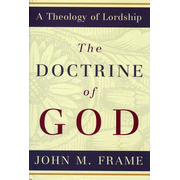
Adapted from Appendix 1 in the phenomenal book: The Doctrine of God by *John M. Frame, Phillipsburg, N.J.: P&R Publishing, 2002

I will present here a list of triads that have sometimes been thought to reflect or illumine the Trinity in some way. I will offer a few comments, but normally will present them without comment.

I have tried to weed out those that seem to me to be obviously arbitrary, contrived, or uninteresting, but readers should not assume my evaluation of any of these. I do not place any theological weight on these examples—nor do I urge readers to do so. All I would claim is that these triads are of some interest and that they may in some measure reflect, illumine, or provide for the evidence of the Trinity on any of these triads (except for the first one).

Some are taken from other sources, but I will not be able to provide adequate documentation in many cases. I have been building this list for many years, and I have lost track of many sources, for which I apologize to the authors (Nathan Wood, The Trinity in the Universe, Grand Rapids: Kregel, 1984 has an even longer list of vestigia). The chapter numbers refer to the chapters in The Doctrine of God.

Scripture and Christian Theology Triads

 (1) Texts anticipating, reflecting, or explicitly teaching the Trinity (chaps. 27-29).

(2) Divine act, covenant making, and period of application.

(3) History, law, and sanctions, as elements of the suzerainty treaty.

(4) God’s word as powerful, meaningful, and self-expressive (See John Frame, Perspectives on the Word of God, Eugene, OR.: Wipf and Stock, 1999, 9-16).

(5) Events, words, and persons as media of God’s word (See Perspectives, 17-35).

(6) Prophet, priest, king.

(7) Revelation, inspiration, and illumination (See Perspectives, 31-32).

(8) Revelation: general, special, and existential.

(9) Control, authority, and presence, as God’s lordship attributes (as discussed throughout The Doctrine of God).

(10) God’s oneness as unity, equality, and concord (Augustine).

(11) Goodness, knowledge, and power, as classifications of divine attributes (as in this volume). Omnipotence, omniscience, and omnipresence, as exemplifications of these.

(12) The theological account of God’s holiness as mysterium temendum et fascinans (mystery arousing fear and fascination – Rudolph Otto).

(13) The threefold repetition of “holy” in Isaiah 6:3.

(14) God as life (John 14:6), light (1 John 1:5), and love (1 John 4:8, 16).

(15) God’s righteousness as standards, actions, and moral excellence (chap. 21).

(16) God’s will as decree, precept, and wisdom (chap. 23).

(17) God’s spirituality as control, authority, and presence (chap. 25).

(18) God’s acts, attributes, and persons.

(19) Miracles as signs, wonders, and powers (chap. 13).

(20) Creation of heaven, earth, and sea (the three-layered universe).

(21) The sun, moon, and stars.

(22) Providence as government, revelation, and concurrence.

(23) God’s decrees, creation-providence, and redemption.

(24) Law, redemption accomplished, and redemption applied (chap. 13).

(25) Jesus as the Word, his acts in history, and his nature as God and man (chap. 13).

(26) Election, effectual calling, and individual soteriology (chap. 13).

(27) Biblical history: the old covenant period, from the incarnation to the Resurrection, Pentecost to the consummation.

(28) The three parts of the Old Testament in the Hebrew Bible: the Law, the Prophets, and the Writings.

(29) Many triads in Bible stories and laws: three stories in Noah’s ark, three sendings of birds after the Flood, three sons of Noah, three visitors to Abraham, three patriarchs, three divisions of the tabernacle, three feast periods, three offerings. The cleansing of a leper by blood, water, and oil on the ear, thumb, and toe (Leviticus 14:1-20). Three years in Jesus’ ministry, three temptations, and three crosses.

(30) Grain, wine, and oil as chief staples, elements of offerings, sacraments, and rites.

(31) Creation, redemption accomplished, and redemption applied.

(32) Man as image of God: in Meredith Kline’s view, the image consists of physical, judicial, and moral qualities (in my terms, situational, normative, and existential qualities (Meredith G. Kline, Images of the Spirit, Grand Rapids: Baker, 1980).

(33) Human responsibility as accountability, liability, and integrity (chap. 8).

(34) Justification, adoption, and regeneration-sanctification as the major benefits of redemption (chap. 13).

(35) The grounds of assurance of salvation: the promises of God, the fruit of salvation in one’s life, and the internal witness of the Spirit (normative, situational, and existential).

(36) Sanctification: definitive, progressive, and final (at the consummation).

Non-Christian Religion Triads

 (37) A.A. Hodge says that the doctrine of the Trinity captures and balances the truth of deism, pantheism, and mythology, by its teaching about the Father, Spirit, and Son respectively (See his interesting discussion in A.A. Hodge, Evangelical Theology, Edinburgh: Banner of Truth, 1976, 107-10).

(38) Triadic polytheisms: (a) Brahma, Vishnu, and Siva in Hinduism; (b) Osiris, Isis, and Horus in Egyptian religion; (c) Sin, Shamash, and Ishtar (Babylon); (d) Anu, Elish, and Ea (Sumer); (e) Uranos, Kronos, and Zeus (Greece); Odin, Thor, and Loki (Norse).

(39) Raimundo Panikkar: everyone has three aspects: divine, anthropic, and cosmic (normative, existential, and situational).

(40) In mysticism: cogitation, meditation, and contemplation.

(41) In mysticism: purification, illumination, and ecstasy.

Ontology

(42) Predicables, cases, and exemplifications, like wisdom, Socrates’ wisdom, and Socrates. I see these as normative, situational, and existential (See Nicholas Wolterstorff, On Universals, Chicago: University of Chicago Press, 1970, 133).

(43) Thales is said to have believed that every object has three dimensions: physical, living, and divine.

(44) Hegel’s being, nothing, and becoming, and other triads on patterns of thesis, antithesis, and synthesis.

(45) Many twofold distinctions can be construed as triads, for the two terms are related in an important way, producing a unity that brings them together similar to Hegel’s dialectic. Thus: subject/object, naïve/theoretical, free/determined, one/many, form/matter, and so forth (Thanks to my correspondent Daniel Davis – henceforth DCD for this observation).

(46) Instantiation, association, and classification (Vern Poythress, described in chap. 29; other threefold distinctions in his writings: particle, wave, field; expressive, informational, productive).

(47) Beginning, middle, end.

(48) Good, true, and beautiful, seen as convertible in scholastic philosophy. But being, unity, and particularity are also among the convertible “transcendentals.”

Epistemolgy

(49) Object, subject, and law (DKG).

(50) The situational, normative, and existential perspectives.

(51) In logic: major premise, minor premise, and conclusion.

(52) Dooyeweerd: the Archimedean point, by which we see the world rightly, must not be separated from our selfhood, divine law, or the totality of the meaning of the cosmos (I see these as existential, normative, and situational, respectively).

(53) Rationalist, empiricist, and subjectivist approaches of secular philosophy (DKG).

(54) Knowledge as justified, true belief (see chaps. 11 and 22).

Ethics

(55) Faith, hope, and love, as virtues that abide (1 Cor. 13:13)

(56) Three lusts (1 John 2:16).

(57) Teleological, deontological, and existential schools of secular ethics (DCD).

(58) Great commandments: love God, love yourself, and love your neighbor.

(59) The world, the flesh, and the devil.

(60) Goal (glory of God), motive (love, faith), and standard (Word of God).

(61) Good works seek the goal of God’s glory, on the basis of the cross of Christ, in the power of the Spirit.

Language

(62) Contrast, variation, and distribution (Poythress: see chap. 29).

(63) Expressive, informational, and productive (Poythress: see chap. 29).

(64) Locution, illocution, and perlocution: locution in a piece of language; illocution is what is done in the language (command, question, statement, etc.); perlocution is what is done through the languages (educate, mislead, annoy, amuse, etc.- See J.L. Austin, How to Do Things with Words, Cambridge, Mass.: Harvard University Press, 1975).

(65) Three grammatical persons: I, you, and he.

(66) Theories of meaning, locating meaning in the author’s intention, the hearer’s understanding, and the text itself.

Education

(67) Grammar, rhetoric, and dialectic—the classic trivium.

Mathematics

(68) Theories of mathematics: formalism (determined by inner consistency), constructivism (based on the structure of the human mind), and Platonism (mathematical objects and relations belong to the ontology of the world).

The Physical World

(69) Field, wave, and particle (see chap. 29).

(70) Red, green, and blue (the primary painters’ colors), from which other colors can be made. I have said (rather tongue-in-cheek) of the first triad that blue is the sky (normative), green is the earth (situational), and red is the interior of the body (existential).

(71) Yolk, white, and shell.

(72) Liquid, solid, and gas.

(73) Height, width, and length (Each constitutes all of space, yet they are distinct).

(74) Outside, inside, and above. (Also used as three viewpoints: “from outside,” etc.)

(75) Number, space, and time (yielding arithmetic, geometry, and calculus).

(76) Past. Present, and future.

(77) Matter, energy, and meaning. David Bohm, a disciple of Einstein, believed that each of these replicates the other two. Each is a basic manifestation of reality.

(78) The nine dimensions of some recent theories: a trinity of trinities.

(79) Root, trunk, and branches.

(80) The sun brings light, heat, and life.

The Human Body

(81) Circulation, respiration, and nervous system.

The Human Mind, Personality

(82) Mind, knowledge, and love.

(83) Memory, understanding, and will (Numbers 82-85 are important to Augustine’s discussion of the Trinity).

(84) Being, knowing, and willing.

(85) In self-knowledge: the self as subject, object, and knowledge.

(86) In self-love: the self as lover, beloved, and love.

(87) Thought, word, and deed.

(88) Intention, action, and response (especially within the same person).

(89) We form our selfhood in our relations to others.

(90) Unity and plurality in the human mind and in the human race (chap. 29).

(91) Some people are normativists, always seeking justice. Others are situationalists, wanting to be committed to a cause or activity beyond themselves. And some are existentialists, focused on their own feelings. In families, the oldest child is often normativist, and the other children sort out the other two roles. These are aspects of all or us, but we differ in focus.

Human Society, Culture

(92) Husband, wife, and child.

(93) Physician, pharmacist, and patient (Normative, situational, and existential, respectively, if you take this triad from the patient’s point of view – Taken from an ad for Women’s International Pharmacy, placing each term at one point on a triangle. Anything is fair game for theology!).

(94) Think, work, and serve (the motto of Tennessee State University – DCD).

(95)  Godel, Escher, and Bach (relatively normative, situational, and existential – See Douglas R. Hofstadter, Godel, Escher, Bach, New York: Random House Basic Books, 1980).

(96) Piety, doctrine, and social action, seen as varying emphases among (especially Reformed) Christians. In truth, each requires the others.

Art, Music, And Literature

(97) I, IV, and V, the three primary chords, defined by triads of tones.

(98) Root position and two inversions of triadic chords.

(99) Tonic, tierce, and quiet.

(100) Melody, harmony, and rhythm (the music as composed).

(101) Timbre, volume, and harmony (the music as presented).

(102) The threefold structure of the twelve-bar blues.

(103) The threefold structure of many classical forms: theme, development, and recapitulation; fast, slow, and fast movements in sonatas and concerti; the da capo aria.

(104) Themes with variations, in which the variations correspond one-to-one with the theme, but are widely different from each other.

(105) Composer’s conception, the score, and the performance (any of these can be called “the piece” – Thanks to Steve Hays for this suggestion).

(106) beauty as integrity, proportion, and splendor.

(107) Aesthetic theories: formal (locating beauty in qualities inherent in objects), emotional (locating it in the response of the perceiver), and relational (finding beauty in the capacity of objects to arouse responses). I see these as normative, existential, and situational, repectively (DCD).

(108) “Unity within monotony” as aesthetic criterion (DCD).

(109) Jesus’ parable of the talents (Matt. 25:14-30) describes three stewards: one increased the Lord’s investment, then a second did, but the third did not. As in many jokes, two people would seem to be too few, and four too many (I recall watching on TV a discussion among several comedians about “three guys” jokes [as, “An atheist, a priest, and a rabbi were going past a bar…”]. They agreed that there was something unique about the number three that was crucial to that form of humor).

The first sets up a pattern, the second establishes it as a continuing pattern, and the third consummates the pattern, driving home its significance. This is not essentially different from the work of the persons of the Trinity: initiation, accomplishment, and application (We should, of course, not see a rigid or unvarying pattern here. There are also important twofold distinctions in Scripture [e.g., Old and New Covenants, Creator and creature, double restitution for theft in the Mosaic law, law and gospel], as well as fourfold, sevenfold, tenfold, etc. But the threefold distinctions are strangely pervasive, and they hold special interest for our present discussion).

(110) The chiasm is a frequent literary device in Scripture, especially in the Pslams, but also in prophecy, prose narratives, etc. It is essentially an A-B-A form in which one idea, theme, image, or motif gives rise to another, then returns to the first with some level of enrichment. The chiasm can become more complicated, when the text includes chiasms within chiasms: so, A-B-A, B-C-B, C-D-C creates the total structure as A-B-C-DC-B-A. Often the central item (D in our example) receives the emphasis. But the overall structure can be understood as triadic: theme, additional theme, return.

(111) The chiasm exists implicitly in all literature. A story begins in a situation and encounters a problem that brings the situation to a different state: thesis, antithesis, and synthesis-consummation (as in the “quest” genre: a journey from comfort to ordeal to enlightement; stasis, katabasis, anabasis). In Scripture: Jesus’ preincarnate glory, his state of humiliation, and his resurrection and ascension to an even greater acknowledgement of his lordship; or creation, fall, redemption.

History

(112) Confrontation, consolidation, and continuation: stages of major cultural movements (reformation in the church and political change).

*John M. Frame is an American philosopher and a Calvinist theologian especially noted for his work in epistemology and presuppositional apologetics, systematic theology, and ethics. He is one of the foremost interpreters and critics of the thought of Cornelius Van Til (who he studied under while working on his B.D. at Westminster Theological Seminary). An outstanding theologian, John Frame distinguished himself during 31 years on the faculty of Westminster Theological Seminary, and was a founding faculty member of WTS California. He is best known for his prolific writings including: Apologetics to the Glory of God; No Other God; The Doctrine of the Knowledge of God; Salvation is of the Lord; The Doctrine of the Christian Life; The Doctrine of the Word of God, and several others. He is a regular contributor to many books and reference volumes, as well as scholarly articles and magazines.
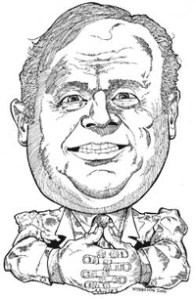
Frame was born (1939) and raised in Pittsburgh, PA. He came to know Christ at around 13 or 14 years of age, through the ministry of Beverly Heights UP Church (in particular the youth and music ministries) and some Christian friends.

For his education, Frame received degrees from Princeton University (A.B.), Westminster Theological Seminary (B.D.), Yale University (A.M. and M.Phil., though he was working on a doctorate and admits his own failure to complete his dissertation), and Belhaven College (D.D.). He has served on the faculty of Westminster Theological Seminary and was a founding faculty member of their California campus. He currently (as of 2005) teaches Apologetics and The History of Philosophy and Christian thought at Reformed Theological Seminary in Orlando, FL. He is appreciated, by many of his students, for his charitable spirit and fairness to opposing arguments (although, he fairly demolishes them nonetheless).

Frame is also a classically trained musician (he plays the piano and organ) and a critic of film, music, and other media. He has been involved in the music/worship ministry of the church since he was a teenager, upon coming to faith in Christ. He is deeply committed to the work of ministry  and training pastors.

10 Essential Truths About the Resurrection of Jesus By Ken Samples

(Adapted from Chapter 10, Kindle Location 1512-1522 of the very helpful book by *Kenneth R. Samples, Without a Doubt: Answering the 20 Toughest Faith Questions, Grand Rapids, Baker, 2004,)

 Ten Essential Truths About the Resurrection of Jesus Christ

The following ten points convey essential theological information about the resurrection of Christ and reveal its Christological implications.

(1) The resurrection is the ultimate confirmation of Jesus’ identity as the divine Messiah, Savior, and Lord (Rom. 1:3-4; 14:9). It proves that Jesus is who he said he is. By raising Jesus from the dead, God the Father vindicated Jesus Christ’s redemptive mission and message (Matt. 16:21; 28:6). The resurrection confirms the truth of everything Jesus said.

(2) Because Jesus Christ rose from the dead as a man—with a physical body as a part of his human nature—he permanently identified with humanity and is the God-man forever. The resurrection was not a flight from the human condition but rather its glorious restoration and fulfillment.

(3) When God raised Jesus Christ from the dead (Acts 2:24; 3:15) all three members of the Trinity were involved: Father (Rom. 6:4; 1 Cor. 6:14; Gal. 1:1; Eph. 1:20), Son (John 10:17-18; 11:25; Heb. 7:16), and Holy Spirit (Rom. 8:11). The resurrection confirms God’s full involvement—as Father, Son, and Spirit—in salvation.

(4) The resurrection designates Jesus Christ as the forever-living head of the Christian church (Eph. 1:19-22). The historic Christian church therefore worships and takes direction from a living Savior.

(5) Christ’s resurrection power is active in, and ensures, the believer’s eternal salvation (Rom. 4:25; 10:9-10; Eph. 2:5-6; Phil. 3:10). The gospel message of salvation in Christ rests on the truth of the resurrection.

(6) Christ’s resurrection power is available to empower all believers as they seek to live in obedience and gratitude to God (Rom. 6:12-13). The debilitating power of sin over mankind has been broken by the resurrection.

(7) Christ’s resurrection is the pledge and paradigm for the future bodily resurrection of all believers (1 Cor. 6:14; 15:20; 2 Cor. 9:14; Phil. 3:21; Col. 1:18; 1 Thess. 4:14). Just as he rose, believers will also rise.

(8) Christ’s resurrection is the answer to mankind’s greatest existential predicament, being stalked by death. Here in death’s shadow, the resurrection provides hope, purpose, meaning, and confidence in the presence of death (John 11:25-26; Rom. 14:7-8).

(9) The resurrection of Jesus Christ is the major theme of the apostles’ original preaching and teaching (Acts 1:22; 2:31; 4:2, 33; 17:18), and the chief doctrinal tenet of the New Testament as a whole. “He is risen” is the confessional cry of the early church.

(10) The truth or falsity of the Christian gospel rests squarely upon the bodily resurrection of Jesus Christ (1 Cor. 15:14-18). Christianity’s truth-claims can be tested through examining the facts of Jesus’ historical resurrection from the dead.

*About Ken Samples In his own words: “Growing up, I wrestled with unsettling feelings of meaninglessness and boredom, driving me to seek answers to life’s big questions. An encounter with Christian philosophy in Mere Christianity by C. S. Lewis led me to examine the New Testament and finally believe that Jesus Christ is the divine Son of God, the Lord and Savior of the world. From then on, I pursued an intellectually satisfying faith.

I began studying Christian philosophy and theology voraciously. I earned an undergraduate degree in philosophy and social science from Concordia University and an MA in theological studies from Talbot School of Theology. For seven years, I worked as senior research consultant and correspondence editor at the Christian Research Institute (CRI) and regularly cohosted call-in radio program, The Bible Answer Man, with Dr. Walter Martin.

Today, as senior research scholar at science-faith think tank Reasons To Believe (RTB), I love using what I’ve learned to help others find the answers to life’s questions. My goal is to encourage believers to develop a logically defensible faith and to challenge skeptics to engage Christianity at a philosophical level.

I’ve written two books for RTB; a third is currently in the works. Without a Doubt provides clear, solid answers to tough questions encountered every day. Topics range from the deity of Christ to religious pluralism, from evolution to moral relativism.A World of Difference places the Christian worldview—as summarized in the Apostles’ Creed—under a microscope and then compares and contrasts it with four other major worldviews: naturalism, Islam, postmodernism, and the pantheistic monism of Eastern religions.

Both my books are available in the RTB web store and on Amazon.com. I’ve also coauthored Lights in the Sky and Little Green Men with RTB founder Dr. Hugh Ross and national security expert Dr. Mark Clark. My weekly podcast, Straight Thinking, is dedicated to encouraging Christians to utilize sound reasoning in their apologetics. Subscription to Straight Thinking is available for free through RTB’s web site, as well as iTunes. You can also hear me and my fellow RTB scholars offer unscripted answers to listener questions on the I Didn’t Know That! podcast.”

“Prophecy and the Bible” By James Montgomery Boice

What The Bible Has To Say About The Future:

Part 1 in a Series of 9 By *James M. Boice

Years ago the noted English agnostic Thomas Huxley was in Dublin, Ireland, for some speaking engagements. On one occasion he left his hotel in a hurry to catch a train, taking one of the city’s famous horse drawn taxis. Huxley thought that the doorman at the hotel had told the driver where he was going, so he simply settled back in the cab and told the man at the reins to drive fast. The driver set off at a vigorous pace. In a few minutes Huxley realized that the cab was headed away from the station. “Do you know where you are going?” he shouted to the driver, “No, your honor,” the driver answered, “but I’m driving fast.”

This story seems to sum up more than just the spirit of Huxley and his followers toward the end of the nineteenth century. It is also an illustration of the outlook of many in our tumultuous age. There is much motion, much speed. Yet few in our day seem to know where they are or where they are headed. For most of our contemporaries, life is as Franklin Delano Roosevelt described it in his inaugural address: “We don’t know where we are going but we are on our way.”

This state of affairs is completely abnormal, of course. Or, to put another way, the confusion is not God’s fault. In fact, God’s revelation in the Bible exists to accomplish just the opposite. The Bible is God’s revelation to men of where we have been, where we are, and where we are headed. It is a revelation of our past, present, and future; and these are revealed, not only in reference to the individual, but also as the concern nations and the movements of history. What will happen to us in the years to come? Where is history headed? How will it end? Is God in control or has He forgotten us? Do the events of our life have significance?

If you are interested in these questions and have not been satisfied with the predictions of politicians or pollsters, then this series of studies of what the Bible has to say about the future is for you.

 Why Study Prophecy?

 I must admit that for many years I have been reluctant to write on this subject – for two reasons. First, I believe that in the last generation there has been an overemphasis on prophecy in the writings of certain evangelical leaders. Prophecy is a part of the Bible. It should be studied. Yet sometimes prophecy has been discussed to the exclusion of many other vital and urgent doctrines. That is inexcusable when some still do not know about sin or about Christ’s atonement.

The second reason that I have hesitated to write on this subject has been an inner suspicion that much teaching on prophecy has been directed toward a wrong level of involvement both for the teacher and for the listener. Many are interested in prophecy solely because of a desire to know something that no one else knows, to have the final word on things to come in the future. In some circles this has led to a certain smugness which has destroyed the very compassion and outreach to humanity that a true understanding of the subject is intended to produce.

Since in the face of such misgivings, I have decided to write a series on biblical prophecy, it would be well to give you my reasons. There are four of them.

Four Reasons To Study Biblical Prophecy

First, for anyone who has determined, as I have, to explore the whole counsel of God by means of a thorough exposition of the Bible, it is impossible to avoid prophecy, for the Bible is full of it. In fact, from one point of view, the Bible is almost entirely prophecy. It is the record of God’s promises of a Redeemer and of the salvation of the human race, together with a record of the fulfillment of those promises insofar as they occurred. One-fourth of the Bible is specifically prophetic. Whole books, both in the Old Testament and the New Testament, are devoted to prophecy. It is a recognition of this fact that has led most good Bible students to treat the subject at least to some degree. A list of them would include such names as Sir Isaac Newton, Blaise Pascal, Jonathan Edwards, H.A. Ironside, I.M. Haldeman, C.I Scofield, Arno C. Gaebelein, G.H. Pember, and, in our day, J. Dwight Pentecost, Hal Lindsey, Billy Graham, and many others.

It is relevant here to point out that 2 Timothy 3:16-17 does not let us regard prophecy, any more than any other part of Scripture, as unprofitable. For we are told, “all Scripture is given by inspiration of God and profitable for doctrine, for reproof, for correction, for instruction in righteousness, that the man of God may be perfect, thoroughly furnished unto all good works.”

My second reason for treating prophetic themes at this time is the current secular interest in the future, particularly as shown by the involvement of many with astrology and spiritualism. It is true that humanity has had an interest in the future throughout history. The Babylonians, Egyptians, Greeks, and Romans all had fortune-telling priests and astrologers. Although condemned by Christianity, astrology was popular in the western world until after the Renaissance, when increased scientific study discredited it. However, the study of astrology has revived in recent years. Today an interest in the future is everywhere apparent. Astrological signs abound. Newstands are filled with books and pamphlets on what is to come. Astrology was brought to the popular level by the rock musical Hair, with its highly successful song “Aquarius.” Millions consult their horoscopes daily. In fact, according to Hal Lindsey, a new and popular writer on prophecy, columns on astrology now run in 1220 of 1750 daily newspapers in the United States. Twenty years ago only 100 papers ran astrology columns.

There is also an interest in the more popular prophets of the day such as Jeanne Dixon, Carroll Righter, and Syndey Omarr. In Europe there are literally thousands of mediums. According to one estimate, there is a fortune-teller for every 120 Parisians. I have been told that there are over 200 mediums in the city of Zurich, Switzerland, alone. Certainly, this kind of interest needs to be countered by the legitimate biblical approach to the events associated with the culmination of our age.

The third reason is the current renewed interest in biblical eschatology by established theologians. The best known of these is the German theologian named Juergen Moltmann, a professor of systematic theology at the University of Tuebingen. His first widely successful book, The Theology of Hope, is an attempt to look at all Christian doctrine from the perspective of God’s future promises, and it has set off a wide range of related studies by others. Thus, although a generation ago many scholars laughed at any interest on the part of conservatives in biblical prophecy, today many would agree with Henry P. Van Dusen who has argued that “the problem of eschatology my shortly become, if it is not already, the framework of American theological discussion,” and perhaps indeed of theological discussion generally (Henry P. Van Dusen, “A Preview of Evanston,” Union Seminary Quarterly Review, March, 1954, p.8).

God’s Challenge

My fourth and final reason for writing this series of studies is the most important one, however. It completely overshadows the others. The reason is this: God Himself appeals to the fulfillment of prophecy as evidence that He alone is God and that He is faithful to all who follow Him. In fact, He challenges those who do not yet believe to investigate personally the fulfillment of biblical prophecy.

I know that some will say, “But I have never heard of that. Where in the Bible does God make such an appeal?” God does so in many places, but the greatest appeal is in a section of nine chapters from the heart of the book of Isaiah, chapters 40-48. The theme of these chapters is the greatness and majesty of the true God, and the appeal is to prophecy.

In chapter 40 God begins by contrasting His own performance on behalf of His people with the performance of idols. The point is that the idols can do nothing.

To who then will you liken God?

Or what likeness will you compare with Him?

As for the idol, a craftsman casts it,

A goldsmith plates it with gold,

And a silversmith fashions chains of silver.

He who is too impoverished for such an offering

Selects a tree that does not rot:

He seeks out for himself a skillfull craftsman

To prepare an idol that will not totter. (Isaiah 40:18-20, NASB)


In the next chapter an appeal is made to the idols:

“Present your case,” the LORD says.

“Bring forward your strong arguments,”

The King of Jacob says.

Let them bring forth and declare to us what is going to take place;

As for the former events, declare what they were,

That we may consider them, and know their outcome;

Or announce to us what is coming.

Declare the things that are going to come afterward,

That we may know that you are gods;

Indeed, do good or evil,

that we may anxiously look about us and fear together.

Behold, you are of no account,

And your work amounts to nothing;

He who chooses you is an abomination. (Isaiah 41:21-24, NASB)

The point of these verses is that the idols are ineffective. No one but God Himself can tell the future, since no one but God can control it. The argument continues in this vein for several chapters until it is summed up in chapter 48, “Who can foretell the future?” God asks.

I declared the former things long ago

And they went forth from My mouth, and I proclaimed them.

Suddenly I acted, and they came to pass. (Isaiah 48:3, NASB)

This is the test of the true God and of the one who claims to speak in His name. No one in biblical times – or today, for that matter – doubts that there are people in every age who will pretend to possess insight into future events. The idols, as well as Jehovah, had their prophets. There have always been astrologers and mystics. But the question is not “Are there prophets?” The question is “Whose prophecies come true?” By this standard, it is the claim of God and of the Bible that all that is prophesied in the Bible has either come to pass or is coming to pass and that men should believe on the God of the Bible because of it.

God’s Spokesman

In this series we will be looking primarily at the biblical prophecies of things that have not yet come to pass. Yet it would be inadequate to look at prophecies that relate to the future without at least considering some of the many prophecies that are also part of the biblical revelation. For one thing, we need to look at the past to meet God’s challenge to Isaiah. For another, only as we do this will we be able to approach the future prophecies, not as guesses by reasonably intelligent men, but rather as further divine revelations, through those who have already been tested, of what awaits this race and the individuals in it.

An excellent place to begin is with a little known prophet, Micaiah. His story is told in 1 Kings 22. Micaiah was a prophet of God in Israel during the days of the divided monarchy when Ahab was king of Israel and Jehoshaphat was king of Judah. At one point in their reigns Jehoshaphat went north to visit Ahab, and the two kings got into a discussion about an area of ancient Palestine called Ramoth-gilead, which bordered on Israel. Ahab had wanted the land for some time, and he saw an opportunity in Jehoshaphat’s visit to possess it. He suggested, “We could take Ramoth-gilead if we did it together, you and I. Shall we do it?”

Jehoshaphat answered, “I am as thou art, my people as thy people, my horses as thy horses.” Ahab was not a worshiper of Jehovah and, in fact, was quite wicked, while Jehoshaphat was more or less a believer in God. So, before they went to battle, Jehoshaphat said, “Let’s consult the Lord before we break camp.” Ahab responded by producing four hundred of his court prophets and asking them, “Shall I go against Ramoth-gilead to battle, or shall I forbear?” The prophets gave the answer that the king wanted to hear.

“Go up; for the Lord shall deliver it into the hand of the king.” This word from the prophets satisfied king Ahab (actually, he would gone even without consulting the prophets) but Jehoshaphat was not satisfied. These men were paid mouthpieces, and Jehoshaphat knew it. So he said to Ahab, “But isn’t there a real prophet, a prophet of the Lord, that we may ask the outcome from him?” Ahab replied that there was one, a man named Micaiah, but that he hated Micaiah because Micaiah never prophesied anything good about him, only evil. Nevertheless, at Jehoshaphat’s insistence, Micaiah was called.

Now if ever there was a situation in which the deck was stacked against one poor prophet, this was it. First, Micaiah was warned as to what he should say. Second, he was brought into the capital city and into the marketplace where all the troops, the false prophets, and the two kings were assembled. Third, he was confronted by the king who hated and feared him. The question was asked: Micaiah, shall we go against Ramoth-gilead to battle; or shall we forbear?”

At first Micaiah ridiculed the kings. He said, “Go and prosper; for the LORD shall deliver it into the hand of the king.” What Micaiah said was a direct quotation of the false prophets, and everyone knew it. Ahab became angry. He literally roared at Micaiah: “I adjure thee that thou tel me nothing but that which is true in the name of the LORD.” So Micaiah replied, “I saw all Israel scattered upon the hills, as sheep that have not a shepherd. And the LORD said, These have no master; let them return every man to his house in peace.”

Ahab recognized that this was a prophecy of his death. He turned to Jehoshaphat and said, “See? What did I tell you? Didn’t I say that he would prophesy no good about me, only evil?” Ahab then disguised himself. But in the fighting one of the Syrian soldiers shot an arrow at random which entered a joint in Ahab’s armor and killed him. So the king died and the people of Israel were scattered, as Micaiah had prophesied.

Isaiah

A much better known prophet is Isaiah. Isaiah had a long life, prophesying over a period of sixty years, during the lifetimes of four successive kings of Judah. Many of his prophecies have been fulfilled, some during and others after his lifetime.

In the year 701 B.C., in the fourteenth year of the reign of King Hezekiah (the third king under whom Isaiah prophesied), the Assyrian king Sennacherib besieged the city of Jerusalem, threatening its total destruction. Sennacherib later wrote that he shut up Hezekiah “like a caged bird…in…his royal city.”

In the midst of the siege, which dragged on and on because of the city’s strong fortifications, Sennacherib sent one of his deputies named Rabshaketh to Jerusalem with a speech intended to weaken the morale of the defenders and perhaps lead to a revolt within the city and subsequent surrender. Rabshaketh spoke in Hebrew, rehearsing all that had happened to other cities and then threatening the same fate for the inhabitants of Jerusalem. The speech had a deadly effect, so much so, in fact, that the city officials asked Rabshaketh to speak Aramaic, the language of international diplomacy, lest the people be further discouraged by hearing him. At this confession of weakness, the deputy merely kept on with his destructive propaganda.

Word came to Hezekiah of what was happening, and he was dismayed. He sent to Isaiah and asked him to pray for the people and the city. Instead, Isaiah immediately sent back a prediction of what would happen. He said, “Thus saith the LORD, Be not afraid of the words which thou hast heard, with which the servants of the king of Assyria have blasphemed me. Behold, I will send a blight upon him, and he shall hear a rumor, and shall return to his own land; and I will cause him to fall by the sword in his own land” (2 Kings 19:6, 7; Is. 37:6,7).

That is precisely what happened. Soon a plague swept through Sennacherib’s army. Then the king apparently heard rumors of rebellion and insurrection at home, and the army left Palestine. Sennacherib was assassinated by two of his sons when he returned to Nineveh (2 Kings 19:35-37).

Later Isaiah predicted the fall of Jerusalem to the armies of Babylon, the captivity of the people, the overthrow of Babylon by the Medes and the Persians, and the eventual return of the Jewish exiles to their homeland. All these events took place roughly one hundred, one hundred fifty, and two hundred years after Isaiah had foretold them.

Prophecies of the Messiah

Spectacular as these specific prophecies relating to Jewish history are, however, the most important of Isaiah’s prophecies are not those relating to the nation at all. They are the prophecies of the Messiah. Here, however, the testimony of Isaiah is supplemented by the predictions of many other prophets who lived both before and after his time.

These men told a great deal about the Messiah and they told it in exquisite detail. The Old Testament tells us that the Messiah was to be a descendent of Abraham through King David (2 Sam. 7:12, 13; 1 Chron. 17:11-14; Jer. 23:5). Micah, one of the so-called Minor Prophets, wrote that the Messiah would be born in Bethlehem (Mic. 5:2). This prophecy was quoted by the Jewish leaders in Jerusalm as an answer to the Wise Men, who came to the city inquiring where the King of the Jews had been born. Isaiah revealed that the Messiah would be the child of a virgin (Isa. 7:14). He also foretold the King’s rejection by Israel and described His suffering (Isa. 53). Zechariah spoke of the price of the Messiah’s betrayal: “So they weighed for my price thirty pieces of silver” (Zech 11:12). Parts of the Psalms describe the crucifixion and intense suffering of the Chosen One; Psalm 22 contains prophecies of the mocking of the Messiah, the piercing of His hands and feet, and the division of His garments by those who carried out his execution.

In Daniel there is even a prophecy of the time at which this would take place. The Messiah was to come shortly before the destruction of the temple built by Herod; that is, before A.D. 70 (Dan. 9:24-26). Moreover, Daniel foretold that the time between the publishing of the decree permitting the rebuilding of the temple after the destruction of the first temple by the Babylonians and the “cutting off” of the Messiah would not exceed 483 years (69 weeks of years or 69 times 7). Since the date of the decree to permit the building of the temple has been fixed from several sources at 445 B.C., the latest possible date for the death of the Messiah is fixed at A.D. 38, meaning that if the prophecies of the Bible are correct, all the events foretold about the Messiah had to be fulfilled before that time (note: The prophecy may be even more accurate than these figures show. For if, as Charles C. Ryrie argues, the “years” of Daniel are based upon 360 rather than 365 days, the prophecy spans 173,880 days and the cutoff date for the Messiah falls on 6 April A.D. 32, the most probable date for Christ’s crucifixion. Justification for a 360-day year lies in the fact that the Scriptures seem to equate 1260 days with 42 months or 31/2 years in prophetic passages, See Ryrie, “The Bible and Tommorow’s News”, Wheaton, ILL.: Scripture Press, n.d., pp.52-56).

Were these prophecies fulfilled? Of course, they were fulfilled. They were fulfilled in the genealogy, birth, life, death, and resurrection of Jesus of Nazareth, who is thereby identified as the Messiah, the Son of God.

A Future World

In Part Two of our series we will begin to look at the biblical prophecies of things to come. But before we do that, we need to take note of the following three conclusions. First, if the prophecies we have already looked at have been fulfilled, as the Bible and history reveal them to have been fulfilled, then the  God of the Bible is the true God and we should worship Him. That is the conclusion that must be reached if we take God’s own challenge through the prophet Isaiah seriously.

Second, if these prophecies have been fulfilled, as we know them to have been fulfilled, then the Bible is a supernaturally trustworthy and totally authoritative book. This will guide our approach as we turn to future things. The Bible is a record of prophecy. If the prophecies have been fulfilled, then what Peter said about this Book is true. “No prophecy of the Scripture is of any private interpretation. For the prophecy came not at any time by the will of man, but holy men of God spoke as they were moved by the Holy Spirit” (2 Pet. 1:20, 21). God Himself stands behind this Book. It follows that we can trust the Bible for what it has to say about our own condition and about God’s plan of salvation through the death and resurrection of Jesus Christ.

Finally, if the biblical prophecies about the past events have come true and if we may expect the biblical prophecies about future events to come true, then the future is bright for those who believe in the Lord Jesus Christ and are His followers. One day the rays of the sun will rise on that last and future world that has been spoken of so much by our contemporaries. But it will not be a world devastated by an atomic holocaust, as some are predicting. It will not be a world decimated by the inevitable encroachment of worldwide famine, which others are warning about. It will not even be a dehumanized world composed of machines and the men who serve them. These things may come. The Bible even predicts that some of them will come. But this will not be the end. The Bible teaches that there is a future beyond them when the Lord Jesus Christ, the Messiah who came once to suffer and will return again, will reign in righteousness and will establish a social order in which love and justice will prevail.

[This article was adapted from Chapter One in one of the first of James Boice’s plethora of books, and is entitled: The Last and Future World, Grand Rapids, MI.: Zondervan, 1974. Though this book was written almost 40 years ago – it’s contents are just as relevant today as when it was first written, since most of the prophecies taught in the Scriptures and addressed by Dr. Boice have yet to be fulfilled.]

*Dr. James Montgomery Boice (July 7, 1938 – June 15, 2000) was a Reformed theologian, Bible teacher, and pastor of Tenth Presbyterian Church in Philadelphia from 1968 until his death. He is heard on The Bible Study Hour radio broadcast and was a well known author and speaker in evangelical and Reformed circles. He also served as Chairman of the International Council on Biblical Inerrancy for over ten years and was a founding member of the Alliance of Confessing Evangelicals. He was the author of numerous expositions of the Bible (e.g. Genesis and Romans), Theological writings (e.g. Whatever Happened to Grace? & Foundations of the Christian Faith), and on the practical Christian life (e.g. Living By The Book & The Cost of Discipleship).

26 Excellent Self Evaluation Questions By Gordon MacDonald

Accountability Questions For You and Your Mentoree/Disciple

 (Adapted from *Gordon MacDonald, Restoring Joy to Your Inner World, Inspiration Press, p. 573)

“Chances are that you have a physical once a year or every two years. I recommend that you also have a “spiritual” once a year as well. Your soul care is just as important as your body care! This is an excellent list of questions to help care for your soul.” – Dr. David P. Craig

(1) Where are you right now in your relationship with God?

(2) What have you read in the Bible in the last week?

(3) What has God been saying to you in this?

(4) Where do you find yourself resisting God these days?

(5) What specific things do you find yourself praying for regarding others?

(6) What specific things do you find yourself praying for yourself?

(7) What specific tasks are facing you that you consider incomplete?

(8) What habits are intimidating you at present?

(9) What have you read in the secular press this week?

(10) What general reading have you been doing?

(11) What have you done to play this week?

(12) How are you doing with your spouse/kids?

(13) If I were to ask your spouse about your state of mind, spirit, etc., what would he/she say?

(14) Are you sensing any spiritual attacks from the enemy this week? Today?

(15) If Satan were to try to invalidate you as a servant of God, where or how would he attack you?

(16) What is the state of your sexual life (temptation, fantasy, etc)?

(17) Where are you at financially (Do you have control, debts, etc)?

(18) Are there any unresolved conflicts (ailing relatives, stress, disputes) in your circle of relationships right now (family, friends those among whom we’re supposed to feel safe)?

(19) When was the last time you spent time with a friend of the same gender?

(20) What kind of time have you spent with a non-Christian this past week?

(21) What challenges do you expect to face in the coming month?

(22) What are your fears at the present time (letting family down, bodies letting us down, etc)?

(23) Are you sleeping well?

(24) What three things are you most thankful for?

(25) Do you like yourself at this point of your pilgrimage?

(26) What are you greatest confusions about your relationship with God?


*Gordon MacDonald has been a pastor and author for over forty years. For many years he pastored Grace Chapel in Lexington, Massachusetts and continues to serve as Pastor Emeritus. He has also provided leadership to influential ministries such as Intervarsity Christian Fellowship, which he served as President for three years, and World Relief, which he currently serves as Chairman. Gordon’s best-selling books include Ordering Your Private World, Mid-Course Correction and, most recently, A Resilient Life. He also writes and serves as Editor-at-Large for Christianity Today’s Leadership Journal. When not writing, leading or speaking at conferences, Gordon and his wife Gail can be found hiking the trails of New England.

Is There Any Evidence for Life After Death? By Dr. R.C. Sproul

Objection #10 Answered: “When You’re Dead You’re Dead! There Is No More!”

 (This is #10 in a series of book excerpts from Objections to Christianity derived from Chapter 10 in *Dr. R.C. Sproul’s fantastic book Reason To Believe, [originally entitled Objections Answered] Grand Rapids: Zondervan, 1982)

Death is obscene. It runs counter to the vibrant flow of life. When we encounter it we shrink from it in horror. We use our finest cosmetics to disguise its impact. When death strikes it always leaves the question, “Is this the end?” Is there absolutely nothing more to hope for?

Perhaps the most ancient question of all is the question, “Is there life after death?” We think of Job in the throes of his misery crying out, “When a man dies, will he live again?” (See Job 14:14). We think of Hamlet musing over the question of suicide in his classic soliloquy, “To be, or not to be?” He contemplates the mystery of the grave and weighs the burdens of the alternatives of life and death. He retreats from suicide asking if man would “rather bear those ills we have than fly to others we know not of?” (Hamlet, act 3, sc.1). From Job to Hamlet to the present day the question persists, “Is there life after death?”

A negative spirit of skepticism has made itself felt in the cultural atmosphere of our age. A sense of despair and hopelessness characterizes much of our culture. We hear such statements as “When you’re dead, you’re dead”; “This is the Pepsi generation, the now generation.” The television commercial exhorts to live our lives with gusto because we only go around once. Those who persist in their hope of a future life are regarded as weaklings who are clinging to naïve superstitions that are outmoded. Christians have received their share of scorn and ridicule for hoping in fantasies of “pie in the sky.” But the issue is not simply a religious question. The issue is far more significant than that. It is the issue of the meaning of all of life. If death is ultimate then life becomes a cruel and mocking joke.

From ancient times the keenest minds of mankind have sought intellectual evidence for the survival of the soul or spirit beyond the grave. Charlatans and magicians have plied their arts couching their tricks in a garb of pseudo-intellectualism. Scholars have given the question serious attention because it is the most serious of all questions. But for the most careful and sober scholar the issue of death has strong emotional overtones. No one can face the question dispassionately for it touches each one of us in a final way.

 Does Nature Teach that There Is Life After Death?

Plato faced the question in a deeply personal way when he visited his beloved mentor, Socrates, in his prison cell. As Socrates prepared himself for execution by enforced drinking of hemlock he discussed the question of immorality with his students. The Socratic argument for life after death is recorded by Plato in his famous Phaedo Dialogue.

Plato explored the question primarily from the vantage point of analogies found in nature. He detected a kind of cycle that was common to nature. He noted that spring follows winter which in turn moves inexorably toward another winter. Winter does not terminate in itself but yields again to spring. The cycle goes on as day follows night and heat follows cold. The pattern continues. He examined the drama of the germination of the seed into flowering life. For the seed to bring forth its life it must first go through a process of rotting. The shell of the seed must decay and die before the life that is locked within it can emerge. He saw here an analogy to life and death. Just as a seed must die and disintegrate before the flower emerges, so the human body must die before the life of the soul can come forth.

Plato looked beyond the realm of flowers to the animal kingdom and was stimulated by the drama of metamorphosis. The beauty of the butterfly begins in the grotesque form of the caterpillar. The caterpillar appears as a worm, bound to the earth, virtually immobile and unattractive. The worm forms for itself an insulated cocoon, withdrawing from the outside world. The cocoon remains dormant and inert for a season. In time the drama mounts as a new creature begins to scratch and stretch its way out of the cocoon. Wings and a body begin to appear and suddenly the woven prison yields a magnificent soaring creature of multicolored beauty. From the “death” of the caterpillar comes the new life of the butterfly!

These analogies from Plato do not present compelling evidence for life beyond the grave. Plato understood that they were but analogies that provide hope in the face of mystery. He was aware that butterflies do not live forever, but he pointed to the complexities of the various forms of life that surround us to cause us to move with caution in the face of unbridled skepticism.

Must We Live as If There is a God?

In later times another philosopher approached the question form a different perspective. Immanuel Kant was perhaps the most weighty and significant philosopher of all time. Certainly his massive work has been a watershed for the development of modern thinking. Though skeptical about man’s ability to prove immortality by reason alone, he offered an ingenious argument for life after death. His argument offers practical “evidence” for the existence of God and for life after death.

Kant observed that all people seem to have some concern for ethics. Though morality differs from person to person and society to society, all people wrestle with questions of right and wrong. All human beings have some sense of moral duty. Kant asked, “What would be necessary for this human sense of duty to make sense?” Are our moral senses merely the by-product of parental discipline or the imposition of society’s standards? Kant thought it went deeper than that. Still the question of the origin of moral sense is different from its ultimate meaning. He noticed that we have a sense of duty and asked what would make it meaningful? Kant answered his own question by saying that ultimately for ethics to be meaningful there must be justice. From a coldly practical perspective he asked, “Why be ethical if justice does not prevail?”

Kant saw justice as an essential ingredient for a meaningful ethic. But he noticed at the same time that justice does not always prevail in this world. He observed what countless others have observed, that the righteous do suffer and the wicked do often prosper in this life. His practical reasoning continued by arguing that since justice does not prevail here in this world there must be a place where it does prevail. For justice to exist ultimately there must be several factors accounted for.

We must survive the grave. For there to be justice, there must be people o receive it. Since we do not receive it in this world, we must survive the grave. Justice demands life beyond death, if ethics are to be practical.

There must be a judge. Justice requires judgment and judgment requires a judge. But what must the judge be like to insure that his judgment is just? Kant answered that the judge himself must be just. If the judge is unjust then he would be prone to pervert justice rather than establish it. The judge must be utterly and completely just to insure ultimate justice. But even just judges are capable of perpetrating injustice if they make a mistake. Honest judges have convicted innocent people who were framed or surrounded by an overwhelming amount of circumstantial evidence. Our just judge must be incapable of such mistakes. To render perfect justice, he must have a perfect knowledge of all the facts and mitigating circumstances. A perfect judge must be nothing less than omniscient.

There must be a judgment. A perfectly just and omniscient judge is necessary for justice but it is not enough to insure it. Once the perfect judge offers his perfect verdict, the sentence must be carried out. If proper rewards and punishments are to be meted out, the judge must have authority and the power to carry them out. If our just and omniscient judge is impotent then we have no guarantee of justice. Perhaps an evil power would prevent the judge from carrying out justice. Thus the judge would have to have perfect power of omnipotence.

Thus, for Kant, practical ethics require life after death and a judge whose description sounds very much like that of the God of Christianity. Kant recognized that his arguments were of a practical nature. He did not think that he had provided an airtight case for the existence of God or for life after death. But he did reduce the practical options for man to two. He said we have either full-bodied theism with life after death or we have no meaningful basis ultimately for our ethical decisions and actions. Without ethics life is chaos and ultimately impossible. Without God ethics are meaningless. Thus Kant’s conclusion was: “We must live as though the were a God.” For Kant, life was intolerable without a solid basis for ethics. If death is ultimate then no ethical mandate is really significant.

What If Life is Meaningless?

Kant’s practical optimism was not universally welcomed. The existentialists of modern culture have taken the option Kant refused. They’ve dared to ask the unaskable question: “What if life is meaningless?” Shakespeare’s Macbeth says despairingly:

Life’s but a walking shadow, a poor player

That struts and frets his hour upon the stage

And then is heard no more. It is a tale

Told by an idiot, full of sound and fury,

Signifying nothing (Macbeth, act 5, sc. 5).

Maybe there is no justice. Maybe there is only the tale of the idiot. Perhaps ultimately so much sound and fury that is empty and void of significance. Why should we live as though there is a God if in fact there is no God? These are the penetrating questions of modern man. All attempts to maintain faith in God and faith in life after death may be only exercises of wish fulfillment for those not courageous enough to face the grim facts or our sound and fury.

Ingmar Bergman states the dilemma of modern man in a dialogue contained in his film The Seventh Seal. Here a conversation ensues between Knight and Death:

Knight: “Do you hear me?”

Death: “Yes, I hear you.”

Knight: “I want knowledge, not faith, not supposition, but knowledge. I want God to stretch out his hand towards me, to reveal himself and speak to me.”

Death: “But he remains silent.”

Knight: “I call out to him in the dark, but no one seems to be there.”

Death: “Perhaps no one is there.”

Knight: “Then life is an outrageous horror. No one can live it in the face of death knowing that all is nothing” (Taken from Donald J. Drew, Images of Man: A Critique of the Contemporary Cinema, Downers Grove, IL: Inter-Varsity Press, 1974, 74).

Long before existentialism was in vogue and playwrights and novelists began to flood our nation with cries of despair, America listened to the painful poetry of Edgar Allen Poe. Some say he was brilliant; others that he was demented. Still others maintain that he was a little of both. One thing is certain; he had a unique ability to express the anguish of the human soul who experiences the loss of a loved one. His poetry is filled with mournful groans of the bereaved. Consider his short poems such as “Annabel Lee” or “Ulalume.” But it is in “The Raven” that the urgency of the issue of life after death is most clearly expressed. The poem begins:

Once upon a midnight dreary, while I pondered, weak and weary,

Over many a quaint and curious volume of forgotten lore,

While I nodded, nearly napping suddenly there came a tapping,

As of some one gently rapping, rapping at my chamber door.

“ ‘Tis some visitor,” I muttered, “tapping at my chamber door;

Only this and nothing more.”

Ah, distinctly I remember, it was in the bleak December,

And each separate dying ember wrought its ghost upon the floor.

Eagerly I wished the morrow; vainly I had sought to borrow

From my books surcease of sorrow, sorrow for the lost Lenore,

Nameless here forevermore.

In the introduction Poe sets the scene of his midnight remorse crushed by his loneliness and the fear of the morrow. With the appearance of his nocturnal visitor who comes from the shores of hell, the poet asks the burning question, “Will I ever see Lenore again?” The reply of the fiendish bird is always the same, “Nevermore.” The poem moves along to the point where the tormented man screams in anger at the visitor:

“Prophet!” said I “think of evil!—prophet still, if bird or devil!

Whether tempter sent, or whether tempest tossed thee here ashore,

Desolate, yet all undaunted, on this desert land enchanted—

On this home by horror haunted—tell me truly, I implore:

Is there—is there balm in Gilead?—tell me—tell me I implore.”

Quoth the raven, “Nevermore!”

And the raven, never flitting, still is sitting, still is sitting

On the pallid bust of Pallas just above my chamber door;

And his eyes have all the seeming of a demon’s that is dreaming;

And the lamplight o’er him streaming throws his shadow on the floor;

And my soul from out that shadow that lies floating on the floor

Shall be lifted—nevermore!

The poem ends in despair. No hope is given for the future. Such an ending is intolerable for many. The current rage of occult films and deep fascination with parapsychology are evidence of the protest of modern man to the prophets of despair. New interest in the recollections of people resuscitated from clinical death have spawned hope that tangible evidence of survival may be available from science.

What is the Biblical Case for Life After Death?

The strongest and most cogent case for life after death comes to us from the New Testament. At the heart of the proclamation of the ancient Christian community is the staggering assertion that Jesus of Nazareth has survived the grave.

Christ was resurrected from the dead. In a classic treatment of the question of life after death, the apostle Paul summarizes the evidence for the resurrection of Christ in his first letter to the Corinthians. His Epistle comes partly in response to skepticism that arises in the Corinthian church. Note how he deals with the question:

Now if Christ is preached as raised from the dead, how can some of you say there is no resurrection of the dead? But if there is no resurrection of the dead, then Christ has not been raised (1 Corinthians 15:12,13).

The logic of this assertion is almost humorously simple. If Christ is raised, then obviously there is such a thing as resurrection from the dead.

On the other hand, if there is no resurrection from the dead, then Christ cannot be raised. The question of Christ’s resurrection is crucial to the entire issue of life after death. The apostle follows with an interesting line of reasoning. He considers the alternatives to the resurrection of Christ. He uses the “if-then” formula of logical progression.

If Christ has not been raised, then our preaching I in vain and your faith [also] is in vain (1 Corinthians 15:14).

Paul gets to the heart of the matter quickly. If Christ is not raised then it is clear that the preaching of the early church is an exercise in futility. The preaching becomes empty words and the faith that follows is worthless.

Moreover we are even found to be false witnesses of God, because we witnessed against God that He raised Christ, whom He did not raise, if in fact the dead are not raised. For if the dead are not raised, not even Christ has been raised; and if Christ has not been raised, your faith is worthless; you are still in your sins. Then those who also have fallen asleep in Christ have perished (1 Corinthians 15:15-18).

The implications of the Corinthians’ skepticism continue. If Christ is not raised then the apostolic witness is a false one. God has been implicated in a spurious historical claim. Again Paul mentions the futility of faith and adds to it the serious result that man is still without a redeemer. Then, almost as an afterthought, Paul touches the emotional nerve of his readers by reminding them of the fate of their departed loved ones. They have perished. At this point the apostle sounds a bit like the “Raven.” He is saying that, without resurrection, death is final.

The madness of the concept of the finality of death came home to me in somewhat unusual fashion. On July 1, 1965, my wife gave birth to our son. I remember the exhilarating experience of observing him through the nursery window at the hospital. All of the dynamism of life seemed to be captured in the animated action of this newborn child. I was thrilled to behold one who was “flesh of my flesh and bone of my bone.” I experienced the inordinate pride that so often attends fatherhood.

The experience of birth was by no means unique or even unusual. What followed, however, was not commonplace. The first visitor to the hospital was my mother. Her delight witnessing her grandson was unbounded. I took her home from the hospital and spent the night in her house. The following morning I went into her bedroom to awaken for breakfast. There was no response, no movement. As I touched her hand to rouse her, I felt the chill of death. Her body was hard and cold. She had died during the night. Within the space of a few hours I witnessed the birth of my son and the corpse of my mother. As I stood stunned by her bedside, a sense of surreal came over me. I thought, “This is absurd. A short time ago she was a living, breathing, dynamic human being, filled with warmth and vitality. Now there is only coldness and silence.”

But as Paul points out, if Christ is not raised then our loved ones have perished. The Raven has the last word.

Paul continues his discourse by saying, “If we have only hope in Christ in this life, we are of all men most to be pitied” (1 Corinthians 15:19).

Perhaps you are not a Christian. Maybe Christians tend to annoy you. Perhaps you become angry when Christians try to force their religion upon you. But if you do not believe that Christ has been raised, don’t be angry with poor deluded Christians. Pity them. They have put all their eggs in a basket that cannot hold any eggs. If all the Christian has is hope with no historical reality to undergird that hope, he is committed to a life of futility. Christians need your sympathy, not your hostility.

Paul concludes his exercise in “what if” thinking by saying, “If the dead are not raised, ‘Let us eat and drink, for tomorrow we die’” (1 Cor. 15:32). No resurrection? Then we may as well sleep in tomorrow. Eat, drink, and be merry while you can. Get your gusto now before it’s too late.

There is a striking similarity between the way apostle Paul approaches life after death and the approach of Kant. Both are keenly aware of the grim alternatives to life after death. However, Paul does not leave us where Kant does. Kant reduces the options to two and then encourages us to choose the more optimistic one. Paul examines the grim alternatives to resurrection but does not build his case on those frightening options.

Rather he says:

For I delivered to you as of first importance what I also received, that Christ died for our sins according to the Scriptures, that he was buried, that he was raised on the third day in accordance with the Scriptures, and that he appeared to Cephas, then to the twelve. Then he appeared to more than five hundred brethren at one time, most of whom are still alive, though some have fallen asleep. Then he appeared to James, then to all the apostles. Last of all, as to one untimely born, he appeared also to me (1 Cor. 15:3-8).

Now Paul speaks in a fashion that moves beyond speculation. He doesn’t play with the occult or rest his case on analogies drawn from nature. He offers two kinds of evidence: First, he appeals to the prophetic predictions of the Old Testament Scripture that are fulfilled with uncanny accuracy in the person of Christ. Secondly, he offers the testimony of numerous eyewitnesses to the event. Christ does not appear on one occasion to a secret audience, but manifests Himself on several different occasions. One occasion involves an audience of over 500 persons. Paul’s final appeal is that he beheld the risen Christ with his own eyes. As John remarks everywhere, “We declare to you what we see with our eyes and hear with our ears” (see John 1:1-3). Paul then rehearses the history of his personal life following his sight of the risen Christ. He speaks of his trials, his imprisonments, his labors, all of which give credence to the impact his visual experience of the resurrected Jesus had on him.

The best argument for life after death is the record of history. The act of resurrection is as well attested to as any event from antiquity. Those who deny it do so invariably from the perspective of a philosophy that would rule the evidence out arbitrarily. Jesus Himself predicted it and spoke in an authoritative way concerning our own future life. He said, “In my father’s house are many mansions, I go to prepare a place for you. If it were not so I would have told you” (see John 14:2). For those who think Christ credible, His words are overpowering. “If it were not so—“ Jesus is saying in this discourse had his disciples believed in an empty hope for the future, Jesus would not hesitate to correct it. The victorious implications of Christ’s resurrection are summarized by Paul:

Lo! I tell you a mystery. We shall not all sleep, but we shall be changed, in a moment, in the twinkling of an eye, at the last trumpet. For the trumpet will sound, and the dead will be raised imperishable, and we shall be changed. For this perishable nature must put on the imperishable, and this mortal nature must put on the imperishable, and the mortal puts on immortality, then shall come to pass the saying that is written: “Death is swallowed up in victory. O death, where is thy sting?” The sting of death is sin, and power of sin is the law (1 Cor. 15:51-56).

Your labor is not in vain. That is the essence of the New Testament message. Death is not ultimate. The answer of the Raven is “Nevermore.” The answer of Christ is “Forevermore.”

Key Points To Remember:

(1) Nature, as Plato suggests, offers analogies that give evidence and hope for future life.

(2) Kant argued for life after death out of a practical concern for ethics. His argument says that universal moral sense would be meaningless apart from ultimate justice: we must survive the grave; there must be a judge; there must be a judgment.

(3) If death is final then life has no ultimate meaning. How we deal with the question of death will reveal how seriously we regard life. Existentialism and the poetry of Poe illustrate man’s sense of hopelessness and futility.

(4) The Bible definitely says, “Yes, there is life after death.” Without Christ, men are without hope. Jesus said, “I am the resurrection and the life; he who believes in me, though he die, yet shall he live” (John 11:25).

(5) The biblical claim for life after death rests on credible eyewitness testimony of historical event. The eyewitnesses were men whose work reflects sober judgment, judgment, whose contemporaries offered to refutation and whose conviction of the truth of their testimony made them willing to die for it.

(6) The ongoing power of Christ to transform human lives gives corroborative evidence to the assertion that He lives in a more real and powerful way than as an inspiring memory.

Dr. R.C. Sproul is the founder and chairman of Ligonier Ministries, an international Christian education ministry located near Orlando, Florida. His teaching can be heard on the program Renewing Your Mind, which is broadcast on hundreds of radio outlets in the United States and in 40 countries worldwide. He is the executive editor of Tabletalk Magazine and general editor of The Reformation Study Bible, and the author of more than seventy books (including some of my all time favorites: THE HOLINESS OF GOD; CHOSEN BY GOD; KNOWING SCRIPTURE; WILLING TO BELIEVE; REASON TO BELIEVE; and PLEASING GOD) and scores of articles for national evangelical publications. Dr. Sproul also serves as president of Ligonier Academy of Biblical and Theological Studies and Reformation Bible College. He currently serves as senior minister of preaching and teaching at Saint Andrew’s in Sanford, FL.

Jonathan Edwards “Resolved” by Dr. Steven Lawson

For the last seven years, I have spoken at a conference on the West Coast called “Resolved.” The name is drawn from the Resolutions of Jonathan Edwards and is aimed at college students and “twenty-somethings” in the next generation. As an eighteen and nineteen year old, young Edwards wrote seventy resolutions, which became his personal mission statement to guide his life. To launch the first conference, I spoke from Edward’s first resolution, what Edwards determined would be the single most important pursuit in his life — the glory of God.

Edwards began his Resolutions with what he desired to be the driving force of his life — an all-absorbing passion to pursue the glory of God. “Resolved: that I will do whatsoever I think to be most to God’s glory and to my own good, profit, and pleasure, in the whole of my duration, without any consideration of the time, whether now or never so many myriads of ages hence. Resolved: to do whatever I think to be my duty, and most for the good and advantage of mankind in general. Resolved: to do this whatever difficulties I meet with, how ever so many and how ever so great.”

With this before his eyes weekly, this first resolution set the tone for his entire life. In every arena, he resolved to honor God supremely. Everything else in his life would be subsidiary to this one driving pursuit.

What is the glory of God? The Bible speaks of it in two ways. First, there is His intrinsic glory, the revelation of all that God is. It is the sum total of all His divine perfections and holy attributes. There is nothing that man can do to add to His intrinsic glory. Second, there is God’s ascribed glory, which is the praise and honor due His name. This is the glory that man must give to God.

For Edwards, to be resolved to live for God’s glory means to exalt His most glorious name. It means to live consistently with His holy character. It means to proclaim and promote His supreme greatness. This is the highest purpose for which God created us.

Why did Edwards place this resolution first? He understood that Scripture places the glory of God first in all things. Edwards was gripped with a transcendent, high view of God. As a result, in writing his “resolutions,” he knew he must live wholeheartedly for this awesome, sovereign God.

Thus, Edwards intentionally chose to “do whatsoever I think is most to God’s glory.” Here is the interpretive principle for everything in life. You want to know what God’s will is? You want to know whom to marry? You want to know what job to take? You want to know what ministry to pursue? You want to know how to invest your resources? You want to know how to spend your time?

There it is! Everything in life fits under this master theme. Anything out of alignment with this principle pursuit is in dangerous territory. Sometimes our decisions are not between right and wrong. Sometimes they are between good, better, and best. These are sometimes the hardest decisions. Edwards said that he would not live for what is merely good. Nor for what is better. He purposed to live only for what is best. Whatever is most to the glory of God — that is what is best!

Edwards believed that God’s glory was inseparably connected with his “own good, profit, and pleasure.” Whenever he sought God’s glory, he was confident that it would inevitably yield God’s greatest good for his life. The glory of God produced his greatest “pleasure.” So it is with us. Would you know unspeakable joy? Abundant peace? True contentment? Then pursue God’s glory.

With unwavering determination, young Edwards chose this first resolution to mark “the whole of my duration.” As long as he was alive, this was to be the driving thrust of his life. He must always live for God’s glory. He would never outgrow this central theme. He must never exchange it for a lesser glory.

Also, Edwards’ believed that his commitment to God’s glory would bring the greatest “good of mankind.” By seeking God’s honor, the greatest advantage would accrue to others. Thus, living for the glory of God would lead to the greatest influence of the Gospel upon the world. Souls would be converted. Saints would be edified. Needs would be met.

Would you have maximum impact upon this world? Would you lead others to Christ? Would you live for eternity? There it is! Live for God’s glory.

No matter what, Edwards resolved to live for God’s glory despite “whatever difficulties I meet with, how ever so many and ever so great.” Regardless the cost, despite the pain, he would pursue God’s honor. Even if it meant persecution or poverty, his mind was made up, his will resolved. He would pay any price to uphold the glory of God, regardless of the hardship that awaited him.

This is my challenge to the next generation: Would you seek the highest goal? Would you know the deepest joy? Would you realize the greatest good? Would you cast the widest influence? Would you overcome the greatest difficulties?

Then make this first resolution of Jonathan Edwards your chief aim. Be resolved to live for God’s glory.

*Article originally appeared in Tabletalk Magazine, August 1, 2008. Dr. Steven J. Lawson is the senior pastor of Christ Fellowship Baptist Church in Mobile, Alabama. Dr. Lawson serves on the board of directors of The Master’s College and on the ministerial board for Reformed Theological Seminary, and teaches with Dr. John MacArthur at the Expositor’s Institute. In addition, Dr. Lawson has written numerous books, including Foundations of Grace and Famine in the Land: A Passionate Call for Expository Preaching, The Unwavering Resolve of Jonathan Edwards, and his recent offering The Gospel Focus of Charles Spurgeon.

15 Great Questions for Personal Evaluation by Carson Pue

(Adapted from *Carson Pue, Mentoring Leaders, Grand Rapids, MI: Baker, 2005, p. 243)

 Spiritual Questions

Distractions: Have you used anything other than God in an attempt to meet your emotional or spiritual needs this week?

God’s Word: Have you been purposefully filling your mind with the knowledge of God’s Word daily? If not, how often? How do you plan to change?

Fasting: Have you fasted and prayed in the last month? If not, when was the last time? When have you next scheduled these disciplines?

Obedience: Is your conscience clear? If not, why? How do you plan to attain a clear conscience?

 Physical Health Questions

Sleep: Are you getting enough sleep each night? If not, how much are you getting? How do you plan to change?

Exercise: Are you exercising daily? If not, how often are you exercising? How do you plan to change?

Eating: Are you eating properly? If not, what are you eating/not eating? How do you plan to change?

Substances: Are you abusing harmful substances? If not, when and how often have you taken them? How do you plan to change?

 Action Oriented Questions

Finances: Where are you financially right now? Are things under control? Are you feeling anxious? Is there any great debt? How are you planning to proceed in this area of your life?

Purity: Have you kept your mind pure (thoughts of anger, bitterness, movies, magazines, Internet pornography, other)? If not, when did you fall?

What temptations need to be removed or precautions taken to prevent it?

Material Goods: Do you have anything that is used for evil needing to be destroyed or removed? If so, what? When and how will you (we) destroy or remove them?

Control: Have you lost control either verbally or otherwise since we last met? If so, when? When and how will you do something to restore and correct your actions?

Relational Questions

Deposits: Have you made positive emotional and spiritual deposits with your kids and your spouse? If not, why? What might you be able to do to make this a natural response?

Family: Have you offended any family member since we last met? If so, when? When and how will you restore and correct those actions?

Truthfulness: Have you told the whole truth in your answers to the questions I have asked you? If not, what do you need to correct? What actions do we need to take to stay and remain accountable?

Process: Is the asking of any of these questions adequate for you? If not, what changes are needed? Who else needs to be a part of this process?

*Carson Pue is the Executive Director at First Baptist Church right smack in the heart of downtown Vancouver, Canada. He describes the church this way, “Congregating in this historic stone building in the very heart of the downtown is a community. We are young, old and in-between, rich, poor, employed and re-training, multicultural, families and singles, Bible scholars, seekers. All share a heart for the city.”

For fourteen years Carson served as CEO of Arrow Leadership a ministry recognized as a global leader in Christian leadership development. Arrow develops leaders worldwide “to be led more by Jesus, lead more like Jesus, and to lead more to Jesus.” They have been highly successful in transforming and enriching the lives and  leadership of men and women who are now deployed around the world.

Recognized as a leader of leaders Carson has an ability to identify leaders and invest wisdom into their development through mentoring, teaching and spiritual guidance.He is also best-selling author: “Mentoring Leaders: Wisdom for Developing Character, Calling and Competency” by Baker Books and his new  Mentoring Wisdom: Living and leading well. Carson is known through his speaking at conferences, published articles, national radio programs and commentaries. Through referrals over 50,000 leaders benefit from his monthly leadership emails “To the Point” “Mentoring Questions” and magazine columns.

With his encouraging style, creative ideas, engaging humor and ministry experience, people find Carson well fitted for his role. In a straightforward manner Carson shares both from success and failure in ministry, believing that leaders learn from both. He is a popular keynote speaker on themes around leadership, spiritual development and the realities of being a pastor today.Carson extends his leadership by serving on the board of directors for World Vision,  Crossroad Communications and CTS Television Network. In addition he is an advisor for the boards of The Billy Graham CenterTruefaced, and the Entrepreneurial Leaders Organization.  He is a trusted advisor to Christian leaders across Canada and the USA and connects globally with The Lausanne Movement and World Evangelical Alliance.

When not traveling the world encouraging leaders, he loves sailing with his BFF and first mateBrenda whom he has been married to since 1976. He loves time with his three sons, two daughters by marriage and three grandsons. He is also restored by laughter, sailing, Ireland, writing and spiritual retreats.