James Boice Sermon: Genesis Part 13 – “The Seventh Day”

SERIES: GENESIS – PART 13

Genesis 1-11 vol 1 Boice

Thus the heavens and the earth were completed in all their vast array. By the seventh day God had finished the work he had been doing; so on the seventh day he rested from all his work. And God blessed the seventh day and made it holy, because on it he rested from all the work of creating that he had done. – Genesis 2:1-3

What does it mean, God rested on the seventh day? It does not mean that God closed his eyes and went to sleep. He did not take a nap. It does not mean that God rested in the sense that he became indifferent to what the man and woman were doing. We know God was not indifferent because when Adam and Eve sinned he was immediately there in the garden calling them to an accounting. He pronounced judgment and held out hope of a Redeemer to come. Rest is not to be understood in either of those ways.

What is involved here is what St. Augustine had in mind when, with his magnificent use of words, he contrasted the rest of God with our restlessness. He said, “Thou has made us for Thyself, and our hearts are restless until they find their rest in Thee.” Augustine was thinking of the turmoil of the human heart. He was saying that our true destiny is to find the rest that is found in God only.

Is it not the case that what is involved here is this kind of rest? God, having completed his work of creation, rests, as if to say, “This is the destiny of those who are my people; to rest as I rest, to rest in me.”

Rest and Restlessness

One thing that makes our lives restless is the pace of change. I wonder how many people have had the experience of watching a population clock. I did at the first of the world congresses on evangelism in Berlin in 1966 and can report that it is a very disturbing experience. In the Congress Halle in Berlin, where the meetings took place, there was a population clock display. It was a printout of numbers that kept increasing at the rate of the increase of the population of this planet. The numbers went by very rapidly. They were literally flipping by in front of our eyes—ten, twenty, thirty, forty, fifty, a hundred, two hundred, three hundred, a thousand, two thousand, three thousand. … That is the way they went. As I stood watching this clock, I was overwhelmed by the rapid pace of change. On this occasion even the clock was overwhelmed, because the mechanism was unable to keep up with the increase of the population and the poor thing began to slow down. Toward the end of the assembly someone had to announce from the platform that the clock was not keeping up with the population and if you wanted to know what it was, you had to upgrade the numbers by a certain amount.

If we fail to recognize how disturbing this is, we need to think of this further fact: not only are the numbers increasing, indicating that time is quickly marching on, but even the rate of increase is increasing. The population increases are accelerating. Instead of slowing down, the clock should have been speeding up. The speed at which it was going back in 1966 for the World Congress on Evangelism was much slower than it would have to be if it were keeping pace with the increase of the world’s population today.

Moreover, the problem is not just the increase in population. That would not be such a bad thing in itself. It is that everything is changing. This is why Alvin Toffler in his book Future Shock speaks of a pending monumental breakdown of people who live in industrialized lands. It is not a case, as some have said, of our choices being increasingly eliminated and industry forcing us into greater and greater uniformity. Rather, our options are increasing and at an ever faster rate of speed. People cannot keep up with the choices they are compelled to make. We look at such things and conclude, rightly and inescapably, that this is an age of great distress and restlessness.

However, we still have not come to the real cause of restlessness. If we were to go back in history before what we regard as the modern age and the quickly accelerating pace of modern life, we would still find people having the kind of restlessness about which St. Augustine wrote. He lived in an age of change. But if we could have asked him, “Augustine, how can it be that you, living back in what we regard as the early periods of western history, can speak of restlessness? We see our problem as having to do with the fast pace of modern life.” Augustine would have said, “It’s not the fast pace of modern life or the slow pace of life that is your problem; the basic problem is sin, which brings turmoil to the heart.” Perhaps he would have pointed us to those words of Scripture that speak of the wicked having lives that are like the churning sea that never rests. That is what sin causes.

The devil was the first one to sin, and he has as one of his names, Diabolos, which means “the disrupter.” The word diabolos is based on two Greek words: dia, which means “through” or “among,” and ballō, which means “to throw.” We get our word “bowling” from it. Together the words describe one who is always throwing something into the middle of things. He is the one who throws the monkey wrench into the machinery. He disrupts. And so does sin! If we were sinless, we would have the peace of the Lord Jesus Christ within. But because we do not, we are at odds with God (who has become our enemy), with others (with whom we are in constant conflict), and ourselves. Even when we sit by ourselves we are unable to be at peace. An author once said, “The greatest problem with men and women is that they do not know how to sit and be still.”

Sabbath Rest

What is the cure for restlessness? It is interesting that these verses in Genesis are picked up by the author of Hebrews in a chapter that is entirely given over to this subject. He begins in chapter 3, but it is really in chapter 4 that he talks about what he calls “Sabbath-rest” (v. 9). He calls attention to the fact that although God has created rest for his people, we are not at rest. He points out that when God led Israel out of Egypt into the wilderness in their days of wandering, he had as a goal to bring them into the Promised Land. It was to be a place where they would find rest from their wandering. It was a symbol of heaven. But the people rebelled, as we do, and God judged that generation. The author quotes Psalm 95:11 in which God says, “I declared on oath in my anger, ‘They shall never enter my rest.’ ” The author asks how this can be. Here is God, who creates a day of rest and promises rest and yet swears that his people will never enter into that rest. He replies that we do not enter into rest because we will not come to God at that point at which rest may be found, namely, in the Lord Jesus Christ.

The author exhorts the people of his day. He says, in effect, “Don’t go on as those people did who perished in the wilderness, about whom these things were said. Rather strive to enter into God’s rest. Cast off sin. Cast off everything that keeps you from Christ. Come in the fullness of faith to rest in him.”

Jesus himself made that offer. Before his crucifixion when he was with his disciples in the upper room, he recognized that they were bothered by what was happening. They had heard his prophecies of his death, and although they did not understand them fully they knew that things were going to change. They were troubled, but he said, “Do not let your hearts be troubled. Trust in God; trust also in me” (John 14:1). He went on to talk about heaven and the giving of the Holy Spirit and the privilege of prayer, and when he got to the end he gave them something that can rightly be regarded as his legacy: peace. He said, “My peace I give you. I do not give to you as the world gives. Do not let your hearts be troubled and do not be afraid” (v. 27).

How does that come about? It is by finding Christ who has done what we need. Sin is the basic cause of restlessness, and sin is the problem with which we must deal. We cannot handle it. We are the sinners. But the Lord Jesus Christ not only can, he does. He comes; he dies; he pays the penalty for our sin. He opens the door into the presence of God for all who believe in him. Then God, on the basis of the death of Christ, pronounces the believing one justified. That one now stands before the presence of God clothed in the righteousness of Jesus Christ.

As long as we live we will be troubled by sin. But we can begin to enter into God’s rest now and can look forward to that day when we will be made like Jesus and stand before God in holiness.

Holiness and Sin

That leads to the second point. God not only promises rest in these verses, he promises holiness as well. Holiness means to be set apart. So God sets the Sabbath day apart to teach that we are to enter not only into rest but also into holiness.

The two go together, because holiness is the opposite of sin, and sin is what makes us restless. Why is it that when we go out into the world with the gospel the world is not willing to respond to Christ’s teaching? Why is it that when we talk about rest, the world, which is restless, does not rush with open arms to embrace the gospel? The answer is that rest is connected with holiness and the world does not want holiness.

The attributes of God are always an offense to men and women. God is sovereign. That is offensive because we want to be our own sovereign. We want to be lords of our lives. We want to say, as one of the poets did, “I am the master of my fate; I am the captain of my soul.”

God is also omniscient. He knows everything. This is troublesome, too, because it means that God knows us. We do not want to be known, certainly not well. We want to be noticed. We want to be praised, built up. But we do not want to be known as we are because we are ashamed of what we are. Yet God knows us as no other man or woman will ever know us, and to be exposed in the sight of a holy God is frightening.

The most troublesome of all the attributes of God is holiness. God is absolutely holy. He has no place for sin. There is not a sinful thought, not a sinful wish, not a sinful deed or emotion in God. Yet everything we do is marred by sin. It says a little later in the Book of Genesis that the thoughts of people had become “only evil all the time” (Gen. 6:5). We may resist the judgment of God and say that this is not true, but this is the way God sees it. We tend to minimize sin. We say, “Of course, there are times when I do not do everything I should, but generally I’m pretty good.” God says, “Even those good times are so infused with sin that, if you could see as I see, you would abhor yourself in ashes.”

Men and women do not like God for his holiness, and it is this that makes the gospel so hard to preach. People need rest, yes. But they need it in the way it is to be found: by having sin’s penalty removed through the work of Christ; sin’s power broken through the power of the Holy Spirit; sin’s presence eradicated by Christ’s return, when those who believe on him shall be made like him in all his perfections.

For believers there is a sense in which the seventh day is fulfilled in us now. We enter by degrees into the rest and holiness Christ provides. But the ultimate realization of the Sabbath is to be at Christ’s return when we go to be with him and rest with him in holiness forever.

To the Work

In spite of the promise of the seventh day, it is nevertheless the case that the seventh day is succeeded by the first day, which also has importance for us. Donald Grey Barnhouse in his devotional study of the Book of Genesis has an interesting word at this point. Each segment of Genesis is followed by a devotional comment, and at this point, after the words “on the seventh day God finished the work which he had done and rested,” Barnhouse remarks, “But not for long.” Sin entered, and God was soon at work again in Christ to bring redemption. Jesus said, “The Father worketh hitherto, and I work.” That work is still going on. So if God the Father, the Lord Jesus Christ, and the Holy Spirit are working, then we had better be working too, because there is much work to be done.

It is significant that the Christian day of worship is not the Sabbath day of rest (characteristic of the Old Testament period) but the first day of the week, Sunday, which is a day of joy, activity, and expectation. Why is it a day of joy? Because we see the culmination of the gospel in Jesus Christ. Before, God’s people lived in expectation. They looked for the coming of the Messiah. Now the Messiah has come, and we rejoice in him. Christ’s first word to the women after his resurrection was “Rejoice.” They were to rejoice because there was much to rejoice about.

Then let us be done with the long faces and solemn demeanors that so often characterize the people of God on the Lord’s Day. And let us be done with the type of worshiper who comes to church only to go home. If you do not enjoy the worship of God and the fellowship of God’s people, if you do not enjoy the preaching of the Word and the response of the congregation in word and song, stay home! In the early days of the church the apostles did not have to go around ringing doorbells to get people to come out to the service. They did not have to maintain every-member visitation plans to renew flagging interest. In fact, the opposite was true. We read in the second chapter in Acts that the Christians “devoted themselves to the apostles’ teaching and to the fellowship, to the breaking of bread and to prayer. … Every day they continued to meet together in the temple courts. They broke bread in their homes and ate together with glad and sincere hearts, praising God and enjoying the favor of all the people. And the Lord added to their number daily those who were being saved” (vv. 42, 46–47).

These were happy Christians. Other people liked to be with them, perhaps most of all because they were happy. Friendships developed. Then on the basis of these friendships the Lord moved and added to the church daily those who were being saved.

The second characteristic of the Lord’s Day is activity. The first Lord’s Day was a day of activity: the women on the way to the tomb, the appearances of Jesus, the return to Jerusalem of the Emmaus disciples, the sharing of experiences, communion, the Lord’s commission. It is possible that if you have been working hard for the other six days of the week, Sunday might have to be a “day of rest” for you. But this is not an integral part of the Lord’s Day. The Sabbath was the day of rest. If you need to rest, try resting on Saturday. The Lord’s Day should be a day of activity.

This does not mean that just any old activity will reflect the fullest significance of the day. You may mow your grass, if you wish. You are not under law. But this does not have much to do with Christ, nor does it help to express your joy in his resurrection.

Worship is significant. It may strike some persons as strange to speak of worship as an activity; for in many minds worship is conceived in a passive sense, that is, sitting in a pew and letting the words of the day run through one’s head like water. But this is a travesty of real worship. The Lord said that real worship is done “in spirit and in truth” (John 4:24). Truth involves content. So worship is above all else an active, rational activity.

Why do we have Scripture readings in the speech of the people instead of in Hebrew, Greek, or Latin? Why are the words of music in common speech? Why does a sermon stand at the heart of each service? The answer is: to engage our minds.

“We must therefore beware of all forms of emotional, aesthetic or ecstatic worship in which the mind is not fully engaged, and especially of those which even claim that they are superior forms of worship,” writes John R. W. Stott, retired rector of All Souls Church in London. “The only worship pleasing to God is heart-worship, and heart-worship is rational worship. It is the worship of a rational God who has made us rational beings and given us a rational revelation so that we may worship Him rationally, even ‘with all our mind’ ” (John R.W. Stott. Christ the Controversialist. Downers Grove: IL.: IVP, 1978, 165).

Another activity that ought to characterize the Lord’s Day is witness. Jesus revealed this characteristic when he instructed the women, “Go tell my brethren,” and later informed the disciples that they were to carry the good news of his life, death, and resurrection into all the world. You can do that on any day, of course. It is of the essence of our day that anything done on Sunday can also be done (and perhaps should be done) on other days also. But do you at least bear witness on Sunday? This is a day on which to invite your friends to go with you to hear God’s Word. At the very least it is a day on which you should teach what you know about Christ to your children.

There is one thing more: the first day should be characterized by expectation. I love Sunday, and one of the reasons why I love Sunday is that I never know in advance what will happen. As I leave my house on the way to church I never know precisely whom I will meet. I never know who will be present in church or who will respond to the preaching. I never plan messages to preach at problems that I imagine to be present in the congregation, yet it is often the case that what I say is used of the Lord to speak precisely to some problem. Lives are changed. Not infrequently, the day is the turning point in someone’s entire spiritual experience.

We who know the reality of the rest and holiness of God should of all people be most joyful, active, and expectant as we take the gospel’s glorious message to a world that knows neither rest nor holiness, but needs them desperately.

About the Preacher

Boice JM in pulpit

James Montgomery Boice, Th.D., (July 7, 1938 – June 15, 2000) was a Reformed theologian, Bible teacher, and pastor of Tenth Presbyterian Church in Philadelphia from 1968 until his death. He is heard on The Bible Study Hour radio broadcast and was a well-known author and speaker in evangelical and Reformed circles. He also served as Chairman of the International Council on Biblical Inerrancy for over ten years and was a founding member of the Alliance of Confessing Evangelicals. James Boice was one of my favorite Bible teachers. Thankfully – many of his books and expositions of Scripture are still in print and more are becoming available. The sermon above was adapted from Chapter 13 in Genesis 1-11: An Expositional Commentaryvol. 1: Creation and Fall. Grand Rapids: Baker, 2006.

Under Dr. Boice’s leadership, Tenth Presbyterian Church became a model for ministry in America’s northeastern inner cities. When he assumed the pastorate of Tenth Church there were 350 people in regular attendance. At his death the church had grown to a regular Sunday attendance in three services of more than 1,200 persons, a total membership of 1,150 persons. Under his leadership, the church established a pre-school for children ages 3-5 (now defunct), a high school known as City Center Academy, a full range of adult fellowship groups and classes, and specialized outreach ministries to international students, women with crisis pregnancies, homosexual and HIV-positive clients, and the homeless. Many of these ministries are now free-standing from the church.

Dr. Boice gave leadership to groups beyond his own organization. For ten years he served as Chairman of the International Council on Biblical Inerrancy, from its founding in 1977 until the completion of its work in 1988. ICBI produced three classic, creedal documents: “The Chicago Statement on Biblical Inerrancy,” “The Chicago Statement on Biblical Hermeneutics” and “The Chicago Statement on the Application of the Bible to Contemporary Issues.” The organization published many books, held regional “Authority of Scripture” seminars across the country, and sponsored the large lay “Congress on the Bible I,” which met in Washington, D.C., in September 1987. He also served on the Board of Bible Study Fellowship.

He founded the Alliance of Confessing Evangelicals (Alliance) in 1994, initially a group of pastors and theologians who were focused on bringing the 20th and now 21st century church to a new reformation. In 1996 this group met and wrote the Cambridge Declaration. Following the Cambridge meetings, the Alliance assumed leadership of the programs and publications formerly under Evangelical Ministries, Inc. (Dr. Boice) and Christians United for Reformation (Horton) in late 1996.

Dr. Boice was a prodigious world traveler. He journeyed to more than thirty countries in most of the world’s continents, and he taught the Bible in such countries as England, France, Canada, Japan, Australia, Guatemala, Korea and Saudi Arabia. He lived in Switzerland for three years while pursuing his doctoral studies.

Dr. Boice held degrees from Harvard University (A.B.), Princeton Theological Seminary (B.D.), the University of Basel, Switzerland (D. Theol.) and the Theological Seminary of the Reformed Episcopal Church (D.D., honorary).

A prolific author, Dr. Boice had contributed nearly forty books on a wide variety of Bible related themes. Most are in the form of expositional commentaries, growing out of his preaching: Psalms (1 volume), Romans (4 volumes), Genesis (3 volumes), Daniel, The Minor Prophets (2 volumes), The Sermon on the Mount, John (5 volumes, reissued in one), Ephesians, Phillippians and The Epistles of John. Many more popular volumes: Hearing God When You Hurt, Mind Renewal in a Mindless Christian Life, Standing on the Rock, The Parables of Jesus, The Christ of Christmas, The Christ of the Open Tomb and Christ’s Call to Discipleship. He also authored Foundations of the Christian Faith a 740-page book of theology for laypersons. Many of these books have been translated into other languages, such as: French, Spanish, German, Japanese, Chinese and Korean.

He was married to Linda Ann Boice (born McNamara), who continues to teach at the high school they co-founded.

Source: Taken directly from the Aliance of Confessing Evangelicals’ Website
James Montgomery Boice’s Books:

1970 Witness and Revelation in the Gospel of John (Zondervan)
1971 Philippians: An Expositional Commentary (Zondervan)
1972 The Sermon on the Mount (Zondervan)
1973 How to Live the Christian Life (Moody; originally, How to Live It Up,
Zondervan)
1974 Ordinary Men Called by God (Victor; originally, How God Can Use
Nobodies)
1974 The Last and Future World (Zondervan)
1975-79 The Gospel of John: An Expositional Commentary (5 volumes,
Zondervan; issued in one volume, 1985; 5 volumes, Baker 1999)
1976 “Galatians” in the Expositor’s Bible Commentary (Zondervan)
1977 Can You Run Away from God? (Victor)
1977 Does Inerrancy Matter? (Tyndale)
1977 Our Sovereign God, editor (Baker)
1978 The Foundation of Biblical Authority, editor (Zondervan)
1979 The Epistles of John: An Expositional Commentary (Zondervan)
1979 Making God’s Word Plain, editor (Tenth Presbyterian Church)
1980 Our Savior God: Studies on Man, Christ and the Atonement, editor (Baker)
1982-87 Genesis: An Expositional Commentary (3 volumes, Zondervan)
1983 The Parables of Jesus (Moody)
1983 The Christ of Christmas (Moody)
1983-86 The Minor Prophets: An Expositional Commentary (2 volumes,
Zondervan)
1984 Standing on the Rock (Tyndale). Reissued 1994 (Baker)
1985 The Christ of the Open Tomb (Moody)
1986 Foundations of the Christian Faith (4 volumes in one, InterVarsity
Press; original volumes issued, 1978-81)
1986 Christ’s Call to Discipleship (Moody)
1988 Transforming Our World: A Call to Action, editor (Multnomah)
1988, 98 Ephesians: An Expositional Commentary (Baker)
1989 Daniel: An Expositional Commentary (Zondervan)
1989 Joshua: We Will Serve the Lord (Revell)
1990 Nehemiah: Learning to Lead (Revell)
1992-94 Romans (4 volumes, Baker)
1992 The King Has Come (Christian Focus Publications)
1993 Amazing Grace (Tyndale)
1993 Mind Renewal in a Mindless Age (Baker)
1994-98 Psalms (3 volumes, Baker)
1994 Sure I Believe, So What! (Christian Focus Publications)
1995 Hearing God When You Hurt (Baker)
1996 Two Cities, Two Loves (InterVarsity)
1996 Here We Stand: A Call from Confessing Evangelicals, editor with
Benjamin E. Sasse (Baker)
1997 Living By the Book (Baker)
1997 Acts: An Expositional Commentary (Baker)
1999 The Heart of the Cross, with Philip Graham Ryken (Crossway)
1999 What Makes a Church Evangelical?
2000 Hymns for a Modern Reformation, with Paul S. Jones
2001 Matthew: An Expositional Commentary (2 volumes, Baker)
2001 Whatever Happened to the Gospel of Grace? (Crossway)
2002 The Doctrines of Grace, with Philip Graham Ryken (Crossway)
2002 Jesus on Trial, with Philip Graham Ryken (Crossway)

Chapters

1985 “The Future of Reformed Theology” in David F. Wells, editor,
Reformed Theology in America: A History of Its Modern Development
(Eerdmans)
1986 “The Preacher and Scholarship” in Samuel T. Logan, editor, The
Preacher and Preaching: Reviving the Art in the Twentieth Century
(Presbyterian and Reformed)
1992 “A Better Way: The Power of Word and Spirit” in Michael Scott
Horton, editor, Power Religion: The Selling Out of the Evangelical Church?
(Moody)
1994 “The Sovereignty of God” in John D. Carson and David W. Hall,
editors, To Glorify and Enjoy God: A Commemoration of the 350th
Anniversary of the Westminster Assembly (Banner of Truth Trust)

SOURCE: from the Tenth Presbyterian Church, Philadelphia, website

WOMEN IN MINISTRY: What Does the Bible Say?

WOMEN IN MINISTRY 4 VIEWS

By S. Michael Houdmann

Question: “Complementarianism vs. egalitarianism—which view is biblically correct?”

Answer: Summarized by “The Council on Biblical Manhood and Womanhood,” complementarianism is the viewpoint that God restricts women from serving in church leadership roles and instead calls women to serve in equally important, but complementary roles. Summarized by “Christians for Biblical Equality,” egalitarianism is the viewpoint that there are no biblical gender-based restrictions on ministry in the church. With both positions claiming to be biblically based, it is crucially important to fully examine what exactly the Bible does say on the issue of complementarianism vs. egalitarianism.

Again, to summarize, on the one side are the egalitarians who believe there are no gender distinctions and that since we are all one in Christ, women and men are interchangeable when it comes to functional roles in leadership and in the household. The opposing view is held by those who refer to themselves as complementarians. The complementarian view believes in the essential equality of men and women as persons (i.e., as human beings created in God’s image), but complementarians hold to gender distinctions when it comes to functional roles in society, the church and the home.

An argument in favor of complementarianism can be made from 1 Timothy 2:9-15. The verse in particular that seems to argue against the egalitarian view is 1 Timothy 2:12, which reads, “I do not permit a woman to teach or to exercise authority over a man; rather, she is to remain quiet.” Paul makes a similar argument in 1 Corinthians 14 where he writes, “The women should keep silent in the churches. For they are not permitted to speak, but should be in submission, as the Law also says” (1 Corinthians 14:34). Paul makes the argument that women are not allowed to teach and/or exercise authority over men within the church setting. Passages such as 1 Timothy 3:1-13 and Titus 1:6-9 seem to limit church leadership “offices” to men, as well.

Egalitarianism essentially makes its case based on Galatians 3:28. In that verse Paul writes, “There is neither Jew nor Greek, there is neither slave nor free, there is no male and female, for you are all one in Christ Jesus.” The egalitarian view argues that in Christ the gender distinctions that characterized fallen relationships have been removed. However, is this how Galatians 3:28 should be understood? Does the context warrant such an interpretation? It is abundantly clear that this interpretation does damage to the context of the verse. In Galatians, Paul is demonstrating the great truth of justification by faith alone and not by works (Galatians 2:16). In Galatians 3:15-29, Paul argues for justification on the differences between the law and the promise. Galatians 3:28 fits into Paul’s argument that all who are in Christ are Abraham’s offspring by faith and heirs to the promise (Galatians 3:29). The context of this passage makes it clear Paul is referring to salvation, not roles in the church. In other words, salvation is given freely to all without respect to external factors such as ethnicity, economic status, or gender. To stretch this context to also apply to gender roles in the church goes far beyond and outside of the argument Paul was making.

What is truly the crux of this argument, and what many egalitarians fail to understand, is that a difference in role does not equate to a difference in quality, importance, or value. Men and women are equally valued in God’s sight and plan. Women are not inferior to men. Rather, God assigns different roles to men and women in the church and the home because that is how He designed us to function. The truth of differentiation and equality can be seen in the functional hierarchy within the Trinity (cf. 1 Corinthians 11:3). The Son submits to the Father, and the Holy Spirit submits to the Father and the Son. This functional submission does not imply an equivalent inferiority of essence; all three Persons are equally God, but they differ in their function. Likewise, men and women are equally human beings and equally share the image of God, but they have God-ordained roles and functions that mirror the functional hierarchy within the Trinity.

While he is not the author of every article on GotQuestions.org, for citation purposes, you may reference our CEO AT LOGOS, S. Michael Houdmann.

*SOURCE: Read more:http://www.gotquestions.org/complementarianism-vs-egalitarianism.html#ixzz2sfAGBJYL

                        Recommended Resources  for Further Study:

Two Views on Women in Ministry. Edited by Stanley N. Gundry, and James R. Beck. Grand Rapids: Zondervan, 2005.

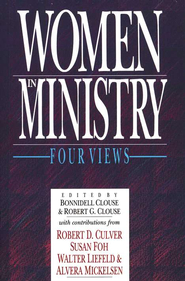
Women in Ministry: Four Views. Edited by Bonnidell Clouse and Robert G. Clouse. Downers Grove, IL.: IVP, 1989.

Women and Men In Ministry: A Complementary Persepective. Edited by Judy TenElshof and Robert L. Saucy. Chicago: Moody Press, 2001.

Recovering Biblical Manhood and Womanhood: A Response to Evangelical Feminism. Edited by John Piper and Wayne Grudem. Wheaton: Crossway Books, 2012.


THE FIVE GOSSIPS YOU WILL MEET – BY TIM CHALLIES AND MATTHEW MITCHELL

RESISTING GOSSIP

Gossip is a serious problem. It is a problem in the home, in the workplace, in the local church and in broader evangelicalism. It is a problem in the blogosphere, in social media, and beyond. In his book Resisting Gossip, Matthew Mitchell defines gossip as “bearing bad news behind someone’s back out of a bad heart” and shows that when the book of Proverbs uses the word “gossip,” it does so in the noun form, not the verb form. In other words, the Bible is concerned less with the words that are spoken and more with the heart and mouth that generate such destruction. Words matter, but they are simply the overflow of the heart. As always, the heart is the heart of the matter.

 Here, drawn from Mitchell’s book, is a gallery of gossips, five different gossiping people you will meet in life.

GOSSIP #1: THE SPY

The first kind of gossip, and I know you’ve run across this person before, is The Spy. Solomon describes him in Proverbs 11:13: “A gossip betrays a confidence, but a trustworthy man keeps a secret.” The Spy is an informer, a person who gathers secrets so he can use them to his personal advantage. This is the person who is always listening for rumors and who always seems to know everyone else’s business. His ear is always to the ground. The Spy’s main motivation is power. It may be the thrill of knowing something before everyone else, or it may be the power that comes when threatening others by revealing their secrets. He uses information to elevate himself and to destroy others.

GOSSIP #2: THE GRUMBLER

The second gossip is The Grumbler and we find him in Proverbs 16:28: “A perverse man stirs up dissension, and a gossip separates close friends.” The Grumbler complains and criticizes. She criticizes other people and complains about them behind their backs. She spreads all their secrets, describes exactly how she feels about them, and then excuses it all by saying, “I just needed to vent for a while.” Because she is miserable, and because misery loves company, she drags other people into her grumbling. Her motive is often jealously or envy. She wants what another person has and grumbles because she does not have it herself.

GOSSIP #3: THE BACKSTABBER

We all know The Backstabber, don’t we? The Backstabber is a complainer, but he is more than that. He is also angry and malicious and is out destroy others. He may bring full-out lies in order to bring down another person, or he may engage in a smear campaign. He looks for something, anything, everything wrong with his enemies and makes sure everyone knows about those things; if he can’t find them, he makes them up. The Backstabber is often motivated by revenge for some deep offense, some opportunity lost, or some hardship gained. This offense or perceived offense has led to bitterness which has taken root and motivated this desire for revenge. Today, many of these people begin web sites and do their work as loudly and publicly as possible.

 GOSSIP #4: THE CHAMELEON

The Chameleon is the person who uses gossip to fit in with the crowd at work or school or church or even in the family. She is desperate to blend in and to be accepted. Since everyone else gossips, she gossips too, so that she can join in the conversation. Since respect comes through sharing juicy facts about others, she finds and then shares that kind of information. Her motivation is fear—the fear of man. She is afraid of what others will think of her, and especially afraid of being excluded from the crowd. Prov 29:25 describes her well: “Fear of man will prove to be a snare, but whoever trusts in the LORD is kept safe.”

GOSSIP #5: THE BUSYBODY

The final kind of gossip is The Busybody. The Busybody is the person who is idle, and his idleness leads to meddling and gossip. Proverbs 26:17 speaks to him: “Like one who seizes a dog by the ears is a passer-by who meddles in a quarrel not his own.” We meet The Busybody man in both of Paul’s letters to the Thessalonians and we meet The Busybody woman in his first letter to Timothy. The Busybody loves the titillation that comes through gossip and loves living vicariously through other people’s stories. The Busybody loves to be online where he can troll celebrity gossip sites in the name of amusement and Christian celebrity gossip sites in the name of discernment.

Most of us have met these people. Most of us have been these people. Each of us is in desperate need of God’s forgiveness and God’s sanctifying grace.

*SOURCE: December 5, 2013 @ http://www.challies.com/christian-living/the-5-gossips-you-will-meet.

HIGHLY RECOMMENDED BOOK: Matthew G. Mitchell. Resisting Gossip: Winning the War of the Wagging Tongue. CLC, 2013.

Friday Humor: R.I.P.

RIP

FRIDAY HUMOR #45

When I was a young minister, a funeral director asked me to hold a grave side service for a homeless man with no family or friends. The funeral was to be at a cemetery way out in the country. This was a new cemetery and this man was the first to be laid to rest there.

I was not familiar with the area and became lost. Being a typical man, of course, I did not ask for directions. I finally found the cemetery about an hour late. The back hoe was there and the crew was eating their lunch. The hearse was nowhere to be seen.

I apologized to the workers for being late. As I looked into the open grave, I saw the vault lid already in place. I told the workers I would not keep them long, but that this was the proper thing to do. The workers, still eating their lunch, gathered around the opening.

I was young and enthusiastic and poured out my heart and soul as I preached. The workers joined in with, “Praise the Lord,” “Amen,” and “Glory!” I got so into the service that I preached and preached and preached, from Genesis to The Revelation.

When the service was over, I said a prayer and walked to my car. As I opened the door, I heard one of the workers say, “I never saw anything like that before and I’ve been putting in septic systems for twenty years.”

SOURCE: Unknown

PAUL TRIPP: 6 Essential Commitments For A Solid Marriage

WDYE? Tripp

COMMITMENT #1: We will give ourselves to a regular lifestyle of confession and forgiveness.

COMMITMENT #2: We will make growth and change our daily agenda.

COMMITMENT #3: We will work together to build a sturdy bond of trust.

COMMITMENT #4: We will commit to building a relationship of love.

COMMITMENT #5: We will deal with our differences with appreciation and grace.

COMMITMENT #6: We will work to protect our marriage.

*SOURCE: Paul David Tripp. What Did You Expect?? Redeeming the Realities of Marriage. Wheaton. Crossway Books, 2010. (Many times in the book – from the Table of Contents and following).

Book Review: David Jeremiah Study Bible

BOOK REVIEW: AN OUTSTANDING RESOURCE

David Jeremiah SB

By David P. Craig

One of the great things about living in the 21st century is the proliferation of great study Bibles that are now available. David Jeremiah’s Study Bible is the result of 40 years of study and 4 years laboring specifically on this Bible. The results are terrific. It’s a Bible that is chalked full of theological insights, practical applications, and a plethora of helpful information to help you grow in your understanding of, and application of the Scriptures.

Some of the unique features of this Bible are:

Easy-to-read type; Book Introductions; 8,000 study notes; 100’s of sidebars on 100’s of topics; Over 50 articles on Doctrinal issues; Helpful illustrations; Answers to tough questions; Wise insights; Words of Jesus in red-letter print; Colorful charts, tables, and maps; A massive topical index and concordance; and a Harmony of the Gospels; available in King James and New King James Versions. One of the best features can be found online or on your phone. There are places throughout the Bible to scan your phone or go on the web for even more articles and helpful tools by Dr. Jeremiah for Bible study.

You can get a great introduction to this Bible by watching a video from Dr. Jeremiah at http://www.JeremiahStudyBible.com. I purchased this Bible for my parents and my wife, and so far we are all really enjoying Jeremiah’s insights and notes.  I personally like the balance of theological explanation and practical application in the study notes. This study Bible will only help you better apply Paul’s exhortation to Timothy: “Be diligent to present yourself approved to God, a worker who does not need to be ashamed, rightly dividing the word of truth” (2 Timothy 2:15). I highly recommend this Study Bible for your personal growth in the Lord.

Albert Mohler: On the Bill Nye vs. Ken Ham Debate

Bill Nye’s Reasonable Man—The Central Worldview Clash of the Ham-Nye Debate

promo-postcard

Last night’s debate between Bill Nye and Ken Ham attracted a huge international audience and no shortage of controversy—even before it began. Bill Nye, whose main media presence is as “The Science Guy,” and Ken Ham, co-founder of Answers in Genesis and founder of the Creation Museum, squared off in a true debate over one of the most important questions that the human mind can contemplate. That is no small achievement.

I enjoyed a front row seat at the debate, which took place even as a major winter storm raged outside, dumping considerable amounts of snow and ice and causing what the local police announced as a “Class Two” weather emergency. Inside the Creation Museum there was quite enough heat, and the debate took place without a hitch. Thankfully, it also took place without acrimony.

The initial controversy about the debate centered in criticism of Bill Nye for even accepting the invitation. Many evolutionary scientists, such as Richard Dawkins and Jerry Coyne, refuse to debate the issue, believing that any public debate offers legitimacy to those who deny evolution. Nye was criticized by many leading evolutionists, who argued publicly that nothing good could come of the debate.

Interestingly, this points back to the famous debates over evolution that took place in nineteenth century England, when Anglican churchmen faced early evolutionary scientists in (mostly) civil public exchanges. Back then, it was the churchmen who were criticized by their peers for participation in the debate. Now, the table has turned, indicating something of the distance between the intellectual conditions then and now.

Of course, Bill Nye might have felt some moral obligation to debate the question, since he had launched a unilateral attack on creationist parents in a video that went viral last year. In that video, Nye told creationist parents:

[I]f you want to deny evolution and live in your world, in your world that’s completely inconsistent with everything we observe in the universe, that’s fine, but don’t make your kids do it because we need them. We need scientifically literate voters and taxpayers for the future. We need people that can—we need engineers that can build stuff, solve problems.”

But if Nye had launched the attack, he did not arrive at the debate in a defensive mode. A protege of the late Carl Sagan and the current CEO of the Planetary Society, Nye was in full form last night, wearing his customary bow-tie, and immaculately dressed in a very expensive suit. He took notes with a very fine writing instrument. I like his style.

Ken Ham is a veteran debater on the issue of origins, and he was clearly prepared for the debate. Ham’s arguments were tight and focused, and his demeanor was uniformly calm and professional. The format allowed for a full expression of both arguments, along with spirited exchanges and questions submitted from the audience. What the 150 minute event lacked was any requirement that the debaters answer each other’s questions. That would have changed the way the debate concluded.

The central question of the debate was this: “Is creation a viable model of origins in today’s modern scientific era?” Ham stuck to the question tenaciously. Nye, on the other hand, tried to personalize the debate and kept changing the question from creation to “Ken Ham’s creationism.” Ham was unfazed, and kept to his argument.

As the debate began, it was clear that Ham and Nye do not even agree on definitions. The most friction on definition came when Nye rejected Ham’s distinction between “historical science” and “observational science” out of hand. Nye maintained his argument that science is a unitary method, without any distinction between historical and observational modes. Ham pressed his case that science cannot begin without making certain assumptions about the past, which cannot be observed. Furthermore, Ham rightly insisted that observational science generally does not require any specific commitment to a model of historical science. In other words, both evolutionists and creationists do similar experimental science, and sometimes even side-by-side.

Nye’s main presentation contained a clear rejection of biblical Christianity. At several points in the debate, he dismissed the Bible’s account of Noah and the ark as unbelievable. Oddly, he even made this a major point in his most lengthy argument. As any informed observer would have anticipated, Nye based his argument on the modern consensus and went to the customary lines of evidence, from fossils to ice rods. Ham argued back with fossil and geological arguments of his own. Those portions of the debate did not advance the arguments much past where they were left in the late nineteenth century, with both sides attempting to keep score by rocks and fossils.

In this light, the debate proved both sides right on one central point: If you agreed with Bill Nye you would agree with his reading of the evidence. The same was equally true for those who entered the room agreeing with Ken Ham; they would agree with his interpretation of the evidence.

That’s because the argument was never really about ice rods and sediment layers. It was about the most basic of all intellectual presuppositions: How do we know anything at all? On what basis do we grant intellectual authority? Is the universe self-contained and self-explanatory? Is there a Creator, and can we know him?

On those questions, Ham and Nye were separated by infinite intellectual space. They shared the stage, but they do not live in the same intellectual world. Nye is truly committed to a materialistic and naturalistic worldview. Ham is an evangelical Christian committed to the authority of the Bible. The clash of ultimate worldview questions was vividly displayed for all to see.

When asked how matter came to exist and how consciousness arose, Nye responded simply and honestly: “I don’t know.” Responding to the same questions, Ham went straight to the Bible, pointing to the Genesis narrative as a full and singular answer to these questions. Nye went on the attack whenever Ham cited the Bible, referring to the implausibility of believing what he kept describing as “Ken Ham’s interpretation of a 3,000 year old book translated into American English.”

To Bill Nye, the idea of divine revelation is apparently nonsensical. He ridiculed the very idea.

This is where the debate was most important. Both men were asked if any evidence could ever force them to change their basic understanding. Ham said no, pointing to the authority of Scripture. Nye said that evidence for creation would change his mind. But Nye made clear that he was unconditionally committed to a naturalistic worldview, which would make such evidence impossible.  Neither man is actually willing to allow for any dispositive evidence to change his mind. Both operate in basically closed intellectual systems. The main problem is that Ken Ham knows this to be the case, but Bill Nye apparently does not. Ham was consistently bold in citing his confidence in God, in the gospel of Jesus Christ, and in the full authority and divine inspiration of the Bible. He never pulled a punch or hid behind an argument. Nye seems to believe that he is genuinely open to any and all new information, but it is clear that his ultimate intellectual authority is the prevailing scientific consensus. More than once he asserted a virtually unblemished confidence in the ability of modern science to correct itself. He steadfastly refused to admit that any intellectual presuppositions color his own judgment.

But the single most defining moments in the debate came as Bill Nye repeatedly cited the “reasonable man” argument in his presentation and responses. He cited Adolphe Quetelet’s famed l’homme moyen—“a reasonable man”—as the measure of his intellectual authority. Writing in 1835, Quetelet, a French intellectual, made his “reasonable man” famous. The “reasonable man” is a man of intellect and education and knowledge who can judge evidence and arguments and function as an intellectual authority on his own two feet. The “reasonable man” is a truly modern man. Very quickly, jurists seized on the “reasonable man” to define the law and lawyers used him to make arguments before juries. A “reasonable man” would interpret the evidence and make a reasoned judgment, free from intellectual pressure.

Bill Nye repeatedly cited the reasonable man in making his arguments. He is a firm believer in autonomous human reason and the ability of the human intellect to solve the great problems of existence without any need of divine revelation. He spoke of modern science revealing “what we all can know” as it operates on the basis of natural laws. As Nye sees it, Ken Ham has a worldview, but Nye does not. He referred to “Ken Ham’s worldview,” but claimed that science merely provides knowledge. He sees himself as the quintessential “reasonable man,” and he repeatedly dismissed Christian arguments as “not reasonable.”

In an unexpected turn, near the end of the event, Nye even turned to make an argument against Christianity on grounds of theodicy. He asked Ham if it was “reasonable” to believe that God had privileged a personal revelation that was not equally accessible to all. Nye’s weakest argument had to do with his claim—made twice—that billions of religious people accept modern science. He provided a chart that included vast millions of adherents of other world religions and announced that they are religious but accept modern science. That is nonsense, of course. At least it is nonsense if he meant to suggest that these billions believe in evolution. That is hardly the case. Later, he lowered his argument to assert that these billions of people use modern technology. So, of course, do creationists. There are few facilities in the world more high-tech than the Creation Museum.

Nye is clearly not a fan of theistic evolution, since he argued that a purely natural argument should be quite enough for the “reasonable man.” He seemed to affirm a methodological agnosticism, since he sees the question of a “higher power” or “spiritual being” to be one of little intellectual consequence. He did argue that nature is a closed system and that natural selection can allow for absolutely no supernatural interference or influence. In this respect, he sounded much like Stephen Hawking, who has argued that God may exist, but that there is nothing for him to do.

Ken Ham is a Young Earth Creationist (as am I), but the larger argument was over worldviews, and the debate revealed the direct collision between evolution and the recognition of any historical authority within Genesis 1-11. As if to make that clear, in making one of his closing arguments, Bill Nye actually went back to cite “this problem of the ark.”

The ark is not the real problem; autonomous human reason is. Bill Nye is a true believer in human reason and the ability of modern science to deliver us. Humanity is just “one germ away” from extinction, he said. But science provides him with the joy of discovery and understanding.

The problem with autonomous human reason is made clear by the Apostle Paul in Romans chapter 1:

For the wrath of God is revealed from heaven against all ungodliness and unrighteousness of men, who by their unrighteousness suppress the truth. For what can be known about God is plain to them, because God has shown it to them. For his invisible attributes, namely, his eternal power and divine nature, have been clearly perceived, ever since the creation of the world, in the things that have been made. So they are without excuse. For although they knew God, they did not honor him as God or give thanks to him, but they became futile in their thinking, and their foolish hearts were darkened. Claiming to be wise, they became fools, and exchanged the glory of the immortal God for images resembling mortal man and birds and animals and creeping things” (Rom 1:18-23 ESV).

The problem with human reason is that it, along with every other aspect of our humanity, was corrupted by the fall. This is what theologians refer to as the “noetic effects of the fall.” We have not lost the ability to know all things, but we have lost the ability to know them on our own authority and power. We are completely dependent upon divine revelation for the answers to the most important questions of life. Our sin keeps us from seeing what is right before our eyes in nature. We are dependent upon the God who loves us enough to reveal himself to us—and to give us his Word.

As it turns out, the reality and authority of divine revelation, more than any other issue, was what the debate last night was all about. As the closing statements made very clear, Ken Ham understood that fact, but Bill Nye did not.

The central issue last night was really not the age of the earth or the claims of modern science. The question was not really about the ark or sediment layers or fossils. It was about the central worldview clash of our times, and of any time: the clash between the worldview of the self-declared “reasonable man” and the worldview of the sinner saved by grace.

SOURCE: http://www.albertmohler.com/2014/02/05/bill-nyes-reasonable-man-the-central-worldview-clash-of-the-ham-nye-debate/

John Owen: FOR WHOM DID CHRIST DIE?

The Death of Death John Owen

The Father imposed His wrath due unto, and the Son underwent punishement for, either:

(1) All the sins of all men.

(2) All the sins of some men, or

(3) Some of the sins of all men.

In which case it may be said:

(a) That if the last be true, all men have some sins to answer for, and so none are saved.

(b) That if the second be true, then Christ, in their stead suffered for all the sins of all the elect in the whole world, and this is the truth.

(c) But if the first be the case, why are not all men free from the punishement due unto their sins? You answer, Because of unbelief. I ask, Is this unbelief a sin, or is it not? If it be, then Christ suffered the punishment due unto it, or He did not. If He did, why must that hinder them more than their other sins for which He died? If He did not, He did not die for all their sins.”

SOURCE: A summary of the argument from John Owen’s book Death of Death in the Death of Christ. Covenanter Press, Box 48, Strathpine North, 4500, Queensland, Australia.

Warren Wiersbe: The Power of God’s Name

OT Words for today Wiersbe

“From the rising of the sun, even to its going down, My name shall be great among the Gentiles; in every place incense shall be offered to My name, and a pure offering; for My name shall be great among the nations,” says the LORD of hosts.” – Malachi 1:11

The first step down for any church is taken when it surrenders its high view of God, wrote A.W. Tozer in his excellent book The Knowledge of the Holy. For “church” you may substitute “Christian” or “Sunday school teacher” or “missionary.” The prophet Malachi ministered to the Jewish exiles who had returned to their land from Babylon to rebuild Jerusalem and the temple. Unfortunately, the level of their spiritual life was not very high. They could have glorified the name of the Lord before the Gentiles, but instead they chose to argue with the Lord. Believers today have three responsibilities when it comes to the names of God.

(1) We must know God’s name. In Bible times, names were indications of character and ability, and the names of God tell us who he is and what he can do. Jehovah means “I Am Who I Am” (Exodus 3:13-14). He is the self-existent, eternal God who always was, always is, and always will be. Jehovah-Sabaoth is “the LORD of hosts, the LORD of the armies of heaven” (1 Samuel 1:3,11), while Jehovah-Rapha is “the LORD who heals” (Exodus 15:22-27). For the battles in life, we must know Jehovah-Nissi, “the LORD our banner” (Exodus 17:8-15), who can give us victory. Jehovah-Shalom is “the LORD our peace” (Judges 6:24), and Jehovah Ra-ah is “the LORD our shepherd” (Psalm 23:1). I could go on, but I suggest you pursue this study yourself with the help of a good study Bible. To know God’s names is to know him better and be able to call on him for the help we need. “Those who know Your name will put their trust in You; for You, LORD have not forsaken those who seek You” (Psalm 9:10).

(2) We must honor God’s name. The priests in the temple were not honoring God’s name but were despising it by performing their ministries carelessly and offering the Lord sacrifices unacceptable to him (Malachi 1:6-10). Malachi used the word “contemptible” to describe their work (1:7,12; 2:9). God demands that we give him our best and serve him in a way that honors his name (1 Chronicles 21:24). The Lord would rather that someone close the temple doors than allow such cheap sacrifices to be offered on his altar (Mal. 1:10; Lev. 22:20). The priests were not rejoicing in their ministry but were weary of the whole thing (Mal. 1:13). “Serve the LORD with gladness; come before His presence with singing” (Ps. 100:2). We must give glory to his name (Mal. 2:2) and fear his name (1:14; 4:2). There was a godly remnant that did fear the Lord and honor his name (3:16-19), and they were the hope of the nation.

(3) We must spread his name abroad. The Lord wanted his name to be “magnified beyond the border of Israel” (1:5). The prophet saw a day when Jews and Gentiles would be one people of faith in Jesus Christ (Eph. 2:11-22). When he died on the cross, Jesus tore the veil of the temple, opening the way to God for all people and breaking down the wall that separated Jews and Gentiles (Eph. 2:14) so that we are “all one in Christ Jesus” (Gal. 3:28). The name of Jesus Christ and his gospel must be shared with the world, for there are no borders that must confine us. “Therefore those who were scattered went everywhere preaching the word” (Acts 8:4). Are we doing our part?

*SOURCE: Adapted from Warren Wiersbe. Old Testament Words For Today. Grand Rapids: Baker, 2013, Chapter 95.

DAVID JEREMIAH: 7 Ways To Study The Bible Effectively

David Jeremiah SB

(1) READ IT – Find time every day to read the Bible. Build this into your routine each morning, Pray as you read, asking God for insight.

(2) LOOK FOR A NEW VERSE EACH DAY – As you read, ask God for a special verse to meet that day’s need. Read until you arrive at that verse, and then write down and carry it with you. You’ll discover new strength!

(3) STUDY BOOK-TO-VERSE-TO-WORD – One of the best methods of Bible study is book-to-verse-to-word, some times called inductive Bible study. Choose the book you want to study, then read through the book introduction and the Bible text several times for a sweep of its contents. Then read all you can about the background of that book. Next…

(4) LOOK FOR THE OUTLINE OR THEME OF THE BOOK – After that, you’re ready to study chapter by chapter. Read through each chapter, making notes, underlining verses, and looking for key thoughts. When you have a good idea of what each chapter says, study the individual verses themselves, down to the various words that are used. Then…

(5) READ THE BIBLE WITH PEN IN HAND – Underline, circle, and draw lines from verse to verse. Thoroughly read (A good study Bible – like the Jeremiah Study Bible) notes and their cross references. Scribble comments and insights in the margins, and post dates besides verses that God gives you on particular days. Someone once said, “A well-marked Bible means a well-fed soul.” You can also use a journal to analyze sentences, paraphrase verses, and condense passages, list points, and record observations.

(6) MEMORIZE SCRIPTURE AND MEDITATE ON IT – Memorized Scripture is the fodder for meditation, and meditating on God’s Word opens the door of our hearts to the real riches of Scripture. When we memorize God’s Word, we can think about it all the time, mulling it over as we eat breakfast, as we drive to work, as we fall asleep at night. We digest its meaning, and it becomes part of us.

(7) JOIN A BIBLE STUDY GROUP – One of the most exciting developments in many churches has been the proliferation of Bible study groups. Find a good group and sign up. The right small group can make a big difference in your appreciation of Scripture.

SOURCE: *Adapted from “Ways To Study The Bible Effectively” in The Jeremiah Study Bible. Worthy Media, 2013. xv.

ABOUT THE AUTHOR

David Jeremiah

Dr. David Jeremiah is the senior pastor of Shadow Mountain Community Church in El Cajon, California, and chancellor of San Diego Christian College. He is also the founder of Turning Point, a ministry committed to providing sound Bible teaching through national radio and television broadcasting. Dr. Jeremiah has authored numerous books, including the best-selling “Captured by Grace,” “Life Wide Open,” “My Heart’s Desire,” and “Sanctuary.”