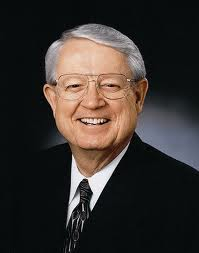
CHUCK SWINDOLL ON “WHY DO WE SUFFER?”
WHY CHRISTIANS SUFFER – A MEDITATION ON 2 CORINTHIANS 1:3-11
2 Corinthians 1:3-11, “Blessed be the God and Father of our Lord Jesus Christ, the Father of mercies and God of all comfort, who comforts us in all our affliction, so that we may be able to comfort those who are in any affliction, with the comfort with which we ourselves are comforted by God. For as we share abundantly in Christ’s sufferings, so through Christ we share abundantly in comfort too. If we are afflicted, it is for your comfort and salvation; and if we are comforted, it is for your comfort, which you experience when you patiently endure the same sufferings that we suffer. Our hope for you is unshaken, for we know that as you share in our sufferings, you will also share in our comfort.
For we do not want you to be unaware, brothers, of the affliction we experienced in Asia. For we were so utterly burdened beyond our strength that we despaired of life itself. Indeed, we felt that we had received the sentence of death. But that was to make us rely not on ourselves but on God who raises the dead. He delivered us from such a deadly peril, and he will deliver us. On him we have set our hope that he will deliver us again. You also must help us by prayer, so that many will give thanks on our behalf for the blessing granted us through the prayers of many.
Of all the letters Paul wrote, Second Corinthians is the most autobiographical. In it the great apostle lifts the veil of his private life and allows us to catch a glimpse of his human frailties and needs. You need to read that letter in one sitting to capture the moving emotion that surged through his soul.
It is in this letter alone that he records the specifics of his anguish, tears, affliction, and satanic opposition. In this letter alone he spells out the details of his persecution, loneliness, imprisonments, beatings, feelings of despair, hunger, shipwrecks, sleepless nights, and that “thorn in the flesh”–his companion of pain. How close it makes us feel to him when we picture him as a man with real, honest-to-goodness problems…just like you and me!
It is not surprising, then, that he begins the letter with words of comfort–especially verses 3 through 11. Now, then, having read those nine verses, please observe his frequent use of the term comfort in verses 3-7. I count ten times in five verses that the same root word is employed by Paul. This word is para-kaleo, meaning literally, “to call alongside.” It involves more than a shallow “pat on the back” with the tired expression, “the Lord bless you…” No, this word involves genuine in-depth understanding…deep-down compassion and sympathy. This seems especially appropriate since it says that God, our Father, is the “God of all comfort” who “comforts us in all our affliction.” Our loving Father is never preoccupied or removed when we are enduring sadness and affliction! Read Hebrews 4:14-16 and Matthew 6:31-32 as further proof.
There is yet another observation worth noting in 2 Corinthians, chapter 1. No less than three reasons are given for suffering–each one introduced with the term “that” in verses 4, 9, and 11. Quietly and without a lot of fanfare, the Holy Spirit states the reasons we suffer:
(1) “That we may be able to comfort those who are in any affliction…” (v. 4). God allows suffering so that we might have the capacity to enter into others’ sorrow and affliction. Isn’t that true? If you have suffered a broken leg and been confined to crutches for weeks–you are in complete sympathy with someone else on crutches, even years after your affliction. The same is true for the loss of a child…emotional depression…an auto accident…undergoing unfair criticism…financial burdens. God gives His children the capacity to understand by bringing similar sufferings into our lives. Bruises attract one another.
(2) “That we should not trust in ourselves…” (v. 9). God also allows suffering so that we might learn what it means to depend on Him, not on our own strength and resources. Doesn’t suffering do that? It forces us to lean on Him totally, absolutely. Over and over He reminds us of the danger of pride…but it frequently takes suffering to make the lesson stick. Pride is smashed most effectively when the suffering comes suddenly, surprisingly. The express trains of heaven are seldom announced by a warning bell; they dash suddenly and abruptly into the station of the soul. Perhaps that has been your experience recently. Don’t resent the affliction as an intruder–welcome it as God’s message to stop trusting in your flesh…and start leaning on Him.
(3) “That thanks may be given…” (v. 11). Honestly–have you said, Thanks, Lord for this test”? Have you finally stopped struggling and expressed to Him how much you appreciate His loving sovereignty over your life? I submit that one of the reasons our suffering is prolonged is that we take so long saying “Thank you, Lord” with an attitude of genuine appreciation.
How unfinished and rebellious and proud and unconcerned we be without suffering! Here are two statements on suffering I heard years ago and shall never forget:
Pain plants the flag of reality in the fortress of a rebel heart.
When God wants to do an impossible task, He takes an impossible individual–and crushes him.
May these things encourage you the next time God heats up the furnace.
Source: Chuck Swindoll. Come Before Winter…And Share My Hope. Multnomah Press, Portland, OR.: 1985, pp. 202-203.
About the Author:
Dr. Charles R. Swindoll is senior pastor of Stonebriar Community Church, chancellor of Dallas Theological Seminary, and the Bible teacher on the internationally syndicated radio program Insight for Living.
Charles Swindoll’s Books:
-
You And Your Child, Thomas Nelson (1977)
-
Hand Me Another Brick, Thomas Nelson (1978)
-
Three Steps Forward, Two Steps Back: Persevering Through Pressure, Thomas Nelson (1980)
-
Strike The Original Match, Multnomah (1980)
-
Improving Your Serve: The Art Of Unselfish Living, Word (1981)
-
Strengthening Your Grip: Essentials In An Aimless World, Word (1982)
-
Growing Strong In The Seasons Of Life, Multnomah (1983)
-
Dropping Your Guard: The Value Of Open Relationships, Word (1983)
-
Come Before Winter – And Share My Hope, Multnomah (1985)
-
Living On The Ragged Edge: Coming To Terms With Reality, Word (1985)
-
Growing Deep In The Christian Life: Returning To Our Roots, Multnomah (1986)
-
The Quest For Character, Multnomah (1987)
-
Living Above The Level Of Mediocrity : A Commitment To Excellence, Word (1987)
-
Growing Wise In Family Life, Multnomah (1988)
-
Living Beyond The Daily Grind: Reflections On The Songs And Sayings In Scripture, Word (1988)
-
Rise & Shine: A Wake-Up Call, Multnomah (1989)
-
The Grace Awakening, Word (1990)
-
Sanctity Of Life: The Inescapable Issue, Word (1990)
-
Stress Fractures, Multnomah (1990)
-
Simple Faith, Word (1991)
-
Laugh Again, Word (1992)
-
Flying Closer To The Flame (Re-issued as Embraced by The Spirit: The Untold Blessings of Intimacy with God, Word in 1993 & Zondervan in 2010)
-
The Finishing Touch, Word (1994)
-
Paw Paw Chuck’s Big Ideas in the Bible, Word (1995)
-
Hope Again, Word (1996)
-
The Road To Armageddon (with John F Walvoord; J Dwight Pentecost), Word (1999)
-
Start Where You Are: Catch A Fresh Vision For Your Life, Word (1999)
-
The Mystery Of God’s Will: What Does He Want For Me?, Word (1999)
-
Perfect Trust: Ears To Hear, Hearts To Trust, And Minds To Rest In Him, J. Countryman (2000 & 2012)
-
The Darkness And The Dawn : Empowered By The Tragedy And Triumph Of The Cross, Word (2001)
-
Why, God?: Calming Words For Chaotic Times, Word (2001)
-
Wisdom For The Way: Wise Words For Busy People, J. Countryman (2001)
-
Understanding Christian Theology (with Roy B Zuck), Thomas Nelson (2003)
-
Behold—The Man!: The Pathway Of His Passion, Word (2004)
-
Getting Through the Tough Stuff: It’s Always Something! Thomas Nelson (2004)
-
So, You Want To Be Like Christ?: Eight Essentials To Get You There, Word (2005)
-
When God Is Silent (Choosing To Trust In Life’s Trials), J. Countryman (2005)
-
Great Attitudes For Graduates!: 10 Choices For Success In Life (with Terri A Gibbs), J. Countryman (2006)
-
Encouragement For Life: Words Of Hope And Inspiration, J. Countryman (2006)
-
The Strength Of Character: 7 Essential Traits Of A Remarkable Life (with Terri A Gibbs), J. Countryman (2007)
-
A Bethlehem Christmas: Celebrating The Joyful Season, Thomas Nelson (2007
-
The Owner’s Manual for Christians: The Essential Guide for a God-Honoring Life, Thomas Nelson (2009)
-
The Church Awakening: An Urgent Call for Renewal, FaithWords (2010 & 2012)
-
Meet Me In The Library: Readings From 8 Writers Who Shaped My Life, IFL (2011)
-
Saying It Well: Touching Others with Your Words, FaithWords (2012)
-
Living the Psalms: Encouragement for the Daily Grind, Worthy (2012)
-
Living the Proverbs: Living in the Daily Grind, Worthy (2013)
Swindoll’s New Testament Insights Commentary Series
-
Insights on Romans, Zondervan (2010)
-
Insights on John, Zondervan (2010)
-
Insights on James and 1 & 2 Peter, Zondervan (2010)
-
Insights on 1 & 2 Timothy and Titus, Zondervan (2011)
-
Insights on Revelation, Zondervan (2012)
-
Insights on Luke, Zondervan (2012)
-
Insights on Galatians & Ephesians, Zondervan (2013)
Profiles in Character series
-
David: A Man Of Passion & Destiny, Word (1997)
-
Esther: A Woman Of Strength & Dignity, Word (1997)
-
Joseph: A Man Of Integrity And Forgiveness, Word (1998)
-
Moses: A Man Of Selfless Dedication, Word (1999)
-
Elijah: A Man Of Heroism And Humility, Word (2000)
-
Paul: A Man Of Grace And Grit, Word (2002)
-
Job: A Man Of Heroic Endurance, Word (2004)
-
Fascinating Stories Of Forgotten Lives: Rediscovering Some Old Testament Characters, Word (2005)
-
Jesus: The Greatest Life Of All, Thomas Nelson (2008)
Honors and Awards
-
Harry A. Ironside Award for Expository Preaching – Dallas Theological Seminary, 1963
-
Christian Education Award – Dallas Theological Seminary, 1963
-
Faculty Award – Dallas Theological Seminary, 1963
-
Doctor of Divinity – Talbot School of Theology, 1977
-
Doctor of Human Letters – Taylor University, 1986
-
Clergyman of the Year – Religious Heritage of America, 1988
-
Doctor of Laws – Pepperdine University, 1990
-
Doctor of Literature – Dallas Baptist University, 1999
-
Lifetime Achievement Award – [Catalyst Conference], 2009
BOOK REVIEW: R.C. SPROUL’S “HOW CAN I DEVELOP A CHRISTIAN CONSCIENCE?”
AN ETHICAL PRIMER FOR DEVELOPING A CHRISTIAN CONSCIENCE
Book Review by David P. Craig
R.C. Sproul begins this book by giving a classical definition of the Christian conscience: “The Christian conscience is thought to be something that God has implanted into our minds…the voice of God within us….The idea is that God created us in such a way that there is a link between the sensitivities of the mind and the conscience with its built-in responsibility to God’s eternal laws.” He then goes on to give several examples of how the conscience and law work together to bring about thoughts and actions that are either in accordance with God’s Word or against God’s Word. The conscience is the “tool that God the Holy Spirit uses to convict us, bring us to repentance, and receive the healing of forgiveness that flows from the gospel.”
In the short chapters of this book Sproul compares and contrasts several important matters with reference to developing a Christian conscience as we deal with what has been clearly revealed in the Scriptures and not clearly revealed in the Scriptures:
(1) Creation ordinances vs. Civil Law – here Sproul cogently and compellingly demonstrates that everyone is responsible to live by the Covenant of Creation and that everything that is legislated by law is “moral legislation” – Sproul writes: “Of course, if you think it through, you realize that moral issues are at the heart of all legislation. The question is not whether the state should legislate morality. The question is what morality should the state be legislating? Natural law states that in nature there are certain principles that we should never violate. But why? Just because nature says it’s wrong? No. Classically and historically, Christianity has said that those laws that we find in nature are the external manifestations of the law of God. Remember that all true and just law is based ultimately on the character of God and His eternal being. From those eternal principles we get a reflection of God in natural law…In the final analysis what the culture does or does not do must not affect my responsibility to God. We are called to be a people of principle. Reformation starts when we begin to live by principle and not by expediency.”
(2) The distinction between ethics and morality – What are the indicatives (morality) of Scripture and what are the imperatives (ethics)? Here Sproul answers two important questions: (a) What is good, and what does God require of us that is well pleasing to Him? and (b) How can we have the ethical courage to do what is right? Perhaps the most important issue handled in this section is Sproul’s treatment of major’s, minor’s, and areas of freedom in the Christian life.
(3) Legalism vs. Antinomianism – Here Sproul demonstrates three ancient and modern varieties of those who are “legalistic” and those who are “anti-law.” He demonstrates the importance of balance between these two dangerous extremes in this way, “The essence of Christian theology is grace, and the essence of Christian ethics is gratitude.” Sproul reminds us that where the Scriptures are silent “we have no right to heap up restrictions on people where He has no stated restriction…We are to be concerned with integrity, justice, mercy, and helping a world that is in pain. It is all too simple to distort the biblical ethic by a kind of legalism that majors in minors.”
(4) Degrees of sin. The last topic addressed in the book is the question are some sins worse than others? Sproul does a wonderful job of providing many examples – especially from the Sermon on the Mount – to demonstrate the seriousness of sin, and God’s provision for our sins. Tackling issues of guilt, law, righteousness, and justification this short book is jam packed with great questions and answers to some of the most important issues of our day. If you want to know how to live as a Christian in the 21st Century this book is an excellent primer of how to develop a conscience that is right with God and pleasing to God.
BOOK REVIEW: R.C. SPROUL’S “WHAT IS THE LORD’S SUPPER?’
Why Christians Celebrate The Lord’s Supper
Book Review By David P. Craig
One of the things that all Protestants and Catholics have in common is that we participate either weekly or monthly in the remembrance of the Lord’s Supper or Communion. In this concise and yet very thorough treatment of what the Bible teaches about the Lord’s Supper R.C. Sproul gives several cogent reasons why Christians around the world remember the body and blood of Christ in the past and present and look forward to His coming in the future.
Dr. Sproul looks at the roots of the Lord’s Supper in examining the Old Testament Passover from the Exodus; the Last Supper of Christ in the Gospels; and the Marriage Supper of the Lamb in the Kingdom of Heaven. The history of the Supper is examined, the theology of the Supper is explained, and the meaning of the Supper is articulated so that we can best apply its meaning as we participate in the elements as we remember the death, burial, resurrection, and coming of Christ by worshipping Him in spirit and in truth.
Reading this book will help you to appreciate and value the partaking of the cup and bread all the more as you remember the amazing sacrifice of the Lamb that was slain to save us from God’s wrath, and unto His gracious presence forever. You will come to a deeper understanding of the necessity of a “bloody” sacrifice, and of the “body” that was slain on our behalf. There is much spiritual meat here, to bring you to deeper intimacy with and reflection on the Lamb of God who takes away the sins of the world.
SUNDAY SERMON: Dr. Tim Keller on “CHRIST OUR HEAD”
SERIES: THE KING AND THE KINGDOM – PART 1 – EPHESIANS 1:15-23
15 For this reason, ever since I heard about your faith in the Lord Jesus and your love for all the saints, 16 I have not stopped giving thanks for you, remembering you in my prayers. 17 I keep asking that the God of our Lord Jesus Christ, the glorious Father, may give you the Spirit of wisdom and revelation, so that you may know him better. 18 I pray also that the eyes of your heart may be enlightened in order that you may know the hope to which he has called you, the riches of his glorious inheritance in the saints, 19 and his incomparably great power for us who believe.
That power is like the working of his mighty strength, 20 which he exerted in Christ when he raised him from the dead and seated him at his right hand in the heavenly realms, 21 far above all rule and authority, power and dominion, and every title that can be given, not only in the present age but also in the one to come. 22 And God placed all things under his feet and appointed him to be head over everything for the church, 23 which is his body, the fullness of him who fills everything in every way.
I keep reading articles and books about New York. This week I read that whereas New York has to compete with Los Angeles as media capital of the world, has to compete with Tokyo as financial capital of the world, has to compete with London as theater capital of the world, and has to compete with Paris as fashion capital of the world, there is one area where there is no competition.
The article said New York is the power capital of the world, not just because it’s the only city that competes in all those categories, but because this is the place where people who want power and where the people who have power come to live. When I looked up the word power in the dictionary, I found all the dictionaries say the same thing. Power is the ability to act, the ability to do. This week again I saw an interesting quote that said people do not come to New York City to think or to reflect; they come to do.
In fact, when I read the interviews of famous people around here and I listen to what they’re saying, the interviewers are basically trying to find what makes you tick. When it comes down to it, though there are hundreds of different answers, I think you can reduce them. Basically the people are saying, “Do you know what makes me tick? Power. Why do I build this skyscraper? Why do I throw this party? Why do I hold this concert? I want to show you what I can do. Look what I can do. Look at the power I have. Look how I count.”
Paul here talks about power that makes all the power of New York combined look like a pop gun, a power that makes all of the power of New York comparatively look like a soggy paper airplane. It says here in verse 19 (and this is what the passage is about) God has “incomparably great power.” That’s a great phrase. Great power in Greek is completely understandable in English. Did you know that? The word greatness is the word megethos, and the word power is the word dunameōs. So what you have there is the megaton dynamite of God. It’s a great phrase, and everybody knows what it’s talking about. It doesn’t need translation. It talks about the megaton dynamite of God.
The real kicker word is the word incomparably. If you have an older translation, it might say, “The exceeding power of God.” The word incomparably is a good word. What Paul is saying is, “It can’t be compared.” Ordinarily the way in which we would measure or try to describe power is we try to describe it by comparing it to something else you know. So you can say, “A hurricane has one thousandth of the power of a nuclear warhead. A nuclear warhead has one millionth of the power of an explosion on the surface of the sun. The sun has one billionth of the power of an exploding supernova.”
How do we describe the power of God? Do we say, “His power is the power of 100 supernovas, a million supernovas, or a billion billion?” Paul is saying here, “No, no, no. God is not at the top of a scale. God has never been on the scale, so he is not even off the scale. He utterly transcends scales.” The reason for that we’re told again and again in the Psalms. The Psalms tell us, “… power belongs to God.” Now look at that. Look and wonder. “… power belongs to God” means not that God has more power than anything or anyone else, but that anyone or anything that has even an atom of power has it because God has delegated it to him. God has all the power.
Now this is an extremely practical teaching. How could Jesus Christ look Pilate right in the eye with calmness and with serenity when he knew Pilate was about to tear him apart and he had the power? Did he have the power? That’s what Pilate was saying: “I have the power to crush you.” Jesus looks at him calmly, not flippantly, because he knew Pilate had power. What did he say? Where did he get his calmness? He said, “You would have no power over me if it were not given to you from above.” Jesus says, “I know you have power. I respect that power, but you don’t have one atom more of it than what has been given to you.” All power belongs to him. That’s what we’re being told here. It’s incomparably great power.
Take a look at all the big power brokers of the world. I don’t mean the ones even now. Look at Alexander the Great, absolute monarch of all the Western world. Look at all the Caesars. Look at Hitler. Look at the incredibly wealthy people we’ve had in the history of the world. Do they really have power? Can they really determine the course of events in the world? It says here, “Jesus Christ is above every title.” Isaiah 40: “He brings the rulers to nothing.” Now that’s power. That’s power.
Friends, my question to you here is … Do you believe that? Now most of you have backgrounds where you have heard this. I think many of you probably do. If your background is Jewish, if your background is Roman Catholic, if your background is Protestant, you’ve heard this. That’s not what Paul is praying for here. Do you see what Paul is praying for? He is saying, “I pray also that the eyes of your heart may be enlightened in order that you may know the hope … the riches … and his incomparably great power.”
You might know about this power, but do you know it the way Jesus knew it? Do you grasp it? Has it sunk in? Do you act on it? Does it affect the way in which you deal with powerful people? Does it affect the way in which you deal with your fears? Has it radically changed your priorities?
Even further, is it flowing through you? Because it says here in verse 19, “… his incomparably great power for us who believe.” For us. It’s the little Greek word eis, which means through or within. Paul means here that the power of God can come through us. You can thrill under it. It can surge through you, and you can become effective, because that’s what power is: the ability to act, the ability to bring about effect, the ability to bring about impact. Now the question is … Do you know this and not just know about it? That’s a pretty good question. Could you look at Pilate in the eye like Jesus did?
If you’re going to know it, you need to take a look at the passage. The passage tells you a lot, but it tells you three things we’re going to look at tonight. Those three things are first of all this is resurrection power. Secondly, it tells us this is headship power. It only comes to people through the headship of Jesus. Thirdly, it’s power that only comes to people born again by the Spirit. It’s resurrection power, it’s headship power, and it’s spiritual power. I’ll explain that as we go along. Let’s roll.
1. Resurrection power
Paul says, “Let me tell you about the incomparably great power of God. This is the power he used to do what? To raise Jesus Christ from the dead and seat him at the right hand above all rule and authority and power and dominion.” Now why does Paul use that illustration? After all, why didn’t he say, “This is the great power God used to put the planets in orbit?” Now that’s pretty powerful. “This is the power God used to scatter the stars across the heavens.” That’s pretty powerful.
No, he goes to the resurrection of Jesus, and here’s why. Of all the powers you can find in the world, there is no power like death. Why does a hurricane have power at all? Why do we say a hurricane is powerful? Because it has some of the power of death. It can kill. Mankind can harness some of the power of creation. We can split the atom. We can do all that, but we will always die.
Don’t you realize, therefore, death is the main power that is arrayed against us? The Bible calls it the last enemy. If you could lick that power, the power of death, don’t you realize there would be no other power that would be a match for you? If you could lick the power of death … do you want a sunny vacation? You could go to the sun and camp out there for the weekend. If you licked that, there would be no other power.
That’s exactly what God did. He snapped the power of death. In Acts 2, Peter says, “But God raised him from the dead, freeing him from the agony of death, because it was impossible for death to keep its hold on him.” It was impossible. That’s why Paul can say, “O death, where is thy sting? O grave, where is thy victory?” That is a taunt, and that is incredible. That’s absolutely incredible that someone can taunt death. There are all kinds of other things which are very, very powerful. A supernova is nothing like death.
This is a letter from a young Lutheran German minister who was put to death in a Nazi death camp. This letter was published after the war. He is not famous. You’ve never heard of him. His name is Hermann. This is what he wrote to his parents the day he died. Listen to this.
When this letter comes into your hands I shall no longer be among the living. The thing that has occupied our thoughts constantly for many months … is now about to happen. If you ask me what state I am in I can only answer: I am, first, in a joyous mood and, second, filled with a great anticipation. ‘God shall wipe away every tear from their eyes.’ What consolation, what marvelous strength emanates from Christ. I am amazed. In Christ I have put my faith, and precisely today I have faith in him more firmly than ever.
My parents, look up the following passages: 1 Corinthians 15 and Romans 14:8. Look anywhere you want in the Bible, and everywhere I find jubilation over the grace that makes us children of God. What can really happen to a child of God? Of what indeed should I be afraid? Everything that till now I have done, struggled for, and accomplished, has at bottom been directed to this one goal, whose barrier I shall penetrate today. “Eye hath not seen nor ear heard, neither has entered into the heart of man the things which God has prepared for them that love him.”
For me, believing will become seeing; hope will become possession, and I shall forever share in Him who is love. Should I not, then, be filled with anticipation? What is it all going to be like? The things that up to this time I have been permitted to preach about, I shall now see. There will be no more secrets nor tormenting puzzles. Today is the great day … From the very beginning I have put everything into the hands of God, and now he demands this end of me. Good. His will be done. And so, until we meet again above, in the presence of the Father of light. Your joyful, Hermann.
I don’t know. I hope I could write a letter like that. What kind of power can enable a human being to laugh in the face of death? When Paul says, “O death, where is thy sting? O grave, where is thy victory?” that’s mockery. That is scorn. That’s humor. That’s incredible. That’s why Paul picks out the resurrection.
Here’s the weird part, and here’s the staggering part. He is trying to show us that the power that is working eis (in us, through us), that’s surging through us if we have Jesus Christ as our Savior, is this resurrection power. What Paul is saying is, “This is the way you measure it. The resurrection is the unit by which you can measure the power in us.” That is incredible.
A unit of measurement is important. If I say, “Do you know how much this book weighs?” and you say, “How much?” and I say, “It weighs five,” that doesn’t help you much, does it? You say, “I want to know what your terms of measurement are. Do you mean five ounces? Do you mean five tons? Wow. Do you mean five pounds?” You have to know what the unit of measurement is.
Paul is saying right here, “This is the unit. This is the only way you can measure it. Death-breaking resurrection power, the same stuff that raised Jesus from the dead when death itself, with all of its fury and all of its power and all of its inevitable strength, tried to bind Jesus up. He broke the bands of death like a thread. That’s what’s in your life now. It’s the only way to measure it.”
That means the things of death in your life, the decay, the destructive emotions and habits, the addictions, the confusions, the brokenness … Even though the power of death is gradually being broken so sometimes it’s here, sometimes it’s greater, and sometimes it’s less, eventually the power of the resurrection will be ascendant in your life.” Will be ascendant in your life.
Why do you think Paul can write the whole Philippian church and he can say, “[I am sure] that he who began a good work in you will carry it on to completion until the day of Christ Jesus?” How can he be so sure about that? A lot of you aren’t sure at all about that, are you? You say, “I know God began a good work in me, but I have screwed up so badly. I don’t have the confidence God will ever bring it to completion.”
Do you know why? Do you know why Paul is sure and why you’re not? Because Paul knows the power of God, the incomparably great power of God, and you don’t. At least you’re not thinking it out. You might know about it, but you don’t know it. Do you rejoice in that? Do you understand that? Do you realize that’s what’s in you? Death-breaking power?
2. Headship power
Verse 22: “And God placed all things under his feet and appointed him to be head over everything for the church, which is his body, the fullness of him who fills everything in every way.” If you look carefully you’ll see something very interesting. Jesus is said here to be a head over the world and over the church. It says here he is ruling over everything. He is head over all things for us. So there is a sense in which he is directing everything for us. Yet this verse also tells us we are part of his body. It’s talking about the very important Pauline teaching that Jesus is the head and we are part of his body, the church.
So we see here two kinds of power. There’s a power God exercises for us by ordering everything in the world for us, and there’s a power God exercises in us. There’s an external kind of power, and there’s an internal kind. There’s a power he operates in the world, and there’s a power he operates in us. Look at those. They’re both kinds of headship.
First of all, do you see what it says? Let’s drink this one in. “God placed all things under his feet and appointed him to be head over everything for the church …” This is nothing less than Romans 8:28, that great promise, “All things work together for good to them that love God, to them who are the called according to his purpose.” All things work together for good. This is saying if you belong to him, everything that happens out there is happening is for you.
Now it’s very seldom we can see how that works. Occasionally God pulls the curtain back and we get a glimpse of him. I remember when I first came to my first church in Virginia. It was a little Presbyterian church that was struggling, and they were so happy to get a pastor. I was so desperate that I took the church. They were just amazed they got a pastor. Of course there were just one or two desperate enough people to take it.
I remember one day getting up, trying to explain this passage, and saying to them, “Listen, friends, do you know why I’m here? I’m glad I’m here. You’re glad I’m here. I’m glad I’m here. It has worked out beautifully. It’s because at the very end of my seminary career I decided to become a Presbyterian. That’s why I could go to a Presbyterian church. Do you know why I decided to be Presbyterian?
Because I fell under the influence of a particular teacher my last semester at seminary. Do you know why I fell under that man’s influence? He came from England after having tremendous visa problems (and probably wasn’t going to get there until the following year). At the last minute somebody cut through the red tape. He came, and I fell under his influence. Do you know why the red tape was cut? The dean of my seminary was on his knees praying about how we were going to get this guy over here when Mike Ford, Gerald Ford’s son, walked in and asked him what he was praying for. Mike Ford was a student at the seminary at that time.
Do you know why Mike Ford was able to cut the red tape? Because his father was the president. Do you know why his father was the president? Because Nixon had resigned. Do you know why Nixon resigned? Because of the Watergate scandal. Do you know why there was a Watergate scandal? Because one day a guard noticed in the Watergate building a particular door ajar that should have been closed.
Who knows why? Maybe that day he took a drink at the water fountain he shouldn’t have, and he just happened to notice it.” I looked at my people, and I said, “What am I doing here? Watergate was for you. Watergate was for me.” Occasionally God rips aside the veil, and you begin to see this very fact: All things happen for you. All things. Everything is knit together.
Christianity is a unique religion. The Bible tells us the way in which God operates is utterly different than what either Western religions or Eastern religions say. Just give me a minute about this. That’s all. Western religions in general have said, “You are in charge of your own destiny. You make your choices. If they’re good choices you ascend; if they’re bad choices you descend.” The people who really like that approach to life say, “Yeah. I get where I get because of my choices.” The successful, famous, and well-off people have always believed that, and of course poor people have always been uptight about that.
Have any of you been reading the New York Times magazine recently? There was an interesting article about Oprah Winfrey a few weeks ago. She said, “I got up there because I made the right choices. I got in touch with who I was.” Just this week there have already been letters saying, “She is giving us the impression that those of us who haven’t come to the top just weren’t as wonderful and as in touch with ourselves as she was.”
The people who have always hit that free will stuff and said, “Yeah, it’s all a matter of free will,” are always the ones on the top. The people who are underneath realize an awful lot of it seems to be breaks, an awful lot of it seems to be who you know, where you were, where you born, who your parents were and all that, and they get irked at that theory of why some people are on the top and some people are on the bottom.
Eastern religions have always been very fatalistic. They’ve always had a tendency to say, “Look. There is this great thing called fate. Nobody can do anything about it. All your choices are for naught because where you go is just determined by the faceless fate.” Christianity will have neither of those things.
Christianity says, “The answer to what Oprah Winfrey is talking about, the answer to what the Eastern religions are talking about, the thing that liberates and brings it all together is the incomparably great power of God.” God is so great that he works out a plan, a plan to work everything out for your good if you belong to him, and his glory, which takes into consideration your choices, and still works his plan out infallibly.
Jacob lied to his father, Isaac, and wanted his birthright. He cheated his older brother out of it. Because he cheated, because he lied, he had to flee from his family. Was he guilty? Yes. Did he experience pain in his life because of that choice? Yes. Was he punished for it? Yes. But because he sinned he went and found his wife, Rachel, through whom the Messiah came. Was it all right then that he sinned?
No, but don’t you see because Jacob sinned, though God held him responsible for that choice, did that put him on an eternal plan B? Did he say, “I’ve ruined it from now on because of this sin. God will never give me the best?” My friends, no. When he sinned he went into the best for him. God is far greater than your stupid choices.
Peter says in Acts 2:23 to the people he is talking to, “[Jesus Christ] was handed over to you by God’s set purpose and foreknowledge; and you, with the help of wicked men, put him to death …” Now wait a minute. You’re wicked for putting him to death, and yet it was all purposed by God. How could they both be? Because we don’t have a mechanistic, impersonal universe; we have a God who’s infinitely wise and incomparably powerful, who is able to work all things together for you.
Now my friends, don’t you see? Yeah, you can scratch your head a little bit and say, “I don’t see how it all connects,” but this liberates, because if I really thought it was all a matter of my choices, that all of my destiny, everything that happened depended on my good choices, I wouldn’t get out of bed in the morning. I’d be afraid. “Which side of the bed should I get up out of?” The guard who found the Watergate door open … That was just because maybe he was 10 seconds later that day or something. I’d be scared to death. If I thought it was all fate, why get out of bed? If I feel like killing and maiming and raping, why not do that? Who cares?
By the way those famous people, when you see them interviewed, go one side or the other. They either say, “It was because I was so brilliant and I made the right choices,” or they’ll say, “I was destined for greatness.” Neither of those is a Christian understanding. Neither of those takes into consideration the incomparably great power of God. Fear gnaws those people because if it was because of your great choices, you ought to always be scared. What if you can’t keep it up? If you’ve made it as a great comic, you ought to be always gnawed with fear because what if tomorrow you can’t think of any more good jokes?
On the other hand, if you think it’s just destiny, you would be always gnawed with fear because what happens if fate just turns you away? “Is it me or is it impersonal fate?” It’s the incomparably great power of God, and that power is bent on your joy and benefit. “All things work together for good …” That gives us responsibility, but man does that give us security. Do you know the power of God? Do you not just know about it? Do you build your life on it? Do you draw your strength from it? That’s what Paul is talking about here. Do you see he is head over all things for the church? Do you have that?
There is another kind of headship: We are his body. That is something amazing. This image is my head, my body. I know it’s not a really good example, but it’s the one I have in hand. The head relates to the body, first of all in the sense of authority. Of course your body does what your head tells you. If it doesn’t it’s a disease. It’s a pathology. But that’s not all headship means.
Headship doesn’t just mean authority; it also means intimacy, because the body and the head participate in the same life. A head is not sewn on to the body nor a body sewn on to a head. It’s not stapled together, but it’s combined by living tissue. Now this gets to the essence of what a Christian is. I don’t know what you think the essence of a Christian is. I’ll tell you what it’s not. Some people say, “The essence of being a Christian is being American or European or Western.”
There are international people who come here all the time to study, and they come to church. Why? Because they’re studying American culture. They say, “Well I come from a Muslim land,” or, “I come from a Hindu land, and you’re in a Christian land. So if I want to understand your culture, I have to understand your religion,” because they see Christianity as being an aspect of culture. Not at all. Christianity can be the heart of any culture, but Christianity is not simply a sociological phenomenon.
Some people think the essence of Christianity is to believe the truth. Of course that is a big part of being a Christian, but there are plenty of people who are orthodox in their doctrine all for the wrong reasons. I know plenty of people who were taught good theology and doctrine as children. They grew up, and the reason I believe they adhere to that doctrine is because of nostalgia. It reminds them of a time when they were cared for. They think of their parents, and so they just feel good listening to the words come out. “I believe in the Ten Commandments. I believe in the Sermon on the Mount. I believe in the Bible.” There is no power in the person’s life.
Some people say, “Being a Christian is following the ideals of Christ.” That’s part of it too, but none of these things get at the essence of what it means to be a Christian. It’s silly to say, “A Christian is someone who follows Jesus’ example or who believes Jesus’ words,” as to say, “A doctor is somebody who wears a white coat.” Now it’s true that a lot of doctors wear white coats, but that’s not the definition of a doctor because there are a lot of other people who wear white coats besides doctors. It’s an incidental thing.
The essence of being a Christian is you’re in the body. I’ll put it another way. There was an old Scotsman named Scougal who wrote a book 200 years ago titled The Life of God in the Soul of Man. That is the essence of being a Christian. The essence of Christianity is the life of God, the power of God, the nature of God, has actually come into your life.
It says in 2 Peter 1:4, “[We are made] partakers of the divine nature …” Now that’s incredible. That means the lifeblood of God comes in. That’s the reason the Bible sometimes talks about Christians being people who are reborn, regenerated, living. The lifeblood, the life-substance of God comes into our lives so we’re renewed. It’s so stupid to do what some people do, and that is to talk about two kinds of Christians. You have the kind who believe and they follow the teachings of Christ, and then there are the “born again” variety. The “born again” variety is the intense types who insist on an emotional experience.
My friends, the Bible says you’re not a Christian at all unless he is your head. That means his life has come into you so his heart now beats through your heart so you feel what he feels, you love what he loves, and you hate what he hates. His mind penetrates your mind so you see what he sees with clarity. His character comes in so you begin to act like him. He is your head. The power comes through. That’s the only kind of Christian there is, and that’s the essence of it: the life of God in the soul of man.
That’s the reason why you have this incredible word right here: “… which is his body, the fullness of him who fills everything in every way.” Do you know what that is? Fullness is the word pleroma. The best way I can do this quickly is to tell you fullness means we are his glory. One of the best ways to translate it is to say, “He comes into his own through us.” When you say, “A ballplayer has come into his own,” what you mean is his talent was always there, but now everybody sees it. He has come into his own. What this is saying is Jesus Christ is glorified by revealing who he is through us. That is a remarkable statement. That’s scary.
Here’s the best illustration I can give you. When your children do something that is praiseworthy (if you haven’t had children, you have no idea), it astonishes you how good you feel about yourself. It’s totally irrational, but you feel, “Hey, it makes me feel great. They’re beautiful. I feel beautiful.” When your children do something shameful, you’re so cast down because if your children are ugly, it says to the world, “He is ugly.” If your children are beautiful, it says to the world, “He is beautiful.” There is that link. “They’re my fullness.”
This claim is both exciting and also scary. It means, on the one hand, God can reproduce Jesus’ glory in you, breath of Spirit, infectious joy. Nobility and love can happen in you. It also means the way in which you act tells the world what Jesus looks like. He chooses for it to be like that. That means when you’re ugly you’re saying to the world, “This is what Jesus is like.” Let me underline something … let me even say it loud. To the extent that you grasp this truth, you will receive power not to sin. Do you hear it? I have to get your attention. I know it’s late here. To the extent that you understand that and grasp that truth, you receive power not to sin. Fullness.
Paul says, “I don’t want you to just know about this; I want you to know it.” Do you know how you know something? You work it in two ways. Number one, you work it in by thinking it out, living in a holy consciousness of it, praying over it, and reflecting it until your heart gets big with it.
I’ll tell you another way in which you know something is you step out and act on it. Philippians 2 says, “… work out your salvation with fear and trembling, for it is God who works in you to will and to act according to his good purpose.” What that means is don’t sit here and say, “I’ll do it as soon as I feel the power surge.” It says, “Work out, for God is at work.” It says, “Go do it. Step out. The power comes in the doing. Don’t wait to feel the power. The power comes in the obedience.”
In Romans and in Hebrews when Abraham was told by God to offer Isaac up, we’re told Abraham looked and he was persuaded that God had the power to raise Isaac up from the dead. So he gave glory to God, and he did not stagger at the Word of God. Now what do you think Abraham did there? Do you feel like Abraham got up that morning ready to sacrifice his son and said, “Ah, I just feel the power of God surging through me. I can’t wait to get up there and see what God is going to do in the mountain?” No. What he did was he thought about it.
This is what you have to do. There is no excuse here. Don’t you dare go away saying, “Look, this is a lot of great talk, but frankly I know about the power of God. It’s all abstract, but I don’t know this kind of power in my life. I guess I’ll just have to wait around until the bolt hits.” No. We’re told Abraham got up and he was persuaded. He thought it out. He saw how God’s power bore on his situation, and he acted on it.
Do you think he felt good? It wasn’t until he got to the mountain. When he got up there, he was about to sacrifice Isaac, God showed him the provision, and he gave him the ram to sacrifice instead of Isaac, they named that place The Lord Will Provide. What is that? Jehovah-jireh. In the mouth of the Lord it will be revealed. You won’t find the power until you get to the mountain. You have to be willing to go. You have to be willing to act. Stretch, act.
If you do, you’ll know an honor you’ve never known before. You’ll see growth you’ve never known before. This is the power of God in you, and it has his holiness in you. I don’t care how bad your problems are. I don’t care how bad your habits are. This life that comes in is potent. It’s omnipotent. It’s like acid. Acid must turn whatever it touches into its own image. The holy life of God must overcome the distorted and the evil parts of you.
3. Spiritual power
Friends, this power belongs to those who do what I said, but also it belongs only to people who are born again by the Spirit. Let me just read you verses 15 and 16. Paul says, “… since I heard about your faith in the Lord Jesus … I have not stopped giving thanks for you … I keep asking that the God of our Lord Jesus Christ, the glorious Father, may give you the Spirit of wisdom and revelation …”
Do you see he doesn’t pray for them and he is not praying for you until he heard about their faith in Jesus Christ? Don’t you see this is only for people with faith in Jesus? What does that mean? It’s nothing mysterious. Some churches teach if you want to be right with God you need Jesus and the sacraments. Some say you need Jesus and good works. Some say you need Jesus and my course on how to be filled with God. Paul says, “It’s faith in Jesus. A Christian is somebody who says, ‘Jesus is my all. The reason I belong to God is because of what Jesus did for me and nothing else.’ If that’s your condition, this is available. It’s available.”
Not one of his promises will fall to the ground because of this power. His promises are so strange. They say, “I’ll give you the bright morning star. All things work out together for good to them who love God. Anyone who gives up lands and family and riches on earth, I’ll give you land and family and riches here and in the world to come, eternal life.” All these promises are incredible, and frankly I don’t know what the heck they mean. But who cares? We’ll never find out what they mean until we trust. The reason they look so strange to us is because we’re sitting back and waiting. Do you know the incomparably great power of God?
*Sermon delivered at Redeemer Presbyterian Church on July 9, 1989.
ABOUT THE PREACHER
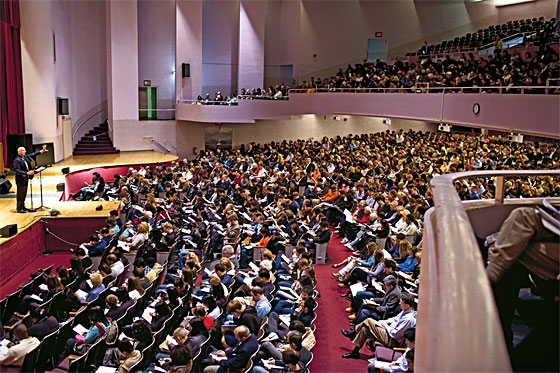
In 1989 Dr. Timothy J. Keller, his wife and three young sons moved to New York City to begin Redeemer Presbyterian Church. In 20 years it has grown to meeting for five services at three sites with a weekly attendance of over 5,000. Redeemer is notable not only for winning skeptical New Yorkers to faith, but also for partnering with other churches to do both mercy ministry and church planting. Redeemer City to City is working to help establish hundreds of new multi-ethnic congregations throughout the city and other global cities in the next decades.
Dr. Tim Keller is the author of several phenomenal Christo-centric books including:
Joy for the World: How Christianity Lost Its Cultural Influence and Can Begin Rebuilding It (co-authored with Greg Forster and Collin Hanson (February or March, 2014).
Encounters with Jesus:Unexpected Answers to Life’s Biggest Questions. New York, Dutton (November 2013).
Walking with God through Pain and Suffering. New York, Dutton (October 2013).
Judges For You (God’s Word For You Series). The Good Book Company (August 6, 2013).
Galatians For You (God’s Word For You Series). The Good Book Company (February 11, 2013).
Every Good Endeavor: Connecting Your Work to God’s Plan for the World. New York, Penguin Publishing, November, 2012.
Center Church: Doing Balanced, Gospel-Centered Ministry in Your City. Grand Rapids: Zondervan, September, 2012.
The Freedom of Self Forgetfulness. New York: 10 Publishing, April 2012.
Generous Justice: How God’s Grace Makes Us Just. New York: Riverhead Trade, August, 2012.
The Gospel As Center: Renewing Our Faith and Reforming Our Ministry Practices (editor and contributor). Wheaton: Crossway, 2012.
The Meaning of Marriage: Facing the Complexities of Commitment with the Wisdom of God. New York, Dutton, 2011.
King’s Cross: The Story of the World in the Life of Jesus (Retitled: Jesus the KIng: Understanding the Life and Death of the Son of God). New York, Dutton, 2011.
Gospel in Life Study Guide: Grace Changes Everything. Grand Rapids, Zondervan, 2010.
The Reason For God: Belief in an Age of Skepticism. New York, Dutton, 2009.
Counterfeit Gods: The Empty Priorities of Money, Sex, and Power, and the Only Hope That Matters. New York, Riverhead Trade, 2009.
Heralds of the King: Christ Centered Sermons in the Tradition of Edmund P. Clowney (contributor). Wheaton: Crossway Books, 2009.
The Prodigal God. New York, Dutton, 2008.
Worship By The Book (contributor). Grand Rapids: Zondervan, 2002.
Ministries of Mercy: The Call of the Jericho Road. Phillipsburg: P&R Publishing, 1997.
BOOK REVIEW: Erwin Lutzer’s “Where Do We Go From Here?”
HOPE AND DIRECTION IN OUR PRESENT CRISIS
Book Review by David P. Craig
Anyone who has lived their lives in the United States as a Christian for the past 20-50 years has witnessed a radical change in five major areas: (1) Our economy; (2) Our morality; (3) Our education; (4) Our Legal Rulings; and (5) The gaining privileged position of Islam and the decline and vilification of Christianity.
Lutzer gives ample illustrations to demonstrate the decline of the Judeo-Christian worldview and values that many of us grew up with, but doesn’t stop there. Going back to the Bible and history he gives us examples of how these types of changes and hardships for Christians have always been the norm. Hardship and suffering are certainties in the life of a Christian, but Lutzer reminds the reader “the consistent lesson of 2,000 years of church history is that the church does not need freedom to be faithful…If there is any truly good news in America, it will not be announced in Washington but will be heard through the lips and lives of believers who share the good news of the Gospel wherever God has planted them. Our task, quite simply, is to witness to the truth of the Gospel in a nation that is under judgment.”
Erwin Lutzer writes compellingly about the calling of the Christian as aliens in this world. He doesn’t minimize the hardships or sufferings that lie ahead. However, he uses examples from the Scriptures to demonstrate that our sufferings are purposeful and that we ultimately will win in the end. We have amazing resources and promises from God by which we are to live in the world and make a difference until Jesus returns. Lutzer’s book is more encouraging than depressing, because he reminds us of the sovereignty of God and how we are a part of His plans that cannot be thwarted no matter how bad things look now. Ultimately everything we do for Jesus matters and lasts for eternity.
I highly recommend this book because it offers numerous constructive things to focus our attention on until the return of Christ. It offers biblical thinking, principles to live by, and actions to take that really do make a difference in our society and for the sake of eternity. It offers hope for the present and for the future. You will be encouraged that you can stop being part of the problem, and how you can be part of God’s solution in our culture.
FRIDAY HUMOR: Do you want the bad news or the good news first?
Friday Humor: #31
A man went to see his doctor for a checkup. He went back the next day to get the results from the tests.
“Doc, how do I look?”
The doctor said, “I have good news and bad news. Which do you want to hear first?”
The man said, “Let me hear the good news first.”
The doctor said, “Well, the good news is you have twenty-four hours to live.”
“Good grief! That’s the good news?” the man gasped. “I’ve got twenty-four hours to live? Then what’s the bad news?”
The doctor replied, “The bad news is I was supposed to tell you yesterday.”
LAST WORDS OF AN AFRICAN MARTYR
UNTO DEATH
I’m part of the fellowship of the unashamed, the die has been cast, I have stepped over the line, the decision has been made–I’m a disciple of Jesus Christ–I won’t look back, let up, slow down, back away or be still.
My past is redeemed, my present makes sense, my future is secure–I’m finished and done with low living, sight walking, smooth knees, colorless dreams, tamed visions, worldly talking, cheap giving and dwarfed goals.
My pace is set, my gait is fast, my goal is heaven, my road is narrow, my way is rough, my companions are few, my guide is reliable, my mission is clear. I won’t give up, shut up, let up until I have stayed up, stored up, prayed up for the cause of Christ.
I must go till He comes, give till I drop, preach till everyone knows, work till he stops me and when He comes for His own, He will have no trouble recognizing me because my banner will have been clear.
*Excerpt from a writing found in a young African Christian’s room after he was martyred for his faith – Source: Erwin Lutzer. Where Do We Go From Here? Chicago: Moody Press, 2013.
BOOK REVIEW: DENNY BURK’S “WHAT IS THE MEANING OF SEX?”
GOD’S INTENTION FOR SEX
Book Review By David P. Craig
Denny Burk has written both a brilliant critique of errant sexual views and presented a cogent case for the biblical meaning of sex that transcends all cultures and time. Burk’s thesis developed in this book is that sex is a gift from God that is to be enjoyed exclusively within the covenant of marriage so that it might magnify God’s own covenant love for his people and thus bring glory to Him. The glory of God [all of who God is put on display] is the ultimate purpose of everything a Christian does – including sex.
There have been many books written by Christians in the past several years but they usually fall short in applying a teleological view of sex. In other words they address what the Bible has to say about sex, but not necessarily what the purpose of sex is. Burk writes: “What they [with reference to Mark Driscoll’s recent book on sex and marriage – but can be applied to various other authors] never asked, however, is the teleological question: Does this act fulfill God’s purposes for the sexual union? Does this act fulfill Gd’s ultimate purpose for marriage and sexuality–the glory of God? This is where teleology can help us.”
Burk proceeds to write a biblical theology of sex with a God-centered ethical foundation based on virtually everything the Bible has to say about our bodies, our interpretation of the relevant passages pertaining to sex, our marriages, conjugal unions, family planning, gender, sexuality and singleness. In all these areas Burk does a remarkable job of what he describes as blending biblical theology, ethics, and cultural issues pertaining to sex. He writes, “I am favoring a bleded approach that gives a privileged place to teleology within the framework of divine revelation. Scripture is plainly concerned with the formation of moral character as the basis for moral choices (as in character ethics). Scripture is also concerned with rules and divine commands (as in deontology). But Scripture also focuses on the glory of God as the purpose of all things (as in teleology).”
Therefore, Burk argues that the four aspects of sex as defined by God in the context of marriage as a covenant between and man and a woman are designed for (1) the consummation of marriage, (2) procreation, (3) expression of love, and (4) pleasure. However, these four purposes “comprise the means by which we glorify God with our sexuality.” Burk unfolds his thesis methodically, clearly, and with great theological depth that “the ultimate purpose of human sexuality is the glory of God and that the ultimate ethic is to glorify God with our sexuality.” I can’t possibly recommend this book high enough for both Christians and non-Christians to come to grips with the reason, meaning, and purpose for one’s gender, identity, sex, and marriage according to God’s great design.
*I was provided with a copy of this book for review by the publisher and was not required to write a fovorable review.