1. Remove hindrances. (a) remove the love of every sin. (b) remove the distracting concerns of this world, especially covetousness [Matthew 13:22, “As for what was sown among thorns, this is the one who hears the word, but the cares of the world and the deceitfulness of riches choke the word, and it proves unfruitful]. (c) Don’t make jokes with and out of Scripture.
2. Prepare your heart. [1 Samuel 7:3, And Samuel said to all those of the house of Israel, “If you are returning to the Lord with all your heart, then put away the foreign gods and the Ashtaroth from among you and direct your heart to the Lord and serve him only, and he will deliver you out of the hand of the Philistines.”] Do this by: (a) collecting your thoughts (b) purging unclean affections and desires (c) not coming to it rashly or carelessly.
3. Read it with reverence, considering that each line is God speaking directly to you.
4. Read the books of the Bible in order.
5. Get a true understanding of Scripture. [Psalm 119:73, “Your hands have made and fashioned me; give me understanding that I may learn your commandments.”] This is best achieved by comparing relevant parts of Scripture with each other.
6. Read with seriousness. [Deuteronomy 32:47, “For it is no empty word for you, but your very life, and by this word you shall live long in the land that you are going over the Jordan to possess.”] The Christian life is to be taken seriously since it requires striving [Luke 13:24, “Strive to enter through the narrow door. For many, I tell you, will seek to enter and will not able.“] and not falling short [Hebrews 4:1, “Therefore, while the promise of entering his rest still stands, let us fear lest any of you should seem to have failed to reach it”].
7. Persevere in remembering what you read. [Psalm 119:52, “When I think of your rules from of old, I take comfort, O LORD “] Don’t let it be stolen from you [Matthew 13:4, 19, “And as he sowed, some fell along the path, and the birds came and devoured them…When anyone hears the word of the kingdom and does not understand it, the evil one comes and snatches away what has been sown in his heart. This is what was sown along the path“]. If it doesn’t stay in your memory it is unlikely to be much benefit to you.
8. Meditate on what you read. [Psalm 119:15, “I will meditate on your precepts and fix my eyes on your ways.“] The Hebrew word for meditate means to be intense in the mind. Meditation without reading is wrong and bound to err, reading without meditation is barren and fruitless. It means to stir the affections, to be warmed by the fire of meditation [Psalm 39:3, “My heart became hot within me. As I mused, the fire burned; then I spoke with my tongue”].
9. Read with a humble heart. Acknowledge that you are unworthy that God should reveal himself to you [James 4:6b, “God opposes the proud, but gives grace to the humble”].
10. Believe it all to be God’s Holy Word. [2 Timothy 3:16, “All Scripture is God-breathed and profitable for teaching, for reproof, for correction, and for training in righteousness”]. We know that no sinner could have written it because of the way it describes sin. No saint could blaspheme God by pretending his own Word was God’s. No angel could have written it of the same reason [Hebrews 4:2, “For good news came to us just as to them, but the message they heard did not benefit them, because they were not united by faith with those who listened”].
11. Prize the Bible highly. [Psalm 119:72, “The law of your mouth is better to me than thousands of gold and silver pieces”]. It is your lifeline; you were born by it [James 1:18, “Of his own will he brought us forth by the word of truth, that we should be a kind of firstfruits of his creatures“]; you need to grow by it [1 Peter 2:2, “Like newborn infants, long for the pure spiritual milk, that by it you may grow up into salvation”].
12. Love the Bible ardently [Psalm 119:72, “The law of your mouth is better to me than thousands of gold and silver pieces”].
13. Come to read it with an honest heart [Luke 8:15, “As for that in the good soil, they are those who, hearing the word, hold it fast in an honest and good heart, and bear fruit with patience”]. (a) Willing to know the entire and complete will of God (b) reading in order to be changed and made better by it [John 17:17, “Sanctify them in the truth; your word is truth”].
14. Apply to yourself everything that you read, take every word as spoken to yourself. Its condemnation of sins as the condemnation of your own sins; the duty that it requires as the duty God would require from you [2 Kings 22:11, “When the king heard the words of the Book of the Law, he tore his clothes.”].
15. Pay close attention to the commands of the Word as much as the promises. Think of how you need direction just as much as you need comfort.
16. Don’t get carried away with the minor details, rather make sure to pay closest attention to the great things [Hosea 8:12, “Were I to write for him my laws by the ten thousands, they would be regarded as a strange thing”].
17. Compare yourself with the Word. How do you compare? Is your heart something of a transcript of it, or not?
18. Pay special attention to those passages that speak to your individual, particular and present situation. e.g. (a) Affliction – [Hebrews 12:7, “It is for discipline that you have to endure. God is treating you as sons. For what son is there whom his father does not discipline?”; Isaiah 27:9, “Therefore by this guilt of Jacob will be atoned for, and this will be the fruit of the removal of his sin: when he makes all the stones of the altars like chalkstones to pieces, no Asherim or incense altars will remain standing.”; John 16:20, “Truly, truly, I say to you, you will weep and lament, but the world will rejoice. You will be sorrowful, but your sorrow will turn into joy.”]; 2 Corinthians 4:17, “For this light momentary affliction is preparing for us an eternal weight of glory beyond all comparison”]. (b) Sense of Christ’s presence and smile withdrawn – Isaiah 54:8, “In overflowing anger for a moment I hid my face from you, but with everlasting love I will have compassion on you,’ says the LORD, your redeemer.”; Isaiah 57:16, “For I will not contend forever, nor will I always be angry; for the spirit would grow faint before me, and the breath of life that I made.”; Psalm 97:11, “Light is sown for the righteous, and joy for the upright in heart”]. (c) Sin – Galatians 5:24, “And those who belong to Christ Jesus have crucified the flesh with its passions and desires.”; James 1:15, “Then desire when it has conceived gives birth to sin, and sin when it is fully grown brings forth death.”; 1 Peter 2:11, “Beloved, I urge you as sojourners and exiles to abstain from the passions of the flesh, which wage war against your soul.”; Proverbs 7:10,14, 22-23, “And behold, the woman meets him, dressed as a prostitute, wily of heart…The mouth of forbidden women is a deep pit; he with whom the LORD is angry will fall into it. Do not rob the poor, because he is poor, or crush the afflicted at the gate, for the LORD will plead their cause and rob life of those who rob them.” (d) Unbelief – Isaiah 26:3, “You keep him in perfect peace whose mind is stayed on you, because he trusts in you.”; 2 Samuel 22:31, “This God–his way is perfect; the word of the LORD proves true; he is a shield for all those who take refuge in him.”; John 3:15, “that whoever believes in him may have eternal life.”; 1 John 5:10, “Whoever believes in the Son of God has the testimony in himself. Whoever does not believe God has made him a liar, because he has not believed in the testimony that God has borne concerning his Son.”; John 3:36, “Whoever believes in the Son has eternal life; whoever does not obey the Son shall not see life, but the wrath of God remains on him.”
19. Pay special attention to the examples and lives of people in the Bible as living sermons. (a) Punishments – Nebuchadnezzar and Herod (b) mercies and deliverances – Daniel, Jeremiah, the 3 youths in the fiery furnace.
20. Don’t stop reading the Bible until you have your heart warmed. [Psalm 119:93, “I will never forget your precepts, for by them you have given me life.” Let it not only inform you but also inflame you – Jeremiah 23:29, “Is not my word like fire, declares the LORD, and like a hammer that breaks the rock in pieces?”; Luke 24:32, They said to each other, “Did not our hearts burn within us while he talked to us on the road, while he opened to us the Scriptures?”
21. Put into practice what you read. [Psalm 119:66 & 105 “Teach me good judgment and knowledge, for I believe in your commandments…Your word is a lamp to my feet and a light to my path”; Deuteronomy 17:19, “And it shall be with him, and he shall read in it all the days of his life, that he may learn to fear the LORD his God by keeping all the words of this law and these statutes, and doing them.”
22. Christ is for us Prophet, Priest and King. Make use of His office as Prophet [Revelation 5:5, “And one of the elders said to me, ‘Weep no more; behold, the Lion of the tribe of Judah, the Root of David, has conquered, so that he can open the scroll and its seven seals.”; John 8:12, Again Jesus spoke to them, saying, “I am the light of the world. Whoever follows me will not walk in darkness, but will have the light of life.”; Psalm 119:102-103, “I do not turn aside from your rules, for you have taught me…How sweet are your words to my taste, sweeter than honey to my mouth!“] Get Christ not only to open the Scriptures up to you, but to open up your mind and understanding [Luke 24:45, “Then he opened their minds to understand the Scriptures“].
23. Make sure to put yourself under a true ministry of the Word, faithfully and thoroughly expounding the Word [Proverbs 8:34, “Blessed is the one who listens to me, watching daily at my gates, waiting beside my doors”]. be earnest and eager waiting on it.
24. Pray that you will profit from reading the Word [Isaiah 48:17, “Thus says the LORD, your Redeemer, the Holy One of Israel: ‘I am the LORD your GOd, who teaches you to profit, who leads you in the way you should go.”; Psalm 119:18, “Open my eyes, that I may behold wondrous things out of your law.”; Nehemiah 9:20, “My soul is consumed with longing for your rules at all times”].
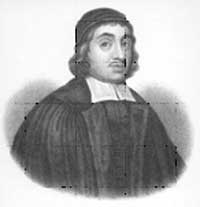
About Thomas Watson (c. 1620-1686)
Thomas Watson was probably born in Yorkshire. He studied at Emmanuel College, Cambridge, earning a Bachelor of Arts degree in 1639 and a Master of Arts degree in 1642. During his time at Cambridge, Watson was a dedicated scholar. After completing his studies, Watson lived for a time with the Puritan family of Lady Mary Vere, the widow of Sir Horace Vere, baron of Tilbury. In 1646, Watson went to St. Stephen’s, Walbrook, London, where he served as lecturer for about ten years, and as rector for another six years, filling the place of Ralph Robinson.
In about 1647, Watson married Abigail Beadle, daughter of John Beadle, an Essex minister of Puritan convictions. They had at least seven children in the next thirteen years; four of them died young.
During the Civil War, Watson began expressing his strong Presbyterian views. He had sympathy for the king, however. He was one of the Presbyterian ministers who went to Oliver Cromwell to protest the execution of Charles I. Along with Christopher Love, William Jenkyn, and others, he was imprisoned in 1651 for his part in a plot to restore the monarchy. Although Love was beheaded, Watson and the others were released after petitioning for mercy. Watson was formally reinstated to his pastorate in Walbrook in 1652.
When the Act of Uniformity passed in 1662, Watson was ejected from his pastorate. He continued to preach in private—in barns, homes, and woods—whenever he had the opportunity. In 1666, after the Great Fire of London, Watson prepared a large room for public worship, welcoming anyone who wished to attend. After the Declaration of Indulgence took effect in 1672, Watson obtained a license for Crosby Hall, Bishopsgate, which belonged to Sir John Langham, a patron of nonconformists. Watson preached there for three years before Stephen Charnock joined him. They ministered together until Charnock’s death in 1680. Watson kept working until his health failed. He then retired to Barnston, in Essex, where he died suddenly in 1686 while engaged in private prayer. He is buried in the same grave as his father-in-law who served as a minister at Barnston.
Watson’s depth of doctrine, clarity of expression, warmth of spirituality, love of application, and gift of illustration enhanced his reputation as a preacher and writer. His books are still widely read today.
Modern Reprints
All Things for Good (BTT; 128 pages; 1988). Watson once said he faced two great difficulties in is ministry: to make the unbeliever sad without grace and to make the believer glad with grace. In this study of Romans 8:28, formerly titled A Divine Cordial (first printed in 1663, one year after two thousand ministers were ejected from the Church of England), Watson encourages God’s people to rejoice. He explains how the best and worst experiences work for good. He writes, “To know that nothing hurts the godly, is a matter of comfort; but to be assured that all things which fall out shall co-operate for their good, that their crosses shall be turned into blessings, that showers of affliction water the withering root of their grace and make it flourish more; this may fill their hearts with joy till they run over.”
If someone asks, “Why do bad things happen to good people?” or “How can I know if I am called by God?,” offer them this book. Its chapters on the love of God, effectual calling, and the purpose of God are especially helpful in understanding Romans 8:28. Chapter 5, on the “tests of love to God,” is particularly searching.
The Art of Divine Contentment (SDG; 133 pages; 2001). Watson’s works are all marked by profound spirituality, terse style, impressive remarks, and practical illustrations. This book, first printed in 1653, is no exception. Based on Philippians 4:11, “I have learned, in whatsoever state I am therewith to be content,” Watson writes, “For my part, I know not any ornament in religion that doth more bespangle a Christian, or glitter in the eye of God and man, than this of contentment. Nor certainly is there any thing wherein all the Christian virtues do work more harmoniously, or shine more transparently, than in this orb. If there is a blessed life before we come to heaven, it is the contented life.”
Godly contentment is a theme missing from many pulpits today. A serious reading of this treatise or Jeremiah Burroughs’s Rare Jewel of Christian Contentment would do much to fill this void.
The Beatitudes (BTT; 307 pages; 1971). First published in 1660, this exposition of Matthew 5:1-12 is rich with instruction. For example, in explaining the blessedness of meekness (5:5), Watson explains meekness towards God as submission to His will and flexibility to His Word. Meekness towards man, he says, involves bearing injuries, forgiving injuries, and recompensing good for evil. In bearing injuries, meekness opposes a hasty spirit, malice, revenge, and speaking evil of others. In forgiving injuries, meekness forgives truly, fully, and often. In recompensing good for evil, Watson says, “To render evil for evil is brutish; to render evil for good is devilish; to render good for evil is Christian.” He offers numerous reasons why Christians should be meek, such as: Jesus Christ is meek; meekness is a great ornament to a Christian; meekness is the way to be like God; meekness argues a noble and excellent spirit; meekness is the best way to conquer and melt the heart of an enemy; meekness contains great promises, for the meek shall inherit the earth; and an un-meek spirit hinders peace. All of this is cogently explained in a mere fifteen pages (pp. 105-119).
A Body of Divinity (BTT; 316 pages; 1998). This book, first published after Watson’s death in 1692, was his magnum opus and became his most famous work. Following the questionand-answer format of the Westminster Shorter Catechism, it offers 176 sermons on the essential teachings of Christianity. It shows the author’s deep understanding of spiritual truths and his ability to make them clear to anyone. Unlike most other systematic theologies, it weds knowledge and piety together, and can be used effectively in daily devotions. It is perhaps the most experiential systematic theology ever written, with the exception of Wilhelmus à Brakel’s The Christian’s Reasonable Service.
The Lord’s Prayer and The Ten Commandments (cf. below) complete Watson’s exposition of the Shorter Catechism. This trilogy on the Shorter Catechism has been reprinted often over the centuries in one or three volumes.
The Duty of Self-Denial and Ten Other Sermons (SDG; 210 pages; 2001). This book includes eight chapters on self-denial, based on Luke 9:23, and ten additional sermons, seven of which have not been reprinted since the seventeenth century. Watson teaches that “self-denial is the first principle of Christianity.” He describes what self-denial is, then demonstrates the Christ-asserting nature of every self-denying act. The additional sermons in this volume are also valuable, particularly those on God as the reward of His people (Gen. 15:1), “kissing” the Son (Ps. 2:12), the comforting rod (Ps. 23:4), and the Judgment Day (Acts 17:31).
The Fight of Faith Crowned (SDG; 191 pages; 1996). This book contains six sermons that had not yet been reprinted in the twentieth century. They include “The Crown of Righteousness” (2 Tim. 4:8), “The Righteous Man’s Weal and the Wicked Man’s Woe” (Isa. 3:10-11), “Time’s Shortness” (a funeral sermon for the Puritan preacher John Wells, based on 1 Cor. 7:29), “The Fight of Faith Crowned” (a funeral sermon for Henry Stubbs, based on 1 Tim. 4:7-8), “A Plea for Alms” (Ps. 112:9), and “The One Thing Necessary” (Phil. 2:12). The last sermon strips away every excuse for not seeking God and pleads that we bow to the demands of the gospel. Watson concludes by explaining six helps for working out one’s salvation: Christ’s strength, diligence, love, humility, hope, and prayer.
Gleanings from Thomas Watson (SDG; 144 pages; 2001). This work offers quotations from Watson’s writings. It sorts them according to fifteen areas of the believer’s walk with Christ, including contentment, persecution, temptation, preaching, prayer, and meditation. Watson had the gift of presenting profound doctrinal truth in vivid images and colorful metaphors that are particularly memorable.
Here are a few samples:
• He who is ashamed of Christ is a shame to Christ.
• Worldly sorrows hasten our funerals.
• They that bear the cross patiently shall wear the crown triumphantly.
The Godly Man’s Picture (BTT; 252 pages; 1992). This work is subtitled Drawn with a Scripture Pencil, or, Some Characteristics of a Man who is Going to Heaven. After explaining the nature of godliness, Watson describes twenty-four marks of a godly man, including “moved by faith,” “fired with love,” “prizes Christ,” “loves the Word,” “is humble,” “is patient,” and “loves the saints.” The concluding chapters offer helps to godliness, advice on how to persevere in godliness, counsel and comfort for the godly, and teaching on the mystical union between Christ and His people.
Harmless as Doves: A Puritan’s View of the Christian Life (CFP; 188 pages; 1994). This book contains ten excellent sermons that provide a biblical picture of practical Christian living. They include “Christian Prudence and Innocency,” “On Becoming A New Creature,” “The Evil Tongue,” “Not Being Weary in Well-Doing,” “On Knowing God and Doing Good,” “Christ All in All,” “The Preciousness of the Soul,” “The Soul’s Malady and Cure,” “The Beauty of Grace,” and “The Trees of Righteousness Blossoming.” These sermons reveal Watson’s colorful and compelling style of preaching. They are experiential and practical and make excellent devotional reading.
Heaven Taken by Storm (SDG; 135 pages; 1992). This is an excellent handbook—perhaps the best ever written—on how to use the various means of grace. Based on Matthew 11:12, Watson describes how the Christian is to take the kingdom of heaven by holy violence through the reading and exposition of Scripture, prayer, meditation, self-examination, conversation, and keeping the Lord’s Day. He explains how the believer is to battle against self, Satan, and the world, and counters objections and hindrances to offering such violence. An appendix to the book includes two additional sermons: “The Happiness of Drawing Near to God” and “How We May Read the Scriptures with Most Spiritual Profit.”
This book helped lead Colonel James Gardiner (1688-1745) as well as many others to conversion. It is an excellent book to give to those who want to start reading the Puritans.
The Lord’s Prayer (BTT; 332 pages; 1994). Originally produced as a companion to A Body of Divinity on the Shorter Catechism, Watson continues the question-and-answer format to explain the petitions of Jesus’ model prayer. In our opinion, this book matches Herman Witsius’s The Lord’s Prayer in usefulness. Witsius’s work is more deliberate and theological, while Watson’s is more devotional and practical.
The Mischief of Sin (SDG; 176 pages; 1994). This is Watson’s most definitive treatment of sin. It includes four parts: “The Mischief of Sin,” “The Desperateness of Sinners,” “An Alarm to Sinners,” and “Hell’s Furnace Heated Hotter.” “The Mystery of the Lord’s Supper” is included in an appendix.
John MacArthur writes, “Thomas Watson’s study of sin is profound, convicting, thought-provoking, and filled with rich spiritual insight. It distills the best attributes of Puritan writing. As devotional as it is doctrinal, as practical as it is biblically sound, and as delightful as it is convicting, this books cuts to the very heart of the biblical issues regarding sin. You cannot read it and remain indifferent toward sin in your own life.”
A Plea for the Godly and Other Sermons (SDG; 480 pages; 1997). This collection containing some of Watson’s best work includes: “Comfort for the Church,” “The Happiness of Drawing Near to God,” “The Tongue, a World of Iniquity,” “The Mystical Temple,” “Christ All in All,” “The Perfume of Love,” “A New Creature,” “The Heavenly Race,” “The Fiery Serpents,” and Watson’s farewell sermon.
The Puritan Pulpit: Thomas Watson (c.1620-1686) (SDG; 233 pages; 2004). This book, the second in the Puritan Pulpit Series, is a collection of ten sermons not found in any other work of Watson’s in print today: “A Christian on Earth Still in Heaven,” “Christ’s Loveliness,” “God’s Anatomy Upon Man’s Heart,” “The Beauty of Grace,” “The Preciousness of the Soul,” “The Saint’s Desire to be with Christ,” “The Saint’s Spiritual Delight,” “The Soul’s Malady and Cure,” “The Tree of Righteousness Blossoming and Bringing Forth Fruit,” and “The Spiritual Watch.” These sermons are vintage Watson—pastoral and easy to understand, rich with illustration and abounding in application.
Religion Our True Interest (BB; 144 pages; 1992). This work consists of Watson’s notes on Malachi 3:16-18. It offers helpful teaching on religious conversation, God-centered thinking, God’s disposition toward His people, and the fear of God, which Watson defines as “reverencing and adoring God’s holiness, and setting ourselves always under His sacred inspection.” Today, we’re sorely in need of such teaching, for too many people who call themselves Christians lack this mark of grace, which Watson calls “the best certificate to show for heaven” though “the fear of God is not our plea, yet [it is] our evidence for heaven.”
The covenant-keeping character of God is evident as Watson explains God’s promise “They shall be mine” from the book of Malachi. Believers belong to God, Watson says, but God and all His riches also belong to believers. God says, “My wisdom shall be yours to teach you, my holiness shall be yours to sanctify you, my mercy shall be yours to save you,” to which Watson responds, “What richer dowry than deity? God is a whole ocean of blessedness. If there is enough in Him to fill the angels, then surely He has enough to fill us.” This book is rich fare for the encouraging, enlightening, and admonishing of believers.
Sermons of Thomas Watson (SDG; 745 pages; 1997). This work was originally titled Discourses on Interesting and Important Subjects, being the Select Works of the Reverend Thomas Watson (2 volumes). With the exception of The Beatitudes, this reprint puts everything in the original two volumes under one cover. It includes “The Christian’s Charter of Privileges,” “The Saint’s Spiritual Delight,” “A Treatise Concerning Meditation,” “The Upright Man’s Character,” and “The Godly Man’s Picture Drawn with a Scripture Pencil.” The treatise on meditation is particularly valuable. Edward Reynolds writes in the introductory epistle: “Meditation is the palate of the soul whereby we taste the goodness of God; the eye of the soul whereby we view the beauties of holiness; the askesis and gymnasia, whereby our spiritual senses are exercised,… it is the key to the wine-cellar, to the banqueting house, to the garden of spices, which letteth us in unto him whom our soul loveth; it is the arm whereby we embrace the promises at a distance, and bring Christ and our souls together.”
The Ten Commandments (BTT; 245 pages; 1998). This third volume that Watson wrote on the Shorter Catechism examines the moral law as a whole as well as each of its commandments. Watson repeatedly shows the various ploys of indwelling sin. In view of the importance of law in Christian living, this is an extremely valuable work.






 LifeCoach4God