
Category: Authors
All of the author’s on this site have a few things in common – they are evangelical; have a High view of God; believe in the literal bodily resurrection and future return of the Lord Jesus Christ; adhere to the inerrancy, authority, and sufficiency of the Scriptures; hold to the vicarious and substitutionary atonement of Jesus Christ; hold to the solas of the reformation – sola gratia; sola fide; sola scriptura; solus Christus; and soli deo gloria; and love the Church for whom Christ died. Almost all of them adhere to the “Doctrines of Grace”

God Has Always Been and Ever Will Be by J.I. Packer
“Before the mountains were brought forth, or ever you had formed the earth and the world, from everlasting to everlasting you are God.” – Psalm 90:2
The Self-Existence of God: His Aseity
Children sometimes ask, “Who made God?” The clearest answer is that God never needed to be made, because he was always there. He exists in a different way from us: we, his creatures, exist in a dependent, derived, finite, fragile way, but our Maker exists in an eternal, self-sustaining, necessary way—necessary, that is, in the sense that God does not have it in him to go out of existence, just as we do not have it in us to live forever. We necessarily age and die, because it is our present nature to do that; God necessarily continues forever unchanged, because it is his eternal nature to do that. This is one of many contrasts between creature and Creator.
God’s self-existence is a basic truth. At the outset of his presentation of the unknown God to the Athenian idolaters, Paul explained that this God, the world’s Creator, “is not served by human hands, as if he needed anything, because he himself gives all men life and breath and everything else” (Acts 17:23-25). Sacrifices offered to idols, in today’s tribal religions as in ancient Athens, are thought of as somehow keeping the god going, but the Creator needs no such support system. The word aseity, meaning that he has life in himself and draws his unending energy from himself (a se in Latin means “from himself”), was coined by theologians to express this truth, which the Bible makes clear:
Psalm 90:1-4, “Lord, you have been our dwelling place in all generations. Before the mountains were brought forth, or ever you had formed the earth and the world, from everlasting to everlasting you are God. You return man to dust and say, “Return, O children of man!” For a thousand years in your sight are but as yesterday when it is past, or as a watch in the night.”
Psalm 102:25-27, “Of old you laid the foundation of the earth, and the heavens are the work of your hands. They will perish, but you will remain; they will all wear out like a garment. You will change them like a robe, and they will pass away, but you are the same, and your years have no end.”
Isaiah 40:28-31, “Have you not known? Have you not heard? The Lord is the everlasting God, the Creator of the ends of the earth. He does not faint or grow weary; his understanding is unsearchable. He gives power to the faint, and to him who has no might he increases strength. Even youths shall faint and be weary, and young men shall fall exhausted; but they who wait for the Lord shall renew their strength; they shall mount up with wings like eagles; they shall run and not be weary; they shall walk and not faint.”
John 5:26, “For as the Father has life in himself, so he has granted the Son also to have life in himself.”
Revelation 4:10-11, “the twenty-four elders fall down before him who is seated on the throne and worship him who lives forever and ever. They cast their crowns before the throne, saying, “Worthy are you, our Lord and God, to receive glory and honor and power, for you created all things, and by your will they existed and were created.”
In theology, endless mistakes result from supposing that the conditions, bounds, and limits of our own finite existence apply to God. The doctrine of his aseity stands as a bulwark against such mistakes. In our life of faith, we easily impoverish ourselves by embracing an idea of God that is too limited and small, and again the doctrine of God’s aseity stands as a bulwark to stop this happening. It is vital for spiritual health to believe that God is great (cf. Ps. 95:1-7 below), and grasping the truth of his aseity is the first step on the road to doing this.
Psalm 95:1-7, “Oh come, let us sing to the Lord; let us make a joyful noise to the rock of our salvation! Let us come into his presence with thanksgiving; let us make a joyful noise to him with songs of praise! For the Lord is a great God, and a great King above all gods. In his hand are the depths of the earth; the heights of the mountains are his also. The sea is his, for he made it, and his hands formed the dry land. Oh come, let us worship and bow down; let us kneel before the Lord, our Maker! For he is our God, and we are the people of his pasture, and the sheep of his hand. Today, if you hear his voice, do not harden your hearts.”
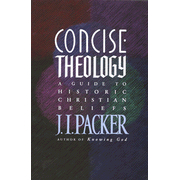
Article above adapted from J.I. Packer. Concise Theology: A Guide to Historic Christian Beliefs. Wheaton: Tyndale House Publishers, 2001, p. 26.
About J.I. Packer:
Dr. J.I. Packer is a British Theologian and has written over 50 books and numerous contributions to theological journals, reference works, and compilations. He is a a brilliant humble scholar who is best known for his works on Theology Proper – The Study of God. His classic work on the attributes and character of God – Knowing God is “must reading” for the Christian.
Tim Keller on How to Pray Better in Public and in Private
Lesson on Prayer from Thomas Cranmer

Years ago when I wanted to become more skillful in public prayer, I was fortunate to come across the collects of Thomas Cranmer, the writer of the original Episcopal Book of Common Prayer. The “collects” (the stress is on the first syllable)that Cranmer wrote were brief but extremely ‘packed’ little prayers that tied together the doctrine of the day to a particular way of living. They were prayed by the minister on behalf of the people, or prayed in unison by the whole congregation.
As I have read them over the years they have brought me two great benefits. First, they have given me a basic structure by which I can compose good public prayers, either ahead of time, or spontaneously. Cranmer’s collects consist of 5 parts:
1. The address – a name of God
2. The doctrine – a truth about God’s nature that is the basis for the prayer
3. The petition – what is being asked for
4. The aspiration – what good result will come if the request is granted
5. In Jesus’ name – this remembers the mediatorial role of Jesus
See this structure in Cranmer’s famous collect for the service of Holy Communion:
1. Almighty God
2. unto whom all hearts are open, all desires known, and from whom no secrets are hid,
3. cleanse the thoughts of our hearts by the inspiration of thy Holy Spirit,
4. that we may perfectly love thee, and worthily magnify thy holy name,
5. through Jesus Christ our Lord, Amen.
See how the prayer moves from a doctrinal basis (why we can ask for it) to the petition (what we want) to the aspiration (what we will do with it if we get it.) It is remarkable how this combines solid theology with deep aspirations of the heart and concrete goals for our daily life.
As time has gone on I have come to use Cranmer’s collects in my personal devotional time (this is the second benefit.) I take up one collect at the beginning of each new week. I read Paul Zahl’s volume The Collects of Thomas Cranmer (Eerdmans, 1999) that provides a very short explanation and meditation on the prayer. Then I pray that prayer to God reflectively every morning for the rest of the week as I begin my personal time with God. I commend this practice to you. Here are a couple of my favorites:
Blessed Lord, who has caused all holy Scripture to be written for our learning; grant that we may so hear them, read, mark, learn, and inwardly digest them; that by patience and comfort of thy holy word we may embrace and ever hold fast the blessed hope of eternal life, which thou hast given us in our savior, Jesus Christ. Amen.
Almighty God, who dost make the minds of all faithful men to be of one will; grant unto thy people, that they may love the thing which thou commandest, and desire that which thou dost promise, that among the sundry and manifold changes of the world, our hearts may be surely fixed where true joys are to be found, through Jesus Christ our Lord. Amen.
God, which hast prepared to them that love thee such good things as pass all man’s understanding; Pour into our hearts such love toward thee, that we loving thee in all things, may obtain thy promises, which exceed all that we can desire; through Christ our Lord. Amen.
Almighty and everlasting God, who art always more ready to hear than we to pray, and art wont to give more than either we desire or deserve, pour down upon us the abundance of thy mercy, forgiving us those things whereof our conscience is afraid and giving unto us that which our prayer dare not presume to ask; through Jesus Christ our Lord. Amen.
Almighty and everlasting God, give unto us the increase of faith, hope, and charity, that we may obtain that which thou dost promise, make us to love that which thou does command; through Jesus Christ our Lord. Amen.
*Article adapted from the Redeemer Report – October, 2010.
Zig Ziglar on the Question: Are You a Responder or a Reactor to Life?
It’s Better to Respond Than to React

When you respond to life, that’s positive; when you react to life, that’s negative. Example: You get sick and go to the doctor. Chances are good that after an examination, she would give you a prescription with instructions to return in several days. If, when you walk back in, the doctor starts shaking her head and says, “It looks like your body is reacting to the medicine; we’re going to have to change it,” you probably would get a little nervous. However, if the doctor smiles and says, “You’re looking great! Your body is responding to the medication,” you would feel relieved. Yes, responding to life is good. Reacting to the incidents of life is negative-and that’s bad.
The next example validates that fact.
Today, there is much turmoil in the job market, and many people are losing their jobs through downsizing, mergers, and takeovers. This creates some unusual opportunities for many people. One positive from this trend is that in the last five years, according to the Wall Street Journal, more than fifteen million new businesses have been created, well over half of them by women. Very few of the women had any marketable skills, and all of them had great financial need. Most of the new businesses were “trust” businesses, meaning that the women collected the money before they delivered the goods or services. The Journal comments that virtually none of the women have been prosecuted and jailed for failure to deliver on that trust. That’s exciting!
Many of these new businesses-possibly most of them-would never have been started had not an unfortunate event occurred in the people’s lives. When those events did occur and needs became obvious, the women chose to respond, and there is little doubt that many of them are better off now than they were before the “tragedy” took place.
The message is clear: If you respond to life instead of react to it, then you’ve got a much better chance of achieving success.
About Zig Ziglar:
Zig Ziglar was born in Coffee County, Alabama on November 26, 1926 and was the tenth of 12 children. In 1931, when Ziglar was five years old, his father took a management position at a Mississippi farm, and family moved to Yazoo City, Mississippi, where he spent his early childhood. In 1932, his father died of a stroke, and his younger sister died two days later.
Zigler served in the Navy during World War II (circa 1943-1945). He was in the Navy V-12 College Training Program, attending the University of South Carolina. In 1944 he met his wife Jean, in Jackson, Mississippi; he was 17 and she was 16. They married in late 1946.
Ziglar later worked as a salesman in a succession of companies. In 1968 he became the vice president and training director for the Automotive Performance company, moving to Dallas, Texas.
In 1970, Ziglar went into the business of motivational speaking full-time, with an emphasis on Christian values. Until then, he called himself by his given name, Hilary, but now satarted using his nickname, Zig, instead.
Until 2010 (aged 86) Ziglar traveled around the world taking part in motivational seminars, but has been somewhat limited recently due to a fall down a flight of stairs in 2007 that has impaired his short-term memory and physical abilities.
Through the ups and downs of life Ziglar has maintained his optimism and encouraged thousands of people to be their best in the particular endeavors to which God has called them. Zig Ziglar is one of the most inspirational people on the planet today and is a terrific example of someone who has embraced the struggle of life giving God the glory each step of the way.
The article above was adapted from one of Zig’s many encouraging books: Something to Smile About: Encouragement and Inspiration for Life’s UPS and DOWNS. Nashville: Thomas Nelson, 1997.
Zig Ziglar’s Books:
Ziglar, Zig; Ziglar, Tom. Born to Win: Find Your Success Code. Dallas: SUCCESS Media (2012).
Zig Ziglar. Something Else To Smile About: More Encouragement and Inspiration for Life’s Ups and Downs. Nashville: Thomas Nelson (2010).
Ziglar, Zig; Norman, Julie Ziglar. Embrace the Struggle: Living Life on Life’s Terms. New York: Howard Books (2009).
The One-Year Daily Insights with Zig Ziglar. Tyndale House Publishers (2009)
Inspiration 365 Days a Year with Zig Ziglar. SIM (2008)
God’s Way is Still the Best Way. Nashville: Thomas Nelson (2007).
Better Than Good: Creating a Life You Can’t Wait to Live. Nashville: Thomas Nelson Publishers (2006).
Conversations with My Dog. B&H Books (2005).
The Autobiography of Zig Ziglar. New York: Random House (2004).
Confessions of a Grieving Christian. Nashville: B&H Publishing Group 2004).
Courtship After Marriage: Romance Can Last a Lifetime. Nashville: Thomas Nelson (2004).
Staying Up, Up, Up in a Down, Down World. Nashville: Thomas Nelson (2004).
Zig Ziglar’s Life Lifters: Moments of Inspiration for Living Life Better. B&H (2003).
Selling 101: What Every Successful Sales Professional Needs to Know. Nashville: Thomas Nelson Publishers (2003).
Ziglar, Zig and Hayes, John P. Network Marketing For Dummies. Foster City, Calif: IDG Books (2001).
Zig Ziglar. Success for Dummies. Foster City, Calif: IDG Books (1998).
Zig Ziglar. Something to Smile About: Encouragement and Inspiration for Life’s UPS and DOWNS. Nashville: Thomas Nelson (1997).
Great Quotes from Zig Ziglar. Career Press (1997)
Zig Ziglar. Over the Top. Nashville: Thomas Nelson Publishers (1994).
Zig Ziglar. Five Steps to Successful Selling. Nigtingale-Conant Corp. (1987).
Zig Ziglar. Top Performance: How to Develop Excellence in Yourself and Others. New York: Berkley Books (1986).
Zig Ziglar. Raising Positive Kids in a Negative World. Nashville: Oliver Nelson (1985).
Zig Ziglar’s Secrets of Closing the Sale. New York: Berkley Books (1982).
Zig Ziglar. See You at the Top. Gretna: Pelican (1975).
C.S. Lewis Contrasting Heaven and Hell
“Of Heaven and Earth”
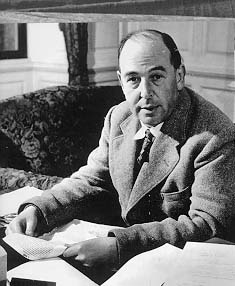
“I believe, to be sure, that any man who reaches Heaven will find that what he abandoned (even in plucking out his right eye) has not been lost: that the kernel of what he was really seeking even in his most depraved wishes will be there, beyond expectation, waiting for him in ‘the High Countries’. In that sense it will be true for those who have completed the journey (and for no others) to say that good is everything and Heaven everywhere. But we, at this end of the road, must not try to anticipate that retrospective vision. If we do, we are likely to embrace the false and disastrous converse and fancy that everything is good and everywhere is Heaven. But what, you ask, of earth? Earth, I think, will not be found by anyone to be in the end a very distinct place. I think earth, if chosen instead of Heaven, will turn out to have been, all along, only a region in Hell: and earth, if put second to Heaven, to have been from the beginning a part of Heaven itself.” —from The Great Divorce, Preface
C.S. Lewis. A Year with C. S. Lewis (p. 348). Harper Collins, Inc.. Kindle Edition.
John C. Maxwell on Contentment vs. Discontentment
Which Tent Do You Live In?

All men live in one of two tents—content or discontent. In which do you live?
The contented man looks beyond his circumstances and sees a better day; the discontented man looks at his circumstances and sees no other way.
The contented man understands the purpose for which he was born; the discontented man looks at other’s success with a face that is filled with scorn.
The contented man has surrendered to a purpose that demands his best; the discontented man has selfishly hoarded much and grasping for more, will not rest.
The contented man has placed his values on things which will forever last; the discontented man has placed his values on things which will soon be past.
The contented man is anchored to clear goals and is hardly ever swayed; the discontented man has no goals that anchor him and is many times dismayed.
The contented man counts his blessings and names them one by one; the discontented man counts other’s blessings and thinks he has no fun.
All men live in one of two tents—content or discontent. In which do you live?
About John C. Maxwell:
John C. Maxwell is an internationally renowned pastor, leadership expert, coach, and author who has sold over 21 million books. Dr. Maxwell founded EQUIP and the John Maxwell Company, organizations that have trained more than 5 million leaders in 174 countries. Every year he speaks to Fortune 100 companies, international government leaders, and organizations such as the United States Military Academy at West Point, the National Football League, and the United Nations. A New York Times, Wall Street Journal, and Business Week best-selling author, Maxwell’s The 21 Irrefutable Laws of Leadership has sold more than 2 million copies. Developing the Leader Within You and The 21 Indispensable Qualities of a Leader have each sold more than 1 million copies. The article above was adapted from the encouraging and practical book by John C. Maxwell. Think On These Things. Kansas City: Beacon Hill Press, 1979, Chapter 30. This was the book that launched Maxwell’s writing career!
You can read his blog at JohnMaxwellOnLeadership.com, follow him at Twitter.com/JohnCMaxwell, and learn more about him at JohnMaxwell.com.
Dr. Tim Keller on “The Christian’s Happiness” – Romans 8:28-30
“And we know that for those who love God all things work together for good, for those who are called according to his purpose. For those whom he foreknew he also predestined to be conformed to the image of his Son, in order that he might be the firstborn among many brothers. And those whom he predestined he also called, and those whom he called he also justified, and those whom he justified he also glorified” (Romans 8:28-30)

Cheer Up Christian: “Your bad things turn out for good, your good things can never be lost, and the best things are yet to come.” – Tim Keller
Introduction
If you’re a Christian, you know that Christianity is supposed to be about joy. You probably also know that you’re supposed to experience joy in spite of circumstances. The Bible clearly teaches that joy is available that should make us happy no matter the circumstances. There’s a joy that the deepest trouble can’t put out and, if properly nourished and nurtured, can even overwhelm the greatest grief.
When Jesus prays to the Father in John 17:13, he prays for us—his followers. He says, I pray that “they may have the full measure of my joy within them.” One chapter before, he says to his disciples, “You will rejoice. and no one will take away your joy” (16:22). That’s pretty amazing! He’s talking to the twelve disciples, men who are going to be persecuted. They’re going to be robbed of everything they own, tortured, and put to death. Yet Jesus promises to give them a joy that will withstand all that. Nothing—not disease or persecution or alienation or loneliness or torture or even death—will be able to take it away.
I often wrestle with that concept. I have to ask myself, “Why do things affect me so much? Why is my joy not relentless?” Sometimes I wonder, “Do we have that kind of impervious joy?” I’m afraid not. I don’t think we understand the nature of this joy.
Romans 8 is all about living in a suffering world marked by brokenness. Paul talks about trouble and persecution and nakedness and poverty and how Christians are supposed to live in a world like that. In 8:28–30 he offers three principles for finding joy in suffering. Paul tells us that if we follow Christ, our bad things turn out for good, our good things cannot be lost, and our best things are yet to come. Those are the reasons for our joy.
Our bad things turn out for good
Verse 28 says: “For those loving him, God works together all things for good.”
There are three implications of this first principle.
First, this verse says that all things happen to Christians. That is, the Christian’s circumstances are no better than anybody else’s. It is extremely important for us to understand this if we’re going to experience relentless and impervious joy. Terrible things happen to people who love God. Many Christians explicitly teach—and most Christians implicitly believe—that if we love and serve God, then we will not have as many bad things happen to us. That’s not true! Horrible things can happen to us, and believing in and loving and serving God will not keep them from happening. All the same things that happen to everybody else will happen to people who love God. “All things” means all things, in this text. In verse 35 Paul says, “What can separate us from the love of Christ? Can trouble, hardship, persecution, famine, poverty, danger, or sword?” Those are terrible things. Paul is saying all the same things that happen to everybody else will happen to us, even if we love God. It’s very important to realize that.
The second implication of this point is that when things work together in your life, it’s because of God. Notice Paul does not say, “Things work together for good.” Things never work together for good on their own. Rather, if anything good happens, it is because God is working it together.
Earlier in Romans 8, Paul discusses how things fall apart because the world is burdened with evil and sin. Things are subject to decay. Everyone will eventually experience the decay of their bodies; that’s the nature of things. The little grains of sand on the beach used to be a mountain. Everything falls apart; things do not come together. This verse tells Christians to get rid of the saccharine, sentimental idea that things ought to go right, that things do go right, and that it’s normal for things to go right. Modern, Western people believe that if things go wrong, we should sue, because things ought to go right. But Christians have to discard that idea completely. Christians have to recognize that if our health remains intact, it is simply because God is holding it up. If people love us, if someone is there to hug us or squeeze our hand, if someone loves us in spite of all our flaws—if someone loves us at all—it’s because God is bringing all things together. God is holding it up. Everything that goes well is a miracle of grace.
The third implication of this principle is the most basic: Although bad things happen, God works them for good. This verse does not promise that those who love God will have better circumstances. Nor does this verse say that bad things are actually good things. Rather, it acknowledges that these are bad things, but it promises that they’re working for good. That means God will work them to good effect in your life.
The story of Jesus standing before the tomb of Lazarus is an endless source of insight for me. As he was about to raise Lazarus from the dead, Jesus was not smiling. He was angry. He was weeping. Why? Because death is a bad thing! Jesus wasn’t thinking, “They think that this is a tragedy, but no harm done! I’m about to raise him from the dead. This looks like a bad thing, but it’s not. It’s really a good thing! It’s a way for me to show my glory. It’s really exciting! I can’t wait!” He wasn’t thinking that. Jesus was weeping at the tomb, because the bad thing he’s about to work for good is bad. The story of Lazarus does not give you a saccharine view of suffering, saying bad things are really blessings in disguise or that every cloud has a silver lining. The Bible never says anything like that! God will give bad things good effects in your life, but they’re still bad. Jesus Christ’s anger at the tomb of Lazarus proves that he hates death. He also hates loneliness, alienation, pain, and suffering. Jesus hates it all so much that he was willing to come into this world and experience it all himself, so that eventually he could destroy it without destroying us.
There’s no saccharine view in the Christian faith. The promise is not that if you love God, good things will happen in your life. The promise is not that if you love God, the bad things really aren’t bad; they’re really good things. The promise is that God will take the bad things, and he’ll work them for good in the totality.
Keep in mind that verse 28 says all things work together for good. That doesn’t mean that when something bad happens, we can decide to give God a week to show us how the situation is going to turn out for good. In fact, don’t wait a month. Don’t wait a year. Don’t wait a decade. The promise isn’t for a month or a year or a decade. The promise is not that we will see how every bad patch in our lives works out for our good. The promise is that God will make sure that all the bad circumstances will work together for your life in its totality.
The best summary of this lesson that anybody has ever come up with is John Newton’s. He said: “Everything is necessary that he [God] sends; nothing can be necessary that he withholds.” What John Newton and Paul are saying is that if God has withheld good things—things that you think are good—they would only be good in the short run. In the long run, they would be terrible. They would be good in the partial but not in the whole. On the other hand, God will only bring bad things into your life—things God knows are bad—in order to cure you of things that can destroy you in the long run. The premise is, the things that really hurt—foolishness, pride, selfishness, hardness of heart, and the belief that you don’t need God—are the only things that can hurt you in the long run. In the short run selfishness and self-deception feel great, but in the long run they will destroy you.
Your joy will be impervious if you hold onto these three principles. Bad things will happen to you. We shouldn’t be shocked or surprised when bad things happen. One of the main reasons a lot of Christians are continually overthrown is not simply because bad things happen to them. At least half of their discouragement and despondency is due to their surprise at the bad things that happen to them. Do you see the distinction? Fifty percent of the reason we get so despondent is that we’re shocked. We say, “This isn’t how it’s supposed to be.” We may say life should be better, but that’s not what the promise is. Or we say we love God, therefore, surely we will have more good circumstances. That’s not the promise either. Until you understand what the promise is, you’re going to be continually shocked and even overthrown.
Our good things can never be lost
The second principle in this passage is that the good things we have cannot be lost. If you’ve been a Christian for any period of time, you know that Romans 8:28 is a very famous verse. People use it all the time. It’s what I call a “blessing box” verse. A blessing box is a collection of verses you rip out of context and recite without concern for what came before and after the verse. It feels good, so you use it. For example, people use Romans 8:28 to assure themselves that when bad things happen, then surely good things will happen. You might think, “I didn’t get into the grad school I wanted to get into, but that’s because there’s a better grad school for me somewhere.” Or, “I didn’t marry the girl or guy I wanted to marry, but that means there’s a better one for me somewhere.” That’s not the promise.
There’s a little word between verses 28 and 29 that indicates the verses go together. The little word is for. “All things work together for good for those who love God and are called according to his purpose, for those he foreknew he also predestined to be conformed into the likeness of his Son.”
God does not promise you better life circumstances if you love him. He promises you a better life. Grad school and marriage are circumstances. We’re talking about a joy that goes beyond circumstances. How dare we interpret verse 28 as a joy that is dependent on those things! Here is an important principle: Jesus Christ did not suffer so that you would not suffer. He suffered so that when you suffer, you’ll become like him. The gospel does not promise you better life circumstances; it promises you a better life.
Romans 8:29 tells us the goal toward which all our circumstances are moving us. Paul uses the word predestined. He’s not introducing the word to confuse you—he doesn’t intend to explain the doctrine of predestination or address the issues that arise when that word is mentioned. He uses this word to comfort us. Something that is predestined is fixed. What Paul means is that if you love God, you can count on a promise that is absolutely fixed, no matter what. That’s all he’s trying to get across.
What is it that is predestined? That we will be conformed to the image of Christ. The Greek word here is morpha, from which we get the word metamorphosis. Paul is saying that God promises to “metamorphosize” us. He promises to change our very inner essence into the very inner essence of Jesus Christ. To be a Christian is to become passionately in love with the character of Jesus. You read about him in the Bible and are amazed by the truth and love you find in his life. You see wisdom and utter conviction. You see incredible courage, brightness, and radiance. The good that God is moving you toward through everything that happens in your life—whether externally good or bad—is your transformation into Christ’s nature. If you love God, everything that happens in your life will mold you, sculpt you, polish you, and shape you into the image of his Son. He is making you like him. He’ll give you Christ’s incredible compassion and courage. God is working everything that happens in your life toward that magnificent goal. It’s predestined. It’s guaranteed.
One of the most astounding things in Romans 8:30 is this: “And those he predestined, he also called; those he called, he also justified; those he justified, he also glorified.” Glorified is in the past tense. Shouldn’t Paul say, “The ones he foreknew he predestined, and justified, and will glorify”? Because the apostle is so absolutely certain that you are bound—that God is going to make you as beautiful as Jesus and give you all these incredible things—he writes of the glorification as an accomplished fact. He talks about it in the past tense because it’s as good as done. God is not going to let anything in life get between you and that goal. You are predestined to be conformed to the image of God’s Son.
In Romans 8:29 Paul calls Christ “the firstborn among many brothers.” That means we are all sons of God. We are all adopted into the family. When Paul alludes to adoption, he’s talking about a practice that was common in the Roman world, but one that’s quite different from the way we think of adoption. In the Roman world, most people who were adopted were adults. When a wealthy man had no heir and didn’t want his estate to be broken up when he died, he would adopt an adult male, usually someone who worked for him whom he trusted. By adopting that adult male, he made him his son. The minute the legal procedure took place, their relationship was changed from formal to intimate, from temporary and conditional to permanent and unconditional. All the debts the man owed before his adoption were wiped out, and he suddenly became rich.
Being completely conformed to the likeness of God’s Son is something that we look forward to in the future, although the transformation is happening now gradually. Being adopted among many brothers is something that we have now. The minute you become a Christian, you have intimacy of relationship. You have an unconditional relationship. You become wealthy, because everything that Jesus Christ has accomplished is transferred to you. You become beautiful and spiritually rich in him.
Some people are put off by Paul’s language of adoption because it’s gender insensitive. They argue, “Wouldn’t it be better to say that we become sons and daughters of God?” It would, but that misses the whole point. Some time ago, a woman helped me understand this. She was raised in a non-Western family from a very traditional culture. There was only one son in the family, and it was understood in her culture that he would receive most of the family’s provisions and honor. In essence, they said, “He’s the son; you’re just a girl.” That’s just the way it was.
One day she was studying a passage on adoption in Paul’s writings. She suddenly realized that the apostle was making a revolutionary claim. Paul lived in a traditional culture just like she did. He was living in a place where daughters were second-class citizens. When Paul said—out of his own traditional culture—that we are all sons in Christ, he was saying that there are no second-class citizens in God’s family. When you give your life to Christ and become a Christian, you receive all the benefits a son enjoys in a traditional culture. As a white male, I’ve never been excluded like that. As a result, I didn’t see the sweetness of this welcome. I didn’t recognize all the beauty of God’s subversive and revolutionary promise that raises us to the highest honor by adopting us as his sons.
Our adoption means we are loved like Christ is loved. We are honored like he is honored—every one of us—no matter what. Your circumstances cannot hinder or threaten that promise. In fact, your bad circumstances will only help you understand and even claim the beauty of that promise. The more you live out who you are in Christ, the more you become like him in actuality. Paul is not promising you better life circumstances; he is promising you a far better life. He’s promising you a life of greatness. He is promising you a life of joy. He’s promising you a life of humility. He’s promising you a life of nobility. He’s promising you a life that goes on forever.
The best things are yet to come
That brings us to the third point. Why can you be joyful no matter what? Your bad things turn out for good, your good things can never be lost, and the best is yet to come. If you understand what is to come, you can handle anything here. What amazes me is that even Ivan Karamazov, the atheist character in Dostoevsky’s The Brothers Karamazov, understood how knowing what is to come helps a person endure present circumstances. He said:
I believe that suffering will be healed and made up for, that in the world’s finality, at the moment of eternal harmony, something so precious will come to pass that it will suffice for all hearts, for the comforting of all resentments, for the atonement of all the crimes of humanity, of all the blood that’s been shed, that it will make it not just possible to forgive, but to justify all that’s happened.
I don’t want you to think that this talk about glory and about heaven trivializes suffering. In fact, Ivan Karamazov said that this hope is the only worldview that takes our brokenness seriously. Our souls are so great and our suffering is so deep that nothing but this promise can overwhelm it. Glory does not trivialize human brokenness. It’s the only thing that takes it seriously. What else could possibly deal with the hurts of our hearts? Your soul is too great for anything but this. Don’t you know a compliment when you hear it?
About the Author
Timothy Keller is founding pastor of Redeemer Presbyterian Church (PCA) in New York City and the author of numerous books, including The Reason for God, King’s Cross, Counterfeit Gods, The Prodigal God, and Generous Justice.
The sermon above was adapted from a collection of Sermons in a book entitled “Sunday’s Best” published by Hendrickson Publishers in Peabody, Massachusetts, 2011.
James M. Boice: The Lord Almighty is With Us
“The Lord Almighty is with us; the God of Jacob is our fortress.” – Psalm 46:11

The conclusion and proper application of Psalm 46 is this statement in verse 11. Who is he, this God who is his people’s refuge? The answer is given in the two names of God in this refrain.
First, he is “the Lord Almighty.” The words are literally “the Lord of Hosts (Jehovah Sabaoth).” “Hosts” refers to the armies of Israel, on the one hand, and to the angelic armies of God, on the other. This makes the name especially apt in this psalm, since the psalm is based on a historical deliverance of the people from earthly armies, whatever their origin, and also looks forward to a final deliverance when God will subdue the hostile forces of rebellious man forever. We have a wonderful insight into the power of God’s hosts in the story of Elisha at Dothan. The city of Dothan had been surrounded by the armies of Ben-Hadad of Syria in an attempt to capture Elisha, and they were discovered early in the morning by Elisha’s young servant. When he saw the soldiers and chariots positioned around the city, he rushed back inside and cried out to Elisha, saying, “Oh, my lord, what shall we do?” (2 Kings 6:15). Elisha prayed that God would open the eyes of his servant to see the heavenly hosts protecting him, and when God did, the servant saw that the hills were filled with horses and chariots of fire around Elisha. Elisha reminded his servant that “Those who are with us are greater than those who are with them” (v. 16).
Second, God is the God of Jacob. Jacob was the third of the three Jewish patriarchs and the least outstanding of the three. He was a schemer, as his name implies. It took him a lifetime to learn to trust God. Yet the God of Abraham was his God no less than he was the God of Abraham. This is your God too, if you have come to him through faith in Jesus Christ. And if he is your God, then he is with you at all times, which is what this important couplet says. On the day he died, John Wesley had already nearly lost his voice and could be understood only with difficulty. But at the last with all the strength he could summon, Wesley suddenly called out, “The best of all is, God is with us.” Then, raising his hand slightly and waving it in triumph, he exclaimed again with thrilling effect, “The best of all is, God is with us.” Is the Lord Almighty with you? Is the God of Jacob your refuge? Make sure that he is. The storms of life will come, and the greatest storm of all will be the final judgment. Make Christ your refuge now, while there is still time.
About Dr. James Montgomery Boice
*Dr. James Montgomery Boice, just 8 weeks after being diagnosed with a fatal liver cancer, died in his sleep on June 15, 2000. The senior pastor of Tenth Presbyterian Church in Philadelphia, he was a world-famous Bible teacher, author, and statesman for Reformed theology. He informed his congregation of 32 years of his condition on May 7, proclaiming his complete confidence in God’s sovereignty and goodness.
In the past 72 years, historic Tenth Presbyterian Church had two senior pastors, Donald Grey Barnhouse and James Montgomery Boice – previous to Dr. Philip Graham Ryken (Currently the President at Wheaton College). Founded in 1828, the church itself predates their tenure by another hundred years. Tenth Presbyterian Church lies in the very heart of the city and today has about 1,200 members.
James Montgomery Boice accepted the position as senior pastor in 1968, and was the teacher of the Bible Study Hour since 1969 and the more recent God’s Word Today broadcast as well. Dr. Boice held degrees from Harvard, Princeton Theological Seminary, and the University of Basel, Switzerland. He had written or contributed to nearly 50 books, including Foundations of the Christian Faith, Living by the Book, and exegetical commentaries on Genesis, Psalms, Acts, and Romans.
He was no less involved in the preserving of the fundamentals of the faith than his predecessor, Dr. Barnhouse. In 1985, Boice assumed the presidency of Evangelical Ministries, Inc., the parent organization of the Bible Study Hour, Bible Study Seminars, Bible Studies magazine, and other teaching ministries. In 1997, Evangelical Ministries merged with Christians United for Reformation and the Alliance of Confessing Evangelicals, taking the latter as the new organization’s name, and Dr. Boice assumed the presidency. In 1997, he was a founding member of, and chaired, the International Council on Biblical Inerrancy.
Of particular concern to Boice was the matter of the church and her relationship to and engagement of society. His recent book, Two Cities, Two Loves, maintains that Christians are citizens of the kingdom of this world and the kingdom of heaven and that they have responsibilities in each. He urged Christians to “participate in secular life rather than merely shoot from the sidelines at secular people.”
His wife, Linda, and three daughters survive Dr. Boice. Characteristic of his ministry was his pushing Christians to commit themselves to staying in one place. He lived what he preached, committing to the church and his downtown neighborhood for 30 years. A gifted pastor and leader, he turned down many attractive opportunities in order to build a sense of permanence and belonging. And he urged his parishioners to do the same. The article above was adapted from Boice’s commentary on the Pslams.
“I See You, and Jesus Sees You” by R.C. Sproul
Series: Friday Humor #4

A local newspaper told an anecdote about a burglar who stalked the neighborhood watching for homes left unguarded by people leaving for vacation. He watched as a family loaded their suitcases into their car and departed. He waited until dark and then approached the front door and rang the bell. There was no answer. The burglar neatly picked the lock and let himself in. He called into the darkness, “Is anybody home?” He was stunned when he heard a voice in reply, “I see you, and Jesus sees you.” Terrified, the burglar called out, “Who’s there?” Again the voice came back, “I see you, and Jesus sees you.” The burglar switched on his flashlight and aimed it in the direction of the voice. He was instantly relieved when his light revealed a caged parrot reciting the refrain, “I see you, and Jesus sees you.” The burglar laughed out loud and switched on the lights. Then he saw it. Beneath the parrot’s cage was a huge Doberman pinscher. Then the parrot said, “Attack, Jesus, attack!”
Adapted from R.C. Sprouls excellent book on sanctification entitled Pleasing God. Tyndale: Wheaton, 1991, p. 46.
This is Not An Abandoned World! By Steve Brown

While I was driving the other day, I saw the ugliest car I’ve ever seen. This car wasn’t just ugly–it was ugly on top of ugly. It had a large gash on its side; one of the doors was held together with baling wire; and several other parts were almost completely rusted out. The car’s muffler was so loose that with every bump, it hit the street, sending sparks in every direction. I couldn’t tell the original color of the car. The rust had eaten away much of the paint, and so much of the car had been painted over with so many colors that any one of them (or none of them) could have been the first coat. The most interesting thing about the care was the bumper sticker: “THIS IS NOT AN ABANDONED CAR.”
We live in a fallen world, and sometimes it looks as ugly as that car. Almost everywhere you turn, you can see tragedy and heartache. Only a fool misses the point from the morning headlines that we are sitting on the edge of disaster.
A long time ago, in a manger, a baby was born. He was a sign to us. His presence read, ‘THIS IS NOT AN ABANDONED WORLD.”
During every Christmas season, there’s a break in the bleakness; a bit of beauty in the middle of the ugliness shines through. People will laugh and make merry. Most won’t understand why they laugh. Many of them will make merry because that is what one is supposed to do during the holiday season. But there are some who will pause and remember, “For unto us a child is born.”
We have not been abandoned. Someday the Owner will return, then all the ugliness will be remedied. There won’t be anymore pain, and all tears will be dried.
May you live merrily because He came. Make your life merry because He keeps coming. Keep it merry because He is coming again to set things right.
Two Biblical Reminders of Our King and Kingdom to Come:
There shall come forth a shoot from the stump of Jesse,
and a branch from his roots shall bear fruit.
And the Spirit of the Lord shall rest upon him,
the Spirit of wisdom and understanding,
the Spirit of counsel and might,
the Spirit of knowledge and the fear of the Lord.
And his delight shall be in the fear of the Lord.
He shall not judge by what his eyes see,
or decide disputes by what his ears hear,
but with righteousness he shall judge the poor,
and decide with equity for the meek of the earth;
and he shall strike the earth with the rod of his mouth,
and with the breath of his lips he shall kill the wicked.
Righteousness shall be the belt of his waist,
and faithfulness the belt of his loins.
The wolf shall dwell with the lamb,
and the leopard shall lie down with the young goat,
and the calf and the lion and the fattened calf together;
and a little child shall lead them.
The cow and the bear shall graze;
their young shall lie down together;
and the lion shall eat straw like the ox.
The nursing child shall play over the hole of the cobra,
and the weaned child shall put his hand on the adder’s den.
They shall not hurt or destroy
in all my holy mountain;
for the earth shall be full of the knowledge of the Lord
as the waters cover the sea.
In that day the root of Jesse, who shall stand as a signal for the peoples—of him shall the nations inquire, and his resting place shall be glorious (Isaiah 11:1-10).
“Then I saw a new heaven and a new earth, for the first heaven and the first earth had passed away, and the sea was no more. And I saw the holy city, new Jerusalem, coming down out of heaven from God, prepared as a bride adorned for her husband. And I heard a loud voice from the throne saying, “Behold, the dwelling place of God is with man. He will dwell with them, and they will be his people, and God himself will be with them as their God. He will wipe away every tear from their eyes, and death shall be no more, neither shall there be mourning, nor crying, nor pain anymore, for the former things have passed away.”
And he who was seated on the throne said, “Behold, I am making all things new.” Also he said, “Write this down, for these words are trustworthy and true.” And he said to me, “It is done! I am the Alpha and the Omega, the beginning and the end. To the thirsty I will give from the spring of the water of life without payment. The one who conquers will have this heritage, and I will be his God and he will be my son. But as for the cowardly, the faithless, the detestable, as for murderers, the sexually immoral, sorcerers, idolaters, and all liars, their portion will be in the lake that burns with fire and sulfur, which is the second death.”
Then came one of the seven angels who had the seven bowls full of the seven last plagues and spoke to me, saying, “Come, I will show you the Bride, the wife of the Lamb.” And he carried me away in the Spirit to a great, high mountain, and showed me the holy city Jerusalem coming down out of heaven from God, having the glory of God, its radiance like a most rare jewel, like a jasper, clear as crystal. It had a great, high wall, with twelve gates, and at the gates twelve angels, and on the gates the names of the twelve tribes of the sons of Israel were inscribed—on the east three gates, on the north three gates, on the south three gates, and on the west three gates.
And the wall of the city had twelve foundations, and on them were the twelve names of the twelve apostles of the Lamb. And the one who spoke with me had a measuring rod of gold to measure the city and its gates and walls. The city lies foursquare, its length the same as its width. And he measured the city with his rod, 12,000 stadia. Its length and width and height are equal. He also measured its wall, 144 cubits by human measurement, which is also an angel’s measurement. The wall was built of jasper, while the city was pure gold, like clear glass.
The foundations of the wall of the city were adorned with every kind of jewel. The first was jasper, the second sapphire, the third agate, the fourth emerald, the fifth onyx, the sixth carnelian, the seventh chrysolite, the eighth beryl, the ninth topaz, the tenth chrysoprase, the eleventh jacinth, the twelfth amethyst. And the twelve gates were twelve pearls, each of the gates made of a single pearl, and the street of the city was pure gold, like transparent glass.
And I saw no temple in the city, for its temple is the Lord God the Almighty and the Lamb. And the city has no need of sun or moon to shine on it, for the glory of God gives it light, and its lamp is the Lamb. By its light will the nations walk, and the kings of the earth will bring their glory into it, and its gates will never be shut by day—and there will be no night there. They will bring into it the glory and the honor of the nations. But nothing unclean will ever enter it, nor anyone who does what is detestable or false, but only those who are written in the Lamb’s book of life.
Then the angel showed me the river of the water of life, bright as crystal, flowing from the throne of God and of the Lamb through the middle of the street of the city; also, on either side of the river, the tree of life with its twelve kinds of fruit, yielding its fruit each month. The leaves of the tree were for the healing of the nations. No longer will there be anything accursed, but the throne of God and of the Lamb will be in it, and his servants will worship him. They will see his face, and his name will be on their foreheads. And night will be no more. They will need no light of lamp or sun, for the Lord God will be their light, and they will reign forever and ever.
And he said to me, “These words are trustworthy and true. And the Lord, the God of the spirits of the prophets, has sent his angel to show his servants what must soon take place.” “And behold, I am coming soon. Blessed is the one who keeps the words of the prophecy of this book” (Revelation 21:1-22:7).
For Thought:
Reflect on the passages just cited. Try to etch into your mind what the future holds for the children of the King. Then, as you face various hardships, recall your future with Him. And remember, just as He has prepared a great inheritance for His children, so has He chosen to prepare them to receive it. He is with you now, working in your life to make you ready for glory. You can find peace and joy in that.
About Steve Brown:
Dr. Steve Brown is one of the most sought after preachers and conference speakers in the country. Having had extensive radio experience before entering the ministry, he is now heard weekdays on the national radio program, Key Life, and one minute feature, “Think Spots”. Steve also hosts a weekly radio talk show, “Steve Brown, Etc.”. He served as the senior pastor of Key Biscayne Presbyterian Church for 17 years before joining the Reformed Theological Seminary (RTS) faculty as Professor of Preaching. After teaching full time for almost two decades at RTS, Dr. Brown retired and is Emeritus Professor of Preaching but remains an Adjunct Professor of Preaching teaching occasional classes each year.
Dr. Brown is the author of many (16 and counting) books and also serves on the Board of the National Religious Broadcasters and Harvest USA (He earned his B.A. from High Point College; an S.T.B. from Boston University School of Theology; and an Litt.D. from King College). Steve is one of my favorite writers and speakers because he is authentic, a great story-teller, is a theologian in disguise, and really knows how to address the realities of how sinful humans can experience the amazing grace of God. The article above was adapted from pages 62-63 in his excellent book on surviving and thriving in a tough world: Jumping Hurdles, Hitting Glitches, and Overcoming Setbacks. Colorado Springs: NavPress, 1992.
Steve Brown Has Authored These Outstanding Grace-Filled Books:
Three Free Sins: God’s Not Mad at You. New York: Simon and Schuster/ Howard Books, 2012.
A Scandalous Freedom. New York: Simon and Schuster/ Howard Books, 2009.
What Was I Thinking? Things I’ve learned Since I Knew It All. New York: Simon and Schuster/ Howard Books, 2006.
Follow the Wind: Our Lord, the Holy Spirit. Grand Rapids: Baker, 1999.
Approaching God: How to Pray. New York: Howard, 1996.
Living Free: How to Live a Life of Radical Freedom and Infectious Joy. Grand Rapids: Baker, 1994.
Born Free: How to Find Radical Freedom and Infectious Joy in an Authentic Faith. Grand Rapids: Baker, 1993.
How To Talk So People Will Listen. Grand Rapids: Baker, 1993.
If Jesus Has Come: Thoughts on the Incarnation for Skeptics, Christians and Skeptical Christians by a Former Skeptic. Grand Rapids: Baker, 1992.
Jumping Hurdles, Hitting Glitches, Overcoming Setbacks. Colorado Springs: NavPress, 1992.
No More Mr. Nice Guy! Saying Goodbye to “Doormat” Christianity. Nashville: Thomas Nelson, 1991.
When Being Good Isn’t Good Enough. Nashville: Thomas Nelson, 1990.
Welcome to the Family: A Handbook for Living the Christian Life. Old Tappan, New Jersey: Fleming H. Revell, 1990.
When Your Rope Breaks: Christ-centered advice on how to go on living—when making it through another day is the hardest thing in the world. Nashville: Thomas Nelson, 1988.
Heirs with the Prince. Nashville: Thomas Nelson, 1985.
If God is in Charge: Thoughts On The Nature of God For Skeptics, Christians, and Skeptical Christians.Grand Rapids: Baker 1983.
 LifeCoach4God