Chuck Swindoll on The Huge Importance of Our Attitude

Attitude is the Most Important Thing by Chuck Swindoll

Swindoll C image

“The longer I live the more I realize the impact of attitude on life. Attitude to me is more important than the past, than education, than money, than circumstances, than failures, than success, than what others think, or say, or do. I am convinced that life is 10% what happens to me and 90% how I react to it.”

The Heart of a Christian Mentor

Qualities and Qualifications of a Mentor by Ron Lee Davis

Two surfers walking on the beach

In 1 Timothy 3 and Titus 1, the apostle Paul listed the qualities and qualifications for people who would occupy positions of leadership and influence in the church. I believe these lists are just as applicable to the role of mentor as to other positions of influence, such as pastor or elder. Here is my own paraphrase of Paul’s qualifications for a biblical mentor:

(1) A mentor must be well-established in the Christian faith, not a recent convert.

(2) A mentor must be a person of good reputation and above reproach.

(3) A mentor must be faithful to his or her spouse.

(4) A mentor must be level-headed and self-controlled, not controlled by bad habits or addictions.

(5) A mentor must be honest and genuine.

(6) A mentor must love what is good, upright, and holy.

(7) A mentor must be biblically literate, daily studying and holding firmly the truths of Scripture.

(8) A mentor must be able to teach others.

(9) A mentor must be hospitable, ready to welcome both friends and strangers.

(10) A mentor must have a gentle and gracious spirit, not given to violent outbursts or anger, not quarrelsome.

(11) A mentor must not be a lover of money and material possessions.

(12) A mentor must be a mentor at home first; that is, a mentor must prove that he or she can nurture, love, teach, train, and counsel his or her own children before attempting to be an example to others.

Mentoring by Ron Lee Davis

– Ron Lee Davis. Mentoring: The Strategy of the Master. Thomas Nelson: Nashville, 1991, pp. 211-212.

An Acrostic for S.C.R.I.P.T.U.R.E

All Scripture is to/for:

Bible opened image

S-anctify: “Sanctify them in the truth; your word is truth.” – John 17:17

C-orrect: “All Scriptures is breathed out by God and profitable for…correction…” – 2 Timothy 3:16

R-ejoice: “The precepts of the LORD are right, rejoicing the heart.” – Psalm 19:8

I-nstruct: “All Scriptures is breathed out by God and profitable for…instruction…” – 2 Timothy 3:16

P-urity: “Having purified your souls by your obedience to the truth [of the Word]…” – 1 Peter 1:22

T-each: “Blessed are you, O LORD; teach me your statutes!” – Psalm 119:12

U-nite: “Teach me your way, O LORD, that I may walk in your truth; unite my heart to fear your name” Psalm 86:11

R-eprove:  “All Scriptures is breathed out by God and profitable for…reproof…” – 2 Timothy 3:16

be E-aten: “Your words were found, and I ate them, and your words became to me a joy and the delight of my heart, for I am called by your name, O Lord, God of hosts.” – Jeremiah 15:16

Spurgeon on Christ’s Love for You

sunset-in-hawaii-1.jpg

The Love of Christ by Charles Haddon Spurgeon

Christ loved you before you loved him.

He loved you when there was nothing good in you.

He loved you though you insulted him, though you despised him and rebelled against him.

He has loved you right on, and never ceased to love you.

He has loved you in your backslidings and loved you out of them.

He has loved you in your sins, in your wickedness and folly.

His loving heart will still eternally the same, and shed his heart’s blood to prove his love for you.

He has given you what you need on earth, and provided for you an habitation in heaven.

Now, Christian, your religion claims from you, that you should love others, as your Master loved you.

How can you imitate him, unless you love too?

With you “un” kindness should be a strange anomaly. It is a gross contradiction to the spirit of your religion,

And if you do not love your neighbor, I cannot see how you can be a true follower of Jesus.

“This is my commandment, that you love one another as I have loved you. Greater love has no one than this, that someone lay down his life for his friends. You are my friends if you do what I command you.” – John 15:12-14

A Garden That You Should Plant Daily

Butchart gardens 1

For best results, this garden should be planted every day:

Five Rows of “P”eas:

  • Preparedness,
  • Perseverance,
  • Promptness,
  • Politeness,
  • Prayer.

Three Rows of Squash:

  • Squash gossip,
  • Squash criticism,
  • Squash indifference.

Five Rows of Lettuce:

  • Let us love one another,
  • Let us be faithful,
  • Let us be loyal,
  • Let us be unselfish,
  • Let us be truthful.

Three Rows of Turnips:

  • Turn up for church,
  • Turn up with a new idea,
  • Turn up with the determination to do a better job tomorrow than you did today.

– Eugene Prime

Four Acrostics for F.A.I.T.H

praying man on one knee image

Now faith is the assurance of things hoped for, the conviction of things not seen…And without faith it is impossible to please him, for whoever would draw near to God must believe that he exists and that he rewards those who seek him. – Hebrews 11:1, 6

For by grace you have been saved through faith. And this is not your own doing; it is the gift of God, not a result of works, so that no one may boast. For we are his workmanship, created in Christ Jesus for good works, which God prepared beforehand, that we should walk in them. – Ephesians 2:8-10

Feeling

Afraid

I

Trust

Him

Faith

Asks

Impossible

Things

Humbly

Flouting

Appearances

I

Trust

Him

Forsaking

All

I

Take

Him

What Failure Does, and Doesn’t Mean

track sprinters

Failure doesn’t mean that you are a failure; it does mean you haven’t yet succeeded.

Failure doesn’t mean that you have accomplished nothing; 

it does mean that you have learned something.

Failure doesn’t mean that you have been a fool; it does mean you have a lot of faith.

Failure doesn’t mean that you have been disgraced; it does mean that you were willing to try.

Failure doesn’t mean you don’t have it; it does mean you have to do something in a different way.

Failure doesn’t mean you are inferior; it does mean you are not perfect.

Failure doesn’t mean you’ve wasted your life; it does mean you can start afresh.

Failure doesn’t mean you should give up; it does mean you must try harder.

Failure doesn’t mean you will never make it; it does mean it will take a little longer.

Failure doesn’t mean God has abandoned you; it does mean God has a better way.

– Author unknown

20 Questions To Ask When Choosing a Career by Doug Sherman

20 Great Questions To Ask When Choosing a Career

TQB Biehl

Choosing a career is the most significant  investment of your life and time that you will make. The selection of a career field obviously will determine what you will be doing during this time, what kind of life-style you will enjoy, and your level of fulfillment. However few will select a career field and stay with it for their entire adult lives. The average person graduating from college today will have four separate careers and several jobs with each career. As a result, your criteria for career selection will be very important to you. Choose wisely! Here are some questions to ask that may help. – Bobb Biehl, The Questions Book, p.41.

(1) What contribution would I like to make to others? No amount of money will offset a career that is not fulfilling. You will be most fulfilled when you know you are in a career that makes a contribution to society and you know your efforts are important to that contribution.

(2) Do I have the proper training to make that contribution? Find out the education and training needed to be an asset to the career field you are considering. In a time of rapid technological change, continuing education will likely be significant to you.

(3) Am I prepared to pay the price the career will demand of me? This question is not simple. You must ask yourself what kind of time and emotional energy will be required in light of your commitment to non work responsibilities.

(4) What is the work environment that allows me to do my best? Do you like working inside or outside? Do you like a fast pace or a slower, more steady routine? Do you like change or predictability?

(5) Where will I be in this job in ten years? Picture your position, your income, and your responsibility ten years from now. Would you be content with what you envision?

(6) Will a person I respect in the career be willing to talk to me about it? Look for someone with gray hair in the career or company you are interested in. The person can provide a wealth of wisdom about what you would be expected to do and what the career might hold for you. Find out the good and the bad. Every job has both.

(7) What would the ideal boss look like? Do you need structure, or do you need lots of freedom? Can you work with a boss who is fairly autocratic, or do you need a more participative style of leadership from your supervisor? Should you be on your own?

(8) What are the ethical challenges I will face? To find this out, you need to talk to an ethical person in the prospective career field. The more you can find out ahead of time, the better you can prepare yourself to keep your integrity.

(9) What is the reputation of the company I’m interested in? Go to the library [internet] and get help in researching articles and information about the company. Find out its reputation among the critics.

(10) What is the market for the product the company offers? Some products have a short-lived life span. Some high-tech companies have products that can become obsolescent in a few years. Your future is tied to the company, so know something about its future.

Other Questions to Consider

(11) Do I need to have increasing levels of responsibility to be happy?

(12) What kind of people will I be working with?

(13) What would an average day look like in this career?

(14) What kind of non work life will I have?

(15) How much travel would I be comfortable with?

(16) Am I open to moving around the country?

(17) What are the annual sales of the company over the last few years?

(18) In what ways will my job challenge me?

(19) What weaknesses could hinder me in this job?

(20) What strengths would make me an asset to this company and career?

Doug Sherman

Doug Sherman is founder of Career Impact Ministries, a Christian organization that helps business people integrate their faith and vocation. Mr. Sherman’s career started with service in the Air Force Academy and followed with a degree from Dallas Theological Seminary. He is the author of several helpful books on your vocation including: More Than Ordinary: Enjoying Life with God;  How to Succeed Where It Really CountsKeeping Your Head Up When Your Job’s Got You Down and Your Work Matters to God & How to Balance Time Demands (co-authored with William Hendricks).

Warren Wiersbe on Marks of a Mature Leader of God

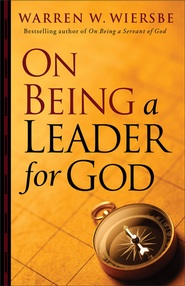
OBALFG Wiersbe

5 Marks of Maturity in Christian Leaders

This is a good place to think about maturity, because one of the goals of Christian leadership is to help others reach their full potential for service. We want to be at our best and we want those working with us to be at their best so that we can do our best work together and, if it’s God’s will, go on to greater challenges. This doesn’t mean that we “break” other people and “re-make” them in our own image, because we aren’t God, and our image—even our best image—doesn’t fit everybody. Instead, it means helping people to grow up and do their very best so they can move ahead in service. Maturing people know themselves, accept themselves, and are themselves in every situation. They don’t “play roles.” They are realistic about themselves and have no illusions about who they are or what they can do. They aren’t fooling themselves or trying to fool others, because maturity and humility go together.

David wrote about this in Psalm 139. No matter how inept we may be in some things, each of us is still “fearfully and wonderfully made,” and we should all praise God for what we are and what we can do (Ps. 139:14). When God made us, He made no mistakes. When I was in grade school, it didn’t take me long to discover that I was not an athlete. (My two older brothers were accomplished athletes.) When you are the last one chosen for every team, and the team that ends up with you tries to give you to another team, you eventually get the message. I could run fast, so soccer was the only game I excelled in; but soccer wasn’t an official school sport in those days. In Indiana, where I grew up, basketball and football reigned supreme. So what did I do? For protection, I managed to have either a star football player or star basketball player as a locker partner, and I managed to bungle my way on the field or in the gym, staying out of trouble. My teammates approved; after all, they did want to win the game. But when it came to academics, writing for the school paper, making speeches for the student government, and even serving as a substitute when a teacher was absent, I was in my element. In those days schools awarded letters only for athletics, not academics, but I didn’t mind. The entire experience helped me find myself and discover the work God wanted me to do.

What are some of the marks of people who are maturing?

To begin with, because they know themselves and accept themselves, they learn to accept others and cultivate a team approach to getting things done. It makes no difference who scores the points so long as the team wins. The key word is “cooperation” and not “competition.” I think it was the British naval hero Lord Nelson who came on deck and found two of his officers engaged in a violent argument. He watched them a few moments and then stepped between them. Pointing to the ocean, he said, “Gentlemen, there is but one enemy, and he is out there!” Whether it’s a coach giving a halftime pep talk or the president of a company explaining a new policy, the goal is the same: different people with different personalities working together to achieve the same purposes with the least possible amount of friction.

Maturing people speak the truth in love (Eph. 4:15). It has well been said that truth without love is brutality and love without truth is hypocrisy. Brutality and hypocrisy are both sins, and sin destroys. Truth and love are tools to build with, and they are partners that work together. It would benefit us to read 1 Corinthians 13 frequently and ask ourselves, “Is this my portrait?” Love is named first in the list of the fruit of the Spirit (Gal. 5:22–23) because love helps us produce and share the rest of the fruit that Paul names. Jesus called love a “new command” and said it is the major mark of each of His disciples (John 13:34–35).

Mature people know how to take responsibility willingly. When problems arise, they admit mistakes and ask questions instead of inventing excuses. They can be trusted to do their work well whether or not anybody is watching. I was once on a staff with a man whose evasive nonwork habits were obvious to everyone but himself. When asked to report on an assignment, he would invariably reply, “Oh, that’s in my briefcase!” When asked where his briefcase was, he would say, “It’s in the trunk of my car.” Where was his car? His wife had it! He didn’t stay on staff very long.

Mature people know that the way they do their work affects how others do their work. Mature people do more than is required, not to earn points or get special recognition but because they consider themselves “slaves of Christ, doing the will of God from [their] heart” (Eph. 6:6). If they see a fellow worker having trouble, they offer to help. They don’t compete with others; they compete with themselves and always strive to do their work better. Mature people have a healthy outlook on life and are dependable whether the Lord sends defeats or victories. If others have a gift of complaining, mature workers don’t preach at them but rather try to have a positive attitude that may help to transform pessimism into optimism. Like Paul and Silas in prison, mature workers can sing and pray—and bring down the house (Acts 16)!

As I’ve watched the men and women who have modeled leadership to me, I’ve observed that they not only have faith in God but also demonstrate faith in their co-workers. All of us on the team must believe in each other, or teamwork will be impossible. We must pray for one another and trust God to work in us, among us, and through us. “I hope in the Lord Jesus to send Timothy to you soon,” Paul wrote to the Corinthian church that Apollos was “quite unwilling” to visit them at that time but would come when he had opportunity (1 Cor. 16:12). This shows that Paul didn’t “play God” in the lives of his associates, moving them around against their wills. Paul had his plans, but so did the Lord—and Paul was flexible.

When a new member joins the team, we soon calculate their “maturity quotient,” and we might have to switch to Plan B to help them start growing. How do they respond to criticism and to praise? Are they patient with delays? Do they know which port they are headed for? Can they patiently listen without interrupting? Even seasoned servants occasionally become childish and require private therapy. “Wounds from a friend can be trusted, but an enemy multiplies kisses” (Prov. 27:6). When I reflect on my own years of service, I give thanks for the men and women who patiently helped me mature and become a better team player. I’m still learning.

Adapted from Warren W. Wiersbe. On Being a Leader for God (Kindle Locations 395-406). Grand Rapids: Baker Publishing Group. Kindle Edition, 2011.

About Warren W. Wiersbe
warren wiersbe image

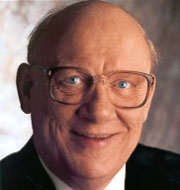
Warren W. Wiersbe is the Distinguished Professor of Preaching at Grand Rapids Baptist Seminary, and is the author of more than 100 books. Billy Graham calls him “one of the greatest Bible expositors of our generation.” Interestingly, Warren’s earliest works had nothing to do with scriptural interpretation. His interest was in magic, and his first published title was Action with Cards (1944).

“It was sort of imbecilic for a fifteen-year-old amateur magician to have the audacity to write a book and send it to one of the nation’s leading magic houses,” Warren says. But having a total of three books published by the L.L. Ireland Magic Company—before the age of 20—gave him a surge of confidence. In later years, he applied his confidence and writing talent to the Youth for Christ (YFC) ministry.

Warren wrote many articles and guidebooks for YFC over a three-year period, but not all his manuscripts were seen by the public eye. One effort in particular, The Life I Now Live, based on Galatians 2:20, was never published. The reason, Warren explains with his characteristic humor, is simple: it was “a terrible book…Whenever I want to aggravate my wife, all I have to say is, ‘I think I’ll get out that Galatians 2:20 manuscript and work on it.’” Fortunately, Warren’s good manuscripts far outnumbered the “terrible” ones, and he was eventually hired by Moody Press to write three books.

The much-sought-after author then moved on to writing books for Calvary Baptist Church. It was during his ten years at Calvary that Expository Outlines on the New Testament and Expository Outlines on the Old Testament took shape. These two works later became the foundation of Warren’s widely popular Bible studies known as the Be series, featuring such titles as Be Loyal (a study on Matthew) and Be Delivered (a study on Exodus). Several of these books have been translated into Spanish.

His next avenue of ministry was Chicago’s Moody Memorial Church, where he served for seven years. He wrote nearly 20 books at Moody before moving to Lincoln, Nebraska, where he and his wife, Betty, now live. Prior to relocating, he had been the senior pastor of Moody Church, a teacher at Trinity Evangelical Divinity School, and a producer of the Back to the Bible radio program.

During all these years of ministry, Warren held many more posts and took part in other projects too numerous to mention. His accomplishments are extensive, and his catalog of biblical works is indeed impressive and far-reaching (many of his books have been translated into other languages). But Warren has no intention of slowing down any time soon, as he readily explains: “I don’t like it when people ask me how I’m enjoying my ‘retirement,’ because I’m still a very busy person who is not yet living on Social Security or a pension. Since my leaving Back to the Bible, at least a dozen books have been published, and the Lord willing, more are on the way.”

Wiersbe’s recent books include Your Next MiracleThe 20 Essential Qualities of a Child of GodClassic Sermons on the Fruit of the SpiritClassic Sermons on Jesus the ShepherdKey Words of the Christian LifeLonely PeopleA Gallery of GraceReal Peace: Freedom and Conscience in the Christian Life, and On Being a Leader for God.

How To Shape Your Life With Intentionality by Dr. David P. Craig

A TEMPLATE FOR SHAPING MY LIFE WITH INTENTIONALITY

Developed by Dr. David Craig – Pastor and Life Coach – Vertical Living Ministries

prayer in field w sunset

 “So whether you eat or drink, or whatever you do. Do all to the glory of God.” – 1 Corinthians 10:31

Head –            Convictions                          What do I need to Know?                         Personal

Heart –       Communication                         What do I need to Say/Convey?               Relational

Hands –       Contribution                             What do I need to Do?                            Practical

For each of the nine areas below set goals in light of the above 3 questions: What will I study or need to know about_____; What will I feel or communicate about _____; and what will I do or what actions shall I take about ______. Each goal is meant to turn what you value into an intentional habit that will make a great difference cumulatively in others lives, your own life, and for the sake of God’s ultimate glory.

 Nine Primary Areas of Living Intentionally:

(1) SpirituallyYour Relationship to God through The Lordship of Jesus Christ. Psalm 37:3-7; 1 Peter 1:3-11; 2 Tim. 2:15; 1 Thess. 5:17

(2) MarriageYour triune covenantal relationship with Christ at the center. Gen. 2:18-25; 1 Cor. 7:1-7; 13:1-8; Eph. 5:22-31

(3) Family/ParentingHow to be a Christ-centered family and raise Children that love Jesus above all else. Deut. 6:1-9; Proverbs; Eph. 6:1-4; 1 Tim. 5:8

(4) VocationallyYour Work in the World and with the Church. Genesis 2:15; Colossians 3:23-25; 1 Cor. 3:5-23

(5) HealthTaking care of the Temple that God will use on this earth until the day of your final glorification. 1 Tim. 4:7-8; 1 Cor. 6:19-20; 10:31; Philippians 4:4-9

(6) FriendshipYour connections and building bridges with others as you reflect Christ in your community. Matt. 5:13-16; Gal. 6:9-10; Eph. 5:15-18; Col. 4:5-6; Lk. 6:27-31

(7) FinanciallyYour stewardship of God’s resources. Matt. 6:19-24; 1 Tim. 6:6-11, 17-19; 1 Cor. 16:1; 2 Cor. 9:6-8

(8) MentoringYour investing in Others Using your Unique Skills, Gifting, Talents, and Personality. Prov. 27:17; 2 Tim. 2:2; Titus 2:4; 1 Thess. 5:11

(9) DiscipleshipYour Investing in the Spiritual Growth of other followers and would-be followers of Christ. Lk. 6:40; Matt. 28:19-20; 1 Tim. 4:16; 2 Tim. 3:10