FRIDAY HUMOR: 0-200 IN A FEW SECONDS!

FRIDAY HUMOR #40

man standing on scale

So a few weeks ago my wife said “Hey honey, if money wasn’t an issue, what would you like for Christmas?” Without much thought I said “I would love to wake up on Christmas morning to find something in the garage that would take me from zero to 200 in a few seconds!”

… so … this morning she told me my present was in the garage so I ran there to find a small box. When I opened it … (wait for it) I found a scale … and she said “stand on it … it will go zero to 200 in a few seconds!” … Merry Christmas to all and to all a good laugh!!

SOURCE: Carlos Sales

MARY’S MODEL FOR MOTHERS

Mary

By Luma Simms

For a mom living in an age where definitions of motherhood have become plastic, my radar is up for solid models of godly motherhood. We must not overlook one such model — Mary.

Many women were loved and blessed by God in the Scriptures, but one in particular was highly favored by God. The Angel Gabriel was sent to her to say:

Greetings, O favored one, the Lord is with you! . . . Do not be afraid, Mary, for you have found favor with God. (Luke 1:2830)

Of all the women in history, God chose Mary, set this peculiar favor on her, and gave all moms a model to study closely.

A Personal Mother

Mary was no womb-for-hire. She was not a surrogate mother God used, paid off, and sent away. Mary was a real mother to her son, Jesus. In her very real pregnancy she experienced a real labor and a real delivery. Mary went through all this as a flesh and blood woman. She delivered him in the same manner that mothers have been delivering babies since Eve. And Mary nursed Jesus at her breast with real colostrum until her milk came in. And when her milk came in, she probably nursed him for close to two years, as was the custom in those days.

Mary’s firstborn child was Jesus. Scripture tells us that Jesus lived a sinless childhood. Think about your toddler throwing a tantrum — Jesus never did that. What of the child that doesn’t make his bed or do his chores — Jesus never did that. Jesus was an obedient son and Mary had the privilege but also the heavy responsibility of parenting a perfect (in the fullest sense of that word) child along with the other children. Think about the wisdom and temperance a mother in that situation needs.

Mary was a personal mother to Jesus. He was her human son. All the hugs, kisses, and love we pour on our children — Mary must have done the same with Jesus.

A Pondering Mother

Many times in the Gospels we read about Mary “observing” and “pondering.” These are marks of a deep and thoughtful woman. Although Mary was young and poor, she was by no means uneducated. She knew her Scriptures.

But it’s clear Mary had more than head knowledge. She had a fruitful faith, and this becomes clear in Mary’s response to the Angel Gabriel in humility and her acquiescence to a providence that would subject herself to public shame and hardship. We see her faith as she stood by her son all the way to the end. She was there at the cross. And Gabriel’s words, well pondered no doubt, were ringing in her ears.

A Submissive Mother

For me, Mary has been the prime example of a submissive woman. Mary’s submission has always struck me as a contented yielding — not servility. This kind of submission is attended with dignity, courage, honor, and grace. It is neither slavish nor degrading.

We see it first in her interaction with Gabriel. She questions him, but not with faithlessness or impudence. The fact that Gabriel answers her instead of rebuking her, as he did to Zechariah, reveals much about Mary’s response.

The words I hope to speak are the words Mary does speak to Gabriel: “Behold, I am the servant of the Lord; let it be to me according to your word” (Luke 1:38).

I shiver whenever I read these words. A poor young virgin has just been told that she will become pregnant in a culture where the penalty for that is stoning to death!

This is the contented yielding of a faith-filled young woman whose trust in God was deep.

In Mary’s relationship with Joseph, and particularly in her three big moves, she is submissive. Joseph says they will go to Bethlehem — she goes. Joseph says they have to flee to Egypt — she goes. Joseph says they will settle down in Nazareth when returning from Egypt — she goes. The fact that she never let her encounter with the Angel Gabriel puff her up nor used it against Joseph, speaks of her true humility.

She could have legitimately doubted Joseph — after all, God only spoke to him in a dream (and you never know about dreams), whereas Mary had been visited by a high-ranking angelic being!

Her deep contented yielding is a mark of the fruit of the Spirit.

A Model for Moms

Puritan Bible Commentator Matthew Henry says of Mary, “We have here an account given of the mother of our Lord, of whom he was to be born, whom, though we are not to pray to, yet we ought to praise God for.”

Indeed, we should praise God for Mary!

Mary has much to teach all women of all ages and all situations, as well as being a model for mothers: Unshaken trust in God, thoughtfully understanding, a lover of the Bible, humbly gracious, sacrificial, and content in her yielding.

This Christmas season, as we meditate on the Lord of glory who came as a real baby boy, may we also spend a little time meditating on the kind of mother God providentially ordained for him — Mary, a beautiful model for all moms.

SOURCE: December 21, 2013 @ http://www.desiringgod.org/blog/posts/mary-s-model-for-mothers

A PRAYER TO JESUS ON CHRISTMAS DAY

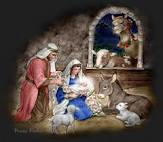
nativity scene

By Scotty Ward Smith

For unto you is born this day in the city of David a Savior, who is Christ the Lord. Luke 2:11

Dear Lord Jesus, a most glorious and praised-filled “Happy birthday!” to you. Angels “harked,” shepherds ran, and Mary pondered the very good news which fills our hearts this grace-filled day. Though you’ve lived forever in rich, joyful, pleasure-filled relationship with the Father and the Spirit, today we celebrate your coming to us and for us.

There is no one like you, Jesus—no other God beside you; no other savior than can truly save; no one as lovely or loving as you; no one more worthy of our heart’s affection and adoration.

We praise you for being born in Bethlehem, the “house of bread.” We were a famished people, binge eating at many empty buffets, spending our money “for that which is not bread” (Isa. 55:2). But you came as the Bread of Life, bringing the feast of the gospel to our souls. You satisfy our deepest hunger with good things… grace things.

Yes, we praise you for entering our world in the town of David—Israel’s beloved shepherd-king. For what King David could never be, you became for us—the Good Shepherd who laid down his life for his sheep, who now cares for us with relentless tenderness and persistent kindness. From heaven to the manger to the cross back to heaven… you are Immanuel, God with us and for us.

Lord Jesus, you are the long-time promised and much longed for Christ—the Messiah… anointed in your death for our salvation… anointed in your resurrection with the oil of gladness for our eternal joy. We are to look no farther than you, for in you every promise of God finds its fulfillment—its unequivocal “Yes!” and by you every tear will be wiped away (Rev. 21:1-6).

You are the King of kings and Lord of lords, presently reigning over everything and working in all things for your glory and our good. You are the ruler of the kings of the earth, setting leaders up and sitting them down at your sovereign discretion. No other kingdom but yours is everlasting. There will never be an end to the increase of your government and peace. Hallelujah! Hallelujah! Hallelujah!

How we long for that magnificent Day when every knee will bow and every tongue will confess that you are Lord, to the glory of God the Father. How we earnestly crave that merciful Day when you return to finish making all things new, including us. Hasten that Day… O that it would be in our lifetime. Until then, we will seek to live and to love to your glory.

Happy birthday, indeed, Lord Jesus. You are so easy to love and so worthy to be adored. So very Amen we pray, your matchless and loving name.

*SOURCE: http://thegospelcoalition.org/blogs/scottysmith/2011/12/25/a-prayer-to-jesus-on-christmas-day/

THE INCARNATION OF CHRIST: FROM HUMILIATION TO EXALTATION

manger scene

By Robert Charles Sproul

It just hangs there. It dangles as if it were simply an afterthought attached to the second chapter of Genesis. But we know there are no afterthoughts in the mind and inspiration of the Holy Ghost. Thus, we look at this passage to give us a clue about our condition prior to the misery of sin. Chapter 2, verse 25, reads, “They were both naked, the man and his wife, and were not ashamed.” This tells us that before sin came into the world, there was no shame. There was no embarrassment. The experience of humiliation was completely unknown and foreign to the human race. However, along with the first experience of sin came the awful burden of the weight of personal shame and embarrassment. Shame and embarrassment are feelings and experiences that occur to us in various degrees. The worst kind of shame, the most dreadful form of embarrassment, is that which results in utter and complete humiliation. Humiliation brings with it not merely the reddened face of embarrassment but also the sense of despair as we lose our dignity and our reputations are cast into ruin.

Yet it was precisely into this domain of shame and humiliation that our Savior came voluntarily in the incarnation. The popular hymn, “Ivory Palaces,” depicts this descent from glory — the Son of Man’s voluntary departure from the ivory palace that is His eternal dwelling place. He chose willingly to make Himself of no reputation, to become a man and a servant, obedient even unto death. It is this humiliation that Christ willingly accepted for Himself, which stands at the beginning of the entire progress that He travels on His road to glory and to His final exaltation. The progress, as the New Testament traces it, is one that moves from humiliation in the birth of Jesus to His exaltation in His resurrection, ascension, and return.

The quality of exaltation is the exact opposite, a strong antithesis, to the quality of humiliation. In exaltation, dignity is not only restored, but it is crowned with the glory that only God can bestow. And so when we look at the biblical theme of the exaltation of Jesus, we look at the way in which the Father rewards His Son and declares His glory to the whole creation.

We are told that no one ascends into heaven except the One who descends from heaven, and we are also told that in baptism, we are given the mark and the sign of our participation with Jesus in both His humiliation and His exaltation. The promise of participating in the exaltation of Christ is given to every believer — but there is a catch. There is a warning, and that warning is clear: unless we are willing to participate in the humiliation of Jesus, we would have no reason to expect ever to participate in His exaltation. But that is the crown that is set before us, that we, who have no right to everlasting glory and honor, will nevertheless receive it because of what has been achieved in our stead by our perfect Redeemer.

In 1990, I wrote a book entitled The Glory of Christ. The writing of that book was one of the most thrilling experiences I’ve ever had in writing. My task on that occasion was to demonstrate that while there is a general progression from humiliation to exaltation in the life and ministry of Jesus, this progression does not run in an unbroken line that moves uninterrupted from humiliation to exaltation. Rather, the book explains that even in Jesus’ general progress from humiliation to exaltation, in His worst moments of humiliation, there are interjections by the grace of God, wherein the Son’s glory is also manifest.

For example, when we consider the nativity of Jesus, it is easy to focus our attention on the sheer impoverishment that went with His being born in a stable and in a place where He was unwelcome in the resident hotel or inn. There was an overwhelming sense of debasement in the lowliness of His birth. Yet, at the very moment that our Lord entered humanity in these debasing circumstances, just a short distance away the heavens broke out with the glory of God shining before the eyes of the shepherds with the announcement of His birth as the King.

Even when He goes to the cross, in the worst moments of His humiliation, there still remains a hint of His triumph over evil, where His body is not thrown into the garbage dump outside of Jerusalem; rather, following the prophetic prediction of Isaiah, chapter 53, Jesus’ body was tenderly laid to rest in the tomb of a wealthy man. His death was ignominious, but His burial was one that was a great honor in ancient terms. His body was adorned with the sweetest spices and most costly perfumes, and He was given the burial plot of honor. Therefore, God, in the midst of the suffering of His obedient servant, would not allow His holy One to see corruption.

And throughout the pages of Scripture, we see these glimpses here and there, breaking through the veil and the cloak of Jesus’ humanity, piercing the armor of the humiliation and debasement that was His lot during His earthly sojourn. These moments, or glimpses, of glory should be for the Christian a foretaste of what lies ahead, not only for the ultimate exaltation of Jesus in the consummation of His kingdom, but also a taste for us of heaven itself, as we become the heirs and joint-heirs of Jesus. Jesus’ final lot, His destiny, His legacy, promised and guaranteed by the Father, is glory, and that glory He shares with all who put their trust in Him.

In common language, the terms exaltation and humiliation stand as polar opposites. One of the most magnificent glories of God’s revealed truth and most poignant ironies is that in the cross of Christ these two polar opposites merge and are reconciled. In His humiliation, we find our exaltation. Our shame is replaced by His glory. The songwriter had it right when he wrote, “My sinful self, my only shame, my glory, all the cross.”

SOURCE: March 1, 2005 @ http://www.ligonier.org/learn/articles/humiliation-exaltation/

The Real Meaning of Christmas

By Stephen Nichols

One of the most remarkable stories of Christmas comes from one of the darkest moments of modern history. World War I ravaged a continent, leaving destruction and debris in its wake. The human cost, well in the millions, staggers us. But from the midst of this dark conflict comes the story of the Christmas Truce of 1914. The Western Front, only a few months into the war, was a deplorable scene of devastation. Perhaps as if to give the combatants one day to breathe again, a truce was called from Christmas Eve through Christmas Day.

As darkness settled over the front like a blanket, the sound of exploding shells and the rat-tat-tat of gunfire faded. Faint carols, in French or English voices on one side and in German voices on the other, rose to fill the silence of the night.

By morning, soldiers, at first hesitantly, began filing out of the maze of trenches into the dreaded and parched soil of No Man’s Land. There was more singing. Gifts of rations and cigarettes were exchanged. Family photos were passed around. Soccer balls appeared. Up and down the Western Front, soldiers, who only hours before had been locked in deathly combat, now faced off in soccer games.

For one brief but entirely remarkable day, there was peace on earth. Some have called the Christmas Truce of 1914 “the Miracle on the Western Front.”

Anxious to print some good news, The Times of London reported on the events of the Christmas Truce. Soldiers recorded the day in letters home and in diaries. Some of those lines made it to newspapers, while others remained unknown until later brought to light. Here’s one such line from the diary of a German infantryman:

The English brought a soccer ball from the trenches, and pretty soon a lively game ensued. How marvelously wonderful, yet how strange it was. The English officers felt the same way about it. Thus Christmas, the celebration of Love, managed to bring mortal enemies together as friends for a time.

“Friends for a time,” “the celebration of love,” “peace on earth”—this is the meaning of Christmas. But these celebrations, these truces, don’t last. After Christmas Day, the soccer balls and the soldiers went back into the trenches. The Christmas carols subsided and the war carried on. And even though World War I eventually ended, a few decades later, Europe’s countryside and cities became the field of battle once again, as did Africa and the Pacific, during World War II.

Events like the Christmas Truce are worth celebrating. But they lack something. They lack permanence. Such impermanent peace is what we often find in our quest for the real meaning of Christmas. If we are looking for permanent and ultimate goodwill, love, and peace, we must look beyond our gift-giving, get-togethers, and office parties. We must look to no other place than to a manger.

We must look to a baby born not with fanfare, pomp, and circumstance, but to poor parents in desperate times. Joseph and Mary, and the Baby Jesus for that matter, were real historical figures. But in a way, Joseph and Mary extend beyond themselves, beyond their particular place and time. They represent all of us. We are all poor and living in desperate times. Some of us are better than others at camouflaging it. Nevertheless, we are all poor and desperate, so we all need the promise bound up in that baby.

We are in need of a way out of our poverty of soul and the desperate state of our human condition. We find it in this child lying in a manger, who was and is Jesus Christ, the long-promised Messiah, Seed, Redeemer, and King.

The birth of Jesus so many centuries ago might have been a slightly-out-of-the-ordinary birth. Even in ancient times, stalls didn’t typically double as birthing rooms and mangers didn’t typically double as cribs for new-born babies. And that newborn baby was very much out of the ordinary. Of course, in some respects, He was perfectly ordinary. He was a human being, a baby. He got hungry. He got thirsty. He got tired. When He was born, He was wrapped in swaddling clothes—the ancient equivalent of Pampers.

An infant. Helpless, hungry, cold, and tired.

Yet, this child was the Son of God incarnate. He was Immanuel, which translated means “God with us.” According to the Apostle Paul’s account, this infant created all things. This infant created His own manger. And this infant, this King, brings peace on earth, ultimate and permanent peace.

Peace

An excerpt from Peace: Classic Readings for Christmas by Stephen Nichols.

Charles Spurgeon: “Going Home–A Christmas Sermon” on Mark 5:19

Spurgeon

The New Park Street Pulpit 1

GOING HOME—A CHRISTMAS SERMON

NO. 109

A SERMON DELIVERED ON SABBATH MORNING, DECEMBER 21, 1856,

BY THE REV. C. H. SPURGEON,

AT THE MUSIC HALL, ROYAL SURREY GARDENS.

“Go home to your friends and tell them how great things the Lord has done for you and has had compassion on you.” Mark 5:19.

THE case of the man here referred to is a very extraordinary one—it occupies a place among the memorabilia of Christ’s life, perhaps as high as anything which is recorded by either of the Evangelists! This poor wretch, being possessed with a legion of evil spirits, had been driven to something worse than madness. He fixed his home among the tombs where he dwelt by night and day and was the terror of all those who passed by. The authorities had attempted to curb him. He had been bound with fetters and chains, but in the paroxysms of his madness, he had torn the chains in sunder and broken the fetters in pieces. Attempts had been made to reclaim him, but no man could tame him. He was worse than the wild beasts—for they might be tamed. But his fierce nature would not yield. He was a misery to himself for he would run upon the mountains by night and day—crying and howling fearfully—cutting himself with the sharp flints and tor- turing his poor body in the most frightful manner. Jesus Christ passed by. He said to the devils, “Come out of him.” The man was healed in a moment—he fell down at Jesus’ feet. He became a rational being—an intelligent man. Yes, what is more—a convert to the Savior! Out of gratitude to his Deliverer, he said, “Lord, I will follow You wherever You go. I will be Your constant companion and Your servant, permit me to be so.” “No,” said Christ, “I esteem your motive, it is one of gratitude to Me, but if you would show your gratitude, go home to your friends and tell them how great things the Lord has done for you and has had compassion on you.”

Now this teaches us a very important fact, namely this—that true religion does not break in sunder the bonds of family relationship. True religion seldom encroaches upon that sacred, I had almost said, Divine institution called home. It does not separate men from their families and make them aliens to their flesh and blood. Superstition has done that. An awful superstition, which calls itself, Christianity, has sundered men from their kind. But true religion has never done so! Why, if I might be allowed to do such a thing, I would seek out the hermit in his lonely cavern and I would go to him and say, “Friend, if you are what you profess to be—a true servant of the living God and not a hypocrite, as I guess you are—if you are a true Believer in Christ and would show forth what He has done for you, upset that pitcher, eat the last piece of your bread. Leave this dreary cave, wash your face, untie your hemp belt—and if you would show your grati- tude, go home to your friends and tell them what great things the Lord has done for you! Can you edify the sere leaves of the forest? Can the beasts learn to adore that God whom your gratitude should strive to honor? Do you hope to convert these rocks and wake the echoes into songs? No, go back—dwell with your friends, reclaim your kinship with men and unite, again, with your fellows—for this is Christ’s approved way of showing gratitude.” And I would go to every mon- astery and every nunnery and say to the monks, “Come out Brethren, come out! If you are what you say you are, servants of God, go home to your friends! No more of this absurd discipline. It is not Christ’s rule! You are acting differently from what He would have you do—go home to your friends!” And to the sisters of mercy we would say, “Be sisters of mercy to your own sisters—go home to your friends—take care of your aged parents! Turn your own houses into con- vents—do not sit here nursing your pride by a disobedience to Christ’s rule, which says, “go home to your friends.” “Go home to your friends and tell them how great things the Lord has done for you and has had compassion on you.” The love of a solitary and ascetic life—which is by some considered to be a Divine virtue—is neither more nor less than a disease of the mind! In the ages when there was but little benevolence and, consequently, few hands to build lunatic asy- lums, superstition supplied the lack of charity and silly men and women were allowed the indulgence of their fancies in secluded haunts or in easy laziness! Young has most truly said—

“The first sure symptoms of a mind in health Are rest of heart and pleasure found at home.”

Avoid, my Friends, above all things, those romantic and absurd conceptions of virtue which are the offspring of supersti- tion and the enemies of righteousness! Be not without natural affection, but love those who are knit to you by ties of na- ture.

True religion cannot be inconsistent with nature! It can never demand that I should abstain from weeping when my friend is dead. “Jesus wept.” It cannot deny me the privilege of a smile when Providence looks favorably upon me. For once Jesus rejoiced in spirit and said, “Father, I thank You.” It does not make a man say to his father and mother, “I am no longer your son.” That is not Christianity, but something worse than what beasts would do—which would lead us to be entirely sundered from our fellows—to walk among them as if we had no kinship with them. To all who think a soli- tary life must be a life of piety, I would say, “It is the greatest delusion!” To all who think that those must be good people who break the ties of relationship, let us say, “Those are the best who maintain them.” Christianity makes a husband a better husband! It makes a wife a better wife than she was before! It does not free me from my duties as a son. It makes me a better son and my parents better parents. Instead of weakening my love, it gives me fresh reason for my affection. And he whom I loved before as my father, I now love as my Brother and co-worker in Christ Jesus. And she whom I reverenced as my mother, I now love as my Sister in the Covenant of Grace to be mine forever in the state that is to come. Oh, sup- pose not any of you, that Christianity was ever meant to interfere with households! It is intended to cement them and to make them households which death, itself, shall never sever—for it binds them up in the bundle of life with the Lord, their God, and re-unites the several individuals on the other side of the flood.

Now, I will tell you the reason why I selected my text. I thought within myself there are a large number of young men who always come to hear me preach. They always crowd the aisles of my Chapel and many of them, by His Grace, have been converted to God. Now, here is Christmas Day come round, again, and they are going home to see their friends. When they get home they will want a Christmas Carol in the evening. I think I will suggest one to them—more especially to such of them as have been lately converted—I will give them a theme for their discourse on Christmas evening. It may not be quite so amusing as, “The Wreck of the Golden Mary,” but it will be quite as interesting to Christian people. It shall be this—“Go home and tell your friends what the Lord has done for your souls and how He has had compassion on you.” For my part, I wish there were 20 Christmas days in the year! It is seldom that young men can meet with their friends. It is rarely they can all be united as happy families. And though I have no respect to the religious observance of the day, yet I love it as a family institution! It is one of England’s brightest days—the great Sabbath of the year—when the plow rests in its furrow. When the din of business is hushed—when the mechanic and the working man go out to re- fresh themselves upon the green sward of the glad earth! If any of you are employers, you will pardon me for the digres- sion when I most respectfully beg you to pay your employees the same wages on Christmas Day as if they were at work. I am sure it will make their houses glad if you will do so. It is unfair for you to make them feast or fast, unless you give them wherewithal to feast and make themselves glad on that day of joy!

But now to come to the subject. We are going home to see our friends and here is the story some of us have to tell. “Go home to your friends and tell them how great things the Lord has done for you and has had compassion on you.” First, here is what they are to tell. Then, secondly, why they are to tell it. And then thirdly, how they ought to tell it.

I. First, then, HERE IS WHAT THEY ARE TO TELL. It is to be a story of personal experience. “Go home to your friends and tell them how great things the Lord has done for you and has had compassion on you.” You are not to repair to your houses and forthwith begin to preach. That you are not commanded to do! You are not to begin to take up Doc- trinal subjects and speak at length on them and endeavor to bring persons to your peculiar views and sentiments. You are not to go home with sundry Doctrines you have lately learned and try to teach these. At least you are not commanded to do so. You may, if you please and none shall hinder you. But you are to go home and tell not what you have believed but what you have felt—what you really know to be your own! Not what great things you have read, but what great things the Lord has done for you. Not, alone, what you have seen done in the great congregation and how great sinners have turned to God, but what the Lord has done for you. And mark this—there is never a more interesting story than that which a man tells about himself! The Rhyme of the Ancient Mariner derives much of its interest because the man who told it was, himself, the mariner. He sat down, that man whose finger was skinny, like the finger of death and began to tell that dismal story of the ship at sea in the great calm when slimy things did crawl with legs over the shiny sea. The wed- ding guests sat still to listen, for the old man was, himself, a story. There is always a great deal of interest excited by a personal narrative. Virgil, the poet, knew this and, therefore, he wisely makes Aeneas tell his own story and makes him begin it by saying, “In which I also had a great part, myself.” So, if you would interest your friends, tell them what you

felt yourself. Tell them how you were once a lost, abandoned sinner, how the Lord met with you, how you bowed your knees and poured out your soul before God and how, at last, you leaped with joy, for you thought you heard Him say within you, “I, even I, am He that blots out your transgressions for My name’s sake.” Tell your friends a story of your own personal experience!

Note, next, it must be a story of Free Grace. It is not, “Tell your friends how great things you have done yourself,” but, “how great things the Lord has done for you.” The man who always dwells upon free will and the power of the crea- ture, but denies the Doctrines of Grace, invariably mixes up a great deal of what he has done, himself, in telling his expe- rience. But the Believer in Free Grace, who holds the great cardinal Truths of the Gospel, ignores this and declares, “I will tell what the Lord has done for me. It is true I must tell how I was first made to pray. But I will tell it thus—

“Grace taught my soul to pray

Grace made my eyes overflow.” It is true, I must tell in how many troubles and trials God has been with me. But I will tell it thus—

“It was Grace which kept me to this day,

And will not let me go.” He says nothing about his own doings, or willings, or prayers, or seeking—but ascribes it all to the love and Grace of

the great God who looks on sinners in love and makes them His children—heirs of everlasting life! Go home, young man, and tell the poor sinner’s story! Go home, young woman, and open your diary and give your friends stories of Di- vine Grace. Tell them of the mighty works of God’s hand which He has worked in you from His own free, Sovereign, un- deserved Love. Make it a Free Grace story around your family fire!

In the next place, this poor man’s tale was a grateful story. I know it was grateful because the man said, “I will tell you how great things the Lord has done for me.” And (not meaning a pun in the least degree) I may observe that a man who is grateful, is always full of the greatness of the mercy which God has shown him. He always thinks that what God has done for him is immensely good and supremely great. Perhaps when you are telling the story, one of your friends will say, “And what of that?” And your answer will be, “It may not be a great thing to you, but it is to me. You say it is little to repent but I have not found it so. It is a great and precious thing to be brought to know myself to be a sinner and to confess it—do you say it is a little thing to have found a Savior?” Look them in the face and say, “If you had found Him, too, you would not think it little. You think it little I have lost the burden from my back? If you had suffered with it and felt its weight as I have, for many a long year, you would think it no little thing to be emancipated and free through a sight of the Cross.” Tell them it is a great story and if they cannot see its greatness, shed great tears and tell it to them with great earnestness and I hope they may be brought to believe that you, at least, are grateful, if they are not. May God grant that you may tell a grateful story. No story is more worth hearing than a tale of gratitude!

And lastly, upon this point—it must be a tale told by a poor sinner who feels himself not to have deserved what he has received. “How He has had compassion on you.” It was not a mere act of kindness, but an act of free compassion to- wards one who was in misery. Oh, I have heard men tell the story of their conversion and of their spiritual life in such a way that my heart has loathed them and their story, too, for they have told of their sins as if they did boast in the great- ness of their crime! And they have mentioned the love of God not with a tear of gratitude—not with the simple thanks- giving of the really humble heart—but as if they as much exalted themselves as they exalted God. Oh, when we tell the story of our own conversion, I would have it done with deep sorrow—remembering what we used to be—and with great joy and gratitude, remembering how little we deserve these things. I was once preaching upon conversion and salvation and I felt within myself, as preachers often do, that it was but dry work to tell this story and a dull, dull tale it was to me, but all of a sudden the thought crossed my mind, “Why, you are a poor lost ruined sinner, yourself! Tell it, tell it, as you received it! Begin to tell of the Grace of God as you trust you feel it, yourself.” Why, then, my eyes began to be fountains of tears—those hearers who had nodded their heads began to brighten up and they listened because they were hearing something which the man felt, himself, and which they recognized as being true to him—if it were not true to them. Tell your story, my Hearers, as lost sinners! Do not go to your home and walk into your house with a supercilious air, as much as to say, “Here’s a saint come home to the poor sinners to tell them a story.” But go home like a poor sinner! And when you go in, your mother remembers what you used to be—you need not tell her there is a change—she will notice it—if it is only one day you are with her. And perhaps she will say, “John, what is this change that is in you?” And if she is a pious mother, you will begin to tell her the story and I know, man though you are, you will not blush when I say it— she will put her arms round your neck and kiss you as she never did before—for you are her twice-born son! Hers from whom she shall never part, even though death, itself, shall divide you for a brief moment. “Go home, then, and tell your friends what great things the Lord has done for you and how He has had compassion on you.”

II. But now, in the second place—Why SHOULD WE TELL THIS STORY? For I hear many of my congregation say, “Sir, I could relate that story to anyone sooner than I could to my own friends! I could come to your vestry and tell you something of what I have tasted and handled of the Word of God, but I could not tell my father, nor my mother, nor my brothers, nor my sisters.” Come, then. I will try and argue with you to induce you to do so—that I may send you home this Christmas Day to be missionaries in the localities to which you belong and to be real preachers! Dear Friends, do tell this story when you go home.

First, for your Master’s sake. Oh, I know you love Him. I am sure you do—if you have proof that He loves you! You can never think of Gethsemane and of its bloody sweat, of Gabbatha and of the mangled back of Christ, flayed by the whip—you can never think of Calvary and His pierced hands and feet without loving Him! And it is a strong argument when I say to you, for His dear sake, who loved you so much, go home and tell it. What? Do you think we can have so much done for us and yet not tell it? Our children, if anything should be done for them, do not stay many minutes before they are telling all the company, “such an one has given me such a present and bestowed on me such-and-such a favor.” And should the children of God be backward in declaring how they were saved when their feet made haste to Hell and how redeeming mercy snatched them as brands from the burning? You love Jesus, young man! I put it to you, then, will you refuse to tell the tale of His love to you? Shall your lips be dumb when His honor is concerned? Will you not, wherev- er you go, tell of the God who loved you and died for you? This poor man, we are told, “departed and began to publish in Decapolis how great things Jesus had done for him and all men did marvel.” So with you. If Christ has done much for you, you cannot help it—you must tell it! My esteemed friend, Mr. Oneken, a minister in Germany, told us last Monday evening that as soon as he was converted, himself, the first impulse of his new-born soul was to do good to others. And where should he do that good? Well, he thought he would go to Germany! It was his own native land and he thought the command was, “Go home to your friends and tell them.” Well, there was not a single Baptist in all Germany, nor any with whom he could sympathize, for the Lutherans had swerved from the faith of Luther and gone aside from the Truth of God. But he went there and preached—and he has now 70 or 80 churches established on the continent! What made him do it? Nothing but love for his Master who had done so much for him could have forced him to go and tell his kins- men the marvelous tale of Divine Goodness!

But, in the next place, are your friends pious? Then go home and tell them, in order to make their hearts glad. I re- ceived last night a short letter, written with a trembling hand, by one who is past the natural age of man living in the county of Essex. His son, under God, had been converted by hearing of the Word preached and the good man could not help writing to the minister, thanking him and blessing, most of all, his God, that his son had been regenerated. “Sir,” he begins, “an old rebel writes to thank you and, above all, to thank his God, that his dear son has been converted.” I shall treasure up that epistle. It goes on to say, “Go on! And the Lord bless you.” And there was another case I heard some time ago where a young woman went home to her parents and when her mother saw her, she said, “There! If the minister had made me a present of all London, I should not have thought so much of it as I do of this—to think that you have really become a changed character and are living in the fear of God!” Oh, if you want to make your mother’s heart leap within her and to make your father glad—if you would make that sister happy who sent you so many letters which sometimes you read against a lamp-post, with your pipe in your mouth—go home and tell your mother that her wishes are all accomplished! That her prayers are heard, that you will no longer tease her about her Sunday school class and no longer laugh at her because she loves the Lord! Tell her that you will go with her to the House of God, for you love God and you have said, “Your people shall be my people and your God shall be my God, for I have a hope that your Heaven shall be my Heaven forever.” Oh, what a happy thing it would be if some here who had gone astray should thus go home! It was my privilege a little while ago to preach for a noble institution for the reception of women who had led abandoned lives. Before I preached the sermon, I prayed to God to bless it and in the printed sermon you will notice that at the end of it, there is an account of two persons who were blessed by that sermon and restored. Now, let me tell you a story of what once happened to Mr. Vanderkist, a city missionary, who toils all night long to do good in that great work. There had been a drunken broil in the street. He stepped between the men to part them and said something to a woman who stood there, concerning how dreadful a thing it was that men should thus be intemperate. She walked with him a little way and he, with her, and she began to tell him such a tale of woe, and sin, too—how she had been lured away from her parents’ home in Somersetshire and had been brought up here to her soul’s eternal hurt. He took her home with him and taught her the fear and love of Christ. And what was the first thing she did, when she returned to the paths of godliness and found Christ to be the sinner’s Savior? She said, “Now, I must go home to my friends.” Her friends were written to—they came to meet her at the station at Bristol and you can hardly conceive what a happy meeting it was! The father and mother had lost their daughter—they had never heard from her. And there she was, brought back by the agency of this institution [The London Female Dormitory] and restored to the bosom of her family! Ah, is there such an one here? I know not, among such a multitude, if there may be such an one. Woman! Have you strayed from your family? Have you left them long? “Go home to your friends,” I beseech you, before your father totters to his grave and before your moth- er’s gray hairs sleep on the snow-white pillow of her coffin. Go back, I beseech you! Tell her you are penitent. Tell her that God has met with you—that the young minister said, “Go back to your friends.” And if so, I shall not blush to have said these things, though you may think I ought not to have mentioned them. For if I may but win one such soul, I will bless God to all eternity! “Go home to your friends! Go home and tell them how great things the Lord has done for you.”

Can you imagine the scene, when the poor demoniac mentioned in my text went home? He had been a raving mad- man! And when he came and knocked at the door, don’t you think you see his friends calling to one another in affright, “Oh, there he is again,” and the mother running upstairs and locking all the doors because her son had come back who was raving mad? And the little ones crying because they knew what he had been before—how he cut himself with stones because he was possessed with devils. And can you picture their joy when the man said, “Mother! Jesus Christ has healed me! Let me in. By His Grace I am no more a lunatic!” And when the father opened the door, he said, “Father! I am not what I was—all the evil spirits are gone! By God’s Grace I shall live in the tombs no longer. I need to tell you how the glorious Man who worked my deliverance accomplished the miracle—how He said to the devils, ‘Get you hence,’ and they ran down a steep place into the sea. And I am come home healed and saved!” Oh, if such an one, possessed with sin, were here this morning and would go home to his friends to tell them of his release—I think the scene would be some- what similar.

Once more, dear Friends. I hear one of you say. “Ah, Sir, would to God I could go home to pious friends! But when I go home, I go into the worst of places. For my home is among those who never knew God, themselves, and, consequently, never prayed for me and never taught me anything concerning Heaven.” Well, young man, go home to your friends. If they are ever so bad, they are still your friends. I sometimes meet with young men wishing to join the Church who say when I ask them about their father, “Oh, Sir, I am parted from my father.” Then I say, “Young man, you may just go and see your father before I have anything to do with you. If you are at ill-will with your father and mother, I will not receive you into the Church. If they are ever so bad, they are still your parents.” Go home to them and tell them, not to make them glad, for they will very likely be angry with you—but tell them for their soul’s salvation. I hope, when you are tell- ing the story of what God did for you, that they will be led by the Spirit to desire the same mercy, themselves! But I will give you a piece of advice. Do not tell this story to your ungodly friends when they are all together, for they will laugh at you. Take them one by one, when you can get them alone, and begin to tell it to them and they will hear you seriously. There was once a very pious lady who kept a lodging-house for young men. All the young men were very merry and giddy and she wanted to say something to them concerning religion. She introduced the subject and it was passed off immedi- ately with a laugh. She thought within herself, “I have made a mistake.” The next morning, after breakfast, when they were all leaving, she said to one of them, “Sir, I should like to speak with you a moment or two,” and taking him aside into another room she talked with him. The next morning she took another and the next morning another and it pleased God to bless her simple statement—when it was given individually! But without doubt, if she had spoken to them all together, they would have backed each other up in laughing her to scorn. Reprove a man alone! A verse may hit him while a sermon flies right by him. You may be the means of bringing a man to Christ who has often heard the Word and only laughed at it, but who cannot resist a gentle admonition.

In one of the States of America there was an infidel who was a great despiser of God, a hater of the Sabbath and all religious institutions. What to do with him, the ministers did not know. They met together and prayed for him. But among the rest, one Elder resolved to spend a long time in prayer for the man. After that, he got on horseback and rode down to the man’s forge, for he was a blacksmith. He left his horse outside and said, “Neighbor, I am under very great concern about your soul’s salvation. I tell you, I pray day and night for your soul’s salvation.” He left him and rode home on his horse. The man went inside to his house after a minute or two and said to one of his faithful friends, “Here’s a new argument. Here’s Elder Bob been down here. He did not dispute and never said a word to me except this, ‘I say, I am under great concern about your soul. I cannot bear you should be lost.’ Oh, that fellow,” he said, “I cannot answer him.” And the tears began to roll down his cheeks. He went to his wife and said, “I can’t make this out. I never cared about my soul but here’s an Elder that has no connection with me, but I have always laughed at him and he has come five miles this morning, on horseback, just to tell me he is under concern about my salvation.” After a little while he thought it was time he should be under concern about his salvation, too! He went in, shut the door, began to pray and the next day he was at the Elder’s house telling him that he, too, was under concern about his salvation and asking him to tell him what he must do to be saved. Oh, that the everlasting God might make use of some of those now present in the same way—that they might be induced to—

“Tell to others round What a dear Savior they have found! To point to His redeeming blood, And say, Behold the way to God!”

III. I shall not detain you much longer, but there is a third point, upon which we must be very brief. HOW IS THIS STORY TO BE TOLD?

First, tell it truthfully. Do not tell more than you know. Do not tell John Bunyan’s experience, when you ought to tell your own! Do not tell your mother you have felt what only Rutherford felt. Tell her no more than the truth. Tell your experience truthfully, for maybe one single fly in the pot of ointment will spoil it and one statement you may make which is not true may ruin it all. Tell the story truthfully.

In the next place, tell it very humbly. I have said that before. Do not intrude yourselves upon those who are older and know more, but tell your story humbly. Not as a preacher, not ex-cathedra but as a friend and as a son.

Next, tell it very earnestly. Let them see you mean it. Do not talk about religion flippantly. You will do no good if you do. Do not make puns on texts. Do not quote Scripture by way of joke—if you do, you may talk till you are dumb— you will do no good if you in the least degree give them occasion to laugh by laughing at holy things yourself. Tell it very earnestly.

And then, tell it very devoutly. Do not try to tell your tale to man till you have told it, first, to God. When you are at home on Christmas Day let no one see your face till God has seen it. Be up in the morning. Wrestle with God. And if your friends are not converted, wrestle with God for them—and then you will find it easy work to wrestle with them for God. Seek, if you can, to get them one by one and tell them the story. Do not be afraid—only think of the good you may possibly do, by God’s Grace. Remember, he that saves a soul from death has covered a multitude of sins and he shall have stars in his crown forever and ever. Seek to be under God—to be the means of leading your own beloved brothers and sisters to seek and to find the Lord Jesus Christ. And then one day, when you shall meet in Paradise, it will be a joy and blessedness to think that you are there and that your friends are there, too, whom God will have made you the instru- ment of saving. Let your reliance in the Holy Spirit be entire and honest. Trust not yourself, but fear not to trust Him. He can give you words. He can apply those words to their heart and so enable you to “minister Grace to the hearers.”

To close up, by a short and, I think, a pleasant turning of the text, I will suggest another meaning to it. Soon, dear Friends, very soon with some of us, the Master will say, “Go home to your friends.” You know where the Home is. It is up above the stars—

“Where our best friends, our kindred dwell,

Where God our Savior reigns.”

Yonder gray-headed man has buried all his friends. He has said, “I shall go to them but they will not return to me.” Soon his Master will say, “You have had enough tarrying here in this vale of tears—go home to your friends!” Oh, hap- py hour! Oh, blessed moment when that shall be the word—“Go home to your friends!” And when we go home to our friends in Paradise, what shall we do? Why, first we will repair to that blessed seat where Jesus sits, take off our crown and cast it at His feet and crown Him Lord of All! And when we have done that, what shall be our next employ? Why, we will tell the blessed ones in Heaven what the Lord has done for us and how He has had compassion on us. And shall such tales be told in Heaven? Shall that be the Christmas Carol of the angels? Yes it shall be. It has been published there be- fore—blush not to tell it yet again—for Jesus has told it before. “When He comes home, He calls together His friends and neighbors, saying unto them, Rejoice with Me, for I have found My sheep which was lost.” And you, poor Sheep, when you shall be gathered in, will you not tell how your Shepherd sought you and how He found you? Will you not sit in the grassy meads of Heaven and tell the story of your own redemption? Will you not talk with your Brothers and your Sisters and tell them how God loved you and has brought you there? Perhaps, you say, “It will be a very short story.” Ah, it would be if you could write it now. A little book might be the whole of your biography. But up there when your memory shall be enlarged, when your passion shall be purified and your understanding clear—you will find that what was but a tract on earth, will be a huge volume in Heaven! You will tell a long story, there, of God’s sustaining, restrain- ing, constraining Grace. And I think that when you pause to let another tell his tale and then another and then another, you will, at last, when you have been in Heaven a thousand years, break out and exclaim, “O Saints, I have something else to say.” Again they will tell their tales and again you will interrupt them with, “Oh, Beloved, I have thought of another case of God’s delivering mercy.” And so you will go on, giving them themes for songs, finding them the material for the warp and woof of Heavenly sonnets! “Go home,” He will soon say, “go home to your friends and tell them how great things the Lord has done for you and has had compassion on you.” Wait awhile. Tarry His leisure and you shall soon be gathered to the land of the hereafter to the home of the blessed—where endless felicity shall be your portion! God grant a blessing for His name’s sake. Amen.

Adapted from The C. H. Spurgeon Collection, Version 1.0, Ages Software.

PRAY THE HOLY SPIRIT WILL USE THIS SERMON TO BRING MANY TO A SAVING KNOWLEDGE OF JESUS CHRIST.

By the Grace of God, for all 63 volumes of C. H. Spurgeon sermons in modern English, and more than 400 Spanish translations, visit: http://www.spurgeongems.org

Volume 3

http://www.spurgeongems.org 7

TIM KELLER ON CHRISTMAS AND SUFFERING

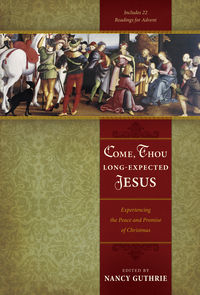
come thou long expected Jesus guthrie

When September 11th happened and New Yorkers started to suffer, you heard two voices. You heard the conventional moralistic voices saying, “When I see you suffer, it tells me about a judging God. You must not be living right, and so God is judging you.” When they see suffering they see a judgmental God. The secular voice said, “When I see people suffering I see God is missing.” When they see suffering, they see an absent, indifferent God.

WHAT CHRISTMAS DOES FOR SUFFERING

But when we see Jesus Christ dying on the cross through an act of violence and injustice, what kind of God do we see then? A condemning God? No, we see a God of love paying for sin. Do we see a missing God? Absolutely not! We see a God who is not remote but involved. We sometimes wonder why God doesn’t just end suffering, but we know that whatever the reason, it isn’t one of indifference or remoteness. God so hates suffering and evil that he was willing to come into it and become enmeshed in it. Dorothy Sayers wrote:

For whatever reason, God chose to make man as he is—limited and suffering and subject to sorrows and death—he [God] had the honesty and the courage to take his own medicine. Whatever game he is playing with his creation, he has kept his own rules and played fair. He can exact nothing from man that he has not exacted from himself. He has himself gone through the whole of human experience, from the trivial irritations of family life and the cramping restrictions of hard work and lack of money to the worst horrors of pain and humiliation, defeat, despair, and death. When he was a man, he played the man. He was born in poverty and died in disgrace, and thought it was worthwhile.

The gift of Christmas gives you a resource—a comfort and consolation—for dealing with suffering, because in it we see God’s willingness to enter this world of suffering to suffer with us and for us. No other religion—whether secularism, Greco-Roman paganism, Eastern religion, Judaism, or Islam—believes God became breakable or suffered or had a body. Eastern religion believes the physical is illusion. Greco-Romans believe the physical is bad. Judaism and Islam don’t believe God would do such a thing as live in the flesh. But Christmas teaches that God is concerned not only with the spiritual, because he is not just a spirit anymore. He has a body. He knows what it’s like to be poor, to be a refugee, to face persecution and hunger, to be beaten and stabbed. He knows what it is like to be dead. Therefore, when we put together the incarnation and the resurrection, we see that God is not just concerned about the spirit, but he also cares about the body. He created the spirit and the body, and he will redeem the spirit and the body.

Christmas shows us that God is not just concerned about spiritual problems but physical problems too. So we can talk about redeeming people from guilt and unbelief, as well as creating safe streets and affordable housing for the poor, in the same breath. because Jesus himself is not just a spirit but also has a body, the gift of Christmas is a passion for justice. There are a lot of people in this world who have a passion for justice and a compassion for the poor but have absolutely no assurance that justice will one day triumph. They just believe that if we work hard enough long enough, we’ll pull ourselves together and bring some justice to this world. For these people, there’s no consolation when things don’t go well. But Christians have not only a passion for justice but also the knowledge that, in the end, justice will triumph. Confidence in the justice of God makes the most realistic passion for justice possible.

WHAT CHRISTMAS DOES FOR THE DESPISED (& THE DESPISER)

Lastly, in the package of Christmas, there’s the ability to reconnect with the part of the human race you despise. Have you ever noticed how women-centric the incarnation and resurrection narratives are? Do you realize that women, not men, are at the very center of these stories? For example, in the story of the resurrection, who was the only person in the world who knew that Jesus Christ had risen from the dead? Mary Magdelene, a former mental patient, is the one Jesus tells to take this news to the world. Everyone else in the whole world learns it from her. Women are the first people to see Jesus risen from the dead.

In the incarnation, the annunciation comes to a woman. God penetrates the world through the womb of a poor, unwed, Jewish, teenage girl. The first theological reflection group trying to wrap their minds around this to figure out what this means and what is going on is Mary and Elizabeth. We know that in those days women had a very, very low status. They were marginalized and oppressed. For example, we know that a woman’s testimony was not admissible in court. Why? Because of prejudice against women.

We say to ourselves, aren’t we glad we’re past all that? Yes, but here’s what we have to realize: God is deliberately working with people the world despises. The very first witnesses to his nativity and resurrection are people whom the world says you can’t trust, people the world looks down on. Because we don’t look down on women today, we don’t look at this part of the story and realize what we’re being told. But here’s what we’re being told: Christmas is the end of snobbishness. Christmas is the end of thinking, “Oh, that kind of person.” You don’t despise women, but you despise somebody. (Oh, yes you do!) you may not be a racist, but you certainly despise racists. You may not be a bigot, but you have certain people about which you think, “They’re the reason for the problems in the world.”

There’s a place in one of Martin Luther’s nativity sermons where he asks something like, “Do know what a stable smells like? You know what that family would have smelled like after the birth when they went out into the city? And if they were standing next to you, how would you have felt about them and regarded them?” He is saying, I want you to see Christ in the neighbor you tend to despise—in the political party you despise, in the race you despise, in the class of people you despise.

Christmas is the end of thinking you are better than someone else, because Christmas is telling you that you could never get to heaven on your own. God had to come to you. It is telling you that people who are saved are not those who have arisen through their own ability to be what God wants them to be. Salvation comes to those who are willing to admit how weak they are.

In Christmas there is a resource for something most of us don’t even feel the need of. We might be able to admit we have trouble being vulnerable or that we need help handling suffering or that we need more passion for justice. But almost nobody says, “What am I going to do about my prejudice and snobbery? I really need help with that.”

Do you remember what an incredible snob you were when you were a teenager? Teenagers generally want nothing to do with people who don’t dress right and look cool. Do you think you ever got over that? You’re not really over that. You just found more socially acceptable ways to express it. You see, teenagers let that aspect of human nature out and don’t realize how stupid they look, and after a while they get rid of it. But really they are just papering over it. There are all kinds of people you look down on and want nothing to do with—and you know it. But in Christmas you have this amazing resource to decimate that—to remove it and take it away.

These are the gifts that come in the package of Christmas— vulnerability for intimacy, strength for suffering, passion for justice, and power over prejudice. And you are blessed if you open this gift and take it into your life. If you do, you’ll be blessed. You’ll be transformed.

SOURCE: This adapted sermon is an excerpt from Come, Thou Long-Expected Jesus: Experiencing the Peace & Promise of Christmas. Edited by Nancy Guthrie, Crossways. Copyright © by Timothy Keller, 2007. 


Tim Keller is the founding pastor of Redeemer Presbyterian Church in Manhattan, which he started in 1989 with his wife, Kathy, and three young sons. For over twenty years he has led a diverse congregation of young professionals that has grown to a weekly attendance of over 5,000.

Tim Challies on How He Writes a Book Review

How I Review a Book

Tim Challies

A question I often receive is this one: “Can you give me some advice on writing a book review?” I’ll be the first to admit that I cannot tell you how to write an academic review or one you would want to submit to a journal. I became a book reviewer rather by trial and error and only through a very informal medium. Even then, I focus almost entirely on popular-level reviews of popular-level books. Having said that, I typically use a loose formula that I think can be helpful and that often resonates with readers.

IDENTIFY

As you write a book review, it is important to ensure you are properly understanding the book and its author. Therefore, the first thing to do is to identify the book’s topic, audience, purpose and and structure. Here are questions to ask and possibly answer in the opening paragraphs.

What is the book about? This is an obvious question and it is usually easy to answer. However, there are times when the author has a little trick up his sleeve and the question is not quite so simple.

Who is this book written for? Who does the author identify as his audience? You will almost always find this in the first few pages.

Why did the author write this book? What does he hope to accomplish through the book? How does he defend the simple fact that he dedicated time to preparing the book? What benefit will there be to you if you read it? Depending on the book’s format or genre, this may come in the form of a thesis statement the author means to prove. Alternatively, it may just be an idea he wishes to explore or a set of facts he wishes to teach.

How has the author structured the book? How does he progress from the first chapter to the last? Some books are heavily dependent upon a specific structure while other books are much less so. The more heavily dependent the book is upon a structure, the more important it is that you describe it.

What is unique about this book? What makes this book different from others and especially from others that deal with a similar topic? The author may make this clear in the book’s opening pages, or it may be something you need to look for on your own. The more books you read on a topic, the more you will be able to identify what sets one book apart from another.

 DISCUSS

How well does the author succeed? Earlier you identified the book’s topic, audience, purpose and structure. Now you will want to tell your readers how well he succeeded in these things. Did he do justice to the topic? Did he write in such a way that this will appeal to his audience? Did he achieve his purpose? Did he follow a clear structure and was that structure helpful?

What strengths did you identify? What are some of the author’s and the book’s most notable strengths? What does he accomplish better than other similar authors and how is his treatment of the topic superior to similar books?

What weaknesses did you identify? It is unfair to only treat a book’s weaknesses, but it is equally unfair to pretend they do not exist. If a book is marked by notable weaknesses that take detract from its readability or the treatment of the topic, make a note of them.

Is it faithful to Scripture? This question is most important to ask when a book interacts with the Bible and claims to interpret Scripture, but is worth asking for any topic. If Scripture speaks to the topic, note whether the book treats the subject in a way that is consistent with the Bible.

How does it compare with other similar books? There is almost no topic that has only a single book written about it, so you do well to compare books to one another. This helps your reader narrow in on the best book on a topic. Does this book make a better case than others before it? Does it update arguments or interact with new facts? When and why should I read this treatment of the subject instead of another one?

What did the book mean to you? There is value in making a book review personal by speaking of what it meant to you. Did it encourage or strengthen you? Did it sadden or infuriate you? Did it bring you moments of joy in a difficult time? Do not neglect the personal touch!

RECOMMEND

Having identified the book’s topic and purpose, and having discussed its strengths and weaknesses, it is time to tell your reader how they can or should respond to it.

Who should read it? Is there anyone who should read the book? Is there a category of person you are convinced ought to read it? If so, serve them by encouraging them to pick up a copy.

Who should not read it? Is there anyone who should not read it? If so, protect them by warning them away from it.

Who might read it? If it is not a book that is not exciting enough to command people to read or bad enough to command them not to read, then suggest some people who may benefit from it.

This is a loose format I follow in many of my reviews and I have found it quite effective in reaching a general audience with an interest in popular-level books. I hope you find it helpful!

*SOURCE: November 27, 2013 @ http://www.challies.com/articles/how-i-review-a-book

ABOUT TIM CHALLIES

Tim blogs at challies.com and is a pastor at Grace Fellowship Church in Toronto, Ontario, and the co-founder of Cruciform Press.

FRIDAY HUMOR: To Give Or Not To Give? That Is The Question

SERIES: FRIDAY HUMOR #39

MEN IN DISCUSSION

Someone tells of a large company where the president set a goal that everyone would contribute to the United Fund. So everybody in the company gave, except one man. The other employees tried their best to convince the man to give. They appealed to his philanthropic nature; they told him about the great needs in the community; they told him how important it was to be a part of the team. He still refused to give. The president of the company finally called the man into his office and said, “Sam, it is my desire that this company be a part of the United Fund, and it is my desire that our participation be 100 percent. There are two ways we will reach that level of giving. If you give, we will meet my goal, or if you don’t give, I will fire you and we will meet my goal.” “Of course, I will give,” the man responded. “It’s just that nobody ever explained it that way to me before.”

Source: Steve Brown. When Your Rope Breaks (Kindle Locations 169-175). Kindle Edition.

WHY C.S. LEWIS NEVER GOES OUT OF STYLE

By Aaron Cline Hanbury

The author’s death barely made headlines 50 years ago when he died on the same day as JFK and Aldous Huxley. But today, his writings are more relevant than ever.

Wikimedia Commons; AP

Last month marked the 50th anniversary of a bizarre day in history. Three men of significant importance each died on November 22, 1963: President John F. Kennedy, author Aldous Huxley, and author and scholar C.S. Lewis.

On that day, the developed world (appropriately) halted at the news of the assassination of the United States’ 35th president. The front page of The New York Times on Saturday morning, the day after the tragic shooting, read, “Kennedy Is Killed by Sniper as he Rides in Car in Dallas; Johnson Sworn in on Plane,” and virtually every other news service around the world ran similar coverage and developed these stories for days and weeks following.

Huxley’s death, meanwhile, made the front page of The New York Times the day after Kennedy’s coverage began. The English-born writer spent his final hours in Los Angeles, high on LSD. His wife, Laura, administered the psychedelic drug during the writer’s final day battling cancer, honoring his wishes to prepare for death like the characters in his novels Eyeless in Gazaand Island. Huxley’s Brave New World depicts a haunting futuristic world where a sovereign, global government harvests its tightly controlled social order in glass jars; the Times obituary writer declared that Huxley’s well-known book “set a model for writers of his generation.”

The news of Lewis’s death, though, didn’t appear in print until Nov. 25, and it appeared in the normal obituary section of The New York Times weekday paper. At an earlier point in his life, Lewis enjoyed vibrant community with family, friends, and colleagues displayed famously in his writers’ club, the Inklings—which included, among others, J.R.R. Tolkien. By the time Lewis died, however, many of those relationships had fizzled out, and only a handful people even knew about Lewis’s funeral in time to attend. In one of the new biographies of Lewis by Alister McGrath (the now-definitive C.S. Lewis: A Life), the writer lists eight attendees, and assumes others, at the funeral for Lewis. No immediate family members were present—his brother, Warnie, stayed in bed, too drunk and distraught to venture to the ceremony. Lewis’s stepson, Douglas Gresham, represented the family at the understated memorial.

But amid all of the attention to these three men during the past year—new biographiesfilmsconferencesmagazinesarticles—the legacy of Lewis stands out in relation to both those of the 35th U.S. president and of the prescient Brave New World author.

As Henry L. Carrigan, Jr. puts it in Publishers Weekly, “While Huxley is now largely forgotten and Kennedy remains a symbol of lost promise, Lewis lives on through his novels, stories, essays, and autobiographical works.” While I think that oversimplifies Kennedy and underestimates Huxley, the underlying point is worth considering: In one of the great ironies of history, Lewis at his death received less attention than Huxley, and far less than Kennedy. But it may be true that Lewis’s ideas claim the most lasting influence, both on the Christian tradition and on the Western culture beyond.

***

Lewis helped Tolkien finish perhaps the best work of literature from the century, ‘The Lord of the Rings’; another biographer suggests the Harry Potter series is kind of homage to the Narnia stories.

Lewis, a native of Belfast, Ireland, taught English literature at Oxford and Cambridge during the middle of the 20th century. Beginning in his teenage years and up through his early career, he was an atheist—but an uncomfortable one. In 1931, he became convinced that the Christian faith was more than a series of rational deductions; that it offered him a narrative that not only answered intellectual questions, but also satisfied his spiritual longings—what he described as the “god-sized hole” in his life. From that point on, he dedicated a significant portion of his energies to this idea that Christianity transcends facts and experience—Lewis believed Christianity wedded facts and experience in a deeper logical and emotional reality.

Lewis’s writing flowed in three streams: scholarly works, defenses of the Christian faith, and fiction. His canon, in addition to hundreds of essays and short writings, consists of more than 30 books, including widely celebrated criticisms on English literature and widely read works of fiction, poetry, and children’s stories. Today, several of these titles are familiar even to those with only a cursory interest in literature—such as the Chronicles of Narnia (which includes 1950’s The Lion, the Witch, and the Wardrobe), 1956’s Till We Have Faces, 1952’s Mere Christianity, and 1942’s The Screwtape Letters.

Just about any list of the best Christian books in the English language, of course, will include at least one Lewis title. In fact, when Christianity Today magazine asked more than 100 Christian writers and leaders to rank the most influential religious books of the 20th century, they named Lewis’s Mere Christianity No. 1 by far—which explains why readers have purchased the around 18 million copies of the book. And Harper Collins, which distributed some 10 million in unit sales since it acquired the rights to most of Lewis’s titles in 2001, reports more than 150,000 copies of Mere Christianity sold in the past year.

But even those numbers seem small compared to the more than 100 million copies (in at least 30 different languages) of The Chronicles of Narnia series sold.

And Lewis’s stories seem just as comfortable in Hollywood as they are in a corner bookstore. In recent years, three stories of the Chronicles of Narnia appeared as major film adaptations, with a fourth in development. And other films based on his life and works have materialized, too—such as Shadowlands, which casts Anthony Hopkins as Lewis and tells the story of his marriage to Joy Davidman, and a forthcoming film version of The Great Divorce, currently in the development stage.

Lewis narratives both answer intellectual questions and satisfy spiritual longings; he demonstrates the importance of images and stories without forgetting the necessity of reasoned, coherent belief.

Lewis’s works also appear onstage: Shadowlands began as television film and later turned into a play, and the theater production of The Screwtape Letters will continue its current tour in California later this month.

Traces of Lewis even appear in the works of other writers. Most significantly, he helped Tolkien finish perhaps the best work of English literature from the century, The Lord of the Rings; McGrath calls Lewis the “chief midwife” to the stories. Another biographer suggests that J.K. Rowling’s Harry Potter series includes seven volumes as a kind of homage to the Narnia stories. Rowling’s character Dudley sounds and acts like Lewis’s Eustace Scrubb (from the Chronicles of Narnia series), and in an interview with the Sydney Morning Herald, Rowling said she found herself “thinking about the wardrobe route to Narnia when Harry is told he has to hurl himself at a barrier in Kings Cross Station.” Lewis’s work also shapes, axiomatically, the stories of Christian writers like N.D. Wilson (also the screenwriter for The Great Divorce adaptation) and Andrew Peterson, and has also influenced writers like Lloyd Alexander—who said, “In our times, every fantasy realm must be measured in comparison with Narnia.”

***

One of the few men who did attend Lewis’s funeral was the English theologian and philosopher Austin Farrer. In his eulogy that day, Farrer effectively described the combination of logic and emotion—of fact and imagination, of prose and poetry—that made Lewis’s writings resonate with many demographics of readers: Farrer said, “There lived in his writings a Christian universe that could be both thought and felt, in which he was at home and in which he made his reader at home.” In other words, readers found—and still find—that Lewis narratives both answer intellectual questions and satisfy spiritual longings; Lewis demonstrates the importance of images and stories for the life of faith, without forgetting the necessity of reasoned, coherent belief, as well.

But Lewis’s appeal clearly reaches further than his Christian audience and draws appreciation from adherents of other faiths and the non-religious. There’s a profound reason for that. As the flamboyant, avant garde theater critic Kenneth Tynan, a proud proponent of amorality, wrote in his diary after reading Lewis’s novels, “How thrilling he makes goodness seem—how tangible and radiant!” And after reading a work of nonfiction, he wrote, “C.S.L. works as potently as ever on my imagination.”

In a culture that views the world more as charcoal than black-and-white, Lewis’s vision of the world speaks to a whole new mind of the 21st century as well as his native 20th.

In honor of his achievements as a writer, officials of Westminster Abbey announced last month that they will honor Lewis in the prestigious Poets’ Corner alongside literary figures such as Geoffrey Chaucer and Charles Dickens. The memorial stone displays Lewis’ famous summary of his faith: “I believe in Christianity as I believe the sun has risen. Not only because I can see it but because by it I can see everything else.”

This vision for a Christian lens to the world permeates Lewis’s stories, because, for him, the best stories hinted at the deep structures of reality, helping humanity in the journey for truth and significance. Good stories point to an ultimate story. And as Farrer—but few else—might have predicted, Lewis appears more relevant today than ever.

Lewis’s writings still often show up in both religious and secular conversations. As recently as last week, writers for The Atlantic recalled Lewis while analyzing contemporary, mainstream works of fiction: One writer invoked Lewis while in a critique of Disney’s Frozen, and another used Lewis’s The Four Loves to make a positive case for the film Love Actually. We live in a culture that views the world more as charcoal than black-and-white—a culture that prefers the mixed-motive, quasi-heroes in 2010’s True Grit to the good-guy-bad-guy figures in 1969’s version; a culture that prefers the more experiential, sensitive atheism of Slavoj Zizek to the cold, laboratory atheism of Richard Dawkins. But Lewis’s vision of the world still resonates in the 21st century as well as it did in his native 20th.

***

Like all good stories, Lewis’s includes an antagonist of sorts, or at least an opposing moral force: Philip Pullman, the author of the His Dark Materials Trilogy (perhaps more familiar to Americans as the series that includes The Golden Compass), an explicitly atheist alternative to the children’s literature of Lewis’s. In 2002, a headline in the Daily Telegraph read, “Pullman does for atheism what C.S. Lewis did for God.” Pullman decried Lewis’ Chronicles of Narnia as “blatant religious propaganda.” and accused Lewis of sexism and racism, among other things.

But, as McGrath, author of C.S. Lewis: A Life, points out, Pullman’s statements about Lewis’s wide readership almost 40 years after his death only draw more attention to the Narnia author, and “affirms Lewis’s cultural significance.” In this way, “Lewis’s most strident critic, paradoxically, turns out to be one of the most important witnesses to his present-day influence and importance.”

Last month, a writer for The Guardian suggested that Huxley was actually the more “visionary” of the two writers who died on Nov. 22, 1963. He points out specifically how Huxley’s Brave New World hints at today’s social networking websites that exchange services for members’ “intimate details.” He writes: “So, even as we remember C.S. Lewis, let us spare a thought for the writer who perceived the future in which we would come to love our digital servitude.” Still, he admits that, compared to Lewis, “Aldous Huxley never attracted that kind of attention.”

And assessments of Kennedy’s ideas, in turn, remain mixed. His actions, certainly, caused massive repercussions on the nation: In part, his term shaped the future of presidential campaigns, as television became a normal aspect of elections campaigns. And his celebrity-type appeal added style, in addition to substance, to the list of essential characteristics of a United States president. But crises like the Bay of Pigs debacle, the Cold War, the convoluted situation in Vietnam, and racial discord around the country arguably mark his time in office more than his Camelot White House.

“Assessments of Kennedy’s presidency have spanned a wide spectrum,” according to Kennedy scholars at the University of Virginia. “Early studies, the most influential of which were written by New Frontiersmen close to Kennedy, were openly admiring. They built upon on the collective grief from Kennedy’s public slaying—the quintessential national trauma. Later, many historians focused on the seedier side of Kennedy family dealings and John Kennedy’s questionable personal morals. More recent works have tried to find a middle ground.” So, the legacy of Kennedy’s ideas remains ambiguous; today, he is perceived by many as an intriguing national figure who lost his opportunity to fulfill many promises.

Back 50 years ago, no one reading the news headlines from November 1963 would predict that the ideas of an English scholar and children’s writer would wield (arguably) greater influence on European and American cultures than Kennedy’s or Huxley’s. After all, Lewis’s funeral only included one family member, related by marriage.

Huxley once wrote that “the prophet must make a selection of the facts that are more significant, that will have the greatest effect on the greatest number of future human beings.” And Kennedy famously said that a “man may die, nations may rise and fall, but an idea lives on.”

And that’s why, in 1963, Lewis left us a legacy with influence that reaches far beyond 1960s England: He wedded significant facts with ideas that live on.

*SOURCE: THE ATLANTIC @ http://www.theatlantic.com/entertainment/archive/2013/12/why-cs-lewis-never-goes-out-of-style/282351/