An Interview with Author Richard F. Lovelace on Revival

An Interview with Author Richard Lovelace & Christian Book Distributors (CBD)
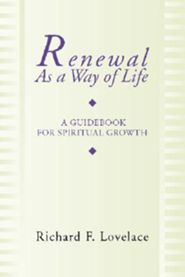
RAAWOL Lovelace

“Revival is an infusion of new spiritual life imparted by the Holy Spirit to existing parts of Christ’s body.”
-Richard Lovelace

Richard F. Lovelace (Th. D., Princeton), professor emeritus of church history at Gordon-Conwell Theological Seminary, is the author of Homosexuality and the Church,The American Pietism of Cotton Mather, and Dynamics of Spiritual Life. He has written numerous articles and has recently written Renewal as A Way of life.

Richard F. Lovelace


The following comments were made by Richard Lovelace in an interview with Christianbook.com on August 26th 1999. 

CBD: Could you describe yourself, your background, your hobbies and interests?

Lovelace:  Ok. This is sort of a first!  I am 68 years old.  I am a graduate of Yale College with a BA in philosophy, as well as a Graduate of Westminster Seminary and of Princeton Theological Seminary. I am emeritus professor of Church History at Gordon-Conwell Seminary, a writer, and still teaching.  I am married [and have] three children.

I have a great interest in music. I was a classical DJ for a year on Boston’s WBAQ before we moved, and I would still be doing that if there were a place to.  I am an avid fisherman.  My son has converted me to fly fishing trout!

CBD: Could you describe the overall premise of your book The Dynamics of Spiritual life, as well as your current book Renewal as a Way of Life ?

Lovelace: Certainly.  I would encourage people to read the second book as well, which can be downloaded on the web athttp://www.overit.com/lovelace/lovelacebooks/index.html I wroteThe Dynamics of Spiritual Life, published in 1978, because I wanted to set forth what I call the unified field theory of Christian Spirituality that would make use of insights particularly on the Reformation, the Puritans, the Great Awakening movements, catholic spirituality, and other areas.  It is a very catholic book.  It really endeavors to reach out everywhere to come upon Biblical principles of spirituality. It is a book on what is called spiritual theology or the historical theology of Christian experience. I started out my own Christian life absorbed in a Christian community which was an offshoot tracing back to the Welsh Revival—the overcomer conference in England. The name of the group was Peniel, it’s still in existence, and I am still working in it.  It has devoted itself to the production of pastoral theology, and practical theology of the Christian life. It was there that I got interested in the subject of spiritual awakening, revival, and renewal in the Church.  The Dynamics of Spiritual life book attempts to set forth both a Biblical portrayal of individual spiritual life, but it also attempts to deal with the great movements of spiritual awakening, because in my opinion these things are related. You can pursue individual spiritual growth but inevitably you will come up with the realization that there is a corporate aspect to this. Christians grow as they are immersed in currents of spiritual life that are larger than individual or local congregations for instance.

CBD: Could you give a definition of what you think revival is, and what it would be distinguished by?

Lovelace: As used by all the historians of revivals, it means an infusion of new spiritual life imparted by the Holy Spirit to existing parts of Christ’s body.  In other words, it happens to a church or community that has already been brought into spiritual life in the past in which that life is ebbing or is at a low ebb.  These are also simply communities that are in covenant with God. I would say that God’s covenant embraces over the generations groups of persons moving through history in what are called denominations. So that in the Presbyterian or Baptist churches for example, you have a collection of people whose grandparents were vital Christians, and God is faithful to his covenant and will strike again and again [to ignite revival] in those lines.

In my own denomination, the Presbyterian Church, we were born half-dead in America.  People with a somewhat dead orthodoxy came over and a powerful movement of Revival through the Log Collegemen (people trained in William Tennent’s in New Jersey) carried the message of not just having orthodox beliefs, but also being born again, and having the vital presence of the Holy Spirit. That divided the Presbyterian Church for 17 years, but it also was a powerful movement of multiplying Christians and the church reunited and that was the first great Awakening from about the 1730’s and 1740’s.  There was another powerful movement again in the congregational and Presbyterian Church’s called the Second Great Awakening from about 1795 to roughly 1838. You see splits occur again and again in revival periods. Yet, I don’t see this to be an evidence of revival nor an end goal. This is a very counter theory to the idea that you become more and more revived the more you split. I don’t see that in history although everything that splits is still on the board, still operating.  If you take a great movement such as the Anglican Communion, there are still streams of life pouring into it, especially from Africa.  You could do this with a local congregational history too. If you could go back to a local congregation that started in 1745, which would be in the middle of the First Great Awakening, you would find that it went though periods of decline in renewal.

CBD: In your book you see great prospects for either Christian Revival or anti-Christian movements. How important is Revival in terms of the outcome?

Lovelace : This depends on what is called your eschatology.  Whether you are pre mill, post mill, a mill, or don’t even know what mill is.  But during the 18th and 19th century it didn’t matter what you were, pre-mill or post-mill or a-mill, everybody expected a triumphant increase.  Just think of the Hymn “Jesus Shall Reign from Shore to Shore.”  That is a declaration of war on the powers of darkness. That is according to Psalm 72 that the gospel will spread to the ends of the earth.  Jesus says  “the gospel will be preached in every nation and then will come the end.  Generally, during the 18 th and 19th centuries people believed that there would be increasing degeneracy as the end drew near, ultimately seen in the coming of many Anti-Christs and then the Anti-Christ.  But also, they believed that there would be great outpourings of the Holy Spirit as Joel predicts and simply on the basis of Acts 2; that as Christians pray, they will be equipped and enabled to move out and advance the kingdom. The great historical example of that was the early Church in the first four centuries. They really did not expect that they would conquer the Roman Empire.  God didn’t let on that they were going to do it either.  Nevertheless, it occurred. Christianity became so powerful a force that the people at the top had to change.  We see that happen over and over again in History. We have seen this bring a quiet infusion of life in the Church that has brought about at least nominal Christianity to a lot of places. Right now, we are sitting here looking at I don’t now how much of the planet under the veil of Islam, the Moslems, that’s where I would expect Spiritual Awakening to spread to. If you are going to say that the Gospel is preached to every nation, I would say a powerful lot of Web site, internet, or radio and TV communication would have to take place in the Moslem area. Also there is China, in which one recent figure said that 28,000 Christians are being made there everyday. If you project that for a decade or so, it will mean a very powerful spread of the gospel there.

CBD: What specifically is your eschatology and your current view of the prospects for Revival?

Lovelace: Here is my eschatology basically.  It is a quote from a conference held in 1801.  “The world is coming to either Christ or to Beelzebub, and the parties are arming on both sides.”  In other words, what is seen as a decline in American culture, is just an extremely obnoxious upsurge of the Beelzebub party so to speak, which is much smaller than it appears at times.  What happens in such an upsurge is usually that the people of God began to call out to God in prayer for a revival.  That is what is happening today.  The most exciting things going on today are with David Bryant’s prayer ministry, and other things related to the prayer movements that are bubbling up everywhere on the planet.  There are huge numbers of these that are now interlocked by the Web.  This is also seen in Bill Bright’s movements of fasting and prayer for revival.  The Bryant people are trying to get a praying area called a lighthouse for every one of those nine digit zip codes in America.  This is human methodology, but it reflects a tremendous upsurge in a burden for revival.  I would say where you see this kind of fireplace being built there is going to be a fire.  There already is a fire.

CBD: A current modern day revival is documented in Jim Cymbala’s book Fresh Wind, Fresh Fire. The striking note of his account is the dominant role of prayer in the church ministry of the Brooklyn Tabernacle.  How is revival linked to the prayer ministry?

Yes, also you have areas of this planet in which simultaneously horrific disasters are occurring, in Africa particularly where the AIDS virus is just ravaging the continent, but also there is every evidence of very, very deep spirituality and growing Christian influence there.  In all of this, one of the things to bear in mind for today is Jonathan Edwards prediction which was that just as the printing press was a catalyst for the Reformation, so new methods of communication and travel  would be used by the Holy Spirit in a great outpouring.

CBD: That’s fascinating!

Lovelace: What we are dealing with today on the Internet is this: it is changing everything.  It is changing business, it is changing the economy, and what happening there is literally a big footrace between the “Beelzebub forces,” and the “Christian forces.”  The question is, how much good stuff can we get out there on the Internet because of course it is accessible all over the planet. Everybody speaks English.  They have to in order to do business.   In addition to this, one can easily translate languages- for example I have this $99 program that translates Swahili web sites!

CBD: In your work you speak of Jonathan Edwards, Distinguishing Marks of a Work of the Spirit of God.  Among those, where do you see the Church going?

Lovelace: Jonathan Edwards said a work of the Holy Spirit will have a strong renewed interest and emphasis on Jesus Christ. It will renew faithful reading of Scripture.  It will damage the Kingdom of darkness.  It will lead to a rebuilding of strong Orthodox theology, and it will generate love towards God and man.  He later revised those to some degree in his treatise on the Religious Affections. Basically, there was a strong emphasis through Evangelicals on solid Biblical study and orthodox Reformation theology.  Evangelicals have not been so strong on experience.  They tend to be rationalistic at times.

The Wesleyan quadrilateral, which is like a baseball diamond, has Scripture as its home plate.  The first base is tradition.  The second base is reason, and the third base is experience. According to Albert Outler in John Wesley, you had to run around that diamond and keep coming back to Scripture.  So, it starts with Scripture, followed by tradition, which is orthodox theology. Then reason, that is applying things to what we know now, and experience—that’s the impact of the Holy Spirit in your life.  Finally, you come back to Scripture.

Evangelicals are very strong on Scripture, tradition, and reason. Charismatics and Pentecostals have been real strong on experience, to some degree also on Scripture. They have not been at all involved deeply in tradition, and sometimes don’t make enough use of reason. But what I see coming is a balance of all of this.  My hope is that we will not have glossolalic and non-glossolalic communities all absolutely isolated from one another, but that we will have communities in which the nine gifts in 1 Corinthians 12 are displayed. Evangelicals could use some of these, words of knowledge, words of wisdom.  I see more of a vanilla-fudge mixture coming in the future, where you can’t tell the Charismatics from the Evangelicals. You have a lot people in the Roman Catholic Church who can’t tell what they are either, but when they talk you listen.

What I am expecting is a stronger emphasis on the doctrine of the Holy Spirit, but also a renewed Christology. This is where the battle lines are being drawn in the mainline denominations now.  There are these skirmishes over homosexuality and sexuality in general, but the real skirmish is over the deity and salvific work of Christ, and also over Scripture. All of those things, you are going to see the screen come into better focus if God continues to give us a reviving work.

Incidentally, I wrote an article which so far has not been published, in which I analyze the last forty years and I consider that a low key but real revival has taken place during this time. That has especially proceeded from the work of the likes of Billy Graham, Bill Bright, and Intervarsity for example.  There’s been a lot of proliferation of real Christians during this time.  Christians may currently be partially disarmed or unarmed for Christian warfare, but if they tensed up the society would feel the brunt of this.

CBD :  If Christians were to “tense up”, react, and take their stand, what kind of responses would you suggest should take place?

Lovelace:  Well, historically the Second Awakening was the high water mark of cultural impact of Protestantism.  In that awakening decades of evangelistic growth was the basis of what ever occurred.  Out of that came home and foreign missions as a first level or phase.

¨ The first phase of response is seen in the great missions movement and great number of Evangelicals who fill pulpits in America. This is evident in the Presbyterian movement, which has been colonized with people from Gordon-Conwell and Fuller Seminary.

¨ The second phase is the production of edifying literature, some of which is not so edifying, but Christian writings could totally absorb the New York Times book review all the time.

¨ Thirdly, there is an educational movement.  This is occurring all over the place, especially as it is seen in the homeschooling movement.  This is also evident in the proliferation of lower level Christian schools.  We haven’t yet created major Christian Universities, but I really like what Regent University has done.  We have colonized the Notre Dame department.  This is amazing!  They are all Evangelicals there. If you are going to see this whole society revived the way it was in the first fifty years of the 19th century (1800-1850), you are going to have to have a massive educational revival.  Because if you are going to find one toxic drip that has been dripping into us, it is our school systems.

¨ Fourthly, great solid crusades against moral depravity must take place.  We have had a couple of groups take a whack at this, but they often appear to be the Republican party at prayer, which is not a broad enough base.

¨ The fifth phase would be great crusades for social justice, where a mass of born again Catholics, Evangelicals, Charismatics, and Pentecostals, get mad at some things that are wrong. I have a list of things that are really bad in this country, from campaign finance reform to the gun situation, from our education, to a whole bunch of other stuff. The generation of righteous indignation in the 19th century abolished slavery. .  We are not doing well with this. Probably because our leaders have been told that you can’t manage social reform, you just have to evangelize. Maybe that was right for a while. But when you get enough Christians that are alive and they get mad about something like abortion, or other deformities on the scene. They are probably going to start praying about it and there are going to be changes.

Some people have said that the anti-abortion crusade is the equivalent of the anti-slavery crusade. The evangelicals in England whipped out slavery essentially. Other issues in need of attention would be the low level of health care in this country. There are so many poor people who don’t have it. That’s an atrocity. What are we going to do? Let all the humanists in Sweden beat us on this?  So, I do see those five phases that we might expect or aim at.

CBD:  What additional thoughts have you contributed to The Dynamics of Spiritual Life in your recent book Renewal as a Way of Life?

Lovelace: The one thing I did do in Renewal, is to develop more a theology of renewal based on the Kingdom of God, or the Kingdom of Christ. I tried to make it kingdom centered prayer and renewal.  Recently, I was out in Holland Michigan, the land of what is sometimes called “frozen chosen,” and I discovered that they weren’t all frozen. There were people translating Abraham Kuyper and Herman Baavinck.  I read some Kuyper and I was amazed at the spiritual vitality of Kuyper. It was like reading Andrew Murray or Mrs. Penn Lewis.  There was a real strong sense of spiritual conflict and the Holy Spirit’s operation in history.  Kuyper has a very positive attitude towards culture, event the French revolution which is a black beast for him had elements in the revolution which to him reflected elements of the resurrection.  We would not have what we have in the Western world had it not been for Christ’s resurrection.

Kuyper went to Keswick, a great spiritual growth center in England.  He was spiritually hungry and said that got fed there, but there are a couple of places there that are not running on all cylinders.  One of them is that they have become somewhat introverted in their spirituality, and they don’t realize the necessity to conquer in the realm of ideas.  The famous statement that he made was that “there isn’t a square inch of territory in this planet in which Jesus Christ is not Lord now.”  He says that we have got to be able to out think the forces that are broadcasting material inimical to Christ. So, firstly we have to get our minds filled with the spirit, and secondly, Kuyper said, we cannot surrender any areas of our society to the forces of darkness without putting up a fight in prayer.  Kuyper started up a newspaper, a University, a Political part, and he is elected premier of Holland for decades.  It is a case study of what happens when there is a real spirit filled renewal in a local area.  What happens, as Phillip Schaff and Alexis de Tocqueville in the 19th century said when they came to America.  “This is amazing! There are no established churches, but Christianity in all these denominations, they hand together enough to make Christianity rule the roost.  Back in 1850 we ran the store in this country.  I hope to see at least a movement in that direction in the next century.

CBD: Thank you for sharing these comments with us.

Emergency Numbers in The Bible

“My presence will go with you, and I will give you rest.” – Exodus 33:14b

dark sunset at the beach

When in SORROW, call John 14

When people FAIL you, call Psalm 27

When you have SINNED, call Psalm 51

When you WORRY, call Matthew 6:19-34

When you are in DANGER, call Psalm 91

When God seems FAR AWAY, call Psalm 139

When your FAITH needs stirring, call Hebrews 11

When you are LONELY and FEARFUL, call Psalm 23

When you grow BITTER and CRITICAL, call 1 Corinthians 13

When you feel DOWN and OUT, call Romans 8:18-39

When you want REST and PEACE, call Matthew 11:25-30

When the WORLD seems BIGGER than God, call Psalm 90

When you want Christian ASSURANCE, call Romans 8:1-30

When you leave home for LABOR or TRAVEL, call Psalm 121

When your PRAYERS grow narrow or SELFISH, call Psalm 67

When you want COURAGE for a task, call Joshua 1

When you think of INVESTMENTS and RETURNS, call Mark 10

How to get along with DIFFICULT people, call Romans 12

For great INVENTION/OPPORTUNITY, call Isaiah 55

For Paul’s secret to HAPPINESS, call Colossians 3:12-17

For a SUMMARY OF CHRISTIANITY, call 1 Corinthians 5:15-19

If you are DEPRESSED, call Psalm 27

If you want to be FRUITFUL, call John 15

If your FINANCIALLY BROKE, call Psalm 37

If your are LOSING CONFIDENCE in PEOPLE, call 1 Corinthians 13

If people seem UNKIND, call John 15

If your are DISCOURAGED about your WORK, call Psalm 126

If you find the world growing SMALL, and you GREAT, call Psalm 19

Keller & Clowney: Preaching Christ in a Post-Modern World

Some of the most helpful resources on preaching Christ from all of Scripture that you will ever find. HIGHLY RECOMMENDED!!!

Ted Torreson's avatarFaith In Motion


I love sharing God’s word through preaching.  Since I’m moving to preaching every week, as we launch The Exchange Community in Jackson, Mo, I thought It would be good to reexamine my preaching and how I interpret and display God’s word.  I remembered a friend of mine shared, a number of years back, that Tim Killer and Edmond Clowney team taught a class at Reformed Theological Seminary on Preaching Christ in a Post-Modern World.  As I started to listen through these teachings, I desired to share them with other church planters, preachers, and pastors that may not be aware of their existence.  Even if you don’t fit in these categories, this is an excellent resource to understand and share scripture.

Free Resources:

Audio from itunes

Course Material in PDF These notes were extremely difficult to find.  I believe they are notes from this course as it was later modified.  They do not…

View original post 272 more words

The Value of Discipleship in Groups

small group bible study

More books and conferences under the banner of disciple-making are available now than ever before. As a result, believers are contemplating the implications of the Great Commission for their lives. With a better understanding of discipleship come questions of how to replicate the process. One important facet is how many people should be discipled together. The size of your discipleship group should be considered before approaching potential group members.

I have found that the most effective discipleship groups, what we call D-Groups, are gender-exclusive. Men should meet with men, and women should meet with women. Some topics and personal problems should not be discussed in a mixed group. While it is wonderful for couples to study God’s Word and grow spiritually together, the crucial dynamic of a D-Group is compromised when couples are involved, particularly in the areas of transparency and accountability.

FIVE REASONS TO DISCIPLE IN GROUPS

While the Bible never prescribes a particular model for discipling others, Jesus invested in groups of varying sizes.[1] Larger groups learned from his teachings and miracles, while his closest followers benefited from personal discipleship and specific instruction. While one-on-one discipling is valid and has it purposes, I want you to consider five reasons to meet in a group of three to five instead of privately with one.

1. Avoid the Ping-Pong Match

First, a group of two can be like a ping-pong match: you, the leader, are responsible to keep the ball in play. “Mike, how was your day?” “Good,” responds Mike. The leader probes deeper by asking, “Any insights from your Scripture reading this week?” “I enjoyed it,” Mike briefly replies. The conversation progresses only as the mentor engages the mentee. The pressure to lead is lessened when others in the group join in on the spiritual journey.

2. One-on-One can be Challenging to Reproduce

Second, a one-on-one model can be challenging to reproduce because the person in whom you are investing has a tendency to look at you in the same manner that Timothy looked at the Apostle Paul. Mentees, after a year or two in a discipling relationship, have said to me, “I could never do with another person what you did with me.” Yet a group takes a journey together. It is worth noting that group members usually don’t feel ready to begin their own groups. Neither did the disciples. But Jesus left them with no choice. Remember, the discipling relationship is not complete until the mentee becomes a mentor, the player becomes a coach.

3. Group of Two Tends to Become a Counseling Session

Third, a group of two tends to become a counseling session, where you spend the majority of your time solving personal problems. Biblical wisdom for personal issues is certainly a part of the discipling relationship, but therapeutic advice every week must not define the group.

4. Jesus Discipled in Groups

Fourth, as mentioned earlier, Jesus utilized the group model. While he spent time investing in a group of twelve, he used teachable moments to shape three—Peter, James, and John—in a unique way. With the exception of Judas, all twelve faithfully followed the Lord, even to the point of death. But these three were the key leaders in the early years of the church.

Solomon, a financial genius and the Warren Buffett of his day, advocated the diversification of assets twenty-five hundred years before Wall Street existed (Eccl. 11:1-2). Wise people invest in a variety of stocks, bonds, and commodities. Jesus, too, believed in diversified investing and modeled it in his discipleship example. Joel Rosenberg and T.E. Koshy pose a thought-provoking question:

What if for three years Jesus had discipled only Judas? Despite his best efforts, Jesus would have wound up with no one to carry on his legacy and his message when he returned to the Father. Jesus didn’t invest in just one man. He invested in a group of men from a wide range of backgrounds, including fishermen, a tax collector, and a Zealot (a political revolutionary).[2]

Jesus poured himself into twelve men, and taught us the importance of the group in disciple-making. Yes, there are times when a one-on-one mentoring relationship is beneficial, but in the New Testament, particularly the Gospels, it is not the norm.

Paul, in similar fashion, used his missionary journeys to train others. He rarely if ever traveled alone, always including Barnabas, Silas, John Mark, Timothy, and others as gospel co-workers. When Paul charged Timothy in his final letter, he stated, “You then, my child, be strengthened by the grace that is in Christ Jesus, and what you have heard from me in the presence of many witnesses entrust to faithful men who will be able to teach others also” (2 Tim. 2:1-2). Notice that Paul says, “Entrust to faithful men”—plural—“who will teach others.” Throughout his ministry, Paul modeled this practice.

5. Built-in Accountability

Finally, a group of three to five provides a built-in accountability system, as well as encouragement from others. In my first D-Group, two of the three men involved came prepared with a Bible-reading journal I had asked them to complete. But one, a skeptic of the system’s value, failed to make any entry. Prior to joining the D-Group, his excuse for not reading the Bible was, “It’s difficult to understand.” Using the other two men to motivate him, I countered, “Can you just try journaling for the next five days? Right now, you have no evidence to prove that it doesn’t work. By trying it, you will know if it works for you or not.” The next week, he arrived with a smile on his face, saying, “Let me share what I heard from God through his Word this week.” Watching the excitement of the others challenged him to contribute to the group, and to his own spiritual development.

What has been your experience in a discipleship group? Does size matter? If so, how?

About Robby Gallaty:

Robby Gallaty

Robby Gallaty (@Rgallaty) is the Senior Pastor of Brainerd Baptist Church in Chattanooga, TN and founder of Replicate Ministries. For more information on discipleship, you can visit replicateministries.org.

[1]The gospels record Jesus ministering in 5 group sizes: the crowd (multitudes), the committed (the 72 in Luke 10), the cell (the twelve disciples), the core (Peter, James, and John), and the close-up encounters (one-on-one). Making disciples cannot be restricted to a particular group meeting; however, a regular gathering time is practically necessary for accountability.

[2] Joel C. Rosenberg and T. E. Koshy, The Invested Life (Carol Stream, IL: Tyndale House Publishers, 2012), 87-88.

*Article adapted from http://www.9marks.org/blog/why-disciple-groups – August 16, 2013

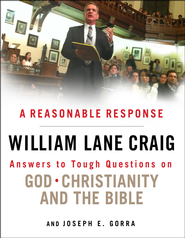
Book Review on William Lane Craig’s and Joseph E. Gorra’s A Reasonable Response

“A Great Application of 1 Peter 3:15”: Book Review by David P. Craig

ARR Craig and Gorra

One of the most famous verses in the Bible used in the field of apologetics is 1 Peter 3:15, “But in your hearts honor Christ the Lord as holy, always being prepared to make a defense to anyone who asks you for a reason for the hope that is in you; yet do it with gentleness and respect” (ESV). In apologetics when a person “defends” the faith of Christianity it’s easy to get “defensive” when arguing with someone of another opinion. The beauty of this book is that Craig and Gorra are able to give the finest evidences for the Christian faith and answer the biggest objections to Christianity and do so while “speaking the truth in love” (Eph. 4:15).

Craig and Gorra are not  only a gifted apologists, but loving evangelists and truly demonstrate how the gospel can be the center piece of all evidence with reference to offensive evidences as well as defending attacks on the Christian faith.

The six sections of this helpful book in answering difficult questions are as follows: (1) Questions on Knowing and Believing What Is Real – questions such as: Does Knowledge require certainty?; What is the criterion for a good argument?; Is there such a thing as objective truth?; and Is the price of biblical errancy too high to pay? (2) Questions About God – such as: Is a Maximally Great Being Possible?; Is Trinity Monotheism Orthodox?; and In What Sense Is God a “Simple Being”? (3) Questions about Origins and the Meaning of Life – like the following: Must the Cause of the Universe Be Personal?; Is there a contradiction in God’s creation of time?; Is life absurd without God?; and Is Scientism Self-refuting? (4) Questions about the Afterlife and Evil – like: Does creation benefit the lost?; Do the damned in Hell accrue further punishment?; and Was the slaughter of the Canaanites an act of “Divine Genocide”? (5) Questions about Jesus Christ and Being His Disciple: What does it mean that Jesus is the Son of God?; Can one justifiably infer Jesus’ resurrection on the basis of the empirical evidence?; and What does it mean to have a personal relationship with God? (6) Questions about Issues of Christian Practice – such as: Do we live in a Postmodern Society?; How might we think about a Christian marrying a non-Christian?; and “Can someone be a “Christian Homosexual?”

Also of immense help are the three appendixes which include: (1) Tips on using the book for small group study;  (2) Fostering question-asking and answer-seeking environments; (3) Civility guidelines for (online) “third places.”

Perhaps nobody will agree with 100% of the answers given, or be totally convinced of all the evidence or answers provided. However, anyone reading this book will benefit richly from it. The myriad of questions addressed by both believers and non-believers are answered cogently and practically. I will return to this book again and again as a virtual encyclopedia of great answers to great questions on the Christian faith. You will learn from these seasoned apologists how to “always be prepared to make a defense to everyone who asks you for a reason for the hope that is in you” and you will be guided in how to do this “with gentleness and respect.”

Tim Keller on Five Practices of The Missional Church

THE MISSIONAL CHURCH

Missional church sign in the desert

The rapid decline of Christendom since the end of WWII has instituted an even greater need for “missional” churches to engage the surrounding community and retell the culture’s stories through the context of the gospel.

THE NEED FOR A MISSIONAL CHURCH

In the West for nearly a thousand years, the relationship of European Christian churches to the broader culture was a relationship known as “Christendom.” The institutions of society “Christianized” people and stigmatized non-Christian belief and behavior. Though people were Christianized by the culture, they were not necessarily regenerated or converted with the gospel. The church’s job was then to challenge persons into a vital, living relation with Christ.

There were great advantages and yet great disadvantages to Christendom. The advantage was a common language for public moral discourse with which society could discuss what was “good.” The disadvantage was that Christian morality without gospel-changed hearts often led to cruelty and hypocrisy. Think of how the small town in Christendom treated the unwed mother, for example. Also, under Christendom the church often was silent against the ruling classes’ abuses of the weak. For these reasons and others, the church in Europe and North America has been losing its privileged place as the arbiter of public morality since at least the mid- nineteenth century. The decline of Christendom has accelerated greatly since the end of World War II.

British missionary Lesslie Newbigin went to India around 1950. There he was involved with a church in a very non-Christian culture. When he returned to England some thirty years later, he discovered that the Western church now found itself in a non-Christian society as well, but it had not adapted to its new situation. Though public institutions and the popular culture of Europe and North America no longer Christianized people, the church still ran its ministries assuming that a stream of Christianized, traditional/moral people would simply show up at worship services. Some churches certainly carried out evangelism as one ministry among many, but the church in the West had not become completely missional—adapting and reformulating absolutely everything it did in worship, discipleship, community, and service so as to be engaged with the non-Christian society around it. It had not developed a missiology of Western culture, the way it had done with other nonbelieving cultures.

One of the reasons much of the evangelical church in the United States has not experienced the same precipitous decline as the Protestant churches of Europe and Canada is because in the United States there is still a heartland with remnants of the old Christendom society. There the informal public culture, though not the formal public institutions, still stigmatizes non-Christian beliefs and behavior. There is a “fundamental schism in American cultural, political, and economic life. There’s the quicker-growing, economically vibrant . . . morally relativist, urban-oriented, culturally adventuresome, sexually polymorphous, and ethnically diverse nation. . . .

And there’s the small-town, nuclear-family, religiously oriented, white-centric other America, [with] . . . its diminishing cultural and economic force. . . . [T]wo countries” (Michael Wolf, “The Party LIne,” New York, February 26, 2001: 19). In conservative regions, it is still possible to see people professing faith and the church growing without becoming missional. Most traditional evangelical churches can win to Christ only people who are temperamentally traditional and conservative. As Wolff notes, however, this

is a shrinking market, and eventually evangelical churches ensconced in the declining, remaining enclaves of Christendom will have to learn how to become missional. If they do not, they will decline or die.

We don’t simply need evangelistic churches; rather, we need missional churches.

THE PRACTICES OF A MISSIONAL CHURCH

(1) SPEAK IN THE VERNACULAR

In Christendom there is little difference between the language inside and outside of the church; technical biblical terms are well-known inside and outside church life. Documents of the early U.S. Congress, for ex- ample, are riddled with allusions to and references from the Bible. In a missional church, however, these terms must be explained.

The missional church:

+ avoids “tribal” language, stylized prayer language, unnecessarily pious evangelical jargon, and archaic lan- guage that seeks to set a spiritual tone.

+ avoids “we-they” language, disdainful jokes that mock people of different politics and beliefs, and dismis- sive, disrespectful comments about those who differ with us.

+ avoids sentimental, pompous, “inspirational” talk.

+ avoidstalkingasifnonbelievingpeoplewerenotpresent.Ifyouspeakanddiscourseasifyourwholeneigh- borhood were present (and not just scattered Christians), eventually more and more of your neighbors will find their way in or be invited.

Unless all of the above is the outflow of a truly humble-bold, gospel-changed heart, it is all just marketing and spin.

(2) ENTER AND RETELL THE CULTURE’S STORIES WITH THE GOSPEL

In Christendom it is possible to simply exhort Christianized people to do what they know they should. There is little or no real engagement, listening, or persuasion. Often, along with exhortation there is a heavy reliance on guilt to motivate behavior change. In a missional church, the preaching and communication always as- sume the presence of skeptical people and consequently engage their stories.

+ To enter the culture’s stories means to show sympathy toward and deep acquaintance with the literature, music, theater, and other arts expressing the existing culture’s hopes, dreams, heroic narratives, and fears.

+ To retell the culture’s stories is to show how only in Christ can we have freedom without slavery, and em- brace of the other without injustice. The older culture’s story called on people to be a good father/mother, son/daughter, and to live a decent, merciful, good life. Now the culture’s story calls people (a) to be free and self-created and authentic (note the theme of freedom from oppression); and (b) to make the world safe for everyone else to be the same (theme of inclusion of the “other”; justice).

(3) THEOLOGICALLY TRAIN LAYPEOPLE FOR PUBLIC LIFE AND VOCATION

In Christendom you can afford to train people solely in prayer, Bible study, and evangelism—private world skills— because they are not facing radically non-Christian values in their public life. In a missional church, the laity needs theological education to “think Christianly” about everything and to work with Christian distinctiveness. They need to know three things: (a) which cultural practices manifest common grace and are to be embraced, (b) which practices are antithetical to the gospel and must be rejected, and (c) which practices can be adapted/revised.

+ In a missional situation, the renewing and transformation of the culture through the work of laypeople with distinctively Christian vocations must be lifted up as real kingdom work and ministry, along with the traditional ministry of the Word.

+ Christians will have to use the gospel to demonstrate true, biblical love and tolerance in the public square toward those with whom we deeply differ. This tolerance should equal or exceed that which groups with opposing views show toward Christians. The charge of intolerance is perhaps the main “defeater” of the gospel in the non-Christian West.

(4) CREATE CHRISTIAN COMMUNITY THAT IS COUNTERCULTURAL AND COUNTERINTUITIVE

In Christendom, “fellowship” is basically just a set of nurturing relationships, support, and accountability. In a missional church, however, Christian community must go beyond that to embody a counterculture, showing the world how radically different a Christian society is with regard to sex, money, and power.

+ In sex. We avoid both the secular society’s idolization of sex and traditional society’s fear of sex. We also exhibit love rather than hostility or fear toward those whose sexual life-patterns are different from ours.

+ In money. We promote a radically generous commitment of time, money, relationships, and living space to social justice and the needs of the poor, the immigrant, and the economically and physically weak.

+ In power. We are committed to power sharing and relationship building among races and classes that are alienated outside of the body of Christ. A missional church must be deeply and practically committed to deeds of compassion and social justice and deeply and practically committed to evangelism and conversion.

(5) PRACTICE CHRISTIAN UNITY AS MUCH AS POSSIBLE ON THE LOCAL LEVEL

In Christendom, when “everyone was a Christian,” it was perhaps necessary for a church to define itself over against other churches—that is, to gain an identity you had to say, “We are not like that church over there or those Christians over here.” Today, however, it is much more illuminating and helpful for a church to define itself over against “the world”—the values of the non-Christian culture.

+ It is very important that we do not spend our time bashing and criticizing other kinds of churches. That criticalness simply plays into the common “defeater” that Christians are all intolerant.

+ While we have to align ourselves in denominations that share many of our distinctives, at the local level we should cooperate with, reach out to, and support the other congregations and churches in our area. This will raise many thorny issues, of course, but our bias should be in the direction of cooperation.

A CASE STUDY

This concept of the missional church goes beyond any program; the practices described here have to be present in every area of the church.

For example, what makes a small group missional? A missional small group is not necessarily one that is do- ing some kind of specific evangelism program (though that is to be encouraged). Rather, (1) if its members love and talk positively about the city/neighborhood, (2) if they speak in language that is not filled with pious tribal or technical terms and phrases, nor with disdainful and embattled verbiage, (3) if in their Bible study they apply the gospel to the core concerns and stories of the people of the culture, (4) if they are obviously interested in and engaged with the literature, art and thought of the surrounding culture and can discuss it both appreciatively and critically, (5) if they exhibit deep concern for the poor, generosity with their money, purity and respect with regard to the opposite sex, and humility toward people of other races and cultures, and (6) if they do not bash other Christians and churches—then seekers and nonbelieving people will be invited and will come and stay as they explore spiritual issues.

Copyright © 2001 by Timothy Keller, © 2009 by Redeemer City to City.

We encourage you to use and share this material freely—but please don’t charge money for it, change the wording, or remove the copyright information.

 About Tim Keller:

In 1989 Dr. Timothy J. Keller, his wife and three young sons moved to New York City to begin Redeemer Presbyterian Church. In 20 years it has grown to meeting for five services at three sites with a weekly attendance of over 5,000. Redeemer is notable not only for winning skeptical New Yorkers to faith, but also for partnering with other churches to do both mercy ministry and church planting.  Redeemer City to City is working to help establish hundreds of new multi-ethnic congregations throughout the city and other global cities in the next decades.

Dr. Tim Keller is the author of several phenomenal Christo-centric books including:

Joy for the World: How Christianity Lost Its Cultural Influence and Can Begin Rebuilding It (co-authored with Greg Forster and Collin Hanson (February or March, 2014).

Encounters with Jesus:Unexpected Answers to Life’s Biggest Questions. New York, Dutton (November 2013).

Walking with God through Pain and Suffering. New York, Dutton (October 2013).

Judges For You (God’s Word For You Series). The Good Book Company (August 6, 2013).

Galatians For You (God’s Word For You Series). The Good Book Company (February 11, 2013).

Every Good Endeavor: Connecting Your Work to God’s Plan for the World. New York, Penguin Publishing, November, 2012.

Center ChurchDoing Balanced, Gospel-Centered Ministry in Your City. Grand Rapids: Zondervan, September, 2012.

The Freedom of Self Forgetfulness. New York: 10 Publishing, April 2012.

Generous Justice: How God’s Grace Makes Us Just. New York: Riverhead Trade, August, 2012.

The Gospel As Center: Renewing Our Faith and Reforming Our Ministry Practices (editor and contributor). Wheaton: Crossway, 2012.

The Meaning of Marriage: Facing the Complexities of Commitment with the Wisdom of God. New York, Dutton, 2011.

King’s Cross: The Story of the World in the Life of Jesus (Retitled: Jesus the KIng: Understanding the Life and Death of the Son of God). New York, Dutton, 2011.

Gospel in Life Study Guide: Grace Changes Everything. Grand Rapids, Zondervan, 2010.

The Reason For God: Belief in an Age of Skepticism. New York, Dutton, 2009.

Counterfeit Gods: The Empty Priorities of Money, Sex, and Power, and the Only Hope That Matters. New York, Riverhead Trade, 2009.

Heralds of the King: Christ Centered Sermons in the Tradition of Edmund P. Clowney (contributor). Wheaton: Crossway Books, 2009.

The Prodigal God. New York, Dutton, 2008.

Worship By The Book (contributor). Grand Rapids: Zondervan, 2002.

Ministries of Mercy: The Call of the Jericho Road. Phillipsburg: P&R Publishing, 1997.

A Journey From Atheism to Jesus

This is a beautiful story of Jordan Monge, a Harvard University student, and her journey from atheism to Christ.

I read the Qur’an and Richard Dawkins’s The God Delusion. I went through The Skeptic’s Annotated Bible and looked up Christian rebuttals to apparent contradictions. But nothing compared to the rich tradition of Christian intellect.

The Atheist's Dilemma

The Atheist’s Dilemma

By Jordan Monge

I don’t know when I first became a skeptic. It must have been around age 4, when my mother found me arguing with another child at a birthday party: “But how do you know what the Bible says is true?” By age 11, my atheism was so widely known in my middle school that a Christian boy threatened to come to my house and “shoot all the atheists.” My Christian friends in high school avoided talking to me about religion because they anticipated that I would tear down their poorly constructed arguments. And I did.

As I set off in 2008 to begin my freshman year studying government at Harvard (whose motto isVeritas, “Truth”), I could never have expected the change that awaited me.

It was a brisk November when I met John Joseph Porter. Our conversations initially revolved around conservative politics, but soon gravitated toward religion. He wrote an essay for theIchthus, Harvard’s Christian journal, defending God’s existence. I critiqued it. On campus, we’d argue into the wee hours; when apart, we’d take our arguments to e-mail. Never before had I met a Christian who could respond to my most basic philosophical questions: How does one understand the Bible’s contradictions? Could an omnipotent God make a stone he could not lift? What about the Euthyphro dilemma: Is something good because God declared it so, or does God merely identify the good? To someone like me, with no Christian background, resorting to an answer like “It takes faith” could only be intellectual cowardice. Joseph didn’t do that.

The Cross no longer seemed a grotesque symbol of divine sadism, but a remarkable act of love. Christianity began to look less strangely mythical and more cosmically beautiful.

And he did something else: He prodded me on how inconsistent I was as an atheist who nonetheless believed in right and wrong as objective, universal categories. Defenseless, I decided to take a seminar on meta-ethics. After all, atheists had been developing ethical systems for 200-some years. In what I now see as providential, my atheist professor assigned a paper by C. S. Lewis that resolved the Euthyphro dilemma, declaring, “God is not merely good, but goodness; goodness is not merely divine, but God.”

Joseph also pushed me on the origins of the universe. I had always believed in the Big Bang. But I was blissfully unaware that the man who first proposed it, Georges Lemaître, was a Catholic priest. And I’d happily ignored the rabbit trail of a problem of what caused the Big Bang, and what caused that cause, and so on.

By Valentine’s Day, I began to believe in God. There was no intellectual shame in being a deist, after all, as I joined the respectable ranks of Thomas Jefferson and other Founding Fathers.

I wouldn’t stay a deist for long. A Catholic friend gave me J. Budziszewski’s book Ask Me Anything, which included the Christian teaching that “love is a commitment of the will to the true good of the other person.” This theme—of love as sacrifice for true good—struck me. The Cross no longer seemed a grotesque symbol of divine sadism, but a remarkable act of love. And Christianity began to look less strangely mythical and more cosmically beautiful.

At the same time, I had begun to read through the Bible and was confronted by my sin. I was painfully arrogant and prone to fits of rage. I was unforgiving and unwaveringly selfish. I passed sexual boundaries that I’d promised I wouldn’t. The fact that I had failed to adhere to my own ethical standards filled me with deep regret. Yet I could do nothing to right these wrongs. The Cross no longer looked merely like a symbol of love, but like the answer to an incurable need. When I read the Crucifixion scene in the Book of John for the first time, I wept.

NO WALK IN THE PARK

But beauty and need do not make something true. I longed for the Bible to be true, but the intellectual evidence was still insufficient.

So I plunged headlong into apologetics, devouring debates and books from many perspectives. I read the Qur’an and Richard Dawkins’s The God Delusion. I went through The Skeptic’s Annotated Bible and looked up Christian rebuttals to apparent contradictions. But nothing compared to the rich tradition of Christian intellect. I’d argued with my peers, but I’d never investigated the works of the masters: Augustine, Anselm, Aquinas, Descartes, Kant, Pascal, and Lewis. When I finally did, the only reasonable course of action was to believe in the death and resurrection of Jesus Christ.

But my head and my heart suddenly switched places. Though I began to know the evidence for the Scriptures, my head full of answers, I began to feel distant from the story that had brought me to tears a month prior. When reading through the Passion narrative on retreat on Cape Cod in the spring, I remained utterly unmoved. I went out to pray.

I walked to a pond surrounded by trees and began praying by the water’s edge. I felt disconnected from God, from the friends I’d begun to hold dear, from my body itself. I begged God to make it all click, as a test for me to know that he was there. After an hour with no progress, I started to walk.

Following the pond to a stream, I began climbing through the surrounding thicket to see if I could reach the ocean a little ways down. I kept pausing, thinking, Do I want to go back? I left all my stuff behind. But each time, I renewed my steps, believing that I couldn’t quit until I’d made it to the end. I wouldn’t forgive myself if I just gave up and went back to where I’d started. I had some sense of direction of where I needed to go, but I didn’t know how to get there.

I climbed over branches and under bushes, sometimes going in the opposite direction for a while when the bramble grew too thick. I treaded lightly through marshes only to have the mud swallow my leg up to the knee. After pulling myself out, I started walking through the stream, since I figured I couldn’t get any dirtier, and the ground seemed to be most trustworthy along the middle of the river where the water had worn the path. So I followed it until the last light of day was waning.

I quickly realized that my journey through the briar patch was an apt metaphor. I’m trying to get somewhere, but I’m not sure how to get there. There’s no clear path, so I must proceed by trusting my instincts. I might even go off in the opposite direction for a little while. In the end, I may arrive right back where I started. But that’s okay too, because I’ll get there with a clearer head and everything will be waiting for me when I’m done. It won’t be easy. Sometimes I’ll get mired in the mud, or caught up in thorns. But I’ll make it through, though not without a few cuts.

If I wanted to continue forward in this investigation, I couldn’t let it be just an intellectual journey. Jesus said, “If you hold to my teaching, you are really my disciples. Then you will know the truth, and the truth will set you free” (John 8:31-32). I could know the truth only if I pursued obedience first.

I’d been waiting for my head and my heart to be in agreement. By the end of the church retreat, they weren’t completely in sync. Many days they still aren’t. But I realized that the unity could come later. If my heart had agreed at one point, and my head agreed now, then my heart would follow. I couldn’t let a malfunctioning heart delay the logical course of action, the obedience required by true faith.

I committed my life to Christ by being baptized on Easter Sunday, 2009.

This walk has proved to be quite a journey. I’ve struggled with depression. I would yell, scream, cry at this God whom I had begun to love but didn’t always like. But never once did I have to sacrifice my intellect for my faith, and he blessed me most keenly through my doubt. God revealed himself through Scripture, prayer, friendships, and the Christian tradition whenever I pursued him faithfully. I cannot say for certain where the journey ends, but I have committed to follow the way of Christ wherever it may lead. When confronted with the overwhelming body of evidence I encountered, when facing down the living God, it was the only rational course of action.

I came to Harvard seeking Veritas. Instead, he found me.

Source: http://www.christianitytoday.com/ct/2013/march/atheists-dilemma.html

Book Review on Tim Keller’s: The Father and Son

“The Value of Christ’s Ascension” Book Review by David P. Craig

TFAS Tim Keller

Most Christians can tell you the value of the incarnation, atonement, or resurrection of Christ. However, on the other hand most Christians would be hard pressed to offer much insight to the practical values related to Christ’s ascension.

In this essay Keller explains how Jesus in His ascension provides great value to His subjects as the reigning Prophet, Priest, and King. In between His resurrection and His return to earth – Christ is currently alive and well and currently reigning in the present.

Keller discusses what the ascension means for us theologically and practically.

Theologically Christ’s ascension means that Jesus’ ascension is not simply Jesus’ return from earth to Heaven, but it is a “new enthronement for Jesus, bringing a new relationship with us and with the whole world.” Jesus as King is currently actively engaged in His mediatorial work throughout the earth. Jesus is directing a “cosmic transition plan–one that will bring about the new heavens and a new earth.”

Practically, Christ’s ascension means three things: (1) Jesus is available to us now twenty four hours a day, seven days a week for intimate communication and loving fellowship. Keller writes: “Because Christ is ascended we can know his presence, actually speaking to us, actually teaching us, actually pouring out his love out into our hearts–through the Holy Spirit”; (2) Jesus is the Ultimate Sovereign Authority over the universe. Keller explains, “Jesus controls all things for the church, and therefore you can face the world with peace in your heart…To say that Jesus is making everything work together for your good means that not only are bad things a part of his plan but also little things”; (3) The ascension of Christ means that Jesus guarantees that we can know that we are forgiven, accepted and delighted in by God the Father.

Keller’s short essay is theologically rich, preeminently encouraging, and extremely practical. This short read will give you an appreciation for the practical ramifications of Jesus’ ascension, but more importantly it will cause you to worship Him on the spot for ascending to Heaven for your benefit and His glory.

Friday Humor: Men Be Careful When Dealing With Your Wife’s Age!

Series: Friday Humor # 23

Mud Pack Picture

Craig’s wife bought a new line of expensive cosmetics guaranteed to make her look years younger.

After a lengthy sitting before the mirror applying the “miracle” products, she asked, “Darling, honestly, what age would you say I am?”

Looking over her carefully, Craig replied, “Judging from your skin, twenty one; your hair, twenty three; and your figure, twenty five.”

“Oh, you flatterer!” she gushed.

“Hey, wait a minute!” Craig interrupted.

“I haven’t added them up yet.”

10 Principles of Discipleship

FTM Michael J. Wilkins
1.     Discipleship is about a Relationship

Michael Wilkins has defined a disciple of Jesus as one who “has come to Jesus for eternal life, has claimed Jesus as Savior and God, and has embarked upon the life of following Jesus.”[1] His very presence in my life and his promise to never leave nor forsake me, encourages me to daily follow Him.  At the heart of following Him is this undeserved relationship I have with Him.

2.     Discipleship is enabled and empowered by the work of the Holy Spirit who transforms us into the image of Christ.

The Holy Spirit indwells and fills believers (Eph. 5:18), guides us into all truth (John 16:13), brings forth fruit in our lives (Gal. 5:22-23) and empowers us for ministry in the church and in the world.[2]  The Spirit is God’s presence in us (Rom. 8:11) to confirm that we are indeed children of God (Rom. 8:16) and to convict us of sin for the continuing process of conforming us into the image of Christ.  Understanding the role of the Holy Spirit encourages the response of submission to His sanctifying work.

3.     Discipleship is grounded and guided by the Word of God

The Bible is our authority in all areas of life.  “If you abide in my word, you are truly my disciples, and you will know the truth, and the truth will set you free” (John 8:31-32). Consistent nourishment is a vital component of one’s spiritual growth (Psalm 1, John 15).

4.     Discipleship is nurtured in community

Community with other believers is a vital part of our growth as disciples.  We were made to be in fellowship with one another.  Thus the imagery of the body of Christ portrays how vitally linked we are to one another.  In such community we are able to fulfill the command of loving one another and with this community then to love the world.

5.     Discipleship is a continuing process of being transformed from the inside-out

“The ultimate goal of the believer’s life is to be conformed to the image of Christ (Ro 8:29).”[3]  Jesus described a radical way of life in the sermon on the mount.  In a world in which righteousness was very much regarded by one’s outward actions, Jesus emphasized the transformation of the heart.

6.     Discipleship produces spiritual fruit

As the Holy Spirit works to transform the individual and change is made from the inside-out, the characteristics of God become evident in the believer’s life:  love, joy, peace, patience, kindness, goodness, faithfulness, gentleness, self-control (Gal. 5:22-23).

7.     Disciples of Christ who are in the process of inward transformation, yield to the Spirit’s leading in service and mission.

Spiritual formation is both about the inward change of heart and the outward manifestation of that changed heart.  Christ modeled the life of service for His disciples and commands us to serve in humility and love while proclaiming His truth in a lost world.

8.     Disciples are called to share in the fellowship of Christ’s sufferings

As we live in a sin-cursed world, we bear the effects of sin on a daily basis.  With the presence of Christ and the promise of future hope with Him, we are able to endure the pain and even be transformed in the process. Paul writes of this truth in 2 Cor. 4:17: “For this light momentary affliction is preparing for us an eternal weight of glory beyond all comparison.”  God invites us to suffer for His sake, for living to honor Christ in a world that is hostile toward Him.  In this, we share in his sufferings and bring glory to Him.

9.     Disciples Must Count the Cost 

Following Christ as His disciple means letting go of one’s own will and seeking the will of God in all things (Luke 9:23).  Nothing must take the place of Jesus as the “focus of allegiance,” as Wilkins explains.[4]

10.   Discipleship is a Life-long Journey

In my own life, describing my faith and discipleship in terms of the journey metaphor has been vitally important on many different levels.  As I come to different forks in the road, or experience difficult trials, knowing that Jesus is my trustworthy Master and Leader, is my sole comfort and motivation to continue in this journey of faith.  We must continue to realize and endeavor to endure the trials of faith that come with renewed commitment to following Christ on a daily basis.


[1] Michael J. Wilkins, Following the Master: A Biblical Theology of Discipleship (Grand Rapids: Zondervan, 1992), 40.

[2] Michael Glerup, “The Holy Spirit and Spiritual Formation,” in The Kingdom Life: A Practical Theology of Discipleship and Spiritual Formation, ed. Alan Andrews (Colorado Springs: NavPress, 2010), 251.

[3] Michael J. Wilkins, Following the Master: A Biblical Theology of Discipleship (Grand Rapids: Zondervan, 1992), 133.

[4] Michael J. Wilkins, An Outline Study Guide to “Following the Master: A Biblical Theology of Discipleship,” 69. 

*Article above adapted from http://www.thetwocities.com/practical-theology/discipleship-2/discipleship-principles/ Posted by Jeannette Hagen – February 25, 2013

About the Author:

Jeanette Hagan is currently a PhD candidate in New Testament at the University of Durham.  Studying under John M.G. Barclay, she is writing her thesis on the relationship between Paul’s doctrine of justification by faith and the continuing participation a believer experiences in the death, resurrection and life of Christ.  Previously, she studied English literature for her B.A. at Biola University while being in the first graduating class of the Torrey Honors Institute. In 2011 she completed her M.A. in New Testament at Talbot School of Theology. Her passion is training and equipping disciples to follow the Lord wholeheartedly.   She has served in a variety of ministry capacities.  Highlights include: organizing summer camps and humanitarian efforts for orphans in Ukraine and Russia, traveling 5 continents sharing the Gospel, helping to facilitate for theological and practical ministry training for believers around the world, and serving in a church plant in Whittier, CA.  In her free time she enjoys reading, being outdoors in a variety of recreational capacities, playing piano, and mostly just spending quality time with family and friends.