R.C. Sproul on Do Our Prayers Change God’s Mind?

OSG Boice and Sproul

One of those perennial questions that all Calvinists face from time to time and that you hear quite frequently is: If God is sovereign, then why pray? If that is the case, would not prayer be a superfluous activity, at best an exercise in meditation or some form if inspiring soliloquy? I am sure we have all had to wrestle with this question at times. Moreover, I think that it is not unlike a similar question that Calvinists also hear frequently. That is, if God is sovereign and predestination is true, why should we be involved in evangelism?

Why Pray? Why Evangelize?

In seminary I had the privilege of being in one of Dr. John Gerstner’s classrooms when he was holding forth on the subject of predestination. After he had given his lecture he began his Socratic method of discourse and started to ask up questions. That class was a seminar of about eighteen men, and we were in a semicircle. I was sitting on one end, and he started on the other end by asking that gentleman, “Now, sir, if predestination is true, why should we be involved in evangelism?”

The student looked up at Gerstner and said, “I don’t know.”

Gerstner went down the line to the next fellow, who said, “Beats me.”

The next student said, “I always wondered about that myself, Dr. Gerstner.”

Our professor kept going around the semicircle, knocking us off one by one, and I was sitting over there in the corner feeling like Socrates in one of Plato’s dialogues. Plato had raised the difficult question. He had heard from all the lesser stars. Now Socrates was to give the lofty answer to the impenetrable mysteries of the question that had been raised. I was frightened. Finally Dr. Gerstner came to me. “Well, Mr. Sproul, if predestination is true, why should we be involved in evangelism?”

I slid down in the chair and prefaced my answer with all kinds of apologies, saying to him, “Well, Dr. Gerstner, I know this isn’t what you’re looking for, and I know that you must be seeking for some profound, intellectual response which I am not prepared to give. But just in passing, one small point that I think we ought to notice here is that God does command us to be involved in evangelism.”

Dr. Gerstner laughed and said, “Yes, Mr. Sproul. God does command us to be involved in evangelism. And of course, Mr. Sproul, what could be more insignificant than the fact that the Lord of glory, the Savior of your soul, the Lord God omnipotent, has commanded you to be involved in evangelism?” I got the point in a hurry! So it is with prayer. One reason to pray is that we are commanded to pray. But in addition to being commanded to pray we are also given the privilege of prayer. Prayer for the Christian is both a duty and an unspeakable privilege.

About ten years ago, I had an experience with another theologian—Dr. Nicole—regarding this question. At that time, whenever students at Gordon College asked me questions about prayer I would say to them, “Well, the way I do it is this: I preach like a Calvinist, but I pray like an Arminian.” I said this in Dr. Nicole’s presence, and I looked at him to see what he would say. He looked at me in his warm fashion and said, “Brother Sproul, I think perhaps that God would be more pleased if you would preach like a Calvinist and pray like a Calvinist as well.” I did not forget that! And I thought I had better learn what it means to pray like a Calvinist.

When I began to pay attention to what Calvin had written on the question of prayer, I noticed something very unusual. As I turned to the Institutes I found that Calvin prefaces his treatment of the doctrine of election and predestination (Book III, chapter 21) with a lengthy treatment of the nature and significance of prayer. I have always required that students in my courses on Calvin read Book III, chapter 20, of the Institutes before they even start the first chapter of Book I, so that they should be disarmed of the host of prejudices that surround the figure of John Calvin and that they might see the warmth of his heart and the passion that he had to converse in dialogue with his Creator and Lord.

Let me give a brief quotation from that chapter. Calvin writes, “But, someone will say, does God not know, even without being reminded, both in what respect we are troubled and what is expedient for us, so that it may seem in a sense superfluous that he should be stirred up by our prayers—as if he were drowsily blinking or even sleeping until he is aroused by our voice? But they who thus reason do not observe to what end the Lord instructed his people to pray, for he ordained it not so much for his sake as for ours.”

So the first point in response to the question, “Does prayer change things?” is simply this: Yes, indeed prayer changes things. If nothing else, it changes us. When we come into the presence of God in conversation with him, one of the immediate benefits of that conversation is what happens to us.

The essence of prayer is adoration, confession, and thanksgiving. What happens to a person who comes daily and regularly to the throne of grace with a broken and a contrite heart? Does God’s forgiveness change him? What happens to the heart that experiences gratitude and in the posture of prayer is able to recall what God has done for him? Does a grateful heart change a person? Certainly. People are changed through spending time with God.

Spiritual Treasures

But what of the thorny question concerning that kind of prayer we call supplication? What about intercession? Calvin again, in his own style, says that when we are involved in intercession and supplication we are actively involved in digging up those treasures that God has stored up for us in heaven. I like that image. The business of prayer, the prayer of supplication, is digging up those treasures that God has laid away for us. Do you remember what James said? “You have not, because you ask not” (James 4:2).

Prayer Unlimited

Certainly the New Testament finds no conflict between the sovereignty of God and the effectual power of supplication for his people. But is there any sense in which God’s sovereignty limits the power of prayer? Or is the power of prayer unlimited? I know that when we see answers to our prayers right before our eyes we often get very excited and sometimes overstate our position. We try to encourage everybody to pray, and we sometimes make statements like: “The power of prayer is limitless! We can do anything if we just pray right!” But that is not true. In our enthusiasm and zeal for the power of prayer we sometimes get carried away and attribute to prayer more power than it actually has. Prayer is powerful and rich. But God’s sovereignty places certain limitations on our prayers.

Not too long ago a woman asked me in class, “Mr. Sproul, does prayer change God’s mind?” Do you notice the difference between that question and the question we are dealing with here? It is one thing to ask, “Does prayer change things?” It is quite another thing to ask, “Does prayer change God’s mind?” I looked at the woman and said, “I don’t think so, if you mean by the mind of God his determinate counsel, his eternal decrees.”

I would never presume to ask God to change his eternal decrees. For example, it is foolishness to think that our prayers could change the ultimate blueprint of the plan of redemption. Suppose we went before the throne of grace and said to God, “We would ask you, please, never to send Jesus back to this planet.” Do you think we could change God’s mind? God has decreed that his Son will return in glory, and if you pray against that from now until kingdom come, he still will come. So there are certain limitations. People have said to me, “If we really want to change the world, shouldn’t we get together and pray for the conversion of Satan?” Do not waste your time! The Word of God has made it clear that God has other plans for Satan. Besides, he does not have a mediator. So how could he be saved even if we did pray for him? These are, I hope, obvious illustrations of the way in which God’s sovereignty does at least to some degree limit our prayers.

Another thing that I think we need to look at is the question of the relationship between my will and the will of God. We understand that creatures in this world are volitional beings. We have wills of our own. We have desires and requests and the ability to exercise those desires and make those requests at the throne of grace. But when we are dealing with God, we also think of God as a volitional being. We talk of our freedom, but it is limited by God’s freedom. Do we think for a moment that if there is a conflict of interests between the will of God and my will, my will could possibly prevail? Certainly not! But this is the way the humanist thinks in our day, and these humanistic views often infiltrate the Christian community. A fundamental postulate of humanism is that God’s sovereignty may never impinge upon or overrule human freedom. The Calvinist looks at it another way: man is free, but his freedom can never overrule God’s sovereignty. Do you see the difference? It is a radical difference. It is the difference between God and no God, when it comes right down to it.

Again, we often hear Christians say, “I believe that the Holy Spirit is a gentleman and will never intrude into the life of a person without an invitation.” But that is a monstrous lie! And I am glad that it is a lie, because if God the Holy Spirit had not intruded upon me, if God the Holy Spirit had not come into my heart before I ever thought of inviting him, I would not be a Christian.

Was the Holy Spirit a gentleman with Jeremiah? Jeremiah said, “O God, you have overwhelmed me, and I am overwhelmed.” Jeremiah knew that he was overwhelmed. He never asked to be overwhelmed, but God overwhelmed him. He overwhelmed him in the power and efficacy of his freedom, freedom to take this fallen and destroyed creature and bring him from death into life. If God waited for us to ask him for every droplet of mercy and grace that we receive, we would be spiritually impoverished.

Again, prayer cannot manipulate God. I sometimes hear Christians saying, “If you pray like this or that or if you claim this or that, God is obliged to answer your prayer.” I hear them say, “If I claim the answer to my prayer before I have any evidence that God is pleased to give it to me [I am not talking about an explicit promise in God’s Word], God will grant it.” I see them stand up before others in church and say, “I know that God is going to do such and such for me,” and it sounds like an exercise in faith. Moreover, it sounds as if (now that they have said it publicly) God is going to get a bad reputation if he doesn’t do it. But God does not have to do it.

You cannot manipulate God. You cannot manipulate him by incantations, repetition, public utterances, or your own predictions. God is sovereign. So when you bring your requests to God he may say Yes, and he may say No.

If It Be Your Will

This raises the next big question—the relationship of the will of God and the will of man. Is it proper to pray, “Not my will, but yours be done”? There are evangelicals who believe that to say “If it be your will” in the context of prayer is unbelief. But if that is unbelief, then our Lord was guilty of unbelief in the Garden of Gethsemane, for he came to his Father in precisely this way. It is as simple as that. So if it is proper and fitting for our Lord to pray that way, it is certainly proper and fitting for us to pray that way.

I must add, however, there are times when we should not say, “If it be your will.” There are times where God has made it abundantly clear that, if we do certain things, he will do certain things. In these cases we do not have to say, “If it be your will.” He has revealed that it is his will.

Let me illustrate what I am talking about. I was out in California a few years ago, and a little old woman came up to me in a spirit of great distress. She said, “Mr. Sproul, would you please help me? I’m desperately trying to figure out the will of God for my life. Can you please help me?”

I said, “Well, what’s your problem?”

She said, “I’ve been married to a man for over forty years, and all the time I’ve been married to him I’ve been a Christian. He’s never been a Christian. He still isn’t a Christian. He’s been a good husband as far as the world is concerned. He’s provided a living. He’s been wonderful to the children. He’s been faithful to me. He tolerates my religious devotion. But the things that are precious to me are not important to him, and the things that are vital to him are not important to me. I can’t stand another day of this incompatibility. So two weeks ago I left my husband. Now every night he’s been calling me on the phone, and he’s been weeping and saying, ‘Oh, Mabel, come home. I can’t live without you after forty-two years.’ I don’t know what to do. I can’t go back to him, but I can’t stand his weeping and crying. Please help me find the will of God in this matter.”

I said, “I’ll solve your problem. The first thing to do is stop praying.”

“What do you mean?”

I said, “You can stop because God has already answered your question. What does the Bible say on the question of the marriage of a believer and an unbeliever? If the unbeliever wants to depart, let him go. But if he doesn’t want to depart, the believer must not depart. God’s will is that you go back to your husband.”

Suddenly this woman’s sweet demeanor changed to outright fury. She looked at me and she said, “You wouldn’t say that if you had to live with him!”

I answered, “Well, I don’t know what I would say or what I wouldn’t say. But, you see, you didn’t ask me what I would do if I were in your situation. It’s quite possible that if I had been unequally yoked to an unbeliever twenty-five, thirty, or forty years ago, I would have broken God’s law long before you have. I might have bailed out in sin years ago. But you did not ask me what I would do in the frailty of my fallen nature. You asked me what the will of God is.”

That woman did not want to know what the will of God is. She wanted God to change his mind. She wanted God to change his prescriptive will. She wanted God to set aside his commandment for his people and make a special case for her. And you know, she was even telling her friends that the Lord had led her to leave her husband, that she had prayed about it and felt peace. That peace did not come from God the Holy Spirit. She was praying against God’s sovereignty, not within it.

I must add, however, that this woman was a Christian and that she eventually came to herself and went home, because she had ears to hear.

Last year I saw a television program on which a certain gentleman was being interviewed. He had become very prosperous by running a brothel which had by this time been open for something like eight years. The news commentator was asking him how he ever became involved in prostitution in the first place, and he said, “Well, I was tired of scratching about for a living, and I decided that I should try some new enterprises. I thought of opening up a brothel and hiring prostitutes to work for me. I made a covenant with God. I said, ‘God, if you will bless my business for ten years, then after ten years I will give you the rest of my life in service.’ And look how God has prospered me.” He was serious, absolutely serious. He had asked God to bless him in his business of prostitution, and he thought God had blessed him. But he prayed against what is the clear revelation of God’s Word.

I say all this in order to point out that when the biblical writers give us statements such as, “If two people agree on anything, it will be done,” or “Seek and you shall find; knock and it shall be opened,” these statements must be understood as they are qualified by other passages. We have to be careful how we deal with them.

Personal Petitions

God has invited us to come to him with our personal requests. We are to come with our supplications in a spirit of humility, as Calvin says, and yet with confidence. That is the ironic posture of prayer, the attitude of humility and boldness.

Many people come into the pastor’s study and say, “Oh, please pray for me. I’m driven to despair by guilt.”

“What’s the problem?”

“Well, I did such and such.” They then tell of a dark crime they have committed.

“Have you asked God to forgive you?”

“Yes, I’ve prayed for forgiveness many times, but I still feel guilty.”

“Let’s pray one more time.”

“Why should we pray one more time? I’ve already prayed many times, and I still feel guilty. One more time is not going to do any good.”

“Wait a minute. You’ve prayed for God to forgive you for that sin. This time I’m going to ask God to forgive you for something else.”

“What?”

“For your arrogance.”

“Arrogance? Now wait a minute. I may be guilty of stealing, murder, anger and adultery, but I am certainly humble enough to ask God to forgive me.”

“But does God say that if you confess your sins he will forgive you your sins?”

“Yes, he says that.”

“Does God lie? Are you suggesting for a minute that the God of heaven and earth, in whom there is no shadow of turning whatsoever, could possibly make a promise to you that he would break and violate? Are you attributing to him the same characteristics of covenant-breaking that are so typical of you? How dare you suggest that the God of glory would break an explicit promise to his people! Let’s get down and pray again, because you are determining your confidence of forgiveness on the basis of your feelings rather than on what God has said in his Word.” Do you see? People confuse forgiveness and the feeling of forgiveness, just as they confuse guilt and guilt feelings. So while we pray with humility, we also are to pray with confidence that what God has promised he will certainly do. We know that if we confess our sins, God is “faithful and just to forgive us our sins, and to cleanse us from all unrighteousness” (1 John 1:9).

God’s Hidden Counsel

Finally, what about the big problem? What about the problem of what theologians call concurrence, the relationship between the ultimate providence of God and our human desires and activities? What about God’s hidden counsel? I am not talking now about what he reveals, but about what he chooses to keep hidden. Does not Calvin say, “All events so proceed from his determinate counsel that nothing happens fortuitously”? Does not Augustine say, “In a certain sense God wills everything that takes place”? Does not Basil, that great Calvinist, say, “Fortune and chance are heathen terms, the meaning of which ought not to occupy pious minds”? Here is where the crunch comes. And that is really what this question is about. Does prayer change things? What we really want to know is the connection between what the philosophers call secondary causality and primary causality. What is the relationship?

I can answer that question, and I can answer it clearly and easily: I do not know. I have not a clue!

I used to worry about that. So I went to college and took all the courses I could take in religion. But nobody seemed to know the answer to that question. I went to seminary. I even studied under John Gerstner, and I figured that if anybody would know the answer to that question, he would. I asked him. And he said, “I don’t know.” I went to Europe to see Dr. Berkhouwer, and I asked him. He said, “I don’t know.” In fact, I have not been able to find any university that offers courses in the secret counsels of God. So when I say that “there is just one thing I do not understand,” I am not playing Columbo. I am not pretending that I do not know only to unravel the riddle for you ten minutes later. I really do not know. And all the raincoats in the world are not going to give me the answer.

But I do know that God is sovereign. I know that he invites me to bring my petitions to him, those that are not against his prescribed will. I am invited to come into his presence, and more than that, I am even provided with a mediator who intercedes for me day and night, carrying my weak, stuttering petitions to the very presence of God. I am assisted by God’s Spirit, who does know something of the secret counsels of God and who aids me in prayer. As a result, whenever I am not sure what the will of God is, I come with what the Father has given me and I leave my request with him. That is when I say, “Not my will but your will be done.”

In the final analysis, that is the only answer I can give beyond what Luther said when he declared, “If God told me to eat the dung off the street, not only would I eat it, but I would know that it was good for me.” That was not a stupid statement. That was a statement from a man who knew the trustworthiness of God and who was not afraid of his sovereignty. He knew that anything that God wills in the ultimate sense is redemptive, and he trusted him to that end. This was not blind trust. It was not a leap of faith. It was trust that had been acquired over a period of time in a life which had repeatedly witnessed the manifestation of God’s perfect trustworthiness.

So you ask me about God’s hidden counsel? I say with Luther, “Let God be God.” I say with Calvin, “Wherever God has closed his holy mouth I will desist from inquiry, but where he has spoken I will speak.” The Bible says that the secret things belong to the Lord our God, but that the things which he has revealed belong to us and to our seed forever.

Article above adapted from “Prayer and God’s Sovereignty.” Our Sovereign God: Addresses Presented to the Philadelphia Conference on Reformed Theology, 1974–1976. James M. Boice, ed. Grand Rapids: Baker, 1977.

About the Author:

Sproul in his forties

Dr. R.C. Sproul (Founder of Ligonier Ministries; Bible College and Seminary President and Professor; and Senior Minister at Saint Andrews in Sanford, Florida) is an amazingly gifted communicator. Whether he is teaching, preaching, or writing – he has the ability to make the complex easy to understand and apply. He has been used more than any other person in my life to deepen my walk with Christ and help me to be more God-centered than man-centered. His book the Holiness of God has been the most influential book in my life – outside of the Bible.
Jonathan Edwards on The Universality of Sin and Man’s Free Will

Jonathan Edwards: We Are Inclined to Sin by Dr. R.C. Sproul

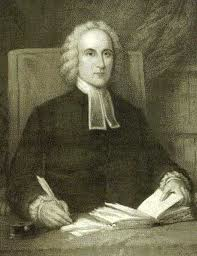
Jonathan Edwards image

If the case be such indeed,

that all mankind are by nature

in a state of total ruin, …

then, doubtless,

the great salvation by Christ

stands in direct relation

to this ruin,

as the remedy to the disease.

– Jonathan Edwards

Apart from his famous sermon, Sinners in the Hands of an Angry God, Jonathan Edwards is most known for his twin works Religious Affections (1746) and Freedom of the Will (1754). One of his lesser known works is on original sin, an important work published posthumously.

In The Great Christian Doctrine of Original Sin Defended (1758), Edwards was not replying to any specific author, but he was moved to write what he called a “general defence” of this important doctrine. He says of it in his preface: “I look on the doctrine as of great importance; which every body will doubtless own it is, if it be true. For, if the case be such indeed, that all mankind are by nature in a state of total ruin, both with respect to the moral evil of which they are the subjects, and the afflictive evil to which they are exposed, the one as the consequence and punishment of the other; then, doubtless, the great salvation by Christ stands in direct relation to this ruin, as the remedy to the disease; and the whole gospel, or doctrine of salvation, must suppose it; and all real belief, or true notion of that gospel, must be built upon it” (Jonathan Edwards, The Great Christian Doctrine of Original Sin Defended: Evidences of Its Truth Produced, and Arguments to the Contrary Answered, in Jonathan Edwards, The Works of Jonathan Edwards, A.M., 10th ed., 2 vols. (1865; Edinburgh / Carlisle, Penn.: Banner of Truth, 1979), 1:145. The author’s preface is dated 1757).

Much of the controversy over human free will is waged in the context of speculative debate over the relationship of man’s freedom to God’s knowledge, or to election and reprobation. For Edwards the central issue of free will is rooted in the ancient controversy (as between Pelagius and Augustine) over the relationship of free will to man’s fallen nature and ultimately to his redemption through the gospel. In a word, Edwards focuses on the broader issue of biblical redemption or the gospel. This same motive drove Martin Luther in his debate with Erasmus: the concern to see sola fide solidly rooted in sola gratia. For Edwards, the greatness of the gospel is visible only when viewed against the backdrop of the greatness of the ruin into which we have been plunged by the fall. The greatness of the disease requires the greatness of the remedy.

Evidence for Original Sin

One interesting facet of Edwards’s defense of the classical view of the fall and original sin is his attempt to show that, even if the Bible were silent on the matter, this doctrine would be demonstrated by the evidence of natural reason. Since the phenomena of human history demonstrate that sin is a universal reality, we should seek an explanation for this reality. In simple terms the question is, Why do all people sin?

Those who deny the doctrine of original sin usually answer this question by pointing to the corrupting influences of decadent societies. Man is born in a state of innocence, they say, but he is subsequently corrupted by the immoral influence of society. This idea begs the question, How did society become corrupt in the first place? If all people are born innocent or in a state of moral neutrality, with no predisposition to sin, why do not at least a statistical average of 50% of the people remain innocent? Why can we find no societies in which the prevailing influence is to virtue rather than vice? Why does not society influence us to maintain our natural innocence?

 Events in the Life of Jonathan Edwards

1703 Born in East Windsor, Conn.

1716–20 Studied at Yale

1726 Became assistant minister in Northampton, Mass.

1727 Married Sarah Pierrepont

1729 Became minister in Northampton

1734 Great Awakening began in Northampton

1751 Moved to Stockbridge to be a pastor, missionary

1758 Inaugurated president of Princeton; Died in Princeton, N.J.

Even the most sanguine critics of human nature, those who insist that man is basically good, repeat the persistent axiomatic aphorism “Nobody’s perfect.” Why is no one perfect? If man is good at the core of his heart and evil is peripheral, tangential, or accidental, why does not the core win out over the tangent, the substance over the accidents? Even in the society in which we find ourselves today, in which moral absolutes are widely denied, people still readily admit that no one is perfect. The concept of “perfect” has been denuded by the rejection of moral absolutes. Yet with a lower standard or norm of perfection than the one revealed by Scripture, we recognize that even this “norm” is not met. With the lowest common denominator of ethics such as Immanuel Kant’s categorical imperative, we still face the frustration of failing to live up to it.
We may discount ethical standards, reducing them below the level of actual perfection, and still fail to meet those standards. People claim a commitment to moral relativism, but when somebody steals our purse or our wallet, we still cry, “Foul.” Suddenly the credo that “everyone has the right to do his own thing” is challenged when the other person’s “thing” conflicts with my “thing.”

Edwards saw in the universal reality of sin manifold evidence for a universal tendency toward sin. Edwards states an objection to this and then answers the objection:

If any should say, Though it be evident that there is a tendency in the state of things to this general event—that all mankind should fail of perfect obedience, and should sin, and incur a demerit of eternal ruin; and also that this tendency does not lie in any distinguishing circumstances of any particular people, person, or age—yet it may not lie in man’s nature, but in the general constitution and frame of this world. Though the nature of man may be good, without any evil propensity inherent in it; yet the nature and universal state of this world may be full of so many and strong temptations, and of such powerful influence on such a creature as man, dwelling in so infirm a body, etc. that the result of the whole may be a strong and infallible tendency in such a state of things, to the sin and eternal ruin of every one of mankind (Ibid., 1:151, col. a.).

Edwards answers this supposition with the following reply:

To this I would reply, that such an evasion will not at all avail to the purpose of those whom I oppose in this controversy. It alters not the case as to this question, Whether man, in his present state, is depraved and ruined by propensities to sin. If any creature be of such a nature that it proves evil in its proper place, or in the situation which God has assigned it in the universe, it is of an evil nature. That part of the system is not good, which is not good in its place in the system; and those inherent qualities of that part of the system, which are not good, but corrupt, in that place, are justly looked upon as evil inherent qualities. That propensity is truly esteemed to belong to the nature of any being, or to be inherent in it, that is the necessary consequence of its nature, considered together with its proper situation in the universal system of existence, whether that propensity be good or bad (Ibid).

Edwards draws an analogy from nature to illustrate his point: “It is the nature of a stone to be heavy; but yet, if it were placed, as it might be, at a distance from this world, it would have no such quality. But being a stone, is of such a nature, that it will have this quality or tendency, in its proper place, in this world, where God has made it, it is properly looked upon as a propensity belonging to its nature.… So, if mankind are of such a nature, that they have an universal effectual tendency to sin and ruin in this world, where God has made and placed them, this is to be looked upon as a pernicious tendency belonging to their nature” (Ibid).

Edwards concludes that within the nature of man there is a propensity toward sin. This inclination is part of the inherent or constituent nature of man. It is natural to fallen mankind. When Scripture speaks of “natural man,” it refers to man as he is since the fall, not as he was created originally. The fall was a real fall and not a maintenance of the status quo of creation.

John Calvin acknowledged that men, though fallen, perform works of seeming righteousness, and he called these works acts of civic righteousness. Such “virtues,” which Augustine called “splendid vices,” may conform outwardly to the law of God, but they do not proceed from a heart inclined to please God, or from a heart that loves God. In biblical categories a good or virtuous work must not only conform outwardly to the prescriptions of God’s law but also proceed from an inward disposition or motive rooted in the love of God. In a real sense the Great Commandment to love God with all the heart underlies the moral judgment of all human activity.

Concerning the preponderance of evil deeds over good ones, Edwards says: “Let never so many thousands or millions of acts of honesty, good nature, etc. be supposed; yet, by the supposition, there is an unfailing propensity to such moral evil, as in its dreadful consequences infinitely outweighs all effects or consequences of any supposed good” (Ibid., 1:152, col. a.).

Edwards goes on to point out the degree of wickedness and heinousness that is involved in merely one sin against God. Such an act would be so wicked since it is committed against such a holy being that it would outweigh the sum of any amount of contrasting virtue. “He that in any respect or degree is a transgressor of God’s law,” Edwards says, “is a wicked man, yea, wholly wicked in the eye of the law; all his goodness being esteemed nothing, having no account made of it, when taken together with his wickedness” (Ibid., 1:152, col. a.).

At this point Edwards echoes the sentiment of James, saying that to sin against one point of the law is to sin against the whole law (James 2:10–11) and, of course, the Law-Giver himself. Likewise, Edwards says works of obedience, strictly speaking, cannot outweigh disobedience. When we are obedient, we are merely doing what God requires us to do. Here we can be nothing more than unprofitable servants.

Edwards sees evidence for man’s depraved nature in the propensity of humans to sin immediately, as soon as they are morally capable of committing actual sin. He sees further evidence in the fact that man sins continually and progressively, and that the tendency remains even in the most sanctified of men. Edwards also finds significant what he calls the “extreme degree of folly and stupidity in matters of religion” (Ibid., 1:156, col. b.).

In a cursory look at human history, Edwards provides a catalogue of woes and calamities that have been perpetrated by and on the human race. Even the most jaded observer of history must admit that things are not right with the world. Then Edwards turns to the universality of death as proof for the universality of sin. In the biblical view, death came into the world through and because of sin. It represents the divine judgment on human wickedness, a judgment visited even on babies who die in infancy. “Death is spoken of in Scripture as the chief of calamities,” Edwards notes, “the most extreme and terrible of all natural evils in this world” (Ibid., 1:173, col. a.).
The Bible and Original Sin

Edwards then turns his attention to the scriptural warrant for the doctrine of original sin. He pays particular attention to Paul’s teaching in Ephesians 2.

Another passage of the apostle, to the like purpose with that which we have been considering in the 5th [chapter] of Romans, is that in Ephesians 2:3—“And were by nature children of wrath, even as others.” This remains a plain testimony to the doctrine of original sin, as held by those who used to be called orthodox Christians, after all the pains and art used to torture and pervert it. This doctrine is here not only plainly and fully taught, but abundantly so, if we take the words with the context; where Christians are once and again represented as being, in their first state, dead in sin, and as quickened and raised up from such a state of death, in a most marvellous display of free rich grace and love, and exceeding greatness of God’s power, etc. (Ibid., 1:197, col. b.).

With respect to the uniform teaching of Scripture, Edwards concludes: “As this place in general is very full and plain, so the doctrine of the corruption of nature, as derived from Adam, and also the imputation of his first sin, are both clearly taught in it. The imputation of Adam’s one transgression, is indeed most directly and frequently asserted. We are here assured, that ‘by one man’s sin, death passed on all.’ … And it is repeated, over and over, that ‘all are condemned,’ ‘many are dead,’ ‘many made sinners,’ etc. ‘by one man’s offence,’ ‘by the disobedience of one,’ and ‘by one offence.’ ”

Related Works by Edwards

The Great Christian Doctrine of Original Sin Defended: Evidences of Its Truth Produced, and Arguments to the Contrary Answered … In The Works of Jonathan Edwards, A.M. 10th ed. 2 vols. 1865. Reprint. Edinburgh / Carlisle, Penn.: Banner of Truth, 1979. 1:143–233.Freedom of the Will. Edited by Paul Ramsey. The Works of Jonathan Edwards, edited by Perry Miller, vol. 1. New Haven and London: Yale University, 1957.A Jonathan Edwards Reader. Edited by John E. Smith, Harry S. Stout, and Kenneth P. Minkema. New Haven: Yale University, 1995.

Finally Edwards argues for original sin from the biblical teaching regarding the application of redemption. The Spirit’s work in regeneration is a necessary antidote for a previous, corrupt condition: “It is almost needless to observe, how evidently this is spoken of as necessary to salvation, and as the change in which are attained the habits of true virtue and holiness, and the character of a true saint; as has been observed of regeneration, conversion, etc. and how apparent it is, that the change is the same.… So that all these phrases imply, having a new heart, and being renewed in the spirit, according to their plain signification” (Ibid., 1:214, col. a.).

In his introduction to the Yale edition of Edwards’s Freedom of the Will, Paul Ramsey makes this observation:

Into the writing of it he poured all his intellectual acumen, coupled with a passionate conviction that the decay to be observed in religion and morals followed the decline in doctrine since the founding of New England. The jeremiads, he believed, had better go to the bottom of the religious issue! The product of such plain living, high thinking, funded experience and such vital passion was the present Inquiry, a superdreadnaught which Edwards sent forth to combat contingency and self-determination (to reword [David F.] Swenson’s praise of one of [Søren] Kierkegaard’s big books) and in which he delivered the most thoroughgoing and absolutely destructive criticism that liberty of indifference, without necessity, has ever received. This has to be said even if one is persuaded that some form of the viewpoint Edwards opposed still has whereon to stand. This book alone is sufficient to establish its author as the greatest philosopher-theologian yet to grace the American scene (Paul Ramsey, “Editor’s Introduction,” in Jonathan Edwards, Freedom of the Will, ed. Paul Ramsey, The Works of Jonathan Edwards, ed. Perry Miller, vol. 1 (New Haven and London: Yale University, 1957), pp. 1–2. The full title of Edwards’s work was originally A Careful and Strict Enquiry into the Modern Prevailing Notions of That Freedom of Will, Which Is Supposed to Be Essential to Moral Agency, Virtue and Vice, Reward and Punishment, Praise and Blame. Ramsey alludes to David F. Swenson, translator of Søren Kierkegaard’s Philosophical Fragments (1936), Concluding Unscientific Postscript (1941), Three Discourses on Imagined Occasions (1941), volume 1 of Either/Or (1941), and Works of Love (1946); and author of Something about Kierkegaard (Minneapolis: Augsburg, 1941).

In his own preface to Freedom of the Will, Edwards speaks of the danger of pinning labels on representatives of various schools of theological thought and the needless rancor often attached to such labels. Yet he pleads that generic terms are necessary for the sake of literary smoothness. A writer must have a shorthand way of distinguishing various characteristics of systems of thought. Although he does not agree with Calvin at every point, Edwards says he is not offended when labeled a Calvinist because he stands so squarely in that tradition.

His chief concern, however, is that the reader understand the consequences of differing theological perspectives. He regards the question of human freedom with the same earnestness Luther displayed in his debate with Erasmus. Far from being an isolated, peripheral, speculative matter, Edwards thinks this question is supremely important. He says:

The subject is of such importance, as to demand attention, and the most thorough consideration. Of all kinds of knowledge that we can ever obtain, the knowledge of God, and the knowledge of ourselves, are the most important. As religion is the great business, for which we are created, and on which our happiness depends; and as religion consists in an intercourse between ourselves and our Maker; and so has its foundation in God’s nature and ours, and in the relation that God and we stand in to each other; therefore a true knowledge of both must be needful in order to true religion. But the knowledge of ourselves consists chiefly in right apprehensions concerning those two chief faculties of our nature, the understanding and will. Both are very important: yet the science of the latter must be confessed to be of greatest moment; inasmuch as all virtue and religion have their seat more immediately in the will, consisting more especially in right acts and habits of this faculty. And the grand question about the freedom of the will, is the main point that belongs to the science of the will. Therefore I say, the importance of this subject greatly demands the attention of Christians, and especially of divines (Edwards, Freedom of the Will, p. 133).

Why We Choose

Edwards begins his inquiry by defining the will as “the mind choosing.” “… the will (without any metaphysical refining) is plainly, that by which the mind chooses anything,” he writes. “The faculty of the will is that faculty or power or principle of mind by which it is capable of choosing: an act of the will is the same as an act of choosing or choice” (Ibid., p. 137).

Even when a person does not choose a given option, the mind is choosing “the absence of the thing refused.” Edwards called these choices voluntary or “elective” actions.

John Locke asserted that “the will is perfectly distinguished from desire.” Edwards argues that will and desire are not “so entirely distinct, that they can ever be properly said to run counter. A man never, in any instance, wills anything contrary to his desires, or desires anything contrary to his will” (Ibid., p. 139. Quotes from John Locke, An Essay Concerning Human Understanding, 7th ed. [1716], 2.21.30).

This brief assertion is critical to understanding Edwards’s view of the will. He maintains that a man never chooses contrary to his desire. This means that man always acts according to his desire. Edwards indicates that the determining factor in every choice is the “strongest motive” present at that moment. In summary, we always choose according to the strongest motive or desire at the time.

People may debate this point with Edwards, recalling moments when they chose something they really did not want to choose. To understand Edwards, we must consider the complexities involved in making choices. Our desires are often complex and even in conflict with each other. Even the Apostle Paul experienced conflicting desires, claiming that what he wanted to do he failed to do and what he did not want to do he actually did (see Rom. 7:15). Does the apostle here belie Edwards’s point? I think not. Paul expresses the struggle he endures between desires in conflict. When he chooses what he “does not want to choose,” he is experiencing what I call the “all things being equal” dimension.

For example, every Christian has some desire in his heart to be righteous. All things being equal, we want always to be righteous. Yet a war is going on inside of us because we also continue to have wicked desires. When we choose the wicked over the righteous course of action, at that moment we desire the sin more than obedience to God. That was as true for Paul as it is for us. Every time we sin we desire more to do that than we do to obey Christ. Otherwise we simply would not sin.

Not only are desires not monolithic, but also they are not constant in their force or intensity. Our desire levels fluctuate from moment to moment. For example, the dieter desires to lose weight. After a full meal it is easy to say no to sweets. The appetite has been sated and the desire for more food diminished. As time passes, however, and self-denial has led to an increased hunger, the desire for food intensifies. The desire to lose weight remains. But when the desire to gorge oneself becomes stronger than the desire to lose weight, the dieter’s resolve weakens and he succumbs to temptation. All things do not remain in a constant state of equality.

Another example is a person being robbed. The robber points a gun at the person and says, “Your money or your life!” (We remember the skit made famous by Jack Benny. When posed with this option, Benny hesitated for a protracted time. In frustration the robber said, “What are you waiting for?” Benny replied, “I’m thinking it over.”) To be robbed at gunpoint is to experience a form of external coercion. The coercion reduces the person’s options to two. All things being equal, the person has no desire to donate the contents of his wallet to the thief. But with only two options the person will respond according to his strongest motive at the moment. He may conclude that if he refuses to hand over his wallet, the robber will both kill him and take his money. Most people will opt to hand the money over because they desire to live more than they desire to keep their wallets. It is possible, however, that a person has such a strong antipathy to armed robbery that he would prefer to die rather than give over his wallet “willingly.”

Related Works about Edwards

Gerstner, John H. The Rational Biblical Theology of Jonathan Edwards. 3 vols. Powhatan, Va.: Berea / Orlando: Ligonier, 1991–93.

Gerstner, John H. Jonathan Edwards: A Mini-Theology. Wheaton: Tyndale, 1987.

Lang, J. Stephen, ed. Jonathan Edwards and the Great Awakening. Christian History 4, 4 (1985).

Murray, Iain H. Jonathan Edwards: A New Biography. Edinburgh and Carlisle, Penn.: Banner of Truth, 1987.

Because this example contains a coercive dimension, I put the word willingly in quotation marks. We must ask if under these circumstances the action really is voluntary? It is if we view it in the context of only two options. However much external coercion is involved, there still remains a choice. Even here, Edwards would say, the person will choose the alternative for which he or she has the stronger motive.

The strongest-motive concept may be lost on us when we consider the manifold decisions we make every day without thoroughly considering the options available to us. We walk into a classroom where several seats are vacant or we walk to an unoccupied park bench and sit down. Rarely do we list the pros and cons before selecting a seat or a part of the bench. On the surface it seems that these choices are entirely arbitrary. We choose them without thinking. If that is so, it belies Edwards’s thesis that the will is the “mind choosing.”

Such choices seem to be mindless ones, but if we analyze them closely, we discover that some preference or motive is operating, albeit subtly. The motive factors may be so slight that they escape our notice. Experiments have been run in which people choose a seat on an unoccupied park bench. Some people always sit in the middle of the bench. Some are gregarious and long for company, so they choose the middle of the bench in hopes that someone will come along and sit beside them. And some people prefer solitude, so they sit in the middle in hopes that no one else will sit on the bench.

Likewise some people prefer to sit in the front of the classroom or the back for various reasons. The decision to select a certain seat is not an involuntary action like the beating of one’s heart. It is a voluntary action, which proceeds from some motive, however slight or obscure. In a word, there is a reason why we choose the seats we choose.

What Determines Our Choices

In his analysis of choices, Edwards discusses the determination of the will. He writes: “By ‘determining the will,’ if the phrase be used with any meaning, must be intended, causing that the act of the will or choice should be thus, and not otherwise: and the will is said to be determined, when, in consequence of some action, or influence, its choice is directed to, and fixed upon a particular object” (Edwards, Freedom of the Will, p. 141).

Edwards is not speaking of what is commonly called determinism, the idea that human actions are determined by some form of external coercion such as fate or manifest destiny. Rather he is here speaking of self-determination, which is the essence of human volition.

Edwards considers utterly irrational the idea that an “indifferent will” makes choices. “To talk of the determination of the will, supposes an effect, which must have a cause,” he says. “If the will be determined, there is a determiner. This must be supposed to be intended even by them that say, the will determines itself. If it be so, the will is both determiner and determined; it is a cause that acts and produces effects upon itself, and is the object of its own influence and action” (Ibid).

At this point Edwards argues from the vantage point of the law of cause and effect. Causality is presupposed throughout his argument. The law of cause and effect declares that for every effect there is an antecedent cause. Every effect must have a cause and every cause, in order to be a cause, must produce an effect. The law of causality is a formal principle that one cannot deny without embracing irrationality. David Hume’s famous critique of causality did not annihilate the law but our ability to perceive particular causal relationships.

The law of causality with which Edwards operates is “formal” in that it has no material content in itself and is stated in such a way as to be analytically true. That is, it is true by analysis of its terms or “by definition.” In this regard the law of causality is merely an extension of the law of noncontradiction. An effect, by definition, is that which has an antecedent cause. If it has no cause then it is not an effect. Likewise, a cause by definition is that which produces an effect. If no effect is produced then it is not a cause.

I once was criticized in a journal article by a scholar who complained, “The problem with Sproul is that he doesn’t allow for an uncaused effect.” I plead guilty to the charge, but I see this as virtue rather than vice. People who allow for uncaused effects are allowing for irrational nonsense statements to be true. If Sproul is guilty here, Edwards is more so. Edwards is far more cogent in his critical analysis of the intricacies of causality than Sproul will ever be in this life.

When Edwards declares that the will is both determined and determiner, he is not indulging in contradiction. The will is not determined and the determiner at the same time and in the same relationship. The will is the determiner in one sense and is determined in another sense. It is the determiner in the sense that it produces the effects of real choices. It is determined in the sense that those choices are caused by the motive that is the strongest one in the mind at the moment of choosing.

John H. Gerstner, perhaps the twentieth century’s greatest expert on Edwards, writes:

Edwards understands the soul to have two parts: understanding and will. Not only is Freedom of the Will based on this dichotomy; that dichotomy underlies Religious Affections as well.…

Edwards agreed with the English Puritan, John Preston, that the mind came first and the heart or will second. “Such is the nature of man, that no object can come at the heart but through the door of the understanding.…” In the garden, man could have rejected the temptation of the mind to move the will to disobey God. After the fall he could not, although Arminians and Pelagians thought otherwise. Their notion of the “freedom of the will” made it always possible for the will to reject what the mind presented. This perverted notion, Edwards said in Original Sin, “seems to be a grand favorite point with Pelagians and Arminians, and all divines of such characters, in their controversies with the orthodox.” For Edwards, acts of the will are not free in the sense of uncaused (John H. Gerstner, “Augustine, Luther, Calvin, and Edwards on the Bondage of the Will,” in Thomas R. Schreiner and Bruce A. Ware, eds., The Grace of God, the Bondage of the Will, 2 vols. [Grand Rapids: Baker, 1995], 2:291. Quotation from John Preston, “Sermon on Hebrews 5:12, ” in John Preston, Works, 2:158).

To Edwards a motive is “something that is extant in the view or apprehension of the understanding, or perceiving faculty” (Edwards, Freedom of the Will, p. 142).

He says:

… Nothing can induce or invite the mind to will or act anything, any further than it is perceived, or is some way or other in the mind’s view; for what is wholly unperceived, and perfectly out of the mind’s view, can’t affect the mind at all.…

… everything that is properly called a motive, excitement or inducement to a perceiving willing agent, has some sort and degree of tendency, or advantage to move or excite the will, previous to the effect, or to the act of the will excited. This previous tendency of the motive is what I call the “strength” of the motive.… that which appears most inviting, and has, by what appears concerning it to the understanding or apprehension, the greatest degree of previous tendency to excite and induce the choice, is what I call the “strongest motive.” And in this sense, I suppose the will is always determined by the strongest motive (Ibid).

Edwards further argues that the strongest motive is that which appears most “good” or “pleasing” to the mind. Here he uses good not in the moral sense, because we may be most pleased by doing what is not good morally. Rather the volition acts according to that which appears most agreeable to the person. That which is most pleasing may be deemed as pleasure. What entices fallen man to sin is the desire for some perceived pleasure.

Edwards then turns his attention to the terms necessity and contingency. He says “that a thing is … said to be necessary, when it must be, and cannot be otherwise” (Ibid., p. 149).

He goes beyond the ordinary use of the word necessary to the philosophical use. He says:

Philosophical necessity is really nothing else than the full and fixed connection between the things signified by the subject and predicate of a proposition, which affirms something to be true. When there is such a connection, then the thing affirmed in the proposition is necessary, in a philosophical sense; whether any opposition, or contrary effort be supposed, or supposable in the case, or no. When the subject and predicate of the proposition, which affirms the existence of anything, either substance, quality, act or circumstance, have a full and certain connection, then the existence or being of that thing is said to be necessary in a metaphysical sense. And in this sense I use the word necessity, in the following discourse, when I endeavor to prove that necessity is not inconsistent with liberty (Ibid., p. 152).

Edwards discusses various types of necessary connection. He observes that one type of connection is consequential: “things which are perfectly connected with other things that are necessary, are necessary themselves, by a necessity of consequence.” This is to say that if A is necessary and B is perfectly connected to A, then B is also necessary. It is only by such necessity of consequence that Edwards speaks of future necessities. Such future necessities are necessary in this way alone.

Similarly Edwards considers the term contingent. There is a difference between how the word is used in ordinary language and how it functions in philosophical discourse. He writes:

… Anything is said to be contingent, or to come to pass by chance or accident, in the original meaning of such words, when its connection with its causes or antecedents, according to the established course of things, is not discerned; and so is what we have no means of the foresight of. And especially is anything said to be contingent or accidental with regard to us, when anything comes to pass that we are concerned in, as occasions or subjects, without our foreknowledge, and beside our design and scope.

But the word contingent is abundantly used in a very different sense; not for that whose connection with the series of things we can’t discern, so as to foresee the event; but for something which has absolutely no previous ground or reason, with which its existence has any fixed and certain connection (Ibid., p. 155).

In ordinary language we attribute to accident or “chance” any unintended consequences. In a technical sense nothing occurs by chance, for chance has no being and can exercise no power. When the term contingent refers to effects with no ground or reason, it retreats to the assertion that there are effects without causes. It is one thing to say that we do not know what causes a given effect; it is quite another thing to say that nothing causes the effect. Nothing cannot do anything because it is not anything (See R. C. Sproul, Not a Chance: The Myth of Chance in Modern Science and Cosmology (Grand Rapids: Baker, 1994).

Our Moral Inability

One of the most important distinctions made by Edwards is the one between natural ability and moral ability. He also distinguishes between natural necessity and moral necessity. Natural necessity refers to those things that occur via natural force. Moral necessity refers to those effects that result from moral causes such as the strength of inclination or motive. He applies these distinctions to the issue of moral inability.

We are said to be naturally unable to do a thing, when we can’t do it if we will, because what is most commonly called nature [doesn’t] allow … it, or because of some impeding defect or obstacle that is extrinsic to the will; either in the faculty of understanding, constitution of body, or external objects. Moral inability consists not in any of these things; but either in the want of inclination; or the strength of a contrary inclination; or the want of sufficient motives in view, to induce and excite the act of the will, or the strength of apparent motives to the contrary. Or both these may be resolved into one; and it may be said in one word, that moral inability consists in the opposition or want of inclination (Edwards, Freedom of the Will, p. 159).

Man may have the desire to do things he cannot do because of limits imposed by nature. We may wish to be Superman, able to leap tall buildings in a single bound, more powerful than a locomotive, and faster than a speeding bullet. But unless we become fifteen-million-dollar men (up from six million due to inflation), it is highly unlikely that we will ever perform such prodigious feats. Nature enables birds to fly through the air without the aid of mechanical devices, and fish to live underwater without drowning. They are so constituted in their natures to be able to do these things. But we lack wings and feathers, or gills and fins. These are limitations imposed by nature. They reveal a lack or deficiency of necessary faculties or equipment.

Moral inability also deals with a deficiency, the lack of sufficient motive or inclination. Edwards cites various examples of moral inability: an honorable woman who is morally unable to be a prostitute, a loving child who is unwilling to kill his father, a lascivious man who cannot rein in his lust.

Given man’s moral inability, the will cannot not be free. The will is always free to act according to the strongest motive or inclination at the moment. For Edwards, this is the essence of freedom. To be able to choose what one desires is to be free in this sense. When I say the will cannot not be free, I mean the will cannot choose against its strongest inclination. It cannot choose what it does not desire to choose. Edwards refers to the common meaning of liberty: “… that power and opportunity for one to do and conduct as he will, or according to his choice.” The word says nothing of “the cause or original of that choice” (

Man may have the desire to do things he cannot do because of limits imposed by nature. We may wish to be Superman, able to leap tall buildings in a single bound, more powerful than a locomotive, and faster than a speeding bullet. But unless we become fifteen-million-dollar men (up from six million due to inflation), it is highly unlikely that we will ever perform such prodigious feats. Nature enables birds to fly through the air without the aid of mechanical devices, and fish to live underwater without drowning. They are so constituted in their natures to be able to do these things. But we lack wings and feathers, or gills and fins. These are limitations imposed by nature. They reveal a lack or deficiency of necessary faculties or equipment.

Moral inability also deals with a deficiency, the lack of sufficient motive or inclination. Edwards cites various examples of moral inability: an honorable woman who is morally unable to be a prostitute, a loving child who is unwilling to kill his father, a lascivious man who cannot rein in his lust.

Given man’s moral inability, the will cannot not be free. The will is always free to act according to the strongest motive or inclination at the moment. For Edwards, this is the essence of freedom. To be able to choose what one desires is to be free in this sense. When I say the will cannot not be free, I mean the will cannot choose against its strongest inclination. It cannot choose what it does not desire to choose. Edwards refers to the common meaning of liberty: “… that power and opportunity for one to do and conduct as he will, or according to his choice.” The word says nothing of “the cause or original of that choice” (Ibid., p. 164).

Edwards notes that Arminians and Pelagians have a different meaning for the term liberty. He lists a few aspects of their definition:

1. It consists in a self-determining power or a certain sovereignty the will has over itself, whereby it determines its own volitions.

2. Indifference belongs to liberty previous to the act of volition, in equilibrio.

3. Contingence belongs to liberty and is essential to it. Unless the will is free in this sense, it is deemed to be not free at all (Ibid., pp. 164–65).

Edwards then shows that the Pelagian notion is irrational and leads to an infinite regress of determination:

… If the will determines the will, then choice orders and determines the choice: and acts of choice are subject to the decision, and follow the conduct of other acts of choice. And therefore if the will determines all its own free acts, then every free act of choice is determined by a preceding act of choice, choosing that act. And if that preceding act of the will or choice be also a free act, then by these principles, in this act too, the will is self-determined; that is, this, in like manner, is an act that the soul voluntarily chooses.… Which brings us directly to a contradiction: for it supposes an act of the will preceding the first act in the whole train, directing and determining the rest; or a free act of the will, before the first free act of the will. Or else we must come at last to an act of the will, determining the consequent acts, wherein the will is not self-determined, and so is not a free act … but if the first act in the train … be not free, none of them all can be free.…

… if the first is not determined by the will, and so not free, then none of them are truly determined by the will.…(Ibid., pp. 172–73).

Edwards says the idea of an indifferent will is absurd. First, if the will functions from a standpoint of indifference, having no motive or inclination, then how can the choice be a moral one? If decisions are utterly arbitrary and done for no reason or motive, how do they differ from involuntary actions, or from the mere responses of plants, animals, or falling bodies?

Second, if the will is indifferent, how can there be a choice at all? If there is no motive or inclination, how can a choice be made? It requires an effect without a cause. For this reason, Edwards labors the question of whether volition can possibly arise without a cause through the activity of the nature of the soul. For Edwards it is axiomatic that “nothing has no choice.” “Choice or preference can’t be before itself, in the same instance, either in the order of time or nature,” he says. “It can’t be the foundation of itself, or the fruit or consequence of itself” (Ibid, p. 197).

Here Edwards applies the law of noncontradiction to the Pelagian and Arminian view of free will, and he shows that it is absurd. Indifference can only suspend choices, not create them. To create them would be to act ex nihilo, not only without a material cause, but also without a sufficient or efficient cause.

Edwards then treats several common objections to the Augustinian view, but we will not deal with them here. We conclude by summarizing Edwards’s view of original sin. Man is morally incapable of choosing the things of God unless or until God changes the disposition of his soul. Man’s moral inability is due to a critical lack and deficiency, namely the motive or desire for the things of God. Left to himself, man will never choose Christ. He has no inclination to do so in his fallen state. Since he cannot act against his strongest inclination, he will never choose Christ unless God first changes the inclination of his soul by the immediate and supernatural work of regeneration. Only God can liberate the sinner from his bondage to his own evil inclinations.

Like Augustine, Luther, and Calvin, Edwards argues that man is free in that he can and does choose what he desires or is inclined to choose. But man lacks the desire for Christ and the things of God until God creates in his soul a positive inclination for these things.

 The Article above was adapted from chapter 7 of R.C. Sproul. Willing to Believe: The Controversy Over Free Will. Grand Rapids, Baker, 1997.
About the Author:
RC Sproul in yellow tie image
Dr. R.C. Sproul (Founder of Ligonier Ministries; Bible College and Seminary President and Professor; and Senior Minister at Saint Andrews in Sanford, Florida) is an amazingly gifted communicator. Whether he is teaching, preaching, or writing – he has the ability to make the complex easy to understand and apply. He has been used more than any other person in my life to deepen my walk with Christ and help me to be more God-centered than man-centered. His book the Holiness of God has been the most influential book in my life – outside of the Bible.
 

Why is God So Narrow-Minded About Salvation? By Dr. R.C. Sproul

Answer to Objection #2 To Christianity: “All Religions Are Good. It Doesn’t Matter What You Believe.”

RTB sproul image

America is a melting pot. People from every conceivable ethnic and religious background come together to form one nation–e pluribus unum, from the many, one. At the heart of our national sense of unity stands the crucial principle of religious toleration. Under the principle of religious toleration, all religious systems are guaranteed freedom of expression and equal treatment under the law. No one religion has exclusive claim to legal rights and government establishment. The government of the United States of America expresses the will of the founding fathers that there will be no “established national religion.: Thus, we have no state church that enjoys exclusive privilege under the law.

With the principle of equal toleration has come the idea that no religion has exclusive claims to truth. Though the concept of legal religious toleration says nothing at all about the validity of truth claims, many have drawn the implication that equal toleration means equal validity. Thus, when Christians or advocates of any religion make claims of exclusivity, their claims are often met with shock or anger at such a narrow-minded posture. To make exclusive religious claims is to fly in the face of national sentiment. It is like attacking baseball, hot dogs, motherhood, and apple pie (not to mention Chevrolet).

In the sixties the uplifted index finger became a symbol not only of a number one ranking for a football team, but also a popular sign of the members of the “Jesus movement” that there is but “one way” to God, the way of Christ. The zeal of the Jesus People met great resistance and hostility at this point.

One of the most embarrassing moments I ever experienced came in a freshman class in college. it was a time of painful public humiliation. The professor was a former war correspondent who was outwardly hostile to Christianity. In the middle of a class she looked at me and said, “Mr. Sproul, do you believe that Jesus is the only way to God?” I gasped as I felt the weight of he question and knew that every eye in the room was on me. My mind raced for a way to escape my dilemma. I knew that if I said yes people would be angry. At the same time, I knew that if I said no I would be betraying Christ. Finally, I mumbled almost inaudibly, “Yes, I do.” The teacher responded with unmitigated fury. She said in front of the whole class, “That’s the most narrow-minded, bigoted, and arrogant statement I have ever heard. You must be a supreme egotist to believe your way of religion is the only way.” I made no reply but slouched rather meekly in my chair.

After the class was dismissed, I went to speak with my teacher privately. In the conversation I tried to explain to her why I believed that Christ was the only way. I asked her if she thought it was at least theoretically  possible that Christ be one way to God. She allowed the possibility. I asked if she thought it were possible that without being narrow-minded or bigoted a person could come to the belief that Jesus was God. Though she did not believe in the deity of Christ, she recognized that people could, in fact, believe that without being bigoted. Then I explained to her that the reason I believed that Christ was the only way because Jesus Himself taught that.

I reminded her that Jesus said, “I am the way, and the truth, and the life; no one comes to the Father, but by me” (John 14:6). I also pointed out that the New Testament refers to Christ as the “only-begotten” of the Father, and that “there is no other name under heaven by which we must be saved” (Acts 4:12). I said to her, “Can you see that I am torn between my loyalty to Christ and the modern spirit of pluralism?” I said, “Do you see that it is possible for me to believe in the uniqueness of Christ because He taught it? If I believed Christ was the only way because I believe that my way must be the only way because it is my way, that would be an act of arrogance and egotism.” She finally acknowledged that it was possible for someone to believe in the uniqueness of Christ without being arrogant and apologized sincerely to me. However, she went on to raise a more serious question than the question of my arrogance. She said, “How can you believe in a God who only allows one way to Himself?” Isn’t it narrow-minded of God to restrict redemption to one Savior and one faith?”

Aren’t All Religions Basically the Same?

In the final analysis this is the issue that must be faced: Is God so narrow-minded that He provides only one way of redemption?

Part of the reason we struggle so deeply with a question like this is due to the impact of the results of the nineteenth century approach to the study of comparative religion. In the nineteenth century there was a concerted effort by scholars to examine closely the distinctive characteristics of the major religions of the world. The “buzz word” of the day was “essence.” Many serious studies of religion were published which contained titles like The Essence of Religion or The Essence of Christianity. These books reflected an attempt to get at the basic core of religious truth that was found in all religion.

Religion was often reduced to its lowest common denominator. Frequently the distilled essence of religion was pinpointed by the phrase “the universal fatherhood of God and universal brotherhood of man.” Thus it was seen that at the heart, all religions were working for the same thing. The outward trappings of religious belief and practice differed from culture to culture but at the root their goals were the same. Thus, if all religions were essentially the same then no one of them could ever make exclusive claims to validity.

Out of this quest for the essence of religion came the now famous and popular “mountain analogy.” The mountain analogy pictures God at the peak of the mountain with man down at the base. The story of religion is the account of man’s effort to move from the base of the mountain to the peak of fellowship and communion with God. The mountain has many roads. Some of the roads go up the mountain by a very direct route. Other roads go up the mountain in a circuitous fashion, but eventually reach the top. Thus, according to the proponents of this analogy, all religious roads, though they differ in route, ultimately arrive at the same place.

Out of this conviction that all roads lead to God has come a considerable number of ecumenical movements, pan-religious endeavors, and even new religions such as Bahai which seek a total synthesis and amalgamation of all the world religions into one new unified religion.

I once had a conversation with a Bahai priest. He told me that all religions were equally valid. I began to interrogate him concerning the points of conflict that exist between islam and Buddhism, between Confucianism and Judaism, and between Christianity and Taoism. The man responded by saying that he didn’t know anything about Islam, Judaism, or the rest but that he did know they were all the same. I wondered aloud how anyone could assert that all religions were the same when he had no knowledge of what those religions professed or denied/ How can Buddhism be true when it denies the existence of a personal God and at the same time Christianity be true when it affirms the existence of a personal God? Can there be a personal God and not be a personal God at the same time and in the same relationship? Can Orthodox Judaism be right when it denies life after death and Christianity be equally right when it affirms life after death? Can classical Islam have a valid ethic that endorses the killing of infidels while at the same time the Christian ethic of loving your enemies be equally valid?

There are only two possible ways to maintain the equal validity of all religions. One is by ignoring the clear contradictions between them by a flight into irrationality; the other is by assigning these contradictions to the level of insignificant nonessentials. The latter approach involves us in a systematic process of reductionism. Reductionism strips each religion of elements considered vital by the adherents of the religion themselves and reduces the religion to its lowest common denominator. The distinctives of each  religion are obscured and watered down to accommodate religious peace.

Why does this kind of reductionism take place? Perhaps there are many motivating factors for it. Certainly one of the most powerful factors is the desire to end religious controversies and the upheaval they bring. Differences in religious conviction have led again and again to passionate disputes between people, family alienation, violent forms of religious persecution, and in many cases even war. Thus if we were able to achieve a universal religious essence perhaps we can end these very costly disputes. The goal is peace. The price is truth.

if religion deals with matters of ultimate concern, there is little wonder that religious debates produce so much passion. But if we are interested in truth we can never discover it by denying real differences of truth claims. The peace that is produced by reductionism is a false and carnal peace. We recall the false prophets of Israel who, in their desperate attempts to avoid conflict, cried, “Peace, peace,” when there was no peace. Jeremiah’s lament remains relevant, “These men heal the wounds of the daughters of Zion, slightly” (see Jeremiah 11).

It is one thing to seek an atmosphere of religious debate that is characterized by charity. It is quite another thing to say the matters under debate are not important. It is one thing to protect the right of every religious person to follow the dictates of his conscience without fear of persecution; it is another to say that opposing convictions are both true. We must note the difference between equal toleration under the law and equal validity according to truth.

Why is God So Narrow-MInded?

We are still left with a problem, however, of a narrow-minded God who provides only one way of redemption. Does this not mean that people who live in a culture where that one religion is proclaimed have a decisive advantage over people living in other cultures? Let’s examine the deeper question of the narrow-mindedness of God who provides only one way of redemption.

We remember the words of Jesus when he said, “Enter by the narrow gate. For the gate is wide and the way is easy that leads to destruction, and those who enter by it are many. For the gate is narrow and the way is hard that leads to life, and those who find it are few( Matthew 7:13-14).”

What kind of a God would have such a narrow gate? The question implies a serious accusation; that God has not done enough to provide redemption for mankind. Let us examine the accusation from a hypothetical perspective. Let us suppose that there is a God who is altogether holy and righteous. Suppose that God freely creates mankind and gives to mankind the gift of life.

Suppose He sets His creatures in an ideal setting and gives them the freedom to participate in all of the glories of the created order with freedom. Suppose, however, that God imposes one small restriction upon them, warning them that if they violate that restriction, they will die. Would such a God have the right to impose such a restriction with the penalty of forfeiture of the gift of life if His authority is violated?

Suppose that for no just cause the ungrateful creatures disobeyed the restriction the moment God’s back was turned. Suppose when He discovered their violation instead of killing them, He redeemed them. Suppose the descendents of the first transgressors broadly and widely increased their disobedience and hostility toward their creator to the point that the whole world became rebellious to God, and each person in it, “did what was right in his own eyes” (Judg. 21:25).

Suppose God still determined to redeem these people and freely gave special gifts to one nation of people in order that, through them, the whole world would be blessed. Suppose God delivered this people from poverty and enslavement to a ruthless Egyptian Pharoah. Suppose this privileged nation, as soon as it was liberated, rose up in further rebellion against their God and their liberator. Suppose they took His law and violated it consistently.

Suppose that God, still intent upon redemption, sent specially endowed messengers or prophets to plead with His people to return to Him. Suppose the people killed the divine messengers and mocked their message. Suppose the people then began to worship idols of stone and things fashioned by their own hands. Suppose these people invented religions that were contrary to the real God and worshiped creatures rather than the Creator.

Suppose in an ultimate act of redemption God Himself became incarnate in the person of His Son. Suppose this Son came into the world not to condemn the world, but to redeem the world. But suppose this Son of God were rejected, slandered, mocked, tortured, and murdered. Yet, suppose that God accepted the murder of His own Son as punishment for the sins of the very persons who murdered Him.

Suppose this God offered to His Son’s murderers total amnesty, complete forgiveness, transcendent peace that comes with the cleansing of all guilt, victory over death and an eternal life of complete felicity.

Suppose God gave these people as a free gift the promise of a future life that would be without pain, without sickness, without death, and without tears. Suppose that God said to these people, “There is one thing that I demand. I demand that you honor my only-begotten Son and that you worship and serve Him alone.” Suppose God did all of that, would you be willing to say to Him, “God, that’s not fair, you haven’t done enough”?

If man has in fact committed cosmic treason against God, what reason could we possibly have that God should provide any way of redemption? In light of the universal rebellion against God, the issue is not why is there only one way, but why is there any way at all? I know of no way of answering that question.

Why Do Christians Say that Christ is God Incarnate?

At the heart of Christianity stands the person and work of Jesus Christ. His person and work are part of the essence of Christianity. It is in who He is and what He has done that the essence of Christianity can be discovered. Both in His person and work we find elements of utter uniqueness. The Christian claim is that in the person of Jesus of Nazareth we meet God incarnate. Buddha never claimed to be anything more than a man. Mohammed never claimed to be anything more than a prophet. Moses and Confucius were mortals. If Christ was in fact God incarnate, then it is a travesty of justice to ascribe equal honor to Him and to the others. To do so would necessitate either falsely attributing to mortal man the attributes of deity or stripping Christ of His divine nature.

In the truth claims of Christianity we find the notion of the sinlessness of Christ. If Jesus was in fact without sin, this would put Him in a class by Himself. If He had no other uniqueness, this one factor would set Him apart from every religious leader the world has ever known. Though claiming something does not make it true, nevertheless the fact that Jesus claimed to be sinless is significant. By that claim the religious stakes are established. If the claim is true, then Jesus’ uniqueness is assured. If the claim is not true then Jesus fails to qualify as even one of many great religious teachers. He would only qualify as a hypocrite and a charlatan.

The claim of resurrection is vital to Christianity. If Christ has been raised from the dead by God, then He has the credentials and certification that no other religious leader possesses. Buddha is dead. Mohammed is dead. Moses is dead. Confucius is dead. But, according to the truth claim of Christianity, Christ is alive. If Christ has been vindicated by resurrection, His uniqueness as an object of religious devotion is established.

Another dimension of the uniqueness of Christ that is vital to Christianity is His work of atonement. Moses could mediate on the law; Mohammed could brandish a sword; Buddha could give personal counsel; Confucius could offer wise sayings; but none of these men was qualified to offer an atonement for the sins of the world.

It is not only the resurrection of Christ that makes Him unique but it is His death that puts Him in a class by Himself. His death was made as a payment for the sins of mankind. His sacrifice was perfect. Here we see the direct correlation between the uniqueness of His person, of His sinlessness, of His atoning death, and of His resurrection. Together these factors describe the only-begotten of the Father.

It is a mistake, indeed a fatal mistake, to assume that God is pleased by “religion.” The cliche that “it doesn’t matter what you believe as long as you are sincere” involves a devastating error. We can be sincerely wrong and miss the way of redemption offered by God. What we believe in makes an ultimate difference to our destiny. “Religion” can be a substitute for truth; a man-made system of distorting the revelation of God.

Christ alone is worthy of unlimited devotion and service. His total value sets Him apart from all pretenders to the throne. He alone is able to redeem. He alone is worthy of worship.

The exclusiveness of the Christian truth-claim must always rest on the uniqueness of Christ. Christians are not immune from arrogance and bigotry. Yet arrogance and bigotry have no ally in Christ. Christ’s critique of these evil practices is more severe than any critic of Christianity can muster. At the same time this one who is so critical of arrogance and bigotry calls us to a single-minded devotion to truth. He claims to be that truth.

Key Points To Remember:

Are all religions good? Does it matter what you believe?

(1) Religious toleration does not mean equal validity of truth. The problem of exclusive claims to truth are deeply rooted in our culture. We must keep in mind the difference between religious toleration as a matter of legal rights and the concept of equal validity of truth.

(2) Objective evidence, not arrogance, must be the basis for Christian truth- claims. Christians must guard against communicating a sense of arrogance about their convictions. The uniqueness of Christ must be established on the basis of objective evidence rather than by personal preference.

(3) All religions do not teach the same thing but differ at key points. Attempts to make all religions “basically the same” involves the serious problem of reductionism–reducing everything to a broad common denominator. Analogies such as the “mountain analogy” obscure the real and crucial differences between world religions.

(4) The uniqueness of Christ and His own exclusive claims are the heart of the issue. To understand that uniqueness we must understand the whole pattern of biblical history. If the biblical history is true, then we can never suppose that God “has not done enough” to provide for our redemption.

(5) In light of biblical history it is easy to see why there is only “one way.”

(6) In spite of the fact that the world has been in constant rebellion to Him, God has provided a way of redemption. The ultimate question of redemption is the question why God would bother to provide any way of redemption for us. The wonderful truth is that even though we don’t deserve it, in Christ “we have redemption through his blood…the forgiveness of sins…according to the riches of his grace” (Eph. 1:7).

About the Author:

Sproul RC laughing over podium image

Dr. R.C. Sproul (Founder of Ligonier Ministries; Bible College and Seminary President and Professor; and Senior Minister at Saint Andrews in Sanford, Florida) is an amazingly gifted communicator. Whether he is teaching, preaching, or writing – he has the ability to make the complex easy to understand and apply. He has been used more than any other person in my life to deepen my walk with Christ and help me to be more God-centered than man-centered. His book the Holiness of God has been the most influential book in my life – outside of the Bible. The article above is adapted from Chapter Two in another one of his excellent books: Reason to Believe. Grand Rapids, Zondervan, 1982 (It was originally entitled: Objections Answered, 1978).
Friday Humor: “Don’t Fill Him, Lord…” by R.C. Sproul

Series: Friday Humor #10

R.C. Sproul sitting in green chair 

We know people who have been “converted” many times. Every time there is a church revival they go to the altar and get “saved.” One minister told of a man in his congregation who had been “saved” seventeen times. During a revival meeting the evangelist made an altar call for all who wanted to be filled with the Spirit. The man who had been converted so often made his way toward the altar again. A woman from the congregation shouted, “Don’t fill him, Lord. He leaks!” … Those who become “unconverted” were never converted in the first place. – R.C. Sproul from a sermon.

“The Sinfulness of Sin” on “Cosmic Treason” by R.C. Sproul

TTOTC Sproul

“The sinfulness of sin” sounds like a vacuous redundancy that adds no information to the subject under discussion. However, the necessity of speaking of the sinfulness of sin has been thrust upon us by a culture and even a church that has diminished the significance of sin itself. Sin is communicated in our day in terms of making mistakes or of making poor choices. When I take an examination or a spelling test, if I make a mistake, I miss a particular word. It is one thing to make a mistake. It is another to look at my neighbor’s paper and copy his answers in order to make a good grade. In this case, my mistake has risen to the level of a moral transgression. Though sin may be involved in making mistakes as a result of slothfulness in preparation, nevertheless, the act of cheating takes the exercise to a more serious level. Calling sin “making poor choices” is true, but it is also a euphemism that can discount the severity of the action. The decision to sin is indeed a poor one, but once again, it is more than a mistake. It is an act of moral transgression.

In my book The Truth of the Cross I spend an entire chapter discussing this notion of the sinfulness of sin. I begin that chapter by using the anecdote of my utter incredulity when I received a recent edition of Bartlett’s Familiar Quotations. Though I was happy to receive this free issue, I was puzzled as to why anyone would send it to me. As I leafed through the pages of quotations that included statements from Immanuel Kant, Aristotle, Thomas Aquinas, and others, to my complete astonishment I came upon a quotation from me. That I was quoted in such a learned collection definitely surprised me. I was puzzled by what I could have said that merited inclusion in such an anthology, and the answer was found in a simple statement attributed to me: “Sin is cosmic treason.” What I meant by that statement was that even the slightest sin that a creature commits against his Creator does violence to the Creator’s holiness, His glory, and His righteousness. Every sin, no matter how seemingly insignificant, is an act of rebellion against the sovereign God who reigns and rules over us and as such is an act of treason against the cosmic King.

Cosmic treason is one way to characterize the notion of sin, but when we look at the ways in which the Scriptures describe sin, we see three that stand out in importance. First, sin is a debt; second, it is an expression of enmity; third, it is depicted as a crime. In the first instance, we who are sinners are described by Scripture as debtors who cannot pay their debts. In this sense, we are talking not about financial indebtedness but a moral indebtedness. God has the sovereign right to impose obligations upon His creatures. When we fail to keep these obligations, we are debtors to our Lord. This debt represents a failure to keep a moral obligation.

The second way in which sin is described biblically is as an expression of enmity. In this regard, sin is not restricted merely to an external action that transgresses a divine law. Rather, it represents an internal motive, a motive that is driven by an inherent hostility toward the God of the universe. It is rarely discussed in the church or in the world that the biblical description of human fallenness includes an indictment that we are by nature enemies of God. In our enmity toward Him, we do not want to have Him even in our thinking, and this attitude is one of hostility toward the very fact that God commands us to obey His will. It is because of this concept of enmity that the New Testament so often describes our redemption in terms of reconciliation. One of the necessary conditions for reconciliation is that there must be some previous enmity between at least two parties. This enmity is what is presupposed by the redeeming work of our Mediator, Jesus Christ, who overcomes this dimension of enmity.

The third way in which the Bible speaks of sin is in terms of transgression of law. The Westminster Shorter Catechism answers the fourteenth question, “What is sin?” by the response, “Sin is any want of conformity to, or transgression of, the law of God.” Here we see sin described both in terms of passive and active disobedience. We speak of sins of commission and sins of omission. When we fail to do what God requires, we see this lack of conformity to His will. But not only are we guilty of failing to do what God requires, we also actively do what God prohibits. Thus, sin is a transgression against the law of God.

When people violate the laws of men in a serious way, we speak of their actions not merely as misdemeanors but, in the final analysis, as crimes. In the same regard, our actions of rebellion and transgression of the law of God are not seen by Him as mere misdemeanors; rather, they are felonious. They are criminal in their impact. If we take the reality of sin seriously in our lives, we see that we commit crimes against a holy God and against His kingdom. Our crimes are not virtues; they are vices, and any transgression of a holy God is vicious by definition. It is not until we understand who God is that we gain any real understanding of the seriousness of our sin. Because we live in the midst of sinful people where the standards of human behavior are set by the patterns of the culture around us, we are not moved by the seriousness of our transgressions. We are indeed at ease in Zion. But when God’s character is made clear to us and we are able to measure our actions not in relative terms with respect to other humans but in absolute terms with respect to God, His character, and His law, then we begin to be awakened to the egregious character of our rebellion.

Not until we take God seriously will we ever take sin seriously. But if we acknowledge the righteous character of God, then we, like the saints of old, will cover our mouths with our hands and repent in dust and ashes before Him.

© Tabletalk magazine 
Permissions: You are permitted and encouraged to reproduce and distribute this material in any format provided that you do not alter the wording in any way, you do not charge a fee beyond the cost of reproduction, and you do not make more than 500 physical copies. http://www.ligonier.org/tabletalk. Any exceptions to the above must be formally approved by Tabletalk. Article from May 1, 2008 – Tabletalk Magazine Online.

Please include the following statement on any distributed copy: From Ligonier Ministries and R.C. Sproul. © Tabletalk magazine. Website: http://www.ligonier.org/tabletalk. Email: tabletalk@ligonier.org. Toll free: 1-800-435-4343.

R.C. Sproul on the Question: “Does Prayer Change God’s Mind?”

We’ve been taught that prayer changes things. In view of God’s sovereignty, what is the role of prayer in a Christian’s life?


First of all, we need to establish that it is the sovereign God who not only invites us but commands us to pray. Prayer is a duty, and as we perform that duty, one thing for sure is going to be changed, and that is us. To live a life of prayer is to live a life of obedience to God.

Also, we must understand that there is more to prayer than intercession and supplication. When the disciples said to Jesus, “Lord, teach us to pray,” they saw a connection between the power of Jesus and the impact of his ministry and the time he spent in prayer. Obviously, the Son of God felt that prayer was a very valuable enterprise because he gave himself to it so deeply and passionately. But I was surprised that he answered the question by saying, “Here’s how you ought to pray,” and gave them the Lord’s Prayer. I would have expected Jesus to answer that question a different way: “You want to know how to pray? Read the Psalms,” because there you see inspired prayer.

The Spirit himself, who helps us to pray, inspired the prayers that are recorded in the Psalms. When I read the Psalms, I read intercession and I read supplication, but overwhelmingly what I read is a preoccupation with adoration, with thanksgiving, and with confession.

Take those elements of prayer, and what happens to a person who learns how to adore God? That person is changed. What happens to a person who learns how to express his gratitude to God? That person will now become more and more aware of the hand of Providence in his life and will grow in his sense of gratitude toward God. What happens to the person who spends time confessing his sins? He keeps in front of his mind the holiness of God and the necessity of keeping short accounts with God.

But can our requests change God’s sovereign plan? Of course not. When God sovereignly declares that he is going to do something, all of the prayers in the world aren’t going to change God’s mind. But God not only ordains ends, he also ordains means to those ends, and part of the process he uses to bring his sovereign will to pass are the prayers of his people. And so we are to pray.

Question adapted from the section on Prayer by R.C. Sproul. Now, That’s a Good Question! Wheaton: Tyndale House Publishers, 2001.

About Dr. R.C. Sproul

R.C. Sproul has taught theology to hundreds of thousands of people through books, radio, audiotapes, videotapes, seminars, sermons, seminary classes and other forums.

Sproul has written approximately sixty books (and counting). In addition to many volumes designed to teach theology, apologetics, and ethics to laymen through expository prose, he has written a novel, a biography, and several childrens books. He has also edited several volumes, including a festschrift for John H. Gerstner, a seminary textbook, and the New Geneva Study Bible. He has written one of the top classics of the 20th century – The Holiness of God; and perhaps the best book to explain God’s sovereignty in our salvation for laymen entitled Chosen by God.

Sproul founded Ligonier Ministries in 1971, a teaching ministry to assist the church in nurturing believers and equipping them for the ministries to which God has called them. Ligonier sponsors a radio program, “Renewing Your Mind,” which features Sproul and is broadcast nationally, five days a week.

Ligonier Ministries sponsors several seminars each year, the largest one in Orlando every winter. Ligonier publishes a monthly periodical, Tabletalk, and has its own web site (http://www.gospelcom.net).

Sproul has taught theology and apologetics at several seminaries. He earned a B.A. degree from Westminster College, a B.D. from Pittsburgh Theological Seminary, and a Drs. from the Free University of Amsterdam. He is ordained in the Presbyterian Church in America.

In 1994 Christianity Today asked a select list of “critics,” “What theologian or biblical scholar has most shaped your Christian life?” Third on the list (and the only American in the top four) was R.C. Sproul.

“I See You, and Jesus Sees You” by R.C. Sproul

Series: Friday Humor #4

A local newspaper told an anecdote about a burglar who stalked the neighborhood watching for homes left unguarded by people leaving for vacation. He watched as a family loaded their suitcases into their car and departed. He waited until dark and then approached the front door and rang the bell. There was no answer. The burglar neatly picked the lock and let himself in. He called into the darkness, “Is anybody home?” He was stunned when he heard a voice in reply, “I see you, and Jesus sees you.” Terrified, the burglar called out, “Who’s there?” Again the voice came back, “I see you, and Jesus sees you.” The burglar switched on his flashlight and aimed it in the direction of the voice. He was instantly relieved when his light revealed a caged parrot reciting the refrain, “I see you, and Jesus sees you.” The burglar laughed out loud and switched on the lights. Then he saw it. Beneath the parrot’s cage was a huge Doberman pinscher. Then the parrot said, “Attack, Jesus, attack!”

Adapted from R.C. Sprouls excellent book on sanctification entitled Pleasing God. Tyndale: Wheaton, 1991, p. 46.

R.C. Sproul on What is The Most Serious of all Questions?

(The Gospel in a Nutshell) What Is the Gospel?

There is no greater message to be heard than that which we call the Gospel. But as important as that is, it is often given to massive distortions or over simplifications. People think they’re preaching the Gospel to you when they tell you, ‘you can have a purpose to your life’, or that ‘you can have meaning to your life’, or that ‘you can have a personal relationship with Jesus.’ All of those things are true, and they’re all important, but they don’t get to the heart of the Gospel.

The Gospel is called the ‘good news’ because it addresses the most serious problem that you and I have as human beings, and that problem is simply this: God is holy and He is just, and I’m not. And at the end of my life, I’m going to stand before a just and holy God, and I’ll be judged. And I’ll be judged either on the basis of my own righteousness – or lack of it – or the righteousness of another. The good news of the Gospel is that Jesus lived a life of perfect righteousness, of perfect obedience to God, not for His own well-being but for His people. He has done for me what I couldn’t possibly do for myself. But not only has He lived that life of perfect obedience, He offered Himself as a perfect sacrifice to satisfy the justice and the righteousness of God.

The great misconception in our day is this: that God isn’t concerned to protect His own integrity. He’s a kind of wishy-washy deity, who just waves a wand of forgiveness over everybody. No. For God to forgive you is a very costly matter. It cost the sacrifice of His own Son. So valuable was that sacrifice that God pronounced it valuable by raising Him from the dead – so that Christ died for us, He was raised for our justification. So the Gospel is something objective. It is the message of who Jesus is and what He did. And it also has a subjective dimension. How are the benefits of Jesus subjectively appropriated to us? How do I get it? The Bible makes it clear that we are justified not by our works, not by our efforts, not by our deeds, but by faith – and by faith alone. The only way you can receive the benefit of Christ’s life and death is by putting your trust in Him – and in Him alone. You do that, you’re declared just by God, you’re adopted into His family, you’re forgiven of all of your sins, and you have begun your pilgrimage for eternity.

*Article adapted from Tabletalk Magazine April 10, 2010 http://www.ligonier.org/blog/what-gospel/

 About Dr. Sproul

Dr. Robert Charles Sproul (born 1939 in Pittsburgh, Pennsylvania) is an American, Calvinist theologian, and pastor. He is the founder and chairman of Ligonier Ministries (named after the Ligonier Valley just outside of Pittsburgh, where the ministry started as a study center for college and seminary students) and can be heard daily on the Renewing Your Mind radio broadcast in the United States and throughout 60 countries. Ligonier hosts several theological conferences each year, including the main conference held each year in Orlando, Florida, at which Sproul is one of the primary speakers. Sproul holds degrees from Westminster College, Pennsylvania, Pittsburgh Theological Seminary, the Free University of Amsterdam, and Whitefield Theological Seminary, and he has taught at numerous colleges and seminaries, including Reformed Theological Seminary in Orlando and Knox Theological Seminary in Ft. Lauderdale. Currently, he is Senior Minister of Preaching and Teaching at Saint Andrew’s Chapel in Sanford, Florida, where he began preaching in 1997. Sproul has been an ardent advocate of Calvinism in his many books and audio and video publications, and he is also known for his advocacy of the Thomistic approach to Christian apologetics and his rejection of both evidentialism and presuppositionalism.

R. C. Sproul was ordained to the gospel ministry by the Pittsburgh Presbytery (UPUSA) on July 18, 1965. From 1965 to 1966 he served as Instructor in Philosophy and Theology at Westminster College. From 1966 to 1968 he served as Assistant Professor of Theological Studies at Gordon College. From 1968 to 1969 he served as Assistant Professor of Philosophical Theology at Conwell School of Theology. From 1969 to 1971 he served as Minister of Theology at College Hill United Presbyterian Church. From 1971 to 1981 he served at Gordon Conwell Theological Seminary as Visiting Professor of Apologetics. Also, starting in 1971, he served as Director for The Coalition for Christian Outreach, Inc. until 1976. 1971 was also the year that Ligonier Ministries was founded, and he has served as Chairman of that ministry from that time through the present. Starting in 1977, he was an executive committee member of the International Council on Biblical Inerrancy, until 1983. He also served as Director of Prison Fellowship, Inc. from 1979 through 1984 and Director of Evangelism Explosion III, International from 1980 through 1981. From 1980 to 1995 he served as Professor of Systematic Theology at Reformed Theological Seminary. During this time at Reformed Theological Seminary, he held the John Dyer Trimble, Sr. Chair of Systematic Theology from 1987 to 1995. He also served as Director of the Foundation for Reformation from 1990 through 1999 and from 1982 through the present has served as Director of Serve International, Inc. From 1995 to 2004 he served as Distinguished Professor of Systematic Theology and Apologetics at Knox Theological Seminary.

R. C. Sproul is married to Vesta Ann of Pittsburgh, PA. They have two grown children – a daughter, Sherrie Sproul Dick, and a son, R. C. Sproul, Jr. Dr. R. C. Sproul, Jr., is a theologian and a strong supporter of homeschooling, traditional family roles, and limited government. He founded the Highlands Study Center in Meadowview, Virginia. R. C. Sproul, Sr. and his wife currently reside in Orlando, Florida. In addition to being an excellent Theologian and Author, Sproul also enjoys reading, golf, sketching and painting, music (piano and violin), and hunting. He has a keen interest in a modern Christian Reformation. May God grant that we would have such a Reformation.

Sources – Ligonier Ministries and Wikipedia. Much thanks to John Cobb and Toni Roth of Ligonier Ministries for their provision of Dr. Sproul’s biographical and bibliographical information.

Publications Sproul is a prolific author who has written more than 60 books and many articles for evangelical publications. He signed the 1978 Chicago Statement on Biblical Inerrancy, which affirmed the traditional view of Biblical inerrancy, and he wrote a commentary on that document titled Explaining Inerrancy. He also served as the editor of the Reformation Study Bible which has appeared in several editions and was also known as the New Geneva Study Bible.Sproul’s work The Holiness of God is considered a modern classic on the subject of God’s character, and his book Not a Chance: The Myth of Chance in Modern Science and Cosmology was highly praised by those who reject the materialism advocated by some in the scientific community. Other works include:

What Books Have Influenced Christian Leaders?

What we read affects us deeply, with long-term results. What books have influenced you the most? The following are the responses given to a survey of Christian leaders, sent out by R. Kent Hughes (*note that many of these leaders have entered into the presence of God).

 Specific questions asked on the survey were:

(1) What are the five books, secular or sacred, which have influenced you the most?

(2) Of the spiritual/sacred books which have influenced you, which is your favorite?

(3) What is your favorite novel?

(4) What is your favorite biography?

 JOHN W. ALEXANDER

(1) Charles Sheldon, In His Steps; H. B. Wright, The Will of God and a Man’s Life Work; H. J. Carnell, An Introduction to Christian Apologetics; William Manchester, American Caesar; Garth Lean, God’s Politician.

(2) H.J. Carnell, An Introduction to Christian Apologetics.

(3) Charles Dickens, David Copperfield.

(4) William Manchester, American Caesar

 HUDSON T. ARMERDING

(1) The Bible; Calvin’s Institutes; J. I. Packer, Knowing God; J. O. Buswell, A Systematic Theology of the Christian Religion; S. E. Morison, History of the U.S. Navy in World War Two.

(2) After the Bible, Calvin’s Institutes.

(3) Dostoyevski, Crime and Punishment and Ernest Gordon, Through the Valley of the Kwai.

(4) Pollock, Hudson Taylor.

JAMES M. BOICE

(1) John Calvin, Institutes of the Christian Religion (2 vols.); B. B. Warfield, Inspiration and Authority of the Bible; T. M. Lindsay, History of the Reformation (2 vols.); John Stott, Basic Christianity; Donald Grey Barnhouse, Romans (10 vols.- most recently issued in 4 vols.).

(2) Calvin’s Institutes.

(3) Ernest Hemingway, Over the River and into the Trees.

(4) Arnold Dallimore, George Whitefield (2 vols).

BRYAN CHAPELL

(1) C. S. Lewis, Mere Christianity

(2) Calvin’s Institutes.

(3) J. Oliver Buswell, A Systematic Theology of Christian Religion.

(4) John Bunyan, Pilgrim’s Progress.

(5) Sidney Greidanus, Sola Scriptura.

 RICHARD CHASE

(1) Charles Colson, Loving God; Werner Jaegei Paideia: The Ideals of Greek Culture (3 vols.); Sir Robert Anderson, The Silence of God; David J. Hassel, City of Wisdom; Nathan Hatch, The Democritization of American Christianity.

(2) Charles Colson, Loving God.

(3) Mary Stewart’s novels: The Crystal Cave, The Hollow Hills, The Last Enchantment (favorite).

(4) Charles Colson, Born Again.

 CHARLES COLSON

(1 & 2) C. S. Lewis, Mere Christianity; St. Augustine, Confessions; Armando Valladares, Against All Hope; Alexander Solzhenitsyn, The Gulag Archipelago; Richard John Neuhaus, The Naked Public Square; Donald Bloesch, Crumbling Foundations; Harry Blamires, The Christian Mind; Dietrich Bonhoeffer, The Cost of Discipleship; St. Augustine, The City of God; Jonathan Edwards, Treatise on Religious Affections; R. C. Sproul, Knowing Scripture; William Wilberforce, Real Christianity; Jacques Ellul, The Political Illusion and The Presence of the Kingdom; J. I. Packer, Knowing God; Paul Johnson, Modern Times; John Bunyan, Pilgrim’s Progress.

(3) John Bunyan, Pilgrim’s Progress.

(4) St. Augustine, Confessions

 JAMES C. DOBSON

Rather than select several books which exceed all others in their impact on my life, I prefer to commend the authors whose collection of writings are most highly prized. This is easier because the best writers require several books to state their cases and leave their mark. First, I admire the memory of Dr. Francis Schaeffer and the anthology he left to us. Second, I have great appreciation for the writings of Chuck Colson. His best book, I believe, is Loving God. His life is a demonstration of its theme.

 LYLE DORSETT

(1) Besides the Bible, which I would, of course, rank #1, E. M. Bounds, Power Through Prayer; George Muller, A Life of Trust; G. K. Chesterton, Orthodoxy; Oswald Chambers, My Utmost for His Highest; Robert E. Coleman, The Master Plan of Evangelism.

(2) Oswald Chambers, My Utmost for His Highest.

(3) C. S. Lewis, The Great Divorce.

(4) Catherine Marshall, A Man Called Peter.

 ELISABETH ELLIOT

(1) Romano Guardini, The Lord; George MacDonald, Salted with Fire; Amy Carmichael, Toward Jerusalem; Janet Erskine Stuart, Life and Letters; Evelyn Underhill, The Mystery of Charity.

(2) Impossible to say.

(3) Sigrid Undeset, Kristin Lavransdatter.

(4) St. Augustine, Confessions.

 LTG. HOWARD G. GRAVES

The Bible; Oswald Chambers, My Utmost for His Highest; Francis Schaeffer, How Should We Then Live?; J. I. Packer, Knowing God; James Stockdale, A Vietnam Experience, Ten Years of Reflection; Charles Swindoll, Growing Strong in the Seasons of Life.

(2) Oswald Chambers, My Utmost for His Highest.

(3) Herman Wouk’s series, Winds of War and Remembrance.

(4) The Personal Memoirs of U. S. Grant.

 HOWARD G. HENDRICKS

(1) C. S. Lewis, Mere Christianity.

(2) Adler Mortimer, How to Read a Book.

(3) Calvin’s Institutes.

(4) Lewis Sperry Chafer, He That Is Spiritual.

(5) A.W. Tozer, The Pursuit of God.

 CARL F. H. HENRY

The Bible; James Orr, The Christian View of God and the World; John Calvin, The Institutes of the Christian Religion (this is all Dr. Henry provided).

 DAVID M. HOWARD

(1) John Stott, The Baptism and Fulness of the Holy Spirit; Earle Cairns, Christianity Through the Centuries; Alexander Whyte, Bible Characters; Carolina Maria de Jesus, Child of the Dark; Dwight Eisenhower Crusade in Europe.

(2) Earle Cairns, Christianity Through the Centuries.

(3) Leo Tolstoy, Anna Karenina.

(4) Elisabeth Elliot, Shadow of the Almighty.

 JERRY JENKINS

(1) Roger Kahn, The Boys of Summer.

(2) Charles Colson, How Now Shall We Live?

(3) Charles Colson, Born Again.

(4) Elisabeth Elliot, Shadow of the Almighty.

(5) Elisabeth Elliot, Through Gates of Splendor.

 KENNETH S. KANTZER

(1) St. Augustine, The City of God; John Calvin, Institutes; Jonathan Edwards, The Distinguishing Marks of a Revival of the Spirit of God; James Orr, The Christian View of God and the World; Leo Tolstoy, Anna Karenina.

(2) St. Augustine, The City of God.

(3) Leo Tolstoy, Anna Karenina.

(4) Carl E H. Henry, The Confessions of a Theologian.

 JAY KESLER

(1) Jacques Ellul, The Presence of the Kingdom; John Bright, The Kingdom of God; Alan Paton, Too Late the Phalarope; Carl Sandburg, Lincoln; C. S. Lewis, Mere Christianity; Fyodor Dostoyevski, Crime and Punishment.

(2) Jacques Ellul, The Presence of the Kingdom.

(3) Alan Paton, Too Late the Phalarope.

(4) Carl Sandburg, Lincoln; see also Lee, Jefferson, Sadat, Wesley, Judson, Truman, Churchill.

 DENNIS F. KINLAW

(1) Clarence Hall, Portrait of a Prophet: The Life of Samuel Logan Brengle; Hudson Taylor’s Spiritual Secret; The Standard Sermons of John Wesley; Yehekel Kaufmann, The Religion of Israel; A. W. Tozer, The Pursuit of God.

(2) The Standard Sermons of John Wesley.

(3) Charles Dickens, A Tale of Two Cities.

(4) Clara H. Stuart, Latimer, Apostle to the English.

 HAROLD LINDSELL

(1) John Calvin, Institutes; Oswald Chambers, My Utmost for His Highest; Philip Schaff, History of the Christian Church; Matthew Henry, Commentary; Martyn Lloyd-Jones, Spiritual Depression – Its Causes and Its Cure.

(2) Oswald Chambers, My Utmost for His Highest.

(3) None.

(4) Hudson Taylor, Spiritual Secrets.

DUANE LITFIN

 (Most influential authors rather than most influential books)

(1) C. S. Lewis, The Great Divorce; Mere Christianity; God in the Dock.

(2) A. W. Tozer, The Pursuit of God.

(3) J. I. Packer, Knowing God.

(4) St. Augustine, De Doctrina Christiana (On Christian Doctrine).

(5) Haddon Robinson, Biblical Preaching.

 WAYNE MARTINDALE

C. S. Lewis, The Great Divorce; C. S. Lewis, The Problem of Pain; C. S. Lewis, Mere Christianity; Charles Sheldon, In His Steps; Elisabeth Elliot, Through Gates of Splendor.

Elisabeth Elliot, Through Gates of Splendor.

Fyodor Dostoyevski, Brothers Karamazov.

Elisabeth Elliot, Through Gates of Splendor.

 ROBERTSON MCCUILKIN

(1) Romans, John, Luke, 2 Timothy; C. S. Lewis, Miracles; Warfield, Inspiration and Authority of Scripture; Johnstone, Operation World; Pollock, Course of Time.

(2) Pollock, Course of Time.

(3) C. S. Lewis, Till We Have Faces; Tolkien, Lord of the Rings; many of Shakespeare’s plays.

(4) Robert McQuilkin, Always in Triumph.

 CALVIN MILLER

(1) Dallas Willard, The Spirit of the Disciplines; Bill Moyers, World of Ideas II; Virginia Stem Owens, If You Do Love Old Men; Larsen, Passions; Williams, Islam.

(2) Jean Pierre de Causade, The Sacrament of the Present Moment or Mother Teresa’s Life in the Spirit.

(3) War and Peace, Anna Karenina, anything by Dickens, Dostoyevski, Tolkien.

(4) Troyat’s Tolstoy or Massie’s Nicholas and Alexandra.

 HAROLD MYRA

(1) C. S. Lewis, Mere Christianity; C. S. Lewis, Perelandra; Paul Tourniet, The Meaning of Persons; Helmut Thielicke, The Waiting Father; Thomas a Kempis, The Imitation of Christ; Oswald Chambers books.

(2) C. S. Lewis, Perelandra.

(3) Fyodor Dostoyevski, Brothers Karamazov.

(4) William Manchester, The Last Lion.

 STEPHEN F. OLFORD

(1) Alvin Toffler, Future Shock; Carl Henry, God, Revelation and Authority; Thomas a Kempis, The Imitation of Christ; A. J. Gordon, The Ministry of the Spirit; John Stott, The Cross of Christ.

(2) Dr. and Mrs. Howard Taylor, Hudson Taylor in the Early Years: The Growth of a Soul.

(3) Lloyd Douglas, The Robe and Lew Wallace, Ben Hur.

(4) Dr. and Mrs. Howard Taylor, Hudson Taylor in the Early Years: The Growth of a Soul.

 J. I. PACKER

(1) John Calvin, Institutes; John Bunyan, Pilgrim’s Progress; Goold, John Owen Works (Vols. 3, 6, 7); Richard Baxter, Reformed Pastor; Luther, Bondage of the Will.

(2) John Bunyan, Pilgrim’s Progress.

(3) Fyodor Dostoyevski, The Brothers Karamazov.

(4) Arnold Dallimore, George Whitefield (2 vols.).

PAIGE PATTERSON

(1) F. W. Krummacher, The Suffering Savior.

(2) Leonard Verduin, The Reformers and Their Stepchildren.

(3) Courtney Anderson, To the Golden Shore.

(4) Roland Bainton, Here I Stand.

(5) Francis Schaeffer, Escape from Reason.

 EUGENE H. PETERSON

(1) Karl Barth, Epistle to the Romans; Fyodor Dostoyevski, The Idiot; Charles Williams, Descent of the Dove; Herman Melville, Moby Dick; George Herbert, Country Parson and the Temple.

(2) Karl Barth, Epistle to the Romans.

(3) Fyodor Dostoyevski, The Brothers Karamazov.

(4) Meriol Trevor, 2 volumes on Newman: The Pillar of the Cloud and Light in Winter.

 C. WILLIAM POLLARD

(1) C. S. Lewis, Mere Christianity.

(2) C. S. Lewis, Surprised by joy.

(3) Francis Schaeffer, How Should We Then Live?

(4) Dorothy Sayers, The Mind of the Maker.

(5) Peter Drucker, Managing for Results and Managing for the Future.

 JIM REAPSOME

W. H. Griffith Thomas, Christianity Is Christ; C. S. Lewis, Mere Christianity; A. W. Tozer, The Pursuit of God; Dr. and Mrs. Hudson Taylor, Hudson Taylor’s Spiritual Secret; D. Martyn Lloyd-Jones, Spiritual Depression – Its Causes and Its Cure.

HADDON ROBINSON

(1) Richard C. Halverson, Christian Maturity; H. Grady Davis, Design for Preaching; S. I. Hayakawa, Language in Thought and Action; Robert Alter, The Art of Biblical Narrative; C. S. Lewis, Mere Christianity.

(2) James Stuart, Heralds of God.

(3) Olov Hartman, Holy Masquerade.

(4) Stockford Brooks, Life and Letters of E W Robertson.

 R.C. SPROUL

(1) Jonathan Edwards, Freedom of the Will; M. Luther, Bondage of the Will; J. Calvin, Institutes of the Christian Religion; James Collins, God and Modern Philosophy; William Simon, A Time for Truth; Ben Hogan, Power Golf.

(2) Martin Luther. Bondage of the Will because of its theological insight and its literary style.

(3) H. Melville, Moby Dick.

(4) W. Manchester, American Caesar.

 CHARLES R. SWINDOLL

John Bunyan, Pilgrim’s Progress; A. W. Tozer, The Pursuit of God; J. I. Packer, Knowing God; Elisabeth Elliot, Through Gates of Splendor; J. Oswald Sanders, Spiritual Leadership; Charles H. Spurgeon, Lectures to My Students; Philip Yancey, Where Is God When It Hurts?

 BILL WALDROP

(1) The Bible; A. W. Tozer, The Pursuit of God; A. W. Tozer, Knowledge of the Holy; Elisabeth Elliot, Shadow of the Almighty; Richard Foster, Celebration of Discipline.

(2) A.W. Tozer, Knowledge of the Holy.

(3) Leo Tolstoy, War and Peace.

(4) William Manchester, The Last Lion.

 WARREN WIERSBE

(1) A.W. Tozer, The Pursuit of God; Jill Morgan, Campbell Morgan, A Man and the Word; Thomas a Kempis, The Imitation of Christ; Henry David Thoreau, Walden; Phillips Brooks, Yale Lectures on Preaching.

(2) Thomas a Kempis, The Imitation of Christ.

(3) Herman Melville, Moby Dick.

(4) Boswell’s Life of Samuel Johnson.

 OTHER THAN THE BIBLE, BOOKS MENTIONED MORE THAN ONCE

C. S. Lewis, Mere Christianity (10)

John Calvin, Institutes of the Christian Religion (8)

A.W. Tozer, The Pursuit of God (6)

Oswald Chambers, My Utmost for His Highest (5)

Fyodor Dostoyevski, Brothers Karamazov (5)

Leo Tolstoy, Anna Karenina (5)

John Bunyan, Pilgrim’s Progress (5)

Elisabeth Elliot, Shadow of the Almighty (4)

Dr. and Mrs. Howard Taylor, Hudson Taylor’s Spiritual Secret (3)

Thomas a Kempis, The Imitation of Christ (3)

C. S. Lewis, The Great Divorce (3)

J.I. Packer, Knowing God (3)

Charles Sheldon, In His Steps (2)

James Orr, The Christian View of God and the World (2)

William Manchester, American Caesar (2)

William Manchester, The Last Lion (2)

The Article/Listing of favorite books above was adapted from “Appendix C” in R. Kent Hughes. Disciplines of a Godly Man. Wheaton: Crossway Books, 2001, p. 241.

Dr. R.C. Sproul on Where Do Babies Go When They Die?

When a baby dies or is aborted, where does its soul go?

The way this question is worded indicates a certain ambiguity about the relationship between abortion and death. If life begins at conception, then abortion is a type of death. If life does not begin until birth, then obviously abortion does not involve death. The classical view is that life begins at conception. If that is so, the question of infant death and prenatal death involve the same answer. Any time a human being dies before reaching the age of accountability (which varies according to mental capacity), we must look to special provisions of God’s mercy.

Most churches believe that there is such a special provision in the mercy of God. This view does not involve the assumption that infants are innocent. David declared that he was both born in sin and conceived in sin (Ps. 51:5, “Behold, I was brought forth in iniquity, and in sin did my mother conceive me.”). By this he was obviously referring to the biblical notion of original sin. Original sin does not refer to the first sin of Adam and Eve, but to the result of that initial transgression. Original sin refers to the condition of our fallenness, and it affects all human beings.

We are not sinners because we sin; rather, we sin because we are sinners. That is, we sin because we are born with sinful natures. Though infants are not guilty of actual sin, they are tainted with original sin. That is why we insist that the salvation of infants depends not on their presumed innocence but on God’s grace. My particular church (note: R.C. Sproul is ordained in the PCA church) believes that the children of believers who die in infancy go to heaven by the special grace of God. What happens to the children of unbelievers is left to the realm of mystery. There may be a special provision of God’s grace for them as well. We can certainly hope for that.

Even though we hope for such grace, there is little specific biblical teaching on the matter. Jesus’ words, “Let the little children come to Me; for of such is the kingdom of heaven” (Matt. 19:14), give us some consolation but do not offer a categorical promise of infant salvation. When the son of David and Bathsheba was taken by God, David lamented, “While the child was alive, I fasted and wept; for I said, `Who can tell whether the LORD will be gracious to me, that the child may live?’ But now he is dead; why should I fast? Can I bring him back again? I shall go to him, but he shall not return to me” (2 Sam. 12:22-23). Here David declared his confidence that “I shall go to him.” Though this could have referred merely to David’s eventual death, it is more likely a thinly veiled reference to his hope of future reunion with his son. This hope of a future reunion is a glorious hope, one that is buttressed by the New Testament teaching on the resurrection.

*The article above was adapted from the Appendix of Question and Answers in the excellent book by R. C. Sproul. Surprised by Suffering: The Role of Pain and Death in The Christian Life. Orlando, FL.: Reformation Trust Publishing (Most recently re-printed in 2012).

 About the Author:

Dr. R.C. Sproul has taught theology to hundreds of thousands of people through books, radio, audiotapes, videotapes, seminars, sermons, seminary classes and other forums.

Sproul has written approximately sixty books (and counting). In addition to many volumes designed to teach theology, apologetics, and ethics to laymen through expository prose, he has written a novel, a biography, and several childrens books. He has also edited several volumes, including a festschrift for John H. Gerstner, a seminary textbook, and the New Geneva Study Bible. He has written one of the top classics of the 20th century – The Holiness of God; and perhaps the best book to explain God’s sovereignty in our salvation for laymen entitled Chosen by God.

Sproul founded Ligonier Ministries in 1971, a teaching ministry to assist the church in nurturing believers and equipping them for the ministries to which God has called them. Ligonier sponsors a radio program, “Renewing Your Mind,” which features Sproul and is broadcast nationally, five days a week.

Ligonier Ministries sponsors several seminars each year, the largest one in Orlando every winter. Ligonier publishes a monthly periodical, Tabletalk, and has its own web site (http://www.gospelcom.net).

Sproul has taught theology and apologetics at several seminaries. He earned a B.A. degree from Westminster College, a B.D. from Pittsburgh Theological Seminary, and a Drs. from the Free University of Amsterdam. He is ordained in the Presbyterian Church in America.

In 1994 Christianity Today asked a select list of “critics,” “What theologian or biblical scholar has most shaped your Christian life?” Third on the list (and the only American in the top four) was R.C. Sproul.