Book Review on Alistair Begg’s “Preaching for God’s Glory”

A Case for Expository Preaching: Book Review By David P. Craig

PFGG Begg

There are many methods that pass for “expository” preaching today. Alistair Begg (one of the finest preachers today) argues that the nature of true expository preaching benefits the body of Christ more than any other kind of preaching, and that it also results in brining glory to God.

In chapters one and two Begg critiques the different types of preaching in our day. He isolates the many problems down to really one thing: that preachers are not preaching the message of the Bible, but their own message. Scholars call this eisogesis “reading into the text what’s not actually there.” Most preaching today either errs on the side of total pragmatism “all application with no theology,” or on the side of all doctrine with very little application. Therefore, to counteract these deficiencies Begg gives a powerful defense for the efficacy of expository preaching.

Begg defines expository preaching as “the unfolding of the text of Scripture in a way that makes contact with the listeners’ world while exalting Christ and confronting them with the need of action.” He continues, “When the Bible is not being systematically expounded, congregations often learn a little about a lot but usually do not understand how everything fits together.”

The key elements of expository preaching are as follows:

(1) Expository preaching always begins with the text of Scripture. This doesn’t necessarily mean that you always begin the sermon reading the text “but it does mean that even when we begin by referring to some current event or the lyric of a contemporary song, it is the text of Scripture that establishes the agenda for the sermon. The verses under consideration always establish and frame the content of the sermon.”

(2) Expository preaching seeks to fuse the two horizons of the biblical text and the contemporary world. “The preacher must learn not simply to fuse the horizons in his teaching, but to do so in such a way that people are learning by example how to integrate the Bible with their own experience.”

(3) The expositor needs to be under the control of the Scriptures. In his summary of expository preaching Begg quotes the Westminster Directory for Public Worship “(a) The matter we preach should be true; that is, in the genral doctrines of Scripture; (b) It should be the truth contained in the text or passage we are expounding; (3) It should be the truth preached under the control of the rest of Scripture.”

The benefits of expository preaching expanded upon by Begg are as follows:

(1) Expository preaching gives glory to God, which ought to be the ultimate end of all we do. “Since expository preaching begins with the text of Scripture, it starts with God and is in itself an act of worship, for it is a declaration of the mighty acts of God. It establishes the focus of the people of God and his glory before any consideration of man and his need.”

(2) Expository preaching demands that the preacher himself become a student of the Word of God. “The first heart God’s Word needs to reach is that of the preacher. There will be no benefit to our people from expository preaching unless we ourselves are being impacted by the Scriptures we are preparing to preach.” As John Owen declared, “A man only preaches a sermon well to others if he has first preached it to himself. If he does not thrive on the ‘food’ he prepares, he will not be skilled at making it appetizing for others. If the Word does not dwell in power in us, it will not pass in power from us.”

(3) Expository preaching enables the congregation to learn the Bible in the most obvious and natural way. By our preaching we either help or hinder our people in the task of interpreting Scripture. If we merely show them the results of our study without at least to some degree including them in the process, they may be ‘blessed’ but will remain untaught.

(4) Expository preaching prevents the preacher from avoiding difficult passages or from dwelling on his favorite texts. By committing himself to an exposition of Scripture that is systematic in its pattern, the preacher will avoid the pitfalls of neglecting tough truths, and preaching on only “pet” doctrines.

(5) Expository preaching assures the congregation of enjoying a balanced diet of God’s Word. We serve our people best when we make clear that we are committed to teaching the Bible by teaching the whole Bible – all 66 books.

(6) Expository preaching liberates the preacher from the pressure of last-minute sermon preparation on Saturday night. Preaching that is systematic and consecutive in its pattern means that a congregation does not approach church asking themselves, “I wonder what the minister will preach about today?”

Alistair concludes his book by giving some helpful pointers on how the preacher can prepare excellent expository sermons by doing the following:

(1) Think yourself empty.

(2) Read yourself full.

(3) Write yourself clear.

(4) Pray yourself hot.

(5) Be yourself, but don’t preach yourself.

Alistair Begg has done a great service to the Church by providing an excellent primer of the pitfalls of preaching, and has made a great case for the value and effectiveness of expository preaching. I recommend this little book for beginning and experienced preachers. It is full of great quotes, biblical advice, sound wisdom, and if applied diligently will result in preaching God’s glory to His Church and benefit the body of Christ richly.

Jonathan Edwards on The Universality of Sin and Man’s Free Will

Jonathan Edwards: We Are Inclined to Sin by Dr. R.C. Sproul

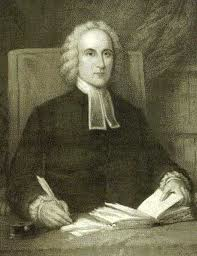
Jonathan Edwards image

If the case be such indeed,

that all mankind are by nature

in a state of total ruin, …

then, doubtless,

the great salvation by Christ

stands in direct relation

to this ruin,

as the remedy to the disease.

– Jonathan Edwards

Apart from his famous sermon, Sinners in the Hands of an Angry God, Jonathan Edwards is most known for his twin works Religious Affections (1746) and Freedom of the Will (1754). One of his lesser known works is on original sin, an important work published posthumously.

In The Great Christian Doctrine of Original Sin Defended (1758), Edwards was not replying to any specific author, but he was moved to write what he called a “general defence” of this important doctrine. He says of it in his preface: “I look on the doctrine as of great importance; which every body will doubtless own it is, if it be true. For, if the case be such indeed, that all mankind are by nature in a state of total ruin, both with respect to the moral evil of which they are the subjects, and the afflictive evil to which they are exposed, the one as the consequence and punishment of the other; then, doubtless, the great salvation by Christ stands in direct relation to this ruin, as the remedy to the disease; and the whole gospel, or doctrine of salvation, must suppose it; and all real belief, or true notion of that gospel, must be built upon it” (Jonathan Edwards, The Great Christian Doctrine of Original Sin Defended: Evidences of Its Truth Produced, and Arguments to the Contrary Answered, in Jonathan Edwards, The Works of Jonathan Edwards, A.M., 10th ed., 2 vols. (1865; Edinburgh / Carlisle, Penn.: Banner of Truth, 1979), 1:145. The author’s preface is dated 1757).

Much of the controversy over human free will is waged in the context of speculative debate over the relationship of man’s freedom to God’s knowledge, or to election and reprobation. For Edwards the central issue of free will is rooted in the ancient controversy (as between Pelagius and Augustine) over the relationship of free will to man’s fallen nature and ultimately to his redemption through the gospel. In a word, Edwards focuses on the broader issue of biblical redemption or the gospel. This same motive drove Martin Luther in his debate with Erasmus: the concern to see sola fide solidly rooted in sola gratia. For Edwards, the greatness of the gospel is visible only when viewed against the backdrop of the greatness of the ruin into which we have been plunged by the fall. The greatness of the disease requires the greatness of the remedy.

Evidence for Original Sin

One interesting facet of Edwards’s defense of the classical view of the fall and original sin is his attempt to show that, even if the Bible were silent on the matter, this doctrine would be demonstrated by the evidence of natural reason. Since the phenomena of human history demonstrate that sin is a universal reality, we should seek an explanation for this reality. In simple terms the question is, Why do all people sin?

Those who deny the doctrine of original sin usually answer this question by pointing to the corrupting influences of decadent societies. Man is born in a state of innocence, they say, but he is subsequently corrupted by the immoral influence of society. This idea begs the question, How did society become corrupt in the first place? If all people are born innocent or in a state of moral neutrality, with no predisposition to sin, why do not at least a statistical average of 50% of the people remain innocent? Why can we find no societies in which the prevailing influence is to virtue rather than vice? Why does not society influence us to maintain our natural innocence?

 Events in the Life of Jonathan Edwards

1703 Born in East Windsor, Conn.

1716–20 Studied at Yale

1726 Became assistant minister in Northampton, Mass.

1727 Married Sarah Pierrepont

1729 Became minister in Northampton

1734 Great Awakening began in Northampton

1751 Moved to Stockbridge to be a pastor, missionary

1758 Inaugurated president of Princeton; Died in Princeton, N.J.

Even the most sanguine critics of human nature, those who insist that man is basically good, repeat the persistent axiomatic aphorism “Nobody’s perfect.” Why is no one perfect? If man is good at the core of his heart and evil is peripheral, tangential, or accidental, why does not the core win out over the tangent, the substance over the accidents? Even in the society in which we find ourselves today, in which moral absolutes are widely denied, people still readily admit that no one is perfect. The concept of “perfect” has been denuded by the rejection of moral absolutes. Yet with a lower standard or norm of perfection than the one revealed by Scripture, we recognize that even this “norm” is not met. With the lowest common denominator of ethics such as Immanuel Kant’s categorical imperative, we still face the frustration of failing to live up to it.
We may discount ethical standards, reducing them below the level of actual perfection, and still fail to meet those standards. People claim a commitment to moral relativism, but when somebody steals our purse or our wallet, we still cry, “Foul.” Suddenly the credo that “everyone has the right to do his own thing” is challenged when the other person’s “thing” conflicts with my “thing.”

Edwards saw in the universal reality of sin manifold evidence for a universal tendency toward sin. Edwards states an objection to this and then answers the objection:

If any should say, Though it be evident that there is a tendency in the state of things to this general event—that all mankind should fail of perfect obedience, and should sin, and incur a demerit of eternal ruin; and also that this tendency does not lie in any distinguishing circumstances of any particular people, person, or age—yet it may not lie in man’s nature, but in the general constitution and frame of this world. Though the nature of man may be good, without any evil propensity inherent in it; yet the nature and universal state of this world may be full of so many and strong temptations, and of such powerful influence on such a creature as man, dwelling in so infirm a body, etc. that the result of the whole may be a strong and infallible tendency in such a state of things, to the sin and eternal ruin of every one of mankind (Ibid., 1:151, col. a.).

Edwards answers this supposition with the following reply:

To this I would reply, that such an evasion will not at all avail to the purpose of those whom I oppose in this controversy. It alters not the case as to this question, Whether man, in his present state, is depraved and ruined by propensities to sin. If any creature be of such a nature that it proves evil in its proper place, or in the situation which God has assigned it in the universe, it is of an evil nature. That part of the system is not good, which is not good in its place in the system; and those inherent qualities of that part of the system, which are not good, but corrupt, in that place, are justly looked upon as evil inherent qualities. That propensity is truly esteemed to belong to the nature of any being, or to be inherent in it, that is the necessary consequence of its nature, considered together with its proper situation in the universal system of existence, whether that propensity be good or bad (Ibid).

Edwards draws an analogy from nature to illustrate his point: “It is the nature of a stone to be heavy; but yet, if it were placed, as it might be, at a distance from this world, it would have no such quality. But being a stone, is of such a nature, that it will have this quality or tendency, in its proper place, in this world, where God has made it, it is properly looked upon as a propensity belonging to its nature.… So, if mankind are of such a nature, that they have an universal effectual tendency to sin and ruin in this world, where God has made and placed them, this is to be looked upon as a pernicious tendency belonging to their nature” (Ibid).

Edwards concludes that within the nature of man there is a propensity toward sin. This inclination is part of the inherent or constituent nature of man. It is natural to fallen mankind. When Scripture speaks of “natural man,” it refers to man as he is since the fall, not as he was created originally. The fall was a real fall and not a maintenance of the status quo of creation.

John Calvin acknowledged that men, though fallen, perform works of seeming righteousness, and he called these works acts of civic righteousness. Such “virtues,” which Augustine called “splendid vices,” may conform outwardly to the law of God, but they do not proceed from a heart inclined to please God, or from a heart that loves God. In biblical categories a good or virtuous work must not only conform outwardly to the prescriptions of God’s law but also proceed from an inward disposition or motive rooted in the love of God. In a real sense the Great Commandment to love God with all the heart underlies the moral judgment of all human activity.

Concerning the preponderance of evil deeds over good ones, Edwards says: “Let never so many thousands or millions of acts of honesty, good nature, etc. be supposed; yet, by the supposition, there is an unfailing propensity to such moral evil, as in its dreadful consequences infinitely outweighs all effects or consequences of any supposed good” (Ibid., 1:152, col. a.).

Edwards goes on to point out the degree of wickedness and heinousness that is involved in merely one sin against God. Such an act would be so wicked since it is committed against such a holy being that it would outweigh the sum of any amount of contrasting virtue. “He that in any respect or degree is a transgressor of God’s law,” Edwards says, “is a wicked man, yea, wholly wicked in the eye of the law; all his goodness being esteemed nothing, having no account made of it, when taken together with his wickedness” (Ibid., 1:152, col. a.).

At this point Edwards echoes the sentiment of James, saying that to sin against one point of the law is to sin against the whole law (James 2:10–11) and, of course, the Law-Giver himself. Likewise, Edwards says works of obedience, strictly speaking, cannot outweigh disobedience. When we are obedient, we are merely doing what God requires us to do. Here we can be nothing more than unprofitable servants.

Edwards sees evidence for man’s depraved nature in the propensity of humans to sin immediately, as soon as they are morally capable of committing actual sin. He sees further evidence in the fact that man sins continually and progressively, and that the tendency remains even in the most sanctified of men. Edwards also finds significant what he calls the “extreme degree of folly and stupidity in matters of religion” (Ibid., 1:156, col. b.).

In a cursory look at human history, Edwards provides a catalogue of woes and calamities that have been perpetrated by and on the human race. Even the most jaded observer of history must admit that things are not right with the world. Then Edwards turns to the universality of death as proof for the universality of sin. In the biblical view, death came into the world through and because of sin. It represents the divine judgment on human wickedness, a judgment visited even on babies who die in infancy. “Death is spoken of in Scripture as the chief of calamities,” Edwards notes, “the most extreme and terrible of all natural evils in this world” (Ibid., 1:173, col. a.).
The Bible and Original Sin

Edwards then turns his attention to the scriptural warrant for the doctrine of original sin. He pays particular attention to Paul’s teaching in Ephesians 2.

Another passage of the apostle, to the like purpose with that which we have been considering in the 5th [chapter] of Romans, is that in Ephesians 2:3—“And were by nature children of wrath, even as others.” This remains a plain testimony to the doctrine of original sin, as held by those who used to be called orthodox Christians, after all the pains and art used to torture and pervert it. This doctrine is here not only plainly and fully taught, but abundantly so, if we take the words with the context; where Christians are once and again represented as being, in their first state, dead in sin, and as quickened and raised up from such a state of death, in a most marvellous display of free rich grace and love, and exceeding greatness of God’s power, etc. (Ibid., 1:197, col. b.).

With respect to the uniform teaching of Scripture, Edwards concludes: “As this place in general is very full and plain, so the doctrine of the corruption of nature, as derived from Adam, and also the imputation of his first sin, are both clearly taught in it. The imputation of Adam’s one transgression, is indeed most directly and frequently asserted. We are here assured, that ‘by one man’s sin, death passed on all.’ … And it is repeated, over and over, that ‘all are condemned,’ ‘many are dead,’ ‘many made sinners,’ etc. ‘by one man’s offence,’ ‘by the disobedience of one,’ and ‘by one offence.’ ”

Related Works by Edwards

The Great Christian Doctrine of Original Sin Defended: Evidences of Its Truth Produced, and Arguments to the Contrary Answered … In The Works of Jonathan Edwards, A.M. 10th ed. 2 vols. 1865. Reprint. Edinburgh / Carlisle, Penn.: Banner of Truth, 1979. 1:143–233.Freedom of the Will. Edited by Paul Ramsey. The Works of Jonathan Edwards, edited by Perry Miller, vol. 1. New Haven and London: Yale University, 1957.A Jonathan Edwards Reader. Edited by John E. Smith, Harry S. Stout, and Kenneth P. Minkema. New Haven: Yale University, 1995.

Finally Edwards argues for original sin from the biblical teaching regarding the application of redemption. The Spirit’s work in regeneration is a necessary antidote for a previous, corrupt condition: “It is almost needless to observe, how evidently this is spoken of as necessary to salvation, and as the change in which are attained the habits of true virtue and holiness, and the character of a true saint; as has been observed of regeneration, conversion, etc. and how apparent it is, that the change is the same.… So that all these phrases imply, having a new heart, and being renewed in the spirit, according to their plain signification” (Ibid., 1:214, col. a.).

In his introduction to the Yale edition of Edwards’s Freedom of the Will, Paul Ramsey makes this observation:

Into the writing of it he poured all his intellectual acumen, coupled with a passionate conviction that the decay to be observed in religion and morals followed the decline in doctrine since the founding of New England. The jeremiads, he believed, had better go to the bottom of the religious issue! The product of such plain living, high thinking, funded experience and such vital passion was the present Inquiry, a superdreadnaught which Edwards sent forth to combat contingency and self-determination (to reword [David F.] Swenson’s praise of one of [Søren] Kierkegaard’s big books) and in which he delivered the most thoroughgoing and absolutely destructive criticism that liberty of indifference, without necessity, has ever received. This has to be said even if one is persuaded that some form of the viewpoint Edwards opposed still has whereon to stand. This book alone is sufficient to establish its author as the greatest philosopher-theologian yet to grace the American scene (Paul Ramsey, “Editor’s Introduction,” in Jonathan Edwards, Freedom of the Will, ed. Paul Ramsey, The Works of Jonathan Edwards, ed. Perry Miller, vol. 1 (New Haven and London: Yale University, 1957), pp. 1–2. The full title of Edwards’s work was originally A Careful and Strict Enquiry into the Modern Prevailing Notions of That Freedom of Will, Which Is Supposed to Be Essential to Moral Agency, Virtue and Vice, Reward and Punishment, Praise and Blame. Ramsey alludes to David F. Swenson, translator of Søren Kierkegaard’s Philosophical Fragments (1936), Concluding Unscientific Postscript (1941), Three Discourses on Imagined Occasions (1941), volume 1 of Either/Or (1941), and Works of Love (1946); and author of Something about Kierkegaard (Minneapolis: Augsburg, 1941).

In his own preface to Freedom of the Will, Edwards speaks of the danger of pinning labels on representatives of various schools of theological thought and the needless rancor often attached to such labels. Yet he pleads that generic terms are necessary for the sake of literary smoothness. A writer must have a shorthand way of distinguishing various characteristics of systems of thought. Although he does not agree with Calvin at every point, Edwards says he is not offended when labeled a Calvinist because he stands so squarely in that tradition.

His chief concern, however, is that the reader understand the consequences of differing theological perspectives. He regards the question of human freedom with the same earnestness Luther displayed in his debate with Erasmus. Far from being an isolated, peripheral, speculative matter, Edwards thinks this question is supremely important. He says:

The subject is of such importance, as to demand attention, and the most thorough consideration. Of all kinds of knowledge that we can ever obtain, the knowledge of God, and the knowledge of ourselves, are the most important. As religion is the great business, for which we are created, and on which our happiness depends; and as religion consists in an intercourse between ourselves and our Maker; and so has its foundation in God’s nature and ours, and in the relation that God and we stand in to each other; therefore a true knowledge of both must be needful in order to true religion. But the knowledge of ourselves consists chiefly in right apprehensions concerning those two chief faculties of our nature, the understanding and will. Both are very important: yet the science of the latter must be confessed to be of greatest moment; inasmuch as all virtue and religion have their seat more immediately in the will, consisting more especially in right acts and habits of this faculty. And the grand question about the freedom of the will, is the main point that belongs to the science of the will. Therefore I say, the importance of this subject greatly demands the attention of Christians, and especially of divines (Edwards, Freedom of the Will, p. 133).

Why We Choose

Edwards begins his inquiry by defining the will as “the mind choosing.” “… the will (without any metaphysical refining) is plainly, that by which the mind chooses anything,” he writes. “The faculty of the will is that faculty or power or principle of mind by which it is capable of choosing: an act of the will is the same as an act of choosing or choice” (Ibid., p. 137).

Even when a person does not choose a given option, the mind is choosing “the absence of the thing refused.” Edwards called these choices voluntary or “elective” actions.

John Locke asserted that “the will is perfectly distinguished from desire.” Edwards argues that will and desire are not “so entirely distinct, that they can ever be properly said to run counter. A man never, in any instance, wills anything contrary to his desires, or desires anything contrary to his will” (Ibid., p. 139. Quotes from John Locke, An Essay Concerning Human Understanding, 7th ed. [1716], 2.21.30).

This brief assertion is critical to understanding Edwards’s view of the will. He maintains that a man never chooses contrary to his desire. This means that man always acts according to his desire. Edwards indicates that the determining factor in every choice is the “strongest motive” present at that moment. In summary, we always choose according to the strongest motive or desire at the time.

People may debate this point with Edwards, recalling moments when they chose something they really did not want to choose. To understand Edwards, we must consider the complexities involved in making choices. Our desires are often complex and even in conflict with each other. Even the Apostle Paul experienced conflicting desires, claiming that what he wanted to do he failed to do and what he did not want to do he actually did (see Rom. 7:15). Does the apostle here belie Edwards’s point? I think not. Paul expresses the struggle he endures between desires in conflict. When he chooses what he “does not want to choose,” he is experiencing what I call the “all things being equal” dimension.

For example, every Christian has some desire in his heart to be righteous. All things being equal, we want always to be righteous. Yet a war is going on inside of us because we also continue to have wicked desires. When we choose the wicked over the righteous course of action, at that moment we desire the sin more than obedience to God. That was as true for Paul as it is for us. Every time we sin we desire more to do that than we do to obey Christ. Otherwise we simply would not sin.

Not only are desires not monolithic, but also they are not constant in their force or intensity. Our desire levels fluctuate from moment to moment. For example, the dieter desires to lose weight. After a full meal it is easy to say no to sweets. The appetite has been sated and the desire for more food diminished. As time passes, however, and self-denial has led to an increased hunger, the desire for food intensifies. The desire to lose weight remains. But when the desire to gorge oneself becomes stronger than the desire to lose weight, the dieter’s resolve weakens and he succumbs to temptation. All things do not remain in a constant state of equality.

Another example is a person being robbed. The robber points a gun at the person and says, “Your money or your life!” (We remember the skit made famous by Jack Benny. When posed with this option, Benny hesitated for a protracted time. In frustration the robber said, “What are you waiting for?” Benny replied, “I’m thinking it over.”) To be robbed at gunpoint is to experience a form of external coercion. The coercion reduces the person’s options to two. All things being equal, the person has no desire to donate the contents of his wallet to the thief. But with only two options the person will respond according to his strongest motive at the moment. He may conclude that if he refuses to hand over his wallet, the robber will both kill him and take his money. Most people will opt to hand the money over because they desire to live more than they desire to keep their wallets. It is possible, however, that a person has such a strong antipathy to armed robbery that he would prefer to die rather than give over his wallet “willingly.”

Related Works about Edwards

Gerstner, John H. The Rational Biblical Theology of Jonathan Edwards. 3 vols. Powhatan, Va.: Berea / Orlando: Ligonier, 1991–93.

Gerstner, John H. Jonathan Edwards: A Mini-Theology. Wheaton: Tyndale, 1987.

Lang, J. Stephen, ed. Jonathan Edwards and the Great Awakening. Christian History 4, 4 (1985).

Murray, Iain H. Jonathan Edwards: A New Biography. Edinburgh and Carlisle, Penn.: Banner of Truth, 1987.

Because this example contains a coercive dimension, I put the word willingly in quotation marks. We must ask if under these circumstances the action really is voluntary? It is if we view it in the context of only two options. However much external coercion is involved, there still remains a choice. Even here, Edwards would say, the person will choose the alternative for which he or she has the stronger motive.

The strongest-motive concept may be lost on us when we consider the manifold decisions we make every day without thoroughly considering the options available to us. We walk into a classroom where several seats are vacant or we walk to an unoccupied park bench and sit down. Rarely do we list the pros and cons before selecting a seat or a part of the bench. On the surface it seems that these choices are entirely arbitrary. We choose them without thinking. If that is so, it belies Edwards’s thesis that the will is the “mind choosing.”

Such choices seem to be mindless ones, but if we analyze them closely, we discover that some preference or motive is operating, albeit subtly. The motive factors may be so slight that they escape our notice. Experiments have been run in which people choose a seat on an unoccupied park bench. Some people always sit in the middle of the bench. Some are gregarious and long for company, so they choose the middle of the bench in hopes that someone will come along and sit beside them. And some people prefer solitude, so they sit in the middle in hopes that no one else will sit on the bench.

Likewise some people prefer to sit in the front of the classroom or the back for various reasons. The decision to select a certain seat is not an involuntary action like the beating of one’s heart. It is a voluntary action, which proceeds from some motive, however slight or obscure. In a word, there is a reason why we choose the seats we choose.

What Determines Our Choices

In his analysis of choices, Edwards discusses the determination of the will. He writes: “By ‘determining the will,’ if the phrase be used with any meaning, must be intended, causing that the act of the will or choice should be thus, and not otherwise: and the will is said to be determined, when, in consequence of some action, or influence, its choice is directed to, and fixed upon a particular object” (Edwards, Freedom of the Will, p. 141).

Edwards is not speaking of what is commonly called determinism, the idea that human actions are determined by some form of external coercion such as fate or manifest destiny. Rather he is here speaking of self-determination, which is the essence of human volition.

Edwards considers utterly irrational the idea that an “indifferent will” makes choices. “To talk of the determination of the will, supposes an effect, which must have a cause,” he says. “If the will be determined, there is a determiner. This must be supposed to be intended even by them that say, the will determines itself. If it be so, the will is both determiner and determined; it is a cause that acts and produces effects upon itself, and is the object of its own influence and action” (Ibid).

At this point Edwards argues from the vantage point of the law of cause and effect. Causality is presupposed throughout his argument. The law of cause and effect declares that for every effect there is an antecedent cause. Every effect must have a cause and every cause, in order to be a cause, must produce an effect. The law of causality is a formal principle that one cannot deny without embracing irrationality. David Hume’s famous critique of causality did not annihilate the law but our ability to perceive particular causal relationships.

The law of causality with which Edwards operates is “formal” in that it has no material content in itself and is stated in such a way as to be analytically true. That is, it is true by analysis of its terms or “by definition.” In this regard the law of causality is merely an extension of the law of noncontradiction. An effect, by definition, is that which has an antecedent cause. If it has no cause then it is not an effect. Likewise, a cause by definition is that which produces an effect. If no effect is produced then it is not a cause.

I once was criticized in a journal article by a scholar who complained, “The problem with Sproul is that he doesn’t allow for an uncaused effect.” I plead guilty to the charge, but I see this as virtue rather than vice. People who allow for uncaused effects are allowing for irrational nonsense statements to be true. If Sproul is guilty here, Edwards is more so. Edwards is far more cogent in his critical analysis of the intricacies of causality than Sproul will ever be in this life.

When Edwards declares that the will is both determined and determiner, he is not indulging in contradiction. The will is not determined and the determiner at the same time and in the same relationship. The will is the determiner in one sense and is determined in another sense. It is the determiner in the sense that it produces the effects of real choices. It is determined in the sense that those choices are caused by the motive that is the strongest one in the mind at the moment of choosing.

John H. Gerstner, perhaps the twentieth century’s greatest expert on Edwards, writes:

Edwards understands the soul to have two parts: understanding and will. Not only is Freedom of the Will based on this dichotomy; that dichotomy underlies Religious Affections as well.…

Edwards agreed with the English Puritan, John Preston, that the mind came first and the heart or will second. “Such is the nature of man, that no object can come at the heart but through the door of the understanding.…” In the garden, man could have rejected the temptation of the mind to move the will to disobey God. After the fall he could not, although Arminians and Pelagians thought otherwise. Their notion of the “freedom of the will” made it always possible for the will to reject what the mind presented. This perverted notion, Edwards said in Original Sin, “seems to be a grand favorite point with Pelagians and Arminians, and all divines of such characters, in their controversies with the orthodox.” For Edwards, acts of the will are not free in the sense of uncaused (John H. Gerstner, “Augustine, Luther, Calvin, and Edwards on the Bondage of the Will,” in Thomas R. Schreiner and Bruce A. Ware, eds., The Grace of God, the Bondage of the Will, 2 vols. [Grand Rapids: Baker, 1995], 2:291. Quotation from John Preston, “Sermon on Hebrews 5:12, ” in John Preston, Works, 2:158).

To Edwards a motive is “something that is extant in the view or apprehension of the understanding, or perceiving faculty” (Edwards, Freedom of the Will, p. 142).

He says:

… Nothing can induce or invite the mind to will or act anything, any further than it is perceived, or is some way or other in the mind’s view; for what is wholly unperceived, and perfectly out of the mind’s view, can’t affect the mind at all.…

… everything that is properly called a motive, excitement or inducement to a perceiving willing agent, has some sort and degree of tendency, or advantage to move or excite the will, previous to the effect, or to the act of the will excited. This previous tendency of the motive is what I call the “strength” of the motive.… that which appears most inviting, and has, by what appears concerning it to the understanding or apprehension, the greatest degree of previous tendency to excite and induce the choice, is what I call the “strongest motive.” And in this sense, I suppose the will is always determined by the strongest motive (Ibid).

Edwards further argues that the strongest motive is that which appears most “good” or “pleasing” to the mind. Here he uses good not in the moral sense, because we may be most pleased by doing what is not good morally. Rather the volition acts according to that which appears most agreeable to the person. That which is most pleasing may be deemed as pleasure. What entices fallen man to sin is the desire for some perceived pleasure.

Edwards then turns his attention to the terms necessity and contingency. He says “that a thing is … said to be necessary, when it must be, and cannot be otherwise” (Ibid., p. 149).

He goes beyond the ordinary use of the word necessary to the philosophical use. He says:

Philosophical necessity is really nothing else than the full and fixed connection between the things signified by the subject and predicate of a proposition, which affirms something to be true. When there is such a connection, then the thing affirmed in the proposition is necessary, in a philosophical sense; whether any opposition, or contrary effort be supposed, or supposable in the case, or no. When the subject and predicate of the proposition, which affirms the existence of anything, either substance, quality, act or circumstance, have a full and certain connection, then the existence or being of that thing is said to be necessary in a metaphysical sense. And in this sense I use the word necessity, in the following discourse, when I endeavor to prove that necessity is not inconsistent with liberty (Ibid., p. 152).

Edwards discusses various types of necessary connection. He observes that one type of connection is consequential: “things which are perfectly connected with other things that are necessary, are necessary themselves, by a necessity of consequence.” This is to say that if A is necessary and B is perfectly connected to A, then B is also necessary. It is only by such necessity of consequence that Edwards speaks of future necessities. Such future necessities are necessary in this way alone.

Similarly Edwards considers the term contingent. There is a difference between how the word is used in ordinary language and how it functions in philosophical discourse. He writes:

… Anything is said to be contingent, or to come to pass by chance or accident, in the original meaning of such words, when its connection with its causes or antecedents, according to the established course of things, is not discerned; and so is what we have no means of the foresight of. And especially is anything said to be contingent or accidental with regard to us, when anything comes to pass that we are concerned in, as occasions or subjects, without our foreknowledge, and beside our design and scope.

But the word contingent is abundantly used in a very different sense; not for that whose connection with the series of things we can’t discern, so as to foresee the event; but for something which has absolutely no previous ground or reason, with which its existence has any fixed and certain connection (Ibid., p. 155).

In ordinary language we attribute to accident or “chance” any unintended consequences. In a technical sense nothing occurs by chance, for chance has no being and can exercise no power. When the term contingent refers to effects with no ground or reason, it retreats to the assertion that there are effects without causes. It is one thing to say that we do not know what causes a given effect; it is quite another thing to say that nothing causes the effect. Nothing cannot do anything because it is not anything (See R. C. Sproul, Not a Chance: The Myth of Chance in Modern Science and Cosmology (Grand Rapids: Baker, 1994).

Our Moral Inability

One of the most important distinctions made by Edwards is the one between natural ability and moral ability. He also distinguishes between natural necessity and moral necessity. Natural necessity refers to those things that occur via natural force. Moral necessity refers to those effects that result from moral causes such as the strength of inclination or motive. He applies these distinctions to the issue of moral inability.

We are said to be naturally unable to do a thing, when we can’t do it if we will, because what is most commonly called nature [doesn’t] allow … it, or because of some impeding defect or obstacle that is extrinsic to the will; either in the faculty of understanding, constitution of body, or external objects. Moral inability consists not in any of these things; but either in the want of inclination; or the strength of a contrary inclination; or the want of sufficient motives in view, to induce and excite the act of the will, or the strength of apparent motives to the contrary. Or both these may be resolved into one; and it may be said in one word, that moral inability consists in the opposition or want of inclination (Edwards, Freedom of the Will, p. 159).

Man may have the desire to do things he cannot do because of limits imposed by nature. We may wish to be Superman, able to leap tall buildings in a single bound, more powerful than a locomotive, and faster than a speeding bullet. But unless we become fifteen-million-dollar men (up from six million due to inflation), it is highly unlikely that we will ever perform such prodigious feats. Nature enables birds to fly through the air without the aid of mechanical devices, and fish to live underwater without drowning. They are so constituted in their natures to be able to do these things. But we lack wings and feathers, or gills and fins. These are limitations imposed by nature. They reveal a lack or deficiency of necessary faculties or equipment.

Moral inability also deals with a deficiency, the lack of sufficient motive or inclination. Edwards cites various examples of moral inability: an honorable woman who is morally unable to be a prostitute, a loving child who is unwilling to kill his father, a lascivious man who cannot rein in his lust.

Given man’s moral inability, the will cannot not be free. The will is always free to act according to the strongest motive or inclination at the moment. For Edwards, this is the essence of freedom. To be able to choose what one desires is to be free in this sense. When I say the will cannot not be free, I mean the will cannot choose against its strongest inclination. It cannot choose what it does not desire to choose. Edwards refers to the common meaning of liberty: “… that power and opportunity for one to do and conduct as he will, or according to his choice.” The word says nothing of “the cause or original of that choice” (

Man may have the desire to do things he cannot do because of limits imposed by nature. We may wish to be Superman, able to leap tall buildings in a single bound, more powerful than a locomotive, and faster than a speeding bullet. But unless we become fifteen-million-dollar men (up from six million due to inflation), it is highly unlikely that we will ever perform such prodigious feats. Nature enables birds to fly through the air without the aid of mechanical devices, and fish to live underwater without drowning. They are so constituted in their natures to be able to do these things. But we lack wings and feathers, or gills and fins. These are limitations imposed by nature. They reveal a lack or deficiency of necessary faculties or equipment.

Moral inability also deals with a deficiency, the lack of sufficient motive or inclination. Edwards cites various examples of moral inability: an honorable woman who is morally unable to be a prostitute, a loving child who is unwilling to kill his father, a lascivious man who cannot rein in his lust.

Given man’s moral inability, the will cannot not be free. The will is always free to act according to the strongest motive or inclination at the moment. For Edwards, this is the essence of freedom. To be able to choose what one desires is to be free in this sense. When I say the will cannot not be free, I mean the will cannot choose against its strongest inclination. It cannot choose what it does not desire to choose. Edwards refers to the common meaning of liberty: “… that power and opportunity for one to do and conduct as he will, or according to his choice.” The word says nothing of “the cause or original of that choice” (Ibid., p. 164).

Edwards notes that Arminians and Pelagians have a different meaning for the term liberty. He lists a few aspects of their definition:

1. It consists in a self-determining power or a certain sovereignty the will has over itself, whereby it determines its own volitions.

2. Indifference belongs to liberty previous to the act of volition, in equilibrio.

3. Contingence belongs to liberty and is essential to it. Unless the will is free in this sense, it is deemed to be not free at all (Ibid., pp. 164–65).

Edwards then shows that the Pelagian notion is irrational and leads to an infinite regress of determination:

… If the will determines the will, then choice orders and determines the choice: and acts of choice are subject to the decision, and follow the conduct of other acts of choice. And therefore if the will determines all its own free acts, then every free act of choice is determined by a preceding act of choice, choosing that act. And if that preceding act of the will or choice be also a free act, then by these principles, in this act too, the will is self-determined; that is, this, in like manner, is an act that the soul voluntarily chooses.… Which brings us directly to a contradiction: for it supposes an act of the will preceding the first act in the whole train, directing and determining the rest; or a free act of the will, before the first free act of the will. Or else we must come at last to an act of the will, determining the consequent acts, wherein the will is not self-determined, and so is not a free act … but if the first act in the train … be not free, none of them all can be free.…

… if the first is not determined by the will, and so not free, then none of them are truly determined by the will.…(Ibid., pp. 172–73).

Edwards says the idea of an indifferent will is absurd. First, if the will functions from a standpoint of indifference, having no motive or inclination, then how can the choice be a moral one? If decisions are utterly arbitrary and done for no reason or motive, how do they differ from involuntary actions, or from the mere responses of plants, animals, or falling bodies?

Second, if the will is indifferent, how can there be a choice at all? If there is no motive or inclination, how can a choice be made? It requires an effect without a cause. For this reason, Edwards labors the question of whether volition can possibly arise without a cause through the activity of the nature of the soul. For Edwards it is axiomatic that “nothing has no choice.” “Choice or preference can’t be before itself, in the same instance, either in the order of time or nature,” he says. “It can’t be the foundation of itself, or the fruit or consequence of itself” (Ibid, p. 197).

Here Edwards applies the law of noncontradiction to the Pelagian and Arminian view of free will, and he shows that it is absurd. Indifference can only suspend choices, not create them. To create them would be to act ex nihilo, not only without a material cause, but also without a sufficient or efficient cause.

Edwards then treats several common objections to the Augustinian view, but we will not deal with them here. We conclude by summarizing Edwards’s view of original sin. Man is morally incapable of choosing the things of God unless or until God changes the disposition of his soul. Man’s moral inability is due to a critical lack and deficiency, namely the motive or desire for the things of God. Left to himself, man will never choose Christ. He has no inclination to do so in his fallen state. Since he cannot act against his strongest inclination, he will never choose Christ unless God first changes the inclination of his soul by the immediate and supernatural work of regeneration. Only God can liberate the sinner from his bondage to his own evil inclinations.

Like Augustine, Luther, and Calvin, Edwards argues that man is free in that he can and does choose what he desires or is inclined to choose. But man lacks the desire for Christ and the things of God until God creates in his soul a positive inclination for these things.

 The Article above was adapted from chapter 7 of R.C. Sproul. Willing to Believe: The Controversy Over Free Will. Grand Rapids, Baker, 1997.
About the Author:
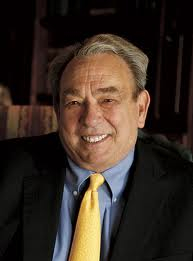
RC Sproul in yellow tie image
Dr. R.C. Sproul (Founder of Ligonier Ministries; Bible College and Seminary President and Professor; and Senior Minister at Saint Andrews in Sanford, Florida) is an amazingly gifted communicator. Whether he is teaching, preaching, or writing – he has the ability to make the complex easy to understand and apply. He has been used more than any other person in my life to deepen my walk with Christ and help me to be more God-centered than man-centered. His book the Holiness of God has been the most influential book in my life – outside of the Bible.
 

Warren Wiersbe on Marks of a Mature Leader of God

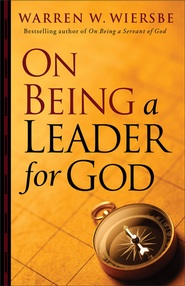
OBALFG Wiersbe

5 Marks of Maturity in Christian Leaders

This is a good place to think about maturity, because one of the goals of Christian leadership is to help others reach their full potential for service. We want to be at our best and we want those working with us to be at their best so that we can do our best work together and, if it’s God’s will, go on to greater challenges. This doesn’t mean that we “break” other people and “re-make” them in our own image, because we aren’t God, and our image—even our best image—doesn’t fit everybody. Instead, it means helping people to grow up and do their very best so they can move ahead in service. Maturing people know themselves, accept themselves, and are themselves in every situation. They don’t “play roles.” They are realistic about themselves and have no illusions about who they are or what they can do. They aren’t fooling themselves or trying to fool others, because maturity and humility go together.

David wrote about this in Psalm 139. No matter how inept we may be in some things, each of us is still “fearfully and wonderfully made,” and we should all praise God for what we are and what we can do (Ps. 139:14). When God made us, He made no mistakes. When I was in grade school, it didn’t take me long to discover that I was not an athlete. (My two older brothers were accomplished athletes.) When you are the last one chosen for every team, and the team that ends up with you tries to give you to another team, you eventually get the message. I could run fast, so soccer was the only game I excelled in; but soccer wasn’t an official school sport in those days. In Indiana, where I grew up, basketball and football reigned supreme. So what did I do? For protection, I managed to have either a star football player or star basketball player as a locker partner, and I managed to bungle my way on the field or in the gym, staying out of trouble. My teammates approved; after all, they did want to win the game. But when it came to academics, writing for the school paper, making speeches for the student government, and even serving as a substitute when a teacher was absent, I was in my element. In those days schools awarded letters only for athletics, not academics, but I didn’t mind. The entire experience helped me find myself and discover the work God wanted me to do.

What are some of the marks of people who are maturing?

To begin with, because they know themselves and accept themselves, they learn to accept others and cultivate a team approach to getting things done. It makes no difference who scores the points so long as the team wins. The key word is “cooperation” and not “competition.” I think it was the British naval hero Lord Nelson who came on deck and found two of his officers engaged in a violent argument. He watched them a few moments and then stepped between them. Pointing to the ocean, he said, “Gentlemen, there is but one enemy, and he is out there!” Whether it’s a coach giving a halftime pep talk or the president of a company explaining a new policy, the goal is the same: different people with different personalities working together to achieve the same purposes with the least possible amount of friction.

Maturing people speak the truth in love (Eph. 4:15). It has well been said that truth without love is brutality and love without truth is hypocrisy. Brutality and hypocrisy are both sins, and sin destroys. Truth and love are tools to build with, and they are partners that work together. It would benefit us to read 1 Corinthians 13 frequently and ask ourselves, “Is this my portrait?” Love is named first in the list of the fruit of the Spirit (Gal. 5:22–23) because love helps us produce and share the rest of the fruit that Paul names. Jesus called love a “new command” and said it is the major mark of each of His disciples (John 13:34–35).

Mature people know how to take responsibility willingly. When problems arise, they admit mistakes and ask questions instead of inventing excuses. They can be trusted to do their work well whether or not anybody is watching. I was once on a staff with a man whose evasive nonwork habits were obvious to everyone but himself. When asked to report on an assignment, he would invariably reply, “Oh, that’s in my briefcase!” When asked where his briefcase was, he would say, “It’s in the trunk of my car.” Where was his car? His wife had it! He didn’t stay on staff very long.

Mature people know that the way they do their work affects how others do their work. Mature people do more than is required, not to earn points or get special recognition but because they consider themselves “slaves of Christ, doing the will of God from [their] heart” (Eph. 6:6). If they see a fellow worker having trouble, they offer to help. They don’t compete with others; they compete with themselves and always strive to do their work better. Mature people have a healthy outlook on life and are dependable whether the Lord sends defeats or victories. If others have a gift of complaining, mature workers don’t preach at them but rather try to have a positive attitude that may help to transform pessimism into optimism. Like Paul and Silas in prison, mature workers can sing and pray—and bring down the house (Acts 16)!

As I’ve watched the men and women who have modeled leadership to me, I’ve observed that they not only have faith in God but also demonstrate faith in their co-workers. All of us on the team must believe in each other, or teamwork will be impossible. We must pray for one another and trust God to work in us, among us, and through us. “I hope in the Lord Jesus to send Timothy to you soon,” Paul wrote to the Corinthian church that Apollos was “quite unwilling” to visit them at that time but would come when he had opportunity (1 Cor. 16:12). This shows that Paul didn’t “play God” in the lives of his associates, moving them around against their wills. Paul had his plans, but so did the Lord—and Paul was flexible.

When a new member joins the team, we soon calculate their “maturity quotient,” and we might have to switch to Plan B to help them start growing. How do they respond to criticism and to praise? Are they patient with delays? Do they know which port they are headed for? Can they patiently listen without interrupting? Even seasoned servants occasionally become childish and require private therapy. “Wounds from a friend can be trusted, but an enemy multiplies kisses” (Prov. 27:6). When I reflect on my own years of service, I give thanks for the men and women who patiently helped me mature and become a better team player. I’m still learning.

Adapted from Warren W. Wiersbe. On Being a Leader for God (Kindle Locations 395-406). Grand Rapids: Baker Publishing Group. Kindle Edition, 2011.

About Warren W. Wiersbe

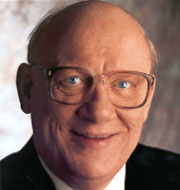
warren wiersbe image

Warren W. Wiersbe is the Distinguished Professor of Preaching at Grand Rapids Baptist Seminary, and is the author of more than 100 books. Billy Graham calls him “one of the greatest Bible expositors of our generation.” Interestingly, Warren’s earliest works had nothing to do with scriptural interpretation. His interest was in magic, and his first published title was Action with Cards (1944).

“It was sort of imbecilic for a fifteen-year-old amateur magician to have the audacity to write a book and send it to one of the nation’s leading magic houses,” Warren says. But having a total of three books published by the L.L. Ireland Magic Company—before the age of 20—gave him a surge of confidence. In later years, he applied his confidence and writing talent to the Youth for Christ (YFC) ministry.

Warren wrote many articles and guidebooks for YFC over a three-year period, but not all his manuscripts were seen by the public eye. One effort in particular, The Life I Now Live, based on Galatians 2:20, was never published. The reason, Warren explains with his characteristic humor, is simple: it was “a terrible book…Whenever I want to aggravate my wife, all I have to say is, ‘I think I’ll get out that Galatians 2:20 manuscript and work on it.’” Fortunately, Warren’s good manuscripts far outnumbered the “terrible” ones, and he was eventually hired by Moody Press to write three books.

The much-sought-after author then moved on to writing books for Calvary Baptist Church. It was during his ten years at Calvary that Expository Outlines on the New Testament and Expository Outlines on the Old Testament took shape. These two works later became the foundation of Warren’s widely popular Bible studies known as the Be series, featuring such titles as Be Loyal (a study on Matthew) and Be Delivered (a study on Exodus). Several of these books have been translated into Spanish.

His next avenue of ministry was Chicago’s Moody Memorial Church, where he served for seven years. He wrote nearly 20 books at Moody before moving to Lincoln, Nebraska, where he and his wife, Betty, now live. Prior to relocating, he had been the senior pastor of Moody Church, a teacher at Trinity Evangelical Divinity School, and a producer of the Back to the Bible radio program.

During all these years of ministry, Warren held many more posts and took part in other projects too numerous to mention. His accomplishments are extensive, and his catalog of biblical works is indeed impressive and far-reaching (many of his books have been translated into other languages). But Warren has no intention of slowing down any time soon, as he readily explains: “I don’t like it when people ask me how I’m enjoying my ‘retirement,’ because I’m still a very busy person who is not yet living on Social Security or a pension. Since my leaving Back to the Bible, at least a dozen books have been published, and the Lord willing, more are on the way.”

Wiersbe’s recent books include Your Next MiracleThe 20 Essential Qualities of a Child of GodClassic Sermons on the Fruit of the SpiritClassic Sermons on Jesus the ShepherdKey Words of the Christian LifeLonely PeopleA Gallery of GraceReal Peace: Freedom and Conscience in the Christian Life, and On Being a Leader for God.

Book Review on Dr. John Huffman’s Memoirs “A Most Amazing Call”

The Pastorate Can Be A Wonderful Life: Review By David P. Craig

AMAC Huffman

In this book John Huffman has written his memoirs highlighting five particular areas of his life as a pastor: his education, family life, ministry in the local church, international ministry, and working with the Boards of several  successful para-church ministries. Dr. Huffman does not deal with the day-to-day minutia of ministry – counseling, visitation, sermon preparation, and so forth. He primarily highlights the big issues, people, and events of over 50 years in pastoral ministry and his 70 years of life.

John writes about his education from growing up in Boston to attending Wheaton College and Princeton University. He went to school with several very influential politicians and ministers and recounts some great stories involving sports, politics, and his world-wide adventures in travel.

In local ministry John began working as a pastor with Dr. Norman Vincent Peale in New York, as well as pastorates in Tulsa, Oklahoma; Key Biscayne, Florida; Pittsburgh, Pennsylvania; and his last 31 years as the Senior  Minister at St. Andrews Presbyterian in Newport Beach, California. It’s interesting to hear about some of his conflicts and struggles with parishioners, as well as some of the amazing things God did in each of these ministries. He talks a lot in the book about being an evangelical in a main-line denomination – the Presbyterian Church U.S.A. He gives some wonderful commentary and insights into what he loves about the denomination (like their governmental structure) and what has been difficult (sexual/political issues). No matter what side you land on these issues – his diplomatic skills have been appreciated by both the liberal and conservative elements in his denomination.

Sprinkled throughout this book are fascinating accounts of his relationships with some amazing people like Richard Nixon, Norman Vincent Peale, Mark Hatfield, Chuck Colson, Billy Graham, Harold Ockenga, Carl F. Henry, Charles Pew, and many others. John traveled extensively in his ministry and has been to the Middle East over thirty times leading tours to Israel and Europe when he was only 18 years old!

John has been a Board member of World Vision, Christianity Today International, Gordon Conwell Seminary, and many other significant organizations. It’s fascinating to hear his stories of Board involvement and the different decisions he’s been involved in making over the years.

Dr. Huffman gives us a little glimpse into the family life of a busy pastor and gives some good insights and wisdom of what to do, and not to do scattered throughout the book. Overall, I really enjoyed reading about the highs and lows of this gifted pastors faithful ministry over the years and how God has used and is continuing to use him for the good of the Church in the United States and around the world. He retells the painful story of the loss of his eldest daughter to cancer – which is absolutely gut wrenching. Even though, most of his ministry and life have been full of blessings, the reality is that suffering visits every person and every family at some point in life. John shares with great empathy and compassion how he and his wife Anne dealt with their loss – and gives some sage advice on dealing with tragedy and loss when it knocks on our front door.

As a pastor myself I enjoyed hearing his story and different tidbits of advice and wisdom throughout the book. John has been a tireless worker for the sake of the Gospel around the globe. He has also been very influential in the local churches where he has served and abroad in missions work. He has traversed smooth and turbulent waters and has passed on much good here to be learned by pastors for future generations. Even if you aren’t a pastor you will enjoy this autobiography. Huffman is a very gifted story-teller and every story in this memoir has a few nuggets thrown in that can benefit a person in any walk of life. Huffman has truly lived an amazing calling that deserves to be read, gleaned from, and emulated.

Book Review of Warren Wiersbe’s Looking Up When Life Gets You Down

Why Us? Book Review by David P. Craig

LUWLGYD Wiersbe

Originally published as ‘Why Us?” in 1984, this reissue by Wiersbe seeks to answer the question: Why do bad things happen to seemingly innocent people? Other questions addressed by Wiersbe include: If God knows everything and is all powerful then why doesn’t he stop tragedies from happening? Is God limited in what He can do? Why does God seem so absent during our disappointments and pains? How Big is God? And When life falls apart, how do you pray?

Wiersbe wisely and sensitively tackles these tough questions and many more, pointing us to faith in the grace and power of God as our greatest hope in our time of need. He motivates the reader to not run or hide from God, but to “look up when life gets you down.” The author does not minimize the harsh realities of suffering but provides a plethora of resources from the Scriptures to help us cope and grow during the difficulties of life which are sure to come.

If you are looking for a clear, comforting, and helpful book to help you deal with difficult times in life this is a great place to start. Wiersbe writes a book that will not bog you down in philosophical discussion, but give you practical solutions to your grappling with pain and suffering. He will guide you into peace and rest as you encounter God’s grace and power in a new and fresh way through the ultimate sufferer – the Lord Jesus Christ.

I slowly read this book during a period in which I was diagnosed with Stage 3 Cancer, and went through a very difficult treatment and recovery process. Personally, I was helped immensely by Wiersbe’s care and wisdom and highly recommend this book for those going thorough suffering and would recommend it even more in preparing for future suffering which is inevitable.

Book Review on Tim Keller’s The Two Advocates

Book Review: “The Two Greatest Advocates One Could Ever Ask For” by David P. Craig

TTA Keller

In this seventh essay by Tim Keller on great encounters with Jesus in the New Testament there is a topical focus on the two great advocates that are necessary for our salvation and sanctification: the Lord Jesus Christ, and God the Holy Spirit. Keller argues compellingly from John 14 and numerous other passages that it is impossible to be right with the Father without the person and works of both Jesus and the Holy Spirit on our behalf.

Keller articulates key doctrines of the Christian faith including the atonement, the justice of God, propitiation, and imputation with excellent illustrations that show clearly why we need two advocates in order to make us justified, righteous, and holy in relationship to the Father. We need Jesus to speak to God for us, and we need the Holy Spirit to speak to us on God’s behalf.

This essay is a fascinating exploration into a deeper understanding and appreciation for how the Triune God accomplishes and applies our salvation for the glory of the Lord Jesus Christ.

James M. Boice on When is Jesus Coming Back?

What The Bible Has To Say About The Future: Part 4 in a Series of 9  – “The Days of Noah”

Last and Future World Boice image

If the Lord Jesus is coming back to this earth as He promised and as the prophets foretold, the most natural next question is: When is Jesus coming? This is not just a question for time-conscious, twenty-first century man, as though he more than others has a special concern for the timing or for the end of human history. It flows naturally from belief in Christ’s second coming itself and is, therefore, a question which has been asked by Christians ever since Christ first spoke of His return, elaborating on the Old Testament prophecies.

The question was in the minds of Christ’s disciples. Toward the end of Jesus’ three-year ministry, shortly before His crucifixion, the disciples asked Him, “Tell us, when will these things be, and what will be the sign of your coming and of the end of the age?” (Matthew 24:3). Part of Christ’s answer was that no one, not even Christ Himself, could know the precise moment at which the prophesied events would unfold. He said, “But concerning that day and hour no one knows, not even the angels of heaven, nor the Son, but the Father only” (Matthew 24:36). Later, after His resurrection, He gave a similar answer to an almost identical question. The disciples had asked, “Lord, will you at this time restore the kingdom to Israel?” Jesus said to them, “It is not for you to know times or seasons that the Father has fixed by his own authority” (Acts 1:6,7).

The disciples could not know. We cannot know. Still, this is not the whole story. For we can hardly fail to notice that when Jesus told the disciples that they could not know the time of His return, He nevertheless went on at some length to describe the conditions that would prevail in the world before He came again. These signs occupy at least two of the twenty-eight chapters of Matthew (24-25), one of the sixteen chapters of Mark (13), and one chapter of Luke (21). Moreover, in the last of these chapters a listing of some of the signs is followed by the challenge: “Now when these things begin to take place, straighten up and raise your heads, because your redemption is drawing near” (Luke 21:28).

Perhaps I can illustrate what Christ was saying by this illustration, borrowed from one of the unpublished writings of Dr. Donald Grey Barnhouse. Suppose a Shakespearean scholar enters a theater one evening not knowing what masterpiece of Shakespeare is to be presented. Before the curtain goes up, he is taken behind the scenes. On stage is a castle with ramparts looking out over a wooded countryside. At once he knows that he will not see Othello, which is set in Venice, not Julius Caesar, which begins with a street scene in Rome. He knows that he not see Macbeth; for although there is a castle scene in Macbeth, the play opens not with the castle but with the witches gathered around their caldron. Finally, our drama critic notices two soldiers with shields bearing the arms of the king of Denmark. He sees two other actors dressed up as a king and queen. There is an actor who is supposed to be a ghost. Now no one has to tell the critic what he will see, for he knows it will be Hamlet.

In the same way today, you and I who are Christians sit in the theater of world events awaiting the opening of God’s apocalyptic drama. We don not know when the play is to start, but, like the drama critic, we know more about it than many. Many stare at the future as at a curtain. For them the future is veiled because they do not have the knowledge of the plan of God. Nor can they go behind curtain where the scene is being set. The Christian is not left in such ignorance. We see behind the scenes. Thus, while it is true that we do not know the precise moment at which the play will begin, we do know the play itself and can begin to sense it beginning as we see the actors starting to take their proper places on the great world stage.

We will understand Christ’s remarks in this light when we realize that they were intended to be indefinite enough to keep anyone from self-satisfaction or complacency but precise enough to encourage Christians to examine history, asking whether the conditions of the Lord’s return may not be entering into their final stages through the developments of their lifetime.

The Days of Noah

But how are we to do this? Where should we begin? One answer to these questions is in Matthew 24, in the verses immediately following Jesus’s statement that no one knows the precise day or hour of His return. These verses contain a reference to the days of Noah, and the point is that the terrible moral conditions that prevailed on the earth just before the flood in Noah’s day will be repeated prior to Christ’s return and the ensuing judgment upon men and nations.

[Note: It might be argued that the emphasis of Matthew 24 is on the sudden and unexpected nature of Christ’s return rather than on the conditions that will prevail at that time. This is partly correct. Certainly Jesus did stress the suddenness of His return: “For as the lightning comes from the east and shines as far as the west, so will be the coming of the Son of Man” (v.27); “Therefore, stay awake, for you do not know on what day your Lord is coming” (v. 42). But that is not the sole message of these verses. And it does not negate the position taken here. Another prominent theme in this chapter is unbelief both in Noah’s day and in the day of Christ’s second coming, and unbelief in itself would lead to the conditions recorded. It may also be noted that the view that conditions of Noah’s day will be repeated before Christ’s return is reinforced by other New Testament passages which speak in similar terms of those days (e.g., 1 Tim. 4:1-4; 2 Tim. 3:1-7; 2 Pet. 2:4-9). Jesus stated elsewhere that conditions before His return would be similar to “the days of Lot” in Sodom, which was noted for its sexual perversions and excesses (Luke 17:28-30).

“For as were the days of Noah, so will be the coming of the Son of Man. For as in those days before the flood they were eating and drinking, marrying and giving in marriage, until the day when Noah entered the ark, and they were unaware until the flood came and swept them all away, so will be the coming of the Son of Man” (Matthew 24:37-39).

(1) Since the days of Noah are described in Genesis 6, we may turn to that chapter and see precisely what Jesus was referring to. One characteristic of the days of Noah was a rapid increase in population: “And it came to pass, when men began to multiply on the face of the earth…” (v. 1). Naturally, an increase in population is in itself without moral overtones. It is neither good nor bad. And yet, men being what they are, it is also natural that an increase in population was then and may again be accompanied by moral decadence.

There is a parallel here with developments of our own age. The world’s population is now approximately three billion people [in 1972 – Now in 2013 it’s more in the ballpark of 6-7 billion!]. That figure is double what it was in 1900m and it is expected to double again by the year 2000 or earlier [It has doubled again since 1972]. With the rapid increase in the world’s population there has been an accompanying increase in suffering, particularly in the area of hunger and malnutrition and related diseases. Some experts predict worldwide famine by the year 1985 [there have been and continue to be famines around the globe – malnutrition and starvation is the number one cause of death in the world today]. Another indication of this same general trend is that the movements of world history today seem to be less under the control of individual political leaders than of the mass movements of nationalism, ethnic consciousness, labor, and consumer activity.

We do not want to make the mistake of imagining that, because we have had a sharp increase in the world’s population in recent years, this is proof in itself that the Lord’s return is imminent. We are to look for trends in the history of our times that may be leading up to His return not for events that foretell it precisely. This is only one trend. Nevertheless, we can hardly overlook the fact that the rapid increase of the world’s population in our day has assumed a scale never before duplicated in known history and has caused even secular observers of the world scene to speak in apocalyptic terms when describing it.

(2) The days of Noah were also characterized by an unprecedented accumulation of knowledge. Genesis 4 speaks of the construction of cities, of developments in metallurgy, the arts, and other sciences. If we are to judge by the size of the ark itself — about 450 feet long with a beam of 75 feet, the size of many modern ocean liners — there was also considerable engineering knowledge and skill coupled with an ability to construct the objects designed. This knowledge contributed to a great indulgence in luxury, as it has for many in our day. It was not to the moral advantage of the age.

(3) In addition to the increases in population, knowledge, and luxury, there was also a rapid acceleration of vice and lawlessness. The account of Genesis says “The LORD saw that the wickedness of man was great on the earth, and that every intention of the thoughts of his heart was only evil continually…Now the earth was corrupt in God’s sight, and the earth was filled with violence. And God saw the earth, and behold, it was corrupt, for all flesh had corrupted their way on the earth” (Genesis 6:5, 11-12). Such wickedness was the cause of the great judgment that befell the earth in Noah’s time and was a primary basis for Christ’s warning that the conditions of Noah’s day would be repeated.

One picture that emerges from this description of wickedness in the early chapters of Genesis is of a world characterized by crime. We too are experiencing this. During the 1960’s, crime in the United States rose 148 percent, while arrests of persons under eighteen nearly doubled. In 1969, the number of reported crimes was 4,989,700, which made the crime rate 2,471 per 100,000 persons’ this compares to 2,234 one year earlier . An average of 9 major crimes per minute were committed during the same period [I shudder to think what the statistics are now in 2013!].

In New York City in 1971, the FBI reported an increase in crime of 11 percent, while homicides in the city increased 30 percent. In 1971 New York City, with a population of only 8 million persons, recorded more crimes than England, Scotland, Wales, Ireland, Switzerland, Spain, Sweden, the Netherlands, Norway, and Denmark combined. In that city there are over 300,000 alcoholics, affecting the lives of 1,500,000 people and costing more than 1 billion dollars annually. The loss approaches 2 billion dollars for the upward of 100,000 hard-core heroin addicts, who must continually steal to support their habit.

In Los Angeles crime has increased 60 percent in 6 years, or 7 times faster than the population of the city.

More alarming even than these figures are the growing permissiveness and disrespect for law that have characterized the last decade. These trends have affected even the police, as various “crime probes” have indicated. Courts are affected. Among the forerunners in open defiance of laws that they consider unjust have been clergymen; there is no lack of others to follow or excel their example.

Another example of vice and lawlessness given in the opening chapters of Genesis is an increase in sexual perversions and crimes. This too is reflected in our society. In one recent year, for instance, forcible rape rose 17 percent. Divorce and remarriage are rampant. Many, including clergymen, speak in favor of “term” rather than lifetime marriages. Venereal disease is reaching epidemic proportions. In an ultimate gesture of moral degeneracy and defiance of all former norms, homosexuality and lesbianism have burst from the darkness of the back alleys onto the front pages of newspapers and to televised talk shows. Recently, a new religious order  was founded by members of a so-called homosexual church named the “Church of the Beloved Disciple.” The order is called the Oblate Companions of St. John, who in turn is honored as “the disciple whom Jesus loved (John 21:20), thus implying a homosexual relationship between John and the Lord. Similar churches now exist in more than a dozen U.S. cities. Recently, national papers and magazines carried stories of the decision of delegates from nineteen United Churches of Christ in the San Francisco area to ordain a confessed homosexual to the gospel ministry [The increase of the homosexual population and influence in culture, politics, and the church is absolutely staggering from the time of Boice’s writing this in 1972].

Again, we dare not make the error of arguing that because these crimes and perversions are appearing to such alarming degrees in our age and society, therefore, the coming of Jesus Christ must occur immediately. We have no warrant for that. Nevertheless, we must ask: Are the alarming moral and economic conditions of our age not more than adequate fulfillment of the conditions that Jesus taught must prevail before His return? Are not our days equal in their vice to the days of Noah? Are they not equally lawless? If they are, then we dare not imagine that Christ cannot or will not appear. Nor dare we neglect His warning: “Therefore, stay awake, for you do not know on what day your Lord is coming” (Matthew 24:42).

Demonism

(4) There is one more characteristic of the times that is especially significant. That is the phenomenon of demonism. Genesis 6 relates that there was a time on earth when some of the angels who had fallen in Satan’s rebellion cohabited with the daughters of men, thereby producing a race of extraordinary beings, half demon and half human. This characteristic of the days of Noah is disclosed in the opening verses of the chapter:

“When men began to multiply on the face of the land and daughters were born to them, the sons of God saw that the daughters of man were attractive. And they took as their wives any they chose…The Nephilim were on the earth in those days, and also afterward, when the sons of God came in to the daughters of man and they bore children to them. These were the mighty men who were of old, the men of renown” (Genesis 6:1-2, 4).

Many who have studied this passage interpret it to mean that the godly descendants of Seth, called “sons of God,” married unbelievers [Note: That is the interpretation given to Genesis 6 by most of the older Protestant commentators–Calvin, Lange, Keil and Delitzch, Scofield and others. More recent interpreters–Simpson, Skinner, Von Rad, Pember, E.W. Bullinger, A.C. Gaebalein, DeHaan–favor the view that the marriages were between human women and demonic beings. Naturally there have been commentators on both sides f the issue at most periods of history]. That would explain the unusual corruption and decadence that existed in the world in Noah’s time and would make good sense of the passage. Nevertheless, there are several reasons why I feel this an inadequate interpretation of these verses.

First, the contrast in the verses is not between the descendants of Seth (both men and women) and the ungodly descendants of Cain. The contrast is between the daughters of men, meaning daughters of the whole human race, and the sons of God, whoever they may be.

Second, in the Old Testament, the phrase “sons of God” is never used of believers. The fact that believers become sons of God or children of God by faith in Jesus Christ is entirely a New Testament concept.

Third, the phrase “sons of God,” when it does occur in the Old Testament, seems to refer not to human beings who believe in God but to angels, that is, to beings not born of others like men but created directly by God. That would be the case with all angels, whether fallen or not. And it would explain the use of the phrase in a new way in New Testament times to refer to those who have experienced a new, direct birth by God through faith in Jesus Christ (Note: The one apparent exception to this usage, an application of the term to Adam in Luke 3:38, actually proves the point being made. For Adam alone, of all the Old Testament characters, was the result of the direct creative activity of God. It should be noted, however, that in the Greek text only phrase “of God” occurs).

The phrase “sons of God” occurs four times in the other parts of the Old Testament — three times in the Book of Job and once in Daniel. In Daniel the phrase was used by King Nebuchadnezzar after he looked into the burning furnace into which he had thrown the Hebrew captives, Shadrach, Meschach, and Abednego. He said, “But I see four men unbound, walking in the midst of the fire, and they are not hurt; and the appearance of the fourth is like a son of the gods” (Daniel 3:25). Nebuchadnezzar clearly meant that the fourth figure looked like an angel. In Job the phrase “the sons of God” occurs in two contexts. In chapter 38 God asked Job where he was at the beginning of creation “when the morning stars sang together, and all the sons of God shouted for joy” (Job 38:7). This is apparently a reference to the angels who witnessed the creation of the earth. In the first two chapters of Job we are twice told of a day when “the sons of God” appeared with Satan to present themselves before the Lord (Job 1:6; 2:1). It is in this sense that we must interpret the reference to “the sons of God” in Genesis.

The conclusive argument to this interpretation of Genesis 6 is that, historically, this was also the view held by the Jews before the time of Christ and expressed in various Jewish documents and apocalyptic literature. One outstanding example is in the book of Enoch, a pseudepigraphical work compiled during the time of the Maccabees or earlier.

And it came to pass when the children of men had multiplied that in those days were born unto them beautiful and comely daughters. And the angels, the children of heaven, saw and lusted after them, and said to one another: “Come let is choose us wives from among the children of men and beget us children” (1 Enoch 6:1,2).

After a description of how this happened and of the wickedness that resulted, the book then gives an account of the objection by the righteous angels.

They have gone to the daughters of men upon the earth, and have slept with the women, and have defiled them  -selves, and revealed to them all kinds of sins. And the women have born giants, and the whole earth has thereby been filled with blood and unrighteousness. And now, behold, the souls of those who have died are crying and make their suit to the gates of heaven, and their lamentations have ascended; and cannot cease because of the lawless deeds which are wrought on the earth (1 Enoch 9:8-10).

An account of the punishment of the fallen angels and a brief reference to the flood follows.

This interpretation of Genesis 6 is also found in the writings of Josephus and Philo, in The Testament of the Twelve Patriarchs, and in the Septuagint, which renders the phrase “sons of God” as “angels of God.”

Moreover, the New Testament seems to support the view also in those few passages which link God’s punishment of certain fallen angels to the time of the flood. Thus Peter writes, “For if God did not spare angels when they sinned, but cast them into hell and committed them to chains of gloomy darkness to be kept until the judgment; if he did not spare the ancient world, but preserved Noah, a herald of righteousness, with seven others, when he brought a flood upon the world of the ungodly; then the Lord knows how to rescue the godly from trials, and to keep the unrighteous under punishment until the day of judgment” (2 Peter 2:4-5, 9 cf. Jude 6).

What shall we say about the duplication or the possibility of the duplication of such things in our day? At the very least, we see an extraordinary revival of spiritism, witchcraft, magic, and Satanism in this country and around the world. Many cities possess hundreds, if not thousands, of spiritualists and mediums. Stories of news interest, particularly gruesome stories, frequently make the front page of the newspapers. Some years ago Swiss papers carried accounts of the murder of a young girl by a group of older people who beat her to death while attempting to exorcise a demon. In America papers carried exhaustive accounts of the Sharon Tate murders by a self-styled devil named Charles Manson and members of his so-called family. Some of the accounts of these murders, such as that which appeared in Esquire magazine (November, 1971), detailed the most horrible practices, including murder, animal and human sacrifice, ritual sex, and sexual perversions.

These practices often involve young people. In 1971, a twenty-year-old was drowned at his request by two friends (aged seventeen and nineteen) because, as he believed, a worshiper of Satan who dies violently is assured command of forty legions of demons in the life to come. He was part of a Satan cult that reportedly involved as many as seventy high school students in his area. Recently another young person who was apparently associated with this group committed suicide.

Are these merely tragic eccentricities? Or are they evidence of a widespread outbreak of genuine Satan worship and demonism in our time? Unfortunately, the extent of Satan worship suggests the latter. And, if the idea precedes the act and theme of the popular book and movie Rosemary’s Baby, which told the conception of a child by a demon father and a human mother, is any indication, the worst may be yet to come.

On the basis of all such evidence, David H.C. Read, minister of the Madison Avenue Presbyterian Church in New York City, recently wrote:

This kind of experience is spreading rapidly and has to be taken much more seriously than we have in the past. The time for ignoring it or laughing it off is over. For too long we have lived with a comfortable, rationalized religion, leaving the mystic, the emotional, and what we call the “spooky” to the ecclesiastical underworld or psychiatrists. In the main-line churches there has been little room for the supernatural of any hue, divine or demonic. Both angels and devils have evaporated from our consciousness. They have disappeared into a little box labeled “primitive superstitions.” Now the lid is off, and it is obvious that the sedate, sensible, secularized religion of the recent past is unable to cope with the storm that is bursting upon us.

According to the Bible, all these things — a rapid increase in the world’s population, an unprecedented accumulation of knowledge, the acceleration of vice and lawlessness, and demonism — will exist side by side with a worldwide proclamation of the Gospel of Jesus Christ before His return. Jesus said, “And this gospel of the kingdom will be proclaimed throughout the whole world as a testimony to tall the nations, and then the end will come” (Matthew 24:14).

Therefore Stand

One more point is in order here. Many are inclined to take lightly te so-called “spiritualist” phenomena — rappings, Ouija boards, witchcraft, seances, and even demonism — particularly as such things are portrayed in popular writings or on television. But the Christian should not do this, nor should he participate in seances or any other form of attempted communication with the spirit world. We have our knowledge of the life to come through Scripture. God has told us many things in the Bible, certainly everything we need to know. To indulge in spiritualist phenomena is really to dishonor and disobey God.

We must remember at this point that God ordered the people of Israel to avoid the various forms of devil worship practiced by the nations around them:

“There shall not be found among you anyone who burns his son or his daughter as an offering, anyone who practices divination or tells fortunes or interprets omens, or a sorcerer or a charmer or a medium or a necromancer or one who inquirers of the dead, for whoever does these things is an abomination to the LORD. And because of these abominations the LORD your God is driving them out before you”  (Deuteronomy 18:10–12).

At the same time, we need to be careful not to take the various evidences of demonism too seriously, in the sense that we might be tempted to fear these things and forget the power of our God. It is the demons, not Christians, who should fear.

It is significant that the demonic activity recorded in the Bible is not scattered throughout the years of biblical history but rather is concentrated at the four focal points of history at which God has been or will be particularly active.

(1) We find demonism at the creation of the world and in the generations immediately following creation. The days of Noah belong to this period.

(2) Again we find demonism at the time of the Exodus of the Israelites from Egypt. Ancient Egyptian worship was demon worship; the plagues at the time of the Exodus were directed  against the supposed power of these “gods.”

(3) Third, there was a remarkable outcropping of demonic activity during the lifetime of Jesus Christ. Many writers have expressed the idea that in this period particularly the demonic powers gathered themselves together in a major effort to prevent the destruction of their kingdom.

(4) The fourth period is one in which the Lord Jesus Christ will return.

“Is it possible that rising evidence of demonism in various forms has an eschatological import?” wrote Russell T. Hitt in a recent booklet. “Is it because the Second Coming of Christ is near, that we are witnessing stepped-up Satanic activity? Perhaps we have a clue here to present worldwide unrest in every area of life.  (Russell T. Hitt, “Demons Today” [Philadelphia: The Evangelical Foundation, 1969, p. 12).

If that is true — and the other periods of unusual demonic activity would suggest that it is — then the phenomena we are witnessing today are much more an evidence of fear and frenzy on the part of Satan and his followers than they are of confidence by Satan in the outcome. Those who are followers of Jesus Christ and know their Bible are not ignorant of Satan and his devices. In fact, armed with such knowledge and with the Word of the living God, we can stand against him: “Put on the whole armor of God, that you may be able to stand against the schemes of the devil” (Ephesians 6:11). We cannot do this in our own strength, of course, but we can in the power of the Lord Jesus Christ, who “disarmed the principalities and powers and made a public example of them, triumphing over them” (Colossians 2:15).

The Return of Jesus Christ

Well, then, is the Lord coming soon? That is the question with which we began, and again we must repeat our first answer. We do not know. Certainly it could be at any moment. It could be delayed.

We should not close this particular article without mentioning a final condition which must precede the return of Jesus. This condition has nothing to do with the days of Noah, yet it is mentioned several times in the Bible as being of great significance. It is the return of the Jews to their homeland, which began to take place in 1948, and especially the repossession of the old city of Jerusalem, which took place as a result of the Six Day War in 1967.

There are statements in the Bible by Jesus Christ that seem to date the second coming within a generation of these events. Two of the most significant statements are in Luke’s version of the Olivet discourse. After an opening section of the discourse listing events that will take place but which are not signs of His immediate return, Jesus refers to the repossession of Jerusalem by the Jews after a long period of Gentile domination. “Jerusalem will be trampled underfoot by the Gentiles, until the times of the Gentiles are fulfilled” (Luke 21:24). The implication is that His return will take place shortly after this time of Gentile domination. Several verses later He adds, “So also, when you see these things taking place, you know that the kingdom of God is near. Truly, I say to you, this generation will not pass away until all has taken place” (Luke 21:31-32). These verses seem to indicate that the Lord Jesus Christ will return within one generation of the repossession of Palestine and the reconquest of Jerusalem by the Jews. If that is so, the biblical length of a generation being about forty years of 1948 (the year of the reestablishment of the state of Israel) or of 1967 (the year in which the old city of Jerusalem once again came into Jewish hands).

All this makes the necessity of belief in the Lord Jesus Christ more urgent. People have always said, “Well, if things get bad enough, I’ll believe in Christ then.” They say that in our time.

It does not work that way. When conditions in the world become more and more like those prophesied for the end times, it is easier to postpone belief rather than harder. It is easy to do what you please when there is no longer a respect for law or popular opinion to restrain you or any regard for sound preaching. Do not think that if these things are true, you will find it easy to arrange a last-minute repentance. The Bible says, “In favorable time I listened to you, and in a day of salvation I have helped you. Behold, now is the favorable time; behold, now is the day of salvation” (2 Corinthians 6:2).

About the Author

Boice JM in pulpit

James Montgomery Boice, Th.D., (July 7, 1938 – June 15, 2000) was a Reformed theologian, Bible teacher, and pastor of Tenth Presbyterian Church in Philadelphia from 1968 until his death. He is heard on The Bible Study Hour radio broadcast and was a well-known author and speaker in evangelical and Reformed circles. He also served as Chairman of the International Council on Biblical Inerrancy for over ten years and was a founding member of the Alliance of Confessing Evangelicals.James Boice was one of my favorite Bible teachers. Thankfully – many of his books and expositions of Scripture are still in print and more are becoming available. He was one of only a handful of reformed theologians that was premillennial in his eschatology (Steven J. Lawson, John MacArthur, Erwin W. Lutzer, S. Lewis Johnson, Rodney Stordtz, John Hannah and John Piper also come to mind). However, what makes him really unique as a Reformed Theologian is that he was not Historic Premillennial – but leaned Dispensational (Held to a pre-tribulation rapture) as well. This article was adapted from Chapter Three in one of the first of James Boice’s plethora of books, and is entitled: The Last and Future World, Grand Rapids, MI.: Zondervan, 1974 (currently out of print). This book is based on 9 sermons that Dr. Boice preached at Tenth Presbyterian Church in Philadelphia in 1972. Though this book was written almost 40 years ago – it is just as relevant as when it was first written since many of the prophecies taught in the Scriptures and addressed by Dr. Boice in this book have yet to be fulfilled. Scripture verses are quoted from the more modern English Standard Version – DPC.

Book Review on Tim Keller’s The Great Enemy

Book Review: “Satan is No Match for Jesus” by David P. Craig

TGE Keller

In this sixth essay on significant encounters with Jesus from the New Testament Tim Keller addresses Jesus’ baptism and subsequent temptation by Satan in the desert as depicted by the Gospel of Matthew in chapters 3 and 4.

Keller goes on to dispel the notion that if we do things God’s way that we will protect us from the evil one. The reality is that no one was more obedient to God the Father than was Jesus, and yet His life was one of constant battling with the evil one. As Jesus had to battle the enemy, so must we.

Tim answers three crucial questions in relationship to our own warfare with Satan: (1) Who is Satan? (2) Where  and how does the enemy fight us? and (3) What is our best defense against the wiles of Satan? He then goes on to demonstrate the erroneous views of Satan in our day namely: monism and dualism. We either have a tendency to underestimate or overestimate the power of Satan over us.

Ultimately our best defense against the enemy is in our knowledge and application of the truth. Jesus knew and used the Word mightily in His battle with the enemy and so must we if we expect to stand in the day of temptation. The most important reality we have in the battle with the enemy isn’t just the Word on paper, but the Word Incarnate.

Keller writes, “We don’t simply have a Book, as perfect as it is–we have Jesus himself, who has been through fiery trials so intense that we can’t imagine them. And he has done it all for us. Now, strengthened with his deep empathy and tender power, we can come through it all at his side.

In this short essay Keller provides encouragement and steps for victory in the battle with Satan as we seek to live our lives in, through, and for the Lord Jesus Christ. We can have no fear of the enemy because Jesus has already won the battle, and will lead us on to victory in the end.

Book Review on Tim Keller’s The First Christian

Book Review by David P. Craig: “Mary Encounters the Resurrected Christ”

TFC Keller

The First Christian is an exploration of the paradox that Christian faith is both impossible and irrational. Keller demonstrates how this paradox is true in light of the resurrection account as told by John in chapter 20 of his Gospel. In this essay by Keller we learn what true faith is about in the light of Jesus’ encounter with Mary Magdalene after his rising from the dead.

The impossibility of faith resides in the fact that all people are spiritually dead. Despite Jesus’ many references to his death and resurrection his disciples totally failed to recognize Jesus immediately after his rising from the grave. When Mary sees the empty tomb she immediately thought that Jesus’ body was stollen. The reality is that whether in the first or twenty first century belief in the resurrection of Christ doesn’t come naturally to anyone. All theological traditions agree that we can’t produce saving faith in Jesus solely through our own ability. The reality is that saving faith is impossible without the supernatural intervention of God Himself. Therefore in the first section of this essay Keller explores our natural skepticism and how to deal with our doubts.

In the second half of the essay Keller shows how rational biblical faith is. The faith of the first Christians was the result of a personal encounter with Jesus – based on objective evidence. During the time of Christ (much like in today’s skeptical climate) Jews, Greeks, and Romans all denied the possibility of a physical resurrection. Salvation was primarily viewed as the liberation of the soul from the body. Keller explores several of the reasons why the disciples were initially so skeptical of the resurrected Jesus. The disciples were no more expecting a bodily resurrection of Christ than people in the twenty-first century are.

Keller goes on to show the evidence required of a skeptic (whether back then or now) to actually believe in a resurrected Christ. He gives a compelling argument for the literal bodily resurrection of Christ and how it objectively provides the evidence necessary for a cogent faith.

Tim states it this way, “What kind of evidence would you need in order to believe that Jesus Christ was the Son of God, resurrected from the dead? Whatever that evidence is, you can reasonably conclude that they must have had something like it. And if that’s so, the evidence that convinced them and brought them to faith might be enough to convince you too.”

In this essay Keller provides the skeptic with much food for thought in giving a convincing argument for why faith in Jesus leads to salvation, and fortifies the existing faith of the Christian giving him or her rational reasons for why faith in Christ makes sense in this life, and the one to come.

Book Review on Tim Keller’s The Wedding Party

Booklet Review By David P. Craig: Jesus Knows How To Party!

TWP Keller

The Wedding Party is the fourth essay in the Encounters with Jesus Series – based on several lectures given to students by Tim Keller at Oxford Town Hall, London, in 2012. In the previous three essays Keller has tackled some of the most important questions one can ever ask. In this essay Keller tackles the question: “What did Jesus come to do?” He answers this question by giving us an exposition of Jesus’ first recorded miracle, or sign at a wedding feast in Cana as recorded in chapter two of the Gospel of John.

The miracle of Jesus’ turning water into wine was ultimately a symbol or a signifier of something greater to come. Keller masterfully gives three future signs that Jesus’ miracle at the wedding banquet point to. There are three symbols or types in this wedding encounter that all ultimately point to our future with Christ. This story is a picture of how Jesus enjoyed the joy at the wedding feast by providing more wine, and yet how He became our substitute on the cross by receiving the cup of God’s wrath that we deserve so that we can one day receive the coming joy provided by Him.

Keller unfolds the big story of all of the Scriptures in this one story from John 2. He shows our need to be reconciled to God, how Jesus provides what we need, and how Jesus is the provider of the feast that we all ultimately long for. We can face anything in life knowing what awaits us at the Lamb’s party that is to come in the Kingdom of Heaven.