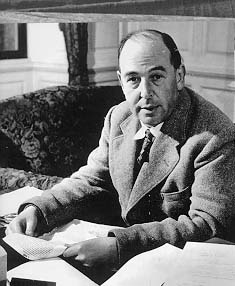
Is It Wrong to Want Heaven Now? By C.S. Lewis

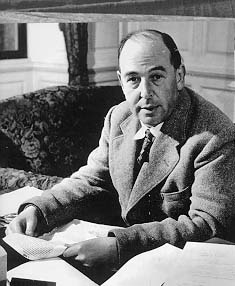
C S Lewis image

We are very shy nowadays of even mentioning heaven. We are afraid of the jeer about ‘pie in the sky’, and of being told that we are trying to ‘escape’ from the duty of making a happy world here and now into dreams of a happy world elsewhere. But either there is ‘pie in the sky’ or there is not. If there is not, then Christianity is false, for this doctrine is woven into its whole fabric. If there is, then this truth, like any other, must be faced, whether it is useful at political meetings or no. Again, we are afraid that heaven is a bribe, and that if we make it our goal we shall no longer be disinterested. It is not so. Heaven offers nothing that a mercenary soul can desire. It is safe to tell the pure in heart that they shall see God, for only the pure in heart want to. There are rewards that do not sully motives. A man’s love for a woman is not mercenary because he wants to marry her, nor his love for poetry mercenary because he wants to read it, nor his love of exercise less disinterested because he wants to run and leap and walk. Love, by definition, seeks to enjoy its object.

(Lewis, C. S. A Year with C. S. Lewis (p. 357). Harper Collins, Inc., excerpted from The Problem of Pain).

 Aim At Heaven

Hope is one of the Theological virtues. This means that a continual looking forward to the eternal world is not (as some modern people think) a form of escapism or wishful thinking, but one of the things a Christian is meant to do. It does not mean that we are to leave the present world as it is. If you read history you will find that the Christians who did most for the present world were just those who thought most of the next. The Apostles themselves, who set on foot the conversion of the Roman Empire, the great men who built up the Middle Ages, the English Evangelicals who abolished the Slave Trade, all left their mark on Earth, precisely because their minds were occupied with Heaven. It is since Christians have largely ceased to think of the other world that they have become so ineffective in this. Aim at Heaven and you will get earth ‘thrown in’: aim at earth and you will get neither. It seems a strange rule, but something like it can be seen at work in other matters. Health is a great blessing, but the moment you make health one of your main, direct objects you start becoming a crank and imagining there is something wrong with you. You are only likely to get health provided you want other things more—food, games, work, fun, open air. In the same way, we shall never save civilisation as long as civilisation is our main object. We must learn to want something else even more.
Lewis, C. S. (2009-03-17). A Year with C. S. Lewis (p. 358). Harper Collins, Inc., excerpted from Mere Christianity).

Zig Ziglar on “Being Gratefull For Your Problems”

Gene Tunney Boxer

We all frequently deal with people who complain about the trials and tribulations of their daily lives. Life seems to be one big problem for them. I would like to take a commonsense, realistic approach and address this mind-set. If there were no problems on your job, then your employer would hire a much less capable person than you to do the routine things that don’t require much thought. In the business world, those who are able to solve complex problems are the ones who are the most valuable to the employer.

Many times the problems or challenges we face force us to grow and become more capable. The runner who trains for the mile run in the Olympics by running downhill will have no chance of winning the medal. The runner who trains by running uphill is far more likely to develop the speed, mental toughness, and endurance needed to win the medal. The best thing that ever happened to boxer Gene Tunney was that he broke both hands in the ring. His manager felt that he could never again punch hard enough to be the heavyweight champion. Instead, Tunney decided that he would become a scientific boxer and win the title as a boxer, not a slugger. Boxing historians will tell you that he developed into one of the best boxers who ever fought. They also will tell you that as a puncher, he would not have had a chance against Jack Dempsey, who was considered by many to be the hardest hitter in heavyweight history. Tunny would never have been champion had he not had the problem of his broken hands.

Message: The next time you encounter a difficult climb, obstacle, or problem, you should smile and say, “Here’s my chance to grow”

*Article adapted from the very encouraging book by Zig Ziglar. Something to Smile About: Encouragement and Inspiration for Life’s Ups and Downs (Kindle Locations 1138-1141). Kindle Edition.

“Living Gratitude” by Ellen Vaughn

RG Vaughn

On the whole, I do not find Christians, outside of the catacombs, sufficiently sensible of conditions. Does anyone have the foggiest idea what sort of power we so blithely invoke? Or, as I suspect, does no one believe a word of it? The churches are children playing on the floor with their chemistry sets, making up a batch of TNT to kill a Sunday morning. It is madness to wear ladies’ hats and straw hats and velvet hats to church; we should all be wearing crash helmets! Ushers should issue life preservers and signal flares; they should lash us to our pews. For the sleeping god may wake someday and take offense, or the waking god may draw us out to where we can never return. Annie Dillard

Having considered gratitude’s surprising blessings, as well as some of the obstacles that can block its flow, how then to develop a perpetual mindset of thankfulness? Is gratitude yet another discipline to be mastered, a potential source of guilt, another daily check box goal that grinds and binds us? No.

After a chat with Chuck Colson one day, off I went to the dentist. Chuck and I had been talking about gratitude, and in passing I mistakenly used the word “discipline” to describe it. Memo to self: Never use an imprecise word with Chuck Colson.

“Gratitude is not a discipline,” he growled, straightening his Prison Fellowship tie pin. “It is the response of the believer to the Spirit’s work.”

Soon after this I left Chuck’s office, arrived at the dentist’s, and settled into the chair. Dr. Funk injected Novocain in my front gum under my nose and in my jaw near my ear. Within a few minutes I couldn’t smell or hear, but I was feeling no pain. Then the doctor called in a dental assistant, and the two of them commenced military operations in my mouth. To remove myself from the stress of the immediate situation, my brain and I entered a deep and reflective meditative state, pondering Chuck’s words.

“He’s quite right,” we thought. Dr. Funk ground away. Tooth fragments flew through the air and settled in a fine dust on my soggy bib. “Gratitude is not a discipline. You can’t fall into the trap of treating it like one. You can’t resolve to be more grateful. Can’t conjure it up by your own determined effort, or it will blow away in the first strong breeze. Can’t go around telling yourself and others that we all must be grateful, we just really must, or you become a nag and no one invites you to Thanksgiving dinner.

“No, if grace is the gift of God, so too is the gratitude that grace creates.”

Ah. My dental-chair epiphany was quite freeing, even after the Novocain wore off. But while a perpetually thankful heart is a gift, receiving it does depend on a discipline or two. Four, actually.

There are four things that we can do to practice the presence of gratitude. When we do, we find that God further uncorks a flood of thankfulness. The four things are quite simple. Any child can do them. So can most adults. First, we remember. Second, we forget. Third, we look up to God. Fourth, we look around to His people.

Adapted from Ellen Vaughn (2009-05-19). Radical Gratitude: Discovering Joy through Everyday Thankfulness (Kindle Locations 1604-1624). Zondervan. Kindle Edition.

“The Sinfulness of Sin” on “Cosmic Treason” by R.C. Sproul

TTOTC Sproul

“The sinfulness of sin” sounds like a vacuous redundancy that adds no information to the subject under discussion. However, the necessity of speaking of the sinfulness of sin has been thrust upon us by a culture and even a church that has diminished the significance of sin itself. Sin is communicated in our day in terms of making mistakes or of making poor choices. When I take an examination or a spelling test, if I make a mistake, I miss a particular word. It is one thing to make a mistake. It is another to look at my neighbor’s paper and copy his answers in order to make a good grade. In this case, my mistake has risen to the level of a moral transgression. Though sin may be involved in making mistakes as a result of slothfulness in preparation, nevertheless, the act of cheating takes the exercise to a more serious level. Calling sin “making poor choices” is true, but it is also a euphemism that can discount the severity of the action. The decision to sin is indeed a poor one, but once again, it is more than a mistake. It is an act of moral transgression.

In my book The Truth of the Cross I spend an entire chapter discussing this notion of the sinfulness of sin. I begin that chapter by using the anecdote of my utter incredulity when I received a recent edition of Bartlett’s Familiar Quotations. Though I was happy to receive this free issue, I was puzzled as to why anyone would send it to me. As I leafed through the pages of quotations that included statements from Immanuel Kant, Aristotle, Thomas Aquinas, and others, to my complete astonishment I came upon a quotation from me. That I was quoted in such a learned collection definitely surprised me. I was puzzled by what I could have said that merited inclusion in such an anthology, and the answer was found in a simple statement attributed to me: “Sin is cosmic treason.” What I meant by that statement was that even the slightest sin that a creature commits against his Creator does violence to the Creator’s holiness, His glory, and His righteousness. Every sin, no matter how seemingly insignificant, is an act of rebellion against the sovereign God who reigns and rules over us and as such is an act of treason against the cosmic King.

Cosmic treason is one way to characterize the notion of sin, but when we look at the ways in which the Scriptures describe sin, we see three that stand out in importance. First, sin is a debt; second, it is an expression of enmity; third, it is depicted as a crime. In the first instance, we who are sinners are described by Scripture as debtors who cannot pay their debts. In this sense, we are talking not about financial indebtedness but a moral indebtedness. God has the sovereign right to impose obligations upon His creatures. When we fail to keep these obligations, we are debtors to our Lord. This debt represents a failure to keep a moral obligation.

The second way in which sin is described biblically is as an expression of enmity. In this regard, sin is not restricted merely to an external action that transgresses a divine law. Rather, it represents an internal motive, a motive that is driven by an inherent hostility toward the God of the universe. It is rarely discussed in the church or in the world that the biblical description of human fallenness includes an indictment that we are by nature enemies of God. In our enmity toward Him, we do not want to have Him even in our thinking, and this attitude is one of hostility toward the very fact that God commands us to obey His will. It is because of this concept of enmity that the New Testament so often describes our redemption in terms of reconciliation. One of the necessary conditions for reconciliation is that there must be some previous enmity between at least two parties. This enmity is what is presupposed by the redeeming work of our Mediator, Jesus Christ, who overcomes this dimension of enmity.

The third way in which the Bible speaks of sin is in terms of transgression of law. The Westminster Shorter Catechism answers the fourteenth question, “What is sin?” by the response, “Sin is any want of conformity to, or transgression of, the law of God.” Here we see sin described both in terms of passive and active disobedience. We speak of sins of commission and sins of omission. When we fail to do what God requires, we see this lack of conformity to His will. But not only are we guilty of failing to do what God requires, we also actively do what God prohibits. Thus, sin is a transgression against the law of God.

When people violate the laws of men in a serious way, we speak of their actions not merely as misdemeanors but, in the final analysis, as crimes. In the same regard, our actions of rebellion and transgression of the law of God are not seen by Him as mere misdemeanors; rather, they are felonious. They are criminal in their impact. If we take the reality of sin seriously in our lives, we see that we commit crimes against a holy God and against His kingdom. Our crimes are not virtues; they are vices, and any transgression of a holy God is vicious by definition. It is not until we understand who God is that we gain any real understanding of the seriousness of our sin. Because we live in the midst of sinful people where the standards of human behavior are set by the patterns of the culture around us, we are not moved by the seriousness of our transgressions. We are indeed at ease in Zion. But when God’s character is made clear to us and we are able to measure our actions not in relative terms with respect to other humans but in absolute terms with respect to God, His character, and His law, then we begin to be awakened to the egregious character of our rebellion.

Not until we take God seriously will we ever take sin seriously. But if we acknowledge the righteous character of God, then we, like the saints of old, will cover our mouths with our hands and repent in dust and ashes before Him.

© Tabletalk magazine 
Permissions: You are permitted and encouraged to reproduce and distribute this material in any format provided that you do not alter the wording in any way, you do not charge a fee beyond the cost of reproduction, and you do not make more than 500 physical copies. http://www.ligonier.org/tabletalk. Any exceptions to the above must be formally approved by Tabletalk. Article from May 1, 2008 – Tabletalk Magazine Online.

Please include the following statement on any distributed copy: From Ligonier Ministries and R.C. Sproul. © Tabletalk magazine. Website: http://www.ligonier.org/tabletalk. Email: tabletalk@ligonier.org. Toll free: 1-800-435-4343.

WHY THE INCARNATION? GOD SENT HIS SON, TO SAVE US by J.I. Packer

The Word became flesh and made his dwelling among us. We have seen his glory, the glory of the One and Only, who came from the Father, full of grace and truth. JOHN 1:14

CT Packer

Trinity and Incarnation belong together. The doctrine of the Trinity declares that the man Jesus is truly divine; that of the Incarnation declares that the divine Jesus is truly human. Together they proclaim the full reality of the Savior whom the New Testament sets forth, the Son who came from the Father’s side at the Father’s will to become the sinner’s substitute on the cross (Matt. 20:28; 26:36-46; John 1:29; 3:13-17; Rom. 5:8; 8:32; 2 Cor. 5:19-21; 8:9; Phil. 2:5-8).

The moment of truth regarding the doctrine of the Trinity came at the Council of Nicaea (A.D.325), when the church countered the Arian idea that Jesus was God’s first and noblest creature by affirming that he was of the same “substance” or “essence” (i.e., the same existing entity) as the Father. Thus there is one God, not two; the distinction between Father and Son is within the divine unity, and the Son is God in the same sense as the Father is. In saying that Son and Father are “of one substance,” and that the Son is “begotten” (echoing “only-begotten,” John 1:14, 18; 3:16, 18, and NIV text notes) but “not made,” the Nicene Creed unequivocally recognized the deity of the man from Galilee.

A crucial event for the church’s confession of the doctrine of the Incarnation came at the Council of Chalcedon (A.D.451), when the church countered both the Nestorian idea that Jesus was two personalities—the Son of God and a man—under one skin, and the Eutychian idea that Jesus’ divinity had swallowed up his humanity. Rejecting both, the council affirmed that Jesus is one divine-human person in two natures (i.e., with two sets of capacities for experience, expression, reaction, and action); and that the two natures are united in his personal being without mixture, confusion, separation, or division; and that each nature retained its own attributes. In other words, all the qualities and powers that are in us, as well as all the qualities and powers that are in God, were, are, and ever will be really and distinguishably present in the one person of the man from Galilee. Thus the Chalcedonian formula affirms the full humanity of the Lord from heaven in categorical terms.

The Incarnation, this mysterious miracle at the heart of historic Christianity, is central in the New Testament witness. That Jews should ever have come to such a belief is amazing. Eight of the nine New Testament writers, like Jesus’ original disciples, were Jews, drilled in the Jewish axiom that there is only one God and that no human is divine. They all teach, however, that Jesus is God’s Messiah, the Spirit-anointed son of David promised in the Old Testament (e.g., Isa. 11:1-5; Christos, “Christ,” is Greek for Messiah). They all present him in a threefold role as teacher, sin-bearer, and ruler—prophet, priest, and king. And in other words, they all insist that Jesus the Messiah should be personally worshiped and trusted—which is to say that he is God no less than he is man. Observe how the four most masterful New Testament theologians (John, Paul, the writer of Hebrews, and Peter) speak to this.

John’s Gospel frames its eyewitness narratives (John 1:14; 19:35; 21:24) with the declarations of its prologue (1:1-18): that Jesus is the eternal divine Logos (Word), agent of Creation and source of all life and light (vv. 1-5, 9), who through becoming “flesh” was revealed as Son of God and source of grace and truth, indeed as “God the only begotten” (vv. 14, 18; NIV text notes). The Gospel is punctuated with “I am” statements that have special significance because I am (Greek: ego eimi) was used to render God’s name in the Greek translation of Exodus 3:14; whenever John reports Jesus as saying ego eimi, a claim to deity is implicit. Examples of this are John 8:28, 58, and the seven declarations of his grace as (a) the Bread of Life, giving spiritual food (6:35, 48, 51); (b) the Light of the World, banishing darkness (8:12; 9:5); (c) the gate for the sheep, giving access to God (10:7, 9); (d) the Good Shepherd, protecting from peril (10:11, 14); (e) the Resurrection and Life, overcoming our death (11:25); (f) the Way, Truth, and Life, guiding to fellowship with the Father (14:6); (g) the true Vine, nurturing for fruitfulness (15:1, 5). Climactically, Thomas worships Jesus as “my Lord and my God” (20:28). Jesus then pronounces a blessing on all who share Thomas’s faith and John urges his readers to join their number (20:29-31).

Paul quotes from what seems to be a hymn that declares Jesus’ personal deity (Phil. 2:6); states that “in Christ all the fullness of the Deity lives in bodily form” (Col. 2:9; cf. 1:19); hails Jesus the Son as the Father’s image and as his agent in creating and upholding everything (Col. 1:15-17); declares him to be “Lord” (a title of kingship, with divine overtones), to whom one must pray for salvation according to the injunction to call on Yahweh in Joel 2:32 (Rom. 10:9-13); calls him “God over all” (Rom. 9:5) and “God and Savior” (Titus 2:13); and prays to him personally (2 Cor. 12:8-9), looking to him as a source of divine grace (2 Cor. 13:14). The testimony is explicit: faith in Jesus’ deity is basic to Paul’s theology and religion.

The writer to the Hebrews, purporting to expound the perfection of Christ’s high priesthood, starts by declaring the full deity and consequent unique dignity of the Son of God (Heb. 1:3, 6, 8-12), whose full humanity he then celebrates in chapter 2. The perfection, and indeed the very possibility, of the high priesthood that he describes Christ as fulfilling depends on the conjunction of an endless, unfailing divine life with a full human experience of temptation, pressure, and pain (Heb. 2:14-17; 4:14-5:2; 7:13-28; 12:2-3).

Not less significant is Peter’s use of Isaiah 8:12-13 (1 Pet. 3:14). He cites the Greek (Septuagint) version, urging the churches not to fear what others fear but to set apart the Lord as holy. But where the Septuagint text of Isaiah says, “Set apart the Lord himself,” Peter writes, “Set apart Christ as Lord” (1 Pet. 3:15). Peter would give the adoring fear due to the Almighty to Jesus of Nazareth, his Master and Lord.

The New Testament forbids worship of angels (Col. 2:18; Rev. 22:8-9) but commands worship of Jesus and focuses consistently on the divine-human Savior and Lord as the proper object of faith, hope, and love here and now. Religion that lacks these emphases is not Christianity. Let there be no mistake about that!

From: Concise Theology: A Guide To Historic Christian Beliefs

Friday Humor: “Be Who You Are!” By Steve Brown

Series: Friday Humor #7

Image

The first axiomatic statement is this: Almost all frustration and anxiety come from a refusal to be what one is. In other words, frustration and anxiety are the result of playing a part other than the one you have been given.

Someone tells the story of a man who was out of work. His unemployment compensation benefits had run out, and he was desperate. He went to the zoo to ask for work, and the zoo keeper told him they didn’t really have any work, but he could make a few extra dollars by taking the place of a gorilla who had died the day before.

Ordinarily the man would not have done it, but he really needed money. He accepted the job, put on the gorilla suit, and made his way back to the gorilla cage. It really wasn’t a bad job. All he had to do was to eat bananas and swing from a rope, and after a while he began to like the job. But alas, all good things must come to an end. One day his rope broke and he fell over the fence into the lion’s cage. He started yelling for help, and the closer the lion came to him, the louder he yelled. Finally the lion came right up next to him, nudged him, and said, “Hey Buddy, will you shut up! We are both going to be out of a job!”

Now the difference between some Christians and the man in the gorilla outfit is that whereas he was forced into his role, we aren’t. We choose a role for which we are not suited, and in that choice is the source of much of our misery and frustration.

Have you ever seen Christians who seemed to be very pure and very spiritual—and very miserable? The problem with those Christians is that they were playing a role for which they were not suited. Jesus said, “No one is good except God” (Mark 10:18). If Jesus was right, and I have every reason to believe He was, then we pretend to be good and pure, we have just climbed into a gorilla suit.

And then there are those Christians who feel that everything they say comes as if from Sinai. They make all sorts of political and social pronouncements as if God Himself had given them a corner on truth. They are very serious—and very miserable. God says, “The heart is more deceitful than all else” (Jeremiah 17:9a). If that is true, then the person who believes and acts as if he or she had a corner on truth (when only God has that corner) has started wearing a gorilla costume.

We see countless examples of Christian men and women who play parts for which they were not created in the pride that so often is the a mark of modern Christianity, in the anger we feel when our plans are crossed, or in the way we want the world to revolve around our selfish desires. It is important that we understand that the source of much of our frustration and anxiety is our proclivity toward being something we aren’t.

*This humorous anecdote was adapted from the excellent book by Stephen Brown. If God is In Charge. Thomas Nelson: Nashville, 1983. Pages 61-62.

R.C. Sproul on the Question: “Does Prayer Change God’s Mind?”

We’ve been taught that prayer changes things. In view of God’s sovereignty, what is the role of prayer in a Christian’s life?


First of all, we need to establish that it is the sovereign God who not only invites us but commands us to pray. Prayer is a duty, and as we perform that duty, one thing for sure is going to be changed, and that is us. To live a life of prayer is to live a life of obedience to God.

Also, we must understand that there is more to prayer than intercession and supplication. When the disciples said to Jesus, “Lord, teach us to pray,” they saw a connection between the power of Jesus and the impact of his ministry and the time he spent in prayer. Obviously, the Son of God felt that prayer was a very valuable enterprise because he gave himself to it so deeply and passionately. But I was surprised that he answered the question by saying, “Here’s how you ought to pray,” and gave them the Lord’s Prayer. I would have expected Jesus to answer that question a different way: “You want to know how to pray? Read the Psalms,” because there you see inspired prayer.

The Spirit himself, who helps us to pray, inspired the prayers that are recorded in the Psalms. When I read the Psalms, I read intercession and I read supplication, but overwhelmingly what I read is a preoccupation with adoration, with thanksgiving, and with confession.

Take those elements of prayer, and what happens to a person who learns how to adore God? That person is changed. What happens to a person who learns how to express his gratitude to God? That person will now become more and more aware of the hand of Providence in his life and will grow in his sense of gratitude toward God. What happens to the person who spends time confessing his sins? He keeps in front of his mind the holiness of God and the necessity of keeping short accounts with God.

But can our requests change God’s sovereign plan? Of course not. When God sovereignly declares that he is going to do something, all of the prayers in the world aren’t going to change God’s mind. But God not only ordains ends, he also ordains means to those ends, and part of the process he uses to bring his sovereign will to pass are the prayers of his people. And so we are to pray.

Question adapted from the section on Prayer by R.C. Sproul. Now, That’s a Good Question! Wheaton: Tyndale House Publishers, 2001.

About Dr. R.C. Sproul

R.C. Sproul has taught theology to hundreds of thousands of people through books, radio, audiotapes, videotapes, seminars, sermons, seminary classes and other forums.

Sproul has written approximately sixty books (and counting). In addition to many volumes designed to teach theology, apologetics, and ethics to laymen through expository prose, he has written a novel, a biography, and several childrens books. He has also edited several volumes, including a festschrift for John H. Gerstner, a seminary textbook, and the New Geneva Study Bible. He has written one of the top classics of the 20th century – The Holiness of God; and perhaps the best book to explain God’s sovereignty in our salvation for laymen entitled Chosen by God.

Sproul founded Ligonier Ministries in 1971, a teaching ministry to assist the church in nurturing believers and equipping them for the ministries to which God has called them. Ligonier sponsors a radio program, “Renewing Your Mind,” which features Sproul and is broadcast nationally, five days a week.

Ligonier Ministries sponsors several seminars each year, the largest one in Orlando every winter. Ligonier publishes a monthly periodical, Tabletalk, and has its own web site (http://www.gospelcom.net).

Sproul has taught theology and apologetics at several seminaries. He earned a B.A. degree from Westminster College, a B.D. from Pittsburgh Theological Seminary, and a Drs. from the Free University of Amsterdam. He is ordained in the Presbyterian Church in America.

In 1994 Christianity Today asked a select list of “critics,” “What theologian or biblical scholar has most shaped your Christian life?” Third on the list (and the only American in the top four) was R.C. Sproul.

God Has Always Been and Ever Will Be by J.I. Packer

“Before the mountains were brought forth, or ever you had formed the earth and the world, from everlasting to everlasting you are God.” – Psalm 90:2

The Self-Existence of God: His Aseity 

Children sometimes ask, “Who made God?” The clearest answer is that God never needed to be made, because he was always there. He exists in a different way from us: we, his creatures, exist in a dependent, derived, finite, fragile way, but our Maker exists in an eternal, self-sustaining, necessary way—necessary, that is, in the sense that God does not have it in him to go out of existence, just as we do not have it in us to live forever. We necessarily age and die, because it is our present nature to do that; God necessarily continues forever unchanged, because it is his eternal nature to do that. This is one of many contrasts between creature and Creator.

God’s self-existence is a basic truth. At the outset of his presentation of the unknown God to the Athenian idolaters, Paul explained that this God, the world’s Creator, “is not served by human hands, as if he needed anything, because he himself gives all men life and breath and everything else” (Acts 17:23-25). Sacrifices offered to idols, in today’s tribal religions as in ancient Athens, are thought of as somehow keeping the god going, but the Creator needs no such support system. The word aseity, meaning that he has life in himself and draws his unending energy from himself (a se in Latin means “from himself”), was coined by theologians to express this truth, which the Bible makes clear:

Psalm 90:1-4, “Lord, you have been our dwelling place in all generations. Before the mountains were brought forth, or ever you had formed the earth and the world, from everlasting to everlasting you are God. You return man to dust and say, “Return, O children of man!” For a thousand years in your sight are but as yesterday when it is past, or as a watch in the night.”

Psalm 102:25-27, “Of old you laid the foundation of the earth, and the heavens are the work of your hands. They will perish, but you will remain; they will all wear out like a garment. You will change them like a robe, and they will pass away, but you are the same, and your years have no end.”

Isaiah 40:28-31, “Have you not known? Have you not heard? The Lord is the everlasting God, the Creator of the ends of the earth. He does not faint or grow weary; his understanding is unsearchable. He gives power to the faint, and to him who has no might he increases strength. Even youths shall faint and be weary, and young men shall fall exhausted; but they who wait for the Lord shall renew their strength; they shall mount up with wings like eagles; they shall run and not be weary; they shall walk and not faint.”

John 5:26, “For as the Father has life in himself, so he has granted the Son also to have life in himself.”

Revelation 4:10-11, “the twenty-four elders fall down before him who is seated on the throne and worship him who lives forever and ever. They cast their crowns before the throne, saying, “Worthy are you, our Lord and God, to receive glory and honor and power, for you created all things, and by your will they existed and were created.”

In theology, endless mistakes result from supposing that the conditions, bounds, and limits of our own finite existence apply to God. The doctrine of his aseity stands as a bulwark against such mistakes. In our life of faith, we easily impoverish ourselves by embracing an idea of God that is too limited and small, and again the doctrine of God’s aseity stands as a bulwark to stop this happening. It is vital for spiritual health to believe that God is great (cf. Ps. 95:1-7 below), and grasping the truth of his aseity is the first step on the road to doing this.

Psalm 95:1-7, “Oh come, let us sing to the Lord; let us make a joyful noise to the rock of our salvation! Let us come into his presence with thanksgiving; let us make a joyful noise to him with songs of praise! For the Lord is a great God, and a great King above all gods. In his hand are the depths of the earth; the heights of the mountains are his also. The sea is his, for he made it, and his hands formed the dry land. Oh come, let us worship and bow down; let us kneel before the Lord, our Maker! For he is our God, and we are the people of his pasture, and the sheep of his hand. Today, if you hear his voice, do not harden your hearts.”

Article above adapted from J.I. Packer. Concise Theology: A Guide to Historic Christian Beliefs. Wheaton: Tyndale House Publishers, 2001, p. 26.

About J.I. Packer:

Dr. J.I. Packer is a British Theologian and has written over 50 books and numerous contributions to theological journals, reference works, and compilations. He is a a brilliant humble scholar who is best known for his works on Theology Proper – The Study of God. His classic work on the attributes and character of God – Knowing God is “must reading” for the Christian.

Zig Ziglar on the Question: Are You a Responder or a Reactor to Life?

It’s Better to Respond Than to React

When you respond to life, that’s positive; when you react to life, that’s negative. Example: You get sick and go to the doctor. Chances are good that after an examination, she would give you a prescription with instructions to return in several days. If, when you walk back in, the doctor starts shaking her head and says, “It looks like your body is reacting to the medicine; we’re going to have to change it,” you probably would get a little nervous. However, if the doctor smiles and says, “You’re looking great! Your body is responding to the medication,” you would feel relieved. Yes, responding to life is good. Reacting to the incidents of life is negative-and that’s bad.

The next example validates that fact.

Today, there is much turmoil in the job market, and many people are losing their jobs through downsizing, mergers, and takeovers. This creates some unusual opportunities for many people. One positive from this trend is that in the last five years, according to the Wall Street Journal, more than fifteen million new businesses have been created, well over half of them by women. Very few of the women had any marketable skills, and all of them had great financial need. Most of the new businesses were “trust” businesses, meaning that the women collected the money before they delivered the goods or services. The Journal comments that virtually none of the women have been prosecuted and jailed for failure to deliver on that trust. That’s exciting!

Many of these new businesses-possibly most of them-would never have been started had not an unfortunate event occurred in the people’s lives. When those events did occur and needs became obvious, the women chose to respond, and there is little doubt that many of them are better off now than they were before the “tragedy” took place.

The message is clear: If you respond to life instead of react to it, then you’ve got a much better chance of achieving success.

About Zig Ziglar:

Zig Ziglar was born in Coffee County, Alabama on November 26, 1926 and was the tenth of 12 children. In 1931, when Ziglar was five years old, his father took a management position at a Mississippi farm, and family moved to Yazoo City, Mississippi, where he spent his early childhood. In 1932, his father died of a stroke, and his younger sister died two days later.

Zigler served in the Navy during World War II (circa 1943-1945). He was in the Navy V-12 College Training Program, attending the University of South Carolina. In 1944 he met his wife Jean, in Jackson, Mississippi; he was 17 and she was 16. They married in late 1946.

Ziglar later worked as a salesman in a succession of companies. In 1968 he became the vice president and training director for the Automotive Performance company, moving to Dallas, Texas.

In 1970, Ziglar went into the business of motivational speaking full-time, with an emphasis on Christian values. Until then, he called himself by his given name, Hilary, but now satarted using his nickname, Zig, instead.

Until 2010 (aged 86) Ziglar traveled around the world taking part in motivational seminars, but has been somewhat limited recently due to a fall down a flight of stairs in 2007 that has impaired his short-term memory and physical abilities.

Through the ups and downs of life Ziglar has maintained his optimism and encouraged thousands of people to be their best in the particular endeavors to which God has called them. Zig Ziglar is one of the most inspirational people on the planet today and is a terrific example of someone who has embraced the struggle of life giving God the glory each step of the way.

The article above was adapted from one of Zig’s many encouraging books: Something to Smile About: Encouragement and Inspiration for Life’s UPS and DOWNS. Nashville: Thomas Nelson, 1997.

Zig Ziglar’s Books:

Ziglar, Zig; Ziglar, Tom. Born to Win: Find Your Success Code. Dallas: SUCCESS Media (2012).

Zig Ziglar. Something Else To Smile About: More Encouragement and Inspiration for Life’s Ups and Downs. Nashville: Thomas Nelson (2010).

Ziglar, Zig; Norman, Julie Ziglar. Embrace the Struggle: Living Life on Life’s Terms. New York: Howard Books (2009).

The One-Year Daily Insights with Zig Ziglar. Tyndale House Publishers (2009)

Inspiration 365 Days a Year with Zig Ziglar. SIM (2008)

God’s Way is Still the Best Way. Nashville: Thomas Nelson  (2007).

Better Than Good: Creating a Life You Can’t Wait to Live. Nashville: Thomas Nelson Publishers (2006).

Conversations with My Dog. B&H Books (2005).

The Autobiography of Zig Ziglar. New York: Random House (2004).

Confessions of a Grieving Christian. Nashville: B&H Publishing Group 2004).

Courtship After Marriage: Romance Can Last a Lifetime. Nashville: Thomas Nelson  (2004).

Staying Up, Up, Up in a Down, Down World. Nashville: Thomas Nelson  (2004).

Zig Ziglar’s Life Lifters: Moments of Inspiration for Living Life Better. B&H (2003).

Selling 101: What Every Successful Sales Professional Needs to Know. Nashville: Thomas Nelson Publishers (2003).

Ziglar, Zig and Hayes, John P. Network Marketing For Dummies. Foster City, Calif: IDG Books (2001).

Zig Ziglar. Success for Dummies. Foster City, Calif: IDG Books (1998).

Zig Ziglar. Something to Smile About: Encouragement and Inspiration for Life’s UPS and DOWNS. Nashville: Thomas Nelson (1997).

Great Quotes from Zig Ziglar. Career Press (1997)

Zig Ziglar. Over the Top. Nashville: Thomas Nelson Publishers (1994).

Zig Ziglar. Five Steps to Successful Selling. Nigtingale-Conant Corp. (1987).

Zig Ziglar. Top Performance: How to Develop Excellence in Yourself and Others. New York: Berkley Books (1986).

Zig Ziglar. Raising Positive Kids in a Negative World. Nashville: Oliver Nelson (1985).

Zig Ziglar’s Secrets of Closing the Sale. New York: Berkley Books (1982).

Zig Ziglar. See You at the Top. Gretna: Pelican (1975).


C.S. Lewis Contrasting Heaven and Hell

“Of Heaven and Earth”

“I believe, to be sure, that any man who reaches Heaven will find that what he abandoned (even in plucking out his right eye) has not been lost: that the kernel of what he was really seeking even in his most depraved wishes will be there, beyond expectation, waiting for him in ‘the High Countries’. In that sense it will be true for those who have completed the journey (and for no others) to say that good is everything and Heaven everywhere. But we, at this end of the road, must not try to anticipate that retrospective vision. If we do, we are likely to embrace the false and disastrous converse and fancy that everything is good and everywhere is Heaven. But what, you ask, of earth? Earth, I think, will not be found by anyone to be in the end a very distinct place. I think earth, if chosen instead of Heaven, will turn out to have been, all along, only a region in Hell: and earth, if put second to Heaven, to have been from the beginning a part of Heaven itself.” —from The Great Divorce, Preface

C.S. Lewis. A Year with C. S. Lewis (p. 348). Harper Collins, Inc.. Kindle Edition.