John Piper – 12 Ways to Love Your Wayward Child

suffering image man with hand over head

Many parents are brokenhearted and completely baffled by their unbelieving son or daughter. They have no clue why the child they raised well is making such awful, destructive decisions. I’ve never been one of these parents, but I have been one of these sons. Reflecting back on that experience, I offer these suggestions to help you reach out to your wayward child.

1. Point them to Christ.

Your rebellious child’s real problem is not drugs or sex or cigarettes or pornography or laziness or crime or cussing or slovenliness or homosexuality or being in a punk rock band. The real problem is that they don’t see Jesus clearly. The best thing you can do for them—and the only reason to do any of the following suggestions—is to show them Christ. It is not a simple or immediate process, but the sins in their life that distress you and destroy them will only begin to fade away when they see Jesus more like he actually is.

2. Pray.

Only God can save your son or daughter, so keep on asking that he will display himself to them in a way they can’t resist worshiping him for.

3. Acknowledge that something is wrong.

If your daughter rejects Jesus, don’t pretend everything is fine.

For every unbelieving child, the details will be different. Each one will require parents to reach out in unique ways. Never acceptable, however, is not reaching out at all. If your child is an unbeliever, don’t ignore it. Holidays might be easier, but eternity won’t be.

4. Don’t expect them to be Christ-like.

If your son is not a Christian, he’s not going to act like one.

You know that he has forsaken the faith, so don’t expect him to live by the standards you raised him with. For example, you might be tempted to say, “I know you’re struggling with believing in Jesus, but can’t you at least admit that getting wasted every day is sin?”

If he’s struggling to believe in Jesus, then there is very little significance in admitting that drunkenness is wrong. You want to protect him, yes. But his unbelief is the most dangerous problem—not partying. No matter how your child’s unbelief exemplifies itself in his behavior, always be sure to focus more on the heart’s sickness than its symptoms.

5. Welcome them home.

Because the deepest concern is not your child’s actions, but his heart, don’t create too many requirements for coming home. If he has any inkling to be with you, it is God giving you a chance to love him back to Jesus. Obviously there are some instances in which parents must give ultimatums: “Don’t come to this house if you are…” But these will be rare. Don’t lessen the likelihood of an opportunity to be with your child by too many rules.

If your daughter smells like weed or an ashtray, spray her jacket with Febreze and change the sheets when she leaves, but let her come home. If you find out she’s pregnant, then buy her folic acid, take her to her twenty-week ultrasound, protect her from Planned Parenthood, and by all means let her come home. If your son is broke because he spent all the money you lent him on loose women and ritzy liquor, then forgive his debt as you’ve been forgiven, don’t give him any more money, and let him come home. If he hasn’t been around for a week and a half because he’s been staying at his girlfriend’s—or boyfriend’s—apartment, plead with him not to go back, and let him come home.

6. Plead with them more than you rebuke them.

Be gentle in your disappointment.

What really concerns you is that your child is destroying herself, not that she’s breaking rules. Treat her in a way that makes this clear. She probably knows—especially if she was raised as a Christian—that what she’s doing is wrong. And she definitely knows you think it is. So she doesn’t need this pointed out. She needs to see how you are going to react to her evil. Your gentle forbearance and sorrowful hope will show her that you really do trust Jesus.

Her conscience can condemn her by itself. Parents ought to stand kindly and firmly, always living in the hope that they want their child to return to.

7. Connect them to believers who have better access to them.

There are two kinds of access that you may not have to your child: geographical and relational. If your wayward son lives far away, try to find a solid believer in his area and ask him to contact your son. This may seem nosy or stupid or embarrassing to him, but it’s worth it—especially if the believer you find can also relate to your son emotionally in a way you can’t.

Relational distance will also be a side effect of your child leaving the faith, so your relationship will be tenuous and should be protected if at all possible. But hard rebuke is still necessary.

This is where another believer who has emotional access to your son may be very helpful. If there is a believer who your son trusts and perhaps even enjoys being around, then that believer has a platform to tell your son—in a way he may actually pay attention to—that he’s being an idiot. This may sound harsh, but it’s a news flash we all need from time to time, and people we trust are usually the only ones who can package a painful rebuke so that it is a gift to us.

A lot of rebellious kids would do well to hear that they’re being fools—and it is rare that this can helpfully be pointed out by their parents—so try to keep other Christians in your kids lives.

8. Respect their friends.

Honor your wayward child in the same way you’d honor any other unbeliever. They may run with crowds you’d never consider talking to or even looking at, but they are your child’s friends. Respect that—even if the relationship is founded on sin. They’re bad for your son, yes. But he’s bad for them, too. Nothing will be solved by making it perfectly evident that you don’t like who he’s hanging around with.

When your son shows up for a family birthday celebration with another girlfriend—one you’ve never seen before and probably won’t see again—be hospitable. She’s also someone’s wayward child, and she needs Jesus, too.

9. Email them.

Praise God for technology that lets you stay in your kids’ lives so easily!

When you read something in the Bible that encourages you and helps you love Jesus more, write it up in a couple lines and send it to your child. The best exhortation for them is positive examples of Christ’s joy in your own life.

Don’t stress out when you’re composing these as if each one needs to be singularly powerful. Just whip them out one after another, and let the cumulative effect of your satisfaction in God gather up in your child’s inbox. God’s word is never proclaimed in vain.

10. Take them to lunch.

If possible, don’t let your only interaction with your child be electronic. Get together with him face to face if you can. You may think this is stressful and uncomfortable, but trust me that it’s far worse to be in the child’s shoes—he is experiencing all the same discomfort, but compounded by guilt. So if he is willing to get together with you for lunch, praise God, and use the opportunity.

It will feel almost hypocritical to talk about his daily life, since what you really care about is his eternal life, but try to anyway. He needs to know you care about all of him. Then, before lunch is over, pray that the Lord will give you the gumption to ask about his soul. You don’t know how he’ll respond.  Will he roll his eyes like you’re an idiot? Will he get mad and leave? Or has God been working in him since you talked last? You don’t know until you risk asking.

(Here’s a note to parents of younger children: Set up regular times to go out to eat with your kids. Not only will this be valuable for its own sake, but also, if they ever enter a season of rebellion, the tradition of meeting with them will already be in place and it won’t feel weird to ask them out to lunch. If a son has been eating out on Saturdays with his dad since he was a tot, it will be much harder for him later in life to say no to his father’s invitation—even as a surly nineteen-year-old.)

11. Take an interest in their pursuits.

Odds are that if your daughter is purposefully rejecting Christ, then the way she spends her time will probably disappoint you. Nevertheless, find the value in her interests, if possible, and encourage her. You went to her school plays and soccer games when she was ten; what can you do now that she’s twenty to show that you still really care about her interests?

Jesus spent time with tax collectors and prostitutes, and he wasn’t even related to them. Imitate Christ by being the kind of parent who will put some earplugs in your pocket and head downtown to that dank little nightclub where your daughter’s CD release show is. Encourage her and never stop praying that she will begin to use her gifts for Jesus’ glory instead her own.

12. Point them to Christ.

This can’t be over-stressed. It is the whole point. No strategy for reaching your son or daughter will have any lasting effect if the underlying goal isn’t to help them know Jesus.

Jesus.

It’s not so that they will be good kids again; it’s not so that they’ll get their hair cut and start taking showers; it’s not so that they’ll like classical music instead of deathcore; it’s not so that you can stop being embarrassed at your weekly Bible study; it’s not so that they’ll vote conservative again by the next election; it’s not even so that you can sleep at night, knowing they’re not going to hell.

The only ultimate reason to pray for them, welcome them, plead with them, email them, eat with them, or take an interest in their interests is so that their eyes will be opened to Christ.

And not only is he the only point—he’s the only hope. When they see the wonder of Jesus, satisfaction will be redefined. He will replace the pathetic vanity of the money, or the praise of man, or the high, or the orgasm that they are staking their eternities on right now. Only his grace can draw them from their perilous pursuits and bind them safely to himself—captive, but satisfied.

He will do this for many. Be faithful and don’t give up.

©2013 Desiring God Foundation. Used by Permission.

Permissions: You are permitted and encouraged to reproduce and distribute this material in any format provided that you do not alter the wording in any way and do not charge a fee beyond the cost of reproduction. For web posting, a link to this document on our website is preferred. Any exceptions to the above must be approved by Desiring God.

Please include the following statement on any distributed copy: By John Piper. May 9, 2007 ©2013 Desiring God Foundation. Website: desiringGod.org

10 Biblical Ways to Love Your Spouse

(1) Promise without forgetting.

 Proverbs 13:12, “Hope deferred makes the heart sick, but a desire fulfilled is a tree of life.”

 (2) Forgive without punishing.

 Colossians 3:13, “bearing with one another and, if one has a complaint against another, forgiving each other; as the Lord has forgiven you, so you also must forgive.”

 (3) Trust without wavering.

 1 Corinthians 13:7, “Love bears all things, believes all things, hopes all things, endures all things.”

 (4) Listen without interrupting.

Proverbs 18:2, “A fool takes no pleasure in understanding, but only in expressing his opinion.”

 (5) Speak without accusing.

James 1:19, “Know this, my beloved brothers: let every person be quick to hear, slow to speak, slow to anger.”

 (6) Give without sparing.

Proverbs 21:26, “All day long he craves and craves, but the righteous gives and does not hold back.”

 (7) Pray without ceasing.

Colossians 1:9, “And so, from the day we heard, we have not ceased to pray for you, asking that you may be filled with the knowledge of his will in all spiritual wisdom and understanding.”

 (8) Answer without arguing.

Proverbs 17:1, “Better is a dry morsel with quiet than a house full of feasting with strife.”

(9) Share without pretending.

Ephesians 4:15, “Rather, speaking the truth in love, we are to grow up in every way into him who is the head, into Christ.”

(10) Enjoy without complaint.

Philippians 2:14, “Do all things without grumbling or disputing.”

John C. Maxwell on “Listening to the Voices of Vision”

THE VOICES OF VISION

T21IQOAL Maxwell

Where does vision come from? To find the vision that is indispensable to leadership, you have to become a good listener. You must listen to several voices.

The Inner Voice: Vision starts within. Do you know your life’s mission? What stirs your heart? What do you dream about? If what you’re pursuing in life doesn’t come from a desire within—from the very depths of who you are and what you believe—you will not be able to accomplish it.

The Unhappy Voice: Where does inspiration for great ideas come from? From noticing what doesn’t work. Discontent with the status quo is a great catalyst for vision. Are you on complacent cruise control? Or do you find yourself itching to change your world? No great leader in history has fought to prevent change.

The Successful Voice: Nobody can accomplish great things alone. To fulfill a big vision, you need a good team. But you also need good advice from someone who is ahead of you in the leadership journey. If you want to lead others to greatness, find a mentor. Do you have an adviser who can help you sharpen your vision?

The Higher Voice: Although it’s true that your vision must come from within, you shouldn’t let it be confined by your limited capabilities. A truly valuable vision must have God in it. Only He knows your full capabilities. Have you looked beyond yourself, even beyond your own lifetime, as you’ve sought your vision? If not, you may be missing your true potential and life’s best for you.   —The 21 Indispensable Qualities of a Leader  

MAKE SURE YOUR VISION CONTAINS ALL THAT IT MUST FOR YOU TO REACH YOUR POTENTIAL.

Source: Maxwell, John C. (2008-10-28). The Maxwell Daily Reader: 365 Days of Insight to Develop the Leader Within You and Influence Those Around You (Kindle Locations 5088-5102). Thomas Nelson – A. Kindle Edition.

Dr. John Maxwell’s 5 Reasons to Live on Purpose

THE POWER OF PURPOSE

John C Maxwell seated

But I want you to know, brethren, that the things which happened to me have actually turned out for the furtherance of the gospel, so that it has become evident to the whole palace guard, and to all the rest, that my chains are in Christ; and most of the brethren in the Lord, having become confident by my chains, are much more bold to speak the word without fear. – PhiIippians 1:12-14

Paul might have been forgiven had he chosen to take a little sabbatical as he sat in prison, awaiting his trial. Yet he used even this opportunity to advance the gospel. Paul was a leader who never drifted from his mission. He determined to leave his mark wherever he went. How did Paul’s sense of purpose keep him in the battle as he sat in prison? What did he learn behind bars? Consider the following:

  1. A purpose will motivate you.
  2. A purpose will keep your priorities straight.
  3. A purpose will develop your potential.
  4. A purpose will give you power to live in the present.
  5. A purpose will help you evaluate your progress.

Article adapted from John C. Maxwell. Leadership Promises for Every Day (Kindle Locations 80-86). Kindle Edition.

Friday Humor: “Be Who You Are!” By Steve Brown

Series: Friday Humor #7

Image

The first axiomatic statement is this: Almost all frustration and anxiety come from a refusal to be what one is. In other words, frustration and anxiety are the result of playing a part other than the one you have been given.

Someone tells the story of a man who was out of work. His unemployment compensation benefits had run out, and he was desperate. He went to the zoo to ask for work, and the zoo keeper told him they didn’t really have any work, but he could make a few extra dollars by taking the place of a gorilla who had died the day before.

Ordinarily the man would not have done it, but he really needed money. He accepted the job, put on the gorilla suit, and made his way back to the gorilla cage. It really wasn’t a bad job. All he had to do was to eat bananas and swing from a rope, and after a while he began to like the job. But alas, all good things must come to an end. One day his rope broke and he fell over the fence into the lion’s cage. He started yelling for help, and the closer the lion came to him, the louder he yelled. Finally the lion came right up next to him, nudged him, and said, “Hey Buddy, will you shut up! We are both going to be out of a job!”

Now the difference between some Christians and the man in the gorilla outfit is that whereas he was forced into his role, we aren’t. We choose a role for which we are not suited, and in that choice is the source of much of our misery and frustration.

Have you ever seen Christians who seemed to be very pure and very spiritual—and very miserable? The problem with those Christians is that they were playing a role for which they were not suited. Jesus said, “No one is good except God” (Mark 10:18). If Jesus was right, and I have every reason to believe He was, then we pretend to be good and pure, we have just climbed into a gorilla suit.

And then there are those Christians who feel that everything they say comes as if from Sinai. They make all sorts of political and social pronouncements as if God Himself had given them a corner on truth. They are very serious—and very miserable. God says, “The heart is more deceitful than all else” (Jeremiah 17:9a). If that is true, then the person who believes and acts as if he or she had a corner on truth (when only God has that corner) has started wearing a gorilla costume.

We see countless examples of Christian men and women who play parts for which they were not created in the pride that so often is the a mark of modern Christianity, in the anger we feel when our plans are crossed, or in the way we want the world to revolve around our selfish desires. It is important that we understand that the source of much of our frustration and anxiety is our proclivity toward being something we aren’t.

*This humorous anecdote was adapted from the excellent book by Stephen Brown. If God is In Charge. Thomas Nelson: Nashville, 1983. Pages 61-62.

The Art of Cultivating a Heart of Gratitude in the Character of Christ by Dr. Ken Boa

Ken Boa

Our culture teaches us that people are basically good and that their internal problems are the result of external circumstances. But Jesus taught that no outside-in program will rectify the human condition, since our fundamental problems stem from within (Mark 7:20-23). Holiness is never achieved by acting ourselves into a new way of being. Instead, it is a gift that God graciously implants within the core of those who have trusted in Christ. All holiness is the holiness of God within us—the indwelling life of Christ. Thus, the process of sanctification is the gradual diffusion of this life from the inside (being) to the outside (doing), so that we become in action what we already are in essence. Our efforts faithfully reveal what is within us, so that when we are dominated by the flesh we will do the deeds of the flesh, and when we walk by the Spirit we will bear the fruit of the Spirit (Galatians 5:16-26).

A Process from the Inside to the Outside

Holiness is a new quality of life that progressively flows from the inside to the outside. As J. I. Packer outlines it in Keep in Step with the Spirit, the nature of holiness is transformation through consecration; the context of holiness is justification through Jesus Christ; the root of holiness is co-crucifixion and co-resurrection with Jesus Christ; the agent of holiness is the Holy Spirit; the experience of holiness is one of conflict; the rule of holiness is God’s revealed law; and the heart of holiness is the spirit of love. When we come to know Jesus we are destined for heaven because He has already implanted His heavenly life within us. The inside-out process of the spiritual life is the gradual outworking of this kingdom righteousness. This involves a divine-human synergism of dependence and discipline so that the power of the Spirit is manifested through the formation of holy habits. As Augustine put it, “Without God we cannot; without us, He will not.” Disciplined grace and graceful discipline go together in such a way that God-given holiness is expressed through the actions of obedience. Spiritual formation is not a matter of total passivity or of unaided moral endeavor, but of increasing responsiveness to God’s gracious initiatives. The holy habits of immersion in Scripture, acknowledging God in all things, and learned obedience make us more receptive to the influx of grace and purify our aspirations and actions.

“Beloved, if our heart does not condemn us, we have confidence before God” (1 John 3:21). It is wise to form the habit of inviting God to search your heart and reveal “any hurtful way” (Psalm 139:23) within you. Sustained attention to the heart, the wellspring of action, is essential to the formative process. By inviting Jesus to examine our intentions and priorities, we open ourselves to His good but often painful work of exposing our manipulative and self-seeking strategies, our hardness of heart (often concealed in religious activities), our competitively-driven resentments, and our pride. “A humble understanding of yourself is a surer way to God than a profound searching after knowledge” (Thomas A Kempis, The Imitation of Christ). Self-examining prayer or journaling in the presence of God will enable us to descend below the surface of our emotions and actions and to discern sinful patterns that require repentance and renewal. Since spiritual formation is a process, it is a good practice to compare yourself now with where you have been. Are you progressing in Christlike qualities like love, patience, kindness, forgiveness, compassion, understanding, servanthood, and hope? To assist you, here is a prayer sequence for examination and encouragement that incorporates the ten commandments, the Lord’s prayer, the beatitudes, the seven deadly sins, the four cardinal and three theological virtues, and the fruit of the Spirit. This can serve as a kind of spiritual diagnostic tool:

Search me, O God, and know my heart; Try me and know my anxious thoughts;

And see if there be any hurtful way in me, And lead me in the everlasting way. (Psalm 139:23-24)

Watch over your heart with all diligence, For from it flow the springs of life. (Proverbs 4:23)

The Ten Commandments

  1. You shall have no other gods before Me.
  2. You shall not make for yourself an idol.
  3. You shall not take the name of the Lord your God in vain.
  4. Remember the sabbath day, to keep it holy.
  5. Honor your father and your mother.
  6. You shall not murder.
  7. You shall not commit adultery.
  8. You shall not steal.
  9. You shall not bear false witness against your neighbor.
  10. You shall not covet.

The Lord’s Prayer
Our Father who is in heaven,

Hallowed be Your name.

Your kingdom come,

Your will be done,

On earth as it is in heaven.

Give us this day our daily bread.

And forgive us our debts, as we also have forgiven our debtors.

And do not lead us into temptation,

But deliver us from evil.

For Yours is the kingdom and the power and the glory forever.

The Beatitudes

Poverty of spirit (nothing apart from God’s grace)

Mourning (contrition)

Gentleness (meekness, humility)

Hunger and thirst for righteousness

Merciful to others

Purity of heart (desiring Christ above all else)

Peacemaking

Bearing persecution for the sake of righteousness

The Seven Deadly Sins

Pride

Avarice

Envy

Wrath

Sloth

Lust

Gluttony

The Four Cardinal and Three Theological Virtues

Prudence (wisdom, discernment, clear thinking, common sense)

Temperance (moderation, self-control)

Justice (fairness, honesty, truthfulness, integrity)

Fortitude (courage, conviction)

Faith (belief and trust in God’s character and work)

Hope (anticipating God’s promises)

Love (willing the highest good for others, compassion)

The Fruit of the Spirit

Love

Joy

Peace

Patience

Kindness

Goodness

Faithfulness

Gentleness

Self-control

Letting Loose of Control and Results

One of the great enemies of process spirituality is the craving to control our environment and the desire to determine the results of our endeavors. Many of us have a natural inclination to be manipulators, grabbers, owners, and controllers. The more we seek to rule our world, the more we will resist the rule of Christ; those who grasp are afraid of being grasped by God. But until we relinquish ownership of our lives, we will not experience the holy relief of surrender to God’s good and loving purposes. Thomas Merton put it this way in New Seeds of Contemplation:

This is one of the chief contradictions that sin has brought into our souls: we have to do violence to ourselves to keep from laboring uselessly for what is bitter and without joy, and we have to compel ourselves to take what is easy and full of happiness as though it were against our interests, because for us the line of least resistance leads in the way of greatest hardship and sometimes for us to do what is, in itself, most easy, can be the hardest thing in the world.

Our resistance to God’s rule even extends to our prayerful attempts to persuade the Lord to bless our plans and to meet our needs in the ways we deem best. Instead of seeking God’s will in prayer, we hope to induce Him to accomplish our will. Thus, even in our prayers, we can adopt the mentality of a consumer rather than a servant.

Perhaps the most painful lesson for believers to learn is the wisdom of being faithful to the process and letting loose of the results.

Opportunity Obedience Outcome
Divine Sovereignty Human Responsibility Divine Sovereignty

We have little control over opportunities we encounter and the outcomes of our efforts, but we can be obedient to the process.

Distorted dreams and selfish ambitions must die before we can know the way of resurrection. We cannot be responsive to God’s purposes until we abandon our strategies to control and acknowledge His exclusive ownership of our lives. At the front end, this surrender to the life of Christ in us appears to be the way of renunciation, but on the other side of renunciation we discover that it is actually the way of affirmation. “For whoever wishes to save his life will lose it, but whoever loses his life for My sake, he is the one who will save it” (Luke 9:24). The better we apprehend our spiritual poverty and weakness, the more we will be willing to invite Jesus to increase so that we may decrease (John 3:30).

Another key to staying in the process is learning to receive each day and whatever it brings as from the hand of God. Instead of viewing God’s character in light of our circumstances, we should view our circumstances in light of God’s character. Because God’s character is unchanging and good, whatever circumstances He allows in the life of His children are for their good, even though they may not seem so at the time. Since His will for us is “good and acceptable and perfect” (Romans 12:2), the trials, disappointments, setbacks, tasks, and adversities we encounter are, from an eternal vantage point, the place of God’s kingdom and blessing. This Romans 8:28-39 perspective can change the way we pray. Instead of asking the Lord to change our circumstances to suit us, we can ask Him to use our circumstances to change us. Realizing that “the sufferings of this present time are not worthy to be compared with the glory that is to be revealed to us” (Romans 8:18), we can experience “the fellowship of [Christ’s] sufferings” through “the power of His resurrection” (Philippians 3:10). Thus, Blaise Pascal prayed in his Pensees:

With perfect consistency of mind, help me to receive all manner of events. For we know not what to ask, and we cannot ask for one event rather than another without presumption. We cannot desire a specific action without presuming to be a judge, and assuming responsibility for what in Your wisdom You may hide from me. O Lord, I know only one thing, and that is that it is good to follow You and wicked to offend You. Beyond this, I do not know what is good for me, whether health or sickness, riches or poverty, or anything else in this world. This knowledge surpasses both the wisdom of men and of angels. It lies hidden in the secrets of Your providence, which I adore, and will not dare to pry open.

We are essentially spiritual beings, and each “today” that is received with gratitude from God’s hand contributes to our preparation for our glorious and eternal destiny in His presence. In “the sacrament of the present moment” as Jean-Pierre de Caussade described it, “It is only right that if we are discontented with what God offers us every moment, we should be punished by finding nothing else that will content us” (Abandonment to Divine Providence). It is when we learn to love God’s will that we can embrace the present moment as a source of spiritual formation.

As we grow in dependence on Christ’s life and diminish in dependence on our own, the fulfillment of receiving His life gradually replaces the frustration of trying to create our own. It is in this place of conscious dependence that God shapes us into the image of His Son. Here we must trust Him for the outcome, because we cannot measure or quantify the spiritual life. We know that we are in a formative process and that God is not finished with us yet, but we must also remember that we cannot control or create the product. Furthermore, we cannot measure our ministry or impact on others in this life. If we forget this, we will be in a hurry to accomplish significant things by the world’s standard of reckoning. Frances Felenon noted that “the soul, by the neglect of little things, becomes accustomed to unfaithfulness” (Christian Perfection). It is faithfulness in the little daily things that leads to faithfulness in much (Luke 16:10). Henri Nouwen used to ask God to get rid of his interruptions so he could get on with his ministry. “Then I realized that interruptions are my ministry.” As servants and ambassadors of the King, we must be obedient in the daily process even when we cannot see what difference our obedience makes.

Cultivating a Heart of Gratitude

A young man with a bandaged hand approached the clerk at the post office. “Sir, could you please address this post card for me?” The clerk did so gladly, and then agreed to write a message on the card.

He then asked, “Is there anything else I can do for you?” The young man looked at the card for a moment and then said, “Yes, add a PS: ‘Please excuse the handwriting.’”

We are an ungrateful people. Writing of man in Notes from the Underground, Dostoevsky says, “If he is not stupid, he is monstrously ungrateful! Phenomenally ungrateful. In fact, I believe that the best definition of man is the ungrateful biped.” Luke’s account of the cleansing of the ten lepers underscores the human tendency to expect grace as our due and to forget to thank God for His benefits. “Were there not ten cleansed? But the nine—where are they? Was no one found who turned back to give glory to God, except this foreigner?” (Luke 17:17-18).

Remember: God’s Deliverance in the Past

Our calendar allocates one day to give thanks to God for His many benefits, and even that day is more consumed with gorging than with gratitude. Ancient Israel’s calendar included several annual festivals to remind the people of God’s acts of deliverance and provision so that they would renew their sense of gratitude and reliance upon the Lord.

In spite of this, they forgot: “they became disobedient and rebelled against You . . . . they did not remember Your abundant kindnesses . . . . they quickly forgot His works” (Nehemiah 9:26;Psalm 106:7, 13). The prophet Hosea captured the essence of this decline into ingratitude: “As they had their pasture, they became satisfied, and being satisfied, their heart became proud; therefore, they forgot Me” (13:6). When we are doing well, we tend to think that our prosperity was self-made; this delusion leads us into the folly of pride; pride makes us forget God and prompts us to rely on ourselves in place of our Creator; this forgetfulness always leads to ingratitude.

Centuries earlier, Moses warned the children of Israel that they would be tempted to forget the Lord once they began to enjoy the blessings of the promised land. “Then your heart will become proud and you will forget the Lord your God who brought you out from the land of Egypt, out of the house of slavery. . . . Otherwise, you may say in your heart, ‘My power and the strength of my hand made me this wealth’” (Deuteronomy 8:14, 17). The antidote to this spiritual poison is found in the next verse: “But you shall remember the Lord your God, for it is He who is giving you power to make wealth” (8:18).

Our propensity to forget is a mark of our fallenness. Because of this, we should view remembering and gratitude as a discipline, a daily and intentional act, a conscious choice. If it is limited to spontaneous moments of emotional gratitude, it will gradually erode and we will forget all that God has done for us and take His grace for granted.

Remember: God’s Benefits in the Present

“Rebellion against God does not begin with the clenched fist of atheism but with the self-satisfied heart of the one for whom ‘thank you’ is redundant” (Os Guinness, In Two Minds). The apostle Paul exposes the error of this thinking when he asks, “What do you have that you did not receive? And if you did receive it, why do you boast as if you had not received it?” (1 Corinthians 4:7). Even as believers in Christ, it is quite natural to overlook the fact that all that we have and are—our health, our intelligence, our abilities, our very lives—are gifts from the hand of God, and not our own creation. We understand this, but few of us actively acknowledge our utter reliance upon the Lord throughout the course of the week. We rarely review the many benefits we enjoy in the present. And so we forget.

We tend toward two extremes when we forget to remember God’s benefits in our lives. The first extreme is presumption, and this is the error we have been discussing. When things are going “our way,” we may forget God or acknowledge Him in a shallow or mechanical manner. The other extreme is resentment and bitterness due to difficult circumstances. When we suffer setbacks or losses, we wonder why we are not doing as well as others and develop a mindset of murmuring and complaining. We may attribute it to “bad luck” or “misfortune” or not “getting the breaks,” but it really boils down to dissatisfaction with God’s provision and care. This lack of contentment and gratitude stems in part from our efforts to control the content of our lives in spite of what Christ may or may not desire for us to have. It also stems from our tendency to focus on what we do not possess rather than all the wonderful things we have already received.

“Rejoice always; pray without ceasing; in everything give thanks; for this is God’s will for you in Christ Jesus” (1 Thessalonians 5:16-18). We cannot give thanks and complain at the same time. To give thanks is to remember the spiritual and material blessings we have received and to be content with what our loving Lord provides, even when it does not correspond to what we had in mind. Gratitude is a choice, not merely a feeling, and it requires effort especially in difficult times. But the more we choose to live in the discipline of conscious thanksgiving, the more natural it becomes, and the more our eyes are opened to the little things throughout the course of the day that we previously overlooked. G. K. Chesterton had a way of acknowledging these many little benefits: “You say grace before meals. All right. But I say grace before the concert and the opera, and grace before the play and pantomime, and grace before I open a book, and grace before sketching, painting, swimming, fencing, boxing, walking, playing, dancing and grace before I dip the pen in the ink.” Henri Nouwen observed that “every gift I acknowledge reveals another and another until, finally, even the most normal, obvious, and seemingly mundane event or encounter proves to be filled with grace.”

Remember: God’s Promises for the Future

If we are not grateful for God’s deliverance in the past and His benefits in the present, we will not be grateful for His promises for the future. Scripture exhorts us to lay hold of our hope in Christ and to renew it frequently so that we will maintain God’s perspective on our present journey. His plans for His children exceed our imagination, and it is His intention to make all things new, to wipe away every tear, and to “show the surpassing riches of His grace in kindness toward us in Christ Jesus” in the ages to come (Ephesians 2:7).

Make it a daily exercise, either at the beginning or the end of the day, to review God’s benefits in your past, present, and future. This discipline will be pleasing to God, because it will cultivate a heart of gratitude and ongoing thanksgiving.

The Secret of Contentment

“We want a whole race perpetually in pursuit of the rainbow’s end, never honest, nor kind, nor happy now, but always using as mere fuel wherewith to heap the altar of the future every real gift which is offered them in the Present.” Uncle Screwtape’s diabolical counsel to his nephew Wormwood in C. S. Lewis’ The Screwtape Letters is a reminder that most of us live more in the future than in the present. Somehow we think that the days ahead will make up for what we perceive to be our present lack. We think, “When I get this or when that happens, then I’ll be happy,” but this is an exercise in self-deception that overlooks the fact that even when we get what we want, it never delivers what it promised.

Most of us don’t know precisely what we want, but we are certain we don’t have it. Driven by dissatisfaction, we pursue the treasure at the end of the rainbow and rarely drink deeply at the well of the present moment, which is all we ever have. The truth is that if we are not satisfied with what we have, we will never be satisfied with what we want.

The real issue of contentment is whether it is Christ or ourselves who determine the content (e.g., money, position, family, circumstances) of our lives. When we seek to control the content, we inevitably turn to the criterion of comparison to measure what it should look like. The problem is that comparison is the enemy of contentment—there will always be people who possess a greater quality or quantity of what we think we should have. Because of this, comparison leads to covetousness. Instead of loving our neighbors, we find ourselves loving what they possess.

Covetousness in turn leads to a competitive spirit. We find ourselves competing with others for the limited resources to which we think we are entitled. Competition often becomes a vehicle through which we seek to authenticate our identity or prove our capability. This kind of competition tempts us to compromise our character. When we want something enough, we may be willing to steamroll our convictions in order to attain it. We find ourselves cutting corners, misrepresenting the truth, cheating, or using people as objects to accomplish our self-driven purposes.

It is only when we allow Christ to determine the content of our lives that we can discover the secret of contentment. Instead of comparing ourselves with others, we must realize that the Lord alone knows what is best for us and loves us enough to use our present circumstances to accomplish eternal good. We can be content when we put our hope in His character rather than our own concept of how our lives should appear.

Writing from prison to the believers in Philippi, Paul affirmed that “I have learned to be content in whatever circumstances I am. I know how to get along with humble means, and I also know how to live in prosperity; in any and every circumstance I have learned the secret of being filled and going hungry, both of having abundance and suffering need” (Philippians 4:11-12). Contentment is not found in having everything, but in being satisfied with everything we have. As the Apostle told Timothy, “we have brought nothing into the world, so we cannot take anything out of it either. If we have food and covering, with these we shall be content” (1 Timothy 6:7-8). Paul acknowledged God’s right to determine his circumstances, even if it meant taking him down to nothing. His contentment was grounded not in how much he had but in the One who had him. Job understood this when he said, “Naked I came from my mother’s womb, and naked I shall return there. The Lord gave and the Lord has taken away. Blessed be the name of the Lord” (Job 1:21). The more we release temporal possessions, the more we can grasp eternal treasures. There are times when God may take away our toys to force us to transfer our affections to Christ and His character.

A biblical understanding of contentment leads to a sense of our competency in Christ. “I can do all things through Him who strengthens me” (Philippians 4:13). As Peter put it, “His divine power has granted to us everything pertaining to life and godliness” (2 Peter 1:3). “Not that we are adequate in ourselves to consider anything as coming from ourselves, but our adequacy is from God” (2 Corinthians 3:5). Contentment is not the fulfillment of what we want, but the realization of how much we already possess in Christ.

A vision of our competency in Christ enables us to respond to others with compassion rather than competition, because we understand that our fundamental needs are fulfilled in the security and significance we have found in Him. Since we are complete in Christ, we are free to serve others instead of using them in the quest to meet our needs. Thus we are liberated to pursue character rather than comfort and convictions rather than compromise.

Notice the contrast between the four horizontal pairs in this chart:

WHO DETERMINES THE CONTENT OF YOUR LIFE?

SELF

CHRIST

Comparison

Covetousness

Competition

Compromise

Contentment

Competency

Compassion

Character

As we learn the secret of contentment, we will be less impressed by numbers, less driven to achieve, less hurried, and more alive to the grace of the present moment.

Article adapted from several sources on the Internet – most likely originally from Bible.org or Monergism.com. Dr. Ken Boa is an outstanding Bible scholar, and Spiritual director, and author of numerous helpful books including the Outstanding Textbook on the Subject of Sanctification and Spiritual Formation: Conformed To His Image.

R.C. Sproul on the Question: “Does Prayer Change God’s Mind?”

We’ve been taught that prayer changes things. In view of God’s sovereignty, what is the role of prayer in a Christian’s life?


First of all, we need to establish that it is the sovereign God who not only invites us but commands us to pray. Prayer is a duty, and as we perform that duty, one thing for sure is going to be changed, and that is us. To live a life of prayer is to live a life of obedience to God.

Also, we must understand that there is more to prayer than intercession and supplication. When the disciples said to Jesus, “Lord, teach us to pray,” they saw a connection between the power of Jesus and the impact of his ministry and the time he spent in prayer. Obviously, the Son of God felt that prayer was a very valuable enterprise because he gave himself to it so deeply and passionately. But I was surprised that he answered the question by saying, “Here’s how you ought to pray,” and gave them the Lord’s Prayer. I would have expected Jesus to answer that question a different way: “You want to know how to pray? Read the Psalms,” because there you see inspired prayer.

The Spirit himself, who helps us to pray, inspired the prayers that are recorded in the Psalms. When I read the Psalms, I read intercession and I read supplication, but overwhelmingly what I read is a preoccupation with adoration, with thanksgiving, and with confession.

Take those elements of prayer, and what happens to a person who learns how to adore God? That person is changed. What happens to a person who learns how to express his gratitude to God? That person will now become more and more aware of the hand of Providence in his life and will grow in his sense of gratitude toward God. What happens to the person who spends time confessing his sins? He keeps in front of his mind the holiness of God and the necessity of keeping short accounts with God.

But can our requests change God’s sovereign plan? Of course not. When God sovereignly declares that he is going to do something, all of the prayers in the world aren’t going to change God’s mind. But God not only ordains ends, he also ordains means to those ends, and part of the process he uses to bring his sovereign will to pass are the prayers of his people. And so we are to pray.

Question adapted from the section on Prayer by R.C. Sproul. Now, That’s a Good Question! Wheaton: Tyndale House Publishers, 2001.

About Dr. R.C. Sproul

R.C. Sproul has taught theology to hundreds of thousands of people through books, radio, audiotapes, videotapes, seminars, sermons, seminary classes and other forums.

Sproul has written approximately sixty books (and counting). In addition to many volumes designed to teach theology, apologetics, and ethics to laymen through expository prose, he has written a novel, a biography, and several childrens books. He has also edited several volumes, including a festschrift for John H. Gerstner, a seminary textbook, and the New Geneva Study Bible. He has written one of the top classics of the 20th century – The Holiness of God; and perhaps the best book to explain God’s sovereignty in our salvation for laymen entitled Chosen by God.

Sproul founded Ligonier Ministries in 1971, a teaching ministry to assist the church in nurturing believers and equipping them for the ministries to which God has called them. Ligonier sponsors a radio program, “Renewing Your Mind,” which features Sproul and is broadcast nationally, five days a week.

Ligonier Ministries sponsors several seminars each year, the largest one in Orlando every winter. Ligonier publishes a monthly periodical, Tabletalk, and has its own web site (http://www.gospelcom.net).

Sproul has taught theology and apologetics at several seminaries. He earned a B.A. degree from Westminster College, a B.D. from Pittsburgh Theological Seminary, and a Drs. from the Free University of Amsterdam. He is ordained in the Presbyterian Church in America.

In 1994 Christianity Today asked a select list of “critics,” “What theologian or biblical scholar has most shaped your Christian life?” Third on the list (and the only American in the top four) was R.C. Sproul.

God Has Always Been and Ever Will Be by J.I. Packer

“Before the mountains were brought forth, or ever you had formed the earth and the world, from everlasting to everlasting you are God.” – Psalm 90:2

The Self-Existence of God: His Aseity 

Children sometimes ask, “Who made God?” The clearest answer is that God never needed to be made, because he was always there. He exists in a different way from us: we, his creatures, exist in a dependent, derived, finite, fragile way, but our Maker exists in an eternal, self-sustaining, necessary way—necessary, that is, in the sense that God does not have it in him to go out of existence, just as we do not have it in us to live forever. We necessarily age and die, because it is our present nature to do that; God necessarily continues forever unchanged, because it is his eternal nature to do that. This is one of many contrasts between creature and Creator.

God’s self-existence is a basic truth. At the outset of his presentation of the unknown God to the Athenian idolaters, Paul explained that this God, the world’s Creator, “is not served by human hands, as if he needed anything, because he himself gives all men life and breath and everything else” (Acts 17:23-25). Sacrifices offered to idols, in today’s tribal religions as in ancient Athens, are thought of as somehow keeping the god going, but the Creator needs no such support system. The word aseity, meaning that he has life in himself and draws his unending energy from himself (a se in Latin means “from himself”), was coined by theologians to express this truth, which the Bible makes clear:

Psalm 90:1-4, “Lord, you have been our dwelling place in all generations. Before the mountains were brought forth, or ever you had formed the earth and the world, from everlasting to everlasting you are God. You return man to dust and say, “Return, O children of man!” For a thousand years in your sight are but as yesterday when it is past, or as a watch in the night.”

Psalm 102:25-27, “Of old you laid the foundation of the earth, and the heavens are the work of your hands. They will perish, but you will remain; they will all wear out like a garment. You will change them like a robe, and they will pass away, but you are the same, and your years have no end.”

Isaiah 40:28-31, “Have you not known? Have you not heard? The Lord is the everlasting God, the Creator of the ends of the earth. He does not faint or grow weary; his understanding is unsearchable. He gives power to the faint, and to him who has no might he increases strength. Even youths shall faint and be weary, and young men shall fall exhausted; but they who wait for the Lord shall renew their strength; they shall mount up with wings like eagles; they shall run and not be weary; they shall walk and not faint.”

John 5:26, “For as the Father has life in himself, so he has granted the Son also to have life in himself.”

Revelation 4:10-11, “the twenty-four elders fall down before him who is seated on the throne and worship him who lives forever and ever. They cast their crowns before the throne, saying, “Worthy are you, our Lord and God, to receive glory and honor and power, for you created all things, and by your will they existed and were created.”

In theology, endless mistakes result from supposing that the conditions, bounds, and limits of our own finite existence apply to God. The doctrine of his aseity stands as a bulwark against such mistakes. In our life of faith, we easily impoverish ourselves by embracing an idea of God that is too limited and small, and again the doctrine of God’s aseity stands as a bulwark to stop this happening. It is vital for spiritual health to believe that God is great (cf. Ps. 95:1-7 below), and grasping the truth of his aseity is the first step on the road to doing this.

Psalm 95:1-7, “Oh come, let us sing to the Lord; let us make a joyful noise to the rock of our salvation! Let us come into his presence with thanksgiving; let us make a joyful noise to him with songs of praise! For the Lord is a great God, and a great King above all gods. In his hand are the depths of the earth; the heights of the mountains are his also. The sea is his, for he made it, and his hands formed the dry land. Oh come, let us worship and bow down; let us kneel before the Lord, our Maker! For he is our God, and we are the people of his pasture, and the sheep of his hand. Today, if you hear his voice, do not harden your hearts.”

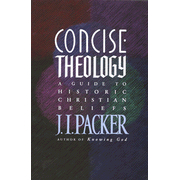
Article above adapted from J.I. Packer. Concise Theology: A Guide to Historic Christian Beliefs. Wheaton: Tyndale House Publishers, 2001, p. 26.

About J.I. Packer:

Dr. J.I. Packer is a British Theologian and has written over 50 books and numerous contributions to theological journals, reference works, and compilations. He is a a brilliant humble scholar who is best known for his works on Theology Proper – The Study of God. His classic work on the attributes and character of God – Knowing God is “must reading” for the Christian.

Zig Ziglar on the Question: Are You a Responder or a Reactor to Life?

It’s Better to Respond Than to React

When you respond to life, that’s positive; when you react to life, that’s negative. Example: You get sick and go to the doctor. Chances are good that after an examination, she would give you a prescription with instructions to return in several days. If, when you walk back in, the doctor starts shaking her head and says, “It looks like your body is reacting to the medicine; we’re going to have to change it,” you probably would get a little nervous. However, if the doctor smiles and says, “You’re looking great! Your body is responding to the medication,” you would feel relieved. Yes, responding to life is good. Reacting to the incidents of life is negative-and that’s bad.

The next example validates that fact.

Today, there is much turmoil in the job market, and many people are losing their jobs through downsizing, mergers, and takeovers. This creates some unusual opportunities for many people. One positive from this trend is that in the last five years, according to the Wall Street Journal, more than fifteen million new businesses have been created, well over half of them by women. Very few of the women had any marketable skills, and all of them had great financial need. Most of the new businesses were “trust” businesses, meaning that the women collected the money before they delivered the goods or services. The Journal comments that virtually none of the women have been prosecuted and jailed for failure to deliver on that trust. That’s exciting!

Many of these new businesses-possibly most of them-would never have been started had not an unfortunate event occurred in the people’s lives. When those events did occur and needs became obvious, the women chose to respond, and there is little doubt that many of them are better off now than they were before the “tragedy” took place.

The message is clear: If you respond to life instead of react to it, then you’ve got a much better chance of achieving success.

About Zig Ziglar:

Zig Ziglar was born in Coffee County, Alabama on November 26, 1926 and was the tenth of 12 children. In 1931, when Ziglar was five years old, his father took a management position at a Mississippi farm, and family moved to Yazoo City, Mississippi, where he spent his early childhood. In 1932, his father died of a stroke, and his younger sister died two days later.

Zigler served in the Navy during World War II (circa 1943-1945). He was in the Navy V-12 College Training Program, attending the University of South Carolina. In 1944 he met his wife Jean, in Jackson, Mississippi; he was 17 and she was 16. They married in late 1946.

Ziglar later worked as a salesman in a succession of companies. In 1968 he became the vice president and training director for the Automotive Performance company, moving to Dallas, Texas.

In 1970, Ziglar went into the business of motivational speaking full-time, with an emphasis on Christian values. Until then, he called himself by his given name, Hilary, but now satarted using his nickname, Zig, instead.

Until 2010 (aged 86) Ziglar traveled around the world taking part in motivational seminars, but has been somewhat limited recently due to a fall down a flight of stairs in 2007 that has impaired his short-term memory and physical abilities.

Through the ups and downs of life Ziglar has maintained his optimism and encouraged thousands of people to be their best in the particular endeavors to which God has called them. Zig Ziglar is one of the most inspirational people on the planet today and is a terrific example of someone who has embraced the struggle of life giving God the glory each step of the way.

The article above was adapted from one of Zig’s many encouraging books: Something to Smile About: Encouragement and Inspiration for Life’s UPS and DOWNS. Nashville: Thomas Nelson, 1997.

Zig Ziglar’s Books:

Ziglar, Zig; Ziglar, Tom. Born to Win: Find Your Success Code. Dallas: SUCCESS Media (2012).

Zig Ziglar. Something Else To Smile About: More Encouragement and Inspiration for Life’s Ups and Downs. Nashville: Thomas Nelson (2010).

Ziglar, Zig; Norman, Julie Ziglar. Embrace the Struggle: Living Life on Life’s Terms. New York: Howard Books (2009).

The One-Year Daily Insights with Zig Ziglar. Tyndale House Publishers (2009)

Inspiration 365 Days a Year with Zig Ziglar. SIM (2008)

God’s Way is Still the Best Way. Nashville: Thomas Nelson  (2007).

Better Than Good: Creating a Life You Can’t Wait to Live. Nashville: Thomas Nelson Publishers (2006).

Conversations with My Dog. B&H Books (2005).

The Autobiography of Zig Ziglar. New York: Random House (2004).

Confessions of a Grieving Christian. Nashville: B&H Publishing Group 2004).

Courtship After Marriage: Romance Can Last a Lifetime. Nashville: Thomas Nelson  (2004).

Staying Up, Up, Up in a Down, Down World. Nashville: Thomas Nelson  (2004).

Zig Ziglar’s Life Lifters: Moments of Inspiration for Living Life Better. B&H (2003).

Selling 101: What Every Successful Sales Professional Needs to Know. Nashville: Thomas Nelson Publishers (2003).

Ziglar, Zig and Hayes, John P. Network Marketing For Dummies. Foster City, Calif: IDG Books (2001).

Zig Ziglar. Success for Dummies. Foster City, Calif: IDG Books (1998).

Zig Ziglar. Something to Smile About: Encouragement and Inspiration for Life’s UPS and DOWNS. Nashville: Thomas Nelson (1997).

Great Quotes from Zig Ziglar. Career Press (1997)

Zig Ziglar. Over the Top. Nashville: Thomas Nelson Publishers (1994).

Zig Ziglar. Five Steps to Successful Selling. Nigtingale-Conant Corp. (1987).

Zig Ziglar. Top Performance: How to Develop Excellence in Yourself and Others. New York: Berkley Books (1986).

Zig Ziglar. Raising Positive Kids in a Negative World. Nashville: Oliver Nelson (1985).

Zig Ziglar’s Secrets of Closing the Sale. New York: Berkley Books (1982).

Zig Ziglar. See You at the Top. Gretna: Pelican (1975).


John C. Maxwell on Contentment vs. Discontentment

Which Tent Do You Live In?

All men live in one of two tents—content or discontent. In which do you live?

The contented man looks beyond his circumstances and sees a better day; the discontented man looks at his circumstances and sees no other way.

The contented man understands the purpose for which he was born; the discontented man looks at other’s success with a face that is filled with scorn.

The contented man has surrendered to a purpose that demands his best; the discontented man has selfishly hoarded much and grasping for more, will not rest.

The contented man has placed his values on things which will forever last; the discontented man has placed his values on things which will soon be past.

The contented man is anchored to clear goals and is hardly ever swayed;  the discontented man has no goals that anchor him and is many times dismayed.

The contented man counts his blessings and names them one by one; the discontented man counts other’s blessings and thinks he has no fun.

All men live in one of two tents—content or discontent. In which do you live?

 About John C. Maxwell:

John C. Maxwell is an internationally renowned pastor, leadership expert, coach, and author who has sold over 21 million books. Dr. Maxwell founded EQUIP and the John Maxwell Company, organizations that have trained more than 5 million leaders in 174 countries. Every year he speaks to Fortune 100 companies, international government leaders, and organizations such as the United States Military Academy at West Point, the National Football League, and the United Nations. A New York Times, Wall Street Journal, and Business Week best-selling author, Maxwell’s The 21 Irrefutable Laws of Leadership has sold more than 2 million copies. Developing the Leader Within You and The 21 Indispensable Qualities of a Leader have each sold more than 1 million copies. The article above was adapted from the encouraging and practical book by John C. Maxwell. Think On These Things. Kansas City: Beacon Hill Press, 1979, Chapter 30. This was the book that launched Maxwell’s writing career!

You can read his blog at JohnMaxwellOnLeadership.com, follow him at Twitter.com/JohnCMaxwell, and learn more about him at JohnMaxwell.com.